
Why Resident Turnover Matters So Much for US Citizen IMGs in Preliminary Medicine
Resident turnover is one of the most important—yet often under‑discussed—warning signs when evaluating a preliminary medicine year. For a US citizen IMG or American studying abroad, your prelim IM year is often your launching pad into advanced specialties (neurology, anesthesia, radiology, PM&R, etc.). A problematic program can derail your trajectory, hurt your performance, or even jeopardize your ability to move on to your advanced position.
When you hear about “residents leaving program,” your first instinct might be to assume it’s the resident’s fault. But in residency program evaluation, patterns matter more than isolated stories. A single departure might be personal; repeated departures can signal serious program problems.
This article focuses specifically on:
- How resident turnover shows up in preliminary medicine programs
- Which patterns should be considered a resident turnover red flag
- How US citizen IMGs can ask smart questions and verify information
- How to balance red flags against other program strengths when ranking
Understanding Resident Turnover in Preliminary Medicine
Resident turnover means residents leaving the program before completing their training there—whether through transfer, withdrawal, dismissal, or extended leave without returning. In a prelim IM year, turnover can look a bit different than in categorical internal medicine.
Why Turnover is Especially Important in a Prelim IM Year
As a US citizen IMG in a preliminary medicine year, you’re often:
- Contracted for a single year only
- Depending on this year to start on time for your advanced specialty
- Needing strong letters of recommendation and solid evaluations
- Frequently entering a system where you are not the program’s long-term priority compared to categorical residents
In this setting, high turnover may indicate:
- Systemic workload issues
- Poor supervision or support
- Unsafe patient care conditions
- Ineffective leadership or disorganized administration
- A culture that marginalizes prelim residents or IMGs
All of those directly affect your ability to succeed in this intense transitional year.
Normal vs Problematic Turnover
Not all resident departures are red flags. Some are expected or understandable:
Typically not alarming:
- One resident leaving for a spouse’s job relocation
- A single unexpected medical leave in several years
- One intern changing specialty due to genuine career change
Potential resident turnover red flag:
- Multiple residents leaving the same year from a small program
- Repeated loss of prelim interns over consecutive years
- Frequent stories of residents “not renewing” or “quietly disappearing”
- The program struggles to fill all positions, or has many off-cycle residents
For a US citizen IMG, your goal is to distinguish between normal human variability and signs of chronic program dysfunction.
Concrete Resident Turnover Warning Signs to Watch For
Below are specific turnover-related signals that may indicate program problems, especially relevant when you’re evaluating a prelim IM spot.
1. Multiple Residents Leaving the Program Recently
One of the clearest and most important indicators:
- More than one resident leaving within the last 1–2 years, especially from the same PGY level
- Departures that are vaguely explained: “They just weren’t a good fit,” or “They decided to move on” without details
- Repeated changes in the resident roster during the year
Ask yourself: in a small prelim cohort (often 4–10 interns), how big is the impact if even 2 leave?
Why this matters for US citizen IMGs:
- Remaining residents often have to cover the workload of departed colleagues
- The program may redistribute call, nights, or cross-cover unfairly
- As an American studying abroad, you may already feel you have to “prove yourself”—extra workload makes that harder
What to look for on interview day:
- Ask, “How many prelim and categorical residents have left the program in the last 5 years?”
- Ask, “Has anyone left mid-year in recent classes?”
- Observe residents’ body language when turnover is mentioned—do they look uncomfortable or guarded?
2. Constant Schedule Changes and Chronic Coverage Gaps
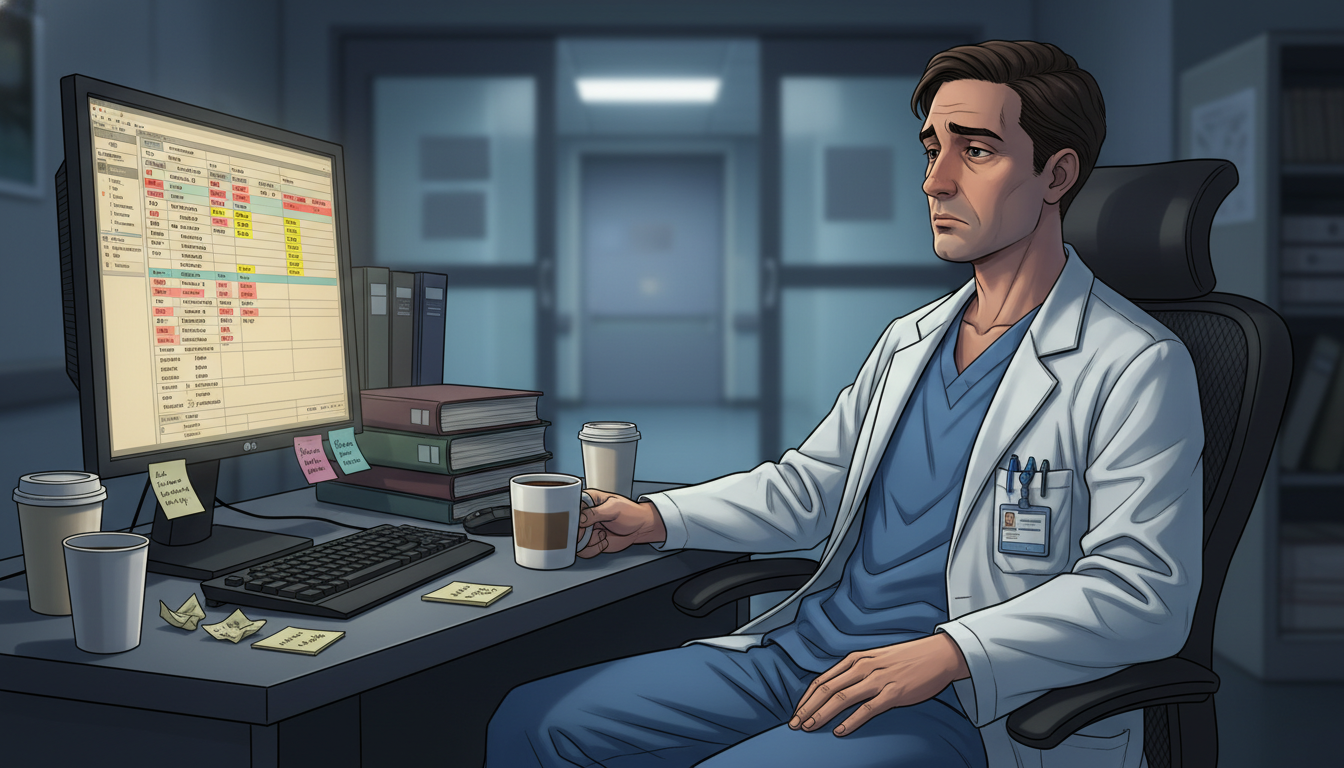
High turnover almost always shows up in the schedule:
- Frequent last-minute emails about “urgent coverage needed”
- Residents regularly working beyond scheduled hours to cover gaps
- Prelim residents repeatedly pulled from electives to cover wards or ICU
- Rotations being canceled or cut short because “we don’t have enough people”
When you see constant coverage drama, that often reflects a history of residents leaving program or ongoing inability to adequately staff the service.
Why this is concerning in a prelim IM year:
- You may lose key electives important for your advanced specialty
- Less time for research or building relationships with faculty
- More fatigue → higher risk of errors and professionalism issues
Questions to ask current residents:
- “How often are you pulled from electives to cover inpatient services?”
- “Has your rota/schedule been stable this year, or are there frequent last-minute changes?”
- “Do you feel the schedule is designed with resident well-being in mind, or just to fill service needs?”
Listen for answers like “we’re always short” or “it depends who quits” as potential program problems.
3. Disproportionate Strain on Prelim Residents vs Categorical Residents
In some internal medicine departments, preliminary medicine interns are treated as disposable labor. A high resident turnover red flag is when prelims:
- Consistently get the worst rotations or heaviest call
- Have fewer or lower-quality electives
- Are blocked from certain opportunities “reserved” for categorical residents
- Are the first ones asked to sacrifice days off or vacations for coverage
This dynamic often fuels further turnover—residents feel exploited or undervalued and seek transfers or early exit if possible.
For a US citizen IMG, pay attention if:
- Prelim residents warn you, “We do most of the scut work here”
- Categorical residents look surprisingly relieved that they “graduated” out of prelim status
- Prelims report difficulty getting letters, research, or support for their advanced match
Targeted questions to ask prelim residents:
- “Do you feel treated equally compared to categorical residents?”
- “Are your schedules and opportunities similar, aside from duration?”
- “How many prelims successfully transition into their advanced positions on time?”
4. Vague or Defensive Explanations About Departed Residents
Turnover can be handled transparently or with evasiveness. The tone matters as much as the content.
Concerning behaviors:
- Faculty or leadership become visibly uncomfortable when you ask about residents who left
- Answers are dismissive: “They just weren’t cut out for medicine”
- You hear multiple different stories from different people about the same person’s departure
- Program leaders emphasize resident “weakness” but never acknowledge system problems
Healthy programs are usually able to say something like:
“We had one resident leave last year for family reasons and another transfer to a program closer to home. The process was difficult, but we supported them, and we’ve made some schedule changes since then.”
As a US citizen IMG, be cautious if:
- Every story puts blame solely on the resident’s character
- There is a pattern of framing departing residents as “unprofessional” or “not resilient”
- No one can clearly explain the program’s remediation or support processes
5. Poor Morale and Emotional Exhaustion in Current Residents
High turnover rarely happens in a vacuum. It’s usually accompanied by low morale and visible burnout.
When you’re on an interview or virtual open house, note:
- Do residents look exhausted, depressed, or cynical?
- Does their tone shift when faculty step out of the room?
- Do they joke about “surviving” rather than learning?
- Are they reluctant to recommend the program to you directly?
Listen for comments like:
- “We make it work” (said with a forced laugh)
- “It’s survivable for a year”
- “You just have to push through; that’s what interns do”
These comments might indicate a culture where chronic overwork is normalized and residents leaving program is brushed off as “not resilient enough.”
For a prelim IM year, a certain toughness is expected. But if residents seem fundamentally unhappy, you should treat that as more than background noise—it may be a key resident turnover red flag.

6. Leadership Instability and Repeated Administrative Changes
Frequent changes in leadership often correlate with resident turnover and program problems:
- Multiple program directors in the last 3–5 years
- Interim leadership without clear permanent plans
- Sudden changes to rotation structure or policies mid-year
- Confusion among residents about who to approach for help
Instability at the top can trigger or worsen residents leaving program, especially if residents feel unheard or unprotected.
Red flags to note:
- PD or APD started very recently and cannot credibly talk about outcomes from previous classes
- Residents tell you, “We’re still figuring things out” or “We just changed everything”
- Program struggles to clearly articulate their education philosophy or long-term vision
For a US citizen IMG—particularly one who is an American studying abroad and may be perceived as “new” to the US system—unstable leadership can make it much harder to navigate problems, ask for help, or seek fair evaluation.
How to Investigate Turnover During Your Application and Interview Process
You cannot simply rely on a program’s website or official presentation. To evaluate resident turnover warning signs realistically, you’ll need to actively gather data from several sources.
Step 1: Research Before You Apply
Use publicly available information to screen programs:
- Check program websites for current resident lists. Search archived versions on the Wayback Machine (web.archive.org) and compare year-over-year. Do names disappear unexpectedly?
- Look at the NRMP Charting Outcomes for general competitiveness of prelim IM spots, but remember: some weak programs still fill due to location alone.
- Search online forums or social media groups (Reddit, SDN, Facebook IMG groups) for patterns: repeated comments about residents leaving program, “toxic culture,” or “terrible prelim experience.”
For US citizen IMGs, also look for:
- Mentions from other American studying abroad in similar paths (“I did prelim there, would not recommend,” etc.).
- Any sign that the program has previous experience with IMGs and supports them well.
Step 2: Ask Direct but Professional Questions on Interview Day
You’re not just being evaluated—you’re evaluating them. It’s appropriate to ask about outcomes and stability, particularly in a one-year prelim IM context.
Questions for program leadership:
- “How many prelim residents have left the program in the last 5 years before finishing their prelim year?”
- “Can you tell me about the last time a resident transitioned out of your program early, and how that was handled?”
- “Are there any ongoing institutional changes that might impact resident workload or staffing?”
- “Have there been changes in leadership recently, and what prompted them?”
Questions for current residents (preferably without faculty present):
- “Has anyone from your class or the previous class left or transferred?”
- “How often are people called in on their days off or asked to cover shifts they weren’t scheduled for?”
- “If you had to choose again, would you come back to this program for your prelim year?”
- “What are the biggest reasons people have been unhappy here?”
You’re listening not only to what they say, but how they say it.
Step 3: Verify Through Multiple Sources
One story—positive or negative—should never be the only data point you rely on. To confirm potential red flags:
- Compare what the PD says with what residents say.
- Ask follow-up questions if you sense discrepancies.
- Reach out to alumni via LinkedIn or email, especially those who did a preliminary medicine year and then moved to popular advanced specialties.
For US citizen IMGs, look specifically for someone who resembles your path: an American studying abroad, who then came back, did prelim IM, and matched into your desired advanced specialty.
Balancing Turnover Red Flags Against Your Personal Priorities
Not every resident turnover red flag is an automatic deal-breaker, especially if you have geographic constraints, visa issues (for non-US citizens), or limited interview offers. As a US citizen IMG, you may be in a middle ground—more options than many non-US IMGs, but often fewer than US MD seniors.
Here’s how to think about prioritization:
When Turnover is a Strong “Do Not Rank Highly” Signal
Consider ranking a program low (or not at all) if:
- Multiple residents have recently left and current residents look burned out
- Prelim residents are clearly overworked and undervalued compared to categorical residents
- Leadership seems dismissive or hostile when you ask about turnover
- There is no clear system for feedback, mentorship, or remediation
These conditions increase your risk of poor evaluations, burnout, or even failure to complete your year successfully, which can harm your long-term specialty goals.
When a Program Might Still Be Acceptable Despite Some Turnover
You might cautiously accept moderate red flags if:
- Turnover happened, but for understandable, diverse reasons (family illness, relocation, career change)
- Leadership openly acknowledges past problems and can describe specific, implemented changes
- Current residents are honest about challenges but still say they’d choose the program again
- The program has strong outcomes for prelim graduates—on-time transition to advanced positions, good letters, and reasonable quality of life
For an American studying abroad returning for residency, you might choose a program with slightly higher workload if it offers:
- Strong name recognition
- Excellent specialty-linked electives
- Proximity to your advanced program
But chronic, unexplained resident departures should always give you pause.
Practical Strategy for US Citizen IMGs Ranking Prelim IM Programs
Here is a strategic approach to using turnover information when creating your rank list:
Create a “risk score” for each program
- 0–1 residents leaving in 5 years, transparent explanations, happy residents → low risk
- Multiple recent departures, visible burnout, evasive leadership → high risk
Overlay your personal constraints
- Geographic must-haves
- Proximity to your advanced position institution
- Financial and support system considerations
Favor programs where:
- Prelim residents clearly feel integrated and respected
- Faculty seem invested in your long-term specialty goals
- Turnover, if present, is openly addressed with evidence of improvement
Deprioritize or drop programs where:
- Residents hint they would not recommend the program
- Stories of residents leaving program are frequent, vague, and always blamed on the individual
- There is obvious resident turnover red flag plus no meaningful plan to address it
Your prelim IM year is one year—but it is not disposable. A toxic or unstable program can follow you via letters, reputation, and your own mental health.
FAQs: Resident Turnover and Prelim Medicine for US Citizen IMGs
1. How many residents leaving is “too many” and should be a deal-breaker?
There’s no absolute number, but as a rough guide for a small to medium IM program:
- 0–1 departures over 5 years (especially with clear personal reasons) is usually fine
- 2–3 departures may warrant deeper questions but might still be acceptable if well explained
- More than 3 departures, clustered in recent years, is a major resident turnover red flag—especially if explanations are vague or residents seem unhappy
Always interpret numbers in context: program size, recent leadership changes, and whether the departures are mostly prelim or categorical.
2. Are prelim IM programs usually worse than categorical programs for resident support?
Not necessarily, but they can be. In some institutions, preliminary medicine interns are treated equitably and integrated fully. In others, they’re disproportionately used to plug coverage gaps.
As a US citizen IMG, ask specifically:
- “How are prelim residents integrated into educational conferences and mentorship programs?”
- “Do prelims get access to the same wellness resources and career advising as categoricals?”
- “Do you track outcomes for prelim graduates (fellowship, advanced program success)?”
Programs that value prelim residents will have thoughtful answers and clear systems.
3. If I sense some red flags but have limited offers as a US citizen IMG, should I still rank the program?
Often, yes—but strategically. The NRMP Match is a binding contract for that year, so you must be prepared to work there. If you have:
- No other options or only one alternative significantly worse geographically or logistically
- Enough reassurance that residents graduate and move on to their advanced specialties
Then you may choose to rank a program despite moderate concerns. However, if the environment seems unsafe, openly hostile to IMGs, or constantly losing residents, it may be better to rank it lower or not at all and consider the Supplemental Offer and Acceptance Program (SOAP) if needed.
4. What can I do during residency if I end up in a high-turnover, problematic program?
If you match into a program with unexpected problems:
- Document your experiences objectively (schedules, duty hours, emails).
- Use institutional resources: GME office, ombudsperson, resident union (if present).
- Seek mentorship from supportive faculty, especially those outside your immediate chain of command.
- Protect your physical and mental health—use counseling and wellness services early.
- If conditions are truly unsafe or irredeemable, explore transfer options, but recognize it’s challenging and must be handled discreetly and professionally.
Above all, prioritize completing the year successfully and protecting your professional reputation, even while advocating for yourself.
Resident turnover is more than a statistic; it’s a window into how a program functions under stress. As a US citizen IMG, your preliminary medicine year is a critical bridge between being an American studying abroad and becoming a competitive resident in your chosen specialty. Pay close attention to where residents stay, where they leave, and what those patterns tell you about the program you’re about to trust with one of the most important years of your career.