
Understanding Resident Turnover: Why It Matters for Caribbean IMGs in Pediatrics
For Caribbean IMGs aiming for a pediatrics residency in the U.S., understanding resident turnover is not optional—it’s essential. You’ve worked hard to get through a Caribbean medical school, you’re focused on the pediatrics match, and you might be thinking primarily about getting any position. But a toxic or unstable program can derail your training, your career, and even your visa status.
“Resident turnover” refers to how often residents leave a program before completing training. This includes:
- Residents who transfer out
- Residents who are dismissed or not renewed
- Residents who resign voluntarily
- Residents who “quiet quit” into just surviving, then leave at the earliest possible moment
High or unexplained resident turnover is a major residency program red flag. For a Caribbean IMG—especially those dependent on visa sponsorship and often far from family support—this risk is amplified.
This article focuses specifically on how to recognize resident turnover warning signs in pediatrics programs as a Caribbean IMG, including those aiming for or coming from Caribbean medical schools (e.g., evaluating SGU residency match lists or similar). You’ll learn:
- What healthy vs. unhealthy turnover looks like in a peds program
- Concrete questions to ask on interview day and during virtual meet-and-greets
- How to interpret evasive or vague answers
- Special considerations for visa-dependent Caribbean IMGs
- How to balance risk when you have limited interview offers
What Is “Normal” Turnover in Pediatrics Residency?
Before spotting problems, you need a realistic baseline. Pediatrics is often described as a “happy” specialty, with generally collegial environments and strong resident camaraderie. Still, some turnover is inevitable.
Healthy vs. concerning turnover
Healthy/expected turnover examples:
- One resident per class leaves over several years due to:
- Family relocation (spouse job move, illness)
- Genuine specialty change (e.g., switching to child neurology, PM&R)
- Military obligations or preplanned change
- A resident in serious academic difficulty who is remediated or released with clear documentation and fair process
- A PGY-3 who leaves after completion of training (this is not “turnover”—it’s graduation)
Concerning turnover examples:
- Multiple residents leaving from the same class within one year
- Two or more residents per class leaving over several consecutive years
- Residents “disappearing” mid-year without explanation
- PGY-2 or PGY-3 residents transferring to comparable or even less prestigious programs simply to get out
- Rumors or patterns of residents leaving the program quietly and faculty avoiding the topic
If several residents at the same level are leaving, this usually signals a structural problem: toxic leadership, unsafe workloads, or chronic understaffing.
Why turnover hits Caribbean IMGs harder
Caribbean IMGs in pediatrics, particularly those on J-1 or H-1B visas, have added vulnerabilities:
- Visa continuity: If a program falls apart or dismisses you, arranging a new sponsor quickly can be extremely difficult.
- Limited safety net: Less likely to have local family support, mentors, or alternative career pathways in the U.S.
- Reputational sensitivity: Caribbean medical school graduates often feel they must counter assumptions about training quality. Being associated with a “problem program” can complicate future fellowship applications or job searches.
Your goal is not just to match; it’s to match into a program with enough stability and support that you will finish and thrive.

Pre-Interview Research: Spotting Turnover and Program Problems Early
You can start detecting resident turnover warning signs long before you set foot (virtually or in person) in an interview. For Caribbean IMGs, especially from schools like SGU, AUC, or Ross, this pre-screening is crucial.
1. Examine residency program websites and rosters
Look at the current residents page for the pediatrics program:
- Are there:
- Missing residents in the middle of the training ladder?
- A PGY-3 class with fewer people than the PGY-2 or interns?
- Odd gaps (e.g., PGY-2 shows 6 residents, PGY-3 only shows 3)?
Patterns to watch:
- Year-over-year shrinkage: If PGY-3 has 4 residents, PGY-2 has 6, and interns have 8, that might be intentional expansion—or it could mean residents left and were not replaced.
- Frequent mid-year additions: Residents who appear labeled as PGY-2 but whose med school graduation year doesn’t line up may be transfers in from other programs.
This does not automatically mean there are program problems—but it’s your first clue. Write these observations down as talking points for the interview day.
2. Review graduation and fellowship outcomes
Check the graduating residents or “alumni” section:
- Do most residents finish on time (3 years for categorical pediatrics)?
- Are there residents who appear for PGY-1 and PGY-2 in older rosters but never show up listed as graduates?
- Do you see “off-cycle” graduates (e.g., finished in October or February rather than June)?
On its own, an off-cycle graduate is not damning. But multiple missing or off-cycle residents can suggest residents leaving program midstream or irregular remediation processes.
3. Cross-check with match lists from your Caribbean medical school
If you’re at a Caribbean school with published match data (for example, reviewing an SGU residency match list, AUC match, or Ross match spreadsheets), use them strategically:
- Identify pediatrics residency programs where your school has repeatedly matched graduates in recent years.
- Ask upperclassmen: “Did anyone you know who matched there transfer out or have a bad experience?”
- Track whether certain programs appeared popular a few years back but suddenly disappear from the match list—this can indicate gradually recognized program problems.
Informal networks (WhatsApp groups, alumni Facebook groups, Caribbean IMG forums) are particularly valuable. Residents are often more candid in private than in any official setting.
4. Search online reviews—but interpret cautiously
Sources:
- Reddit (r/medicalschool, r/Residency, r/IMG, etc.)
- Student Doctor Network (SDN)
- Google reviews of the hospital and children’s hospital
- Specialty forums for pediatrics
Look for:
- Repeated comments about “everyone is trying to leave”, “residents keep transferring out”, or “the program lost multiple residents recently”
- Mentions of retaliation after complaints
- Concerns about patient safety or severe under-staffing
Be careful: a single disgruntled post is not definitive. Patterns and corroborated stories are far more meaningful than isolated rants.
Interview Day Red Flags: What Resident Turnover Looks Like on the Ground
Interview day (virtual or in-person) is your best opportunity to detect resident turnover warning signs directly from the source. For Caribbean IMGs, being deliberate and strategic in what you ask is essential.
1. Ask directly about turnover—then watch the reaction
Use neutral, data-driven language:
- “How many categorical pediatrics residents have left the program in the past 5 years before graduation?”
- “Can you share how often residents transfer out and what typically drives those decisions?”
- “Has the program had any mid-year PGY-2 or PGY-3 departures recently?”
Healthy programs will usually respond with:
- Specific numbers (even if approximate)
- Clear reasons (family, fellowship opportunities, genuine specialty change)
- No visible tension from the PD or chief residents
Concerning responses include:
- “I’m not sure about the exact numbers” (but no effort to approximate)
- “We don’t really track that” (they absolutely do)
- Visible discomfort, changing the subject, or a defensive tone
- “People leave programs all the time everywhere. It’s not unique to us” without providing data
2. Observe how residents talk about each other and the program
During resident Q&A or informal sessions, listen for:
Positive markers:
- Residents mention helping each other through personal crises or intensives blocks
- Honest acknowledgment of challenges plus specific improvements (“We had issues with night coverage a few years ago, but the program added an extra night float and a moonlighter and it’s much better now.”)
- Clear pride in graduates and stable fellowship matches
Turnover warning signs:
- Residents speak in vague clichés (“We’re like a family,” “We all survive somehow”) without concrete examples
- Residents avoid talking about alumni or recent classes
- When you ask, “Have many residents transferred out?” they:
- Look at each other before answering
- Say, “That’s more a question for the PD”
- Give obviously rehearsed or extremely minimal replies
If possible, arrange one-on-one or small group chats outside the official schedule (often offered informally by programs). Residents are more candid when faculty are not watching.
3. Pay attention to gaps in the schedule and coverage structure
Ask specific, practical questions:
- “On a typical inpatient peds month, how many residents are on during the day? How many at night?”
- “Have you had to change the schedule recently because of residents leaving?”
- “Have you ever had to cross-cover more than X services because of vacancies?”
Clues to resident turnover or program problems include:
- Frequent last-minute schedule changes
- Residents mentioning that they are always covering extra shifts
- Overreliance on moonlighters or hospitalists for core resident tasks
- PGY-3s or PGY-2s doing work that would normally be done by interns because the intern class is too small
Coverage strain often follows high turnover; if the schedule feels constantly fragile, consider it a red flag.
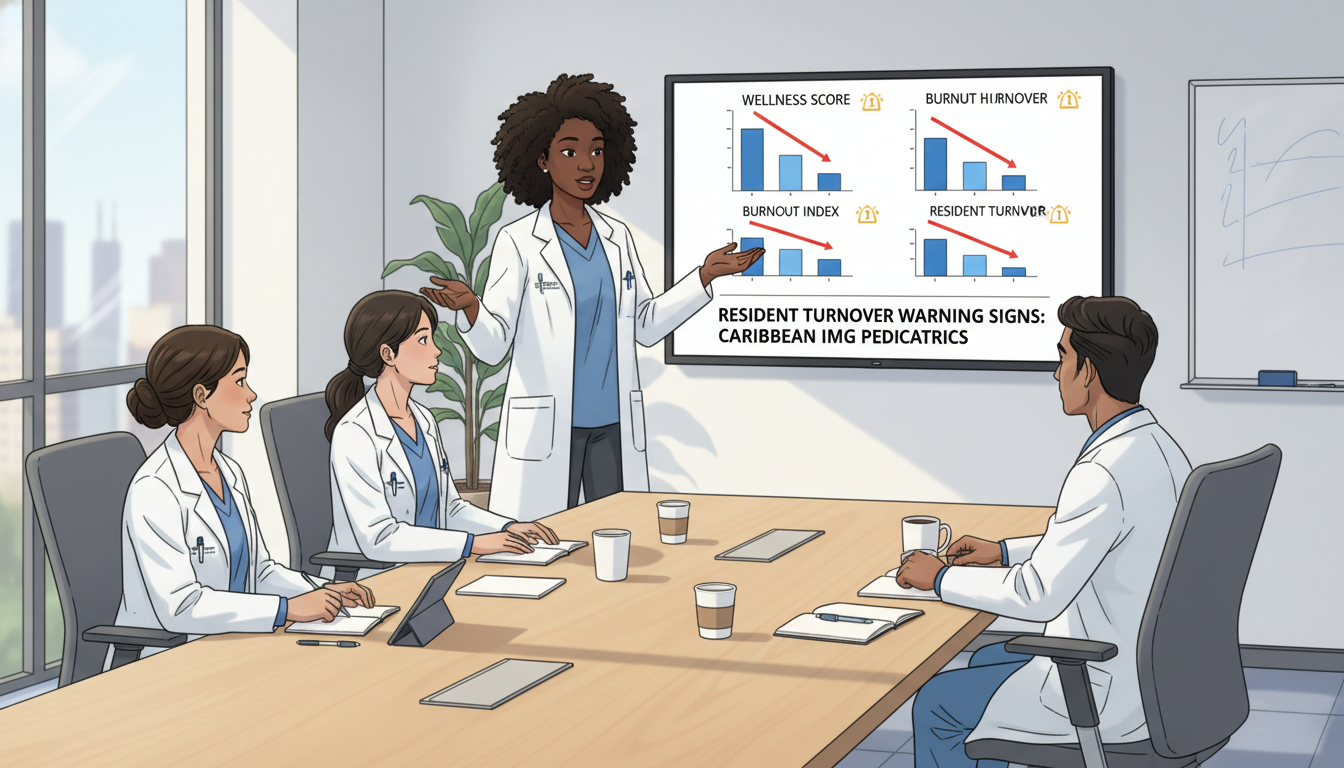
Subtle Signals of Unhealthy Turnover: Culture, Leadership, and Communication
Some resident turnover red flags in pediatrics are less obvious but equally important—especially for Caribbean IMGs who may have limited local networks. These “soft” signs usually reflect deeper program problems.
1. Leadership churn and communication style
Ask about program leadership stability:
- “How long has the current PD been in place?”
- “Have you had any recent changes in program leadership or major curriculum overhauls?”
- “How does leadership respond to resident feedback?”
Concerning indicators:
- Multiple PD changes within a few years
- A recent leadership turnover where residents seem:
- Relieved but evasive about the past
- Or anxious and uncertain about the future
- Residents describe feedback as:
- Ignored
- Punished (e.g., evaluation retaliation)
- Processed slowly without visible outcomes
Frequent leadership changes often accompany or precipitate residents leaving program, particularly when conflict between administration and residents is unresolved.
2. Hidden or minimized wellness problems
Ask about wellness and burnout in concrete terms:
- “What specific resources are available for mental health support?”
- “Have residents ever had to take medical or mental health leave? How was that handled?”
- “What changes has the program made in the last 2–3 years to address burnout?”
Red flags:
- Wellness is spoken of only in abstract slogans
- No examples of actual leave or accommodations being supported
- Residents quietly hint at colleagues who “disappeared” but won’t say more
- Residents look tired, withdrawn, or disengaged—especially senior residents
In pediatrics, where emotional strain from sick children and distressed families is high, poor wellness culture is a strong predictor of burnout and turnover.
3. The “blame the resident” culture
Listen for language that suggests the program reflexively blames individuals rather than examining systemic issues. Examples:
- “A few residents just couldn’t handle our workload”
- “Some residents simply weren’t a good fit for our culture of hard work”
- “We expect our residents to be tougher than average; this isn’t the place for everyone”
Healthy programs will acknowledge that when multiple residents are struggling or leaving, something in the system needs review. If every departure is framed purely as a resident’s personal failure, it signals a lack of introspection and growth.
Special Considerations for Caribbean IMGs: Risk Management and Decision-Making
As a Caribbean IMG pursuing a pediatrics residency, your tolerance for program instability should generally be lower than that of a U.S. MD with multiple backup options. Yet, you may feel pressure to rank any program that offers you an interview. Here’s how to think strategically.
1. Weighing a high-risk program vs. no match
Sometimes you’ll face a hard choice: a program with obvious turnover red flags vs. leaving a spot off your rank list because it feels dangerous.
Factors to consider:
- Visa status: If you’re on or need a J-1 or H-1B, a program with known resident dismissals or high turnover could be career-ending if things go badly.
- Supportive Caribbean alumni presence: If multiple graduates of your Caribbean medical school are currently there and seem genuinely happy, they may be a protective factor (shared experience, supportive network).
- Geographic isolation: A troubled program in an extremely isolated area may compound stress and limit transfer options.
In some extreme cases, it can be rational to rank a high-risk program lower or leave it off if you have safer options—even if that increases your chance of going unmatched. This is deeply personal and may require input from mentors who know your full situation.
2. Using your Caribbean school’s network wisely
If you come from a Caribbean school with a robust match footprint (e.g., SGU residency match history across many children's hospitals and community programs), use that to your advantage:
- Ask match advisors which pediatrics residency programs historically had:
- Residents transferring out
- Multiple residents on remediation
- Patterns of complaints
- Request honest feedback, not just reassurance. Make clear you’re willing to hear uncomfortable truths.
Your Med 4 classmates, recent grads in peds, and alumni in fellowship are an invaluable real-time barometer of program problems that won’t appear in any official brochure.
3. Protecting yourself if you do match at a shaky program
If you end up in a pediatrics program with known or suspected resident turnover:
- Document everything related to:
- Evaluations
- Feedback sessions
- Changes in rotation schedules or duties
- Establish early relationships with:
- GME office staff
- An unbiased mentor outside your department (e.g., faculty from medicine or emergency medicine)
- Keep your clinical performance solid and communicate proactively if you struggle
- If you see residents leaving, quietly gather information but avoid public gossip; focus on understanding processes and protecting your training continuity
If the situation deteriorates, having documentation and external mentors increases your chance of a safe transfer or intervention.
Practical Questions to Ask (and How to Interpret the Answers)
Here is a concise list you can bring to interviews or virtual socials, specifically tailored to detecting resident turnover and program stability in pediatrics.
“How many residents have transferred out or left the program before completion in the last 3–5 years?”
- Good sign: “Two in five years, one moved due to spouse relocation, one switched to child neurology.”
- Warning: “I don’t know exactly; it’s not something we keep track of.”
“Have there been any major schedule or staffing changes due to residents leaving?”
- Good sign: “We expanded our nocturnist coverage and hired more hospitalists so that when we had a resident leave, coverage wasn’t unsafe.”
- Warning: “We just all pitched in more; it was tough but we managed.”
“Can you share an example of resident feedback that led to a concrete change recently?”
- Good sign: Specific examples involving call, didactics, or support staff.
- Warning: Only vague mention of surveys with no clear outcomes.
“How often do residents go on mental health leave or medical leave, and what does that process look like here?”
- Good sign: Clear policy, examples of supported leaves.
- Warning: “We don’t really have that issue here; people just push through.”
“What happens if someone is struggling academically or clinically? How is remediation handled?”
- Good sign: Structured, supportive process with mentorship.
- Warning: Heavy focus on discipline, probation, and dismissal with little mention of support.
Write down these answers immediately after each interview to compare programs later; patterns will emerge that strongly correlate with resident turnover risk.
FAQs: Resident Turnover and Pediatrics for Caribbean IMGs
1. Is some resident turnover normal in pediatrics?
Yes. Over several years, it’s normal for a small number of residents to leave for family reasons, specialty switches, or rare academic issues. What’s concerning is recurrent or unexplained turnover, especially when multiple residents from the same class leave or when leadership is evasive about the numbers.
2. As a Caribbean IMG, should I automatically avoid any program with past turnover issues?
Not automatically. Focus on how the program responded to those issues. If they acknowledge problems, describe specific changes, and current residents seem genuinely better off, the program may now be stable or even stronger. However, if there’s ongoing high turnover, vague explanations, or clear resident distress, Caribbean IMGs—especially on visas—should be very cautious.
3. How do I find out if residents are leaving a program if it’s not obvious online?
Use multiple channels:
- Ask direct but respectful questions on interview day
- Talk to current residents privately (email, social media, WhatsApp)
- Reach out to Caribbean alumni who matched there previously
- Check forums for repeated stories about residents leaving or transferring
A single source is rarely enough; look for consistent patterns across several sources.
4. What if my only pediatrics offer is from a program with clear red flags about turnover?
This is a difficult situation. Discuss your options with trusted mentors or advisors at your Caribbean medical school. Consider:
- Your visa status and ability to handle a potential program collapse
- Whether you’d be comfortable reapplying next cycle if necessary
- Whether you have non-residency backup plans (research, public health, home-country practice)
For some, ranking that program is still the right choice; for others, the risk is too high. Make a deliberate, informed decision rather than reacting out of fear.
By approaching resident turnover with clear-eyed realism—especially as a Caribbean IMG targeting pediatrics—you dramatically increase your chances of not just securing a peds match, but completing residency in an environment where you can grow, learn, and build the career you envision.