Why Resident Turnover Matters So Much for Caribbean IMGs in IR
As a Caribbean IMG aiming for interventional radiology (IR), you are entering one of the most competitive and demanding specialties in medicine. You cannot afford to “hope for the best” when it comes to residency program quality. One of the strongest signals that something may be wrong with a program is resident turnover: residents leaving the program, switching specialties, or failing to finish.
For a Caribbean medical school residency applicant—especially from schools like SGU, Ross, AUC, and others—choosing the wrong IR residency can have long‑term consequences. An unstable training environment may affect:
- Your chances of completing residency on time
- Your ability to successfully navigate the IR match if you’re in an integrated or ESIR pathway
- Your fellowship and job opportunities afterward
- Your visa and immigration status (if applicable)
- Your mental health, burnout risk, and overall well‑being
This article breaks down how to identify resident turnover red flags, what they actually mean, and how you—as a Caribbean IMG—can assess program problems before you sign a contract.
We’ll focus specifically on interventional radiology, but most principles apply broadly to diagnostic radiology and other procedure‑heavy specialties.
Understanding Resident Turnover: What It Really Means
Before you can spot warning signs, you need to understand what “resident turnover” actually is and what’s normal versus concerning.
What Counts as Resident Turnover?
In the context of residency programs, “resident turnover” usually refers to:
Residents leaving the program
- Transferring to another IR or DR program
- Switching into a completely different specialty
- Leaving medicine/training altogether
Residents not progressing on time
- Repeating a year
- Extended remediation periods
- Delays in graduation
Frequent upper-level gaps
- Empty PGY-3/4/5 slots
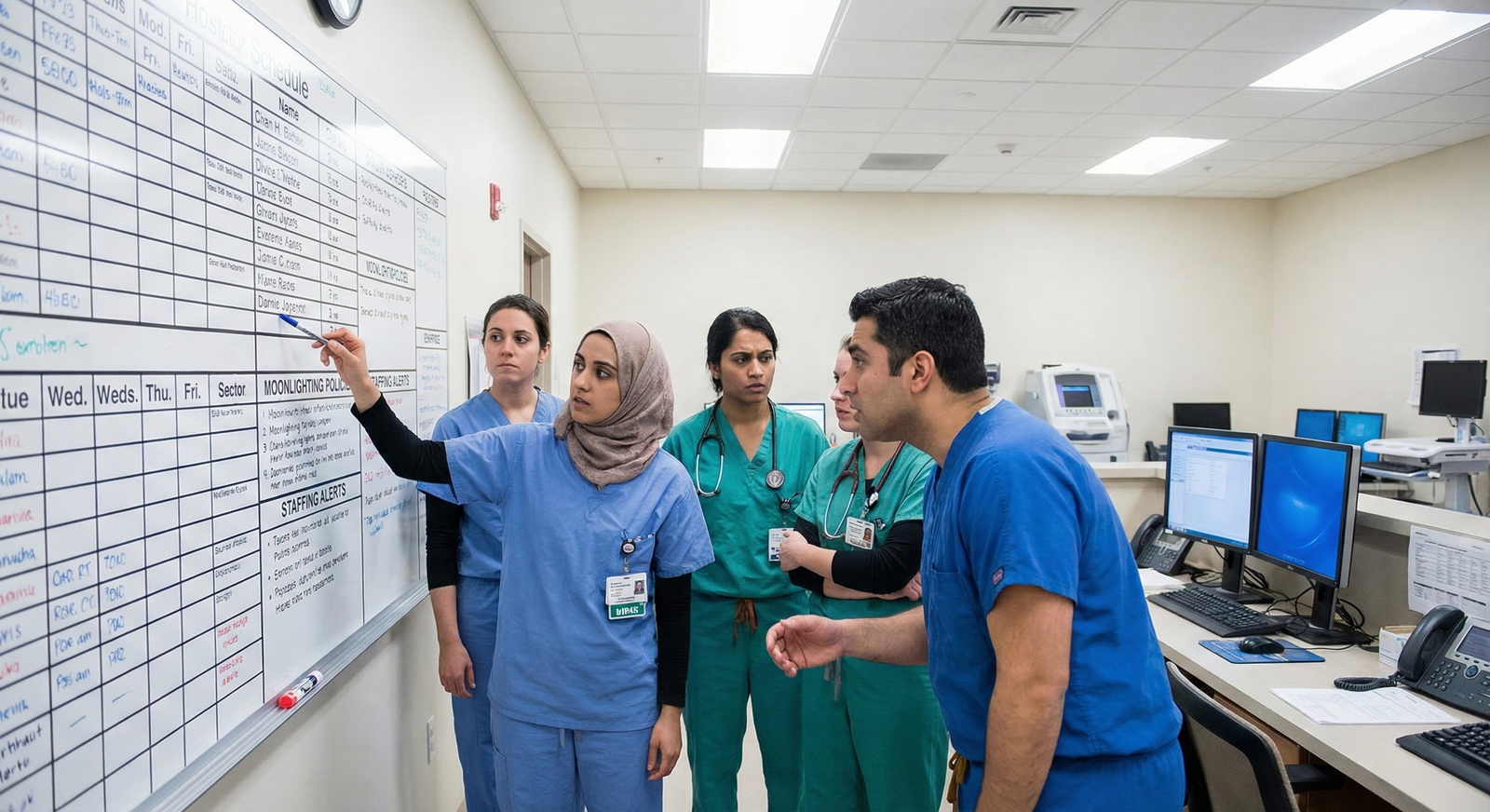
- Reliance on locums or moonlighting attendings instead of stable senior residents
Any of these, in small numbers, can be normal. But patterns matter.
What Is Normal Turnover vs. a Red Flag?
Residency is intense. Life happens. A few examples of normal, isolated events:
- One resident in several years leaves due to family relocation or spouse’s job
- A resident switches to another specialty for sincere career-fit reasons
- A single resident has academic difficulties but improves with structured support
These do not automatically indicate program problems.
Concerning patterns include:
- A resident leaving every year (or most years)
- Multiple residents in the same class leaving or transferring
- Residents repeatedly failing board exams
- “Mysterious” disappearances of names from program rosters or websites
- Residents openly cautioning away applicants, especially repeatedly
When these patterns are present, especially in a small IR program, you should treat them as a resident turnover red flag.
Why Interventional Radiology Is Especially Vulnerable
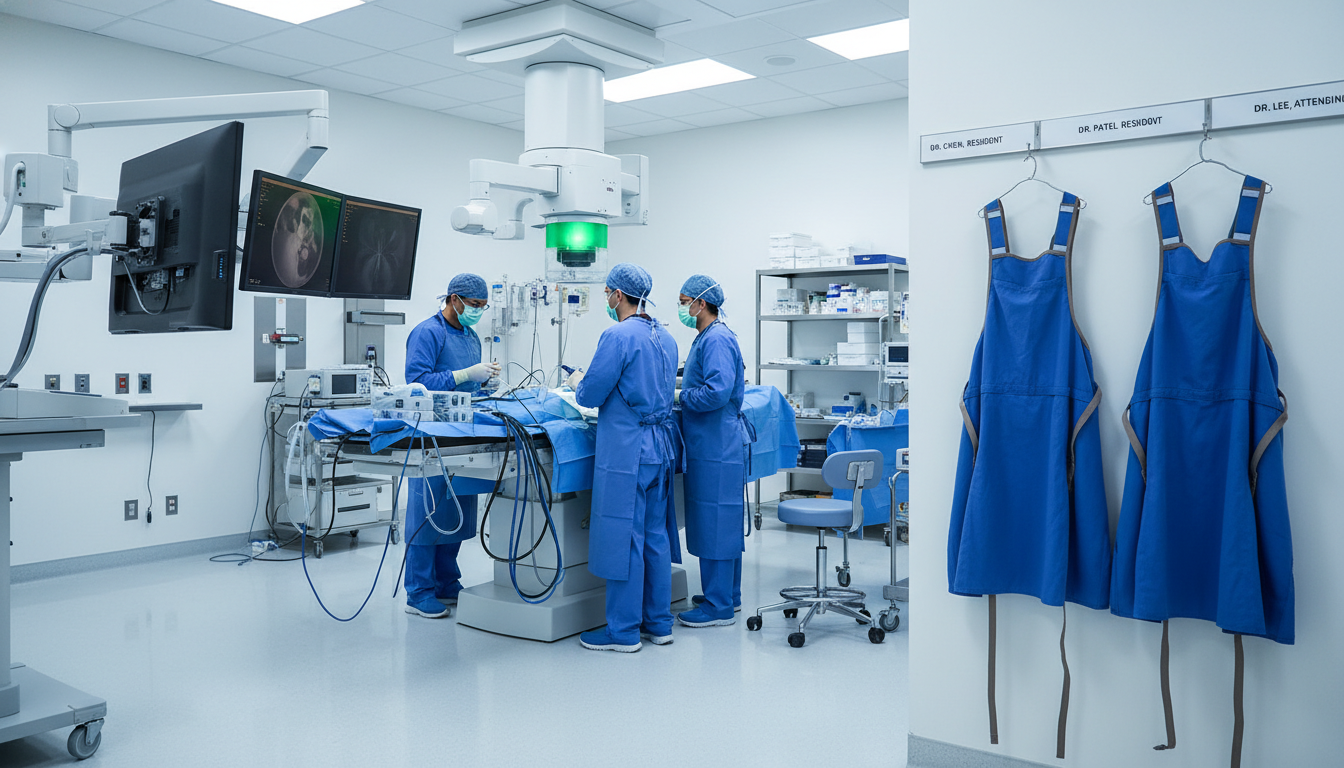
Interventional radiology residency—integrated and independent—faces unique stressors that can amplify turnover:
High procedure volume & steep learning curve
Long hours, call burden, and complex cases can lead to burnout in poorly supported programs.Hybrid identity: proceduralist + imaging expert
Programs that don’t balance IR and DR training well can frustrate residents on both sides.Service-heavy culture
Some programs over-emphasize “scut” (consult chasing, transport, floor work) with inadequate teaching.Rapidly evolving field
Programs that don’t keep up with modern IR practice, techniques, and case mix may cause residents to seek better training elsewhere.
As a Caribbean IMG, you may already face bias or higher expectations. Entering a program with hidden instability can compound that risk.
Concrete Resident Turnover Red Flags Caribbean IMGs Must Watch For
Here are specific signs that a residency program—especially in IR—may have underlying issues leading to residents leaving or failing to thrive.
1. Missing or Inconsistent Resident Names and Photos
What to look for:
- Resident roster on the website changes suddenly during the year
- Gaps in class sizes (e.g., four PGY-2s, two PGY-3s, one PGY-4)
- Obvious blank spaces where resident profiles should be
- Multiple “former residents” or “transfers” listed without explanation
Why it matters:
Programs rarely advertise when residents leave. However, you can often tell something is wrong when the resident list doesn’t track properly over time.
How to check (especially for a Caribbean medical school residency applicant):
- Use the Wayback Machine (Internet Archive) on the program’s residency page to see historical rosters.
- Compare “Residents” or “Current Trainees” pages over the last 3–4 years.
- For IR specifically, compare integrated IR and DR rosters; see if IR slots are routinely vacant or filled late.
If you consistently see residents disappearing from rosters between PGY-2 and PGY-5/6, that’s a strong resident turnover red flag.
2. Residents Who Avoid Answering Direct Questions
During interviews, social hours, or virtual socials, pay attention to how residents answer, not just what they say.
Warning patterns:
When you ask, “Have any residents left the program recently?” they:
- Pause awkwardly, look at each other, or say, “I’m not sure.”
- Provide vague non-answers: “Things are pretty standard here.”
- Change the subject or defer to the chief resident repeatedly.
Body language suggesting discomfort:
- Nervous laughter, glances at faculty
- “We’ll tell you more later off Zoom” comments
What a healthy response looks like:
“Yes, we had a PGY-3 transfer to another IR program last year because of family relocation. It was supported by the program and not related to training issues. We’ve had very few departures overall in recent years.”
Programs with nothing to hide will usually give specific, transparent reasons for the rare resident departure.
If multiple residents seem hesitant or fearful to talk about program problems or residents leaving the program, assume there is more going on than they can safely share.
3. Persistent Rumors of Toxic Culture or Program Problems
Caribbean IMGs often rely heavily on online information networks to understand the U.S. GME landscape. Use them wisely.
Where to look (with caution):
- Specialty forums (e.g., Reddit r/Residency, r/Radiology, Student Doctor Network)
- Caribbean school alumni groups (SGU, Ross, AUC, etc.)
- WhatsApp, Telegram, or Facebook groups dedicated to the IR match or Caribbean IMG residency pathways
Red flags in online commentary:
Multiple posts over several years mentioning:
- “Residents are always leaving this place”
- “High resident turnover and poor support”
- “Toxic culture, program director retaliation”
- “Avoid this program if you’re an IMG”
Former or current residents openly discussing:
- Bullying, intimidation, or humiliation in IR suites
- Punitive responses to pregnancy, health issues, or mental health leaves
- Over-reliance on residents for service with minimal teaching
No single anonymous post should decide your rank list. But consistent, corroborated reports over time should weigh heavily—especially if you hear similar stories privately through alumni networks.
4. Unusually High Graduation or Board Failure Rates
Not all residency programs prominently report their board pass rates, but many IR/DR programs will share:
- Recent ABR Core Exam pass rates (for DR component)
- IR/DR Certifying Exam outcomes for recent graduates
- Data on how many residents complete the program on time
Red flags:
- The program declines to provide any data when asked.
- Board pass rates are significantly below national averages.
- There is a pattern of residents repeating years due to “performance issues.”
- Graduates struggle to secure fellowships or IR jobs at a reasonable rate.
For Caribbean IMGs, these issues can be especially damaging because you may already face additional scrutiny during job or fellowship applications. You need the strength of a program’s reputation and outcomes to help offset any remaining stigma around Caribbean medical school residency pathways.
5. Chronic Under-Staffing and Overworked Residents
In IR, staffing levels directly determine your training quality and burnout risk.
Warning signs from resident comments:
- “We’re constantly short-staffed.”
- “We’re essentially covering for two classes because people left.”
- “We’re on call every 3rd night for IR; it’s brutal.”
- “We don’t have time for reading or conferences; it’s all service.”
System-level signs:
- The program frequently scrambles to fill IR call.
- Reliance on fellows to plug gaps that should be covered by residents.
- Attendings routinely doing resident work because of vacancies.
Overwork is both a cause and a consequence of resident turnover. Once people start leaving, the workload on remaining residents skyrockets, which pushes more people out—a vicious cycle.

Distinguishing Normal Challenges from Serious Program Problems
Not every difficulty equals a red flag. For a Caribbean IMG—especially one excited about securing any IR position—it’s vital to separate manageable issues from true deal-breakers.
Normal Challenges You Should Expect
Every residency, including top IR programs, will have:
- Busy rotations with long hours
- Occasional personality conflicts
- A few weaker attendings alongside excellent ones
- Temporary schedule disruptions due to maternity/paternity leaves, illness, or institutional changes
Seeing a single resident struggle academically, or one isolated conflict with leadership, does not automatically mean the program is broken.
Patterns That Suggest Deeper Structural Problems
Start to worry when you see repeated or multi-year patterns such as:
Resident attrition > national norms
One or more residents leaving almost every year.Chronic dissatisfaction
Multiple current or recent residents independently describe:- Feeling unsafe speaking up
- No response to harassment or abuse complaints
- Retaliation for raising wellness or schedule issues
Leadership instability
- Frequent program director turnover
- Multiple assistant PDs resign in a short period
- Abrupt changes in rotation structure with little explanation
Poor remediation support
Residents who struggle are simply pushed out instead of being coached and given a plan.
As a Caribbean IMG, you want a program that is structured, stable, and transparent, with leadership that has experience supporting IMGs and understands your unique pressures (exam eligibility, visas, financial constraints, and relocation issues).
Practical Strategies Caribbean IMGs Can Use to Investigate Turnover
Researching resident turnover as an applicant takes intentional effort. Here’s how to do it systematically.
1. Use a Structured Question Strategy on Interview Day
During interviews or social events, ask targeted questions to at least two different resident levels (junior and senior). Examples:
- “In the last 5 years, how many residents have left the program before graduating?”
- “Have any residents transferred out of IR to another specialty or another institution?”
- “If someone struggles academically or clinically, how is it handled here?”
- “How has the workload been affected if residents left previously?”
- “Do people usually finish the program on time?”
For faculty:
- “How would you describe resident retention over the past few years?”
- “What changes have been made in response to resident feedback?”
Listen for consistency in answers. Inconsistencies often signal missing information or attempts to downplay problems.
2. Talk to Caribbean Alumni and Upper-Class Mentors
If you’re from a school like SGU, Ross, AUC, Saba, or another Caribbean institution, leverage your alumni network:
- Ask your clinical dean’s office or career services if they know graduates at the programs you’re considering.
- Reach out to alumni via email or LinkedIn:
- “I’m a Caribbean IMG interested in IR. I’d value any advice about your program or others you considered.”
- Ask specific questions:
- “Did anyone leave or transfer out of your program while you were there?”
- “How supportive was leadership when residents went through personal or academic challenges?”
- “Would you choose the same program again as a Caribbean IMG?”
Alumni are often more candid than current residents, especially if they have already graduated and moved on.
3. Cross-Check Rosters and Match Lists Over Time
For IR, you want to look at:
- IR/DR integrated match lists (where available)
- ESIR participation (if you’re entering through DR but planning IR)
- Former fellows in IR training programs linked to that institution
Look for trends:
- Are there “missing years” where an IR resident should be?
- Are integrated IR residents switching back to DR or disappearing from IR faculty pages?
- Are recent graduates actually practicing IR, or did some revert to DR only?
A strong program should show consistent progression: residents enter, train, and go on to IR fellowships or IR attending roles with minimal unexplained attrition.
4. Use the SGU Residency Match Mindset—But Don’t Over-Optimize for the Name
Many Caribbean IMGs look admiringly at SGU residency match lists and similar outcomes, and there is a tendency to overvalue any match in a competitive field like IR.
That mindset is understandable—but dangerous if it leads you to ignore program problems. A prestigious university name cannot compensate for:
- A chronically toxic IR section
- Unstable leadership
- Patterns of residents leaving or being pushed out
Ask yourself:
“Would I still choose this program if it weren’t in this city or attached to this brand-name hospital, knowing what I’ve learned about attrition and culture?”
If the answer is no, reconsider where you rank it, even if it’s in a desirable location.
Balancing Risk and Opportunity as a Caribbean IMG Targeting IR
Caribbean IMGs face real constraints: fewer interview invitations, visa issues, financial limitations, and sometimes a narrower IR match footprint. You may feel you have to rank any program that even hints at IR training.
You do not need a “perfect” program, but you do need a functional one.
When a Red Flag Means “Proceed With Caution”
If you find one or two of the following, but residents overall seem supported:
- One resident left in the last 5 years for clear personal reasons.
- Workload is high but improvements are being made.
- New leadership is transparent about past problems and shows genuine reform.
In such a case, you might still rank the program, especially if your options are limited, but adjust your expectations and prepare to advocate for yourself.
When a Red Flag Should Move a Program Down (or Off) Your List
Strong reasons to significantly lower or exclude a program:
Multiple residents leaving over several years, without clear, benign explanations.
Consistent off-the-record warnings from current or former residents, especially about:
- Retaliation
- Bullying
- Lack of support for remediation
Chronic under-staffing with no clear plan to recruit and stabilize.
As a Caribbean IMG, you are investing enormous resources—financially, emotionally, and professionally—into your training. A program with serious turnover issues risks:
- Forcing you into extended years (and more debt)
- Leaving you without a completed IR pathway
- Endangering your visa status (if applicable)
When in doubt, choose stability and a track record of successful graduates, even if the program is less glamorous on paper.
FAQs: Resident Turnover Warning Signs for Caribbean IMGs in IR
1. How many residents leaving is considered a serious resident turnover red flag?
In small specialties like IR, even one resident leaving every few years is noticeable, but not automatically alarming. It becomes a real red flag when:
- You see a pattern: one or more residents leaving most years.
- Multiple residents from the same class leave or transfer.
- No clear, benign explanation is offered (e.g., “family relocation”).
Think in terms of patterns over 4–5 years, not single events.
2. As a Caribbean IMG, can I still rank a program with some turnover if it’s my only IR option?
Yes, but do so with open eyes:
- Clarify the reasons behind the turnover as much as possible.
- Assess whether problems seem to be improving or worsening.
- Consider how dependent your IR future is on that specific program (e.g., integrated IR vs. DR with potential ESIR).
If it’s your only route into IR, you may decide the opportunity outweighs the risk, but then prioritize:
- Building strong mentor relationships
- Staying academically solid
- Preparing backup plans (e.g., DR-only, different institution for fellowship)
3. Are programs usually honest about residents leaving during interviews?
Programs tend to minimize or sanitize the story, but many will still be reasonably honest if asked respectfully and specifically. Compare:
- The official explanation from leadership
- The tone and details you hear from residents
- Any alumni perspectives you gather
If all three sources align, you can be more confident. Large discrepancies suggest you’re not hearing the full story.
4. Is high resident turnover always due to program toxicity?
No. Some turnover is driven by:
- Family moves
- Personal health concerns
- Genuine changes in career interests
- Visa or immigration complications
However, in IR—where training is intensive and culture matters a lot—repeated attrition should prompt you to question whether:
- Workload is sustainable
- Culture is supportive
- Leadership responds constructively to feedback
Your goal as a Caribbean IMG is not to find a perfect program, but to avoid truly unstable or harmful ones. Resident turnover is one of your most powerful early warning signals—use it thoughtfully when deciding where to train in interventional radiology.