
Understanding Resident Turnover: Why it Matters for Caribbean IMGs in Peds-Psych
Resident turnover is one of the strongest—and most visible—warning signs that a residency program may have deeper problems. For Caribbean international medical graduates (IMGs), especially those aiming for combined Pediatrics-Psychiatry (peds psych residency) or Triple Board programs, ignoring these signs can have serious consequences for training, well‑being, and future fellowship or job prospects.
As a Caribbean IMG, you already navigate unique challenges: visa issues, bias against Caribbean medical school graduates, and the pressure to prove yourself in the match. You cannot afford to enter a toxic or unstable program where residents are frequently leaving, graduating late, or quietly transferring out.
This article walks you through:
- How to recognize resident turnover red flags—especially in small, niche programs like Triple Board
- Which patterns are “normal churn” vs. true program problems
- How to ask smart questions on interview day without burning bridges
- How to interpret data and what to do if you sense residents are hiding something
- Special considerations for Caribbean IMGs from schools like SGU, AUC, Ross, SABA, etc.
Throughout, keep one principle in mind: high resident turnover is rarely random. It often reflects issues with leadership, culture, workload, or support that will directly impact your experience.
Why Resident Turnover Is Especially Risky in Peds-Psych and Triple Board
Pediatrics-Psychiatry-Child Psychiatry (Triple Board) and other peds psych residency pathways are small by design. A typical Triple Board program might have:
- 2–4 residents per year
- 10–15 total residents across all years
- Heavy integration between pediatric and psychiatry departments
In such a small ecosystem, even one or two residents leaving the program can be a major red flag.
The Unique Vulnerabilities of Small, Combined Programs
Disproportionate Impact of Each Resident
- If a categorical internal medicine program loses 3 residents out of 50, the system often absorbs the loss.
- If a Triple Board program loses 1 resident out of 3 in a class, everyone feels it—call schedules, continuity clinics, teaching, and morale all shift.
Complex Rotations and Accreditation Requirements
- Peds psych and Triple Board programs must satisfy multiple accreditation standards simultaneously (pediatrics, psychiatry, child psychiatry).
- If residents leave, the program may scramble to cover required experiences or clinics, sometimes stretching remaining residents thin and risking burnout.
Fewer Mentors and Role Models
- With fewer faculty and residents, your support network is smaller.
- High turnover usually means role models are leaving—or avoiding the program entirely.
Less “Noise” in the Data
- In large programs, an occasional departure can be due to personal reasons.
- In small programs, patterns appear faster: if three residents in five years leave or transfer, that is a substantial percentage of the total.
Caribbean IMG-Specific Concerns
For Caribbean IMGs (including those from SGU, AUC, Ross, SABA, etc.) the stakes are even higher:
- Visa complications: If you need to transfer because of program problems, a new program must also sponsor your visa. That is never guaranteed.
- Bias and vulnerability: Some programs view Caribbean IMGs as “more replaceable,” leading to less investment in support and quicker inclination to put residents on remediation.
- Limited options: Many Caribbean IMGs match in a narrower set of programs; leaving or being pushed out may mean struggling to secure another spot.
This is why, before trusting glowing brochures or a polished SGU residency match list that shows impressive outcomes, you must learn to read between the lines about resident stability and turnover in each program you interview at.

Visible Warning Signs: When Resident Turnover Signals Deeper Program Problems
Not all departures are bad. People leave for fellowships, spouse relocation, or personal life events. The issue isn’t one resident leaving, it’s the pattern and the context. Below are high‑yield resident turnover red flags to watch for, especially relevant to Caribbean IMGs pursuing peds psych residency paths.
1. Multiple Residents Leaving or Transferring in Recent Years
Patterns to watch:
- More than one resident per year leaving or transferring in a program with fewer than 30 residents
- Any voluntary departures in a Triple Board or combined peds psych program over a short period
- Residents who “step away” and never come back, with vague explanations
Questions for residents:
- “In the last 5 years, have any residents transferred out of the program or left before completing training?”
- “What usually happens when a resident is struggling—do they get support, or do they tend to leave?”
Interpreting answers:
- Honest but specific: “We had one resident who left for family reasons, and one who decided to switch into adult psychiatry; the program supported both transitions.”
→ Not necessarily a red flag, especially if details feel consistent and residents look comfortable sharing. - Vague or evasive: “You know, things happen… people go different directions. It’s private.”
→ Concerning, especially if no one provides at least general context.
2. Frequent PGY Class Restructuring or “Hybrid” Paths
Signs:
- A PGY-3 class has 4 residents, but PGY-2 has 2, and PGY-1 has 3—with no clear explanation.
- Repeated mention of “restructuring” or “transition periods” due to “recent changes.”
- A Triple Board program that suddenly has “no PGY-2s this year” or skipped a match year.
Ask:
- “I notice different class sizes across the PGY levels. Could you walk me through why that is?”
- “Has the program had to restructure often in recent years?”
What you don’t want to hear:
- Confusing explanations that don’t add up.
- Blame placed on residents without describing any program introspection: “A couple of them just couldn’t handle the workload.”
3. High Resident Turnover Paired with Heavy Recruiting of Caribbean IMGs
As a Caribbean IMG, you may see programs that match many graduates from Caribbean medical schools—sometimes including strong outcomes like SGU residency match placements. That is not automatically bad. However, paired with high resident turnover, it can signal:
- Overreliance on IMGs to fill less competitive programs
- A culture that accepts high burnout as normal
- Programs that expect residents to tolerate poor conditions because their options are limited
Evaluate:
- “How long have you been taking Caribbean IMGs?”
- “Looking at the last 5 years, have most Caribbean IMGs graduated on time?”
- “Has anyone failed to graduate, or required extra time?”
If multiple Caribbean IMGs have left, extended training, or failed to graduate, take that extremely seriously.
4. Residents Speak Anxiously, Defensively, or Only in Groups
Beyond numbers, pay attention to nonverbal turnover warnings:
- Residents only answer questions when faculty are present.
- A resident looks uncomfortable when you ask about people leaving the program.
- Nobody wants to talk one‑on‑one during interview lunch or social.
- Answers feel scripted: “We are like a family; we all support each other; there is no problem.”
Often, in programs with high resident turnover and program problems, residents learn that honesty can be punished. They may:
- Downplay the situation: “We’ve had some residents leave, but it’s not a big deal.”
- Blame the person who left: “They just weren’t a good fit,” without specifics.
If residents appear fearful or guarded, assume there may be more turnover than they are allowed to admit.
5. Abrupt Leadership Changes and “Rebuilding” Narratives
Program instability often precedes or follows high turnover:
- New Program Director (PD) almost every 1–3 years
- Multiple associate program directors stepping down
- PD or chair describing the program as “in transition” or “rebuilding”
On its own, a new PD can be positive—many come in to fix existing problems. But combined with residents leaving the program, it may reflect deeper systemic issues.
Ask:
- “When did the current PD start, and what changes have been made since?”
- “How have residents experienced the leadership transition?”
If residents and faculty give very different stories—or if residents dodge the question—be cautious.
Subtle Indicators of Trouble: When Resident Turnover Is Only the Tip of the Iceberg
Some programs won’t openly show you resident turnover, but you may still detect underlying instability from context clues.
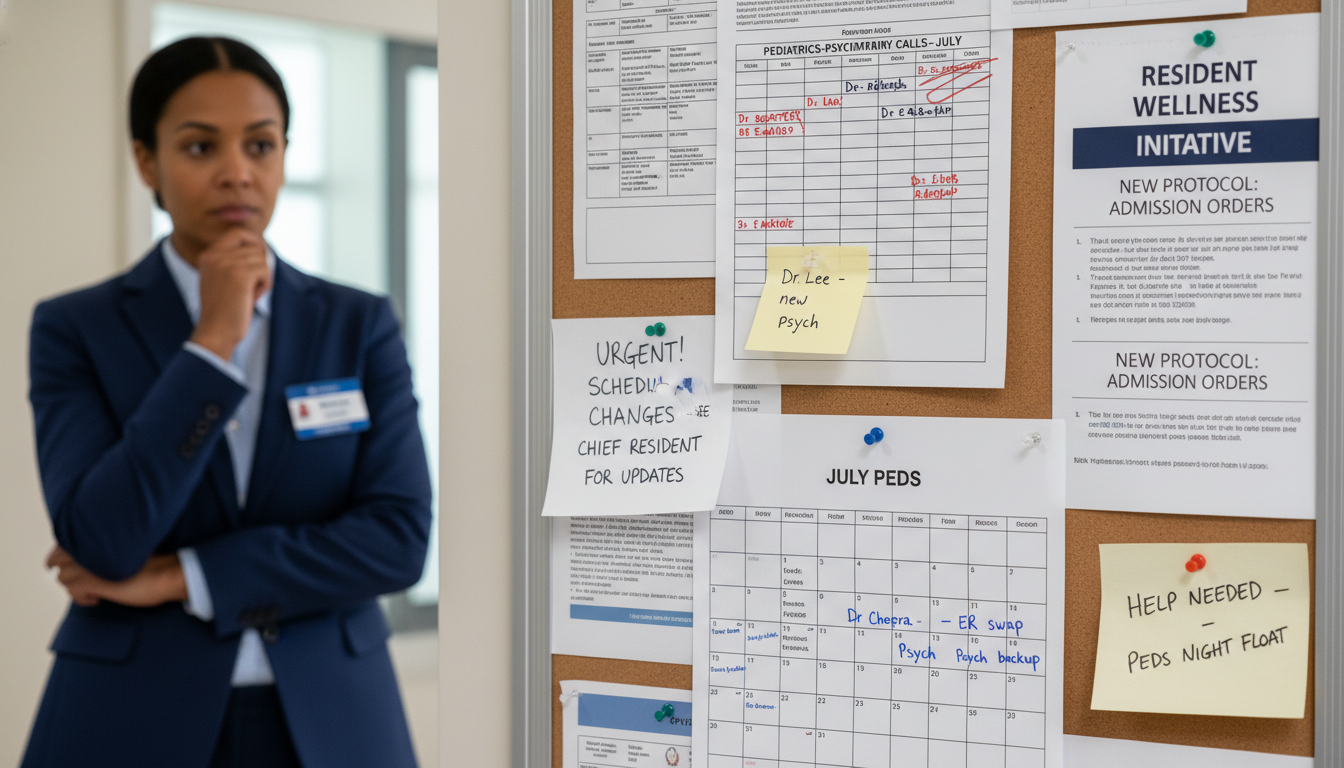
1. Chronic Schedule Instability and Coverage Gaps
Even if residents aren’t openly leaving mid-year, you may notice signs that the program has been scrambling:
- Frequent last‑minute call changes and emails about coverage
- Residents describing “we’re constantly short” or “we often cover extra shifts”
- Complaints of unsafe workloads or duty hour violations
These often follow earlier turnover—residents left, so remaining staff must cover more. Over time, this can drive further burnout and more departures.
Questions:
- “What does a typical week look like on peds inpatient? On psychiatry inpatient?”
- “How often do you end up working beyond your scheduled hours?”
- “Have there been any duty hour citation issues?”
Red flag:
- Laughing off chronic 80–90-hour weeks as “part of residency.”
- Residents saying, “We’re used to it; you just push through.”
2. Residents Leaving the Program Quietly (Not Just the Specialty)
Some residents may not transfer to another residency, but:
- Leave medicine altogether
- Fail to advance to the next PGY level
- “Take time off” with no clear plan to re-enter
Programs often frame this as resident “choice,” but high rates suggest:
- Poor support for struggling residents
- Toxic feedback culture
- Inadequate mental health resources—dangerous in psychiatry and peds psych environments
Ask:
- “In the last few years, have there been residents who did not complete the program? What support did they receive?”
You don’t need names—just patterns.
3. Fellowship and Job Outcomes Don’t Match the Marketing
Programs may highlight one or two standout graduates (e.g., “Our resident matched a top child psychiatry fellowship after a peds psych residency!”), but avoid showing full alumni data.
Look for:
- A website that lists only selected success stories, not full graduate lists.
- Ambiguous statements: “Our graduates have gone on to successful careers in diverse settings.”
For Caribbean IMGs, this is crucial—you need data to ensure that graduates like you (not just US MDs) successfully pursue fellowships or jobs.
Ask:
- “Could you share where the last 5–10 graduates went—both for child psychiatry fellowships and jobs?”
- “Have all Caribbean IMGs matched into fellowships or jobs they wanted?”
If they resist providing details or say, “We don’t track that,” you may be seeing downstream effects of earlier resident turnover and training gaps.
4. Culture Mismatch for Caribbean IMGs
Even if turnover numbers seem acceptable, the pattern of who leaves matters:
- Are most of the residents leaving international grads?
- Do Caribbean IMGs seem isolated or less integrated?
- Does the program leadership make comments suggesting bias: “Our US MDs usually become chiefs; our IMGs are often more service-oriented”?
If residents leaving the program are disproportionately Caribbean IMGs, it may reflect:
- Poor support for visa issues
- Implicit bias in evaluation and remediation
- Lack of understanding of Caribbean medical school backgrounds
In that setting, even a “stable” program can be highly risky for you.
How to Investigate Resident Turnover Without Burning Bridges
You need honest information, but you also need to remain professional. Here’s a step‑by‑step strategy tailored to Caribbean IMGs targeting peds psych or Triple Board programs.
Step 1: Pre-Interview Research
Before your interview:
Check the website carefully
- Look for year‑by‑year resident lists.
- Are there missing residents between PGY levels?
- Do they show only the current class, hiding alumni?
Search old versions with the Wayback Machine
- Compare last year’s resident list to this year’s.
- Note anyone who disappears mid-stream.
Use public forums cautiously
- Websites like Reddit, Student Doctor Network, or specialty forums occasionally hint at “program problems,” “residents leaving program,” or “toxic environment” comments.
- Treat anonymous reports as signals to investigate, not proof.
Network with alumni from your Caribbean med school
- SGU residency match and other school match offices often know informal reputations of programs.
- Ask specifically: “Have you heard of residents leaving this program?”
Step 2: Ask Targeted, Neutral Questions on Interview Day
When speaking with residents, focus on open, non-accusatory framing:
- “How well does the program support residents who are struggling or have personal challenges?”
- “Have there been recent changes in the resident complement or schedule structure?”
- “Do you feel the program leadership listens when problems are raised?”
When speaking with the PD or faculty:
- “How has your resident complement changed over the last 5 years?”
- “What prompted any recent program changes or schedule restructuring?”
- “How do you approach remediation and support if a resident is having difficulty in either peds or psych rotations?”
Observe:
- Do answers align between residents and leadership?
- Do people seem comfortable discussing difficult topics?
Step 3: One-on-One Resident Conversations
Try to speak privately with at least one resident (ideally an IMG or someone in peds psych / Triple Board):
You can say:
- “As a Caribbean IMG, I’m particularly interested in how IMGs have done here—have many graduated, or transferred elsewhere?”
- “If a resident wanted to transfer, how would the program handle that? Has it happened before?”
Look for:
- Willingness to discuss real challenges.
- Specific, concrete examples (without naming names).
- A balance of pros and cons—if everything is perfect, it’s probably not.
Step 4: Post-Interview Reflection and Data Check
After interviews:
- Revisit program websites and notes.
- Compare:
- Number of residents per class
- Number of faculty changes
- Residents’ tone vs. official program messaging
If anything feels “off,” trust that intuition and move the program lower on your rank list, especially if:
- Turnover is high or obscure.
- Caribbean IMGs appear disproportionately affected.
- Residents seem fearful or overly rehearsed.
When Is Turnover Not a Dealbreaker?
Not every instance of residents leaving the program means you should avoid it entirely. Consider these more benign scenarios.
1. Clearly Explained Family or Geographic Reasons
Example:
- A resident left because their partner matched in another city and they secured a transfer to be together.
- A resident took a leave for a serious illness or caregiving responsibilities.
If:
- Both leadership and residents share the same story (in general terms),
- There is no pattern of similar events,
- Remaining residents are positive about program response,
…this is unlikely to be a major red flag.
2. Honest Acknowledgment of Past Problems with Evidence of Change
Some programs will say:
- “We had a rough period 4–5 years ago with leadership turnover. Residents did leave. Since the new PD came, we’ve stabilized; here’s what changed…”
Look for:
- Concrete changes (new wellness initiatives, schedule restructuring, better supervision).
- Current residents who trained under the new system and genuinely feel supported.
- No recent pattern of residents leaving.
In such a case, the program might actually be on a positive trajectory and worth considering.
3. Single Resident Struggle with Clear Supportive Response
Occasionally, a resident may:
- Struggle with clinical performance
- Face professionalism concerns
- Be ultimately asked to leave or seek another path
This can happen even in healthy programs. The question is how the program responds:
- Is there a formal remediation plan?
- Are there mentorship and counseling resources?
- Does the program describe the process with empathy, not contempt?
If one resident left, but the program’s handling seems mature and supportive, that alone does not equal a major red flag.
Practical Takeaways for Caribbean IMGs Targeting Peds-Psych or Triple Board
To protect your training and long‑term career:
- Treat resident turnover as a core screening variable, not a side note—especially in small peds psych or Triple Board programs.
- Don’t be reassured by prestige alone—a strong name or hospital system can still harbor pockets of dysfunction.
- Pay special attention to how Caribbean IMGs fare in that specific program:
- On-time graduation?
- Fellowship/job placement?
- Retention and promotion into chief roles or leadership?
- Trust consistent stories, question inconsistencies.
- If residents and faculty paint very different pictures, assume there is more you aren’t being told.
- Use your Caribbean med school network (SGU, AUC, Ross, SABA, etc.) to gather informal intel on resident turnover and program culture.
Ultimately, resident turnover is one of the few relatively visible markers of deeper program problems. As a Caribbean IMG in a niche field like peds psych, you must read these warning signs carefully. Your choice of program will shape not only your training experience, but your mental health, visa stability, and career trajectory.
FAQ: Resident Turnover Red Flags for Caribbean IMGs in Peds-Psych
1. How much resident turnover is “too much” in a peds psych or Triple Board program?
In small combined programs (e.g., Triple Board with 2–3 residents per year), any pattern of repeated departures is concerning. One resident leaving over 5–7 years may be explainable. Multiple residents leaving, transferring, or failing to graduate in that time frame is a significant red flag. For larger categorical pediatric or psychiatry programs, losing more than one resident per year to transfers or non-completion—especially without clear context—is worrisome.
2. Are programs that take many Caribbean IMGs more likely to have resident turnover problems?
Not necessarily. Some programs that welcome Caribbean IMGs are excellent and supportive. However, if you see both:
- heavy recruitment of Caribbean IMGs, and
- a pattern of residents leaving the program, burnout, or poor outcomes,
you should be cautious. Investigate how Caribbean IMGs specifically have fared—graduation rates, extensions, and fellowship/job placement.
3. How can I safely ask about residents leaving the program during interviews?
Use neutral, non-accusatory language, such as:
- “Could you describe how the resident complement has changed over the last several years?”
- “What happens when a resident is struggling—are they usually able to graduate with support?”
- “Have residents ever needed to transfer for personal or academic reasons? How was that handled?”
These questions show maturity and concern for fit, rather than accusation, and most honest programs will respond openly.
4. Should I automatically avoid any program where a resident has left or transferred?
No. One departure, especially with a transparent, reasonable explanation and no pattern of repeated turnover, is not automatically disqualifying. Look at:
- Patterns over time
- Consistency of stories between residents and faculty
- How the program handled the situation
If multiple residents have left, explanations are vague, or Caribbean IMGs appear disproportionately affected, then it’s wise to rank that program lower or avoid it altogether.