Understanding Resident Turnover as a Caribbean IMG in Preliminary Medicine
For a Caribbean IMG pursuing a preliminary medicine year, resident turnover is not just an abstract concept—it can directly affect your training, your ability to secure a strong letter of recommendation, and even your chances of landing a categorical position or advanced specialty spot later.
When you hear about residents leaving a program, switching programs, or not renewing contracts, you should pause and ask: Is this normal churn, or is this a serious resident turnover red flag?
This article will walk you through:
- What “resident turnover” means in the context of a prelim IM year
- Which patterns are normal vs dangerous
- Specific warning signs of unstable or troubled programs
- How these issues uniquely affect Caribbean medical school residency applicants
- Practical questions to ask and strategies to protect yourself
1. What “Resident Turnover” Really Means in Preliminary Medicine
Before you can recognize warning signs, you need a clear definition.
1.1. Normal vs concerning turnover
Some movement is expected in any residency:
- Residents going on maternity/paternity leave
- Residents transferring to be closer to family
- Someone who realized they chose the wrong specialty
- Visa issues or unexpected life events
These isolated cases do not necessarily indicate program problems.
Concerning resident turnover is different. You should worry when you see:
- Multiple residents leaving the same program within 1–2 years
- Residents not renewing contracts or being “encouraged to resign”
- A pattern of not filling all positions in the Match or SOAP
- Frequent last-minute schedule changes because “someone just left”
For a preliminary medicine year, where your training is only 12 months, instability can disrupt:
- Your access to electives
- Your continuity of supervision
- Your ability to build strong relationships for letters
- Your personal wellbeing and mental health
1.2. Why turnover matters more for Caribbean IMGs
Caribbean IMGs face additional layers of risk:
- You may be on a visa, making transfers or early contract termination more complex and dangerous
- You often depend on your prelim IM year to secure U.S. clinical experience and letters for advanced positions (e.g., neurology, anesthesiology, radiology, PM&R)
- Some programs see prelims as “service residents” and underinvest in your teaching—this can be worse in dysfunctional programs
If you come from a Caribbean medical school like SGU, AUC, Ross, Saba, or others, your prelim IM year is a crucial bridge to long-term training. A program with high turnover can seriously undermine your trajectory, even if you’re hardworking and capable.

2. Concrete Resident Turnover Red Flags: What to Watch and Listen For
When evaluating programs—especially as a prelim IM candidate—you need to pay close attention to subtle clues. Here are key resident turnover warning signs to look for.
2.1. Frequent mention of “recent changes” without clear details
You might hear during interviews or open houses:
- “We’ve had a lot of change in the residency recently.”
- “The program is in transition.”
- “We’re rebuilding our program culture.”
These phrases are not automatically bad, but they should trigger follow-up questions like:
- What changed? Why? Over what time frame?
- How many residents have left or transferred in the last 2 years?
- What concrete steps have you taken to address the issues?
If answers are vague, defensive, or evasive, this is a strong resident turnover red flag.
2.2. Current residents are guarded—or clearly unhappy
During interview day or virtual resident meet-and-greets, watch for signs that residents are holding back:
- Only chief residents are allowed to talk; interns and prelims are absent or silent
- Residents give short, scripted answers and avoid discussing specifics
- When you ask, “Have many residents left the program recently?” there’s an awkward pause or a quick subject change
More explicit warning signs:
- Residents say, “We’ve had a lot of people leave” or “Several people didn’t finish here”
- Someone jokes, “If you survive intern year here, you can survive anywhere,” but the tone is grim rather than playful
- Residents describe chronic schedule chaos because they’re covering for lost co-residents
If multiple residents mention that people left mid-year, you should treat this as a major red flag, particularly if they frame it as:
- “They couldn’t handle the workload”
- “They were told they weren’t a good fit”
- “We’ve had some people who just disappeared from the schedule”
These phrases often camouflage deeper program problems.
2.3. Prelim residents are clearly treated as second-class
As a preliminary medicine year applicant, you must specifically probe how prelims are treated compared with categorical IM residents.
Warning signs:
- Prelims have fewer or no elective choices
- Prelims are consistently assigned to heavier rotations (“all the nights,” “all the ICU”)
- Prelims are often left off teaching conferences or leadership opportunities
- Prelims say they don’t get formal mentorship or career planning support
If prelim residents tell you that:
- “We just do the scut work”
- “We don’t really get teaching rounds”
- “We’re here mostly to keep the service running”
then high turnover is not surprising—and you should consider this a substantial risk. This is especially relevant to Caribbean medical school residency candidates, who may feel pressure to accept any prelim IM spot. Remember: not all prelim years are equal.
2.4. A pattern of residents not advancing to good positions
Even though it’s “just” a 1-year position, a strong prelim IM program should:
- Place graduates into competitive advanced specialties
- Help residents who don’t have advanced positions confirmed at Match find alternatives
- Provide strong letters and advocacy
Red flags:
- You can’t find information on where recent prelim graduates went
- When you ask, “Where have your recent prelims gone after this program?” you get unclear answers like “Various places” or “All over” without specifics
- Multiple recent prelims did not match into advanced positions or had to SOAP unexpectedly
Compare this to, say, an SGU residency match report that clearly lists where graduates went. If your prelim IM program can’t name destinations, there may be an issue with support, reputation, or program structure.
2.5. Frequent changes in program leadership
Instability at the leadership level is often closely tied to resident turnover:
- The program director (PD) has changed 2–3 times in the last 5 years
- Associate program directors (APDs) are new or still “acting”
- Chief residents rotate mid-year or seem to be filling administrative gaps
On interviews or on the website, look for:
- How long has the PD been in the role?
- Are faculty bios up to date, or does the site look abandoned?
Frequent leadership turnover can result from:
- ACGME citations or probation
- Internal politics
- Chronic resident dissatisfaction and complaints
For a Caribbean IMG, where mentorship and advocacy are critical, unstable leadership is a serious concern.
3. Structural Program Problems That Drive Residents to Leave
Many residents don’t leave because of one bad call night; they leave because of systemic program problems that never get fixed. Recognizing these structural issues can help you interpret turnover patterns more accurately.
3.1. Chronic understaffing and unsafe workloads
Signs of persistent understaffing:
- Interns or prelims regularly carry excessive patient loads (e.g., 18–24+ patients per resident on day shifts)
- Night float consistently feels dangerous or overwhelming
- Residents are frequently pulled from electives to cover wards or nights
- You hear phrases like, “We’re always short,” “We’re constantly cross-covering multiple teams,” or “We never have enough help”
If residents describe near-miss events, frequent RRTs/code blues on overwhelmed teams, or minimal attending presence, turnover is often high because:
- Residents burn out
- ACGME rules are bent or broken
- Residents don’t feel safe clinically or legally
For a prelim IM resident, especially from a Caribbean school, this environment can be particularly harmful: rather than building solid IM fundamentals, you’re just trying to survive.
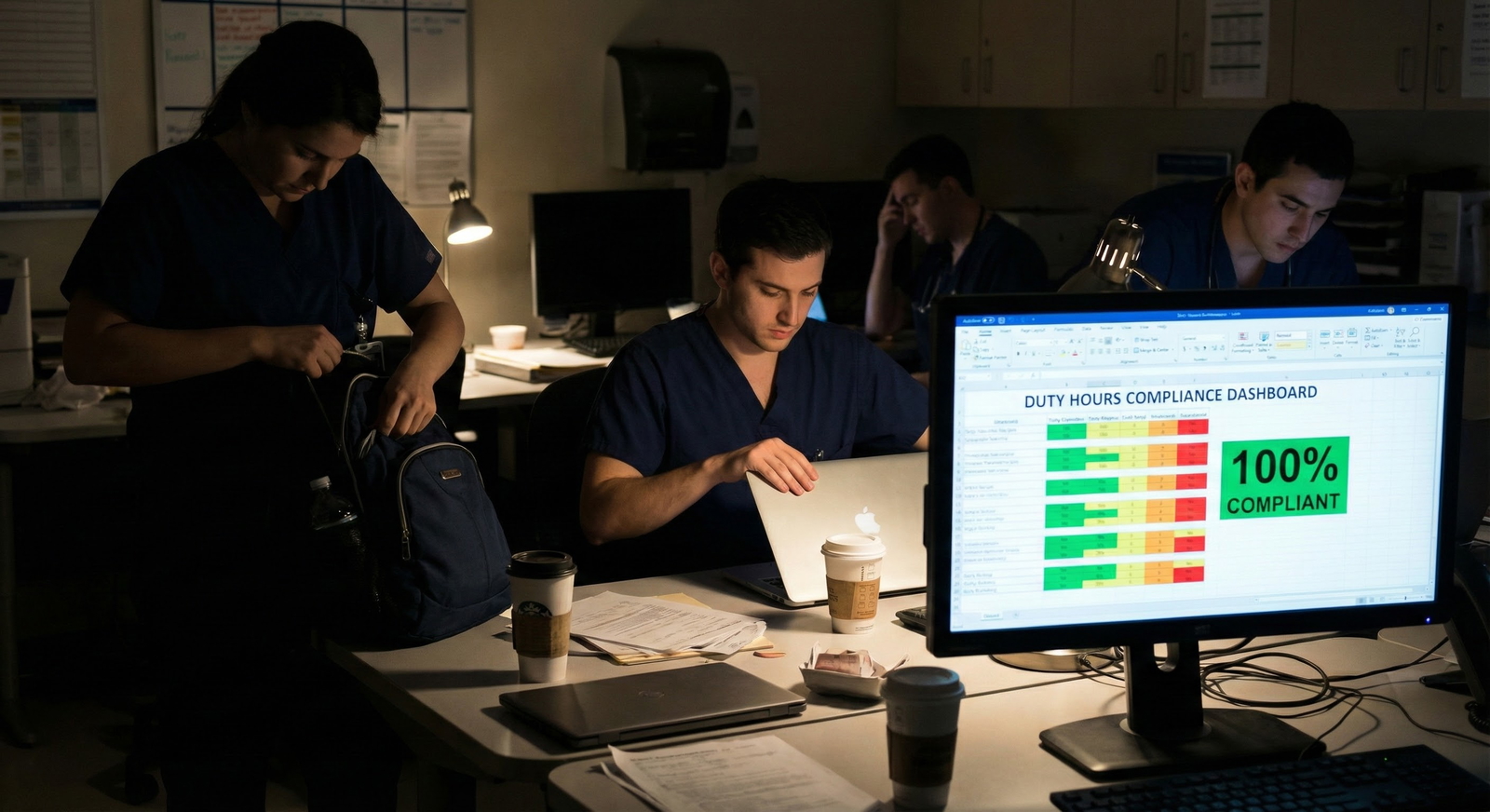
3.2. Repeated duty hour violations and retaliation for reporting
Ask specifically:
- “How often are duty hours violated, and how does the program respond?”
- “Are you encouraged to report duty hour concerns? What happens when you do?”
Red flags:
- Residents laugh and say, “We always ‘fix’ our duty hours before submitting them”
- Someone mentions, “We’re told to be careful about reporting too much”
- Residents say, “The program doesn’t really like it when we report violations”
Duty hour problems often correlate with residents leaving program positions early, or with ACGME citations. If multiple residents mention:
- Working 16–20 hour shifts regularly
- Coming in on post-call days for “mandatory” tasks
- Not getting a full day off weekly
then you’re likely looking at a high-risk environment.
3.3. Toxic culture and lack of support
Culture is more than “we’re a family.” For Caribbean IMGs, support around transition to U.S. healthcare, visa issues, and perceived bias is essential.
Toxic cultural signs:
- Attendings or senior residents frequently belittle or humiliate juniors
- Racist, xenophobic, or sexist comments are dismissed as “jokes”
- IMGs (especially Caribbean grads) report being blamed more harshly for mistakes
- Mistakes are treated as moral failings instead of learning opportunities
If multiple former or current residents leave because they feel:
- Unheard
- Unsafe
- Discriminated against
turnover is natural—and you should strongly reconsider ranking such a program.
3.4. Poor academic support and remediation processes
Not every struggling resident is a “problem resident.” Many need structured support. Warning signs include:
- High or repeated board exam failure rates among residents
- No formal remediation pathway for struggling interns
- Residents “disappearing” after failing Step 3 or in-service exams
- Former residents are described in vague, negative ways (“They just weren’t a good fit”)
If a program doesn’t have transparent, fair policies for remediation and graduation requirements, Caribbean IMGs may be at higher risk of being pushed out without proper support.

4. How to Investigate Resident Turnover Before You Rank a Program
As a Caribbean IMG in prelim medicine, you must become an active investigator, not a passive applicant. Here’s how to gather reliable information.
4.1. Use your interview day strategically
Ask targeted, non-confrontational questions. Example phrasing:
- “Can you tell me about any changes in the residency program over the past 2–3 years?”
- “How many residents have transferred out or left the program in the last 2 years?”
- “What kind of support is available if a resident is struggling academically or personally?”
- “How are prelim residents integrated into the program compared with your categorical residents?”
- “Have there been any ACGME citations or changes after site visits recently?”
Direct your questions to:
- Interns
- Current prelim residents
- Chief residents
Pay attention not only to the content of the answers, but also the tone, body language, and whether anyone seems afraid to speak.
4.2. Research online—beyond the program website
Use:
- FREIDA, NRMP data, and program websites for objective info (number of spots, prelim vs categorical ratios, affiliations).
- Alumni networks from your Caribbean medical school (e.g., SGU, Ross, AUC, Saba) to ask who has trained there. Many schools maintain lists similar to SGU residency match outcomes.
Search online for:
- “[Program name] residency turnover”
- “[Program name] internal medicine ACGME citation”
- “Residents leaving [program name]”
Also review:
- Glassdoor/Indeed reviews for the hospital (not perfectly accurate, but patterns are informative)
- Reddit or Student Doctor Network (SDN) threads—take with caution, but recurring patterns across years can be meaningful
4.3. Talk to alumni and near-peers
Tap into your Caribbean IMG network:
- Ask upperclassmen or recent grads: “Have you heard anything about resident turnover at [Program]?”
- If someone matched there for prelim IM, ask specifically:
- “How many people left during your year?”
- “How were prelims treated?”
- “Would you rank it again if you had the choice?”
These informal conversations can reveal hidden program problems that never make it into official presentations.
4.4. Check for match fill rate and SOAP patterns
Look for:
- Programs that frequently go partially unfilled in the Match, especially in IM
- Programs that rely heavily on the SOAP to fill many positions each year
This is more nuanced for preliminary medicine, as some prelim spots are harder to fill or viewed as service-heavy by design. Still, chronic unfilled categorical positions combined with heavy SOAP reliance should make you question why applicants avoid the program.
5. Balancing Risk and Opportunity as a Caribbean IMG Prelim Applicant
You may feel pressure to accept any Caribbean medical school residency opportunity, especially a prelim IM spot that gives you 1 year in the U.S. system. But you must balance that pressure against your long-term goals and wellbeing.
5.1. When a risky program might still be worth ranking
You might still consider a program with some concerns if:
- You have no other U.S. offers and this is your only chance to get U.S. training
- The program is transparent about past problems and can clearly demonstrate recent improvements (new leadership, better duty hours enforcement, stronger wellness initiatives)
- You have strong resilience, local support, and a realistic plan for using the year (e.g., strong Step scores, established contacts in your advanced specialty)
Even then, set realistic expectations and protect yourself:
- Clarify in writing your schedule expectations and rotation mix
- Ask specifically about Step 3 support, feedback, and letter-writing culture
- Identify mentors and allies early
5.2. When to seriously reconsider or rank a program low
You should strongly consider ranking a program low or not at all if you observe:
- Multiple residents openly describing chronic burnout and unsafe conditions
- A pattern of residents leaving program mid-year without clear, isolated causes
- Repeated duty hour violations plus pressure to falsify hours
- Obvious hostility toward IMGs or Caribbean grads
- No clear answers about where previous prelims went or why several left
A toxic prelim IM year can:
- Sabotage your performance and letters
- Lead to burnout or even depression
- Create gaps or negative narratives in your training history
As a Caribbean IMG, you’re already working uphill; you don’t need additional, avoidable damage from a dysfunctional program.
5.3. Protecting yourself if you’re already in a high-turnover program
If you’ve matched and later realize your program has serious turnover issues, focus on:
- Patient safety and your own mental health
- Use official channels: GME office, ombuds, wellness resources
- Document duty hour violations or unsafe conditions
- Building relationships with reasonable attendings
- Aim for strong letters and mentorship, even in a difficult environment
- Planning your next steps early
- For prelims, this might mean applying aggressively to advanced positions, networking, and seeking advice from alumni who successfully navigated from similar programs
- Understanding your rights
- Review your contract and institutional policies
- If you’re on a visa, get early input from a qualified immigration attorney before considering any transfer or early exit
6. Practical Checklist: Turnover Warning Signs for Caribbean IMG Prelim Applicants
Use this quick checklist when evaluating preliminary medicine programs:
Ask residents and faculty:
- How many residents have left or transferred in the past 2 years?
- Have any prelim residents not finished their year here? Why?
- How often are duty hours exceeded, and how is that handled?
- How are prelim residents supported in obtaining advanced positions?
- How are IMGs and Caribbean graduates supported, specifically?
Observe for these red flags:
- Residents seem fearful or vague when discussing program problems
- Multiple mentions of being “short-staffed” or “always covering someone who left”
- Prelims consistently doing the heaviest, least educational rotations
- No clear record of where prelims go after the year
- Recent or frequent leadership turnover at the PD/APD level
- Culture of blame, shaming, or unaddressed discrimination
Research externally:
- Patterns of partial unfilled positions and heavy SOAP use
- Negative online discussion repeated across multiple years
- Lack of transparency about program outcomes compared to, for example, detailed SGU residency match-style reports
If you find multiple red flags aligning, treat that program with caution on your rank list.
FAQ: Resident Turnover Warning Signs for Caribbean IMGs in Preliminary Medicine
1. Is some resident turnover normal, even in good prelim IM programs?
Yes. Even strong programs will occasionally have residents leave due to family issues, health problems, wrong specialty choice, or rare performance issues. What’s concerning is a pattern: several residents leaving within a short time frame, especially with vague explanations and no clear corrective actions from leadership.
2. As a Caribbean IMG, should I ever accept a prelim spot at a program with known turnover issues?
It depends on your overall situation. If it’s your only U.S. training opportunity, you might still decide to accept, but do so with your eyes open. Clarify expectations, identify supportive faculty early, and use the year strategically to secure strong letters and an advanced position. If you have safer alternatives, it’s usually better to avoid programs with multiple, consistent red flags.
3. How can I specifically assess how prelim residents are treated compared with categorical residents?
During interviews or virtual sessions, ask:
- “Do prelims attend the same educational conferences and didactics as categoricals?”
- “How many electives do prelims get, and do they have any choice in them?”
- “Do prelims get assigned disproportionately more nights or heavy services?”
- “Are prelims assigned a faculty mentor, and do they get help planning their next steps?”
If you hear that prelims are mainly used to “keep the service running” with minimal educational focus or support, that’s a serious concern.
4. What if a program admits they had problems but say they’re improving? How do I know if that’s true?
Improvement can be genuine, but you need specifics:
- Has a new PD been in place for at least 1–2 years?
- Have duty hour violations decreased, with actual evidence (resident testimony, ACGME feedback)?
- Are current residents—especially interns and prelims—able to describe concrete positive changes (better schedules, more teaching, more support)?
If the program can provide clear examples of changes and current residents confirm improvements, the risk may be acceptable—especially if you don’t have many other options. If explanations are vague and residents don’t seem to feel the benefits, consider it a continuing red flag.
By approaching each preliminary medicine program with a structured lens for identifying resident turnover warning signs, you can protect your training, your mental health, and your long-term career prospects as a Caribbean IMG. Your goal isn’t to find a perfect program—it’s to avoid the truly dangerous ones and choose a place where you can grow, learn, and move confidently toward your advanced specialty.