
Understanding Resident Turnover as a Red Flag in ENT for DO Graduates
When you are a DO graduate entering the otolaryngology match, you are already navigating a competitive landscape: fewer positions, variable program cultures toward DO applicants, and an intense clinical workload. One of the most important—but often under-discussed—signals of program health is resident turnover: residents leaving the program early, transferring out, not advancing, or disappearing from the roster.
In ENT residency, where teams are small and call is intense, each resident departure is a major event. One resident leaving can double the workload for others, change call schedules overnight, and signal deeper program problems. For DO graduates who may be especially sensitive to hidden biases or unstable training environments, recognizing resident turnover red flags is critical before you rank programs.
This article will walk you through:
- What “resident turnover” really means in otolaryngology
- How to spot subtle and overt warning signs during interviews and away rotations
- What’s different for DO graduates in the osteopathic residency match and integrated ACGME system
- Practical questions to ask and how to interpret answers
- When turnover might be acceptable—and when it should move a program down (or off) your rank list
What “Resident Turnover” Actually Means in ENT Programs
Many applicants think “resident turnover” only means people quitting or being fired. In reality, there are several patterns, and each carries a different implication for your training and well-being.
Types of Resident Turnover You Might Encounter
Attrition (Residents Leaving Before Graduation)
- Voluntary: Resident switches to another specialty, transfers to a different program, leaves medicine.
- Involuntary: Dismissal due to performance, professionalism, or major conflict.
In a small ENT program with 2–4 residents per class, losing even one resident can be dramatic.
Frequent Transfers Out
- Residents “finding” a position at another ENT program after PGY-1 or PGY-2.
- Repeated pattern of one or more residents transferring every few years.
Residents Not Advancing on Time
- Residents repeating a year or not being promoted.
- “Research year” that is actually a remediation year in disguise.
Unfilled or Rapidly Backfilled Positions
- Mid-year hires into upper-level spots.
- Chief class with fewer residents than junior classes.
Silent Disappearances
- Resident photos removed from website with no explanation.
- “We’ve had some changes in staffing” with no clear details.
Each of these suggests a different style of leadership and culture. As a DO graduate, your margin for error in choosing a supportive, stable ENT residency is smaller—especially if you are entering a program without a strong history of training DO residents. Resident turnover becomes a key indicator of whether you’ll get the support and education you need.
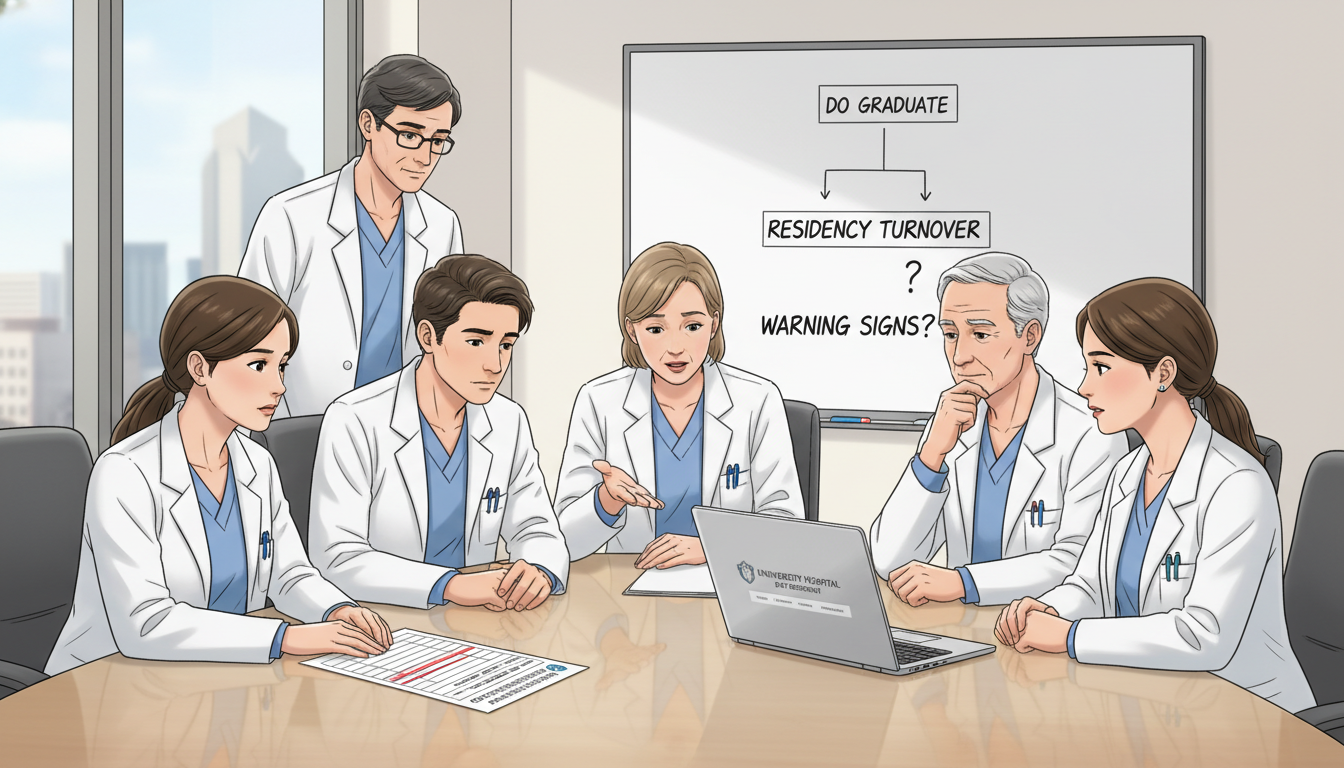
Why Resident Turnover Matters So Much in Otolaryngology (ENT)
Otolaryngology is not a large-volume specialty like internal medicine. Most ENT programs have:
- 2–4 residents per year
- 10–15 total residents across all years
- High clinical volume with subspecialty services (head and neck, otology, rhinology, peds ENT, laryngology)
Losing even one resident from a small program changes everything.
Direct Impact on Your Training
When residents leave a program:
Call burden spikes
A 1-in-5 call schedule can become 1-in-4 or 1-in-3 overnight. Less sleep, more fatigue, more burnout risk.Operative experience gets distorted
- Early on, you might get more cases because there are fewer residents.
- But if turnover is due to poor teaching, chaotic scheduling, or toxic culture, your early case volume may not translate into meaningful, supervised learning.
Continuity suffers
- Longitudinal relationships with attendings and patients are harder to build.
- Faculty may become more guarded or stressed if turnover has been contentious.
Morale declines
Remaining residents may feel trapped, overworked, or resentful. That environment can quickly become toxic for new interns.
What Persistent Turnover Suggests About Program Culture
A single resident leaving for legitimate personal reasons isn’t necessarily a red flag. Patterns of turnover are.
Frequent or unexplained departures often indicate:
Poor leadership or disorganized administration
Last-minute schedule changes, unclear expectations, no one advocating for residents.Mismatched expectations and reality
Applicants sold a “family” atmosphere or strong operative experience that doesn’t match daily life.Lack of remediation or mentorship
Struggling residents aren’t supported; they’re pushed out.Toxic or punitive culture
Residents afraid to admit fatigue, ask questions, or acknowledge mistakes.Board performance concerns
Programs under pressure due to poor in-training or board exam pass rates may respond with strict, unsupportive policies.
For DO graduates, these issues can be magnified if there is implicit bias against DO training backgrounds. If a program is already unstable, DO residents may be more vulnerable to blame or inadequate support when problems arise.
Key Resident Turnover Warning Signs During the ENT Interview Process
You will never see a program label itself as “unstable,” “toxic,” or “high-turnover.” You’ll need to read between the lines using the website, interview day, social events, and any away rotation experience.
1. Resident Roster and Website Discrepancies
Before your interview:
Study the resident roster by year
- Does each class have the same number of residents?
- Do recent classes look notably smaller or inconsistent?
- Are any PGY years missing entirely?
Check the archive (if available)
Some programs show “graduated residents” year by year. Compare past class sizes to current classes.
Red flags include:
- A class that clearly started with 3–4 residents but only lists 1–2 now.
- Multiple “former residents” whose outcomes are vague: “pursued other opportunities.”
- Residents who appear for 1 year in older photos/news but are not listed in any graduation list.
Action: Keep a simple spreadsheet noting class sizes. When you see unexpected gaps, plan specific questions about them.
2. Residents Avoiding Direct Answers About Turnover
During resident-only sessions, social dinners, or small breakout rooms, pay attention not only to what is said—but what isn’t.
Warning signs:
You ask, “Have any residents left the program or transferred in the past few years?” and get:
- “Every program has some attrition.”
- “We’ve had a few changes, but it’s not really a big deal.”
- Quick topic changes or awkward silence.
Residents look at each other before answering or seem anxious when discussing staffing.
A chief resident handles all “difficult” questions while juniors remain quiet.
This evasiveness is especially concerning in ENT, where residents typically know everything about each other’s careers.
3. High Reliance on Non-Categorical or Off-Cycle Positions
Some ENT programs patch gaps by using:
- Non-categorical interns
- Off-cycle PGY-2 or PGY-3 transfers
- Frequent mid-year reassignments
On interview day, look for:
- “We just added a new PGY-2 from another program.”
- Multiple residents who started in one specialty (e.g., general surgery) and then switched midstream due to an opening.
One off-cycle transfer is not inherently bad. But a pattern suggests chronic instability or recurrent residents leaving the program.
4. Program Leadership Explanations That Don’t Add Up
Ask the program director or chair:
- “Has your program had much resident turnover in the last 5–10 years?”
- “Can you describe the most recent time a resident left the program before graduation and what you did in response?”
- For DO graduates: “Have you had DO residents before? How have they performed and progressed through the program?”
Concerning responses:
- Vague explanations: “There were some personal issues” with no further details.
- Blaming the resident: “They just couldn’t keep up,” “They weren’t committed,” without any reflection on program support or remediation.
- Minimizing patterns: “That was an isolated case” when resident rosters show multiple departures.
You’re not asking for confidential information, but you are entitled to understand whether residents who struggle are supported or simply exited.
5. High Number of Residents Expressing Burnout or Fear
In small side conversations, listen for:
- “It’s survivable.”
- “You just get through it.”
- “We don’t want to scare you off, but the call is… intense.”
- Jokes about “we’re just trying not to quit.”
Humor can be healthy, but repeated, heavy jokes about burnout, quitting, or fear of attendings often reflect real distress.
Red flag combinations:
- History of residents leaving the program
- Residents today describing chronic exhaustion, lack of autonomy, or hostile faculty
- Few examples of meaningful support (mentorship, wellness resources, schedule adjustments)

Unique Considerations for DO Graduates in the Otolaryngology Match
As a DO graduate, you navigate additional layers of complexity when evaluating resident turnover risk in ENT.
1. Historical Acceptance of DO Graduates
Some ENT programs have a strong, positive history with DO residents. Others may:
- Be interviewing DOs for the first time
- Have had a single negative experience with a DO resident and overgeneralized
- Still carry outdated biases about osteopathic training
Use these questions:
- “Have you had DO residents in the past 5–10 years?”
- “Are any of your recent graduates DOs?”
- “What has been your experience with DO residents’ performance on the in-training exam and boards?”
Red flag patterns:
- They have had DO residents but can’t (or won’t) discuss their outcomes.
- They mention a DO resident who left or struggled but frame it in a way that suggests it was “because” they were DO, not because of individual circumstances.
- There are no DO residents currently in the program, and no clear plan or enthusiasm to integrate them.
In a program that already struggles with resident retention, being the only DO resident can place you in a vulnerable position if problems arise.
2. Transparency About Support and Remediation
Ask specifically:
- “How do you support residents who struggle clinically or on exams?”
- “Can you describe a situation where a resident was having difficulty and how the program helped them succeed?”
- “Are there any tailored resources for residents coming from different medical school curricula (like DO schools)?”
If the only example of “support” is:
- Extra call, extra rotations, or punitive measures,
that is not support—it’s punishment.
You want to hear about:
- Formal remediation plans
- Structured mentorship
- Protected time for board study
- Regular check-ins with the program director
A program that never remediates, but only loses residents, is a major resident turnover red flag.
3. The Osteopathic Residency Match and Integrated ACGME Environment
Since the single accreditation system, DO graduates compete in the same otolaryngology match as MD applicants. Some programs:
- Have fully integrated and embraced DO applicants
- Publicly highlight successful DO graduates in their program
- Provide clear guidance on COMLEX vs. USMLE requirements
Others may:
- List DO-friendly policies, but have no DOs in the current or recent classes
- Ask DOs to take USMLE “to be competitive,” but still rarely rank them highly
- Have unspoken hierarchies between MD and DO residents
In a program with any history of residents leaving, ask:
- “Were any of the residents who left DO graduates?”
- “What did the program learn from that experience?”
You’re not judging the departed resident; you’re assessing whether the program takes shared responsibility or simply blames individuals—especially if they were DOs.
How to Investigate and Interpret Resident Turnover Before You Rank
You cannot directly see internal HR files, but you can triangulate information from multiple sources to assess risk.
1. Pre-Interview Research
Program website
- Note class sizes by PGY year.
- Look for “Former Residents” pages.
- Check for DO graduates (names, medical schools, current positions).
PubMed and institutional news
- Are residents co-authors on faculty papers?
- Are there announcements about “welcome our new PGY-3” type hires (suggesting mid-stream entries)?
Word-of-mouth
- ENT is a small world. Ask trusted mentors or upper-level ENT residents:
- “Have you heard anything about residents leaving Program X?”
- “Is Program Y stable in terms of resident staffing?”
- ENT is a small world. Ask trusted mentors or upper-level ENT residents:
2. Key Questions to Ask on Interview Day
For Program Leadership:
- “In the last 5–7 years, have any residents left the program before graduation? What were the circumstances, in general terms?”
- “How does the program handle it when a resident is not meeting expectations?”
- “If the program has a resident leave, how are call and workload adjusted for the remaining residents?”
For Current Residents (ideally without faculty present):
- “Have there been any residents who left or transferred in recent years? How did that affect your workload and morale?”
- “If someone is struggling, do you feel the program genuinely helps them or just expects them to figure it out?”
- “Do you feel comfortable speaking up about fatigue, wellness concerns, or conflicts with faculty?”
As a DO Graduate, specifically:
- “Have DO residents trained here before? How did the program support their transition if their medical school curriculum was different?”
- “Do you feel there’s any difference in how DO residents are treated versus MD residents?”
Document answers right after the interview—your impressions will blur once you’ve visited multiple programs.
3. Interpreting Mixed Signals
You might encounter:
One resident left 5 years ago for family reasons; everyone openly acknowledges it
- Likely acceptable—especially if it is truly one uncommon event with a clear, personal explanation.
Multiple residents left in the last 3–5 years; explanations vary, and stories conflict
- High risk—this pattern suggests deeper program instability or culture problems.
No one has left, but residents seem anxious, overworked, or fearful of leadership
- Risk for future turnover and burnout; consider this carefully before ranking.
Match your comfort level with the severity of the red flags. As a DO applicant in a competitive specialty, you may feel pressure to “accept what you can get,” but you do not want to spend 5 years in a program where residents repeatedly try to escape.
When Turnover Is a Manageable Yellow Flag vs. a Hard Red Flag
Not all turnover is equal. You’re looking for patterns, transparency, and program response.
Turnover That May Be Acceptable (Yellow Flags)
- One resident left in 10 years for a spouse’s job, family illness, or a clear lifestyle/family reason.
- The program director candidly describes the situation and what the program did to adjust.
- Remaining residents feel supported, not punished, when someone leaves.
- Resident workload is acknowledgeably intense but balanced, with clear efforts toward wellness.
In this situation, you weigh turnover against:
- Case volume
- Faculty mentorship
- Board performance
- DO-friendliness and program culture
Turnover That Should Make You Strongly Reconsider (Red Flags)
- Multiple residents leaving or transferring in the past 3–5 years.
- Residents who left are described vaguely or negatively, with leadership taking no ownership.
- Residents today express fear, burnout, or distrust of leadership.
- You detect underlying bias in how DO graduates’ performance or struggles are discussed.
- Call is described as “brutal” or “unmanageable,” and turnover is brushed off as individual weakness.
In a specialty as small and close-knit as ENT, completing residency in a toxic program can have long-term consequences for your career satisfaction, mental health, and reputation. It is far better to match at a moderately prestigious but stable, supportive program than at a flashy name with a trail of residents leaving the program.
FAQs: Resident Turnover Red Flags for DO Graduates in ENT
1. Is it always bad if a program has had at least one resident leave?
No. Life happens—family illness, relocation needs, or genuine change of specialty interest can lead to a single, understandable departure. The concern is recurrent or unexplained turnover, especially when the program is vague or defensive about it. Look for patterns and how openly leadership and residents talk about the situation.
2. As a DO graduate, should I avoid programs that have never had a DO resident before?
Not automatically. A program that is genuinely eager to recruit DO graduates, has DO faculty or strong osteopathic awareness, and demonstrates robust support structures can be an excellent fit, even if you are their first DO resident. However, if that program also has a history of residents leaving, is vague about support, or seems ambivalent toward DO applicants, the combination becomes a significant red flag.
3. How can I ask about residents leaving a program without sounding confrontational?
Use neutral, process-focused language. For example:
- “I’m trying to understand how programs respond to challenges. Have there been any residents who left the program in the past few years, and how did the program handle workload and support for the remaining residents?”
- “Can you share a time when a resident struggled and how the program helped them succeed—or, if they left, what the program learned from that?”
These questions show maturity and insight, not hostility.
4. What should I do if I really like a program but see clear signs of high turnover?
Step back and systematically evaluate:
- How many residents have left, and over what timeframe?
- Do current residents seem supported or exhausted and fearful?
- Is leadership transparent and self-reflective, or defensive and vague?
- As a DO graduate, will you be entering as the only DO in a historically unstable environment?
If concerns remain significant, consider ranking the program lower or not at all. Matching into a residency with recurrent residents leaving the program can cost far more—personally and professionally—than taking another solid, if less “prestigious,” option with a stable, supportive culture.
By systematically analyzing resident turnover patterns, asking targeted, respectful questions, and paying attention to how programs treat DO graduates, you can greatly reduce the risk of landing in a troubled otolaryngology residency. Your goal is not just to match, but to thrive—and a stable, supportive program is the foundation of that success.