Why Resident Turnover Matters So Much for US Citizen IMGs in Addiction Medicine
For a US citizen IMG or American studying abroad, matching into addiction medicine—often through internal medicine, family medicine, or psychiatry first—is already a high‑stakes journey. Once you match, you’re trusting that program with your training, your board eligibility, and your long‑term career in substance use and addiction care.
That’s why resident turnover is such a critical warning sign.
High or unexplained resident turnover is a red flag that something may be wrong with the program: poor teaching, toxic culture, unsafe patient loads, or chronic instability. In addiction medicine specifically—where patients are complex, vulnerable, and often stigmatized—a dysfunctional program can quickly lead to burnout, compassion fatigue, and even jeopardize your future fellowship applications, including for an addiction medicine fellowship.
This article breaks down:
- What “resident turnover” actually means
- How to recognize resident turnover red flags
- Specific signs of program problems in addiction‑focused training
- How these issues affect US citizen IMGs and Americans studying abroad
- Strategies to gather real information and protect yourself before ranking a program
Understanding Resident Turnover: What It Is and Why It Happens
Resident turnover sounds simple—residents leave the program—but it can mean several different scenarios, each with different implications.
Types of Resident Turnover
Voluntary Resignations or Transfers
- Residents choose to leave the program.
- May transfer to another specialty or another program in the same specialty.
- Sometimes framed as “career change” but may reflect dissatisfaction or serious conflict.
Non‑Renewal of Contracts or Dismissals
- Program chooses not to renew a resident’s contract or terminates earlier.
- Can be related to:
- Academic performance
- Professionalism issues
- Serious conduct concerns
- Occasional non‑renewal happens even in strong programs, but frequent cases are concerning.
Leave of Absence / Extended Time Off
- Medical, family, parental leave, or personal crisis.
- Usually not a red flag in isolation—but repeated patterns, especially if residents don’t return, may hint at deeper issues (e.g., burnout, mental health strain due to work conditions).
Unfilled Vacancies / Chronic Understaffing
- Positions remain unfilled after the Match or due to mid‑year departures.
- Over time, this leads to more call and workload for remaining residents.
Why Turnover Is Especially Important for US Citizen IMGs
As a US citizen IMG or American studying abroad, you:
- May have fewer local support systems, especially if training far from home.
- Often feel more vulnerable to program culture and leadership, particularly if you sense bias against IMGs.
- Need program stability to be competitive for:
- Future addiction medicine fellowships
- Subspecialty training in related areas (e.g., pain medicine, psychiatry subspecialties)
- Academic or leadership roles in substance abuse training and policy
If residents are leaving a program frequently, you need to understand who is leaving, why they’re leaving, and how the program responds—especially as someone in a group that can be more exposed to marginalization or lack of advocacy.
Resident Turnover Red Flags: Warning Signs Before You Rank a Program
Some resident turnover is inevitable. The real concern is when turnover reflects systemic program problems. Below are concrete warning signs you can detect during your research, interviews, and second looks.
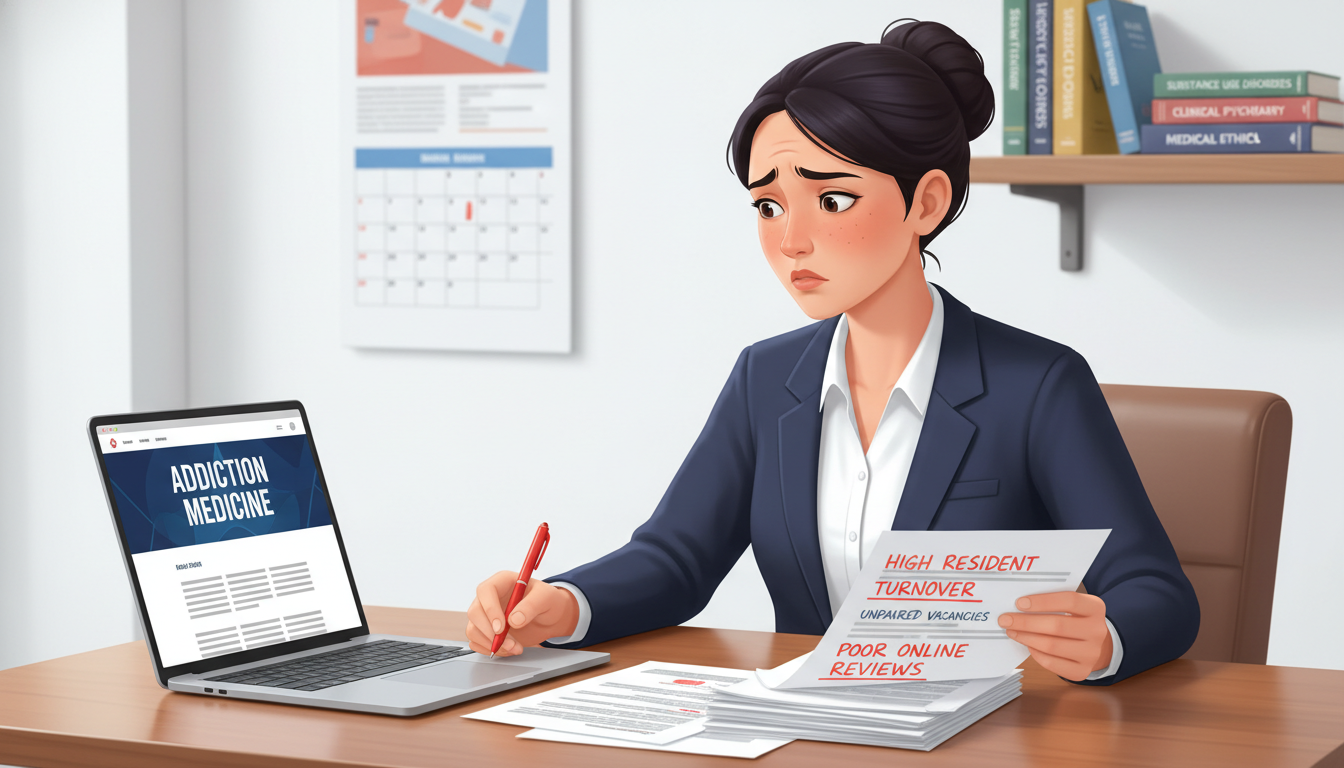
1. Vague or Evasive Answers About Past Residents
Ask directly:
“Have any residents left the program early in the last 3–5 years?”
Red flags include:
- Faculty or program leadership dodge the question:
- “We don’t really track that.”
- “Every program has some turnover; it’s not a big deal.”
- Rapid changes of subject.
- Inconsistent answers between:
- Program Director (PD)
- Chief residents
- Current residents
- Overly rehearsed or defensive responses:
- “All those residents left for personal reasons; it had nothing to do with the program,” with no further explanation.
Programs that are stable and honest will:
- Acknowledge if residents have left
- Explain whether it was for another specialty, family relocation, or specific issues
- Describe what they learned and what changed afterward
2. History of Multiple Residents Leaving the Program
Pay attention to patterns like:
- “Two people left from the same class.”
- “Every year we’ve had at least one resident transfer out.”
- “We’ve had several mid‑year spots open.”
Especially concerning:
- Residents leaving the program during PGY‑1 or PGY‑2, which often suggests:
- Early recognition of a toxic culture
- Unmanageable workload
- Poor support systems
- Repeated stories of residents leaving for mental health reasons without evidence of improved wellness initiatives
Ask residents:
- “Have many residents left before graduating in the past few years?”
- “Were they able to find other spots?”
- “What did the program do to address what led them to leave?”
3. Unfilled Positions and Constant Recruitment for Off‑Cycle Residents
Some programs advertise off‑cycle PGY‑2 or PGY‑3 positions repeatedly. This can indicate:
- Chronic resident turnover
- Inability to retain trainees
- A reputation that causes applicants to avoid them in the Match
When you see:
- Frequent postings on forums, program websites, or NRMP/ERAS updates for replacement positions
- Residents talking about being “short-staffed almost all year”
- Chiefs doing significant amounts of scut work because positions are vacant
…you should consider it a major resident turnover red flag.
4. Residents Look Exhausted, Guarded, or Fearful
During interview day or a virtual social:
- Are residents relaxed and candid?
- Or do they seem:
- Hesitant to answer questions
- Glancing at faculty before speaking
- Giving short, generic statements like:
- “Everything is fine.”
- “You’ll learn a lot.”
- Unusually tired, disengaged, or burnt out
These soft signals often reflect:
- Fear of retaliation for honest criticism
- Chronic overwork
- Low morale after repeated turnover
Pay attention if the most positive feedback comes from hand‑picked “star” residents, while the rest seem disengaged.
5. Overly High Emphasis on “Resilience” and “Thick Skin”
Programs should support wellness and resilience, particularly in addiction medicine where emotional demands are significant. However, be cautious when:
- You hear phrases like:
- “We need tough residents who don’t complain.”
- “We’re not for everyone, but if you’re strong you’ll survive.”
- “You have to have really thick skin to make it here.”
- Wellness initiatives are only symbolic (occasional pizza nights) without changes in:
- Call load
- Supervision
- Support for emotionally heavy addiction and substance use cases
This culture can lead to:
- Shame around burnout or mental health struggles
- Residents leaving because they feel unsafe or unsupported
- A normalization of chronic turnover as “just how things are”
6. Longstanding Rumors or Bad Reputation Online
Forums and word‑of‑mouth are imperfect, but repeated patterns matter. Warning signs include:
- Program’s name repeatedly associated with:
- “toxic”
- “avoid”
- “residents leaving program”
- “unsafe workload”
- Multiple anonymous reports of:
- Hostile leadership
- Micromanagement
- Harassment or discrimination
- Program defended mostly by:
- Very recent residents only
- Individuals with a clear stake (e.g., PD or recruiting faculty under pseudonyms)
As a US citizen IMG, be especially attentive to comments about:
- IMG‑hostile culture
- Lack of mentorship or support for IMGs seeking competitive subspecialties like addiction medicine fellowship or other advanced training in substance abuse
Online rumors alone should not decide your rank list, but consistent negative themes over several years are a serious concern.
Specific Red Flags in Addiction Medicine and Substance Abuse Training Environments
Addiction medicine adds unique layers of complexity and potential stress. Resident turnover in this context can reflect deep structural problems in how the program manages complex, high‑risk care.

1. Poor Supervision in High‑Risk Addiction Settings
In addiction medicine–related rotations (detox units, inpatient consults, methadone clinics, ED consults):
Red flags include:
- Residents reporting they are:
- Alone overnight managing severe withdrawal or suicidal patients
- Forced to make complex medication decisions with delayed attending back‑up
- No clear protocols for:
- Opioid use disorder induction (e.g., buprenorphine, methadone)
- Management of benzodiazepine or alcohol withdrawal
- Handling co‑occurring psychiatric emergencies
Such conditions drive turnover because residents feel:
- Professionally unsafe
- Ethically distressed
- Vulnerable to legal or board complaints
2. High Emotional Load Without Real Support
Addiction medicine exposes you to:
- Overdose deaths
- Relapse after progress
- Family conflict
- Stigma from colleagues and systems
If a program does not provide:
- Regular debriefing after traumatic events
- Access to mental health care that’s confidential and easy to use
- Faculty genuinely invested in resident wellbeing
…then compounded emotional strain becomes a major reason residents leave.
Ask:
- “How does the program support residents after difficult patient events like overdoses or suicides?”
- “Are there structured debriefings or mentoring related to addiction care specifically?”
3. Disorganized or Tokenistic Addiction Training
You may be attracted to a program because they advertise:
- “Strong substance abuse training”
- “Excellent preparation for addiction medicine fellowship”
However, turnover may be higher when the reality is:
- Addiction rotations are disorganized or chaotic
- Teaching is sporadic and unsupervised
- “Addiction focus” exists only in brochures, not in daily practice
Warning signs:
- Residents say:
- “We have an ‘addiction track’ but it’s mostly self‑directed.”
- “Our addiction elective is hit or miss, depending on which attending is on.”
- Addiction teaching limited to:
- A few lectures per year
- Little hands‑on experience with MAT (medications for addiction treatment)
Disillusionment with broken promises about addiction training can push residents to transfer, especially those aiming for addiction medicine fellowship.
4. Disrespect or Stigma Toward Addiction Patients
Toxic attitudes toward people with substance use disorders are red flags for anyone—but especially for residents passionate about this field.
Watch for:
- Faculty or staff casually referring to:
- “Frequent flyers”
- “Drug seekers”
- “Noncompliant addicts”
- Residents expressing fear of speaking up about stigma
- Lack of policies to address discriminatory behavior toward patients
Such environments fuel moral injury and burnout, which can translate into higher turnover among trainees who entered medicine to provide compassionate addiction care.
Special Considerations for US Citizen IMGs and Americans Studying Abroad
As a US citizen IMG, you may face unique vulnerabilities regarding resident turnover and program culture.
1. Are IMGs Disproportionately Leaving?
When you hear about residents leaving program, ask subtle follow‑up questions:
- “Were those residents mostly US graduates or IMGs?”
- “Did the program help them land on their feet?”
- “Were there concerns about fair treatment?”
Patterns to worry about:
- Most of the residents who left were IMGs.
- Stories of IMGs:
- Getting less favorable schedules
- Being targeted more for remediation
- Feeling unsupported in remediation plans
This may indicate underlying bias, even if the program claims to be “IMG friendly.”
2. Visa vs. US Citizen IMG Dynamics
Even as a US citizen IMG, you might be grouped mentally with all IMGs by some faculty. Ask:
- “What proportion of your residents are IMGs?”
- “How do IMGs do in your program in terms of:
- Promotion?
- Chief positions?
- Fellowship placements?”
If IMG residents routinely struggle to secure addiction medicine fellowship or other competitive training, it might reflect:
- Weak advocacy from faculty
- Poor networking support
- Subtle bias in how letters and recommendations are written
All of this can be compounded in a program with high turnover, where continuity of mentorship is limited.
3. Lack of Structured Mentorship for Addiction‑Focused Careers
US citizen IMGs often rely heavily on institution‑based mentors to:
- Build scholarly projects in addiction medicine
- Access quality substance abuse training
- Navigate fellowship applications
Red flags here:
- Residents say they “have to find mentorship on their own.”
- Faculty turnover is high, especially in addiction medicine–interested attendings.
- Little formal connection to:
- Local addiction treatment networks
- Public health agencies
- Recovery community organizations
In such a program, even if you finish residency, your addiction medicine career may stall compared with peers from more stable, supportive programs.
How to Investigate Resident Turnover Before Ranking a Program
You can’t rely only on the official interview day. Use a combination of strategies to get a realistic picture of resident stability and program culture.
1. Ask Direct, Neutral Questions to Residents
During interview socials or follow‑up emails, try:
- “Have many residents left early in the last few years?”
- “If someone struggles, how does the program respond?”
- “Do you feel comfortable giving honest feedback to leadership?”
- “If you had to apply again, would you choose this program?”
Look for:
- Consistency in responses
- Willingness to acknowledge problems and meaningful improvements
- Differences between how interns talk about the program vs. seniors
- Seniors may have seen more turnover and know the full story.
2. Observe Body Language and Tone
Even in virtual settings, watch:
- Facial expressions when you bring up:
- Wellness
- Turnover
- Program changes
- Whether residents look to each other nervously before answering
- If they lower their voice or change topics quickly
These subtle cues can tell you more than their words.
3. Use Alumni and Informal Networks
If possible:
- Identify recent alumni (last 3–5 years).
- Reach out via:
- Program alumni lists
- Social media (Twitter/X, specialty groups)
- Ask:
- “How many of your co‑residents left before graduating?”
- “Were there any big conflicts or changes while you were there?”
- “Would you recommend this program to someone invested in addiction medicine?”
Alumni will often be more candid than current residents still dependent on the program.
4. Check Objective and Semi‑Objective Data
Look at:
- ACGME citations or warnings (if publicly available or disclosed)
- Changes in:
- Program Director
- Chair of Department
- Major affiliations (lost hospital sites, closed addiction units)
- Recruitment patterns:
- Did the program suddenly start filling lots of off‑cycle spots?
- Did the program’s reputation drop sharply in a few years?
Frequent or recent leadership turnover plus resident turnover suggests deeper instability.
5. Ask About How the Program Handles Conflict and Complaints
Important questions:
- “If a resident feels mistreated by an attending, what are the formal and informal steps?”
- “Has the program ever changed a rotation or schedule because of resident feedback?”
- “What’s an example of resident feedback that led to a real change?”
Programs that have learned from turnover will:
- Be able to describe how they improved things
- Not act offended that you asked
- Value transparency
Balancing Red Flags with Your Personal Goals in Addiction Medicine
Not every program with some turnover is unsafe. You’re looking for patterns and responses, not perfection.
When Turnover Might Not Be a Deal‑Breaker
It may be acceptable if:
- One or two residents left for clearly explained personal or career‑change reasons.
- The program acknowledges past problems and can describe concrete improvements (e.g., adjusted call structure, added addiction medicine faculty, revamped wellness support).
- Current residents, including IMGs, express:
- Feeling heard
- Being supported with remediation if needed
- Having real access to addiction‑focused experiences
In such a setting, some turnover can reflect honest growing pains, and the program might actually be on an upward trajectory.
When You Should Strongly Consider Ranking the Program Low or Not at All
Consider avoiding or ranking low when:
- Multiple residents left in similar circumstances (burnout, conflict with leadership, mental health crises).
- Residents consistently report:
- Fear of speaking up
- Unresponsive or punitive leadership
- Addiction training is:
- Poorly supervised
- Emotionally overwhelming
- Disorganized, despite heavy marketing as a strength
- IMGs seem to have worse outcomes or be more likely to leave.
As a US citizen IMG planning a career in addiction medicine, you need:
- Stability
- Honest mentorship
- Respectful culture around substance use and mental health
- A track record of graduates matching into addiction medicine fellowship or working in robust, fulfilling addiction care roles
Programs with chronic turnover often fail in these areas, even if they look strong on paper.
Key Takeaways for US Citizen IMGs Targeting Addiction Medicine
- Resident turnover is one of the strongest real‑world indicators of program health.
- Not all turnover is bad, but patterns of residents leaving program, especially IMGs, are major red flags.
- In addiction medicine–adjacent training (IM, FM, psych), turnover often reflects:
- Poor supervision of high‑risk cases
- Emotional overload without real support
- Toxic attitudes toward addiction patients
- As a US citizen IMG or American studying abroad, you must:
- Ask direct questions about turnover.
- Seek honest input from residents and alumni.
- Pay close attention to IMG experiences in that institution.
- A program that handles past problems openly and supports resident wellbeing will serve you far better than one that hides turnover and dismisses concerns.
Choosing the right environment now sets the foundation for your future addiction medicine fellowship, your skill in managing substance use disorders, and your long‑term resilience in a demanding but deeply meaningful field.
FAQ: Resident Turnover and Program Red Flags for US Citizen IMGs
1. Is some resident turnover normal, or should I avoid any program where someone has left?
Some turnover is normal—people may switch specialties, move for family reasons, or have personal crises. The concern is frequent, unexplained, or patterned turnover, especially when:
- Multiple residents left in a short time frame
- Residents give guarded or evasive responses about why
- IMGs appear disproportionately affected
Focus less on whether one person left and more on how often it happens, who it happens to, and how the program responds.
2. How can I ask about residents leaving without sounding confrontational?
Use neutral, open‑ended questions such as:
- “Have there been any residents who didn’t complete the program in the last few years?”
- “How does the program support residents who are struggling or thinking about leaving?”
- “What kinds of changes have you made in response to resident feedback?”
These invite honest answers without accusing anyone or implying you assume problems exist.
3. As a US citizen IMG, should I be especially worried if IMGs have left the program in the past?
Not automatically—but it deserves closer attention. Ask:
- Were those IMGs helped to find new positions?
- Do current IMGs feel supported and treated equitably?
- Do IMGs match into competitive fellowships, including addiction medicine fellowship?
If IMGs who left describe discrimination, lack of mentorship, or unfair treatment—and current IMGs are reluctant to talk openly—you should treat this as a serious red flag.
4. How do I weigh excellent addiction medicine exposure against possible turnover issues?
You should not sacrifice safety, support, and basic respect for better exposure. Ideal programs give you:
- Strong addiction and substance abuse training
- Reasonable workload and real supervision
- Supportive culture around mental health and wellness
- A track record of stable resident classes
If a program offers impressive addiction exposure but has repeated resident turnover red flags and poor culture, the risk to your wellbeing and career may outweigh the benefits. In most cases, a solid, supportive program with growing addiction medicine opportunities is better than a highly “addiction‑heavy” but unstable environment.