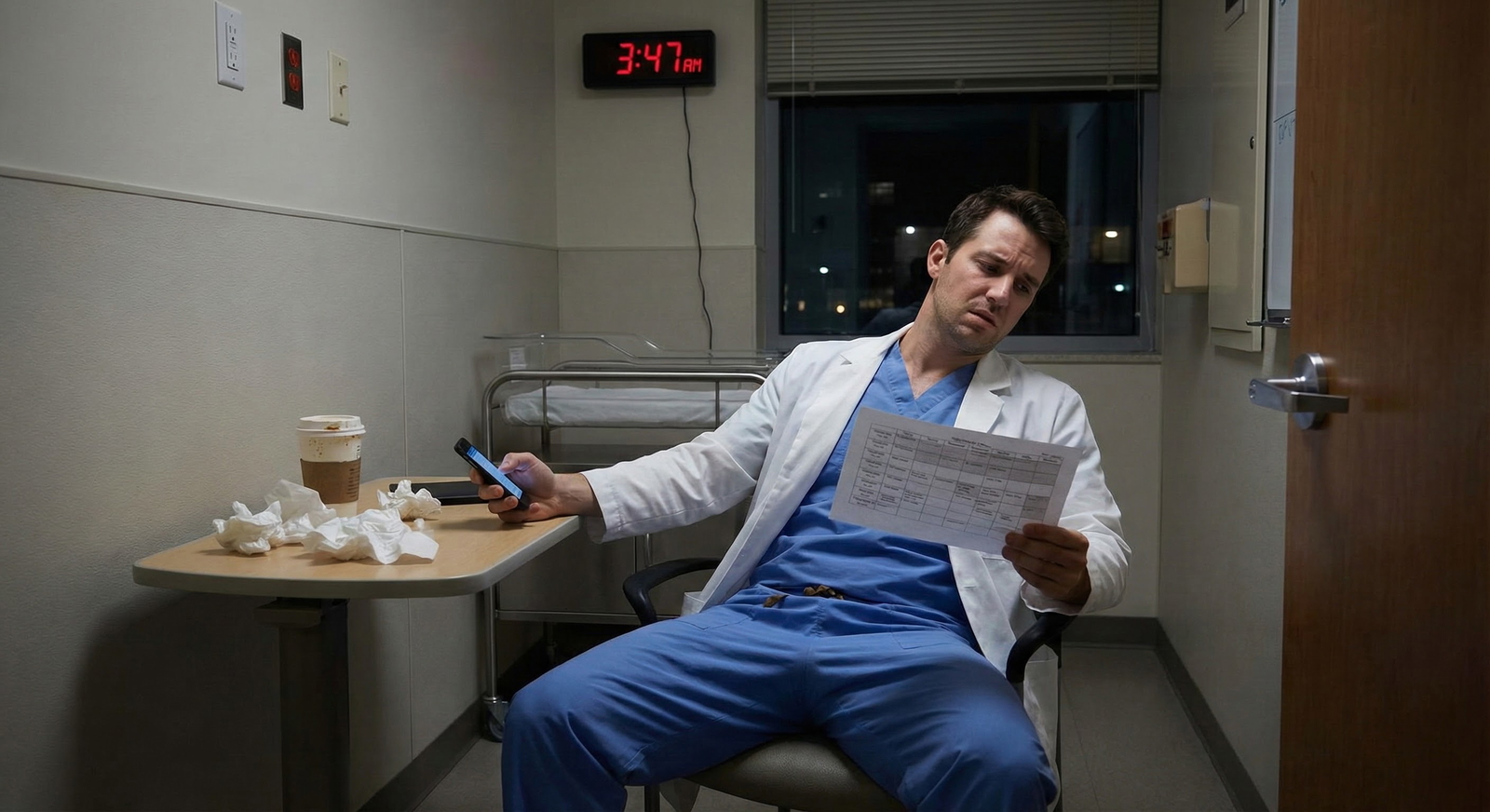
Residency in a combined Medicine-Psychiatry (Med-Psych) program offers unique, deeply rewarding training—but the dual demands of two specialties also make program culture and stability especially important. One of the strongest indicators of a program’s health is resident turnover: how often residents leave, transfer, or fail to complete the program.
Not all turnover is a problem—life circumstances change—but consistent patterns of residents leaving a program or “quietly disappearing” from rosters can point to serious issues. This guide will help you recognize resident turnover warning signs in Medicine-Psychiatry residency so you can make informed decisions before ranking programs.
Understanding Resident Turnover in Med-Psych Programs
Resident turnover refers to residents leaving a program before completion—through transfer, non-renewal of contracts, withdrawal, or dismissal. In the context of a medicine psychiatry combined residency, turnover can be more complex than in categorical programs because residents are navigating:
- Two departmental cultures (Internal Medicine and Psychiatry)
- Two sets of faculty, leadership, and administrative structures
- Rotations across multiple sites with different expectations
Normal vs Concerning Turnover
It’s essential to distinguish between normal and concerning turnover:
Normal patterns might include:
- A rare transfer for family reasons (partner relocation, serious illness, etc.)
- An individual resident changing specialties for personal passion or fit
- A single dismissal over many years when serious professionalism or competency issues are clearly described
Concerning patterns often include:
- Multiple residents leaving from the same class or back-to-back classes
- Vague or evasive explanations when applicants ask why residents left
- A reputation across other programs or institutions that “people don’t stay there”
- Faculty or residents hinting at unspecified “problems” without clarity
For Med-Psych residency, high turnover is especially worrisome because it may signal:
- Poor coordination between medicine and psychiatry departments
- Scheduling chaos that makes it hard to meet board requirements
- Inadequate support for the unique stressors inherent to dual training
Your goal as an applicant is to identify whether any resident turnover you observe is an isolated event or a systemic red flag.
Key Resident Turnover Red Flags in Med-Psych Programs
Residents are usually cautious when speaking negatively about their own program, especially in front of interviewers. Still, consistent patterns emerge if you know what to look for. Below are the major resident turnover red flags and how they show up specifically in medicine-psychiatry combined training.
1. Missing or Unaccounted Residents
One of the clearest indicators of program problems is when there are residents who used to be in the program but are no longer present—and no one can explain why in a straightforward way.
Warning signs:
- The program’s website lists residents from all years, but during interview day, certain people are never introduced or mentioned.
- You notice discrepancies between the resident list online and the people who actually show up to your interview day or social.
- When you ask, “I saw X listed as a PGY-3 on your website—are they around today?” and the answer is vague:
- “They’re…not here anymore,” followed by an awkward silence.
- “They had to leave for personal reasons,” with no clear framing or context.
- Faculty give a different story than residents about why someone left.
In a combined program, you might also see:
- A resident who has “switched” to categorical internal medicine or psychiatry in the same institution—but no one can explain whether that transition was voluntary, supported, or contentious.
- Residents technically still on the roster but doing extended leave or research time that seems unusual or poorly defined.
Healthy programs can describe departures honestly and professionally:
- “This resident transferred closer to family because of a new caregiving responsibility.”
- “This person decided they were more passionate about pure internal medicine, and we helped them transition to our categorical track.”
If instead you encounter defensive, inconsistent, or secretive responses, treat it as a resident turnover red flag.

2. “We’ve Had a Lot of Transitions Lately”
Programs with residents leaving program frequently will often frame the problem as “a period of transition.”
Phrases to listen for carefully:
- “We’ve been going through some changes lately.”
- “Our previous PD left, and then we had some turnover, but things are better now.”
- “A few residents decided to pursue other opportunities.”
- “We’ve restructured the program a couple of times.”
Alone, none of these is necessarily bad. Many programs do undergo leadership changes or curriculum redesigns. But multiple vague references to turnover and transition—especially without concrete details—are concerning.
Ask follow-up questions:
- “Can you tell me more about the transitions you mentioned?”
- “Roughly how many residents have transferred or left over the last 5–7 years?”
- “What did the program learn from that experience, and what specific changes did you implement?”
- “How has communication between Medicine and Psychiatry leadership changed during this time?”
Look for:
- Specific, transparent answers vs. generalized reassurance.
- Evidence of stable leadership and clear policies after the transition.
- Signs that Med-Psych identity is valued, not marginalized between two large departments.
If no one can give satisfactory, specific answers—or if the explanations feel rehearsed and avoidant—this is a strong indicator of program instability.
3. Overworked and Isolated Residents
High workload and poor support fuel resident turnover. In a Med-Psych residency, the risk is amplified because you can be pulled from both sides:
- Medicine leadership expecting you to function like a full categorical internist.
- Psychiatry leadership expecting full participation in psych rotations, call, and didactics.
- Little recognition that you are carrying two identities, two sets of exam requirements, and complex future career plans.
Signs of a breakdown that may drive residents away:
Chronic fatigue and burnout visible on interview day
- Residents appear exhausted, rushed, or disorganized.
- They joke about never seeing each other or only meeting between long calls.
- When asked about wellness, they respond with dark humor or deflection.
Lack of protected time
- Med-Psych didactics squeezed in between full departmental schedules.
- Residents struggling to attend both medicine and psychiatry conferences.
- Conflicts frequently resolved in favor of service needs instead of education.
No true Med-Psych community
- Residents describe themselves as “caught between” medicine and psychiatry, with no clear home.
- Minimal faculty mentorship from integrated Med-Psych trained attendings.
- No Med-Psych specific clinics, case conferences, or longitudinal experiences.
High workloads are common in residency, but a chronic pattern of overwork with zero structural support to address it is a recipe for residents burning out and leaving.
When you notice that multiple classes look drained and ambivalent, not just the interns, consider this a serious resident turnover warning sign.
4. Tension Between Medicine and Psychiatry Departments
Medicine-psychiatry combined residencies depend on strong collaboration between two often very different departmental cultures. Persistent conflict between departments can show up as:
- Constant scheduling conflicts and last-minute changes.
- Residents being used to fill service gaps on medicine wards or psychiatry units.
- Conflicting expectations about call schedules, clinic duties, and vacation.
These systemic issues create a training environment where residents feel:
- Torn between two bosses
- Chronically guilty for disappointing one team or the other
- Unsupported when trying to fulfill dual requirements (for ABIM and ABPN boards)
Over time, this stress can push residents to:
- Transfer into a categorical track
- Leave the program or institution altogether
- Consider leaving medicine-psychiatry combined training entirely
How you might detect this in interviews:
- Residents mention frequent “logistics issues” between the two departments.
- Someone jokes, “We’re everyone’s backup plan” or “We’re ping-ponged between services.”
- Faculty from one department attend the recruitment day, but not the other—especially when Med-Psych is “owned” more visibly by one side.
- When you ask, “How do the Medicine and Psychiatry departments collaborate around scheduling and curriculum?” you get vague or defensive answers.
Stable, well-run Med-Psych programs can describe:
- Clear leadership structure (e.g., a unified Med-Psych Program Director and associate PDs from each department)
- Regular, scheduled meetings to coordinate rotations and didactics
- Explicit policies on how conflicts between departments are resolved
If instead you hear about chronic turf battles or unclear expectations, it’s not surprising that residents might be leaving the program.

5. Defensive Attitudes and Lack of Transparency
Programs with resident turnover red flags often respond to direct questions with defensiveness or minimization.
Watch for:
- “Oh, you must have read that online—things are totally different now,” without specific examples.
- “Every program has people leave,” without clarifying numbers or context.
- “We’ve fixed all of that,” but residents and leadership give different versions of events.
- Downplaying the importance of Med-Psych identity: “At the end of the day, you’re just doing good medicine and good psychiatry.”
Healthy programs:
- Acknowledge past challenges openly.
- Provide specific details on what changed, when, and how.
- Welcome probing questions about culture, support, and workload.
- Encourage you to speak with residents without faculty listening in.
If instead you notice a pattern of:
- Redirected answers
- Evasive generalizations
- Residents seeming anxious or guarded when you ask about past departures
…that lack of transparency itself is a serious red flag—even before you know the exact details of past resident turnover.
How to Investigate Resident Turnover During Your Application Process
Recognizing these patterns is important, but you also need concrete strategies to gather information before you rank programs. Here’s a step-by-step approach tailored to medicine psychiatry combined applicants.
1. Pre-Interview Research
Before interview day, do a structured review of the program’s public information:
a. Website and social media
- Compare resident rosters year to year (using cached pages or Internet Archive if needed).
- Look for gaps in class sizes—e.g., a year with fewer residents than usual without explanation.
- Check for updates: websites that haven’t been maintained may hide recent resident losses.
b. Board pass rates and accreditation status
- For Med-Psych, look at both:
- Internal Medicine board pass rates
- Psychiatry board pass rates
- Search ACGME or institutional sites for:
- Citations related to duty hours
- Concerns about resident supervision or education
- Problems with combined program structure
c. Online reputation (with caution)
Anonymous forums can be biased or outdated, but if you see repeated references to:
- “Residents leaving program”
- “Resident turnover red flag at [Program Name]”
- “Program problems with Med-Psych identity”
…treat this as a prompt to ask targeted questions, not as final judgment.
2. Strategic Questions for Interview Day
On interview day, your goal is to gather specific, observable facts rather than emotional impressions alone. Consider asking:
To residents (without faculty present):
- “Have any residents left the program or transferred in the last 5–7 years? How was that handled?”
- “Do you feel like you’re supported by both Medicine and Psychiatry leadership?”
- “Are Med-Psych residents ever asked to do extra service coverage because of staffing issues?”
- “If someone was struggling—burnout, personal issues, or academic challenges—how would the program respond?”
To leadership:
- “What does resident retention look like over the last decade?”
- “What feedback from residents has led to major changes in the program?”
- “Can you describe a time when something went wrong and how the program addressed it?”
- “What are you most proud of about your Med-Psych program—and what are you still working to improve?”
Listen for:
- Clear, consistent stories matching what residents and faculty describe.
- Willingness to discuss hard topics calmly and specifically.
- Evidence of genuine quality improvement rather than public relations spin.
3. Follow-Up After Interviews
If specific program problems seem likely but not fully explained, you can:
Email a resident you connected with and ask:
“I appreciated your transparency during interview day. I’m very interested in your program and wanted to follow up about resident retention. Are you comfortable sharing how often residents have left or transferred in recent years?”Ask your home Med-Psych leadership (if available):
Medicine-psychiatry is a small community; program directors often know each other and may give high-level insight into:- Which programs are stable and well-regarded
- Which have had notable issues with residents leaving program
Reach out to recent graduates via LinkedIn or institutional websites:
“I’m applying to Med-Psych residencies and noticed you trained at [Program]. Would you be open to a quick email exchange or brief call about your experience?”
No single data point should make your decision, but multiple aligned sources suggesting ongoing resident turnover red flags should carry significant weight.
Balancing Red Flags with Your Personal Priorities
Not every program with some past turnover is unsafe, and not every “perfect on paper” program will be the right fit for you. In Med-Psych, especially, you may prioritize:
- Strong integrated care training
- Robust outpatient and inpatient exposure
- Faculty mentorship in your desired niche (CL, addiction, public psychiatry, etc.)
When you encounter resident turnover warning signs, ask:
Is the turnover clustered or ongoing?
- One or two isolated events with clear explanation may be acceptable.
- A pattern of multiple departures over several years is more concerning.
Has the program taken visible steps to improve?
- Structural changes in leadership with clear communication?
- Better scheduling, wellness initiatives, or Med-Psych-specific support?
Do current residents seem genuinely supported?
- Look beyond words to body language, tone, and cohesion between classes.
- Do residents socialize across year levels? Do they speak proudly of the program?
Will this environment help you grow—and keep you safe?
- You are not just choosing a training ground; you’re choosing the setting in which you will experience some of the most intense years of your professional life.
A program can have outstanding clinical opportunities but still be a poor choice if resident turnover signals chronic systemic issues that haven’t been addressed.
Practical Summary: Quick Checklist for Med-Psych Applicants
Use this condensed checklist while you research and interview:
Concerning Resident Turnover Signs
- Unaccounted or “disappeared” residents across multiple classes.
- Evasive answers when asking why residents left.
- Repeated references to “transition” or “restructuring” without specifics.
- Multiple residents leaving program over a short time span.
- Visible exhaustion and burnout across several PGY levels.
- Tension or confusion between medicine and psychiatry expectations.
- Residents saying they feel “between” departments, with no clear home.
- Defensive program responses to questions about retention or wellness.
Reassuring Signs
- Transparent discussion of past challenges with clear, concrete improvements.
- Stable leadership in both Medicine, Psychiatry, and Med-Psych program direction.
- Residents who know and support each other across classes.
- Clear Med-Psych identity: clinics, didactics, and mentors explicitly aligned with combined training.
- Board pass rates that are solid in both specialties.
- A culture of open feedback and continuous quality improvement.
When you notice multiple resident turnover red flags without strong counterbalancing evidence of improvement, consider ranking that program lower—even if its name or location is attractive.
FAQs: Resident Turnover and Med-Psych Residency
1. Is any resident leaving a program automatically a bad sign?
No. Even the best programs occasionally have a resident leave for personal, geographic, or fit-related reasons. What becomes concerning is a pattern:
- Several residents leaving or transferring over a few years.
- Vague or conflicting explanations about those departures.
- Current residents expressing dissatisfaction or burnout.
A single, well-explained departure in a decade is not inherently worrisome. Multiple “quiet exits” with no clarity often are.
2. How can I distinguish between a reputation issue and current reality?
Use triangulation:
- Ask current residents and leadership directly about any historical concerns you’ve heard.
- Look for evidence of change (new leadership, curriculum redesign, improved rotation structure).
- Talk to recent graduates (within 3–5 years) who experienced both “before” and “after.”
If everyone acknowledges past issues and can describe specific, successful improvements—and current residents seem genuinely happy and supported—the reputation may lag behind reality. If responses are defensive or non-specific, the original concerns may still be valid.
3. What if the program is my dream location but shows clear turnover red flags?
Weigh risk vs. reward honestly:
- Will the clinical opportunities and personal location benefits outweigh the stress of potential program instability?
- Could program problems affect your board eligibility, fellowship prospects, or mental health?
- Do you have other programs—with fewer red flags—where you’d still receive excellent training?
Many applicants ultimately choose slightly less “ideal” locations in exchange for stable, supportive programs. Your long-term career and well-being usually benefit more from a healthy training environment than from a perfect city.
4. Are Medicine-Psychiatry programs more prone to resident turnover than categorical programs?
Not necessarily—but they can be if:
- There is poor integration between departments.
- Med-Psych residents are routinely overburdened or under-supported.
- Leadership does not fully understand or value the combined identity.
Well-run Med-Psych programs often have excellent retention and strong resident satisfaction because they attract highly motivated, mission-driven trainees. The key is determining whether your target program has that culture—or whether resident turnover warning signs suggest chronic systemic issues that may compromise your training.
By approaching resident turnover thoughtfully—especially in the context of medicine psychiatry combined training—you can better identify which programs will truly support your development as a compassionate, well-rounded physician-psychiatrist.