
Residency is stressful everywhere—but unusually high resident turnover is a warning sign you must not ignore, especially as a non-US citizen IMG entering a prelim surgery residency. Unlike categorical residents, you often have only one year to prove yourself, secure strong letters, and protect your visa status. A program with frequent residents leaving the program can put all of that at risk.
This guide explains the key resident turnover warning signs, how to spot them before you rank a program, and what they might mean about program problems—with specific focus on preliminary surgery year positions and the unique risks for a foreign national medical graduate.
Understanding Resident Turnover in Preliminary Surgery
Resident turnover means more than the occasional resident switching specialties. It usually refers to:
- Residents resigning mid-year
- Residents transferring out to other programs
- Residents being non-renewed or terminated
- Positions going unfilled or repeatedly filled by off-cycle or backup residents
In a prelim surgery residency, some movement is normal. Many prelims:
- Transition after PGY-1 into:
- Categorical general surgery
- Surgical subspecialties (e.g., urology, neurosurgery, orthopedics)
- Anesthesiology, radiology, or other advanced specialties
- Do one preliminary surgery year for additional training before attempting another match
So you must distinguish expected prelim “churn” from red-flag turnover. The key differences:
Normal prelim movement:
- Residents leave after completing the full year
- Departures are planned (to anesthesia, radiology, other surgical positions)
- Program proudly discusses where prelims go (fellowships, categorical slots)
Concerning turnover:
- Residents disappear from the website mid-year
- Staff or residents comment that “people keep quitting”
- Multiple residents in the same PGY class leave or are dismissed
- Program avoids questions about past residents’ outcomes
For a non-US citizen IMG, high-risk turnover can mean:
- Lost visa sponsorship if you’re dismissed
- No time to find another position
- Poor or missing letters of recommendation
- A negative narrative you have to explain in future applications
Understanding the pattern and reasons behind resident turnover is essential before you commit.
Why Non-US Citizen IMGs Must Pay Extra Attention to Turnover
Every resident should care about turnover, but a non-US citizen IMG in a prelim surgery residency faces additional vulnerabilities.
1. Visa Dependence
If you are on a J-1 or H-1B:
- Your visa is directly tied to your training position
- If the program asks you to leave or does not renew your contract, your legal status can be jeopardized
- Finding another sponsoring program mid-year is extremely difficult
In programs with a history of residents leaving the program, you must clarify:
- Is turnover mainly among IMGs or visa holders?
- Has the program ever withdrawn sponsorship mid-year?
- Do they have a track record of helping struggling residents, or just terminating them?
2. Limited Time to Build Your Career
A preliminary surgery year is often your “audition year”:
- You need strong letters from surgeons
- You must prove you can handle surgical workload and US healthcare
- You are building your reputation for future categorical positions or match cycles
A toxic or unstable program with high turnover:
- Leaves you exhausted, unsupported, and sometimes labeled as “problematic,” even if the system is broken
- May offer poor teaching, so you finish the year with weak operative logs and minimal academic output
- Can trap you: you spend all your energy surviving, not advancing your career
3. Power Imbalance and Vulnerability
As a foreign national medical graduate:
- You may be less familiar with US labor protections, due process, or grievance processes
- You may hesitate to complain, fearing it could affect your visa, contract renewal, or references
- Language, cultural differences, and isolation can make it harder to recognize subtle program problems
In programs with high resident turnover, IMGs may:
- Be used as “workhorses”
- Receive fewer opportunities for OR cases, teaching, or research
- Get blamed for systemic failures such as understaffing or poor scheduling
Because of these factors, what might be “survivable” for a US graduate can be career-threatening for a non-US citizen IMG.
Resident Turnover Red Flags: What to Look For
Below are specific resident turnover red flags you should systematically assess when researching a prelim surgery residency.
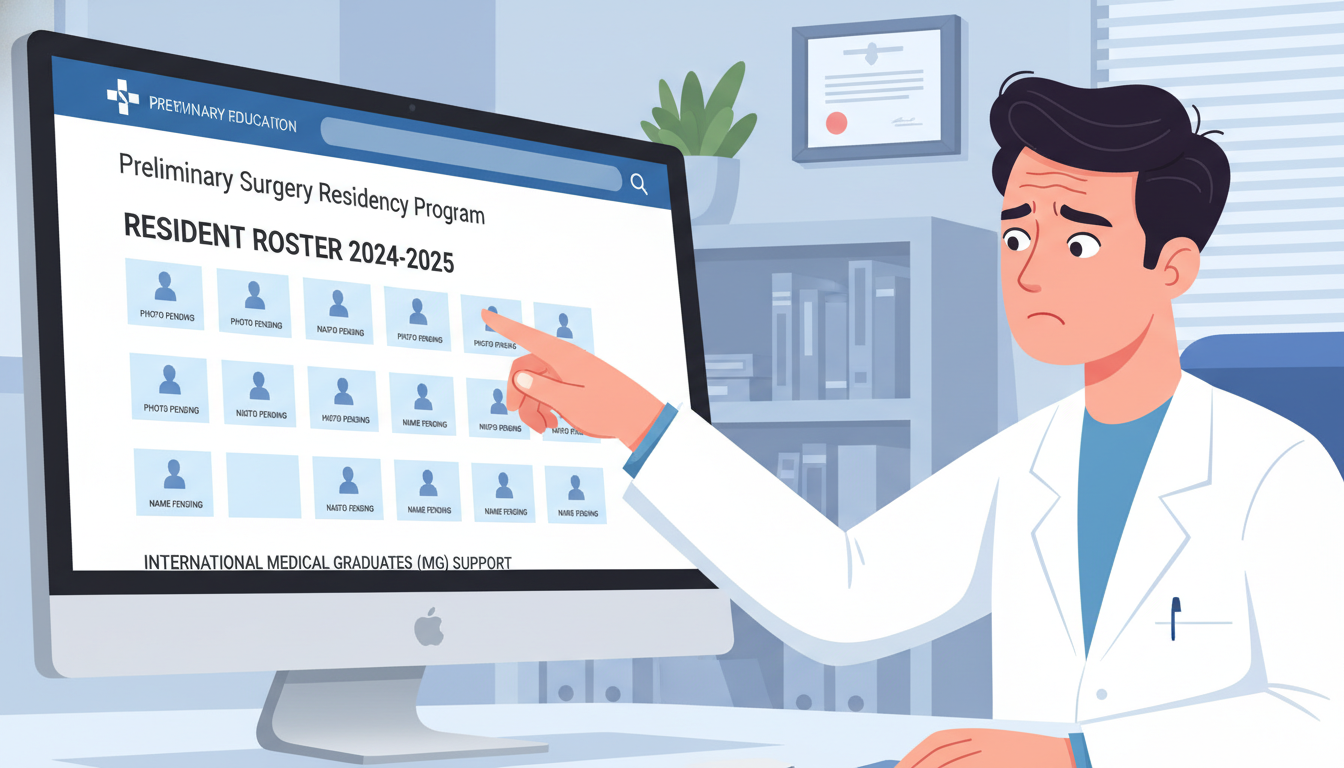
1. Disappearing Names and Faces
Before your interview and again before ranking:
- Visit the program’s website pages for:
- Current residents
- Recent graduates / alumni
- Prelim surgery class
Signs of problems:
- Multiple residents missing without explanation (“PGY-2, PGY-3 page looks thin”)
- A class listed as “PGY-1: 6 residents” when the NRMP data showed they originally matched 8
- Sudden removal of a resident’s photo/name during the year
- “Class of 2024” showing people who are clearly no longer there with no update or explanation
Follow-up strategy:
- Politely ask on interview day:
- “I noticed your website lists fewer PGY-2 residents than PGY-1 residents last year. Did some residents transfer or switch specialties?”
- “What happens if a resident is struggling? How does the program support them before considering non-renewal?”
If answers are vague (“some people just left”) or defensive, consider that a resident turnover red flag.
2. High Proportion of Prelims vs Categoricals With Poor Outcomes
In some hospitals, prelims carry a huge share of the workload. That is not automatically bad—but it becomes a problem if:
- Prelims are mostly non-US citizen IMGs
- Few of them advance to categorical surgery or quality positions elsewhere
- The program cannot explain where prior prelims ended up
Ask very specifically:
- “What percentage of your preliminary surgery year residents in the last 3–5 years obtained:
- Categorical general surgery spots?
- Other competitive specialties?
- Non-surgical positions?”
- “How many prelims are you planning to match this year compared to categoricals?”
- “Could you share examples of where recent foreign national medical graduates have gone after prelim?”
Red flags:
- No one can answer clearly
- Chief residents shrug and say, “Most just disappear or switch out of medicine”
- They say, “You’re just here to get a year of experience,” with no mention of advancement or mentorship
3. Residents Leaving Program Mid-Year
Residents leaving program mid-year is very different from leaving after PGY-1 ends.
Listen carefully on interview day:
- Do residents mention phrases like:
- “We’ve had some turnover”
- “A couple of people quit”
- “Some residents didn’t finish the year”
- Does the PD or coordinator hint at “fit issues,” “performance issues,” or “disciplinary problems” with multiple residents in recent years?
Not all mid-year departures are red flags (personal health, family crisis, etc.). But patterns matter:
Concerning patterns:
- More than one resident in a single year leaving early
- Multiple prelims quitting or being fired before March
- Stories of residents being “let go” with little warning
As a non-US citizen IMG, ask bluntly (but respectfully):
- “Have you ever terminated a visa-holding prelim surgery resident mid-year?”
- “If a resident is struggling, what steps are taken before considering non-renewal or dismissal?”
- “How is due process handled here?”
If they avoid answering or say, “We reserve the right to end the contract at any time” without mentioning remediation steps, that’s a major resident turnover red flag.
4. Resident Morale and Culture
Talk to current residents separately from faculty. Ask targeted questions:
- “If you had to do it again, would you rank this program here?”
- “Has anyone left the program during your time here? Why?”
- “Do prelims feel supported and included, or treated mainly as service?”
Warning signs:
- Residents give eye contact to each other before answering “tough” questions
- They say, “This place isn’t for everyone,” or “You need a thick skin to survive”
- They avoid talking about former residents or say “people move on” without details
- Distinct divide between categorical and prelim residents (prelims feel disposable)
For an IMG, especially a foreign national medical graduate relying on sponsorship, being in a culture where prelims are disposable dramatically raises your risk.
5. Program Leadership Instability
High turnover isn’t only about residents. Pay attention to:
- Frequent changes in program director, assistant PDs, or chief of service
- Major restructuring of rotations, call schedules, or hospital contracts
- Recent ACGME citations related to:
- Resident supervision
- Duty hours
- Professionalism or mistreatment
Ask:
- “How long have the program director and coordinators been in their roles?”
- “Has the program had any recent ACGME citations related to resident well-being or attrition?”
- “What changes have been made in response?”
A brand-new PD is not automatically bad, but rapid leadership turnover plus resident turnover often signals deeper program problems.
6. Hidden or Minimized Feedback About Turnover
Some programs will admit past problems and show clear corrective actions. Others:
- Blame all departed residents as “weak” or “not cut out for surgery”
- Refuse to discuss details, even at a high level
- Insist “we’re a tough program; if you’re serious, you’ll be fine” without acknowledging support systems
As an applicant, especially as a non-US citizen IMG, you want programs that:
- Explain, “We used to have attrition issues; here’s exactly what we changed…”
- Show that residents are now finishing their prelim year and moving into good positions
- Value transparency over image protection
If every story about a resident leaving sounds like a personal failure, not a system issue, be cautious.
How to Investigate Turnover Before You Rank a Program
You cannot rely only on what’s openly said on interview day. There are concrete steps you can take to evaluate resident turnover risk.
1. Carefully Review Program Data and Website
Before and after your interview:
- Compare:
- The number of prelims listed the year before vs. now
- The number of categoricals vs. prelims
- Look at:
- Alumni lists (do they show where people went?)
- Photos from different years (are there faces that appear for only one year, or vanish mid-year?)
If the program claims, “Our prelims do great,” but cannot show where they went, this is concerning.
2. Use Third-Party and Word-of-Mouth Sources
While anonymous forums (Reddit, SDN) should be used cautiously, they are often where residents first describe:
- Residents leaving program unexpectedly
- Patterns of mistreatment, overwork, or lack of support
- Specific PGY years with high turnover
Strategies:
- Search “[Program Name] prelim surgery attrition”
- Search for “[Program Name] non-US citizen IMG” or “visa issues”
- Look for consistent themes across multiple comments, not isolated complaints
If you find repeated mention of:
- Resident turnover red flag
- Terminations without due process
- Visa issues for IMGs
Consider this a serious data point, even if the program downplays it.

3. Ask Direct but Professional Questions on Interview Day
Prepare a short list of key questions focused on outcomes and process, not gossip.
To current residents:
- “Have any residents left the program early during your time here? What were the main reasons?”
- “Do prelims feel they receive fair opportunities in the OR and for letters compared with categoricals?”
- “If a resident is struggling, do they usually get support, or does the program push them out?”
To program leadership:
- “In the past 3–5 years, approximately what percentage of your prelims have:
- Completed the year here?
- Matched into categorical surgery or other specialties?”
- “How does the program ensure due process if there are concerns about a resident’s performance?”
- “Do you have experience supporting foreign national medical graduates with visas if they need remediation or extra time?”
Watch how they respond—transparent and specific vs. defensive and vague.
4. Follow Up After the Interview
If you still have questions:
- Email the program coordinator or PD with targeted, respectful questions
- Ask if you can speak with:
- A current prelim surgery resident
- A recent prelim graduate, ideally a non-US citizen IMG
If the program refuses to connect you with current prelims or alumni, that is itself a concerning sign.
Balancing Risk: When Turnover is a Dealbreaker vs. Manageable
Not all turnover is equally dangerous. You should weigh:
Factors That Make Turnover More Dangerous for You
- You are on a tight visa timeline (e.g., limited attempts at J-1 sponsored training)
- You have few interview offers, so one bad year could heavily impact your career
- You are highly dependent on this prelim year for US letters and experience
- You are relocating far from any family or support system
If a program shows:
- Multiple mid-year resignations or terminations
- Poor track record of prelims advancing
- Conflicts or confusion about visas for IMGs
- Leadership changes and vague responses
Then resident turnover red flag may be a dealbreaker, even if the program is “prestigious.”
When Modest Turnover May Be Acceptable
Some attrition can be understandable, for example:
- One resident left for family reasons or health issues
- A resident decided they no longer wanted surgery and transferred with support
- The PD can clearly explain a past problem and show evidence it has improved
In such cases, your decision may depend on:
- Availability of mentors genuinely invested in helping IMGs
- Clear data: “80–90% of our prelims in the last few years matched successfully”
- A supportive, respectful culture conveyed by current residents
Always remember: as a non-US citizen IMG in a preliminary surgery year, your margin for error is smaller. A program with serious turnover issues is gambling with your visa, your career, and sometimes your mental health.
Practical Ranking and Decision-Making Tips for Non-US Citizen IMGs
To summarize the actionable approach:
Create a Turnover Checklist for each program:
- Number of prelims vs categoricals
- Any missing residents between years
- Mid-year departures reported?
- Clear prelim outcomes provided?
- Any PD or resident comments suggesting program problems?
Score Each Program (e.g., 1–5) for:
- Transparency about turnover
- Support for struggling residents
- Track record with foreign national medical graduates
- Resident morale and honesty
Identify “Hard Red Flags”:
- Multiple mid-year departures of prelims recently
- No data on where prelims go
- Reports of residents leaving the program over mistreatment or lack of support
- Unclear or hostile answers about visas and due process
Prioritize Safety Over Prestige:
- It is better to train in a mid-tier but stable prelim surgery program that supports IMGs
- Than in a “big name” institution where prelims are burned out, discarded, or dismissed
Have a Backup Career Strategy:
- Consider alternate specialties (e.g., IM, FM, anesthesia) if surgery options are limited
- Use the prelim year (if safe) to:
- Build relationships with multiple departments
- Secure broad letters, not just from surgeons
- Show strong performance across rotations to keep future doors open
Your goal is not just to survive a preliminary surgery residency, but to use it strategically as a stepping stone. Avoid programs where resident turnover suggests you may not even make it through the year.
FAQs: Resident Turnover and Preliminary Surgery for Non-US Citizen IMGs
1. Is high resident turnover always a bad sign in a prelim surgery program?
Not always. Some turnover is natural as prelims move into different specialties or programs by design. It becomes a red flag when:
- Multiple residents leave mid-year
- The program cannot clearly explain where prior prelims went
- IMGs or visa holders seem disproportionately affected
- Current residents describe a pattern of dissatisfaction, burnout, or dismissals
Focus on patterns and transparency, not isolated events.
2. As a non-US citizen IMG, should I completely avoid programs with any history of residents leaving the program?
Not necessarily. You should avoid programs with ongoing, unexplained turnover and poor support systems. If a program:
- Acknowledges past problems
- Shows concrete improvements
- Demonstrates a strong track record of helping foreign national medical graduates succeed
Then it may still be a reasonable option. The key is ensuring the risk level matches your personal situation, especially regarding visa status and career flexibility.
3. How can I tactfully ask about turnover without upsetting the program?
Use neutral, outcome-focused language:
- “Could you share how your prelims have done over the last few years—in terms of completing the year and moving on to other positions?”
- “How does the program handle it when a resident is struggling? What steps are taken before considering non-renewal?”
- “Have there been any recent changes aimed at reducing attrition or improving resident retention?”
These questions show professionalism and maturity rather than confrontation.
4. What if I realize after matching that my program has serious turnover and culture problems?
If you have already matched:
- Document everything: duty hours, feedback, any questionable incidents.
- Seek mentorship early: from trusted faculty, program leadership, or GME office.
- Use institutional resources:
- GME office
- Ombudsperson
- EAP / wellness services
- If you’re on a visa, contact:
- ECFMG (for J-1) or your immigration advisor to understand your options
- Focus on:
- Maintaining professionalism
- Securing at least one strong advocate/letter writer
- Exploring transfer or alternative specialty pathways if needed
However, your best protection is to avoid high-risk programs from the start by carefully assessing resident turnover warning signs during your application and ranking process.
By systematically analyzing resident turnover, asking focused questions, and prioritizing stable, supportive programs, a non-US citizen IMG can significantly reduce the risk of entering a prelim surgery residency with hidden program problems—and maximize the chance that this demanding year becomes a powerful springboard for your long-term surgical career.