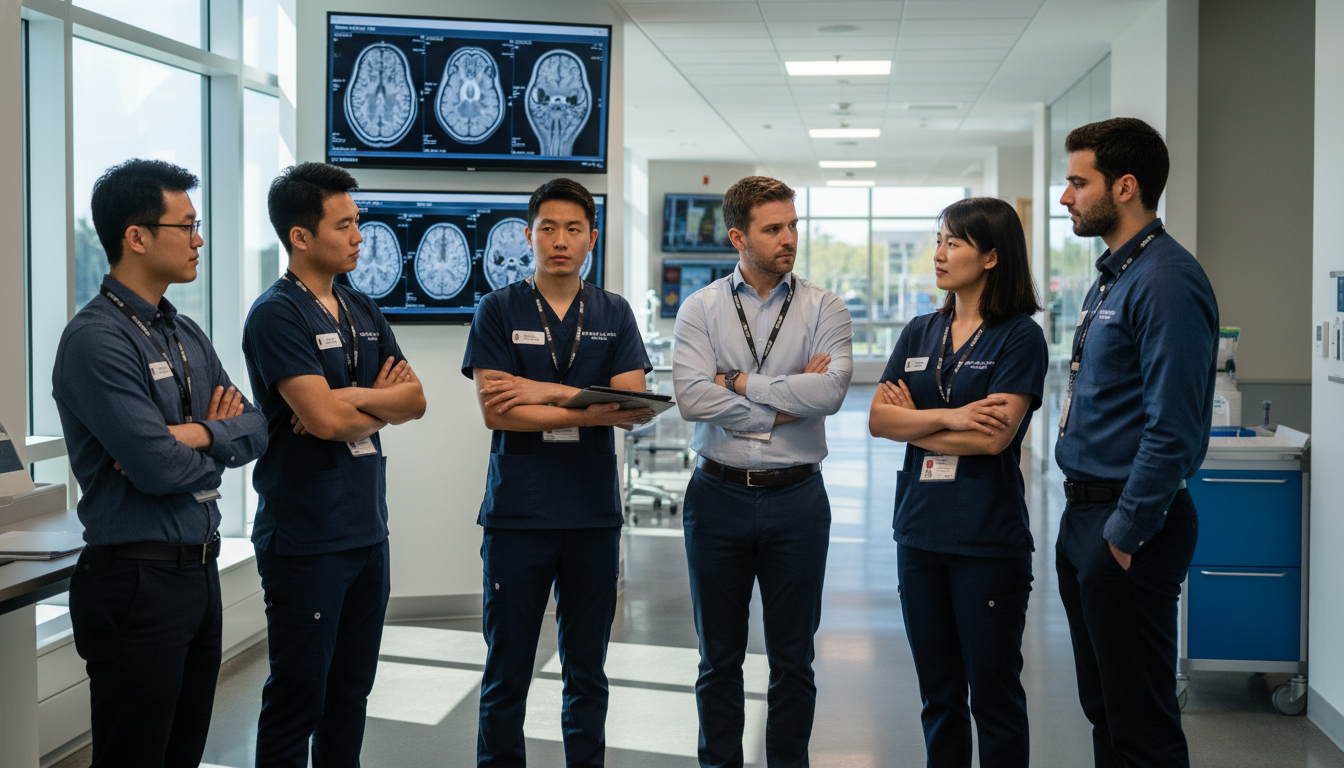
Why Resident Turnover Matters So Much for Non‑US Citizen IMGs in Neurology
For any applicant, high resident turnover is a concern. For a non‑US citizen IMG applying to neurology residency, it can be a career‑defining risk.
If you match into a program where residents are leaving the program, that can mean:
- Stressful training and poor learning conditions
- Difficulty securing letters of recommendation and research
- Delays in graduation, board eligibility, or visa issues
- In extreme cases, needing to transfer or being terminated—potentially losing your immigration status
Because you’re a foreign national medical graduate relying on a J‑1 or H‑1B visa, you have less flexibility than US citizens. You must be especially alert to resident turnover red flags and early warning signs of program problems before ranking programs in your neuro match list.
This article will help you:
- Understand why residents leave neurology programs
- Recognize resident turnover warning signs during interviews and virtual encounters
- Ask the right questions—especially about visas and IMG support
- Interpret what’s a manageable issue vs a serious resident turnover red flag
- Protect your training, your visa, and your long‑term neurology career
Understanding Resident Turnover in Neurology Programs
Resident turnover means that interns or residents do not complete their training at the program where they started. It can be “normal” or it can signal major program dysfunction.
Normal vs Concerning Turnover
Normal, understandable turnover may include:
- One resident leaving for family or personal reasons (illness, relocation, spouse’s job)
- A resident changing specialties (e.g., switching from neurology to psychiatry)
- A resident leaving for a prestigious research fellowship or PhD opportunity
- A single resident struggling with professionalism or performance
Concerning turnover patterns involve:
- Multiple residents leaving within 1–2 years
- More than one resident per class leaving or requesting transfers
- Residents leaving for vague or unexplained reasons
- Turnover combined with low morale, poor board pass rates, or ACGME citations
You’re not just asking, “Has anyone left?” but rather:
- “How often do residents leave?”
- “Why do they leave?”
- “What changed afterward?”
Why Resident Turnover is Especially High‑Risk for Non‑US Citizen IMGs
As a non‑US citizen IMG, you face additional vulnerabilities:
Visa Dependence
- Your J‑1 or H‑1B is usually tied to your residency program.
- If you’re dismissed or forced to leave, you may lose legal status quickly.
- Transferring programs as a visa‑dependent foreign national medical graduate can be very difficult.
Limited Safety Net
- Less family support locally
- Financial constraints and limited ability to take time away from training
- Fewer “backup” opportunities in the US job market if something goes wrong
Need for Strong Mentors & Advocacy
- You may depend heavily on program leadership and faculty for
- Letters of recommendation
- Fellowship opportunities
- Networking in the US neurology community
- A toxic or unstable program can block these completely.
- You may depend heavily on program leadership and faculty for
Increased Scrutiny
- Visa‑sponsored residents can feel extra pressure to “never complain” because of fear of retaliation or termination.
- Programs that mishandle visas or show little interest in IMG welfare may also mishandle resident conflicts and wellness.
For all these reasons, resident turnover red flags must be taken very seriously by non‑US citizen IMGs in neurology.
Core Resident Turnover Warning Signs in Neurology Programs
Below are major warning signs you should watch for during your neuro match process. None of these alone automatically means “do not rank,” but patterns of multiple signs are concerning.
1. Vague or Evasive Answers About Residents Leaving
Ask directly:
“Have any residents left the program or transferred in the last few years?”
Bad signs:
- “It’s complicated” without further explanation
- “We’d rather not talk about that”
- “Every program has issues” with no details
- Residents sharing different stories than faculty
- Shifting quickly to another topic when you ask for clarification
Better, healthier responses:
- Clear explanation: “Last year one resident left for family reasons—they moved to another state to be closer to their parents. We helped them transfer to a program there.”
- Specific context: “Two years ago, one PGY‑2 realized they preferred psychiatry and switched specialties. We supported the transition.”
When people are confident their program handled issues fairly, they usually don’t avoid the topic.
2. Multiple Residents Per Class Leaving or Transferring
A single departure may be understandable. Multiple departures in a short span often point to deeper program problems.
Warning patterns:
- “We had three residents leave in the last two years.”
- “We recently lost two PGY‑2s” with no clear explanation.
- Residents mentioning that transfers are “common” or “not surprising here.”
Follow‑up questions to ask:
- “What were the main reasons residents left?”
- “What changes did the program make afterward?”
- “How has the program addressed any concerns that led to those departures?”
If they cannot clearly explain causes or improvements, be cautious.
3. High PGY‑2 Attrition: A Specific Neurology Red Flag
In neurology, PGY‑1 is often internal medicine; neurology‑specific training intensifies at PGY‑2.
Concerning patterns:
- PGY‑1s complete the year, but multiple PGY‑2s and PGY‑3s leave
- Residents say: “The real problems start once you get to the neurology wards.”
Potential reasons:
- Inadequate supervision on stroke or neuro ICU
- Safer or more educational environment in medicine than in neurology
- Toxic culture among neurology attendings or chief residents
- Unmanageable workload and call burden once neurology rotations begin
For a non‑US citizen IMG, leaving at PGY‑2 or PGY‑3 can create a visa crisis with very limited options to continue training.
4. Residents Appear Afraid to Speak Honestly
Observe closely in resident‑only sessions and social events.
Red flags:
- Residents give only generic, overly positive answers
- When asked about challenges, they say things like:
- “Every program is busy; it’s fine”
- “We manage somehow; it is what it is”
- Nervous laughter when discussing call schedule or workload
- Residents glance at each other or at the door (as if checking if leadership is nearby)
- You receive direct messages later (email, social media) saying, “Let me tell you more privately…”
Healthy programs encourage residents to speak frankly about:
- Workload
- Education quality
- Leadership responsiveness
- Wellness and support
If residents seem fearful, guarded, or rehearsed, especially about why residents left, that’s a serious resident turnover red flag.
5. Chronic Understaffing and Dependence on Backup Shifts
Programs with high turnover often have chronic staffing shortages.
Signs to note:
- Residents describe frequent “Jeopardy” or backup calls
- They’re regularly covering for open positions or sick colleagues
- PGY‑2s or PGY‑3s cover multiple services at once (e.g., stroke + consults)
- Residents say things like:
- “We’re always short”
- “We had to pick up extra shifts after someone left”
- “We don’t have a full complement of residents this year”
This can lead to:
- Burnout
- Poor learning environment
- Safety issues—particularly in high‑acuity neurology settings
For IMGs, chronic understaffing may also mean less mentoring, more “service,” and fewer opportunities for research and career development.
6. Poor Transparency About Board Pass Rates and ACGME Issues
Ask programs:
- “What are your neurology board pass rates in the last 5 years?”
- “Have there been any ACGME citations or concerns, and how were they addressed?”
Possible red flags:
- “We don’t keep those numbers handy”
- “It varies; we don’t share that information”
- Residents privately say they feel unprepared for boards
Resident turnover often correlates with:
- Disorganized teaching
- Limited feedback
- Poor exam preparation
- Weak academic oversight
If the program cannot openly discuss outcomes, be careful.
7. Recurrent Conflicts With Residents, Especially Around Remediation
One resident on remediation is not necessarily a major concern. Repeated issues suggest deeper problems.
Warning patterns:
- Multiple residents on remediation within a short timeframe
- Residents mention “a lot of people being put on probation”
- A culture where struggling residents are blamed rather than supported
- Lack of clear structure for remediation or feedback
For non‑US citizen IMGs, remediation or probation can:
- Delay contract renewal and visa processing
- Lead to visa complications if training is extended or terminated
- Make it harder to transfer or apply for fellowships later
Programs that disproportionately blame residents—especially IMGs—while ignoring systemic issues often have high turnover and toxic dynamics.
8. Complaints About “Fit” or Attitude for Departed Residents
Pay close attention to how faculty and residents talk about those who left.
Concerning language:
- “They just weren’t a good fit.”
- “They didn’t want to work hard enough.”
- “We’ve had attitude problems with a few residents.”
- “They were not used to the US system.”
While sometimes true, repeated blame of former residents can indicate:
- Poor insight into program‑level problems
- Lack of supportive culture, especially for IMGs
- Leadership that avoids self‑reflection
As a non‑US citizen IMG, you don’t want to join a program where, if something goes wrong, the solution is to label you as the problem instead of addressing systemic issues.

Visa‑Specific Red Flags for Non‑US Citizen Neurology Applicants
Resident turnover is tightly connected to visa stability for non‑US citizen IMGs. Understanding visa‑related program problems is critical.
1. Inconsistent or Recently Changed Visa Sponsorship
Ask very clearly:
- “Do you sponsor J‑1 visas?”
- “Do you sponsor H‑1B visas for neurology residents?”
- “Have there been any recent changes to your visa sponsorship policies?”
Red flags:
- “We are re‑evaluating our visa sponsorship.”
- “We might not sponsor visas every year.”
- “We used to sponsor H‑1B but we’re not sure going forward.”
- No clear written policy or history of consistent sponsorship
If visa policies change mid‑training, residents may be forced to:
- Leave the program
- Return to their home country
- Scramble for another training position
This can directly contribute to residents leaving the program and high anxiety among current IMGs.
2. Minimal Institutional Support for Visa Processing
Ask residents and program coordinators:
- “How smoothly does visa processing usually go?”
- “When are contracts and visa documents typically finalized?”
Warning signs:
- Visas routinely processed very late, causing anxiety about start dates
- Residents managing most paperwork alone without GME/legal support
- A history of delayed start for IMGs due to visa issues
- Residents say things like:
- “You have to keep emailing them to get anything done.”
- “Visa stuff is always last minute here.”
These administrative weaknesses may reflect larger organizational issues that lead to resident turnover and stress.
3. Poor Track Record With Non‑US Citizen IMGs
Even if a program accepts IMGs, you must determine:
- How many non‑US citizen IMGs are currently in the program?
- How many have successfully graduated in recent years?
- What fellowships or jobs did they obtain?
Red flags:
- A program that matches IMGs but repeatedly loses them before graduation
- IMGs cluster in junior years, but very few IMG graduates in senior years
- Residents hint that “IMGs have had a hard time here” without specifics
Ask diplomatically:
“Have any non‑US citizen IMG residents left the program before completing training? What were the main reasons?”
If the answer is vague or defensive, consider that a concern.
How to Investigate Resident Turnover During Your Neuro Match Process
You cannot always rely on official presentations. Use multiple strategies to assess resident turnover red flags.
1. Prepare Targeted Questions for Interview Day
Ask current residents (especially IMGs) in a respectful, open‑ended way:
- “How many residents have left the program in the last 3–5 years?”
- “What is the usual reason residents leave, if they do?”
- “How does the program respond when residents raise concerns?”
- “Do you feel comfortable giving honest feedback to leadership?”
- “How has the work environment changed over the last few years?”
Ask leadership:
- “What are you most proud of, and what are you actively working to improve?”
- “Have you made any major changes in response to resident feedback or departures?”
- “How do you support non‑US citizen IMGs with visas and adaptation to US training?”
Notice differences between what residents and leadership say.
2. Use Virtual and Informal Interactions Effectively
In addition to official interview day:
- Attend virtual open houses and ask about program culture.
- Email current residents (especially IMGs from your region) with permission from the coordinator.
- Ask for a private Zoom or phone call to discuss your specific concerns.
Useful questions:
- “If you were deciding again, would you still choose this program?”
- “Have many residents considered transferring or leaving?”
- “What do new residents usually find most surprising or difficult here?”
Listen not only to words, but to tone and hesitation.
3. Analyze Program Structure and Schedule
High turnover often correlates with unsustainable schedules.
Ask for:
- Sample block schedule
- Night float/call schedule
- Neuro ICU and stroke coverage details
Red flags:
- Excessive consecutive night shifts
- PGY‑2 residents carrying very high patient loads alone
- Very limited elective time or research opportunities
- Consistent weekend calls with minimal days off
If the workload seems far heavier than at similar programs, consider how that might contribute to burnout and residents leaving the program.
4. Check External Signals and Reputation
While not always perfect, external signals can help:
- Talk to alumni from your medical school who know the program.
- Ask faculty mentors if they’ve heard consistent concerns about a program.
- Look for sudden leadership turnover (new PDs in quick succession).
- Review any publicly available ACGME information (e.g., probation status, if applicable).
Patterns of:
- Multiple PDs in a short time
- Rumors about “lots of people leaving”
support the need for more careful questioning.
How to Interpret and Act on Resident Turnover Information
Not all programs with some turnover are unsafe. The key is context and response.
When Turnover May Be Acceptable
You might still consider ranking a program if:
- Only 1–2 residents left in 5+ years
- Reasons are clear and reasonable (family, relocation, change of specialty)
- Residents overall seem supported and satisfied
- Program leadership openly discusses past issues and specific improvements made
- The program has a strong record of graduation and board pass for IMGs
In that case, turnover might represent individual circumstances, not a systemic problem.
When Turnover Should Make You Strongly Reconsider
You should seriously consider ranking a program lower or not at all if you see:
- Multiple residents per class leaving or transferring
- Conflicting or vague stories about why they left
- Visibly anxious or guarded residents
- Recurrent comments about feeling unsupported, unsafe, or overwhelmed
- A pattern of non‑US citizen IMGs struggling, leaving, or not graduating
- Unclear or unstable visa sponsorship policies
Given your dependence on visa stability, it is better to:
- Rank fewer, safer programs higher
- Accept a less famous but more stable program
than to match at a place where you risk losing both your training and your immigration status.
Example Scenarios for Non‑US Citizen IMGs
Scenario 1: Mild Concern, Manageable Risk
- One resident left last year to join their spouse in another state.
- Another left three years ago to switch to psychiatry.
- Residents are honest about heavy work but describe leadership as responsive.
- Several IMGs have successfully graduated and matched strong fellowships.
→ Likely acceptable, especially if other aspects (mentorship, research) are strong.
Scenario 2: Significant Red Flags
- In the last three years, 4 residents left; reasons are described vaguely as “fit issues.”
- Residents look uncomfortable when you ask about turnover.
- IMGs mention visa issues being handled late and with little communication.
- Recently two PDs have changed, with no clear explanation.
→ For a non‑US citizen IMG, this combination strongly suggests program instability. Consider ranking it low or removing it.
FAQs: Resident Turnover and Red Flags for Non‑US Citizen IMGs in Neurology
1. As a non‑US citizen IMG, should I completely avoid any neurology program where a resident has left?
No. A single resident leaving over several years, especially for clear personal or academic reasons, is not necessarily concerning. What you must avoid is a pattern: multiple residents leaving, unclear explanations, and guarded or fearful behavior from current residents. Focus on frequency, transparency, and how the program responded.
2. How can I ask about residents leaving the program without sounding confrontational?
Use neutral, open‑ended language, such as:
- “I know every program has some turnover over the years. Could you share whether any residents have left recently and what the program learned from those experiences?”
- “How does your program support residents who are struggling, and has that changed based on prior resident experiences?”
This approach respects the program while still getting critical information.
3. What specific visa questions should I ask during interviews as a foreign national medical graduate?
Key questions include:
- “Do you consistently sponsor J‑1 (and/or H‑1B) visas for neurology?”
- “How many current residents are on visas, and have previous visa holders successfully completed training?”
- “When are contracts and visa documents typically finalized each year?”
- “Have any residents experienced delays or complications with visa processing?”
Their answers will help you assess both administrative reliability and risk of visa‑related resident turnover.
4. If I realize after matching that my program has major problems, what can I do?
Your options are more limited but not zero:
- Document issues carefully (emails, schedules, feedback requests).
- Seek support from the GME office, ombudsman, or resident union (if available).
- Reach out to mentors outside your program (former attendings, faculty from home country, specialty societies).
- In extreme cases, discuss transfer options with trusted advisors—but always consider visa implications before making moves.
Ideally, careful attention to resident turnover warning signs before ranking will reduce the chance of ending up in such a situation.
Being a non‑US citizen IMG in the neurology residency match adds extra layers of risk and complexity, but also opportunity. By carefully evaluating resident turnover red flags, visa stability, and program culture, you can better protect your training, your immigration status, and your long‑term success as a neurologist.