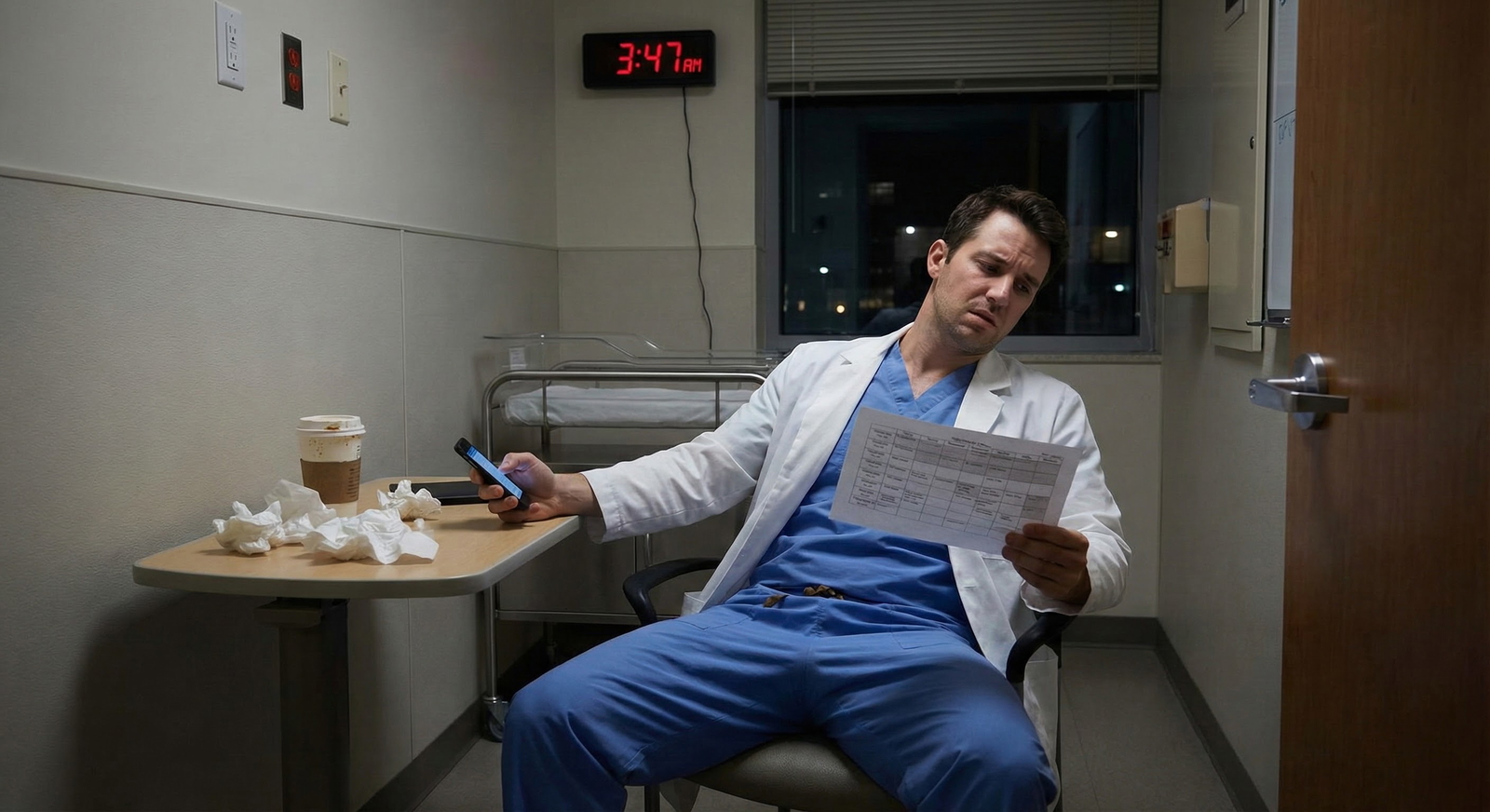
Resident turnover is one of the most important—and most underestimated—warning signs applicants should watch for when evaluating any training program. In a small specialty like nuclear medicine, where each resident represents a significant portion of the trainee cohort, resident turnover can be a powerful indicator of deeper program problems.
This guide focuses on helping you recognize and interpret resident turnover warning signs specifically in the context of nuclear medicine residency programs. You’ll learn what to look for, how to verify what you hear, and how to differentiate between normal attrition and true red flags that could affect your training, well-being, and career.
Understanding Resident Turnover in Nuclear Medicine
What “resident turnover” really means
Resident turnover refers to residents leaving a training program before completing the full duration of training. This can appear in several forms:
- A resident transfers to another nuclear medicine residency
- A resident switches specialties (e.g., from nuclear medicine to radiology, internal medicine, or another field)
- A resident resigns from training altogether
- A resident is dismissed or non-renewed for academic, professionalism, or performance reasons
In nuclear medicine, where there may be only 1–4 residents per year in many programs, a single departure can represent 25–50% of a class, making turnover patterns particularly revealing.
Normal vs concerning turnover
Not all residents leaving a program means the program is toxic or unsafe. Some turnover is:
- Career-related: A resident discovers a stronger interest in another specialty (e.g., radiology or cardiology)
- Life-related: Family relocation, health issues, personal crises
- Visa or licensing-related: Unexpected regulatory barriers
These individual situations can happen in any program.
However, turnover becomes a red flag when:
- Pattern: Multiple residents leave over a few years
- Consistency: Departures occur from more than one training level (e.g., PGY-2 and PGY-3/4)
- Direction: Residents consistently leave for other programs or specialties, not just for life reasons
- Silence: The program is vague, defensive, or evasive when you ask about it
In a nuclear medicine residency, where the culture is typically very collegial and academic, recurring resident turnover often points to systemic issues rather than isolated events.
Why Resident Turnover Matters So Much in Nuclear Medicine
Small programs magnify turnover
Compared to larger fields like internal medicine or diagnostic radiology, nuclear medicine typically operates with:
- Fewer residents per class
- Fewer total residents in the program at any time
- Greater dependence on each resident for daily operations
This means:
- If even one resident leaves, workload and call responsibilities may increase significantly for the remaining trainees.
- The educational environment can shift quickly if a small cohort loses a member.
- Program culture is more sensitive to interpersonal dynamics and faculty-resident relationships.
Turnover as a proxy for program health
Consistent or unexplained turnover often reflects:
- Toxic culture or poor leadership
- Unsupportive program leadership
- Disorganized educational structure
- Inconsistent or unfair treatment of residents
- Workload and service imbalance
- Heavy service obligations with inadequate faculty support
- Nuclear medicine residents used as “cheap labor” for unrelated tasks
- Inadequate educational experience
- Limited case volume, especially for advanced modalities (PET/CT, SPECT/CT, theranostics)
- Poor board exam preparation or low board pass rates
- Patient safety or ethics concerns
- Cutting corners on protocols
- Pressure to sign off studies too quickly or without supervision
Because residents tend to stay despite normal stress when they are truly learning and supported, a pattern of residents leaving program after program is a strong early warning of training quality issues.
Key Warning Signs of Problematic Resident Turnover
1. Multiple residents leaving in recent years
When you’re researching a nuclear medicine residency, explicitly ask:
- “Have any residents left the program or transferred in the last 5–7 years?”
- “How many residents have left, and at what stage of training?”
- “Where did they go afterward (different program, specialty, or career path)?”
Concerning patterns
- More than one resident leaving in a 3–5 year window (especially in a small program)
- Residents leaving at different PGY levels (not all for early personal reasons)
- Departures where current residents seem uncomfortable discussing details
- A history of residents leaving before board eligibility
Less concerning (but still worth exploring)
- A single resident leaving for a transparently explained personal reason (family, health, visa)
- One isolated transfer where everyone can clearly explain it and there’s no pattern
- A resident left many years ago and no others have followed
If you keep hearing of “a few people who didn’t finish” over time without clear explanations, consider this a resident turnover red flag.
2. Vague, defensive, or inconsistent explanations
It’s not inherently problematic if the program has had residents leave. It becomes alarming when:
- The program leadership gives very general or evasive answers, such as:
- “Things just didn’t work out.”
- “They weren’t a good fit.”
- “We prefer not to discuss that.”
- Different people give conflicting stories about why someone left.
- Residents say “ask the program director” and the program director says “you’d have to ask the resident”—a mutual deflection.
What you want to hear instead
Professional, consistent, and respectful descriptions, for example:
- “We had one resident leave in 2022 due to a family relocation; they transferred to another nuclear medicine program closer to home.”
- “A resident realized they were more interested in diagnostic radiology and successfully matched into a radiology residency; we supported that transition.”
You do not need names or personal details, but you do need credible, consistent explanations that don’t sound rehearsed or defensive.

3. Empty positions and frequent “off-cycle” recruitment
Unfilled or backfilled positions can signal underlying instability in a nuclear medicine residency. Watch for:
- Notices for off-cycle resident recruitment (starting outside the normal July 1 cycle)
- A program that regularly posts open residency positions on institutional or national forums
- During your interview, you hear statements like:
- “We’re hoping to fill a vacant PGY position this year.”
- “We’ve had some unexpected openings but are rebuilding.”
On its own, one unexpected vacancy isn’t definitive. But combine this with:
- Stories of past residents leaving
- Apparent pressure to “fill” spots quickly
- A general sense of disorganization
…and it strongly suggests deeper program problems.
4. Overburdened or anxious current residents
Talking with current residents is one of the best ways to detect subtle nuclear medicine match risks related to turnover.
Behavioral cues to watch for
- Residents seem exhausted, burned out, or anxious, beyond what you’d expect in a demanding specialty.
- They answer your questions only in hallways or away from faculty, signaling they may not feel safe speaking openly.
- When you ask about residents leaving program, they:
- Change the subject
- Give hesitant, nervous answers (“It’s… complicated”)
- Appear visibly uncomfortable
Content cues
Ask questions like:
- “Has resident turnover impacted your workload?”
- “How balanced do you feel the clinical service is compared to your learning needs?”
- “Do you feel the program supports you if you struggle?”
If multiple residents independently indicate:
- Significant increase in call or daily workload because of empty positions
- Little time for didactics or case review
- Fear of making mistakes or being punished rather than coached
You’re likely seeing the consequences of prior turnover and a culture that risks perpetuating it.
5. Reputation among other departments and institutions
Nuclear medicine is deeply integrated with other specialties, particularly radiology, oncology, cardiology, and endocrinology. You can often gauge program stability indirectly:
Ask radiology residents or fellows
- “How is the nuclear medicine department viewed here?”
- “Do you interact with their residents much? Any sense of turnover or morale there?”
If you’re at a different institution, ask:
- Your home radiology faculty
- Nuclear medicine physicians you meet at conferences
- Alumni from your school who matched into nuclear medicine
Consistent reports of:
- “They always seem to be looking for residents.”
- “I’ve heard several people left that program.”
- “They’ve had some issues with residents not finishing.”
…should prompt careful re-evaluation, especially if the program’s own narrative doesn’t fully align.
How to Investigate Turnover Concerns During the Nuclear Medicine Match
Before you apply: background research
Review program websites carefully
- Look at current resident rosters by year.
- Search archived versions (e.g., via the Wayback Machine) to see if names disappear unexpectedly.
- Frequent roster changes without clear graduations suggest churn.
Check public data when available
- Some programs list past graduates and their placements.
- Gaps in graduation years or incomplete lists can be clues.
Search beyond the program site
- PubMed or institutional pages: did a former resident suddenly appear at a different institution mid-training?
- Professional networking sites: you may see “Resident, Nuclear Medicine at [Program 1] (2021–2022); Resident, Diagnostic Radiology at [Program 2] (2022– )”.
Isolated examples are fine; patterns aren’t.
During interviews: targeted, professional questions
You are absolutely allowed—and encouraged—to ask about turnover. Frame questions neutrally and professionally:
To the program director (PD)
- “Could you share how stable the residency has been over the last 5–7 years in terms of residents completing training?”
- “Have there been residents who transferred or left early? If so, how did the program handle that?”
- “If a resident struggled academically or personally, how would the program typically respond?”
Pay attention not only to the content but to the tone:
- Clear, transparent, and non-defensive = reassuring
- Defensive, dismissive, or evasive = concerning
To current residents (without faculty present)
- “Have there been residents who left recently? How did that affect your workload or morale?”
- “Do you feel comfortable raising concerns to leadership?”
- “If you had serious problems here, do you think they’d be addressed fairly?”
If you sense residents are trying to warn you subtly—“We’ve had some… challenges in the past”—probe gently while respecting their boundaries.

After interviews: triangulate and reflect
Once interviews are over:
Compare notes across programs
- Did multiple programs show evidence of residents leaving program unexpectedly?
- Which programs provided the clearest, most consistent explanations?
Reflect on your gut sense
- Did you feel like you were getting the full story?
- Were residents’ body language and tone aligned with what leadership said?
Reach out to trusted mentors
- Radiology or oncology faculty often have informal insight into nuclear medicine program reputations.
- Ask if they’ve heard of high resident turnover at particular sites.
If you can’t reconcile multiple warning signs, consider ranking that program lower in your nuclear medicine match list, even if other aspects seem attractive.
When Is Turnover a Dealbreaker vs a Manageable Risk?
When turnover may be acceptable
You might still consider ranking a program highly if:
- There was only one recent resident who left, and:
- The reason was clearly personal (family, health, immigration)
- Current residents still appear well-supported and positive
- The workload and education seem balanced
- The program acknowledges past issues and shows:
- Concrete changes (new PD, new faculty, restructured schedule)
- Honest reflection rather than denial
Example:
A nuclear medicine program explains that three years ago, they lost a resident due to a sudden family obligation overseas. The PD describes how they temporarily increased faculty coverage to prevent overburdening the remaining residents. Current trainees confirm this and express feeling well-supported. Here, the turnover is not necessarily a red flag.
When turnover should heavily weigh against ranking a program
Resident turnover becomes a serious resident turnover red flag if:
- More than one resident has left in recent years, for unclear reasons
- There are currently unfilled positions or the program is actively trying to backfill
- Current residents appear:
- Overworked or distressed
- Hesitant to discuss the reasons for past departures
- Explanations from different sources are inconsistent or defensive
- The program seems to downplay or minimize the impact of residents leaving program
In nuclear medicine, where your educational exposure to PET/CT, theranostics, SPECT/CT, and research opportunities is concentrated in a small, specialized environment, a chronically unstable program can pose major risks to:
- Your board preparation and clinical competence
- Your fellowship or job prospects
- Your mental health and well-being
You will likely have other options in the nuclear medicine match; it is rarely necessary to accept a high-risk program just to secure a spot.
Practical Tips for Protecting Yourself in the Nuclear Medicine Match
Create a “turnover checklist” for every program
After each interview, note:- Any mention of residents leaving
- How the issue was described by PD vs residents
- Your impression of resident morale
- Whether there are any open or unfilled positions
Weight stability as heavily as prestige
A “big-name” institution with a history of residents leaving program unexpectedly may be a worse choice than a mid-tier but stable, supportive program.Prioritize transparent leadership
Programs that openly acknowledge past challenges and show evidence of improvement are often safer than those that pretend everything is perfect.Remember that you’re choosing a work environment, not just a CV line
In a highly specialized field such as nuclear medicine, your daily experience, learning environment, and mental health will affect your future practice as much as the program’s name.
FAQs: Resident Turnover and Nuclear Medicine Residency
1. How much resident turnover is “too much” in a nuclear medicine residency?
In a small nuclear medicine residency, even two residents leaving within 3–5 years can be significant. Look at:
- The total size of the residency (percentage who left)
- The reasons given and how clearly they’re explained
- Whether current residents seem stable and supported
If multiple residents at different levels have left, and explanations are vague or inconsistent, this is concerning.
2. Is it appropriate to ask directly about residents leaving during interviews?
Yes. It is both appropriate and wise to ask. Use neutral, professional wording such as:
- “Could you describe the program’s experience with resident retention?”
- “Have any residents left early, and how did the program handle that situation?”
Programs that respect residents as colleagues will answer thoughtfully and transparently.
3. What if a program admits there was past turnover but says they have improved?
This can be a positive sign, provided that:
- They can describe specific changes (e.g., leadership change, new wellness initiatives, schedule restructuring).
- Current residents confirm those improvements.
- There have been no recent departures since those changes were implemented.
Use your conversations with residents and your own impressions to verify whether the culture feels genuinely healthier now.
4. How should I weigh turnover concerns against other factors when ranking programs?
Consider creating a simple ranking rubric that gives weight to:
- Resident stability and turnover history
- Resident morale and support
- Educational quality and case volume
- Research/theranostics exposure
- Geographic/personal fit
If a program scores poorly on stability and morale due to recurrent residents leaving program, it should drop significantly on your list—even if other features look attractive. In nuclear medicine, a stable, supportive training environment will often do more for your long-term success than prestige alone.
Being intentional about recognizing resident turnover warning signs can protect you from entering an unsafe or unstable training environment. As you navigate the nuclear medicine match, use turnover patterns—not just brochures and websites—to identify programs where you can thrive, learn deeply, and build a sustainable, rewarding career.