Understanding Resident Turnover as a DO Applicant in Ophthalmology
As a DO graduate entering the competitive world of ophthalmology residency, you already know you must evaluate programs carefully. Beyond case numbers, research output, and fellowship placement, one of the most critical—and often under‑discussed—factors is resident turnover.
Resident turnover isn’t just a statistic. It can be a powerful indicator of deeper program problems, especially when multiple residents are leaving a program within a short time. For a DO graduate in ophthalmology, recognizing resident turnover red flags can help you avoid matching into a toxic or unstable environment and protect your career trajectory.
This article will walk you through:
- What resident turnover means in ophthalmology programs
- Why it matters especially for DO applicants
- Specific warning signs to watch for during the ophtho match process
- How to ask about turnover without sounding confrontational
- How to interpret what you hear and what you don’t hear
Throughout, we’ll focus on practical, interview-day strategies tailored to DO graduates navigating the osteopathic residency match and integrated ophthalmology match landscape.
What Resident Turnover Really Means (and Why It Matters More Than You Think)
Resident turnover refers to residents who leave the program before completing training—through transfer, non-promotion, resignation, or dismissal. In ophthalmology, where programs are relatively small, even one departure can have noticeable impact.
Normal vs. Concerning Turnover
Not all turnover equals trouble. Some departures are isolated and understandable:
- A resident switches specialties (e.g., to internal medicine or radiology)
- A family move for spouse/partner or dependent care
- Medical or personal emergencies
- Rare mismatch between resident and specialty
These can happen even in excellent programs.
Concerning turnover is different. Patterns to worry about:
- Multiple residents leaving from the same year or consecutive classes
- Residents leaving for non-geographic, non-family reasons
- Transfers to comparable or lower-profile programs (suggesting escape, not advancement)
- Ongoing turnover over several years, not a one-off event
In a typical medium-sized ophthalmology program (e.g., 3–6 residents per year), if two or more residents have left in the past 3–5 years, you should be asking why.
Why Turnover Is Especially Important for DO Graduates
For DO graduates, resident turnover has added significance:
Program culture toward non-MD trainees
Programs that historically marginalized DO applicants may show signs of inequity, different expectations, or lack of support that contribute to residents leaving.Vulnerability to being scapegoated
In troubled programs, DO residents may be more likely to be blamed for systemic issues—especially if there are few DOs in the program.Limited lateral mobility
Ophthalmology transfers are hard to secure. If the environment is bad and you want to leave, it may be more challenging as a DO with fewer DO-friendly ophtho programs nationally.Attending bias and evaluation risk
Subtle bias against DO training backgrounds may surface under stress—such as when a program is under scrutiny for turnover or accreditation issues.
Remember: as a DO applicant, your best protection is prevention—identifying unhealthy environments before you rank them.
Concrete Resident Turnover Red Flags in Ophthalmology Programs
Turnover doesn’t always show up as a neat statistic. Often you’ll detect it indirectly through patterns, atmosphere, and inconsistencies. Below are key warning signs to look for during interviews, virtual socials, and away rotations.

1. Missing Residents and Vague Explanations
For a small specialty like ophthalmology, you should typically meet or at least see evidence of every class during interview day.
Warning signs:
- A class that’s “short” a resident without clear explanation
- A resident listed on the website but never mentioned or introduced
- You hear “We had a PGY-3 who recently left” with no meaningful detail
- Faculty and residents give different explanations for the same missing person
How to probe diplomatically:
- “I noticed your PGY-2 class has four instead of five residents. Could you share how that came about?”
- “I see a name on your website who I didn’t get to meet—are they on off-site rotation?”
- “Have you had any residents transfer out in the past few years? What were the circumstances?”
You’re not looking for perfection; you’re looking for transparency and consistency.
2. Repeated References to “Recent Changes” Without Clear Context
Programs sometimes try to reframe persistent issues as “recent changes” or “growing pains.”
Possible red flags:
- Multiple people saying things like “We’re in transition” or “We’re still ironing things out”
- Vague comments about “recent restructuring” with no details
- Major schedule, call, or leadership changes that are poorly explained
These can be related to:
- Past resident complaints
- ACGME citations or near-probation
- Faculty departures due to conflict or burnout
- Unaddressed workload concerns causing residents leaving program earlier
Follow-up questions:
- “You mentioned the program has gone through some changes recently—what prompted those? Were they based on resident feedback?”
- “How have these changes affected resident workload and wellness?”
- “What aspects are still being worked out, and how are residents involved in that process?”
Credible programs can explain why changes were made and how residents are benefiting now.
3. Residents Who Seem Guarded, Overly Cautious, or Disconnected
The tone of resident interactions is often the strongest indicator of underlying problems.
Pay attention if you see:
- Residents giving scripted-sounding or identical responses to questions
- Nervous glances at faculty during Q&A sessions
- Evasive answers when you ask about work hours, call, or support
- A resident who clearly wants to say more but holds back
- Residents who seem unusually tired, demoralized, or disengaged
Try asking one-on-one or in resident-only sessions:
- “If you had to pick one thing you’d change about the program, what would it be?”
- “How does the program respond when residents raise concerns?”
- “Have any issues come up in the last year that you feel still aren’t fully addressed?”
If responses are overly positive, with no constructive criticism at all, that can be as concerning as obvious negativity. Healthy programs have residents who feel safe acknowledging both strengths and weaknesses.
4. Evidence of Burnout and Overwork That No One Owns
Some turnover stems from brutal workloads and lack of support. In ophthalmology, clinical volume can be intense—particularly at safety-net or high-volume surgical centers.
Warning signs of burnout-related turnover:
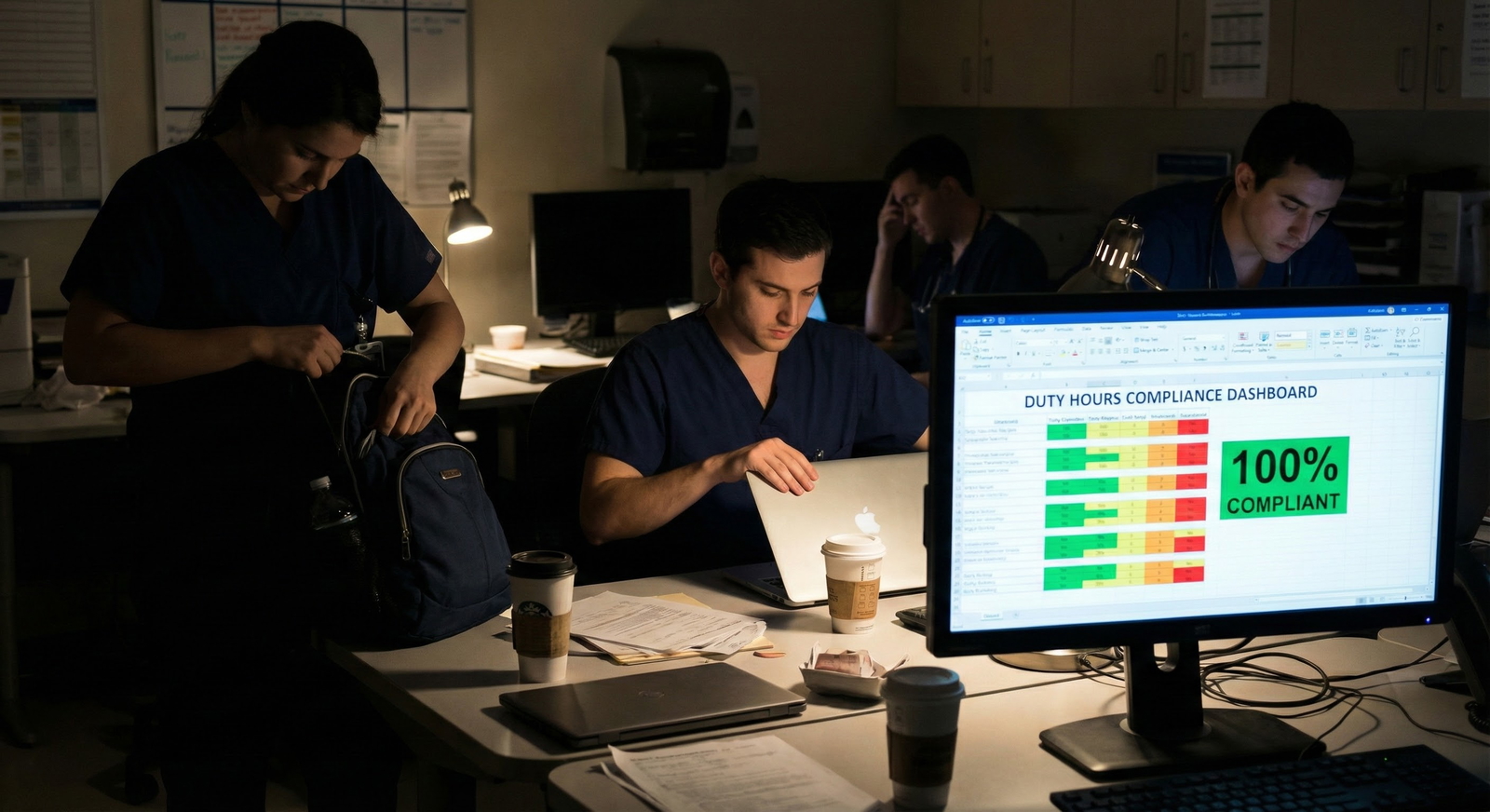
- Residents joke about never seeing daylight or regularly working past 80 hours
- Offhand comments like “We survive somehow” or “You just get through it”
- Frequent mention of duty hour “stretching,” like charting off the clock
- PGY-2s or PGY-3s openly discussing missed vacations or time off
Try asking:
- “How often do residents feel they are close to or over duty hour limits?”
- “When someone is struggling, how does the program respond?”
- “Have staffing changes been made in response to resident workload concerns?”
If you hear that multiple residents have left in the past and there’s no evidence the workload model changed, that’s a strong red flag.
5. Too Many Residents Transferring to Comparable or Lower-Profile Programs
In the competitive world of ophthalmology residency, transfers do happen—for good reasons in some cases: going to a top-tier research program, joining a spouse, or returning to hometown.
What’s concerning:
- Residents leaving for programs not clearly “better” by objective measures
- A pattern of residents transferring out over multiple years
- Residents who left outpatient-based programs for similarly busy or “lateral” programs
For DO applicants, also note where transferred residents end up:
- Are they going to historically DO-friendly programs?
- Is there a pattern of DO residents leaving while MD residents stay?
Ask:
- “Have any residents transferred in or out in the past few years? What were the circumstances?”
- “Were there changes implemented based on feedback from residents who left?”
The honesty and detail of the response will tell you more than the fact of turnover itself.
DO-Specific Red Flags: When Turnover Points to Culture and Bias
As a DO graduate entering the ophtho match, you are evaluating not only clinical training but also how a program treats trainees from different backgrounds. Turnover patterns can hint at hidden cultural issues.

1. Only DO Residents Have Left Recently
If you learn that the only residents who have left the program in recent years were DOs, that deserves serious attention.
This might indicate:
- Lower baseline support or mentorship for DO trainees
- Subtle bias in performance evaluation
- Unfair expectations (e.g., DO residents expected to “prove themselves” more)
- Poor fit between program culture and osteopathic training background
Questions you might ask (carefully):
To residents:
- “Have there been DO residents here recently? How have they done?”
- “Did they feel the expectations or support were any different for them?”
To faculty or PD (indirectly):
- “How does the program support residents from different educational backgrounds (MD, DO, international)?”
If people become visibly uncomfortable or evade questions about DO graduates, consider that a strong cultural red flag.
2. DO Residents Clustered in Lower-Prestige Rotations
Turnover or dissatisfaction among DO residents may show up as rotation inequities:
- DO residents repeatedly assigned to more service-heavy, less educational rotations
- Fewer surgical cases logged early on compared to MD peers
- DOs excluded from high-profile research or subspecialty experiences
These patterns, if persistent, can contribute to resentment, burnout, and eventual residents leaving program.
When speaking with residents:
- “Do you feel caseload and surgical opportunities are fairly distributed across residents?”
- “Have there been any concerns about equity between different training backgrounds?”
Look for body language as much as words. If DOs or recent graduates seem tense answering these questions, take note.
3. Defensive Attitudes About DO Applicants or Past DO Residents
Some programs still harbor outdated views about osteopathic training. You may encounter veiled or direct comments like:
- “We’re open to DOs if they’re exceptional.”
- “Our DO residents have had to work a little harder to catch up initially.”
- “We had a DO resident who struggled, but we prefer not to talk about that.”
Residency leadership that blames turnover on resident caliber—especially when those residents are predominantly DOs—rather than examining structural causes is a serious warning sign.
Look for:
- Programs that highlight DO graduates who have thrived (fellowship matches, chief roles)
- Statements emphasizing support, not suspicion—“Our DO residents have done incredibly well” rather than “We took a chance and it worked out.”
How to Ask About Turnover and Program Problems Without Burning Bridges
You need answers, but you also need to maintain professionalism during the application and osteopathic residency match process. There are respectful, low-risk ways to probe resident turnover issues.
Strategy 1: Normalize the Question
Phrase questions in a way that suggests you know turnover happens everywhere:
- “In many programs there are occasional residents who transfer or leave. Has that happened here recently, and what have been the main reasons?”
- “Every program has areas it’s working to improve. What kind of feedback have residents given recently that’s led to changes?”
This shows maturity and understanding rather than suspicion.
Strategy 2: Ask Residents and Faculty Separately
You want two perspectives:
- Residents may share lived realities—workload, culture, fairness
- Faculty/PDs may share structural context—accreditation, leadership challenges, recruitment issues
Compare stories:
- If both groups describe the same event (a resident leaving for family reasons) in similar language and tone, that’s reassuring.
- If residents allude to “difficult circumstances” but leadership stresses “personal reasons,” dig deeper in your own analysis.
Strategy 3: Use Open-Ended Questions
Avoid yes/no questions about resident turnover. Instead:
- “Can you tell me about a time when a resident was struggling? How did the program handle it?”
- “What kind of residents tend to thrive here, and what kind of residents have struggled?”
- “Have there been any major challenges the residency has faced in the last few years, and how were they addressed?”
Listen for whether answers acknowledge specific issues or use only vague platitudes.
Strategy 4: Leverage Off-the-Record Conversations
If you do an away rotation or have informal contact with recent graduates, use that opportunity wisely:
- “I’d love to hear your honest thoughts—what do you wish you’d known before ranking this program?”
- “Did any residents leave while you were here? What was the story?”
Many alumni will share candid insights that are rare on official interview days.
Putting It All Together: Interpreting Turnover in Your Rank List
By the time you submit your rank list for the ophtho match, you should have:
- A sense of whether turnover exists, and at what scale
- Some context for why it occurred
- An impression of how honestly and constructively the program talks about it
Use the following framework to interpret what you’ve learned.
Green Zone: Low Concern
Characteristics:
- One or two resident departures over several years with clear, reasonable explanations
- Turnover led to visible improvements (e.g., added support, schedule changes)
- Residents and faculty give consistent stories
- DO graduates (if present) have positive trajectories and speak well of support
For a DO applicant, such programs can still be excellent choices if other factors align (surgical volume, education, location).
Yellow Zone: Moderate Concern
Characteristics:
- Multiple residents have left in 3–5 years, but there are plausible reasons
- Explanations are somewhat vague, but residents seem mostly satisfied now
- There are signs of stress or burnout, but also recent concrete changes
- DO support is unclear or untested, but not obviously negative
Here, your decision may depend on your personal risk tolerance and backup plans. Consider ranking these programs, but not at the very top, especially if you have strong alternatives.
Red Zone: High Concern
Characteristics:
- Pattern of residents leaving program over multiple years
- Evasive, inconsistent, or defensive explanations from leadership
- Resident body appears guarded, unhappy, or fearful of speaking openly
- DO residents have left under unclear circumstances, or DOs seem marginalized
- Evidence of chronic overwork without meaningful reform
These may be programs where a DO graduate residency experience could be particularly vulnerable. Unless you have no viable alternatives, think carefully before ranking such programs highly—or at all.
Frequently Asked Questions (FAQs)
1. Is any resident turnover automatically a bad sign?
No. Turnover happens even in excellent ophthalmology residency programs. A single resident leaving over several years for clear reasons—family move, health issues, or a well-considered specialty change—is not inherently concerning. What matters is the pattern, the frequency, and how openly the program discusses it.
2. As a DO applicant, should I directly ask if past DO residents have left the program?
You can, but it’s wise to be tactful. Instead of asking “Have DOs left your program?”, try:
- “Have you had DO residents before? How have they done after graduation?”
- “How does the program support residents from varied educational backgrounds, including DOs?”
If the program volunteers that a DO left, pay attention to how they describe the situation—whether they focus on support and reflection, or primarily on resident deficits.
3. How can I distinguish between a program improving after past problems vs. one still in trouble?
Look for evidence of change, not just statements of intent:
- Specific schedule changes and added resources (e.g., clinic scribes, additional staff, wellness initiatives)
- Resident testimonies that things have measurably improved
- A timeline: issues that occurred 4–5 years ago but have been stable since are less concerning than problems persisting up to the current recruitment cycle
If a program can clearly articulate what went wrong, what they learned, and what they changed, that’s a good sign.
4. If I notice multiple red flags but the program is strong academically, should I still rank it?
Academic strength cannot compensate for a toxic or unstable environment, especially in a small specialty like ophthalmology. If a program shows consistent signs of dysfunction and high resident turnover, carefully weigh:
- Your personal resilience and support system
- How many safer, DO-friendly programs are on your list
- Whether you’d be willing to attempt a transfer if needed (and the difficulty of that in ophtho)
In many cases, it’s better to match slightly “down” in prestige into a healthy program than to train in a problematic environment that could jeopardize your board performance, mental health, and fellowship opportunities.
By approaching interview season with a clear eye for resident turnover warning signs, you’ll position yourself—especially as a DO graduate—to choose an ophthalmology residency that not only trains you well, but also values and supports you throughout your journey to becoming an attending.