
As a US citizen IMG or American studying abroad, you may be especially drawn to programs that advertise a strong global health residency track, international medicine opportunities, and work with underserved populations. These can be incredibly rewarding paths—but they also create a vulnerability: some of the most malignant residency programs aggressively market themselves as “innovative,” “mission-driven,” or “global health–focused” while masking toxic program signs beneath the branding.
The challenge is twofold:
- You’re competing from a relative disadvantage as an IMG, and
- You may be more willing to overlook red flags for the chance to match anywhere, particularly if a program dangles global health or international rotations.
This article is designed to help a US citizen IMG systematically recognize residency red flags—especially in “global health”–branded or “international medicine” programs—so you can avoid a malignant residency program and protect your wellbeing and career.
Understanding “Malignant” Programs in the Context of Global Health
In residency language, a malignant residency program is one with a persistent pattern of behavior that is harmful to residents’ physical, emotional, or professional wellbeing. This goes beyond “a tough program” or “high expectations.” It’s about culture, power dynamics, and lack of support.
For a US citizen IMG pursuing global health, malignant programs often share themes:
Exploitative “mission” framing
Using global health language to justify excessive service with minimal education in the name of “commitment to the underserved” or “sacrifice.”Imbalanced power with few safeguards
IMGs may be more vulnerable to visa issues (for non–US citizens), lack of advocacy, or threats of non-renewal.Superficial global health branding
A “global health residency track” that is little more than an elective site list, with no real mentorship, structure, or scholarly support.Toxic program signs dismissed as “resilience training”
Burnout, bullying, or unsafe systems being reframed as “building grit” or “preparing you for resource-limited settings.”
You can’t always avoid challenges in residency—medicine is demanding and global health work is often intense by nature. The key is distinguishing high-expectation but supportive programs from unsafely malignant ones.
Core Red Flags: Universal Signs of a Malignant Residency Program
Before layering on global health specifics, you should recognize the universal residency red flags that apply to any training environment.
1. High Resident Turnover, Non-Renewals, or Silent Graduates
Patterns to probe:
Frequent resident attrition
- Multiple residents resigning, transferring, or being “let go” in recent years
- PGY-2 or PGY-3 classes much smaller than PGY-1
Vague explanations
- “We just weren’t the right fit for them” with no detail
- “They had personal issues” repeated in multiple cases
Alumni who won’t talk
- Graduates ignoring messages
- Former residents speaking only in generalities, unwilling to comment
For you as a US citizen IMG, a program with a history of non-renewals or probation can be particularly risky. If they’ve previously targeted IMGs, it may repeat.
Questions to ask (politely and neutrally):
- “How many residents have left the program in the past 5 years, and what were the patterns or reasons?”
- “Are there any current remediation processes, and how does the program support residents in difficulty?”
Watch not just for the content of the answer, but for defensiveness, evasiveness, or hostility.
2. Chronic Non-Compliance with Duty Hours and Sleep
Malignant programs often normalize:
- Consistent 80-hour workweek violations
- Routine 24+ hour shifts turning into 28–30 hours
- Residents advised not to log actual hours to “avoid ACGME problems”
- Punitive attitudes toward taking post-call rest when allowed
You might hear:
- “We don’t really track hours—this is real life medicine.”
- “Our residents are committed, so they stay until the job is done.”
- “If you’re here for duty hours, this isn’t the place for you.”
In global health contexts, they may compare this to low-resource settings:
“You’ll work longer hours abroad anyway, this prepares you.”
This is a red flag. Global health exposure should be supervised and ethical, not a justification for chronic violation of safety standards.
Action step:
On interviews or during virtual Q&A, ask multiple residents independently:
- “In a typical month, how often do you hit or exceed duty hour limits?”
- “How comfortable do you feel honestly logging hours?”
- “Has anyone been criticized for logging violations?”
Look for consistency. If answers differ wildly between residents, something is off.
3. Bullying, Public Shaming, and Fear Culture
Red flags for toxic program signs in interpersonal dynamics:
Attendings or program leadership routinely:
- Yell, humiliate, or mock residents in front of patients or staff
- Encourage competition over collaboration
- Use sarcasm or humiliation as “motivation”
Residents expressing:
- Fear of retaliation for speaking up
- Fear of asking questions or admitting “I don’t know”
- Anxiety about making minor mistakes due to disproportionate punishment
Leadership saying:
- “We only want the strongest residents” as an excuse for cruelty
- “If you’re too soft, you won’t survive here”
You might hear this framed as “preparing you for tough global health settings” or “warzone medicine.” That is not an excuse for abuse.
Signals during interview day:
- Do residents speak candidly, or do they look to faculty before answering?
- Does leadership joke about how “brutal” they are to trainees?
- Are there disturbing stories told as funny anecdotes (e.g., “We made the intern stay all night to rewrite notes as a lesson”)?
If you feel uneasy or “small” after their stories, pay attention to your gut.
4. Poor Transparency on Board Pass Rates and Outcomes
A program that can’t or won’t share basic data is concerning:
Board pass rates:
- They “don’t really track those numbers,” or
- They refuse to specify 3–5 year rolling pass rates
Fellowship and job placement:
- No clear pattern of where graduates end up
- Vague responses like, “Our residents do fine; many go into practice”
As a US citizen IMG, you want to see:
- Stable or improving ABIM/ABFM or specialty board pass rates
- A track record of graduates matching into global health fellowship, academic positions, or meaningful primary care/academic roles if that’s your goal
If a program heavily markets global health but none of the graduates work in global health roles, that’s a significant disconnect.
Specific questions:
- “What is your 3–5 year rolling board pass rate?”
- “Can you share examples of what recent graduates are doing now, especially those who pursued global health or international medicine?”
Evasive or irritated responses are a warning.

Global Health–Specific Residency Red Flags
Not all “global health residency track” offerings are equal. Some are outstanding; others are essentially branding without substance, and a few border on exploitation.
1. “Global Health” as Unpaid Labor in Unsafe Conditions
Toxic program signs in the global health space include:
Unstructured international rotations
- No clear supervising physician on site
- Residents primarily providing service, not education
- Minimal pre-departure training on ethics, safety, or culture
Residents carrying inappropriate responsibility
- Being the most senior clinician with no backup
- Handling emergencies beyond training without adequate support
- Expected to “make do” in ways that would be unacceptable in the US
Moral injury disguised as “mission”
- Pressure to do procedures outside your comfort zone in the name of “service”
- Little or no debriefing after distressing cases
- Any hint that “if you’re not comfortable, maybe you’re not truly committed to global health”
This is not ethical global health practice; it’s exploitation.
Ask pointedly:
- “Who supervises residents during international rotations? Are they on-site full time?”
- “How is patient safety and resident safety ensured abroad?”
- “What training do residents receive before going to international sites?”
If answers are vague—“We partner with local doctors, don’t worry”—be cautious.
2. Global Health Track That Exists Only on Paper
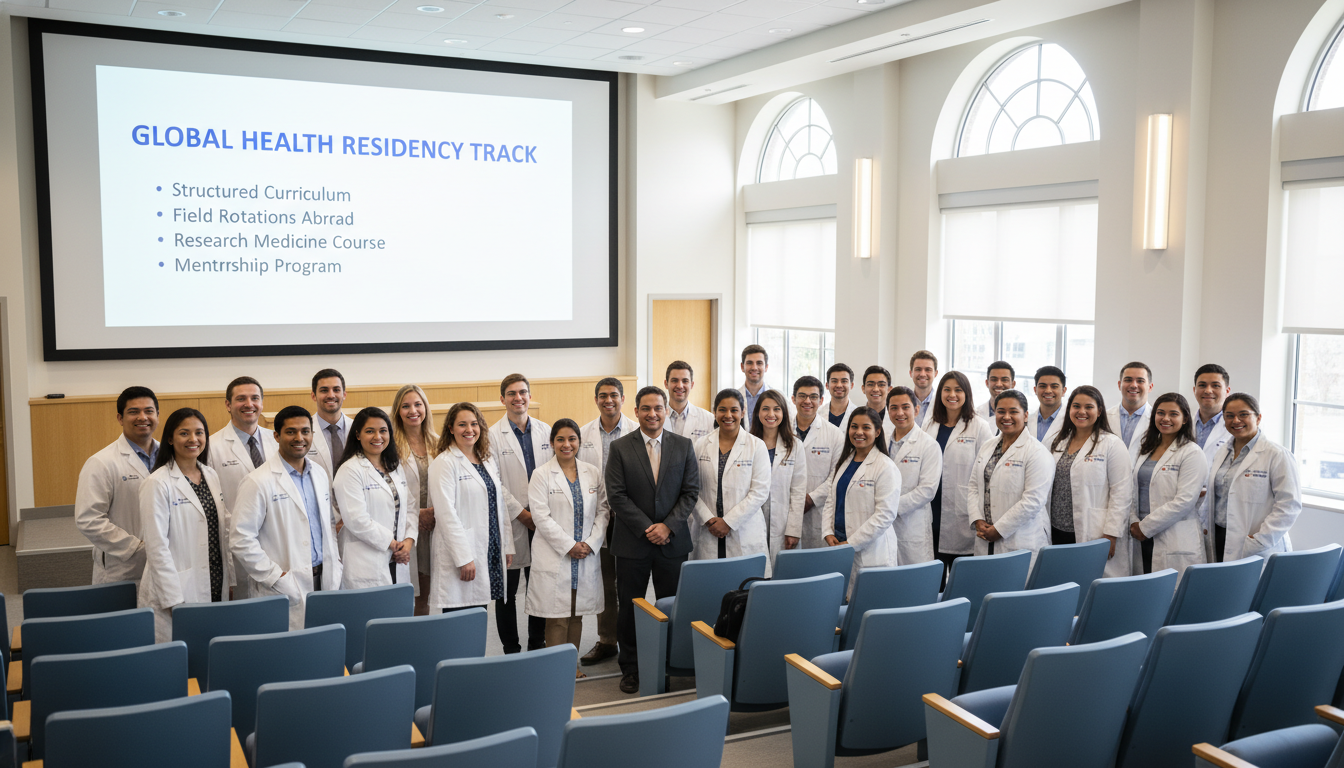
A legitimate global health residency track typically includes:
- A clear curriculum (lectures, seminars, reading lists)
- Defined faculty mentors with global health or international medicine backgrounds
- Opportunities for scholarship, QI projects, or research in global health
- Protected elective time devoted to global or underserved health
Concerning signs:
They can’t name specific global health faculty or mentors
Global health “track” is just:
- One elective rotation at a domestic FQHC, or
- A PowerPoint talk once a year
Residents say:
- “I’m in the global health track, but honestly it’s just a line on my CV”
- “We were told there’d be trips abroad, but funding disappeared”
As a US citizen IMG eager for international medicine, superficial offerings may still look appealing, but they won’t move your career forward and often indicate broader organizational disarray.
Action step:
Ask to speak with current residents in the global health track specifically and ask:
- “How many weeks of truly global health–focused time have you had?”
- “How is the track documented on your diploma or transcript?”
- “Have prior track residents gone on to global health fellowships or positions?”
3. Using Global Health to Justify Under-Resourcing at Home
Some programs in resource-challenged environments provide superb training with transparent limitations. That alone is not a red flag. The issue is when:
- Equipment or staffing shortages are reframed as “preparing you for low-resource settings” instead of being transparently acknowledged and addressed.
- The hospital’s primary safety-net role leads to overwhelming volume with minimal support, and leadership romanticizes it rather than working to improve conditions.
- Global health or “service to the underserved” becomes a shield against criticism:
- “Our patients need you; you can’t complain about burnout.”
- “If you’re really dedicated to equity, you’ll put in the hours.”
Healthy programs acknowledge both their mission and their limitations:
- “We care for a high-need population; it’s intense. Here’s how we protect you: backup attendings, wellness resources, schedule protections, and open dialogue.”
If instead they treat your suffering as proof of commitment, that’s a hallmark of a malignant culture.
4. Predatory Recruitment of IMGs Under a “Mission” Banner
As a US citizen IMG or American studying abroad, you may be specifically targeted:
Programs with a very high percentage of IMGs but:
- Minimal academic output
- Poor board pass rates
- Little transparency about outcomes
Messaging like:
- “We especially value IMGs because they work hardest.”
- “We know you’re grateful to be here; we expect you to go the extra mile.”
Patterns where:
- IMGs take the heaviest call and scut
- US MD/DO grads are protected or fast-tracked
- Only a subset of residents access global health opportunities
Global health language may be used to romanticize overwork:
“You’re not just a resident—you’re changing the world.” That can be inspiring but also manipulative if the system is unwilling to protect you.
Concrete questions to residents:
- “Are international graduates and US grads treated similarly in terms of rotations, call, and mentorship?”
- “Who typically gets priority for competitive electives or international rotations?”
- “Has there been any pattern of IMGs having contracts not renewed?”
If US citizen IMGs describe feeling second-class or disproportionately burned out, be extremely cautious.
How to Research and Detect Malignant Programs Before You Rank
1. Read Between the Lines of Official Data
Use publicly available information:
FREIDA / ACGME listings:
- Number of positions per year
- Program accreditation status, warnings, or recent changes
- Whether they’ve recently expanded rapidly (sometimes a stressor)
Program website:
- Do they transparently list board pass rates and alumni destinations?
- Is the global health residency track clearly described with curriculum and leadership?
- Has the site been updated recently (current residents, current leadership)?
State or institutional news:
- Any mentions of hospital financial crisis, leadership scandals, or closures?
- Rapid program expansions with no parallel faculty growth?
A single issue doesn’t condemn a program, but patterns of instability raise risk, especially for more vulnerable trainees like IMGs.
2. Use Backchannel Communication Wisely
Backchanneling is often where you’ll detect real residency red flags:
Contact alumni, especially:
- US citizen IMG graduates
- Recent grads (within last 5 years)
- People who were in the global health track or did international rotations
Use:
- Medical school alumni networks
- Social media (LinkedIn, X/Twitter, specialty groups)
- IMG-specific communities or forums
When you reach out, be respectful and specific:
“I’m a US citizen IMG interested in your former program’s global health track. I’d value your honest perspective on training quality, support for IMGs, and any cultural red flags you think applicants should know about. Anything you share will be kept confidential.”
Pay attention to:
- Delays in response and tone once they reply
- Alumni who say:
- “I’d rather talk by phone than write” (often a sign they’ll share sensitive issues)
- “I learned a lot but wouldn’t choose it again”
- “Be careful” or “It’s not as advertised”
Ask directly, but gently:
- “Would you describe the culture as supportive, neutral, or malignant?”
- “Were there any consistent issues with duty hours, bullying, or fairness?”
- “Would you recommend the program to another US citizen IMG interested in global health?”
3. Decode Interview Day Dynamics (In-Person or Virtual)
Interviews—despite being curated—offer many subtle signals:
Look for green flags (protective against malignancy):
- Multiple residents from different PGY levels present and open
- Residents who can describe both strengths and weaknesses of the program
- Program leadership acknowledging challenges and describing concrete improvements
- Clear, specific answers about:
- Global health curriculum
- Resident support and remediation
- Approaches to wellness and mental health
And watch for red flags:
- Program leadership speaking almost the entire time, with residents barely allowed to talk
- Residents repeatedly using vague praise: “It’s great,” “You’ll be fine,” but no examples
- Defensive reactions to any question about:
- Board pass rates
- Attrition
- International rotation safety
- Treatment of IMGs
Trust your emotional response:
- Did you feel respected and listened to, or talked at?
- Could you imagine going to that program director with a serious problem?
Your safety and growth depend on those relationships.
4. Rank List Strategy for US Citizen IMGs
Given the competitiveness and the very real fear of going unmatched, you might wonder: “Can I afford to avoid malignant programs?”
A few practical points:
Matching into a toxic residency program can be worse than not matching at all, especially if:
- Your contract isn’t renewed
- You become severely burned out or depressed
- You struggle to pass boards due to poor training
Consider tiering your rank list:
- Tier 1: Supportive programs with solid global health options
- Tier 2: Supportive programs with limited or no global health, but good training (you can pursue global health later)
- Tier 3: Programs with some yellow flags—rank only if you would truly be willing to train there
- Do not rank: Programs that trigger multiple serious red flags, especially malignant culture + poor outcomes
Remember that global health is a career path, not just a residency label:
- You can build global health experience post-residency through fellowships, MPH programs, NGOs, and academic roles—even if your residency wasn’t formally “global health–branded.”
It is better to train well in a solid, non-toxic environment and pursue international medicine afterward than to endure a malignant program just because it promises “global health” on paper.
Protecting Yourself if You End Up in a Malignant Program
Despite best efforts, sometimes you won’t realize a program’s true nature until after you start. As a US citizen IMG, you need a plan for self-protection.
1. Document Everything
Keep written records of:
- Duty hour violations you’re pressured not to log
- Bullying, threats, or discrimination
- Unsafe clinical demands or being forced beyond your competency
Save:
- Emails, messages, and schedules
- Any communication about performance concerns or remediation
These records can be crucial if you need to:
- Appeal decisions
- Contact a GME office, ombuds, or ACGME
- Transfer to another program
2. Know Your Institutional and External Resources
Most hospitals and universities have:
- Graduate Medical Education (GME) office
- Program ombuds or designated institutional official (DIO)
- Employee assistance / mental health services
- Compliance or ethics hotlines
Externally, there are:
- ACGME complaint mechanisms (for duty hours, patient safety, harassment)
- Specialty societies that may offer resident advocacy
- IMG and physician support groups
You are not obligated to suffer in silence. Use these channels early, especially if student visas are not a concern for you as a US citizen IMG; you may have slightly more flexibility than non–US citizen IMGs in taking action or seeking transfers.
3. Consider Strategic Transfer if Necessary
If the program is truly malignant:
- Talk confidentially to:
- Trusted faculty mentors (even at your former medical school)
- An institutional ombuds or DIO
- Previous residents who have successfully transferred
Key considerations:
- The earlier you act, the more feasible a transfer may be
- Framing matters: focus on educational misfit and safety, not personal attacks
- Protect your board eligibility—ensure continuous accredited training
Transferring is not an easy path, but staying in a severely toxic environment can be far more damaging in the long run.
Final Thoughts for US Citizen IMGs Pursuing Global Health
As an American studying abroad or a US citizen IMG, you may feel pressure to accept any offer, especially if it promises a global health residency track or international medicine opportunities. Yet, malignant residency programs can leave lasting scars—professionally and personally.
Key principles to carry with you:
- Global health should not require self-sacrifice to the point of harm.
- A program’s true values show in how it treats its most vulnerable residents, including IMGs.
- It is better to have solid, safe training and pursue global health afterward than to chase branding at the expense of your wellbeing.
Use data, backchannels, and your own intuition to spot residency red flags. Ask hard questions, listen carefully to what is not said, and give yourself permission to walk away from programs that feel wrong—no matter how shiny their global health brochures appear.
FAQs: Malignant Programs and Global Health Training for US Citizen IMGs
1. As a US citizen IMG, should I ever rank a program that seems malignant if it’s my only interview?
You should be extremely cautious. Matching into a malignant residency program can jeopardize your career through burnout, poor training, non-renewal, or board exam failure. If the red flags are severe—persistent bullying, gross duty hour violations, unsafe clinical expectations—it may be safer to not rank the program, accept the risk of going unmatched, and strengthen your application for the next cycle. Discuss this decision with trusted advisors who understand your specific situation.
2. How can I tell if a global health track is legitimate or just marketing?
Look for specifics and structure:
- Named global health faculty leaders with real experience
- A written curriculum and schedule (lectures, seminars, journal clubs)
- Documented international or domestic underserved rotations with clear supervision
- Evidence of resident projects, publications, or presentations in global health
- Graduates who actually work in global health, international medicine, or related fellowships
If all you see is vague language (“We’re committed to global citizenship”) and one photo from a mission trip, treat the track as likely superficial.
3. Is every “hard” program or safety-net hospital malignant?
No. Many of the best training programs are in high-volume safety-net hospitals where the work is intense—but the culture is supportive. Distinguish between:
Demanding but healthy:
- Honest about challenges
- Strong supervision and backup
- Respectful treatment, responsive leadership
- Learning is prioritized; errors are teaching moments
Malignant:
- Abuse, humiliation, or fear culture
- Systemic duty hour violations without remediation
- Unsafe expectations, poor supervision
- Blame and punishment for inevitable mistakes
The same hospital can be both demanding and deeply rewarding if the culture is right.
4. Can I still pursue global health if I match into a program without a formal track?
Absolutely. Many leaders in global health trained in standard residency programs and built their international medicine careers afterward. You can:
- Seek out global health–oriented mentors locally or virtually
- Work with underserved populations domestically during residency
- Engage in research or QI projects related to global or refugee health
- Pursue an MPH or global health fellowship after residency
- Partner with NGOs or academic centers once you have solid clinical training
Prioritize finding a non-toxic, educationally strong residency; you can build the global health layer on top of that foundation.