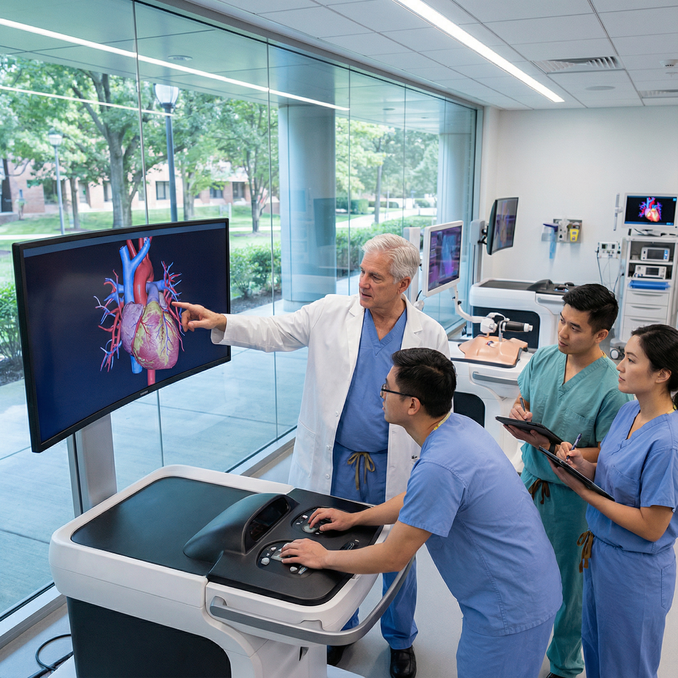
Critical review of VR simulation training for procedural skills: what improves on simulators, limits in real-patient transfer, and guidance for educators.
131 articles found in 1.49s
Critical review of VR simulation training for procedural skills: what improves on simulators, limits in real-patient transfer, and guidance for educators.
Compare family medicine vs internal medicine for outpatient primary care, patients, procedures, training, and career fit to choose the right residency.
Learn how surgical training, deliberate practice, and anxiety techniques can tame shaky hands, practical advice for med students pursuing surgical fields.
Don't chase chill programs. Learn how low workload can undermine residency training, procedural exposure, and fellowship prospects - what to evaluate.
Learn how ancillary support and staffing ratios shape residency training, boost clinical learning, reduce scut work, and choose programs wisely.
Choose residency wisely: compare board pass rates, case logs, and fellowship outcomes with a data-driven method to reduce risk and improve training and careers
Don't pick psychiatry just to avoid procedures. Understand how procedural skill develops, what psychiatry really requires, and how to choose residency.
Compare resident case volumes by specialty, community vs academic benchmarks, procedural case counts, and practical guidance to rank residency programs for hands-on training.
Assess procedural autonomy and graduated responsibility in residency: evaluate supervision levels, procedure-specific expectations, and meaningful case-logs.
Avoid residency regrets: learn why choosing location over training can limit skills, fellowship chances, and long-term career growth, choose programs wisely.