This article is for educational purposes only. It is not financial advice, not legal advice, and not tax advice. Figures vary by individual circumstances, so consult a qualified professional before acting.
The Night Before: When Your Body Betrays You
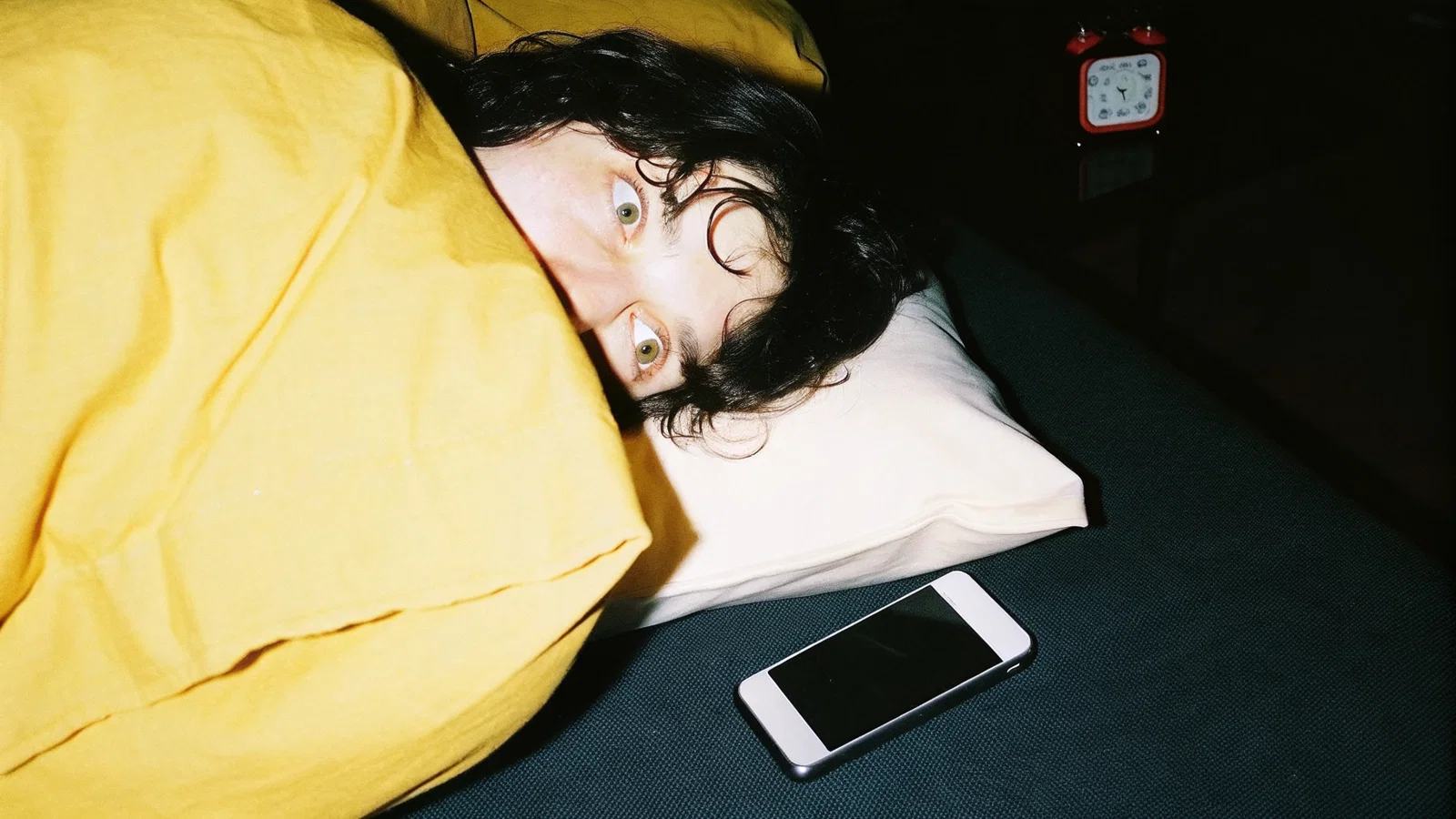
You're staring at the ceiling. It's 2:47 AM. Your heart is hammering against your ribs like it's trying to break out, your palms are slick with sweat, and your mind is running a relentless highlight reel of every possible disaster. What if I fail? What if I blank on the first question? What if my heart beats so loud the proctor asks me to leave? What if I don't match and my entire life falls apart?
Welcome to the classic pre-exam panic spiral. I know it intimately because I've lived it. You feel like you're losing your mind, but what's actually happening is a massive, misguided physiological cascade. Your brain has misread this high-stakes medical exam as a literal, life-threatening event. It doesn't know the difference between a failing grade and a hungry predator. So, it dumps cortisol and adrenaline into your bloodstream. Your breathing gets shallow. Your muscles coil tight. You are physically primed to run for your life.
And here is the cruel, sick irony of it all: the harder you try to "just calm down," the worse it gets. You notice your racing heart, which makes you anxious about being anxious, which triggers more adrenaline. It's a feedback loop from hell. You lie there, exhausted but wired, watching the clock tick down, terrified that this physical betrayal is going to ruin months of grueling preparation. You aren't weak. You aren't broken. Your body is just doing exactly what it evolved to do, just at the worst possible time.
The Exam Room: Your Heart Is Pounding, Your Brain Is Foggy
You walk in. You sit down. The proctor says, "You may begin." And immediately, your sympathetic nervous system completely hijacks your frontal lobe.
This is the moment test anxiety goes from an uncomfortable feeling to a performance killer. When your brain perceives a threat, it prioritizes survival over complex cognitive tasks. It shuts down your working memory because, evolutionarily speaking, you don't need to recall the steps of the coagulation cascade when you're being chased by a bear. You just need to run. But you can't run. You have to sit still and read a five-paragraph clinical vignette.
I remember staring at a straightforward Step 2 question about a murmur radiating to the carotid. I read it five times. The words were in English, but my brain was speaking static. I couldn't hold the patient's age, the symptom, and the lab value in my head at the same time. My working memory was entirely offline because my amygdala was screaming, not my cerebrum.
When this happens, you start to panic about the panic. Why can't I read? Am I forgetting everything? Did I study the wrong things? Your eyes dart around the room. You notice the person next to you typing furiously, which spikes your heart rate even higher. The physical symptoms, tachycardia, tachypnea, tunnel vision, create a thick cognitive fog. It's not that you don't know the material. It's that the biological hardware required to retrieve it has been temporarily unplugged.
The Aftermath: The Spiral of Self-Blame
You walk out of the testing center and the obsession begins. You replay every single question you flagged. You dissect every guess. And because your brain was foggy during the exam, you assume you bombed it.
This is where the real damage happens. You attribute your poor performance to "I'm just not smart enough" or "I don't have what it takes to be a doctor." You completely ignore the fact that your body was in a full-blown fight-or-flight state for eight hours. You internalize a physiological response as a personal failure.

This creates a vicious, self-fulfilling cycle. Poor performance leads to a deep fear of repeating it. That fear generates more anxiety the next time you sit down to study or take a practice test. More anxiety leads to worse physical symptoms next time.
Listen to me carefully: this is not a reflection of your intelligence, your work ethic, or your potential as a physician. It is a physiological response that has gone haywire. And just like any other physiological response, it can be retrained. You are not at the mercy of your panic.
What You Can Do Right Now: Body-First Interventions
Telling an anxious applicant to "just relax" or "think positive" is practically malpractice. You cannot think your way out of a sympathetic nervous system hijack. You have to use your body to hack your brain. Here is what actually works when the panic spikes.
Breathe with your diaphragm (The 4-6-8 Pattern) When you panic, you take shallow chest breaths, which signals to your brain that you are in danger. You need to manually activate your parasympathetic nervous system. Inhale through your nose for 4 seconds, hold for 6, and exhale slowly through pursed lips for 8. The key is the long exhale. A prolonged exhale physically slows your heart rate via the vagus nerve. Do this five times. It feels like it takes forever. Do it anyway.
The Physiological Sigh If 4-6-8 feels too slow when you're actively spiraling, use the physiological sigh. This is a biological cheat code. Take two quick, sharp inhales through your nose (until your lungs are totally full), followed by one long, slow exhale through your mouth. This pops open collapsed alveoli in your lungs and offloads carbon dioxide rapidly. It is the fastest real-time way to reduce acute stress. Two quick sniffs in, one long blow out. Repeat three times.
Progressive Muscle Relaxation (PMR) Anxiety lives in your muscles. Your shoulders are hiked up to your ears; your jaw is clenched. Systematically tense and release muscle groups to break the cycle. Squeeze your fists and tense your arms for five seconds. Release. Tense your legs and toes. Release. Shrug your shoulders to your ears. Release. It forces your body to recognize the difference between tension and relaxation.
The 5-4-3-2-1 Grounding Technique When your mind is trapped in worst-case scenarios, pull it back to the physical room. Name 5 things you can see (the whiteboard, my pencil, the clock). 4 things you can physically feel (the chair against my back, my feet on the floor). 3 things you can hear (the AC humming, someone coughing). 2 things you can smell. 1 thing you can taste. It shifts your brain's processing power away from internal panic and back to external reality.
Long-Term Training: Rewiring Your Body's Response
In-the-moment tricks are great, but you need to rewire your baseline response before test day. You wouldn't wait until the day of your surgery to learn how to tie a knot. Don't wait until test day to learn how to manage your nervous system.
Build Interoceptive Awareness Start a daily mindfulness or meditation practice. I know, it sounds like generic wellness fluff. It's not. Meditation increases your "interoceptive awareness", your ability to notice physical sensations (like a slightly elevated heart rate) without immediately attaching a catastrophic narrative to it. You learn to observe your body's alarm bells without immediately running for the exit. Ten minutes a day. Use an app if you need to. Just do it.
Interoceptive Exposure This sounds crazy, but it is highly effective. Deliberately induce mild physical symptoms of anxiety in a safe environment to desensitize your brain. Spin in an office chair for a minute to simulate dizziness. Breathe fast for 30 seconds to simulate shortness of breath. Run up and down the stairs to spike your heart rate. By exposing yourself to these physical sensations when you are not in danger, you uncouple the physical feeling from the panic response. When your heart races on test day, your brain won't freak out because it's used to the sensation.
Cognitive Reappraisal Borrow a trick from sports psychology. The physical sensations of fear and excitement are virtually identical, elevated heart rate, butterflies, heightened alertness. The only difference is the label your brain applies. When you feel the adrenaline hit, say out loud: "I am excited. My body is giving me the energy I need to focus." Relabeling the arousal changes how your brain processes it, shifting you from a threat mindset to a challenge mindset.
Habituate with High-Stakes Practice Do not take your practice exams in your pajamas on your bed. Simulate the stress. Wake up at 6 AM. Put on the clothes you'll wear to the real exam. Drive to a library. Use the exact same break schedule. You need to habituate your body to the stress response in a controlled setting so that the actual exam feels like just another practice run.

The Final Tool: Build Your Emergency Panic Kit
When you are in the middle of a panic spiral, your executive functioning drops to zero. You will not remember a complex relaxation protocol. You need a simple, foolproof kit.
Write your top 3 go-to calming techniques on a small index card. Keep it in your pocket or locker and review it during your breaks. Write a "reassurance script" to read before you click 'Start'. Something like: "This racing heart is just my body's alarm system. It is not my real ability. I have prepared for this. I can handle the discomfort."
Find a grounding anchor. A smooth stone in your pocket. A rubber band on your wrist that you can snap lightly to snap out of a thought loop. A physical object to touch when the symptoms spike.
Commit to one small step today. Pick just one technique from this article and practice it for five minutes. That's it. Five minutes. It is enough to begin breaking the cycle and proving to your brain that you are in control.
Key Takeaways
- It's biology, not weakness: Physical anxiety symptoms are a normal, adaptive response gone haywire, not a sign of incapability or a lack of intelligence.
- You can train your nervous system: Your body can be taught to calm itself through specific, evidence-backed techniques. You are not at the mercy of your panic.
- Combine short-term and long-term strategies: The most effective approach pairs in-the-moment calming hacks with long-term desensitization and cognitive reframing. Step into the exam room with a strategy, not just hope.
Frequently Asked Questions
What if I panic during the actual exam and can't remember my calming techniques? First, I know that exact fear. It's terrifying. But know that panic is a temporary state, it peaks and then naturally subsides. If your mind goes totally blank, use a simple physical anchor: press your feet hard into the floor, feel the chair beneath you, and take one slow, exaggerated breathe out, like you're blowing out a candle through a straw. That single action begins to shift your physiology. Keep a note in your test booklet margin: "This is just a feeling. It will pass." You have prepared enough to survive this moment. Trust that.
I've tried breathing before and it doesn't work for me. What else can I do? Breathing feels weak if you're doing it wrong or if you're too deep in the spiral. Try the 'physiological sigh' instead, two quick inhales through the nose followed by one long exhale through the mouth. It works faster than slow breathing for many people. Also, pair it with cognitive reframing: tell yourself, "My racing heart is my body preparing me to perform, not a sign of impending doom." If breathing truly fails, use progressive muscle relaxation, tense your toes for five seconds, then release, to break the physical hold. Most importantly, practice your chosen method repeatedly before test day so it becomes a reflex, not a last resort.
Will my physical symptoms ever fully go away? You are asking the right question, and I'll give you the honest answer: they may never completely disappear. And that's okay. Even seasoned attending physicians feel a rush of adrenaline before a code or a difficult family meeting. The goal is not to eliminate the response, but to change your relationship with it. When you reframe those palpitations as "my body giving me energy to focus," and you know you have a toolbox to manage them, the symptoms lose their power. Over time, through exposure, the intensity will diminish. You are not broken. You are a human taking a high-stakes test. That is normal. And you absolutely have the ability to move from fear to function.