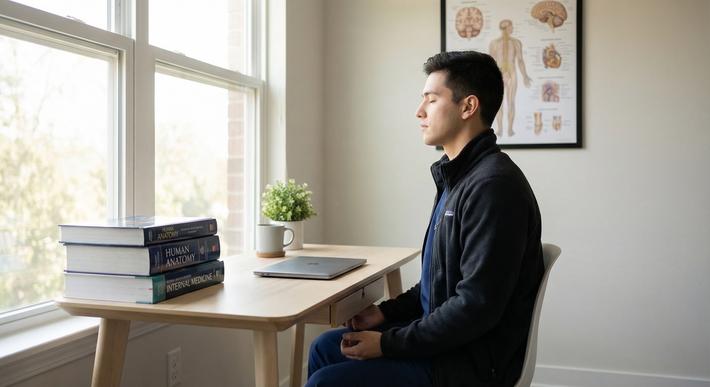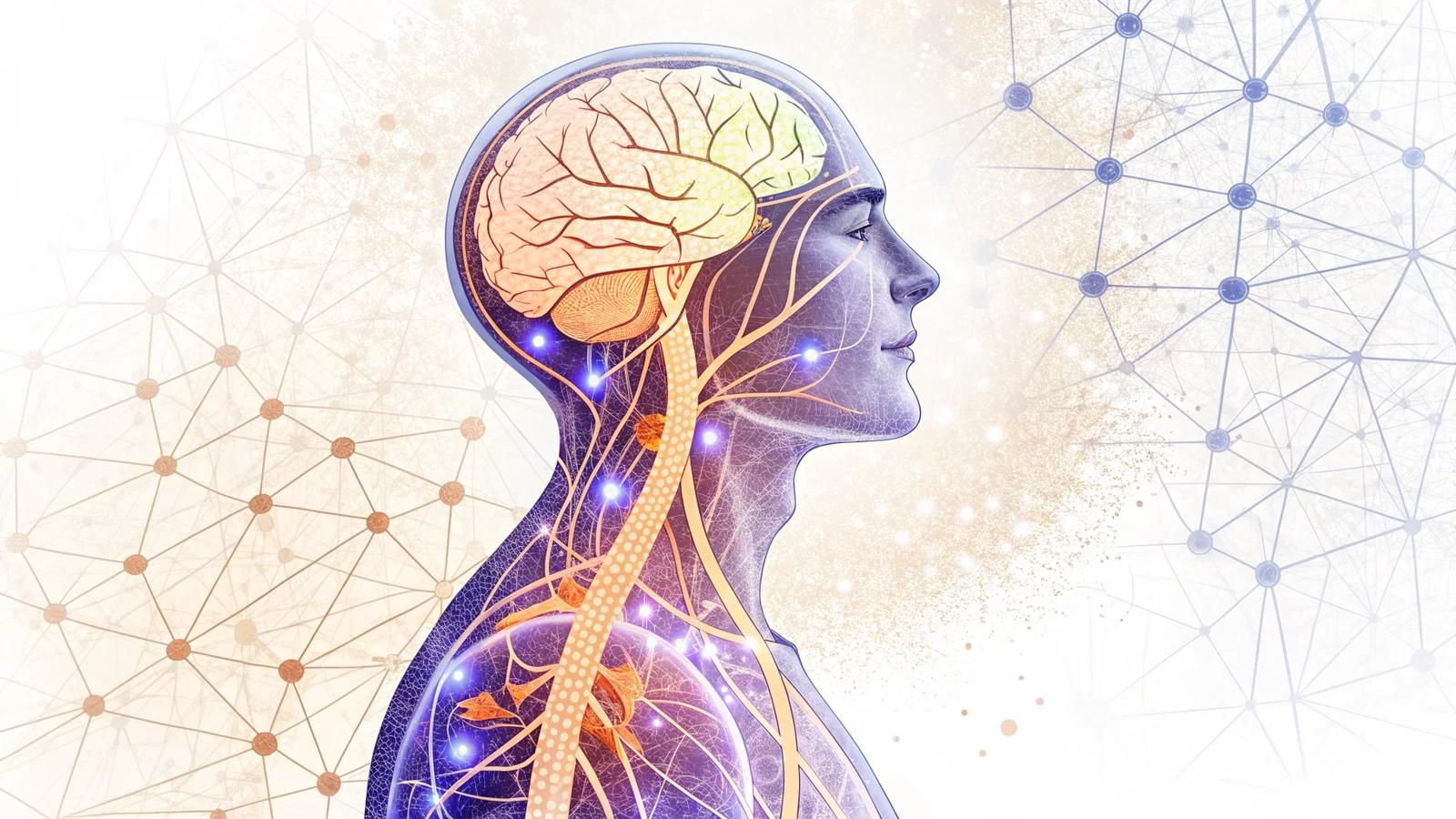
Your test anxiety is not a psychological failure. It is a gut health crisis in disguise. You have been told to manage test nerves with breathing exercises, visualization, and positive self-talk, all strategies aimed at your head. Meanwhile, your stomach, your intestines, and the trillions of microbes living inside them are running a parallel operation that can override every cognitive trick you try. If you have ever felt brain fog descend mid-exam or your stomach clench with dread the moment you read the first question, your gut-brain axis is hijacking your performance.
Every high-stakes testing season I watch brilliant medical students lose points not because they did not know the material, but because their digestive systems were inflamed, imbalanced, or simply ignored. The standard advice, sleep more, study harder, take a beta-blocker, misses the most controllable lever available to you. Fix the gut, and you fix the anxiety at its source.
The Gut-Brain Hijack: Why Your Stomach Is Stealing Your Test Scores
Test anxiety does not live exclusively in your prefrontal cortex. It lives in your intestinal lining, your vagus nerve, and your microbiome. When you cram for an exam, stress hormones rise; your gut permeability increases; and the bacterial populations that normally keep you calm get washed out by inflammatory signals. What follows is a feedback loop: gut inflammation amplifies anxiety, which in turn slows memory retrieval and decision speed.
Common digestive complaints, bloating, erratic bowel movements, post-meal fatigue, food sensitivities, correlate directly with heightened exam-day stress. Yet nearly every test-prep protocol treats the body as an afterthought. You are told to eat a "healthy" breakfast and get sleep. No one tells you that the granola bar with oats and dairy might be triggering a subclinical immune reaction that clouds your frontal lobe for the next four hours. This disconnect is why so many well-prepared students underperform. The stomach is not a bystander. It is stealing your scores. And you can stop it.
The Science: How Your Gut Controls Your Test-Day Nerves
You probably learned the gut-brain axis as a two-way street in preclinical years. Here is what you may have missed: roughly 80% of the traffic runs upstream, from gut to brain. The vagus nerve transmits sensory information from your gastrointestinal wall directly to the nucleus tractus solitarius, feeding into areas that govern emotional reactivity and fear conditioning. When your gut is irritated, the vagus nerve sends an SOS signal that the brain interprets as threat. Your sympathetic nervous system kicks in, cortisol spikes, and suddenly a straightforward differential diagnosis looks like a code you cannot crack.
The connection between gut health and test performance is backed by research on cognitive function and academic success. See more about Mastering Test Anxiety: Strategies for Academic Success in Medical School at https://residencyadvisor.com/resources/test-anxiety-tips/connection-test-anxiety-academic-performance-know.
The gut microbiome is not passive in this. It manufactures approximately 95% of your body's serotonin, along with significant amounts of gamma-aminobutyric acid (GABA). These neurotransmitters are not just for mood; they regulate cognitive clarity, impulse control, and working memory. A dysbiotic gut, where pathogenic bacteria outnumber beneficial strains, produces less GABA. You walk into the exam with an already depleted inhibitory neurotransmitter system, meaning every anxious thought amplifies without opposition. Add intestinal permeability ("leaky gut") and you get lipopolysaccharides and inflammatory cytokines crossing into circulation, crossing the blood-brain barrier, and directly impairing memory consolidation and retrieval. The mechanism is not theoretical. It is measurable.
Elevated cortisol from gut-driven inflammation disrupts hippocampal function, the very region you need for recall during a multiple-choice test. In other words, a leaky gut the night before an exam can make you forget information you knew cold the day before. This is not about being weak-minded. It is biology. And you can intervene.
The Sabotage: 4 Ways Gut Health Wrecks Your Test Performance
I have seen these patterns destroy exam scores again and again. They are rarely acknowledged in academic support offices.
If you're looking for comprehensive approaches to managing test anxiety, learn about Top Self-Care Strategies to Overcome Test Anxiety for Medical Students at https://residencyadvisor.com/resources/test-anxiety-tips/self-care-strategies-mitigate-test-anxiety.
1. Brain fog from barrier failure. When tight junctions in the intestinal epithelium loosen, bacterial fragments and inflammatory markers slip into the bloodstream. The brain, sensing this insult, shifts into a protective, low-grade neuroinflammatory state. Processing speed drops. You reread the same question three times and still cannot fully parse it. You leave the exam knowing you knew the answer but could not access it in time. This is not a recall problem, it is a barrier problem.
2. The GABA deficit of dysbiosis. Commensal bacteria like Bifidobacterium and Lactobacillus species produce GABA and modulate GABA receptors in the brain. A diet high in processed foods, artificial sweeteners, and irregular meal timing wipes out these strains. On test day, you are left with an amplified hypothalamic-pituitary-adrenal response to the normal pressure of a timed exam. Your heart races, your palms sweat, and your mind goes blank because your neurochemical brakes are shot.
3. Discomfort as a distraction engine. Even moderate bloating or the urge to defecate during a three-hour block is enough to fracture attention. You cannot maintain the flow state required for complex clinical reasoning when your enteric nervous system is sending cramping signals every few minutes. I have watched students use half their break time locating a bathroom, arrive late for the next section, and compound their mental fatigue, all because they ate a fiber-heavy "healthy" breakfast their gut was not ready to handle.
4. Bowel unpredictability burns time and confidence. Test-day performance relies on rhythm and predictability. If you do not know whether you will need a bathroom emergency 90 minutes in, you carry a constant low-level threat appraisal. That cognitive load steals bandwidth from executive function. The fix is not just about eating less; it is about training your gut to be consistent and calm before the high-stakes moment.

The Fix: 4-Week Gut Health Protocol for Test Anxiety Reduction
You cannot cram gut health the night before an exam. But four weeks is enough time to rebuild the terrain. Commit to this sequence. I have used it with students preparing for Step 1, shelf exams, and board certifications, and the drop in subjective anxiety scores is consistent and rapid.
Week 1: Elimination trial. Remove gluten, dairy, and all processed sugars. These are the three most common gut irritants in high-stress populations, and they fuel both inflammation and dysbiosis. Expect some cravings and mild irritability for two to three days. By day five, many students notice reduced bloating and clearer cognition. Keep a log: record anxiety levels on a 1-10 scale each morning and note any exam simulation scores. The data will motivate you.
Week 2: Probiotic introduction. Specific strains matter. A generic "probiotic" off the shelf is not enough. Target Lactobacillus rhamnosus GG and Bifidobacterium longum 35624. The first has human data for reducing stress-induced intestinal permeability; the second is linked to lower cortisol output and improved cognitive performance under acute stress. Take on an empty stomach in the morning. If you experience temporary gas, reduce the dose for three days and then titrate back up. This is normal.
Week 3: Gut-healing nutrients. Incorporate three daily practices. First, drink one cup of bone broth (chicken or beef) each morning. Its glycine and glutamine support enterocyte repair. Second, add a small serving of fermented food, sauerkraut, kimchi, or unsweetened kefir, with one meal. Third, supplement with 30 mg of zinc picolinate and 5 grams of L-glutamine powder dissolved in water, taken between meals. These nutrients accelerate tight junction repair and reduce inflammatory signaling. You are not just feeling better; you are physically rebuilding the barrier.
Week 4: Stress management integration. The gut-brain loop requires active vagal tone work. Every morning and evening, practice five minutes of resonant breathing: inhale for four seconds, exhale for six seconds. This stimulates the vagus nerve and shifts you toward parasympathetic dominance. Simultaneously, fix your sleep schedule: lights out by 10:30 p.m., no screens one hour before bed, and a consistent wake time. Meal timing matters: finish eating at least three hours before sleep to avoid nocturnal intestinal permeability spikes.
This 28-day architecture removes the chaos and replaces it with a system. You do not need perfection. You need consistency. By week three, the nervous student who panics at a UWorld block will start to feel like a stranger.
Step-by-Step: Your Test-Day Gut Optimization
Morning-of decisions make or break the preceding weeks of work. Do not abandon the protocol at the final hurdle.
Breakfast timing and composition. Eat a light, familiar meal 2-3 hours before your exam start time. The goal is to be past the gastric emptying phase and to have had a bowel movement before you enter the testing center. Choose foods you have tested multiple times during your study sessions: white rice with a poached egg and steamed vegetables, or a banana and almond butter on gluten-free toast. No high-fiber raw salads. No dairy. No experimental "brain smoothies." The morning is not the time to be adventurous.
Pre-test vagal activation. Ten minutes before entering the exam room, sit or stand quietly and perform four rounds of four-second inhale, six-second exhale through the nose. This reduces sympathetic tone and primes executive function. Do not skip this because you are "too nervous." That is precisely when you need it.
During the exam. Sip plain water between sections. Avoid caffeine boosts if you are already jittery. Do not consume new snacks; bring only what your gut knows. If you feel a cramp or bloating coming on, take three slow, deep breaths before returning to the question, rather than letting panic compound the physical sensation.
Supplements you may consider. Magnesium glycinate 200-300 mg the night before calms the nervous system without sedation. Ashwagandha root extract (sensoril or KSM-66) taken with breakfast can reduce cortisol and blunt the acute stress response, but you must trial it during practice exams first. Never introduce a new supplement on test day.
Your Next 30 Days: Fix Your Gut, Transform Your Test Scores
Gut health is not a soft wellness trend. It is a performance variable you control. When you stop treating digestive symptoms as separate from cognitive performance, you unlock a competitive advantage that no amount of extra studying can replicate.
Start with one change this week, the elimination trial. Build momentum. Track your anxiety numbers and exam simulation scores. Within two weeks you will see a correlation that reorients how you prepare. Within four weeks, the student who used to freeze during questions will move with a quiet steadiness that feels almost unfair.
You have thirty days. The protocol is here. Your next score depends on what you do for your gut, starting now.

Key Takeaways:
- The gut-brain axis is a two-way street, your digestive health directly controls your anxiety levels and cognitive performance on test day.
- A 4-week protocol targeting gut health can significantly reduce test anxiety without pharmaceutical intervention.
- Test-day preparation starts the night before: meal timing, familiar foods, and vagus nerve activation are your secret weapons.
- Small daily gut health investments compound into major test performance improvements over weeks and months.