
Educational disclaimer: This article is for medical education and test-prep purposes only. It is not financial, legal, tax, medical, or professional advice. For personal study planning, exam policy, accommodations, registration, disability-related questions, or any individual health concerns that may affect testing, consult the USMLE/NBME, your medical school, your physician, and other qualified professionals as appropriate.
If you know the material but still keep leaving blocks unfinished, the problem is no longer intelligence. It's pacing. That's the bottleneck now.
I want to be blunt because this is where a lot of good students waste weeks. They keep saying, "I just need to know more," when the real issue is that they are bleeding time on every block and then detonating in the last 10 questions. You've seen the pattern:
- you're still chewing through long stems late in the block
- question 31 feels manageable, but question 36 feels like a fire drill
- the last few answers become random, rushed, or half-read
- review shows you actually knew a chunk of what you missed, but fatigue and the clock mangled your judgment
That's not a pure knowledge problem. That's a timing failure.
Here's the clean way to tell the difference. Review your missed questions honestly. If a lot of them were "gettable" with another 20 to 40 seconds, this article is for you. If you had no clue what the question was testing, you need more content work. But if your review keeps sounding like, "I knew this mechanism," "I changed it from right to wrong," or "I got trapped rereading the stem," then yes, a 3-week pacing reset is exactly the right move.
And no, the solution is not "just work faster." That advice is useless. You need a structured reset with week-by-week goals and day-by-day drills.
At this point you should stop tracking only percent correct and start tracking time to decision per question. That's the metric that matters now.
Why timing usually fails on Step 1:
- overreading every stem like it's a literature assignment
- failing to identify the actual task early
- rechecking too soon
- perfectionism disguised as thoroughness
- terrible flagging discipline
- burning two minutes to separate two answer choices that were both mediocre anyway
Do a quick self-audit today:
- What's your average time per 40-question block?
- How many questions go unanswered?
- How many answers do you change on review?
- Where does your pace collapse, early, middle, or final 10?
- Which question types slow you down most: long stems, biostats, ethics, renal physiology, calculations?
That's your starting point. From here, pacing improves through deliberate practice under controlled timing. Not through random extra questions. More volume without a system is just more chaos.
This article is for educational purposes only. It is not financial advice, not legal advice, and not tax advice. Figures vary by individual circumstances, consult a qualified professional before acting.
When Timing Becomes the Real Problem: Identify the Pattern Fast
Once timing becomes the main problem, your job changes. At this point you should stop asking, "How do I know everything?" and start asking, "Where exactly am I leaking seconds?"
Running out of time on Step 1 rarely looks dramatic at first. It starts small. You reread one long stem. You overwork one biostats item. You hesitate between two answer choices because you want certainty. Then 25 questions later, the block owns you.
The classic signs are predictable:
- unfinished stems in the final quarter of the block
- a rushed, low-quality final 10
- random guesses at the end
- mental fatigue turning solid knowledge into sloppy misses
I've seen students review these blocks and realize something frustrating: they didn't fail because they were unprepared. They failed because they treated every question like it deserved a full TED Talk.
Bad idea.
What you need now is a time-based reset. The next three weeks are not about becoming magically smarter. They're about becoming more decisive, more disciplined, and much less wasteful with the clock.
Week 1: Diagnose the Delay and Rebuild Your Block Strategy
Week 1 is diagnostic. At this point you should not try to force speed yet. First, find the leak.
Your goal this week: finish each practice block with a repeatable process, even if your accuracy dips a little while you retrain.
Day 1: Baseline block
Do one timed 40-question block under strict exam conditions.
Record where you are at:
- 15 minutes: near question 10
- 30 minutes: near question 20
- 45 minutes: near question 30
- 60 minutes: near question 40
Then review every slow question and label the cause:
- content gap
- overthinking
- rereading
- weak stem triage
- calculation delay
- stuck between two answer choices
Be specific. "I was slow" is not a diagnosis.
Day 2: Stem triage drill
At this point you should train yourself to find the task before the story.
For each question:
- Read the final line first.
- Identify the task: diagnosis, mechanism, next step, graph, stats, ethics.
- Scan for organ system, acuity, age, and discriminating clues.
- Only then read details with purpose.
This alone saves a shocking amount of time.
Day 3: The 75-second rule
Now introduce your first-pass decision rule.
If no clear path emerges by about 75 seconds:
- eliminate what you can
- choose the best answer
- flag it
- move on
This is the week you stop pretending every hard question will yield if you just stare longer. Usually it won't.
Day 4: Two mini-blocks
Do two timed 20-question mini-blocks with hard stops.
Why mini-blocks? Because they let you practice momentum without the usual late-block collapse. You're training rhythm.
Day 5: Review behaviors, not just content
Go through wrong answers and ask:
- Did I misread the task?
- Did I read answer choices too early?
- Did I build a giant differential for a straightforward question?
- Did I change an answer without a concrete reason?
Those are pacing mistakes. Treat them like pathology.
Day 6: Full timed block with checkpoints
Run another 40-question block using fixed checkpoints:
- Q10 by 15 minutes
- Q20 by 30 minutes
- Q30 by 45 minutes
At this point you should care more about process consistency than score.
Day 7: Weekly reset
Summarize what reliably slows you down.
Common culprits:
- long stems
- biostats
- ethics/communication
- multistep pathophysiology
- calculations
Also write a "stop doing this" list:
- reading answer choices before understanding the stem
- doing full differential diagnoses on obvious questions
- changing answers just because you feel uneasy
- re-reviewing flagged items too early
By the end of Week 1, you should know your timing failure pattern in detail. That's success.
Week 2: Train Speed Without Losing Accuracy
Now you build speed. At this point you should keep the Week 1 process fixed and compress decision time without becoming reckless.
Your goal this week: finish blocks on time and still have enough brainpower left for the last 10 questions.
Day 8: Baseline comparison
Do one full timed block and compare your checkpoint times to Week 1.
Look for:
- fewer stalls before question 20
- less panic after question 30
- fewer unanswered questions
Day 9: Targeted drill day
Do three timed sets:
- 10 long-stem questions
- 10 biostats/graphs
- 10 ethics/communication questions
Use strict time caps. Don't lounge around inside one annoying Kaplan-style graph like it owes you money.
Day 10: Commit before rereading
Train answer-choice discipline.
For each question, try to commit to your likely answer before rereading the entire stem. This keeps you from drifting into endless reconfirmation loops.
Day 11: Minimal review block
Do one full block where flagged questions are revisited only if at least 5 minutes remain.
This is one of the best fixes for chronic overreview. A lot of students are not reviewing intelligently. They're just feeding anxiety.
Day 12: Back-to-back mini-blocks
Do two timed mini-blocks in sequence.
This matters because pacing often looks fine in block 1 and falls apart under cumulative fatigue. Step 1 cares about block 6-you, not just fresh-coffee block 1-you.
Day 13: Flag audit
Run one full block and track:
- how many questions you flagged
- how many were truly worth revisiting
- how many were "anxiety flags" with no real payoff
Most students flag too much. That's not caution. That's indecision wearing scrubs.
Day 14: Weekly metrics review
Track the big three:
- average seconds per question
- number of unfinished questions
- percent correct in the final 10 questions
Practical speed techniques for this week:
- Read for discriminators, not narrative fluff.
- Recognize recurring Step 1 templates fast.
- If answer choices cluster around one mechanism, decide faster.
- Slow down only when the question truly demands interpretation, calculation, or multistep reasoning.
Expect a brief wobble in accuracy. That's normal. The goal is a better total block score, not perfection on isolated questions. By the end of Week 2, you should be finishing most blocks with 3 to 5 minutes left.
Week 3: Simulate the Real Exam and Lock In Your Pace
Week 3 is rehearsal. At this point you should stop experimenting. No new hacks. No sudden "maybe I should read every answer choice first" nonsense. Stabilize what works.
Your final goal: reproduce your pacing strategy automatically under realistic fatigue.
Day 15: Full simulation
Do a full-length practice exam, or at minimum several timed blocks in sequence with planned breaks.
Use your real break structure. Eat what you plan to eat. Sit how you plan to sit. Make it boringly realistic.
Day 16: Timing-first review
Review timing-related misses before content:
- late-block errors
- bad flags
- right-to-wrong changes
- questions sunk by rushing
That review is gold.
Day 17: Reinforce the slowest category
Take your worst time sink from the last two weeks and do small timed sets. Not marathon review. Focused repair.
Day 18: Final pacing script block
Do one strict timed block using your final rules:
- final line first
- identify task immediately
- 75-second first-pass threshold
- checkpoint times
- no early rescue missions on flagged questions
Day 19: Light day
Keep workload lighter. Confidence and consistency matter now.
Do not add new resources. Do not overhaul your system. Last-minute reinvention is how students sabotage decent prep.
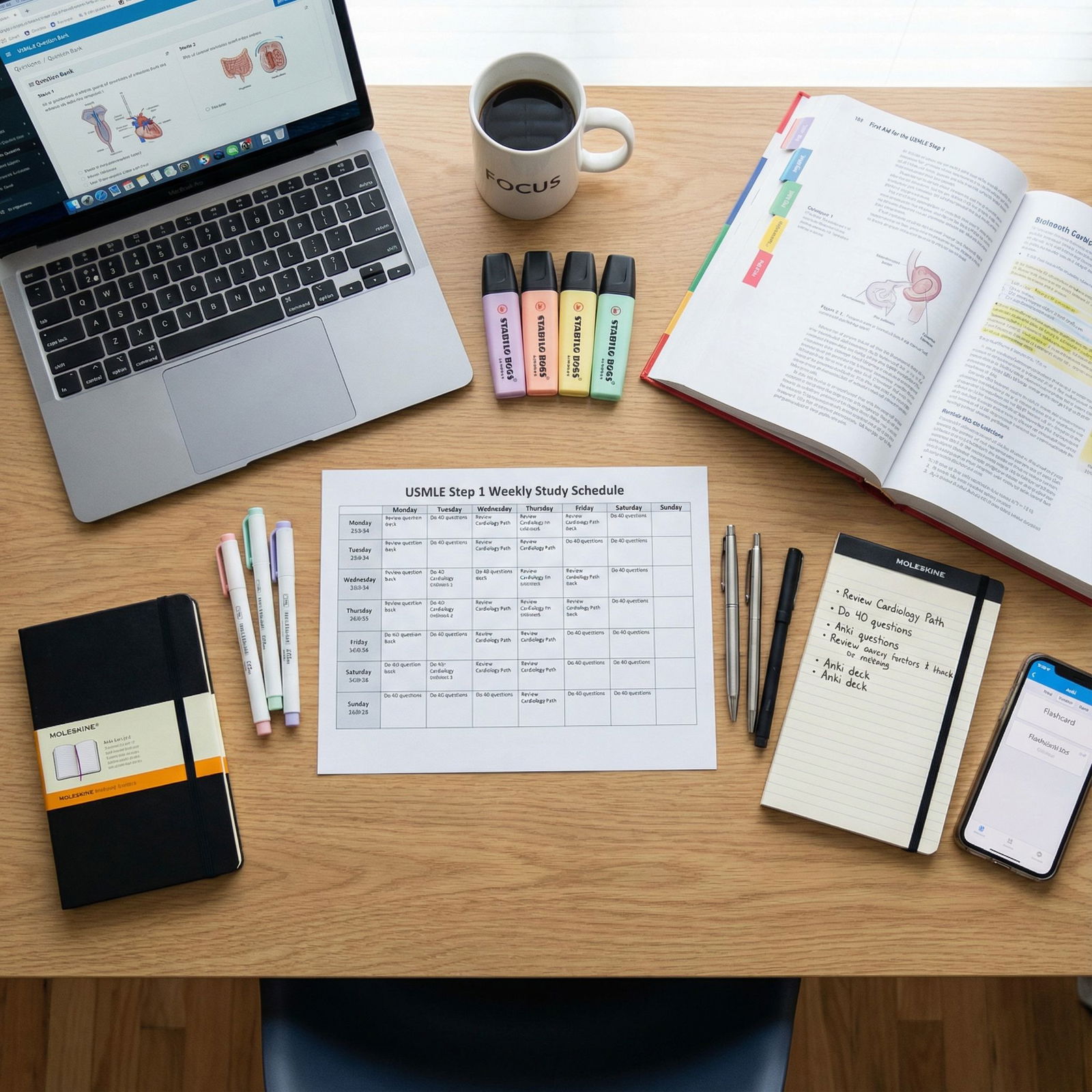
Day 20: Final simulation check
Do one final full simulation or half-length timing check.
Pay special attention to the last third of each block. That's where your old habits try to come back.
Day 21: Taper and consolidate
Write your one-page exam-day timing plan:
- target pace at Q10, Q20, Q30
- flagging rules
- break structure
- what to do when stuck
- what to do if behind pace
Your exam-day pacing script should be simple:
- Read the final line first.
- Identify the task.
- Make a first-pass decision by about 75 seconds.
- Flag and move if uncertain.
- Check pace at Q10, Q20, Q30.
- Never let one ugly question become a rescue mission.
If you fall behind mid-block, don't panic. Make up time over the next 3 to 5 easier questions by committing faster. Do not try to recover by obsessing over the question that already hurt you.
Pre-exam checklist:
- sleep like it matters, because it does
- use familiar food only
- know your break plan
- decide how you'll use tutorial time
- reset mentally between blocks instead of carrying frustration forward
By this point you should trust the system you practiced.
What to Watch For After the 3 Weeks
You'll know the pacing fix is working when:
- unanswered questions drop toward zero
- checkpoint times become steady
- your score no longer collapses in the final 10 questions
- fatigue feels manageable instead of catastrophic
If you now finish on time but accuracy is still low across the whole block, good, you've clarified the problem. Timing is no longer the main issue. Shift back toward content gaps.
For maintenance in the final days before the exam:
- do 1 timed block daily or every other day
- review timing briefly after each block
- keep the same method
- stop changing your approach every 48 hours
That's the real message here. At this point you should walk into test day with a pacing system, not a vague hope that adrenaline will somehow fix the clock. It won't. A trained routine will.