
You’ve just finished your last preclinical exam. The class GroupMe is split between people flexing their color-coded Notion boards and people saying, “I’ll figure it out after this weekend.” Your dedicated Step 1 period starts Monday at 8:00 a.m. You’ve got UWorld, Anki, First Aid, Boards & Beyond or Pathoma queued up—and zero clue what your actual days should look like.
This is where the wheels usually come off. Not content. Not intelligence. The daily schedule.
Let’s build time-blocked templates you can actually follow for 4–8 weeks without imploding.
Step 0: Know Which Bucket You’re In (Before You Time-Block Anything)
At this point—about 1–3 days before dedicated—you should decide your daily structure type. Your board score goal and baseline dictate the template, not vibes.
Here’s the blunt breakdown:
| Profile | Baseline | Goal | QBank Focus |
|---|---|---|---|
| Recovery Mode | Failing/just passed school exams | Pass | 40-60 Qs/day |
| Solid but Anxious | 215-230 NBME CBSSA | Strong Pass/Low 230s | 60-80 Qs/day |
| Gunning for High Score | 230+ baseline | 240+ | 80-120 Qs/day |
| Working/Family Constraints | Any | Pass | 40-60 Qs/day |
Pick the profile that fits you most. Then stick to that template for at least one full week before changing it.
Baseline Rules for Every Single Day of Dedicated
Before we go hour-by-hour, set these non-negotiables. At this point—before Day 1—you should write these on paper:
Start time is fixed.
Whether it’s 7:30 a.m. or 9:00 a.m., pick it. No “I’ll just start when I wake up” nonsense.Max 10–11 hours of focused work.
I’ve watched people brag about 15-hour days and crash by week two. Unsustainable.Blocks, not tasks.
You don’t “do Anki.” You do “8:30–9:30 Anki: 200 reviews.” You don’t “do UWorld.” You do “10:00–12:00: 40 Qs timed, random.”Movement and food are scheduled.
If you don’t plan breaks, you’ll scroll your phone 40 minutes every 90 minutes and then “mysteriously” lose 3 hours.
Core Building Blocks (Know Your Pieces Before You Arrange the Day)
Think of your day as Lego bricks. At this point you should know roughly how long each brick takes for you, but here are realistic averages:
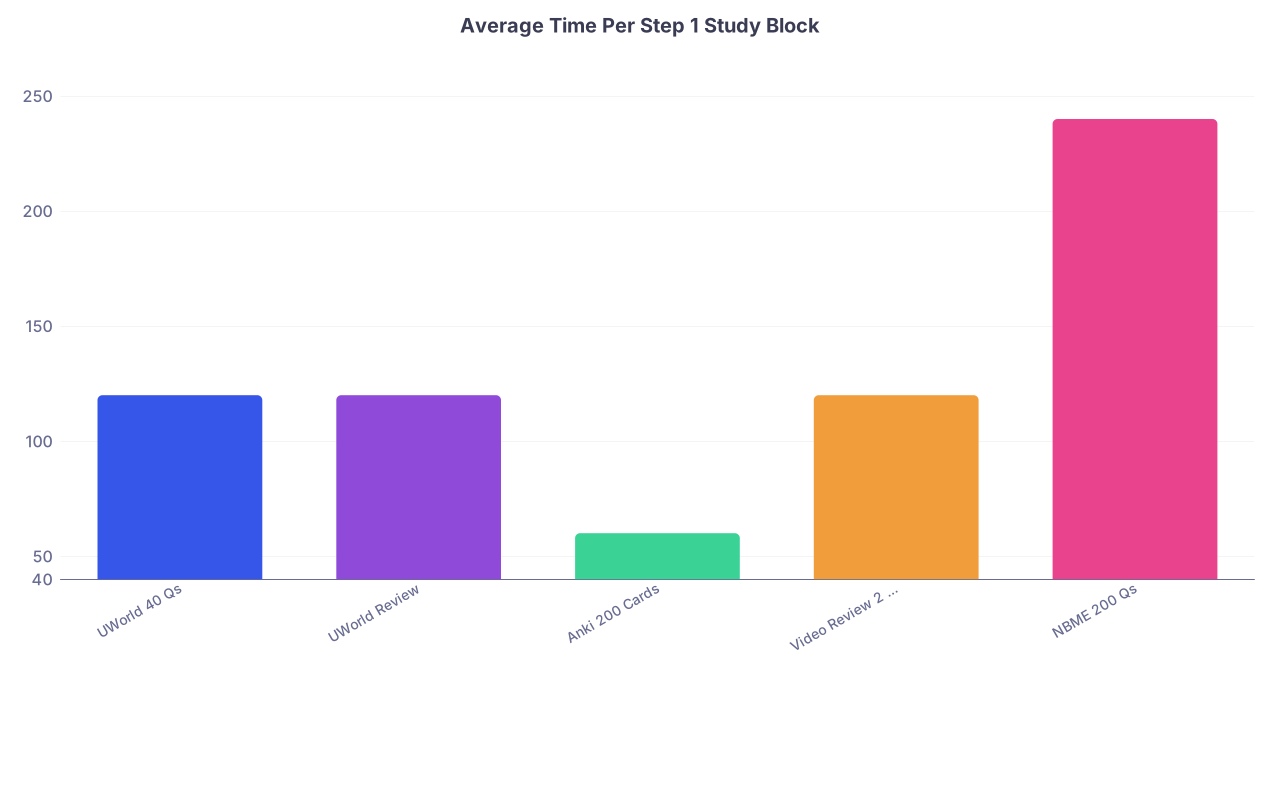
| Category | Value |
|---|---|
| UWorld 40 Qs | 120 |
| UWorld Review | 120 |
| Anki 200 Cards | 60 |
| Video Review 2 hrs | 120 |
| NBME 200 Qs | 240 |
Standard dedicated “bricks”:
40 UWorld questions, timed & random:
- 1.5–2 hours to take
- 1.5–2 hours to review well
- Total: 3–4 hours
200–300 Anki reviews:
- 45–90 minutes depending on card style/speed
2 hours of video (Boards & Beyond, Pathoma, Sketchy):
- 2–2.5 hours with pausing/rewinding
1 NBME or UWorld self-assessment (one sitting):
- ~4 hours including short break + quick flag review
Admin / logistics:
- 15–30 minutes: schedule tweaking, checking scores, planning next day
We’re going to combine these bricks into templates that match your situation.
Template 1: Standard 8–10 Week Dedicated, Solid Baseline
This is for the “I’m passing school exams, I’ve done ~50–70% of UWorld, NBME 215–230, I want a comfortable pass / low-mid 230s.”
Week Structure
At this point—about 6–8 weeks from your exam—your week should look like:
- Mon–Thu: Heavy UWorld + Anki + targeted content
- Fri: QBank + lighter content
- Sat: Half-day or full NBME every 1–2 weeks
- Sun: Half-day review + planning + rest
Daily Time-Blocked Template (Full Study Day)
Assume start at 8:00 a.m. Adjust by 30–60 min if you’re an early bird or night owl, but keep the relative pattern.
8:00–8:30 – Wake / breakfast / no-phone warm-up
- Light stretching.
- Skim your schedule for the day. No decision-making now; just execution.
8:30–9:45 – Anki Block 1 (200–250 reviews)
- Goal: Clean up old cards, avoid review pile-up.
- Rule: No new cards after Week 2 of dedicated unless absolutely necessary.
9:45–10:00 – Break
- Bathroom, coffee, quick walk.
- No social media sinkhole.
10:00–12:00 – UWorld Block 1 (40 Qs, timed, random)
- Simulate real testing. No pausing.
- Mark 6–10 questions for “deep review.”
12:00–12:45 – Lunch
- Away from desk if possible.
- Don’t talk about percentile graphs during lunch. Your brain needs distance.
12:45–2:30 – UWorld Review Block 1
At this point in the day, you should be:
- Reading every explanation (even corrects, at least briefly).
- Writing short takeaways: one-liners, not essays.
- Tagging concepts to revisit (e.g., “renal phys priority,” “biostats CIs weak”).
2:30–2:45 – Break
- 10–15 minute walk. Hydrate.
2:45–4:45 – Content Block (Video + Notes)
Example:
- 60–90 minutes Pathoma (heme/onc, renal, etc.)
- 30–60 minutes review notes or hit relevant Anki decks
Tie it to your weak areas from UWorld. If endocrine is murdering you, this block is endocrine all week.
4:45–5:00 – Snack + reset
5:00–6:30 – UWorld Block 2 (Optional on lighter days)
- 40 Qs, timed, random
- For most at this stage: do this 3–4 days/week, not daily, to avoid burnout.
6:30–7:15 – Quick Review of Block 2
- Focus on marked questions and themes.
- If time tight, “fast review” corrects.
7:15–8:00 – Dinner / decompress
8:00–8:30 – Light Anki or Concept Review
- Maybe 100 light cards, or review of a tough organ system.
- No new heavy topics now. This is consolidation, not assault.
8:30–10:00 – Off
- Phone, family, Netflix, walk. In that order of preference I’d go: walk > people > screen.
If you follow this pattern, your Mon–Thu looks like:
- 1–2 UWorld blocks/day → 60–80 Qs
- 300–400 Anki reviews
- 1 focused content block tied to UWorld weaknesses
By Friday, you back off a bit: maybe one UWorld block, more review, earlier cutoff.
Template 2: High-Intensity Dedicated (You Want 240+ and Have the Baseline)
Profile: UWorld mostly done once, NBME 230+, willing to grind. At this point 4–6 weeks from your exam, your days should look almost exam-like.
Goal: 80–120 high-quality Qs per day, serious review, minimal fluff.
Sample High-Yield Time-Blocked Day
Assume 7:30 a.m. start.
7:30–8:00 – Wake / breakfast / schedule review
8:00–9:00 – Anki Power Hour
- 300–400 reviews, aggressive pass.
- Suspend garbage cards. You don’t need 8 versions of von Gierke disease.
9:00–11:00 – UWorld Block 1 (40 Qs) + Rapid Flag Review
- 75–90 minutes questions
- 30–45 minutes fast review of severe misses; deep dive later.
11:00–11:15 – Break
11:15–1:15 – UWorld Block 2 (40 Qs)
- Same routine: full Timed, Random.
- Track your cumulative stats but don’t obsess daily.
1:15–2:00 – Lunch
2:00–4:00 – Deep Review Block (QBank from morning)
This is where scores actually move.
- For each missed or lucky-correct:
- Ask: “What single sentence would have kept me from missing this?”
- Write that. Only that.
- Build micro-lists:
- “Causes of metabolic alkalosis,”
- “Nephrotic vs nephritic lab patterns,” etc.
4:00–4:15 – Break / movement
4:15–6:00 – Targeted Mixed Content
- 60–90 minutes: weak system (e.g., neuro) via Boards & Beyond or notes
- 30–45 minutes: associated Anki deck
6:00–7:00 – Dinner / decompress
7:00–8:30 – Optional UWorld Block 3 (30–40 Qs, tutor or timed)
- On heavy days (3–4x/week) do this.
- On lighter days, swap this for concept mapping / biostats practice.
8:30–9:00 – Quick Look-Back
- Scan your notebook: today’s high-yield one-liners.
- Pick 2–3 focus items for tomorrow morning’s content block.
9:00 onward – Off
This schedule is aggressive. You don’t do it 7 days a week. 4–5 days like this + 1 lighter day + 1 test/rest day is plenty.
Template 3: Recovery / Near-Fail Risk (You Just Need to Pass)
Different game. If your baseline is shaky, your schedule should tilt more toward understanding and repetition than raw question volume.
At this point, 4–8 weeks from your exam, your day should emphasize:
- ~40–60 high-quality questions
- Lots of explanation reading
- Heavy Anki / core content
“Stabilization” Time-Blocked Day
Assume a 9:00 a.m. start to keep it realistic.
9:00–9:30 – Wake / breakfast / mental warm-up
9:30–10:30 – Anki + Basic Facts Review
- 200–250 cards
- Focus on basic path, pharm, micro, phys.
- If you cannot explain the card out loud, mark it.
10:30–10:45 – Break
10:45–12:45 – UWorld Block (40 Qs, tutor, but still timed per question)
- You’re allowed to see explanations as you go, but no infinite thinking time.
- Focus on:
- Reading stems carefully
- Eliminating options logically even when you’re unsure
12:45–1:30 – Lunch
1:30–3:00 – Deep Review of That Same Block
- Go slow. It’s fine.
- For each question:
- Write 1–2 bullet facts you learned.
- If topic is unfamiliar, flag for content block.
3:00–3:15 – Break / short walk
3:15–5:15 – Structured Content Block
Pick 1 major topic per day:
- E.g., “Renal phys + pharm,” “Cardio path,” “Micro – bugs and drugs.”
- Sources: Boards & Beyond, Pathoma, First Aid, or your school notes if they’re actually good.
Your job here isn’t to cover the world. It’s to make the confusing areas slightly less terrifying.
5:15–6:00 – Snack / decompress
6:00–7:00 – Light QBank or Question Review
Options:
- 10–20 more Qs on that same topic in tutor mode
- Or re-review 10–15 of the UWorld explanations from earlier
7:00–8:00 – Dinner / family / life
8:00–9:00 – Gentle Anki / Flashcards / Sketchy Review
- Micro or pharm Sketchy if that works for you.
- No new massive topic at night.
9:00 onward – Off
This kind of day—done consistently—is how I’ve seen people move from “I might fail” to “solid pass.” Not heroic. Just relentless, focused repetition.
Template 4: Dedicated While Juggling Life (Kids, Job, or Mandatory Research)
If you’re working part-time, have kids, or some other real-life anchor, your schedule won’t look like the marathon days above. That’s reality.
At this point, 5–8 weeks from test day, your priority is protected, high-yield blocks—not touching content 12 hours a day.
Let’s say you reliably have:
- 6 a.m.–8 a.m.
- 7 p.m.–10 p.m.
- Weekends more open
Weekday Time-Blocked Template (6 Hours Total)
6:00–6:15 – Wake / coffee / quick review of plan
6:15–7:00 – Anki (200–250 cards)
Non-negotiable. Cards are your spaced repetition backbone.
7:00–8:00 – UWorld Mini-Block (20 Qs timed, random)
- 35–40 minutes questions
- 20–25 minutes speed review of explanations
- Flag any topic that was total guesswork.
Then you go to work / kids / life.
Evening
7:00–7:30 – Dinner / reset
7:30–9:00 – UWorld Block 2 (20–40 Qs, tutor or timed)
- If you’re fried, 20 quality questions > 40 rushed ones.
- Mix random and system-based depending on your weak spots.
9:00–10:00 – Content / Review Block
- Rotate nightly:
- Mon/Wed/Fri: focused system review
- Tue/Thu: biostats, ethics, high-yield micro/pharm
- Tie tonight’s topic to what hurt you in UWorld.
On weekends, you stretch to something closer to Template 1 or 2:
- One full NBME Saturday morning every 1–2 weeks
- Long review block + light content afternoon
- Sunday half-day + rest
Full-Week View: How These Days Fit Together
To keep this concrete, here’s how a Standard Dedicated Week (Template 1) should look around Week 3–4 of your study period:
| Day | Morning | Midday | Afternoon | Evening |
|---|---|---|---|---|
| Mon | Anki + UWorld 40 | UWorld review | Content (weak system) | Light Anki |
| Tue | Anki + UWorld 40 | UWorld review | Content (biostats/micro) | Light review |
| Wed | Anki + UWorld 40 | UWorld review | UWorld 40 | Light Anki |
| Thu | Anki + UWorld 40 | UWorld review | Content (pharm) | Off by 9 |
| Fri | Anki + UWorld 40 | Review + content | Early stop | Social / rest |
| Sat | NBME AM | NBME review | Light content | Off |
| Sun | Anki | Weekly topic review | Plan week | Off |
That’s the rhythm. Not glamorous, but it works.
How Your Template Should Evolve Week-by-Week
You shouldn’t be using the exact same schedule on Day 5 and Day 30. At this point you should plan checkpoints every 7 days.
Here’s how the emphasis shifts across a 6-week dedicated:
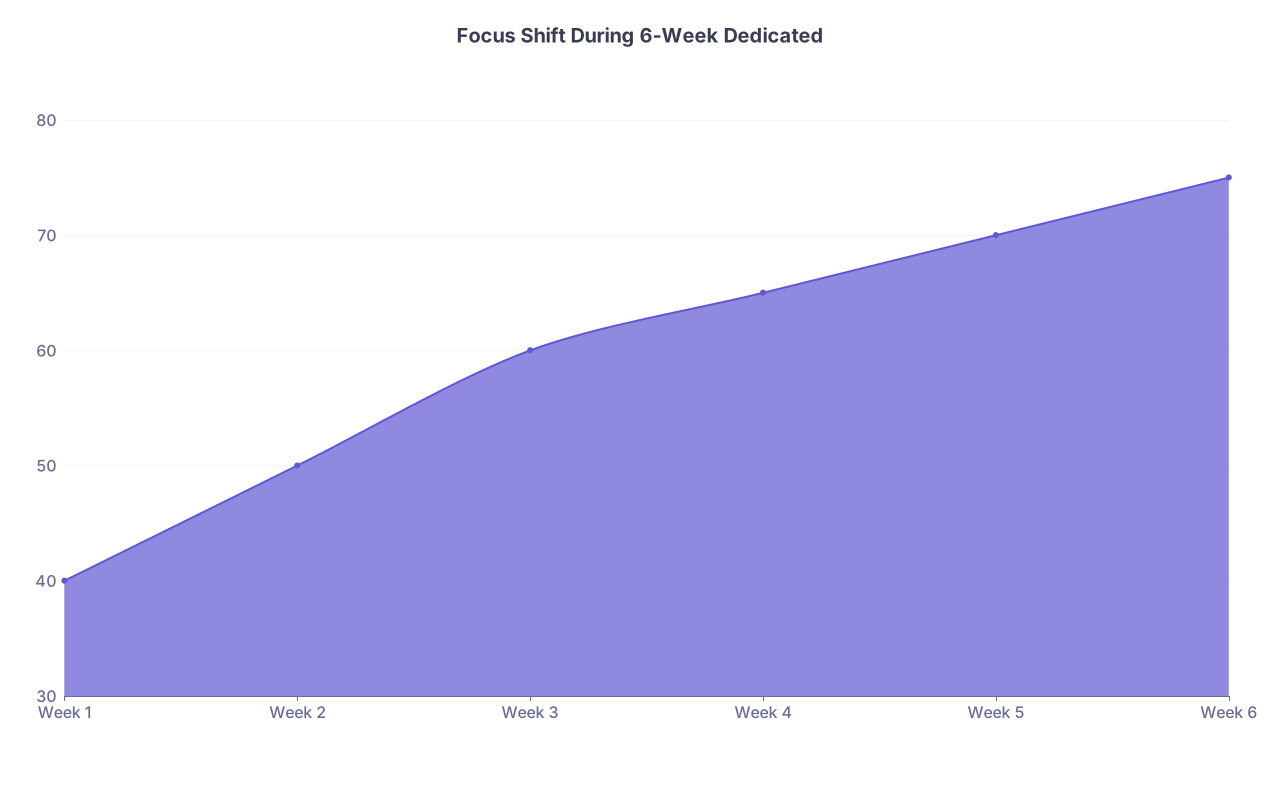
| Category | Value |
|---|---|
| Week 1 | 40 |
| Week 2 | 50 |
| Week 3 | 60 |
| Week 4 | 65 |
| Week 5 | 70 |
| Week 6 | 75 |
(Think of the percentages as “percent of time on questions/review” versus “pure content.” Roughly: content heavy early, question heavy late.)
Weeks 1–2
At this point:
- 50–60%: UWorld + review
- 40–50%: Content (videos, reading, consolidated notes)
- 200–400 Anki cards daily
Goal: Identify your true weak systems and clean up rusty basics.
Weeks 3–4
Shift gears:
- 70%: Questions + review
- 30%: Targeted content on only your weak zones
- More full-lengths (NBME/SA) every 1–1.5 weeks
Weeks 5–6 (Final Push)
Most of your time now:
- Random, mixed questions
- NBME + deep review
- Very little new content
Template here:
- 2–3 days/week: close to full-length test simulation
- Other days: question-review heavy, light on long videos
Non-Negotiable Daily Checklists
You can customize details, but you shouldn’t deviate from these daily minimums unless you’re acutely sick.
Every Day (Yes, Every Single One)
- At least 1 solid question block (20–40 Qs)
- At least 200 Anki reviews (unless you truly never used Anki; then shift to note review)
- At least 1 dedicated break outside your living space (walk, gym, fresh air)
- A written plan for tomorrow before you log off
Here’s what that “plan for tomorrow” can look like in 60 seconds:
- 8:00–9:00 – Anki (250)
- 9:15–11:15 – UWorld 40 timed
- 11:15–1:00 – Review
- 2:00–4:00 – Content: endocrine
- 4:30–6:00 – Mixed review (endocrine Anki + Qs)
- 8:00–8:30 – Light recap
That’s it. Six lines. But it keeps you from wasting the first two hours “setting up.”
What To Do the Day Before a Practice NBME
Quick but important, because people butcher this.
At this point—24 hours before your NBME—you should:
- Cut question volume by ~50%
- Focus on:
- Light Anki
- Reviewing high-yield lists (biostats formulas, common equations, acid-base, murmurs)
- Stop all “new” content by 6 p.m.
- Sleep like it’s the actual exam
- 8:00–12:00 – NBME full-length
- 12:00–1:00 – Lunch / decompress
- 1:00–4:00 – Quick review of all questions, flagging themes
- 4:00–6:00 – Deeper dive on patterns, not every single missed question
Final 3 Days Before Step 1: Micro-Template
Quick structure because people ask for it constantly.
T-3 and T-2 Days:
- AM: 40–60 mixed questions + review
- Midday: High-yield content loops (e.g., rapid review sheets, weak systems)
- PM: Light Anki, biostats formulas, ethics
T-1 (Day Before):
- No full blocks.
- Maybe 20–30 very light questions if you’re anxious.
- Short Anki session (cut reviews in half).
- Review only your highest-yield summary materials.
- Stop by late afternoon. Long walk, early bedtime.
Summary: What You Actually Need To Remember
Three things:
Your day needs fixed blocks, not vague intentions. “9–11 UWorld, 11–1 review, 2–4 content” beats “do a lot of questions” every time.
Question + review time is the core engine. The exact resources matter less than spending several focused hours daily on questions and truly understanding the explanations.
Adjust the template weekly, not daily. Commit to a schedule for 7 days, then tweak based on your NBME results and your mental state, not based on a bad afternoon.
That’s your dedicated period: not mysterious, just disciplined repetition inside a schedule you can execute.