90 Days Before Step 1: Weekly Goals for Content and Question Banks
It’s 90 days before your Step 1 exam.
Your school schedule is either light or just ended, your friends are “starting dedicated next week,” and you’ve got a UWorld subscription, an Anki deck with 10,000 overdue cards, and a slightly terrifying NBME score from a “baseline” you maybe should not have taken on a post-call day.
At this point, you need a timeline. Not vibes. Not “I’ll do UWorld and First Aid and Pathoma and Sketchy and… somehow it’ll work.”
Here is a week‑by‑week guide for the next 12 weeks (90 days) that tells you, very directly:
- What you should focus on each week
- How much content vs questions you should be doing
- When to take NBMEs and self-assessments
- What to change if you’re behind or your scores stall
I’ll break it into three phases:
- Weeks 1–4: Foundation + high‑yield content
- Weeks 5–8: Question‑heavy with targeted content
- Weeks 9–12: Exam simulation + ruthless refinement
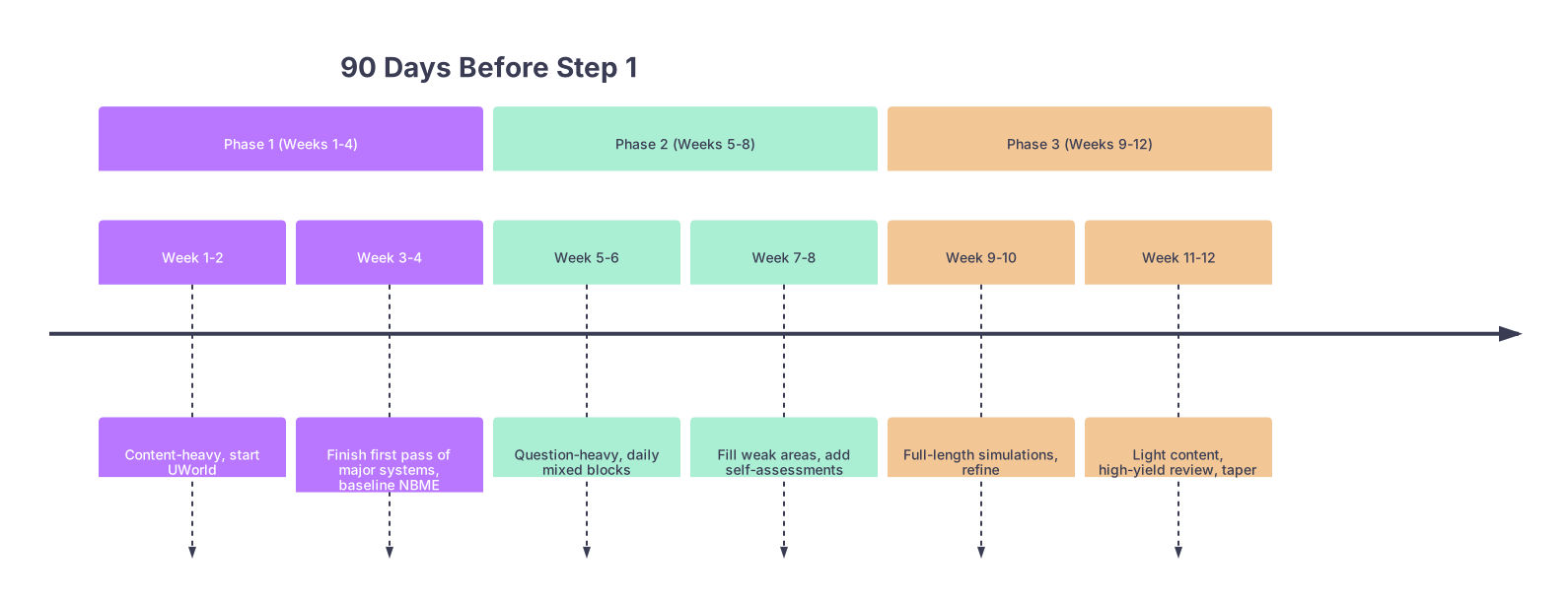
| Period | Event |
|---|---|
| Phase 1 (Weeks 1-4) - Week 1-2 | Content-heavy, start UWorld |
| Phase 1 (Weeks 1-4) - Week 3-4 | Finish first pass of major systems, baseline NBME |
| Phase 2 (Weeks 5-8) - Week 5-6 | Question-heavy, daily mixed blocks |
| Phase 2 (Weeks 5-8) - Week 7-8 | Fill weak areas, add self-assessments |
| Phase 3 (Weeks 9-12) - Week 9-10 | Full-length simulations, refine |
| Phase 3 (Weeks 9-12) - Week 11-12 | Light content, high-yield review, taper |
Ground Rules for All 12 Weeks
Before the week‑by‑week breakdown, a few non‑negotiables. If you ignore these, your schedule will unravel.
Primary resources only
- UWorld (or AMBOSS as a secondary bank, but UWorld is non‑negotiable)
- First Aid or Boards & Beyond notes / similar consolidated text
- Pathoma (for pathology)
- Anki (ONLY if you’ve been using it or can commit daily without flaking)
Daily non‑negotiables
- 1–2 UWorld blocks (40–80 questions)
- Review every question in painful detail
- At least 1–1.5 hours of dedicated weak‑area content review
NBMEs / Self‑assessments
- Every 2 weeks starting around Week 3–4
- Taken timed and standard length, not “for fun” in tutor mode
Score ranges and expectations (roughly)
- 90 days out: you might be anywhere from “barely passing” to “already 230+” on practice tests
- The important thing: trajectory, not where you start
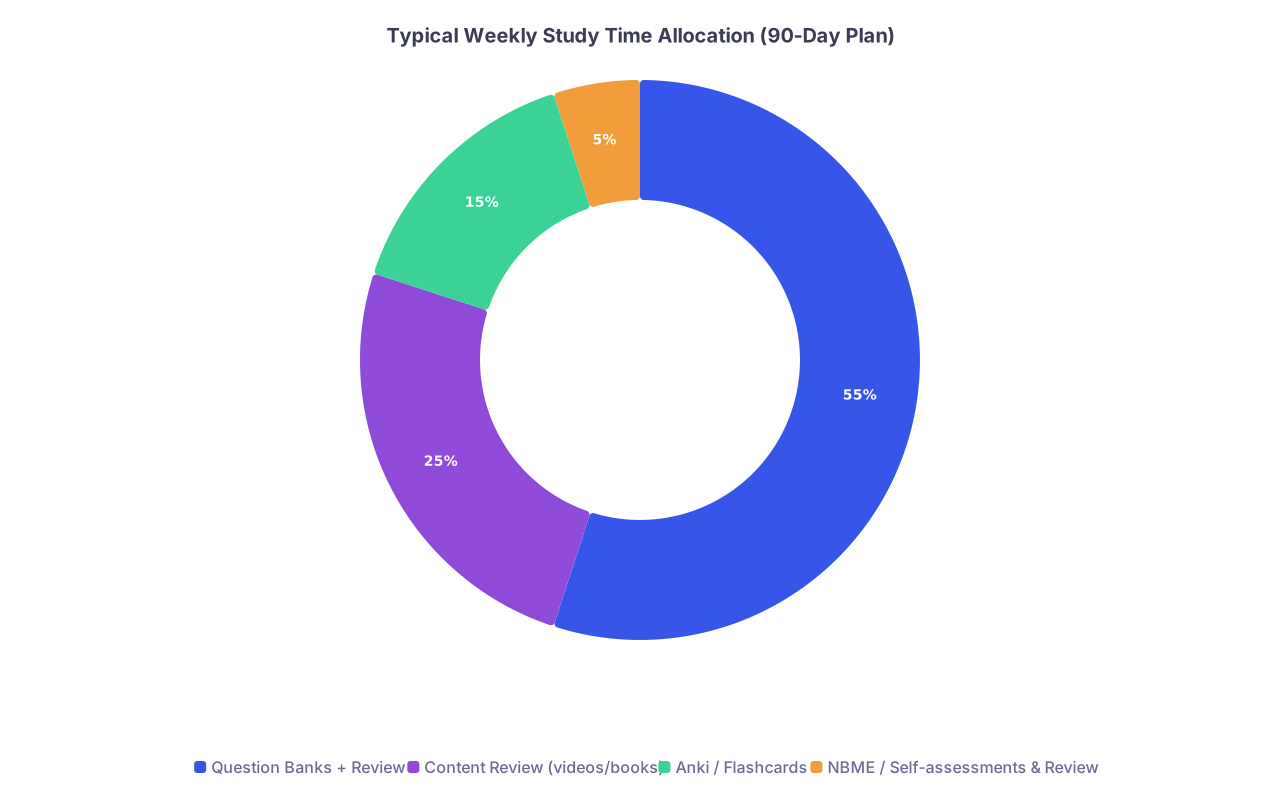
| Category | Value |
|---|---|
| Question Banks + Review | 55 |
| Content Review (videos/books) | 25 |
| Anki / Flashcards | 15 |
| NBME / Self-assessments & Review | 5 |
Phase 1 (Weeks 1–4): Build the Framework + Start Real Questions
Week 1: Baseline Structure, Not Baseline Panic
Goal: Get your systems/content map laid out and start UWorld with discipline.
At this point you should:
- Pick your resources and lock them in (stop shopping for the “perfect” video series)
- Sketch your 12‑week calendar: which systems/topics each week
- Decide your daily start + stop times (protect at least 1 real break)
Weekly targets:
- UWorld: 120–160 questions
- 1 block/day (40 questions) for 3–4 days
- Start with system-based, easiest for you (often cardio, heme/onc, or endocrine) to build momentum
- Content:
- 2–3 hours/day of Pathoma + your main text (First Aid or B&B notes) on the same system
- Anki:
- 30–60 minutes/day, ONLY on high‑yield decks or your own cards tied to what you did that day
End of Week 1 checklist:
- You’ve finished at least 1 small system OR a chunk of a bigger one (e.g., cardio + renal starting)
- You’ve completed 3–4 UWorld blocks and reviewed them fully
- You know your worst topics from this first round (e.g., acid-base, murmurs, lysosomal storage diseases)
Week 2: Increase UWorld Volume, Finish 2–3 Systems
Goal: Ramp the question volume slightly, keep content aligned with questions.
At this point you should:
- Be doing 1–2 UWorld blocks on at least 4 days of the week
- Stay system-based in UWorld but push into systems you dislike (GI, neuro, repro)
Weekly targets:
- UWorld: 160–240 questions
- 4–5 days of UWorld
- For weaker systems, do:
- 40-question block → review → related Pathoma/First Aid → brief Anki
- Content:
- Aim to cover 2–3 full systems (e.g., cardio, renal, pulmonary)
- Anki:
- Keep it short and consistent. Missing 3 days in a row and letting reviews explode is how people tank their last month.
End of Week 2 checklist:
- At least 300–400 total questions done so far
- 3–5 systems covered at least once in notes/videos
- A written list (or spreadsheet) of “frequent miss” topics from UWorld
Week 3: First NBME + Finish First Pass of Most High‑Yield Systems
Goal: Reality check. You can’t improve what you won’t measure.
At this point you should:
- Take your first NBME (if you didn’t already) at the end of the week
- Shift into slightly more mixed blocks but still leaning system-based
Weekly targets:
- UWorld: 200–240 questions
- 5–6 days of 1–2 blocks/day
- Start sprinkling in mixed blocks (maybe 1 block mixed, 1 block system)
- Content:
- Pathoma + notes to catch you up on:
- Pulm, cardio, renal, GI, heme/onc, endocrine at minimum
- Pathoma + notes to catch you up on:
- NBME:
- 1 NBME (or UWSA1 if you absolutely can’t access NBMEs)
- Same time of day as your real exam if possible
How to interpret that Week 3 NBME:
- <200 / barely passing: You’re behind on fundamentals.
- Next 2 weeks = more content focus, but do not stop questions.
- 200–220: Solid base. You need volume and targeted review.
- 220+: Good position. The priority is not burning out and steadily polishing weaknesses.
End of Week 3 checklist:
- 500–650 total UWorld questions completed
- NBME score logged, with error breakdown by system + subject
- You know your bottom 3 systems and bottom 3 disciplines (e.g., pharm, biochem, immuno)
Week 4: Consolidate Systems, Fix Foundational Holes
Goal: End the first month with a mostly complete “first pass” of high‑yield content and a stable study routine.
At this point you should:
- Be able to do 2 blocks/day without totally frying your brain
- Have at least touched all major systems once (maybe not micro/biochem in full depth yet)
Weekly targets:
- UWorld: 200–240 questions
- Mostly system-based, hammering your weak ones
- Content:
- Finish remaining “big” systems (neuro, MSK, repro, GI if not done)
- Start structured review for:
- Biochem (metabolism, inborn errors, vitamins)
- Micro (major organisms + drugs)
End of Week 4 checkpoint:
By the end of the first month you ideally have:
- 700–900 UWorld questions completed
- 1 NBME score to compare against later
- At least one clear written plan for:
- How you’ll tackle micro (often Sketchy + UWorld + a small table in your notes)
- How you’ll tackle biochem (structured charts, not random reading)
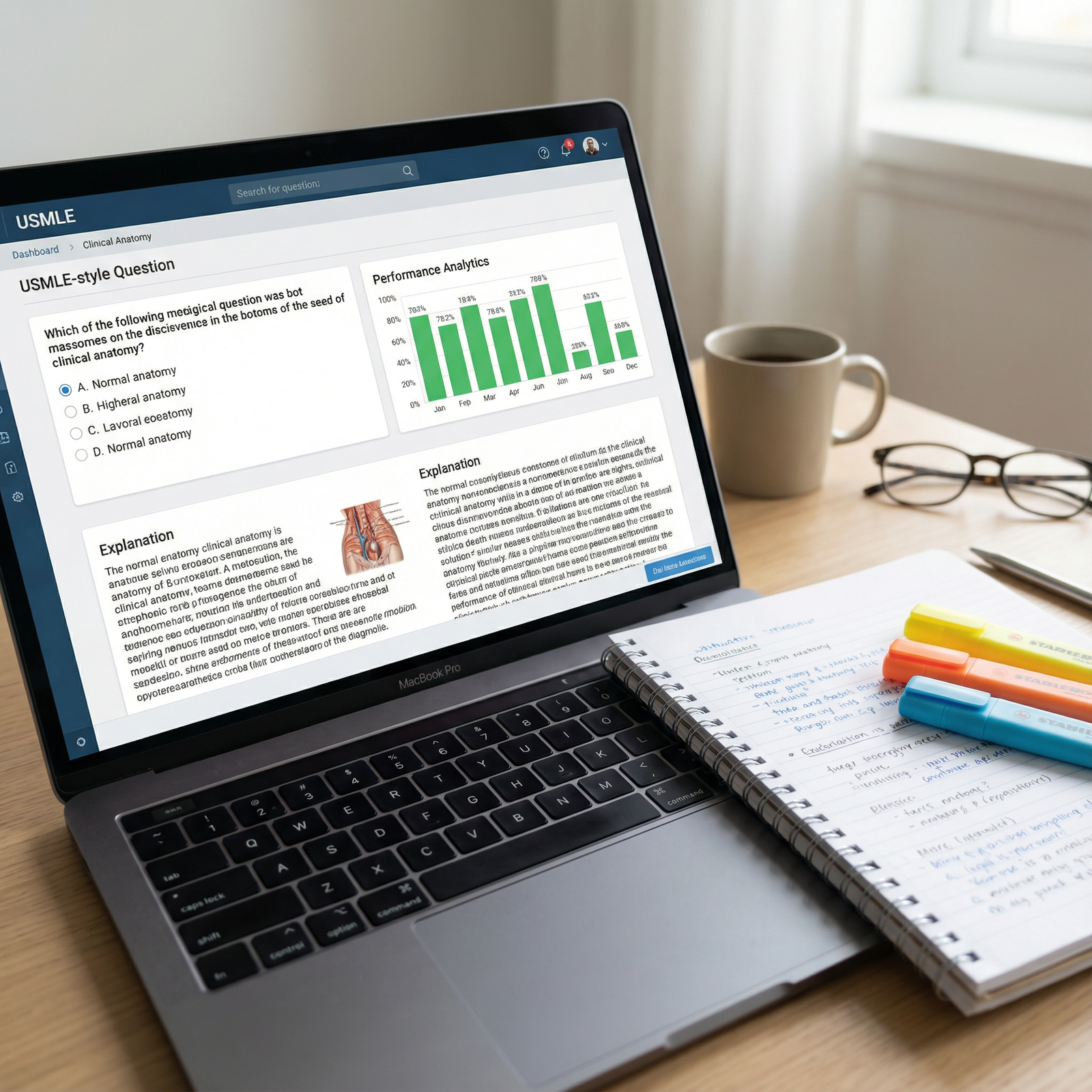
Phase 2 (Weeks 5–8): Question-Heavy, Data-Driven Adjustments
Now you’re not “starting dedicated.” You’re in the middle of it. This is where people either get systematically better or just spin inside UWorld without fixing anything.
Week 5: Switch to Mostly Mixed Blocks
Goal: Train your brain to switch topics quickly, like the real exam.
At this point you should:
- Move to majority mixed blocks (by organ system and discipline)
- Get comfortable being uncomfortable: you will feel worse at first
Weekly targets:
- UWorld: 240–320 questions
- 6 days of 2 blocks/day on most days
- All in timed mode, random or mixed
- Content:
- 1–2 hours/day of targeted review driven by:
- UWorld % by subject
- NBME breakdown from Week 3
- 1–2 hours/day of targeted review driven by:
- Anki:
- Only if it fits. If Anki is eating 3 hours/day and your questions are dropping, cut it down aggressively.
End of Week 5 checklist:
- 1–2 pages of concise notes (or a OneNote/Notion file) of “commonly missed patterns”
- You’re seeing repeat errors less often (because you’re actually fixing them, not just reading the explanation and moving on)
Week 6: Second NBME + Complete First UWorld Pass (or Close)
Goal: See if your changes are doing anything.
At this point you should:
- Be approaching the end of your first UWorld pass (or at least >60–70% through)
- Take another NBME at the end of this week
Weekly targets:
- UWorld: 200–280 questions
- If you’re close to the end of the bank, don’t rush sloppy blocks just to finish; quality still matters
- NBME:
- NBME #2 (or UWSA1 if you did NBME last time and want variation)
- Content:
- Focus on your worst 2 systems and worst 1–2 foundational areas (usually pharm or biochem)
How to read the Week 6 NBME:
- If your score went up ≥10 points: you’re on a good trajectory.
- If it’s flat: your studying is not targeted enough; you’re just “doing questions.”
- If it went down: check for:
- Fatigue (overdoing hours, no real rest days)
- Sloppy timing / rushing through stems
- Not actually understanding why answers are wrong/right
End of Week 6 checklist:
- 1000–1300 total UWorld questions done
- 2 NBME scores, graphed, with notes on what you changed between them
- A ranked list of systems by strength: Strong / Medium / Weak
Week 7: Start Second Pass Elements, Ramp Up Weak Disciplines
Goal: Begin revisiting key questions and patterns, not just plowing forward.
At this point you should:
- Have either finished UWorld or be close enough that you plan to finish by Week 8
- Start a selective second pass:
- Marked questions
- Topics you continually miss
Weekly targets:
- UWorld:
- 160–240 “new” questions if you haven’t finished first pass
- Plus 80–120 “marked” or incorrect questions review
- Content:
- 1 discipline‑focused block per day (e.g., all pharm, all micro) with immediate targeted review
- Add 1–2 short “rapid review” sessions daily:
- 20–30 minutes of:
- Buzzword drills
- High‑yield tables (glycolysis vs TCA vs ETC inhibitors, autosomal dominant diseases, etc.)
- 20–30 minutes of:
End of Week 7 checklist:
- You know EXACTLY which disciplines drag you down on every practice test
- You have a sustainable way to re‑see high‑yield facts multiple times (Anki, rapid review docs, or both)
Week 8: Third NBME + Nail Down Exam Strategy
Goal: Transition from “what to study” to also “how to test.”
At this point you should:
- Take another NBME toward the end of the week
- Have fully completed UWorld first pass
Weekly targets:
- UWorld / Questions:
- 160–200 questions, mostly:
- Second-pass marked questions
- Random mixed blocks from bank #2 (AMBOSS or leftover UWorld if you were slow earlier)
- 160–200 questions, mostly:
- NBME:
- NBME #3 (or UWSA2—many people like this one closer to test day)
- Strategy:
- Time yourself per block:
- How many questions left at 10 minutes?
- Are you always rushing last 5 questions?
- Time yourself per block:
Score interpretation now:
- If you’re not reasonably above passing by Week 8, you need an honest talk with your dean/advisor about pushing the exam. I’ve seen people salvage from low 190s in the last 4 weeks, but it’s not fun and it’s definitely not guaranteed.
End of Week 8 checklist:
- UWorld first pass complete
- 3 self‑assessments done and trended
- Concrete timing strategy: how long you allow per question, when you flag, how you move on

Phase 3 (Weeks 9–12): Simulation, Refinement, and Taper
This last month is not about discovering new resources. It’s about hitting exam day with:
- Stable scores
- A repeatable test‑day routine
- A brain that’s tired in a good way, not fried beyond recognition
Week 9: First Full-Length Simulation Week
Goal: See how your brain holds up across a near‑full exam day.
At this point you should:
- Schedule a “mock exam day”:
- 7 blocks of 40 questions (NBMEs + UWorld mixed, or UWSA timed)
- Realistic breaks, realistic start time
Weekly targets:
- Questions:
- 1 full simulated test day (280 questions)
- 2–3 other days of 80–120 questions + review
- Content:
- Short, sharp reviews:
- Pharm autonomics
- Antimicrobials
- High‑yield pathology (vasculitides, nephritic/nephrotic, cardiomyopathies, etc.)
- Short, sharp reviews:
- Post‑simulation:
- Write down:
- When did you mentally dip? Block 5? 6?
- Were your last blocks way worse than your first?
- Write down:
End of Week 9 checklist:
- One near‑full exam reproduced under timed conditions
- A list of non‑content issues: timing, stamina, breaks, hydration, caffeine timing
Week 10: Last NBME/UWSA + Focused Polishing
Goal: Get your last solid snapshot of where you stand.
At this point you should:
- Take your final “big” self‑assessment this week (NBME or UWSA)
- Accept that your knowledge ceiling is mostly set—now it’s about execution and recall
Weekly targets:
- Questions:
- 160–200 questions, mostly random mixed
- Assessment:
- NBME #4 or UWSA2 (if not already used)
- Review:
- Brutal focus on:
- Mistake patterns that keep repeating
- Topics you “almost know” (these are easier points to gain than brand‑new areas)
- Brutal focus on:
Score interpretation at this point:
- If last 2–3 self‑assessments are stable and safely passing → stay the course
- If wildly fluctuating → you’re either fatigued or studying chaotically; simplify and protect sleep
- If right at the pass cutoff → speak with a mentor about extension, but be honest about your trajectory
End of Week 10 checklist:
- Last formal score on record
- A clean, prioritized list of topics for the final 2 weeks
Week 11: High-Yield Blitz, Low-Stress Volume
Goal: Cement what you already know; do NOT blow yourself up with 12‑hour marathons.
At this point you should:
- Scale total hours slightly down, not up
- Focus on recall speed and pattern recognition
Weekly targets:
- Questions:
- 80–160 per day for 4–5 days
- Block size can be 20–40 questions, but always timed
- Content:
- Quick passes through:
- First Aid rapid review section
- Your own condensed notes / “do not miss” list
- Quick passes through:
- Sleep:
- Start normalizing your exam‑day sleep schedule this week, not the night before
End of Week 11 checklist:
- You can flip through your notes and actually recognize almost everything
- No huge new content gaps, just a few “annoying” topics that you’ll give one more pass
Week 12 (Final 7 Days): Taper, Don’t Cram
Break this down day‑by‑day. This is where students either protect their score or self‑sabotage.
7–5 Days Before Exam
At this point you should:
- Do 1–2 blocks/day (40–80 questions), all mixed and timed
- Spend more time reviewing than answering
Daily structure example:
- Block of 40 questions → 2–2.5 hours review
- 1–2 hours of rapid review (pharm tables, micro, biochem, high‑yield path)
- 30–45 minutes of light Anki or flashcards
- Hard cutoff time in the evening (e.g., 7–8 PM)
4–3 Days Before Exam
- Drop down to 1 block/day, max 40 questions
- Avoid new resources, avoid long videos
- Re-read:
- Your “most missed” notebook/pages
- Pathoma chapters you still feel shaky on (short ones, not the whole thing)
- Visit (or mentally rehearse) the test center logistics:
- Travel time
- ID, snacks, breaks
2 Days Before Exam
At this point you should:
- Stop heavy questions
- Maybe 20 easy/mid‑level questions in the morning if you’re antsy
- Spend the rest of the day on:
- Light review of your own notes
- Making sure everything is ready: Prometric email, snacks, clothes, directions, ID
1 Day Before Exam
Do not be the person who “just did one more NBME” the day before and then couldn’t sleep.
- Zero heavy questions
- If you must do something:
- 20–30 minutes of flipping through rapid review or images
- Get outside. Move your body. Eat food that won’t upset your stomach.
- Go to bed early with your exam‑day routine already planned.
| Phase & Weeks | Total Questions/Week | Main Focus |
|---|---|---|
| Weeks 1–2 | 120–240 | System-based, content-heavy |
| Weeks 3–4 | 200–240 | Finish systems, first NBME |
| Weeks 5–6 | 200–320 | Mixed blocks, second NBME |
| Weeks 7–8 | 200–320 | Second-pass + third NBME |
| Weeks 9–10 | 200–280 | Full simulations + final NBME/UWSA |
| Weeks 11–12 | 80–200 | Tapering, high-yield refinement |
Final Takeaways
- At each week, know your main goal: build base (Weeks 1–4), sharpen with questions (Weeks 5–8), then simulate and refine (Weeks 9–12).
- Questions without targeted review are a waste; content without questions is a fantasy. You need both, in shifting proportions.
- The last 10–14 days are about protecting your score, not heroics. Taper, sleep, and walk into Step 1 with a brain that can actually use what you’ve spent 90 days building.