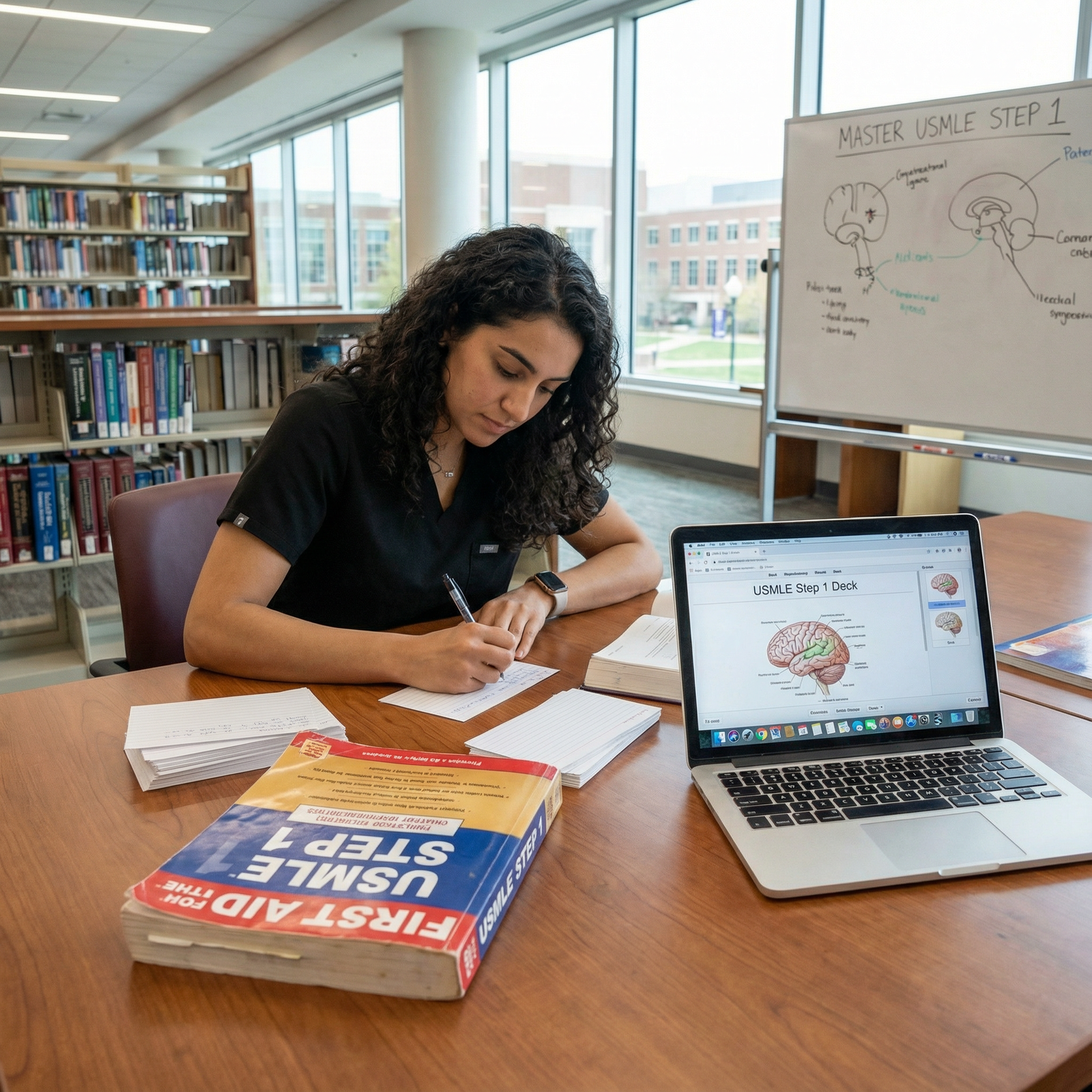
The biggest lie MS1s believe is that “Step 1 prep starts MS2.” It doesn’t. It starts the week you get your badge.
If you wait until dedicated, you’re playing catch-up against people who quietly built Step habits from month one. They will feel calm in March of MS2 while you’re figuring out what UWorld even looks like.
Here’s the month‑by‑month, then week‑by‑week roadmap for MS1 that actually sets you up for Step 1 success—without turning your life into a board prep bootcamp.
Big Picture: How Your MS1 Year Should Evolve
At this point, you need a bird’s-eye view. Then we’ll zoom into the calendar.
| Phase | Timeframe | Primary Goal | Step 1 Focus Level |
|---|---|---|---|
| Orientation Block | Weeks 1–2 | Build systems, not scores | Very Low |
| Fall Sem 1 | Months 1–4 | Learn how to learn for boards | Low–Moderate |
| Winter Break | 2–3 weeks | Light bridge, no burnout | Low |
| Spring Sem 2 | Months 5–9 | Integrate boards with classes | Moderate–High |
| Summer After MS1 | 4–8 weeks | Solidify foundations | High (but focused) |
The rule: Class first, boards second, but never boards “later.” Every block should have some Step connection, even if it’s tiny.
Orientation to Month 1: Do Not Open UWorld Yet
This is the part people get wrong. At this point, you are not “behind” no matter what your classmates say.
Week 0–1: Orientation & First Real Classes
Your job this week is logistics and habits.
Focus on:
- Getting your note system locked (OneNote/Notion/GoodNotes, doesn’t matter—just commit)
- Deciding on one main extracurricular and ignoring the rest for now
- Learning how your school tests: slide-based? NBME-style? Old exams?
Step‑relevant moves (light, but deliberate):
- Create accounts for:
- AnkiWeb
- USMLE-Rx or AMBOSS (if your school gives access)
- Install:
- AnKing Overhaul deck (even if you won’t fully use it yet)
- Anki add‑ons for image occlusion, hierarchical tags
- Start daily micro‑Anki habit
- 30–50 cards/day max
- Use it for class content, not random Step facts yet
At this point, you should not be grinding any question banks. Practice restraint. Your brain is already flooded.
Months 1–2 (Fall): Foundations & Systems > Scores
This is your “learning how to be a medical student” period. The goal is to learn how to study in a Step‑friendly way, not to memorize FA cover to cover.
Weekly Structure (Baseline Template)
Pick a simple weekly rhythm and stick to it:
Mon–Fri
- Class content 70–80% of your study time
- Anki every single day
- 10–15 board‑style questions per week, not per day
- Use: USMLE‑Rx / AMBOSS / school Q-bank
- Topic: only what you’ve already covered in class
Sat
- Light review of the week’s lectures
- Clean up Anki (suspend garbage cards, add a few high‑yield ones)
Sun
- OFF or half‑day
- Protect at least one real break day to not burn out by November
What to add now:
Board book alignment
- When you start your first real block (e.g., Foundations, Biochem, Anatomy):
- Skim that section in First Aid or Boards & Beyond outline
- Not deep reading. 15–20 minutes per topic just to see “this is Step language.”
- When you start your first real block (e.g., Foundations, Biochem, Anatomy):
Question exposure, not performance
- Start with tutor mode, 5–10 questions at a time
- Target: 50–80 questions/month, that’s it
- You’re building comfort with:
- Length of stems
- How “distractors” look
- Common buzzwords
At this point, you should:
- Know how to run Anki daily without missing
- Have done your first 50 “real” Step‑ish questions
- Be passing your school exams solidly (this matters way more than early Step stats)
Months 3–4 (Late Fall): Pre‑Clinical Science → Your First Real Step Foundation
This is where you stop pretending class and Step are separate planets.
You’ll probably hit courses like biochem, genetics, early phys, maybe a little neuroanatomy. These are Step heavy.
Month 3: Tighten the System
Weekly plan (bumped up, still reasonable):
Anki
- 100–150 reviews/day (mix of class + some Step‑aligned cards)
- Start tagging class cards with Step tags when possible
Questions
- 20–30 questions/week, by system/topic
- Still in tutor mode, untimed
- Use explanations as mini‑lectures:
- When you miss a question, ask: “Was this content I haven’t learned yet, or did I just forget?”
Video resources
- Pick one main video resource for clarification:
- Boards & Beyond, Osmosis, or Pathoma (if you’ve already started path)
- Use it surgically:
- 1–2 short videos to clarify confusing lectures, not as a second full curriculum
- Pick one main video resource for clarification:
At this point, you should:
- Be comfortable translating your class lecture into Step terms
- Be touching board‑style material every week
- Have stopped downloading 17 different decks/resources you’ll never use
Thanksgiving to Winter Break: Mini‑Recalibration
Last 2–3 weeks before break:
- Do a small self‑audit:
- Which study methods worked?
- Where did you lose points on exams (details? concepts? reading questions?)
- Adjust:
- If you’re constantly crushed by details → more Anki
- If you’re missing conceptual questions → more question banks and board videos
Winter Break is not Step bootcamp. But it’s not 100% vacation either if you’re aiming high.
Winter Break: Light Bridge, Not Burnout Camp
You’ll have 2–3 weeks. Use them smartly.
Week 1 of Break
First few days:
- Actually rest. Sleep. See normal humans.
Then:
Spend 3–4 days doing:
- 20–30 questions/day (Rx/AMBOSS) in tutor mode
- Focus heavily on:
- Biochem
- Molecular / genetics
- Basic phys
- After each block, write 2–3 “if I see X, think Y” rules
Example: “Baby, cataracts, musty odor → think phenylketonuria, decreased phenylalanine hydroxylase.”
Skim First Aid sections you’ve already done in class
- 1–2 hours/day max
- Goal: familiarity, not memorization
Week 2 of Break
- Drop back to:
- 10–20 questions/day
- Maintain your Anki streak
- Start planning Spring MS2‑style habits:
- When will you do questions during busy systems blocks?
- How many questions can you realistically sustain on weekdays?
At this point, you should:
- Have maybe 150–250 total board questions under your belt
- Feel that Step language is less alien
- Still want to return to school, not hate medicine
Months 5–7 (Early Spring): Systems Start — Now It Gets Real
This is the turning point. Most schools start organ system blocks around now: cardio, pulm, renal. These are your Step 1 backbone.
You cannot treat these like any random block. This is Step content.
Month 5: First System (Example: Cardio)
Weekly targets:
Class first, but in board format
- After each lecture:
- Make/curate 5–15 Anki cards max
- Focus: mechanisms, “if this ↑ then that ↓,” major drug effects
- Make/curate 5–15 Anki cards max
- Same day, if possible, watch the matching Boards & Beyond (or similar) chapter section
- After each lecture:
Questions
- 15–20 questions per system per week
- Use system‑tagged blocks (Cardio Only, if available)
- Ask one question after each study session:
- “How would this show up on a question stem?”
Weekend consolidation
- One half‑day:
- 10–15 additional questions on that week’s topics
- 30–45 minutes FA cardio section skim
- One half‑day:
At this point, you should:
- Be thinking in mechanisms and patterns, not just lists
- Have a sustainable rhythm that merges class + Step for one system
Month 6: Second System (Example: Pulm) — Turn the Dial Up Slightly
You’re now familiar with the process. Increase the Step weight:
Questions
- 30–40 questions/week
- If you’re comfortable, start trying:
- 10–15 question blocks
- Timed, but not strict—just don’t pause for every stem
Self‑testing
- At the end of the block, simulate:
- 25–30 mixed questions from that system
- Timed
- Review:
- Content misses → add/revise Anki
- Test‑taking misses → practice reading stems slowly once, then marking key data
- At the end of the block, simulate:
Months 7–9 (Late Spring): Now You’re Training Like a Future Step Taker
By now, you’ve had at least cardio + pulm + one or two more systems (renal, GI, heme, etc.). These are all Step 1 murder weapons. You want them solid.
Here’s where your weekly routine starts to look like a “mini‑dedicated,” but stretched out and gentler.
Standard Week in Late Spring
Daily
- Anki: 200–250 reviews/day (max 60–75 minutes)
- Class content: 3–5 hours
Questions
- 40–60 Step‑style questions/week
- Mostly system‑based, but add:
- 10–15 mixed questions every 1–2 weeks so you don’t get soft
FA / Pathoma / Boards & Beyond
- 1–2 hours/week flipping through:
- Pathoma chapters that match your current block
- FA diagrams/tables for each system
- 1–2 hours/week flipping through:
At this point, you should:
- Have ~600–1000 board‑style questions completed (across Rx/AMBOSS/school bank)
- Be less scared of long question stems
- Know your weak systems by feel (you don’t need a spreadsheet to tell you renal is rough)
End of MS1 Coursework: Mini‑Cumulative Check
Once your last big spring block ends:
- Do a 2–3 day cumulative review:
- 25–40 mixed system questions/day
- Focus on:
- Cardio
- Pulm
- Renal
- Pharm from those systems
- Identify:
- 3–5 recurring weak topics (e.g., acid‑base, heart murmurs, asthma drugs)
This isn’t an NBME full diagnostic. It’s a reality check. You’re just trying to not walk into MS2 with silent landmines.
Summer After MS1: Smart Sprint, Not Marathon
This time is gold. It’s also where people destroy themselves with bad plans.
The main variables:
- Length of break (4–8 weeks? research? job?)
- When your school schedules dedicated (after MS2)
Here’s a general template you can adjust.
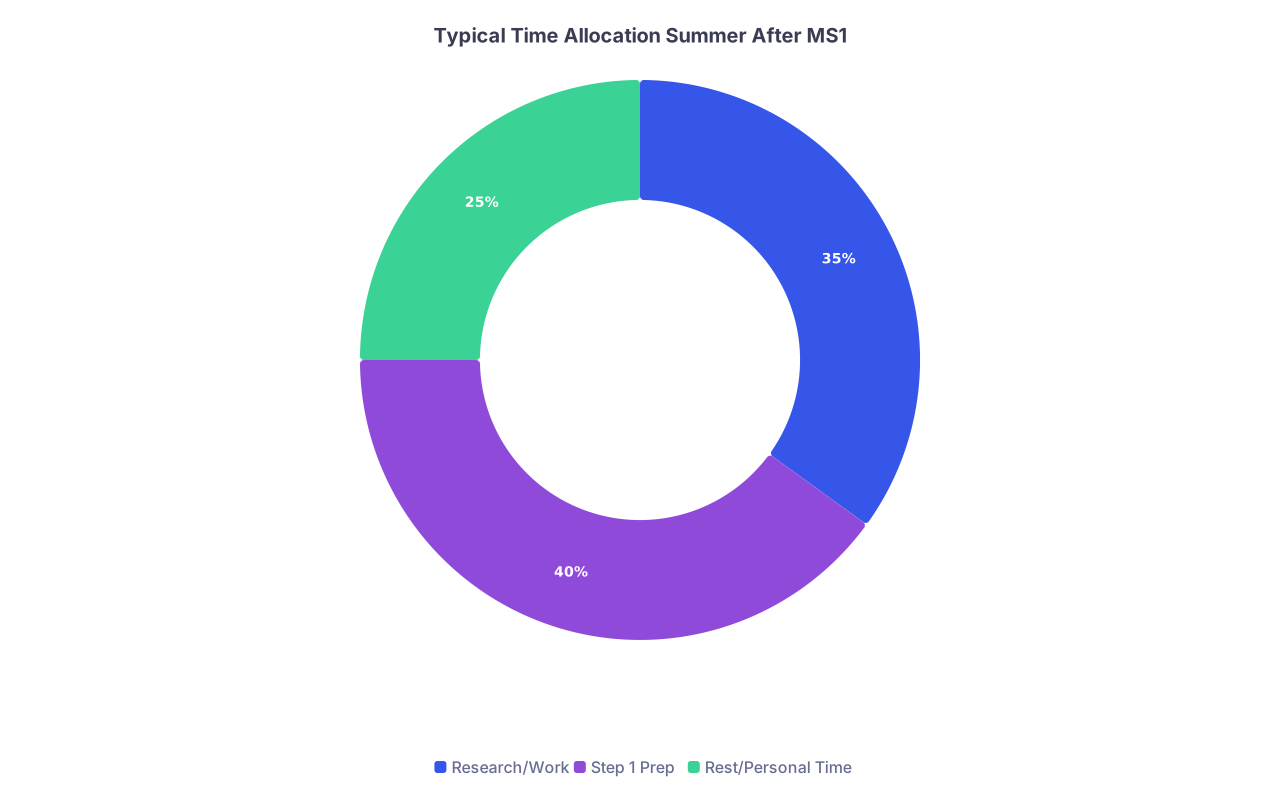
| Category | Value |
|---|---|
| Research/Work | 35 |
| Step 1 Prep | 40 |
| Rest/Personal Time | 25 |
If You Have 6–8 Weeks Off
Weeks 1–2: Baseline & Cleanup
- 30–40 questions/day, 5 days/week
- Mixed but heavily weighted to MS1 systems and core sciences
- Anki:
- Clear daily review backlog
- No massive new card creation spree
- Content review (1–2 hours/day):
- Pathoma videos for systems you’ve already done
- Quick FA passes for:
- Biochem
- Immunology
- Micro basics
At this point, you should:
- Feel your MS1 material resurfacing
- Notice that you’re slowly reading question stems faster
Weeks 3–4: Build Real Endurance
40–60 questions/day, 5 days/week
- Start standardizing to:
- 2 blocks of 20–25 questions
- Timed
- Start standardizing to:
After each block:
- Full, slow review > rapid score checking
- Write down:
- 3 “themes” per block (e.g., “I misread all the renal phys graphs”)
1–1.5 hours focused content:
- Always driven by question misses
- No random chapter binges “just because”
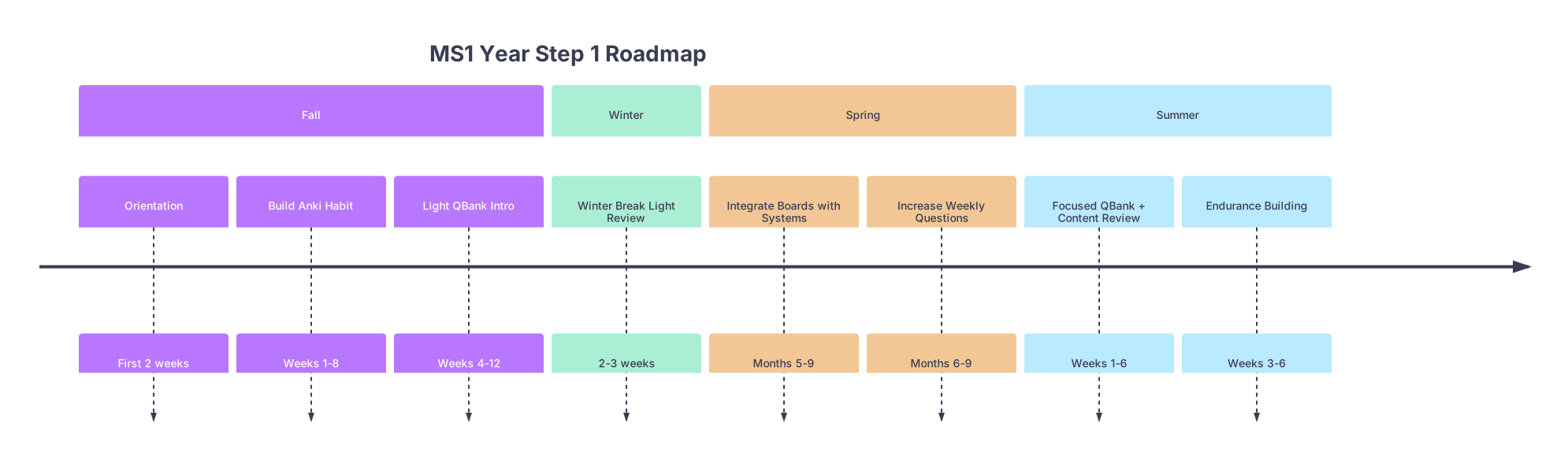
| Period | Event |
|---|---|
| Fall - Orientation | First 2 weeks |
| Fall - Build Anki Habit | Weeks 1-8 |
| Fall - Light QBank Intro | Weeks 4-12 |
| Winter - Winter Break Light Review | 2-3 weeks |
| Spring - Integrate Boards with Systems | Months 5-9 |
| Spring - Increase Weekly Questions | Months 6-9 |
| Summer - Focused QBank + Content Review | Weeks 1-6 |
| Summer - Endurance Building | Weeks 3-6 |
If You Only Have 4 Weeks Truly Free
Cut it down:
- 30–40 questions/day, 5 days/week
- Weekend:
- One day off
- One half‑day to organize your Anki and notes for MS2
That’s enough. Going much heavier now just steals energy from the year that really matters (MS2 + dedicated).
What You Should Not Be Doing MS1 (But People Try Anyway)
Quick fire list:
Full UWorld reset MS1
- No. Save UWorld for when you’ve seen most systems. Burning through it MS1 is usually wasteful.
Full timed 40‑question blocks in October of MS1
- You’re practicing test‑taking on content you don’t know yet. That just trains panic, not skill.
Trying to memorize all of First Aid
- FA is an index, not a textbook. Use it to anchor what you already learned.
5 different decks, no loyalty
- Pick one main deck (e.g., AnKing). Add or tweak for your curriculum. Stop deck‑hopping.
Turn winter break into fake dedicated
- You’ll be miserable by February. Short sprints, not marathons.
Quick MS1 Step 1 Checklist by Timepoint
By End of Month 1
You should:
- Have a daily Anki habit (even if tiny)
- Have done at least 20–30 board‑style questions
- Know what resource you’ll use to supplement confusing lectures
By End of Fall Semester
You should:
- Have 100–250 questions done (Rx/AMBOSS/etc.)
- Understand how Step 1 questions are structured
- Be passing your courses with reliable, repeatable study methods
By End of Spring Semester
You should:
- Have 600–1000+ questions completed across systems
- Be integrating boards resources during systems blocks
- Know your top 3 weak areas from MS1 content
By End of Summer After MS1
You should:
- Have run through:
- Pathoma (for MS1‑covered systems)
- Major FA sections for basic sciences
- Be comfortable doing:
- 40–60 questions/day for several days in a row without mental collapse
- Feel like Step 1 is a big challenge, but not a black box
The Core Truths to Remember
Consistency beats intensity.
20 focused questions/week all year MS1 crushes 300 panicked questions over winter break.Class and Step are not enemies.
The smartest MS1s are constantly asking, “How will this show up on Step?” and adjusting their studying accordingly.You’re building skills, not just knowledge.
MS1 is where you learn how to use Anki, how to read stems, how to survive long study days. Step 1 is just the first big test of that system you build now.