
The way most students “fit in” practice exams before Step 1 is wrong. They cram NBMEs at the end, burn out, and never actually learn from them.
You have 30 days. You need a planned, day‑by‑day testing rhythm that tells you exactly what to do when—not vague advice like “take a practice test every week.”
Below is a complete 30‑day countdown, with specific test days, review days, and offloading days so you peak on your real exam, not 10 days before.
Big Picture: Your 30-Day Step 1 Game Plan
At this point—30 days out—you must stop pretending you have unlimited time. You are in the execution phase.
Here is the overall structure first, then we drill into the daily schedule.
| Phase | Days | Main Focus |
|---|---|---|
| Phase 1 | 30–22 | Baseline + fill gaps |
| Phase 2 | 21–15 | Weekly NBMEs + refinement |
| Phase 3 | 14–7 | High-frequency testing |
| Taper & Peak | 6–1 | Shorter tests, recovery |
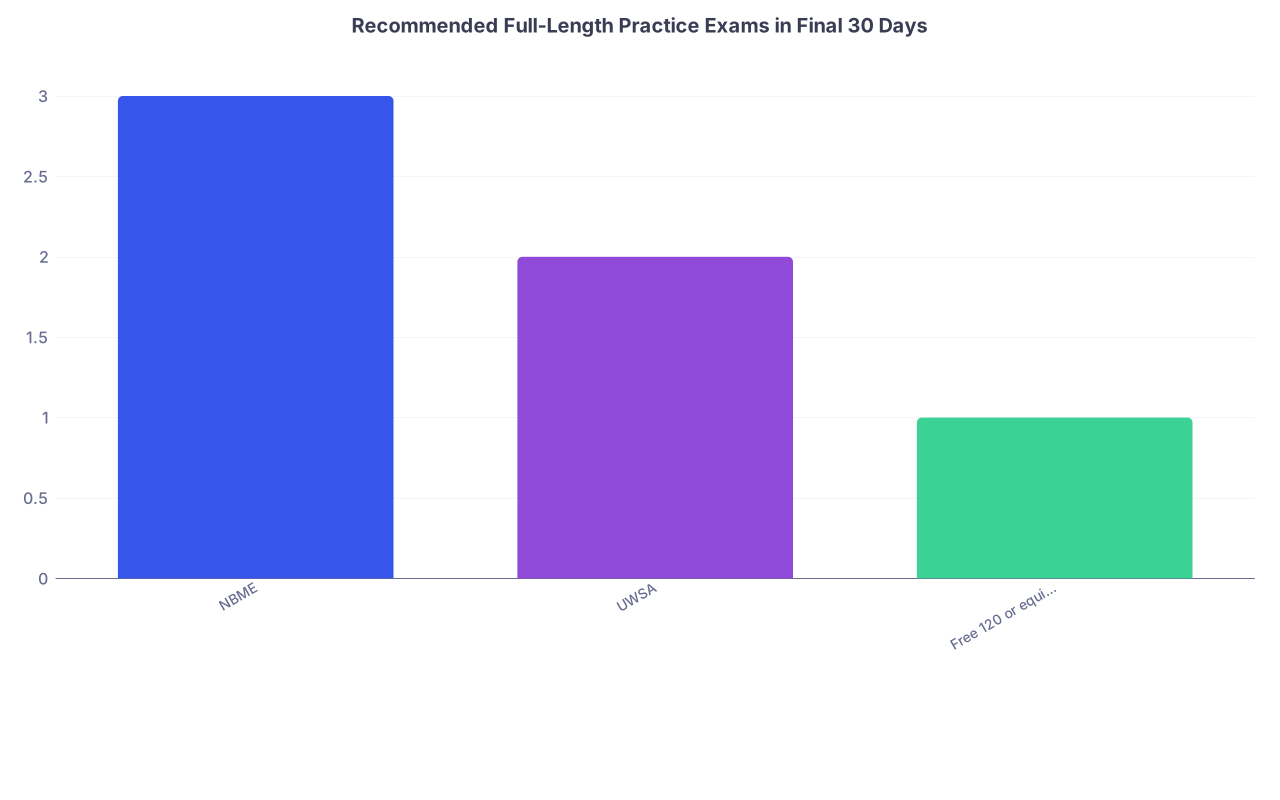
And here is how many full practice exams you should realistically aim for in this last month:
| Category | Value |
|---|---|
| NBME | 3 |
| UWSA | 2 |
| Free 120 or equivalent | 1 |
If you cannot hit those numbers because of time or energy, we will prioritize; I will tell you when to cut and what to cut.
Ground Rules Before Day 30
Before we go day‑by‑day, lock in these rules:
- Full‑length = 7 blocks (or the exam’s natural full length). No pausing, no “I’ll finish later.”
- Review is non‑negotiable. An 8‑hour exam day requires a lighter review day after. If you skip review, you waste the score.
- No new resources. With 30 days left, your core tools are:
- 1 main question bank (UWorld, AMBOSS)
- NBMEs + UWSAs
- First Aid / Boards & Beyond / Pathoma only as reference during review
- Protect sleep > squeezing extra questions. The last two weeks especially.
If you are still doing 80–120 new QBank questions daily right now, that will change. Practice tests become your core; QBank becomes support.
Phase 1 (Days 30–22): Baseline and Targeted Fixes
Goal: Get a hard baseline and identify themes you keep missing.
Day 30 – Full Baseline NBME
At this point you should:
- Take a full NBME (online, standard conditions).
- Treat it like test day:
- Same start time as your real exam
- Same breaks structure
- No phone, no random snacks mid‑block
After the exam (briefly):
- Write down:
- Overall percent / score
- Weakest systems (e.g., neuro, renal)
- Weakest disciplines (e.g., pharm, biostats)
- Do not start full review today. You are mentally cooked. Look at 5–10 questions max if you must, but then stop.
Day 29 – NBME Deep Review (Part 1)
Today is for slow, ruthless review of NBME Day 30.
You should:
- Go through ~50% of the exam questions.
- For each wrong or guessed question:
- Write:
- Topic (e.g., “RAAS, ACEi effects”)
- Why you were wrong (knowledge gap vs. misread vs. panic)
- 1–2 sentence correction.
- Write:
- Build a short “NBME Error Log” document or notebook.
Do 20–40 spaced QBank questions only in your worst 2 subjects from the NBME.
Day 28 – NBME Deep Review (Part 2) + Light QBank
Finish the remaining ~50% of NBME review.
Focus on pattern recognition:
- Are you repeatedly missing:
- 2‑step physiology problems?
- Multi‑step path/pharm chains?
- Simple recall because of rush?
At this point you should pick 2–3 high‑yield themes to target this week (e.g., cardio phys, renal, biostats).
Do 40–60 QBank questions, all in weak areas.
Day 27 – Targeted Content + Mixed Questions
You are still early enough for small content patches.
- Spend 2–3 hours on targeted content:
- Watch 2–3 specific videos (e.g., Pathoma renal, Sketchy for certain bugs).
- Skim First Aid only for NBME‑revealed gaps.
- Then do 60–80 mixed QBank questions (timed, random if possible).
- Review as you go. This is not “see how many I can do.” It is “fix what NBME exposed.”
Day 26 – Medium-Length Practice (3–4 Blocks)
Simulate half exam practice.
At this point you should:
- Do 3–4 timed blocks (40 questions each) from your QBank:
- Random
- Timed
- No pausing
- Briefly review same day:
- Only spend heavy time on things you truly do not understand.
You are training stamina + pacing early.
Day 25 – Recovery + Review
Less intensity to avoid smoldering burnout.
- Review yesterday’s 3–4 blocks in detail.
- Build more entries in your Error Log.
- Do 20–30 very targeted questions in your single worst subject.
- Light First Aid skimming (1–2 organ systems, not the whole book).
Day 24 – NBME #2 (Calibration)
Time for a second formal checkpoint.
- Take another NBME (ideally a different one in the 25–31+ range if using older forms).
- Same exam‑day conditions as Day 30.
- Log:
- Change in score
- Changes in weak systems / disciplines
You are not aiming for perfection here. You are calibrating.
Day 23 – NBME #2 Review
By now, you see recurring villains.
You should:
- Review all wrongs and all “lucky guesses.”
- Update your Error Log:
- Mark which topics repeated across NBME #1 and #2.
- Do 30–40 QBank questions targeted to your repeated weak themes.
Day 22 – Strategic Planning Day
This is the last day of Phase 1. You regroup.
- Compare NBME 1 vs NBME 2:
- Where did you actually improve?
- Where did you stagnate?
- Decide your primary war zones for the next 10 days:
- Example: “Neuroanatomy, renal phys, endocrine pharm.”
Do 60–80 mixed QBank questions, but:
- Intentionally start each block with 1–2 of your weakest systems to face them, not avoid them.
Phase 2 (Days 21–15): Weekly NBMEs and Refinement
Goal: Establish a “test every 3–4 days” rhythm and build test‑taking stamina.
At this point you should view practice tests as the core of your prep.
Day 21 – UWSA 1 or NBME (Full)
- Take either:
- UWSA 1 (if using UWorld and you want an optimistic but helpful predictor), or
- Another NBME if you want a stricter bar.
- Same full test conditions.
- Brief notes post‑test; full review happens tomorrow.
Day 20 – UWSA/NBME Review + Focused QBank
- Review all incorrect and guessed questions.
- Map performance:
- High (>75%)
- Medium (60–75%)
- Low (<60%) topic sets.
Target:
- 40–60 QBank questions in your lowest band topics.
Day 19 – High-Yield Systems Day
At this point you should hit your highest‑yield systems hard (cardio, pulm, renal, neuro).
Plan:
- Pick 2 systems.
- For each:
- 1–2 hours of focused content review.
- 20–30 system‑specific questions.
- Finish with 1 timed mixed block (40 questions).
Day 18 – Medium Test (4–5 Blocks)
Simulate a heavy day, but not full exam.
- 4–5 timed blocks (QBank).
- Minimal pausing between blocks.
- Track:
- Timing—do you finish with >5 minutes left or are you rushing?
- Fatigue—when does your accuracy drop?
Short review of most missed topics only.
Day 17 – Review + Biostats/Ethics Cleanup
You know this already: biostats and ethics are easy points if you stop winging them.
Today:
- Review the worst 2–3 blocks from yesterday in detail.
- Spend 1–2 hours on:
- Biostat formulas, interpreting graphs, study designs.
- Ethics: classic scenarios (breaking bad news, confidentiality exceptions).
- Do 20–30 biostats/ethics questions.
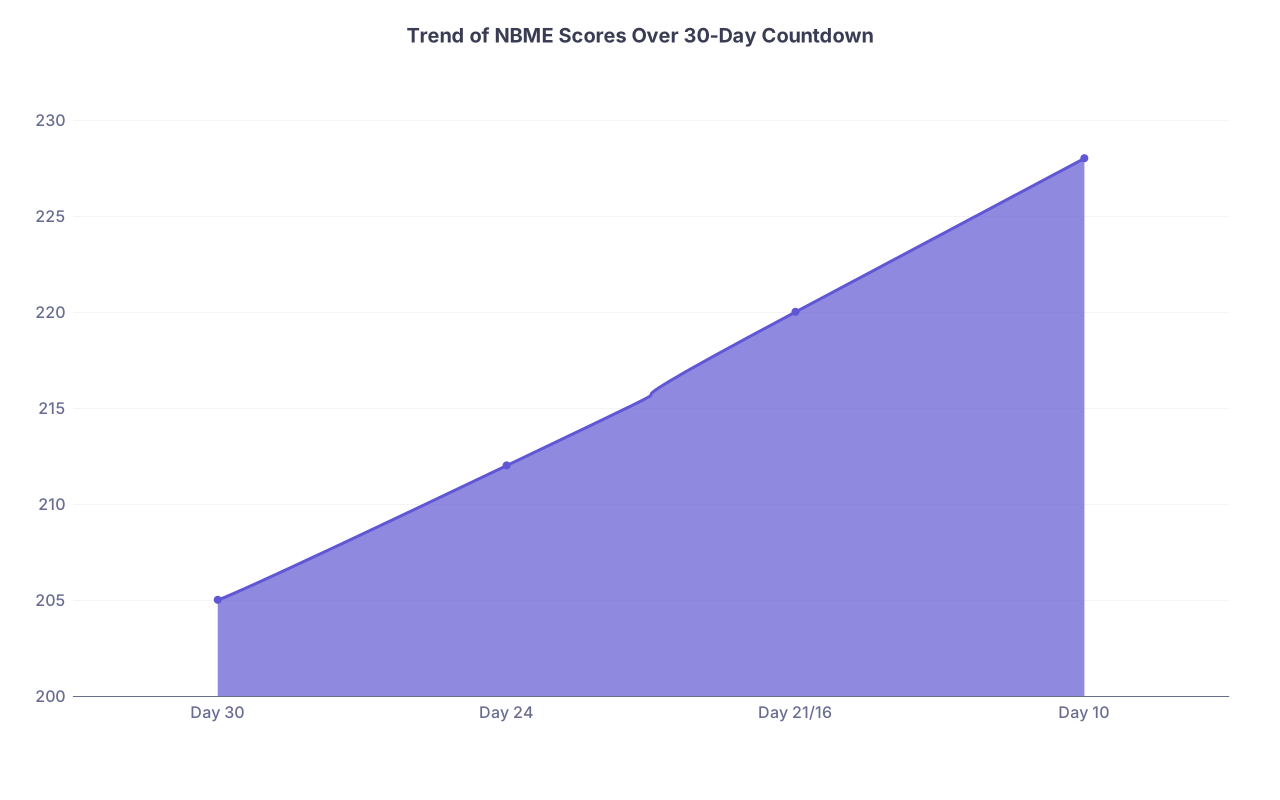
Day 16 – NBME #3 (Reality Check)
You are about 2 weeks from test day. Scores now matter more.
- Take another NBME.
- This one is your “am I on track” metric:
- If you are far from your goal, adjustment happens now, not Day 5.
| Category | Value |
|---|---|
| Day 30 | 205 |
| Day 24 | 212 |
| Day 21/16 | 220 |
| Day 10 | 228 |
(Example numbers; your curve may differ, but you want the general upward slope.)
Day 15 – NBME #3 Review + Priority Reset
Deep review day.
You should:
- Categorize NBME #3 mistakes into:
- Content gaps
- Misreading / rushing
- Strategy problems (changing right answers, getting lost in answer choices)
- Decide:
- Which 2–3 topics you must stabilize in the next week.
- Do 30–40 targeted questions based on NBME themes only.
You have finished Phase 2. The test is close enough that you shift away from heavy content learning and toward performance and consolidation.
Phase 3 (Days 14–7): High-Frequency Testing and Polishing
Now you live in exam mode. Shorter gap between big tests. More emphasis on repeated patterns.
Here is the rough rhythm: full test → deep review → focused blocks → repeat.
Day 14 – UWSA 2 (Or Full-Length Equivalent)
At this point you should take UWSA 2 if you have it. It is often the closest predictor to your final Step 1 performance.
- Full 7‑block exam.
- Same conditions as real day.
Do not “save it for later.” Later is now.
Day 13 – UWSA 2 Review + Error Log Consolidation
- Deep review of UWSA 2.
- Go through your Error Log from Day 30 onward:
- Highlight topics that show up in 3+ different tests.
- Create a “Last 10 Days Hit List”:
- Short list of topics you will repeatedly hit (e.g., “acid‑base, vasculitides, nephritic vs nephrotic, lysosomal diseases, immunodeficiencies”).
Day 12 – Mixed Blocks + Hit List Review
- Do 3–4 timed mixed QBank blocks.
- Between blocks:
- Spend 20–30 minutes reviewing one item from your Hit List with First Aid / videos.
You are now layering repetition over your personal weak points.
Day 11 – Lighter Review + Systems Cleanup
You are not a robot. You cannot do daily marathons without paying for it.
- Review yesterday’s hardest blocks.
- Spend 2–3 hours on your single weakest system (e.g., neuro):
- Anatomy + lesions
- Classic path (tumors, degenerative disease)
- Pharm.
Finish with 1 timed block in that system only.
Day 10 – NBME #4 (Final Formal Checkpoint)
This is your last full NBME before test week.
- Take one more NBME.
- This gives you:
- A final realistic floor/ceiling sense.
- Confirmation that you are not sliding backward.
At this point you should not chase another full NBME after Day 7. That just adds stress.
Day 9 – NBME Review + Strategy Fixes
- Review NBME #4 thoroughly.
- Focus especially on:
- Questions you got wrong because of rushed reading.
- Questions where you flipped from right to wrong.
- Develop simple exam rules for yourself:
- “I read the stem twice before looking at choices.”
- “I only change answers if I find new information in the stem, not because of doubt.”
Do 20–30 questions only if you have mental bandwidth. Quality beats quantity here.
Day 8 – Full-Length Simulation (Optional but Strongly Recommended)
If your energy allows:
- Do a full 7‑block day using:
- A combination of unused QBank blocks OR
- A mixed mock test you build yourself.
- Purpose:
- Practice stamina and logistics, not score prediction.
- Keep review light; cold‑analyze patterns but do not punish yourself.
If you are already exhausted or your last NBME scores are stable and acceptable, drop this to 4–5 blocks instead.
Day 7 – Taper Begins
One week out. You start to back off just a bit.
- Review high‑yield summary materials for:
- Micro (tables, Sketchy summary, First Aid charts)
- Pharm (prototype drugs, big adverse effects, antidotes)
- Do 2–3 timed mixed blocks max.
- Short, focused review.
Taper & Peak (Days 6–1): Protect the Brain, Sharpen the Edges
At this point you should stop trying to overhaul weaknesses. You are sharpening, not rebuilding.
Day 6 – Targeted Light Day
- Do 2 mixed blocks (40 questions each).
- Review wrongs and guesses.
- Spend 1–2 hours on:
- Acid‑base
- Cardio phys
- Renal phys
(The usual landmines.)
Day 5 – Free 120 (Or Equivalent) + Logistics Check
If you have not done the NBME Free 120 (online), today is ideal.
- Take it under real‑test timing.
- This doubles as a logistics rehearsal:
- Same start time as your real exam.
- Use the same snack, caffeine, and break pattern you plan for test day.
| Period | Event |
|---|---|
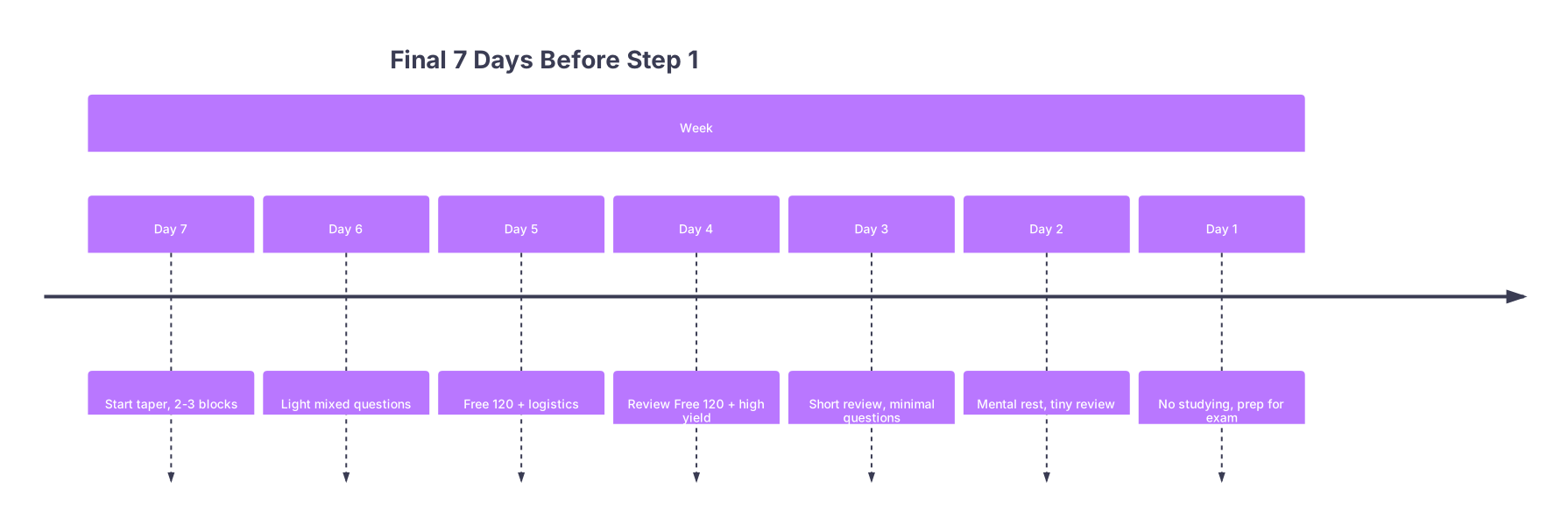
| Week - Day 7 | Start taper, 2-3 blocks |
| Week - Day 6 | Light mixed questions |
| Week - Day 5 | Free 120 + logistics |
| Week - Day 4 | Review Free 120 + high yield |
| Week - Day 3 | Short review, minimal questions |
| Week - Day 2 | Mental rest, tiny review |
| Week - Day 1 | No studying, prep for exam |
Day 4 – Free 120 Review + High-Yield Pass
- Review all Free 120 items, especially:
- Any new question styles or quirks.
- Do a short, structured review of:
- Biostats
- Ethics
- Classic image‑based questions (rashes, glomerular diseases, vasculitis patterns).
Keep question volume modest (1–2 blocks at most).
Day 3 – Gentle Mixed Day
Your main job now is preserving confidence.
- Do 1–2 easy/moderate mixed blocks. If your brain fights you, stop at 1.
- Focus on:
- Getting into test rhythm.
- Not spiraling over each miss.
- Light review of your Hit List. No new notes.
Day 2 – Mental Decompression with Light Touch
This is where many students sabotage themselves by panic‑studying 12 hours. Do not.
At this point you should:
- Do 0–1 very light blocks only if doing nothing makes you more anxious.
- Skim:
- 1–2 pages of your personal Error Log.
- A few key tables you personally rely on.
- Confirm:
- Exam location, travel time, parking, ID, confirmation email.
- Packed bag (ID, confirmation, snacks, layers, earplugs if allowed).

Sleep becomes non‑negotiable. Aim for a consistent bedtime that matches what you want for test day.
Day 1 – Zero Study, Only Execution Prep
The day before Step 1.
You should not be doing questions.
Use the day to:
- Do something mildly engaging but not exhausting:
- Walk, light exercise, meet a supportive friend, watch something relaxing.
- Lay out:
- Clothes for exam day.
- Breakfast plan.
- Commute plan (with backup option).
- Go to bed at a reasonable hour. You might not sleep perfectly—that is normal. You do not need perfect sleep, just adequate.
Exam Day (Day 0): You Run the Script
You wake up. This is not the time to improvise.
- Eat the same kind of breakfast you used on practice test days.
- Arrive early.
- Use breaks the way you practiced with NBMEs and UWSAs:
- Brief bathroom break after 1–2 blocks.
- Snack + liquids.
- In the exam:
- If you feel panic: one deep breath, read the stem slowly, focus on the next question only.
You are executing a plan you have rehearsed for 30 days. That is the point of this entire schedule.

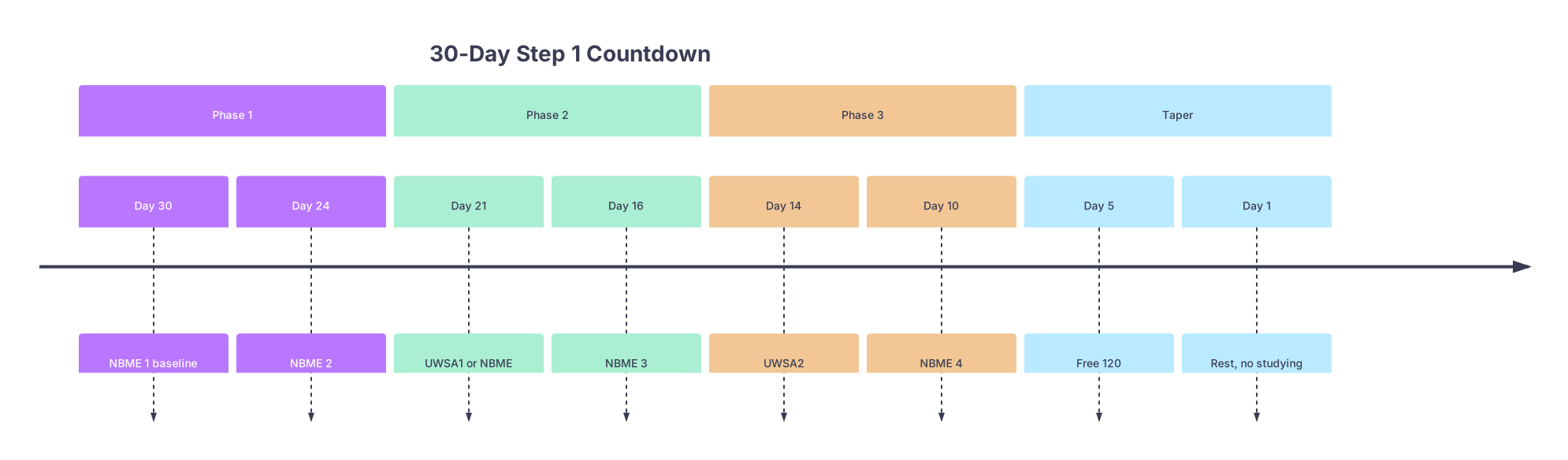
Quick Visual: Month Overview
| Period | Event |
|---|---|
| Phase 1 - Day 30 | NBME 1 baseline |
| Phase 1 - Day 24 | NBME 2 |
| Phase 2 - Day 21 | UWSA1 or NBME |
| Phase 2 - Day 16 | NBME 3 |
| Phase 3 - Day 14 | UWSA2 |
| Phase 3 - Day 10 | NBME 4 |
| Taper - Day 5 | Free 120 |
| Taper - Day 1 | Rest, no studying |
FAQ (Exactly 4 Questions)
1. How many full-length practice tests are “enough” in the last 30 days?
For most students, 4–6 full practice exams in this window is the sweet spot: 3–4 NBMEs, 1–2 UWSAs, plus the Free 120. Less than 3 and your stamina and pacing are under‑tested. More than 6 and you start replacing learning time with just collecting scores, which is pointless. If you are late to the game, prioritize NBMEs and UWSA 2 over everything else.
2. What if my NBME scores are flat or dropping 1–2 weeks out?
Then you must stop cramming new content and aggressively fix test‑taking mistakes. Look for patterns: reading too fast, overthinking easy questions, falling apart in late blocks from fatigue. In that situation, reduce QBank volume, commit to 1–2 more high‑quality practice tests with full review, and make sleep + breaks a priority. Changing your process matters more than memorizing another enzyme.
3. Should I keep doing lots of new QBank questions in the final week?
No. In the last 7 days, new question volume should drop sharply. The focus shifts to: reviewing old mistakes, stabilizing weak concepts you have already seen, and keeping your brain fresh. One or two blocks a day is plenty. If you are still forcing 80–100 new questions daily at that point, you are trading away mental sharpness for the illusion of productivity.
4. Can I move or add tests if I feel “behind” on content?
You can shift by 1–2 days, but do not tear up the entire structure. Cutting every planned exam to “study more” usually backfires; you go into Step 1 untested and anxious. If you must adjust, keep:
- At least 3 NBMEs,
- UWSA 2, and
- The Free 120.
Then use non‑testing days for hyper‑targeted content based on those exams, not random chapters.
Key points:
- In the final 30 days, practice exams are the spine; QBank and content are support.
- Every full exam must be followed by a serious review day or you waste the data.
- The final week is about tapering, preserving confidence, and protecting your brain for the only score that actually counts.