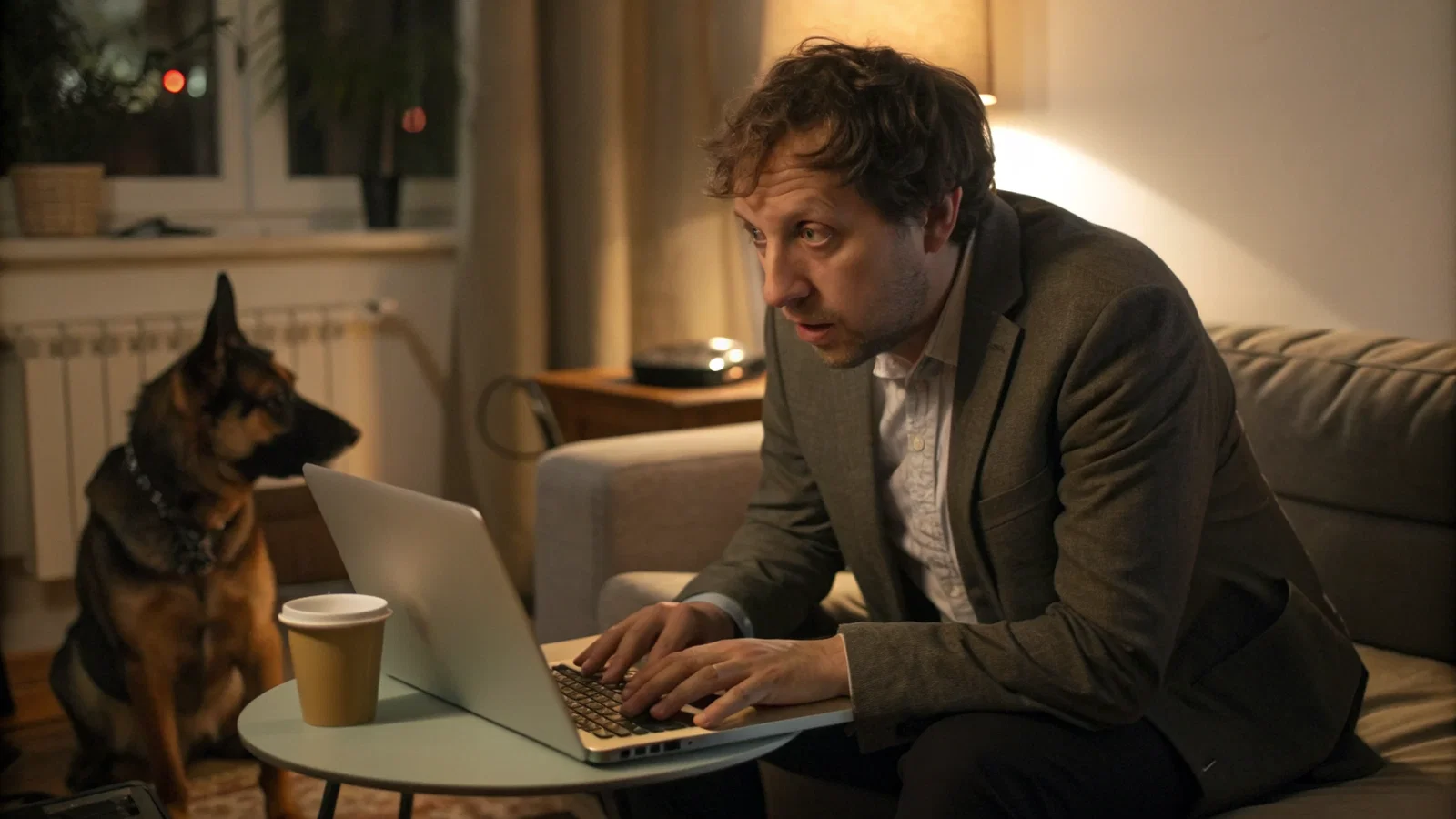
I can still feel my stomach drop just imagining it. You're mid-sentence, finally hitting a rhythm answering a tough question about your research. The attending nods. Then, through your office door, which you swore you locked, toddler chaos explodes. A three-year-old in nothing but a diaper charges straight toward your webcam, screaming, "DADDY, I DID A POO-POO!" The panel of five attendings freezes. At that moment, I'm convinced my chance at this program has evaporated. I can literally see the words "DO NOT RANK" flashing behind my eyelids for the next six weeks.
This is the bedtime horror that loops through every anxious applicant's brain. We don't just fret about the interruption itself; we catastrophize up an entire chain of doom. I think, They'll flag my file as unprofessional. The coordinator will send a snarky email to the program director. I'll be known as the candidate whose family couldn't be controlled. Worst-case scenario thinking becomes a full-blown disaster movie in my head, complete with a secret blacklist that somehow gets shared with every program I applied to. The truth, believe it or not, is that this nightmare almost never kills a candidacy. But convincing my terrified inner monologue of that is a full-time job. Here's how I (barely) claw my way back to sanity and maybe save the interview.
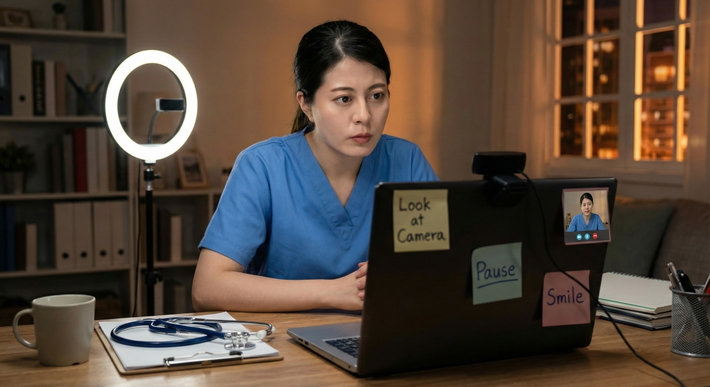
The first three seconds decide whether you look like a poised future resident or a complete disaster. I've rehearsed this in the mirror so many times I've scared my cat. Mute yourself immediately. Not the computer, hit the physical mute button or keyboard shortcut so a random curse word doesn't escape. While your internal voice is shrieking, It's over, it's over, your outside appearance needs to scream calm. I force a small, almost-amused smile and raise one hand gently, like a traffic cop, while I never break eye contact with the camera. That eye contact is crucial: you're telling the committee "I'm still here, I'm not running away."
Quickly, don't make it dramatic, I'll say, "Would you excuse me for just one moment?" Then swiftly, without turning my back, I'll guide the tiny intruder out of frame, maybe hand him back to a spouse through the door crack, or deposit the cat on the floor. The whole maneuver should take under five seconds. No long explanations, no "Oh my God, I'm so sorry" yet. My body language says I can handle a crisis while remaining professional. If I'm lucky, the committee is already chuckling.
Breathe. Sit back down. Unmute. Re-establish eye contact and that calm smile. Now you're ready for the next step.
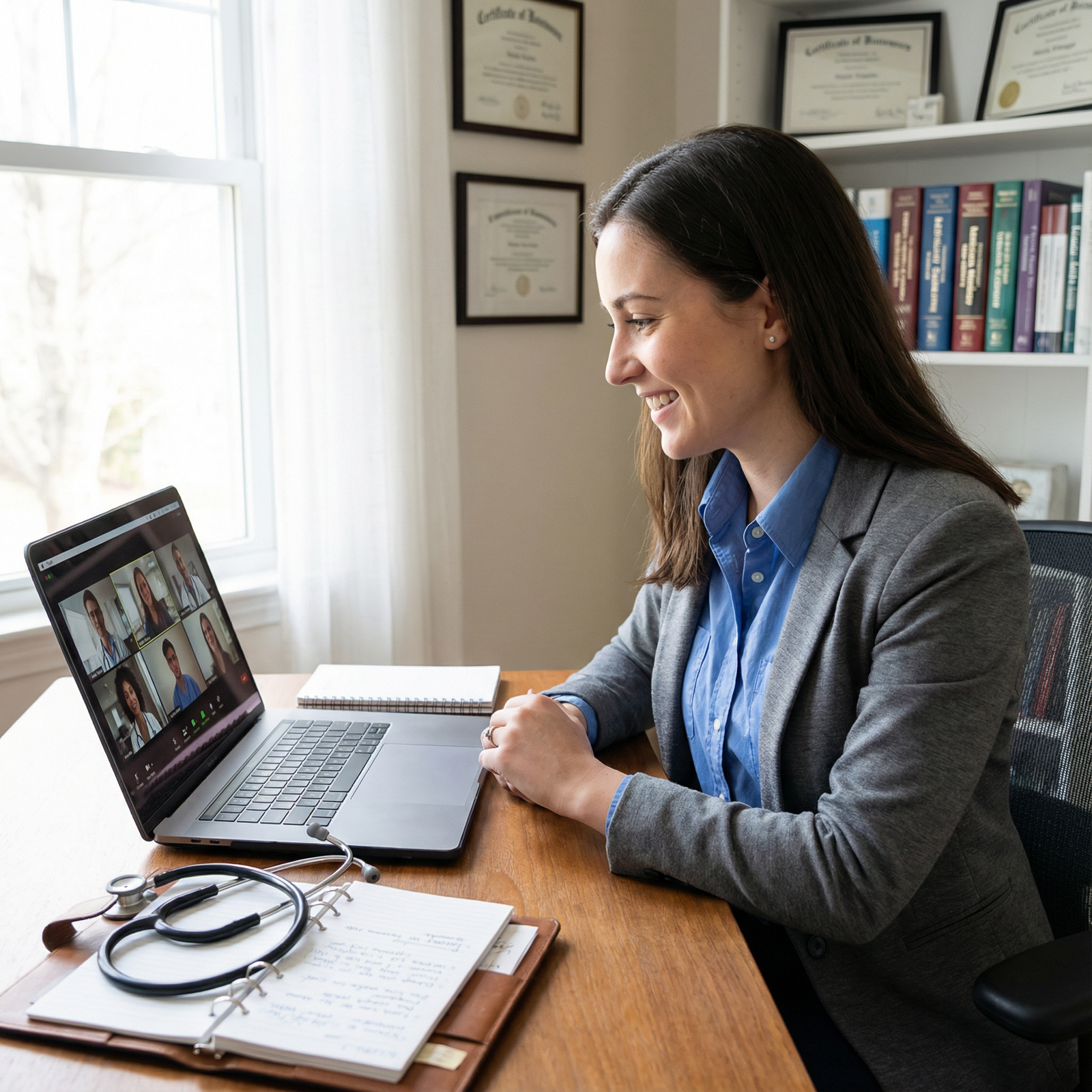
I used to think I had to launch into a formal apology that covered every possible offense. I'd rehearse long, polished sentences like, "I deeply regret any unprofessional distraction." But that just makes you sound stiff and terrified. A quick, light acknowledgment works infinitely better and shows you don't take yourself too seriously.
Right after I return to the screen, I'll say, "My apologies, that was my unofficial research assistant." If the panel laughed or smiled during the interruption, I might add, "Clearly, he also wants to interview for this spot." Short. Self-deprecating. Then I immediately pivot back to the interview's topic: "To return to your question about my ICU rotation..." This shows grace under pressure. Interviewers, who are tired human beings, will likely remember the funny moment more than the blunder.
But I also obsess over their facial expressions. If they look annoyed, I drop the joke and just say "Sorry about that" and move on within one breath. I never, ever blame the pet or kid, never say "He never does this," because that sounds defensive. One sentence, then vanish the moment. My anxiety screams that they're judging me forever, but the truth is they're already thinking about the next question.

Every fiber of my anxious being wants to over-apologize in the thank-you email. I'll draft five versions: a groveling one, an explaining one, a "please don't judge me" one. Then I delete all of them because that's exactly the wrong move. Mentioning the interruption in a thank-you note wraps a minor hiccup in neon lights and hands it back to the program coordinator's attention. It literally makes you the candidate who can't let go.
My thank-you email ignores the incident entirely. It's two short paragraphs: gratitude for their time, a single clinical strength I admired about the program, and one sentence connecting my background to that strength. Nothing about dogs, toddlers, or accidentally-muted-family-members-in-pajamas. I remind myself: if they've already moved on, bringing it up will only re-plant the seed of awkwardness. Keeping the note professional and forward-looking says "I'm a mature future resident who doesn't dwell."
Sure, I still lie awake worrying that the coordinator wrote "UNPROFESSIONAL" in my file, but the research shows that only truly egregious behavior, like yelling or an half-naked stunt, triggers that. A crying kid or a barking dog? They see it ten times a day.
After one close call, I become a pre-interview tyrant. Environmental lockdown means the door gets locked, a heavy chair gets wedged under the handle, and a giant neon sign that screams "INTERVIEW IN PROGRESS, DO NOT KNOCK OR ENTER" gets taped to the outside. I've even put a shock mat at the entrance (kidding... mostly). You bet I shut the cat in the laundry room and silence every device twice. This isn't paranoia, it's baseline survival. If you live in a thin-walled apartment, you tell your neighbor you'll buy them pizza if they'll try not to use the blender for thirty minutes.
But even with a bunker, the real enemy is my own brain. After an interruption, I spend days replaying it frame by frame, each time concluding I've ruined everything. I have to actively practice self-compassion: "Hey, I handled it. I stayed calm. That's what they want in a resident who gets paged at 3 a.m." I literally say that out loud, like a crazy person, because it fights the inner monologue that calls me a failure. I also remind myself that program directors have kids, dogs, and chaotic home offices. They've done Zoom calls while their toddler drew on the wall behind them. That bar chart over there? No real data, but my therapist swears nobody remembers a five-second door intrusion by the time the next interview starts.
If you need to, vent to a trusted friend, not to the residency applicant forum that will only amplify your dread. Let the worst-case scenario play out entirely: "What if I actually did get ranked to the bottom?" Clinically, no single minor glitch tanks a strong application. Most programs rank on fit, scores, and interview content, not on your dog's cameo. Repeat that until you believe it even a little.
- Program directors care much more about how you handle unexpected stress than the interruption itself. A calm, brief apology followed by a pivot back to clinical conversation neutralizes the awkwardness instantly.
- Over-explaining an interruption in a thank-you note draws unnecessary attention to a minor hiccup. Don't.
- Environmental lockdown isn't overkill; it's a love letter to your future sanity. Then silence the inner critic who swears your career is over.