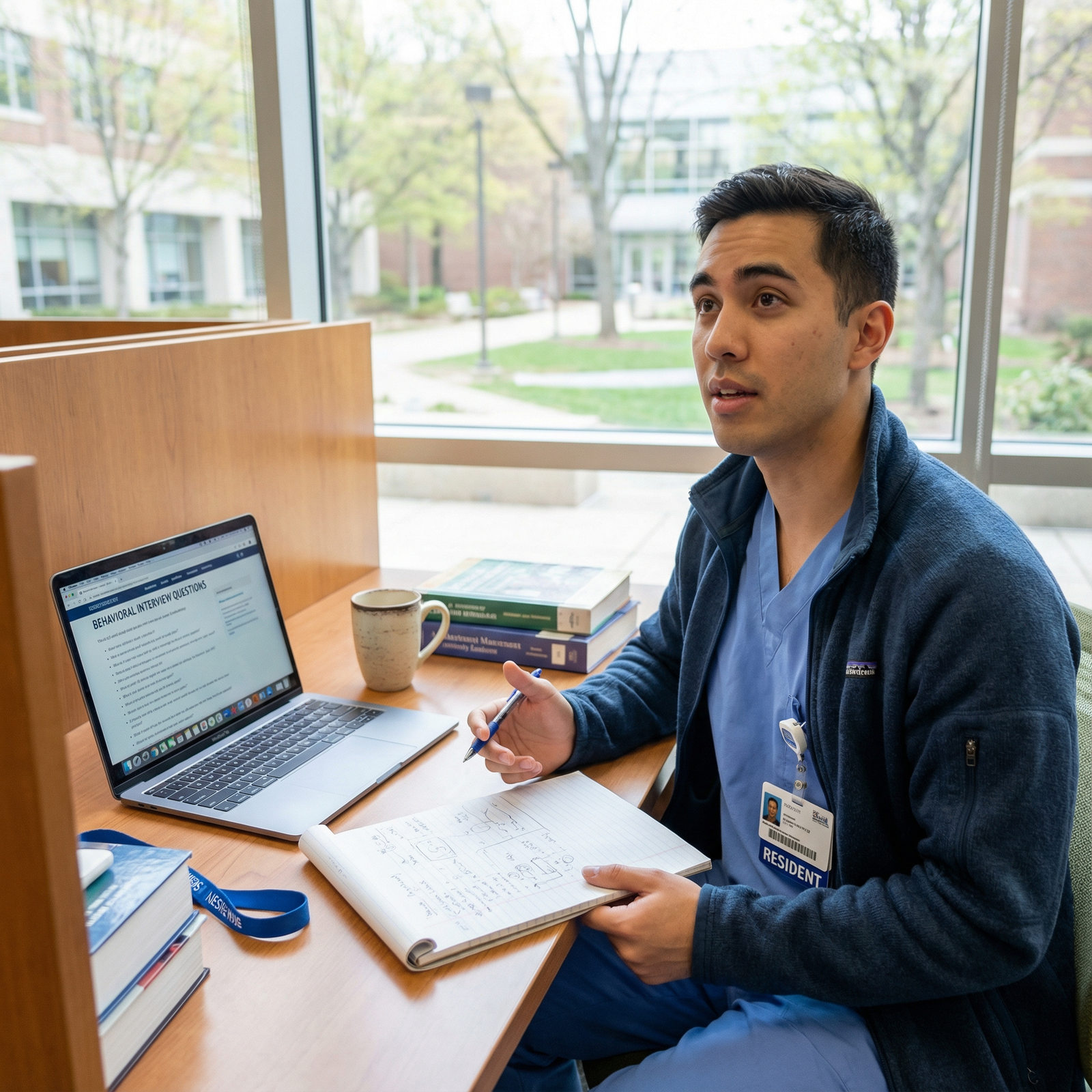
Understanding the Anesthesiology Interview as a US Citizen IMG
As a US citizen IMG (American studying abroad), you will encounter many of the same anesthesiology residency interview questions as US MD/DO applicants—but how you are evaluated can be different. Programs know you navigated a non‑traditional path and will probe to understand your training quality, communication skills, and ability to succeed in a high‑acuity, team‑based specialty.
This guide walks through common anesthesiology residency interview questions—especially behavioral interview medical questions—and how you, as a US citizen IMG, can answer them effectively. You’ll see example frameworks, US citizen IMG–specific angles, and tips for weaving in your strengths.
1. Foundational Questions: Setting the Tone
These questions usually come early in the interview and heavily influence your first impression.
“Tell me about yourself.”
This is almost guaranteed. Interviewers are assessing:
- Your communication skills
- How well you summarize your story
- Whether you understand your own narrative as a US citizen IMG and future anesthesiologist
Structure your answer (2–3 minutes) using: PAST → PRESENT → FUTURE
Past – Brief background and major milestones
- Where you grew up in the US
- Why you chose medicine
- Why you attended medical school abroad as an American studying abroad
Present – Where you are now
- Current clinical status, rotations, or research
- Why anesthesiology interests you (keep it concise here, you’ll revisit in more detail later)
- Key strengths relevant to anesthesia (calm under pressure, attention to detail, teamwork)
Future – What you’re looking for
- What you want from an anesthesiology residency
- Long‑term goals (e.g., academic career, regional anesthesia, critical care, private practice, global health anesthesia)
Example outline for a US citizen IMG:
- Past: “I grew up in New Jersey in a family of nurses and respiratory therapists, which exposed me to the hospital early. I went to medical school in [Country] because…”
- Present: “In my clinical years I found myself drawn to the OR and ICU…”
- Future: “I’m looking for an anesthesiology program that emphasizes strong clinical autonomy, structured teaching, and exposure to critical care…”
Key tip for US citizen IMG:
Address the “US citizen IMG” aspect clearly but briefly. Treat it as a deliberate, thoughtful choice, not a defensive explanation. Avoid sounding apologetic.
“Why anesthesiology?”
Program directors want to differentiate genuine commitment from vague interest. They also want to ensure you understand the specialty beyond “I like physiology and pharmacology.”
Use a three-part structure:
- Initial exposure
- A specific clinical experience or rotation (OR, ICU, pain clinic)
- Deeper understanding
- Core aspects of anesthesia that resonate with you:
- Acute problem‑solving
- Physiology and pharmacology application in real time
- Procedural work (airways, lines, regional blocks)
- Team‑based OR environment
- Perioperative medicine and patient advocacy
- Core aspects of anesthesia that resonate with you:
- Alignment with your strengths and personality
- Staying calm in crises
- Communicating clearly under pressure
- Enjoyment of detailed preparation and checklists
- Love for working “behind the scenes” to keep patients safe
US citizen IMG angle:
Show how your training abroad enriched your perspective:
- Exposure to resource‑limited settings, making you adaptable
- Managing acutely ill patients with fewer technological supports
- Working in diverse teams and systems
Connect these to how you’ll function as a resilient anesthesiology resident in the US.
“Why did you choose to attend medical school abroad?”
This is particularly common for an American studying abroad. Programs want to:
- Understand your decision‑making
- Screen for academic or disciplinary concerns
- Gauge your insight and maturity
Answering strategy:
State a clear, honest reason (without oversharing):
- Strong early acceptance or scholarship abroad
- Desire for international exposure and cultural competence
- Limited domestic acceptances combined with strong motivation to pursue medicine
Highlight what you gained:
- Flexibility and resilience
- Exposure to different healthcare systems
- Resourcefulness in clinical settings
- Comfort working with diverse patient populations and health beliefs
Bridge to US practice:
- Emphasize US clinical experience (USCE), observerships, or electives
- Show you already adapted back to US standards and documentation
Pitfalls to avoid:
- Blaming US schools or sounding bitter
- Suggesting foreign training is “inferior” (programs may have faculty from those systems)
- Overly long backstory—stay focused and professional
2. Motivation, Fit, and Program-Specific Questions
These questions explore alignment with anesthesiology and each specific residency.
“Why our program?”
An easy place to stand out—or sound generic. Programs use this to gauge preparation and genuine interest.
Research before the interview:
- Case volume and complexity
- Strengths (e.g., regional anesthesia, cardiac, pediatric, critical care, pain)
- Teaching style (early autonomy vs. more supervision, academic vs. community focus)
- Specific faculty interests, research, or national leadership
- Resident culture (from website, socials, or pre‑interview dinner)
Use a 3‑pillar answer:
- Clinical training:
- “Your high diversity of cases, including complex cardiac and transplant surgery, would give me broad exposure…”
- Education and support:
- “I appreciate your protected didactics and simulation curriculum, especially the crisis resource management training…”
- Fit and contribution:
- “As a US citizen IMG who has worked in two health systems, I can bring adaptability and a strong work ethic to your OR teams…”
Make it specific enough that it couldn’t be said about every program.
“What are you looking for in a residency program?”
Interviewers want to see you know what training actually involves and that your expectations are realistic.
You might emphasize:
- Structured supervision early, with graduated autonomy
- Strong exposure to:
- Airway management
- Regional anesthesia
- Critical care rotations
- Obstetric anesthesia
- Supportive, collegial culture among residents and faculty
- Commitment to teaching and mentorship
- Opportunities for research or QI projects (if relevant to your goals)
- Robust preparation for boards
US citizen IMG nuance:
You can mention:
- “Given my international background, I value programs that invest in feedback and communication training so I can continue to refine my skills in US OR and ICU settings.”
- “I’m particularly interested in programs that support transition to US practice, including documentation and EMR training.”
“What are your long-term career goals?”
They’re not locking you in, but they want to know you have direction.
Good directions to mention:
- Undecided but “I know I want to be a strong, broadly trained clinician first.”
- Possible fellowship interests (cards, ICU, peds, regional, pain)
- Academic medicine, teaching, or leadership
- Private practice with strong clinical focus
- Global health anesthesia or outreach (especially relevant if your medical school is in a country with limited resources)
Connect to your US citizen IMG background:
- “Long term, I’d like to build collaborations between US centers and training programs in [your school’s country], particularly in perioperative safety and critical care education.”

3. Behavioral Interview Questions: Stories That Show Who You Are
Behavioral interview medical questions often start with:
- “Tell me about a time when…”
- “Describe a situation where…”
- “Give me an example of…”
Programs use these to measure:
- Judgment and professionalism
- Teamwork and leadership
- Response under pressure
- Communication with patients and staff
- Adaptability—especially crucial for anesthesiology
Answering with the STAR Method
Use STAR to keep answers structured and meaningful:
- S – Situation: Brief context
- T – Task: Your role
- A – Action: What you did (focus here)
- R – Result: Outcome and what you learned
Make answers 1.5–3 minutes, focused, and reflective.
Common Behavioral Questions and How to Tackle Them
1. “Tell me about a time you made a mistake in clinical care.”
They aren’t looking for perfection; they want ownership and insight.
Strong answer elements:
- Choose a real mistake, but not one involving severe harm or gross negligence
- Emphasize:
- Early recognition
- Transparency (senior involvement, disclosure if appropriate)
- Steps you took to mitigate harm
- Concrete changes you made afterward (e.g., checklists, new habits)
US citizen IMG angle:
You can highlight how working in a different system shaped your response:
- Communication across language or hierarchy barriers
- Navigating different expectations around disclosure or feedback
2. “Describe a time you had a conflict with a colleague or team member.”
Anesthesiology is intensely team‑driven. Conflict management is critical.
Good approach:
- Choose a professional disagreement (not personality drama)
- Show that you:
- Stayed respectful
- Sought to understand the other perspective
- Used calm, direct communication
- Emphasize resolution and lessons learned
Keep it focused on:
- Protecting patient safety
- Maintaining professional relationships
- Being willing to adjust if you were wrong
3. “Tell me about a time you worked under significant pressure or in a crisis.”
This is highly relevant to anesthesia, where crises (hypotension, desaturation, anaphylaxis) are central.
If your country had fewer resources or more chaotic clinical environments, you may have powerful examples—but be careful to keep stories:
- Focused on your role
- Respectful to local systems
- Oriented around learning and growth, not drama
Example pressures:
- Managing multiple unstable patients in an ED or ICU
- Rapid deterioration during a procedure
- Handling a code or near‑code situation
- High patient load with limited supervision
Link your behavior to anesthesia skills:
- Prioritization under pressure
- Calm communication with the team
- Using algorithms or systematic approaches (e.g., ACLS)
- Seeking help appropriately
4. “Give an example of a time you had to deliver bad news or handle a difficult conversation with a patient or family.”
Even though anesthesiologists often have brief pre‑op contact, communication is critical—especially explaining risks or perioperative plans.
Focus on:
- How you prepared
- How you assessed the patient’s understanding
- How you used clear, jargon‑free language
- How you showed empathy while being honest
- Any follow‑up you arranged
You can draw on experiences from wards, clinic, or emergency settings.
5. “Tell me about a time you demonstrated leadership.”
Programs want to see that you can lead in the OR, ICU, or as a senior resident.
Examples:
- Leading a student group, teaching session, or simulation
- Organizing a QI project
- Serving as a liaison between administration and your class
- Leading a team during a shift or emergency situation
Highlight:
- How you listened to others
- How you coordinated tasks
- How you kept the team focused on patient care and safety
Behavioral Questions Tailored to US Citizen IMGs
You may be asked variations of:
- “Tell me about a challenge you faced adapting to a new healthcare system.”
- “Describe a time when cultural differences affected patient care and how you handled it.”
- “What was the biggest challenge of being a US citizen IMG, and how did you overcome it?”
Strong points to include:
- Language or documentation differences you mastered
- Learning new systems (referrals, labs, pharmacy, imaging)
- Developing cultural humility and flexibility
- Transitioning back to US EMR, protocols, and patient expectations
You want to show:
- Adaptability
- Self‑directed learning
- Resilience in unfamiliar environments
4. Clinical and Specialty-Specific Questions in Anesthesiology
While most anesthesiology residency interviews are not formal oral boards, some faculty will test your thinking process.
“Tell me about a memorable anesthesia case or OR experience.”
You don’t need advanced knowledge; they’re assessing:
- Clinical curiosity
- Reflective thinking
- Understanding of anesthesiology’s role
Choose a case where you:
- Observed or assisted anesthesiologists managing:
- A difficult airway
- Hemodynamic instability
- Regional block for major surgery
- High-risk patients (cardiac, obstetric, trauma)
- Learned something about:
- Physiology in action
- Team coordination in the OR
- Decision‑making under uncertainty
End with how it clarified or deepened your interest in anesthesiology.
“What do you think are the biggest challenges facing anesthesiology today?”
Thoughtful answers might include:
- Patient safety and perioperative optimization
- Burnout and wellness in high‑acuity settings
- Balancing production pressure with education
- Shortages in rural or underserved areas
- Increasing complexity of patients (older, more comorbidities)
- Opioid stewardship and pain management
- Incorporating technology: ultrasound, automation, AI, EMR burden
As a US citizen IMG, you can uniquely reference:
- Comparisons between anesthesia services in your training country and the US
- Perspectives on global anesthesia access and safety
“How do you handle stress, especially in acute situations?”
Anesthesiology demands steady performance under pressure.
Show that you:
- Use structured approaches (algorithms, mental checklists)
- Communicate clearly and assign roles
- Maintain situational awareness
- Debrief and reflect after critical events
- Have healthy coping strategies outside of work (exercise, supportive relationships, hobbies)
Avoid clichés like “I don’t get stressed.” Instead, describe how you manage stress effectively.

5. Background, Gaps, and Red Flag Questions for US Citizen IMGs
Programs will often probe areas of concern. Preparing clear, non‑defensive responses is crucial.
Common “Red Flag” Style Questions
“I see you have a gap/extended time in your training. Can you tell me about that?”
Be:
- Honest
- Concise
- Solution‑focused
Possible reasons:
- Additional exam preparation
- Health or family issues
- Visa or logistical delays (less likely for US citizens, but possible for schools abroad)
- Research or degree pursuit
Emphasize:
- What you did during that period (research, volunteering, coursework)
- How you ensured your clinical skills stayed sharp (if applicable)
- What you learned and how you’re now more prepared
“Can you explain your (USMLE) score performance?”
If you have lower scores, a step failure, or inconsistencies, expect this.
Good structure:
- Acknowledge the issue without making excuses.
- Provide concise context if relevant (e.g., adjustment to new system, misjudged timing).
- Emphasize clear evidence of improvement:
- Better performance on later exams
- Strong clinical evaluations
- Great letters of recommendation
- End on growth:
- Better study strategies
- Time management
- Insight into your learning style
Programs want to see accountability, reflection, and upward trajectory.
“As a US citizen IMG, why should we choose you over a US MD or DO graduate?”
This can be asked explicitly or implicitly.
Key themes:
- Added value, not apology.
Focus on what your unique path brings:- Adaptability
- Comfort working with diverse populations
- Resourcefulness in different clinical settings
- Comparable competence.
Point to:- Strong US clinical electives or sub‑internships
- Excellent letters from US anesthesiologists or internists
- Positive feedback on communication and professionalism
- Commitment to anesthesiology and the US system.
Example elements:
“My path as a US citizen IMG has required extra initiative to secure US clinical experience, pass licensing exams, and adapt to multiple systems. That’s made me particularly resilient, self‑directed, and grateful for opportunities—traits I will bring to your OR every day.”
“What challenges do you anticipate as a US citizen IMG in our program?”
Programs appreciate when you show insight and proactive thinking.
Potential challenges:
- Fine‑tuning documentation patterns and EMR workflows
- Adjusting to US OR culture and communication patterns
- Bridging any minor differences in pharmacologic formularies or protocols
Counterbalance with:
- Prior successful adaptation to new systems (e.g., from US to your school’s system, then to USCE)
- Concrete strategies: asking for feedback, observing senior residents, reviewing policies, using orientation resources
6. Your Questions for Them—and Final Tips
Near the end of almost every interview, you’ll be asked:
“Do you have any questions for us?”
This is still part of the interview. Avoid:
- Questions answered easily on the website
- Salary/benefits as your first or only topic
- Overly aggressive questions about call schedule fairness or moonlighting
Instead, ask 2–4 thoughtful questions tailored to the interviewer.
Examples for anesthesiology faculty:
- “How does your program support residents in developing independence while still ensuring patient safety, particularly in the CA‑2 and CA‑3 years?”
- “What qualities have you seen in your most successful residents?”
- “How is feedback typically delivered after cases or rotations?”
Examples reflecting US citizen IMG perspective:
- “How do you support residents who may be transitioning from different medical school systems or who took non‑traditional paths, like US citizen IMGs?”
- “Are there resources for refining communication and documentation skills early on?”
Final Practical Tips for the Anesthesia Match Interview
- Practice aloud answers to:
- “Tell me about yourself”
- “Why anesthesiology?”
- “Why this program?”
- Prepare at least 6–8 STAR stories you can adapt:
- A mistake / learning experience
- A conflict
- A leadership example
- A teamwork success
- A high‑pressure situation
- A time you adapted to a new system
- A time you advocated for a patient
- Have program-specific notes ready:
- 3–4 reasons you’re genuinely interested in each
- Remember anesthesiology culture:
- Calm
- Precise
- Team‑oriented
- Safety‑focused
Your goal isn’t to sound perfect; it’s to sound authentic, thoughtful, and ready to grow into a safe, reliable anesthesiology resident in the US healthcare system.
FAQs: Common Concerns for US Citizen IMGs in Anesthesiology Interviews
1. Will they ask me different residency interview questions because I’m a US citizen IMG?
Most core anesthesiology residency interview questions are the same for everyone: “Tell me about yourself,” “Why anesthesiology?” and behavioral interview medical questions. However, as a US citizen IMG, you are more likely to be asked about:
- Why you studied abroad
- Any gaps or exam issues
- How you adapted to different healthcare systems
- How ready you are for US clinical practice
Preparing clear, confident responses to these topics is essential.
2. How can I best answer “Tell me about yourself” as a US citizen IMG?
Use the Past–Present–Future framework:
- Past: Where you’re from in the US and why you chose medicine and your school abroad
- Present: Your current stage, interest in anesthesiology, and main strengths
- Future: What you hope to do in anesthesiology and what you seek in a residency
Mention being an American studying abroad early, frame it as a purposeful decision, and connect that experience to skills relevant to anesthesiology (adaptability, resilience, working in diverse teams).
3. How detailed should I get with clinical explanations if they ask case-based questions?
Most anesthesiology residency interviews are not formal exams. When discussing cases:
- Focus on your role, reasoning, and what you learned
- Use clear, accessible language
- Show understanding of basic physiology and pharmacology, but don’t try to impress with obscure details
- If you don’t know something, say so honestly and pivot to how you would find out
They care more about your ability to think, communicate, and learn than about encyclopedic knowledge.
4. How do I address weaker scores or a failed Step attempt?
Be honest but concise:
- Acknowledge the issue directly
- Provide brief context without over‑explaining
- Emphasize evidence of improvement—later scores, clinical performance, strong letters
- Explain what you changed: study approach, time management, seeking mentorship
- End on a forward‑looking note, stressing how this growth will help you as a resident
Programs are wary of defensiveness or blame; they respond well to accountability and clear upward progress.
By anticipating these common interview questions and tailoring your answers to highlight your strengths as a US citizen IMG, you can present a compelling, confident, and authentic candidacy for anesthesiology residency.