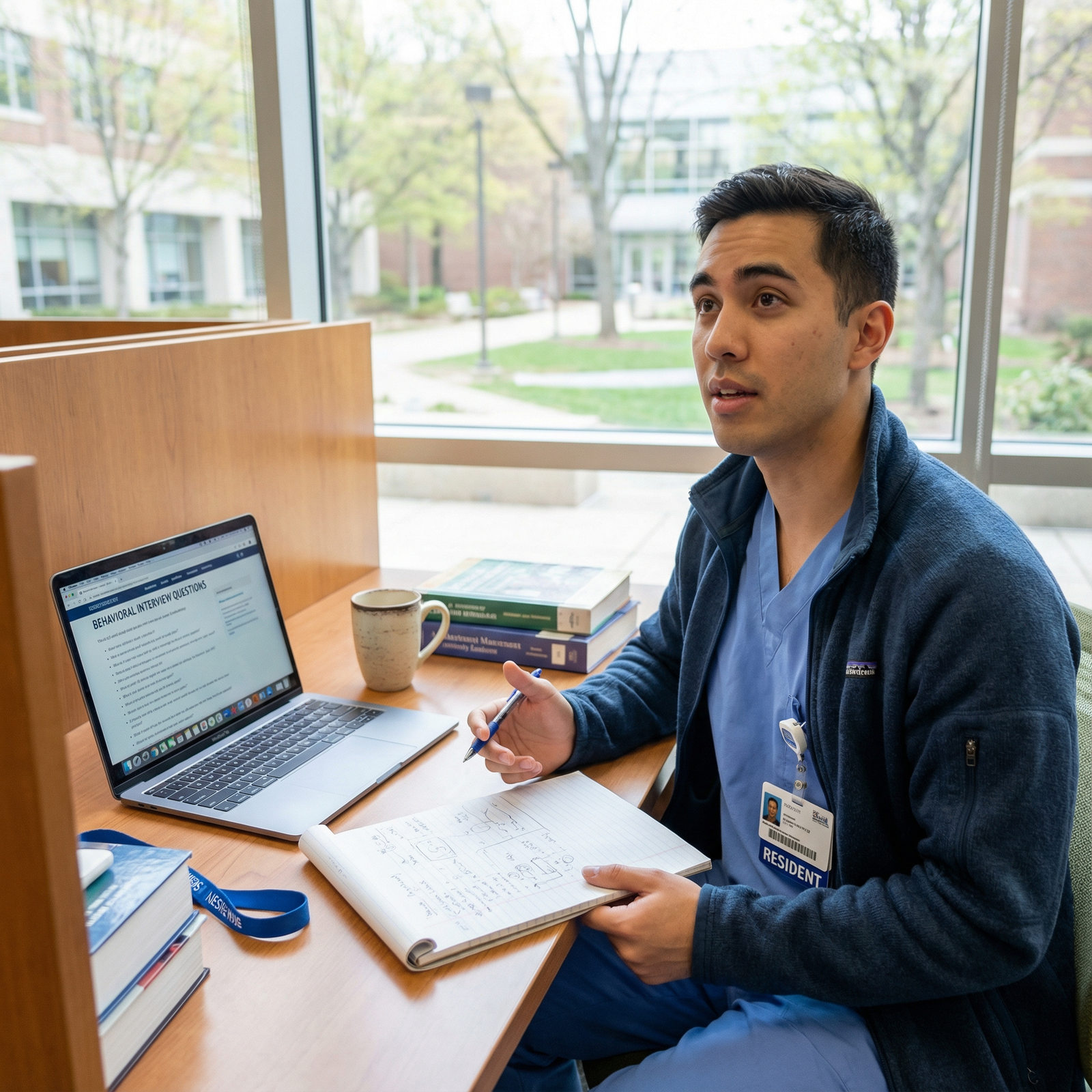
Understanding the Cardiothoracic Surgery Interview Landscape as a Caribbean IMG
Cardiothoracic surgery is one of the most competitive and demanding surgical specialties. For a Caribbean international medical graduate (IMG), the residency interview can feel like the final high‑stakes filter between you and a career in heart surgery. Programs are not just assessing your knowledge and CV; they are asking:
- Can you handle the intensity of heart surgery training?
- Will you integrate well with our team?
- Are you reliable, resilient, and coachable?
- Do your answers to behavioral interview questions match the story in your application?
This article focuses on common interview questions for Caribbean IMG applicants to cardiothoracic surgery (both integrated and traditional pathways) and how to answer them strategically. We’ll also highlight issues unique to Caribbean medical school residency applicants, including the SGU residency match and similar Caribbean programs, and how to address them confidently.
Throughout, you’ll see how classic questions like “Tell me about yourself” and more advanced behavioral prompts can be tailored to your unique pathway and strengths as a Caribbean IMG.
Core “Get to Know You” Questions You Must Master
Every cardiothoracic surgery interview—whether at an academic powerhouse or a smaller community program—will include a core set of questions designed to quickly understand who you are, what drives you, and how you communicate.
1. “Tell me about yourself.”
This is almost always the opening. For a Caribbean IMG, this is your chance to neutralize bias early and present a clear, compelling narrative.
What they’re really asking:
- Can you summarize your story clearly and confidently?
- Do you understand your own trajectory and career goals?
- How do you frame your Caribbean medical education and IMG path?
Framework (2–3 minutes total):
Origin & hook (20–30 seconds)
- Brief background and where you’re from.
- A concise introduction of your current status.
Medical school & key experiences (60–90 seconds)
- Why you chose medicine and then surgery.
- Why cardiothoracic surgery specifically.
- One or two defining experiences (research, clinical rotations, mentors).
Current strengths & direction (45–60 seconds)
- What you bring to a cardiothoracic surgery residency team.
- Your long‑term goals.
Example (Caribbean IMG–focused):
I was born and raised in Trinidad, and I’m currently a final-year student at a Caribbean medical school, completing my clinical rotations in the U.S. I’ve always been drawn to procedural problem‑solving and high‑acuity care, which initially led me toward general surgery.
During my core surgery rotation at a U.S. teaching hospital, I spent time in the cardiothoracic OR and followed a patient from emergent CABG through recovery. The combination of complex anatomy, critical decision‑making, and the tangible impact on a patient’s life made cardiothoracic surgery the only field that truly fit my interests.
Since then I’ve focused my training and research on heart and lung surgery—completing an elective in cardiothoracic surgery, presenting a poster on postoperative atrial fibrillation, and seeking mentorship from CT surgeons who have helped me understand the realities of heart surgery training. I’m now applying for cardiothoracic surgery residency with the goal of becoming an academic surgeon focused on quality improvement and resident education. I bring strong work ethic, adaptability from my Caribbean IMG path, and a proven commitment to cardiothoracic surgery.
Tips for Caribbean IMGs:
- Address the Caribbean path subtly but confidently. You don’t need to defend it, but you should show you understand the extra hurdles and have overcome them.
- Avoid a chronological “CV reading.” Instead, tell a focused story that leads logically to cardiothoracic surgery.
- Practice out loud until it sounds conversational, not memorized.
2. “Why cardiothoracic surgery?”
In a field this demanding, programs want to be sure your interest is deep, informed, and durable.
What they’re really asking:
- Do you understand what cardiothoracic surgery actually entails day‑to‑day?
- Is your motivation intrinsic (meaningful and sustained) or superficial (prestige, money, drama)?
- Have you tested this interest with real experiences, not just a single impressive case?
Structure your answer around three pillars:
- Clinical fascination: complexity of physiology, precision of operations.
- Patient impact: life‑saving interventions, longitudinal care, follow‑up.
- Fit with your personality and strengths: work ethic, team‑orientation, resilience.
Example:
Cardiothoracic surgery combines exactly the elements of medicine that keep me fully engaged—intensive physiology, intricate anatomy, and time‑critical decision‑making. When I assisted in valve replacements and CABGs during my sub‑internship, I was struck by how a technically demanding operation could immediately transform a patient’s trajectory.
I also appreciate the continuity of care—seeing the same patient in pre‑op clinic, operating, and then managing their ICU and stepdown recovery. That level of responsibility is challenging but deeply meaningful to me.
Finally, the culture of cardiothoracic surgery—the expectation of preparation, discipline, and constant technical improvement—matches how I naturally work. As a Caribbean IMG, I’ve had to be highly self‑directed and resilient, and I believe those traits align well with the demands of heart surgery training.
Make your answer field‑specific: talk about CABG, valve surgery, lung resections, transplant, ECMO, mechanical circulatory support, or minimally invasive techniques you’ve actually seen.
3. “Why our program?”
For competitive specialties, generic answers can kill your chances quickly. Programs know they’re part of a small pool; they expect you to show you’ve done your homework.
What they’re really asking:
- Have you actually learned about us, or is this just another application?
- Do your goals align with our strengths (e.g., transplant, aortic surgery, thoracic oncology)?
- Are you likely to be happy and stay here?
How to prepare:
- Review their website, case volumes, faculty interests, and recent publications.
- Identify 2–3 specific features that genuinely resonate with your goals.
- If possible, mention interactions during away rotations, virtual sessions, or emails.
Example structure:
- Signal knowledge of the program (specific, not generic).
- Connect program features to your goals.
- Show you’d be a good culture fit.
Example answer:
I’m particularly interested in your program for three reasons. First, your high volume in both complex aortic surgery and lung resections fits my interest in developing a strong open surgical foundation before focusing on a niche area. Reading about your outcomes in complex aortic arch procedures and seeing your published work on ERAS pathways was very compelling.
Second, I value structured education. Your dedicated simulation curriculum for junior residents, along with protected didactic time, tells me teaching is truly prioritized, not just advertised.
Finally, during the virtual open house and my email exchanges with Dr. X, I sensed a culture that balances high expectations with genuine support. As a Caribbean IMG, I’ve thrived when I’m part of a team that values hard work but also mentorship, and I see that here.

Behavioral Interview Questions in Cardiothoracic Surgery
In competitive programs, behavioral interview medical questions are increasingly common. They’re based on the idea that past behavior predicts future behavior. The structure often starts with phrases like:
- “Tell me about a time when…”
- “Describe a situation where…”
- “Give an example of…”
Use the STAR method (Situation, Task, Action, Result) to organize your responses.
4. Teamwork and Communication
Example questions:
- “Tell me about a time you had a conflict with a team member. How did you handle it?”
- “Describe a situation where you had to work with a difficult colleague or attending.”
- “Tell me about a time your communication prevented or mitigated a problem.”
What programs want to see:
- You can handle conflict professionally and calmly.
- You can communicate with nurses, peers, attendings, and patients.
- You don’t blame others; you focus on solutions and learning.
Example answer (conflict with a team member):
During my general surgery rotation at a U.S. hospital, I was on a team with another student who frequently arrived late to rounds, which increased the workload and tension for the rest of us.
Initially, I felt frustrated, but I realized criticism behind their back wasn’t helping. I asked them to grab coffee after rounds and framed the conversation around how their late arrivals were affecting patient care and our team’s efficiency, rather than making it personal. I also asked if there was anything going on that was making mornings difficult.
They admitted they were struggling with transportation after a recent car issue. Together, we worked out a plan where I shared my notes template to help them pre‑round faster, and they arranged an earlier bus route. I also let the resident know we’d discussed it, so expectations were clear but supportive.
Over the next week, their punctuality improved significantly, and the team dynamic became much smoother. It reinforced for me that early, respectful communication can resolve issues before they escalate.
Key points for Caribbean IMGs:
- Choose U.S. clinical experiences when possible to show familiarity with the local system.
- Emphasize respect, humility, and proactive problem-solving.
- Avoid stories where you come across as the hero who fixes everything alone; highlight team collaboration instead.
5. Stress, Fatigue, and Resilience
Cardiothoracic surgery is physically and emotionally demanding. Programs want residents who can manage stress safely and sustainably.
Example questions:
- “Tell me about a time you were overwhelmed. What did you do?”
- “Describe a particularly stressful clinical situation and how you handled it.”
- “Residency is demanding. How do you manage fatigue and maintain performance?”
Strong answer elements:
- You recognize when you’re reaching your limits.
- You use practical strategies: prioritization, seeking help, self‑monitoring.
- You link your strategies to patient safety, not just personal comfort.
Example answer (overwhelmed on a busy service):
During my sub‑internship in cardiothoracic surgery, I had a week where we had several complex post‑op patients in the ICU while also adding new surgical cases each day. I was responsible for pre‑rounding, writing notes, and assisting in the OR.
Mid‑week, I realized I was falling behind on notes and starting to cut corners on pre‑rounding, which could compromise my understanding of overnight events. I spoke with the resident and shared that I was concerned about missing important details. Together, we prioritized tasks: I focused on our sickest ICU patients first, then completed high‑yield components of the notes for stable patients. The resident also suggested I draft templates and pre‑populate some lab and vitals data early.
I also set alarms to step away for short breaks to hydrate and eat, which helped me stay focused. By the end of the week, my efficiency and accuracy improved, and I received feedback that my notes better reflected the key clinical issues. The experience taught me the importance of early communication, task triage, and small self‑care steps in managing stress safely.
6. Mistakes, Feedback, and Growth
Programs want trainees who accept feedback well and learn from mistakes—critical in heart surgery training, where the stakes are extremely high.
Example questions:
- “Tell me about a mistake you made in clinical care.”
- “Describe a time you received critical feedback. How did you respond?”
- “Give an example of a time you changed your approach after feedback.”
Guidelines:
- Choose a real but non-catastrophic example.
- Don’t blame others or circumstances; own your part.
- Emphasize corrective action and long-term change.
Example answer (critical feedback):
Early in my clinical rotations, an attending told me I needed to be more concise during case presentations. I tended to include every detail, which made it harder for the team to identify the key issues.
Initially, I felt defensive because I equated thoroughness with quality. But I realized the feedback was about clarity and efficiency, not effort. That evening, I reviewed sample presentations from online resources and asked a senior resident to listen to a practice case and critique it. They showed me how to structure the presentation around the chief problem, assessment, and plan.
Over the next few weeks, I focused on presenting only the most relevant data first, then adding details when asked. The same attending later commented that my presentations had improved significantly. This experience reshaped how I think about communication in a surgical environment—precision and relevance are just as important as completeness, especially in a time-sensitive specialty like cardiothoracic surgery.
7. Leadership and Initiative
Heart surgery training requires residents to step into leadership roles—running the service, leading codes, teaching juniors.
Example questions:
- “Tell me about a time you took initiative without being asked.”
- “Describe a situation where you led a team through a challenging task.”
- “Tell me about a leadership role you’ve held and what you learned.”
Example answer (initiative):
During my cardiac surgery elective, I noticed that handoffs between the ICU and stepdown were inconsistent, and important details about postoperative anticoagulation were sometimes unclear. As a student, I obviously couldn’t change policy, but I wanted to help reduce confusion.
I started by informally tracking what information was most often missing—such as last INR, anticoagulation plan, and recent imaging. I then drafted a simple one‑page checklist and shared it with my resident, asking if I could use it when I participated in handoffs. After a week of using the checklist, the resident agreed that it seemed to improve clarity, and we shared it with the fellow, who encouraged us to refine it further.
While my role was small, the process taught me that even as a student—and especially as an IMG—I can contribute to systems improvement by observing carefully, proposing structured solutions, and seeking input from the team.
Technical, Academic, and Specialty-Specific Questions
In addition to behavioral questions, expect targeted questions that probe your clinical reasoning, knowledge, and commitment to cardiothoracic surgery.
8. Clinical and Technical Questions
These are rarely full “oral boards,” but you may get scenario questions to see how you think.
Examples:
- “Walk me through your pre‑op evaluation for a patient undergoing CABG.”
- “How would you approach a hypotensive patient in the CTICU after surgery?”
- “What complications are you most concerned about after lung resection?”
Programs don’t expect you to know everything, especially before intern year; they’re checking:
- Do you have a structured approach?
- Can you articulate basic priorities: airway, breathing, circulation, hemodynamics, pain, bleeding, infection, etc.?
- Do you show awareness of when to ask for help?
Tips:
Use structured frameworks: ABC, differential diagnosis lists, stepwise workups.
If you don’t know an advanced detail, say something like:
I’m not entirely sure of the exact protocol at your institution, but in general, I would…
Show an instinct for patient safety and escalation.
9. Research and Academic Questions
Cardiothoracic surgery is academically heavy. You may be asked:
- “Tell me about your research project.”
- “What did you learn from your SGU residency match outcomes research?” (or similar, if applicable).
- “How do you see research fitting into your career?”
How to prepare:
- Know your poster, abstract, or paper inside and out.
- Be ready to discuss your role, not just the general topic.
- Be honest about limitations of your study.
Example answer framework:
- Briefly describe the project: question, design, population.
- Highlight your contribution: data collection, statistics, writing, IRB process.
- Summarize main findings.
- Reflect on what you learned about research and how it informs your future work.

Caribbean-Specific Issues: Addressing Your IMG Background Confidently
As a Caribbean IMG, you should anticipate subtle (or direct) questions about your training pathway, performance, and readiness.
10. “Why did you choose a Caribbean medical school?”
What they’re really asking:
- Was this a thoughtful decision or a last resort?
- Did you make the most of the opportunity?
- Are you reflective and honest about your journey?
Example answer:
I pursued a Caribbean medical school because my initial academic record and timing limited my acceptance to U.S. schools, but I was deeply committed to becoming a physician. I chose my particular school because of its established affiliations with U.S. teaching hospitals and a track record of placing graduates into competitive specialties, including surgery.
Once there, I focused on maximizing the opportunities available—seeking out surgical mentors, arranging U.S. clinical rotations in cardiothoracic surgery, and participating in research projects. This pathway required intentional planning, self‑discipline, and adaptability, which I believe are directly relevant to succeeding in a demanding specialty like cardiothoracic surgery.
Avoid sounding defensive or apologetic. Acknowledge realities while emphasizing growth and ownership.
11. Questions About Exam Scores, Gaps, or Red Flags
You may be asked:
- “I see you had a gap between Step 1 and Step 2—can you tell us about that?”
- “Can you walk us through your Step attempts?”
- “Your clinical grades improved over time—what changed?”
Response strategy:
- State the fact briefly, without excuses.
- Explain key contributing factors (concise, responsible).
- Highlight corrective actions and sustained improvement.
- Connect the experience to your resilience and growth.
Example (score or delay):
I took longer than planned between Step 1 and Step 2 because my initial practice scores were not where I wanted them to be. I realized I needed a more structured approach, so I sought guidance from upperclassmen who had excelled, adjusted my study schedule to include more question‑based learning, and built in weekly self‑assessments.
While the delay was not ideal, the process fundamentally changed how I study and self‑monitor. This new approach helped me perform significantly better on Step 2 and has since carried over into how I prepare for rotations and manage my ongoing learning.
Programs are often less concerned about a past weakness if they see clear evidence of maturity, insight, and lasting improvement.
Common Residency Interview Questions You Should Practice Verbally
Below is a consolidated list of core residency interview questions particularly relevant for a Caribbean IMG pursuing cardiothoracic surgery. Practice answering them out loud, ideally with a mentor or peer.
General and Motivational
- “Tell me about yourself.”
- “Why cardiothoracic surgery?”
- “Why our program?”
- “Where do you see yourself in 10 years?”
- “What are your strengths and weaknesses?”
- “What do you like to do outside of medicine?”
Behavioral and Professionalism
- “Tell me about a time you disagreed with an attending or senior.”
- “Describe a time you faced an ethical dilemma.”
- “Tell me about a time you made a mistake in patient care.”
- “Describe a situation where you had to give or receive difficult feedback.”
- “Tell me about a time you worked with someone from a very different background.”
Clinical and Specialty-Related
- “What experiences have confirmed your interest in cardiothoracic surgery?”
- “Describe a challenging cardiothoracic case you were involved in.”
- “How do you think AI and technology will change heart surgery training over the next decade?”
- “What aspect of cardiothoracic surgery are you most interested in—cardiac, thoracic, or congenital—and why?”
Caribbean IMG and Pathway Questions
- “Why did you attend a Caribbean medical school?”
- “How have your U.S. clinical experiences prepared you for residency?”
- “Tell me about your experience with the SGU residency match or similar Caribbean school outcomes—how has that influenced your planning?”
- “What challenges have you faced as an IMG and how have you handled them?”
For each question, aim to weave in:
- Clinical maturity (how you think about patients and systems)
- Self‑awareness (knowing your strengths and growth areas)
- Alignment with cardiothoracic surgery culture (discipline, teamwork, resilience)
Practical Preparation Tips for Caribbean IMGs Targeting Cardiothoracic Surgery
To compete for a cardiothoracic surgery residency as a Caribbean IMG, your interview performance must be exceptionally polished.
1. Build a Consistent Narrative
Your answers must align across:
- ERAS application and personal statement
- Letters of recommendation
- Interview responses
If your personal statement emphasizes research in thoracic oncology, but in interviews you suddenly claim your main interest is congenital surgery, it raises questions about authenticity.
2. Practice Behavioral Questions Actively
- Write bullet‑point outlines (not scripts) for your main stories: teamwork, conflict, mistake, leadership, resilience.
- Practice delivering them using STAR in 1.5–2 minutes.
- Record yourself and adjust for clarity, pacing, and filler words.
3. Refine “Tell Me About Yourself”
Because this is asked so frequently—and also used in other settings like fellowship and job interviews—invest serious time into making this answer crisp, authentic, and tailored to cardiothoracic surgery.
4. Prepare Thoughtful Questions for Interviewers
When they ask, “Do you have any questions for us?” you should have specific, program‑targeted questions, such as:
- “How do junior residents get early exposure to the OR in your program?”
- “What distinguishes residents who thrive here from those who struggle?”
- “How is feedback delivered during heart surgery training—formally, informally, or both?”
Avoid questions that can be easily answered on the website.
5. Leverage Mentor and Alumni Experience
If you have connections from your Caribbean medical school—such as SGU residency match alumni or graduates from similar schools now in cardiothoracic programs—ask them:
- What questions were they asked most often?
- How did they address their Caribbean IMG background?
- What would they have done differently in interviews?
Real‑world, program‑specific insights are invaluable.
FAQ: Common Questions About Cardiothoracic Surgery Interviews for Caribbean IMGs
1. How different are cardiothoracic surgery interviews from general surgery interviews for Caribbean IMGs?
Cardiothoracic surgery interviews are typically more focused on your long‑term commitment to the specialty, your understanding of its demands, and your academic interests. While both will include behavioral and general questions, CT surgery interviews more often probe your motivation, resilience, and readiness for a very high‑intensity training path. Expect more questions about heart surgery training, research interests, and specific CT experiences.
2. How do I address concerns about my Caribbean medical school in interviews without sounding defensive?
Acknowledge your path directly, then pivot to what you did with the opportunity. Emphasize U.S. clinical performance, research, strong letters, and concrete examples of adaptability and work ethic. Avoid blaming systems or people; instead, focus on ownership, growth, and alignment with the demands of cardiothoracic surgery residency.
3. What if I get a technical question I don’t know how to answer?
Stay calm and be honest. Start by sharing what you do know, organize your thoughts clearly, and explain your reasoning. You might say: “I’m not certain of the exact protocol, but I would start by…” Then outline a safe, logical approach. Programs are evaluating your thought process and humility, not just your knowledge base.
4. How important are behavioral interview answers compared to my board scores and CV?
For highly competitive fields like cardiothoracic surgery, strong metrics and experiences get you in the door—but your behavioral interview performance often decides the rank list. Programs want residents who are reliable, coachable, collegial, and resilient. Clear, thoughtful responses to questions about conflict, mistakes, teamwork, and stress can significantly distinguish you from other applicants with similar exam scores and backgrounds.
By anticipating these common interview questions and preparing targeted, honest, and reflective answers, you can present yourself as a mature, motivated Caribbean IMG genuinely ready for the rigor and responsibility of cardiothoracic surgery residency.