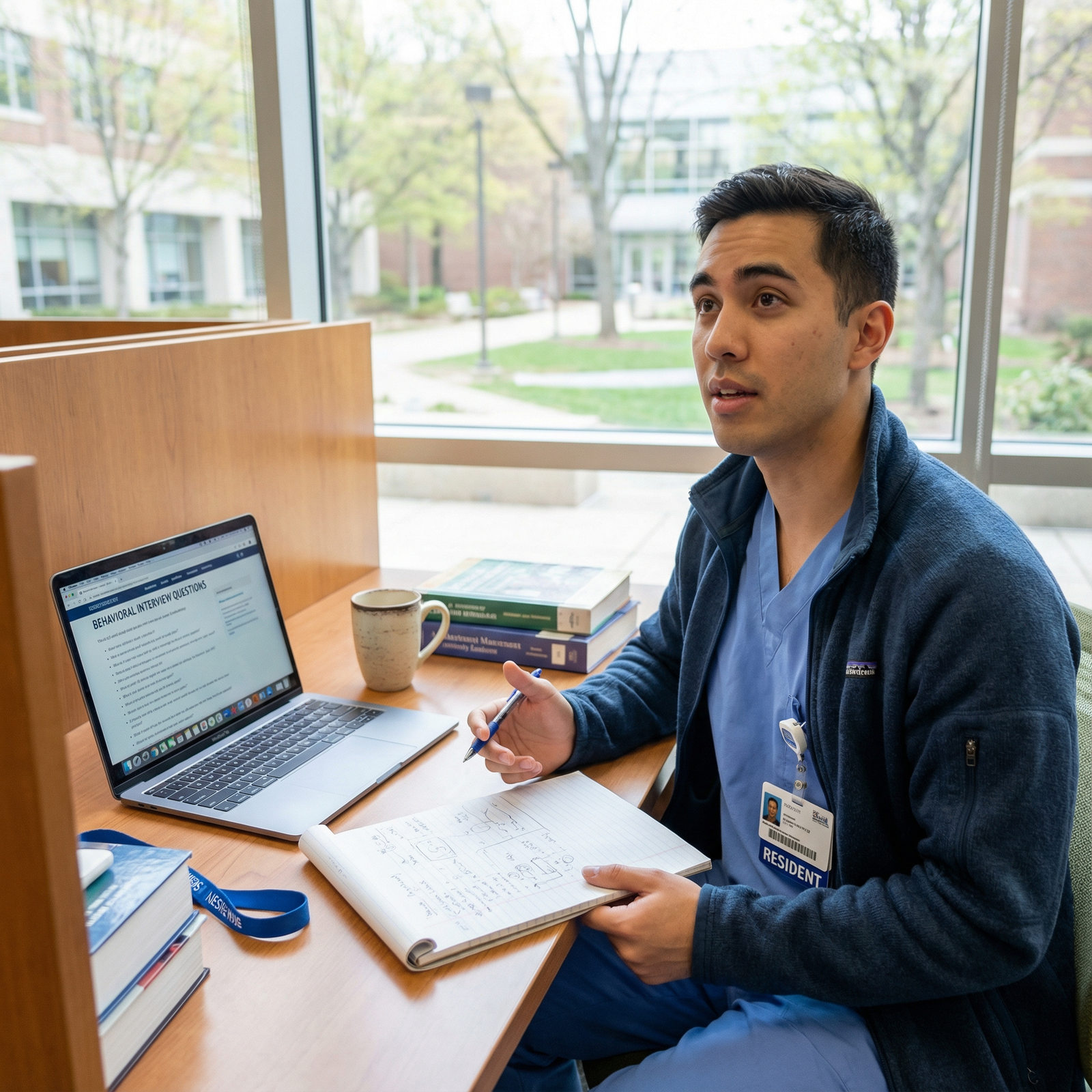
Understanding the ENT Residency Interview as a Caribbean IMG
Securing an otolaryngology (ENT) residency in the U.S. or Canada as a Caribbean IMG is absolutely possible—but it requires exceptional preparation. Otolaryngology is one of the more competitive specialties, and your residency interview is often the decisive factor after your application clears the initial screen.
For Caribbean medical school graduates, the stakes can feel even higher. Program directors may have less familiarity with your school or may have preconceived concerns about Caribbean medical school residency candidates. The good news: a strong, thoughtful interview performance can overcome many doubts and highlight why you will be an asset to their program.
This guide focuses on common interview questions you are likely to encounter as a Caribbean IMG applying to ENT, along with strategies and sample answers you can adapt. It will also touch on behavioral interview medical formats and how to handle questions like “tell me about yourself” in a way that reinforces your fit for otolaryngology.
We will assume many readers are from SGU, AUC, Ross, or similar schools, and may be particularly interested in how to strengthen their story for a strong SGU residency match or equivalent match outcome.
Core “Story” Questions: Telling Your ENT and IMG Narrative
These are often asked early in the interview, and they set the tone for how the rest of the conversation will go. As a Caribbean IMG, you should expect to answer these in nearly every ENT residency interview.
1. “Tell me about yourself.”
This is almost guaranteed and is one of the most important residency interview questions you’ll face.
What they really want:
A concise, structured, professional summary of who you are as an applicant, how you got here, and where you’re going—not your entire life story.
Framework (2–3 minutes total):
Opening Identity (10–20 seconds)
- Who you are in one sentence: training level, school, intended specialty, and key theme.
- Example: “I’m a fourth-year medical student at Saint George’s University with a strong interest in otolaryngology, particularly in patient-centered surgical care and global health.”
Academic & Professional Path (1–1.5 minutes)
- Briefly mention undergrad focus or early experiences that led you toward medicine.
- Highlight why you chose a Caribbean medical school and any strengths it gave you (e.g., resilience, adaptability, diverse clinical exposure).
- Emphasize experiences that naturally connect to ENT (research, shadowing, procedures, anatomy, communication-heavy roles).
Why ENT & What You Value (45–60 seconds)
- Connect your skills and personality to ENT.
- Include patient impact, technical interest, and long-term goals (academic, community practice, subspecialty interest is optional).
Why You Now / Why This Phase (15–30 seconds)
- Conclude with what you’re looking for in a residency program and how you want to contribute.
Sample tailored answer (Caribbean IMG, ENT-focused):
“I’m a fourth-year medical student at St. George’s University, originally from New York, and I’m pursuing otolaryngology because I’m drawn to the combination of precise surgery, complex anatomy, and meaningful long-term patient relationships.
In college I majored in biomedical engineering and became fascinated by head and neck anatomy and devices, especially during a project on cochlear implants. That sparked my interest in the interface between technology and patient quality of life. I chose to attend a Caribbean medical school because it offered me a clear pathway to U.S.-based clinical training, and I knew I would thrive in a rigorous, high-volume environment. Studying in the Caribbean required a lot of self-discipline and adaptability, and my clinical years in the U.S. exposed me to diverse populations and pathology.
During my third-year surgery and ENT electives, I found that I really enjoyed the OR, but what stood out about ENT was how often a single intervention—like a sinus surgery or a laryngology procedure—could rapidly and dramatically improve someone’s ability to breathe, speak, or hear. I also appreciated the balance of clinic, procedures, and longitudinal relationships. Those rotations led to my ENT research on outcomes after endoscopic sinus surgery, and I’ve enjoyed working closely with faculty mentors on that.
Now I’m looking for a residency program where I can continue developing strong surgical skills, contribute to research, and serve a diverse patient population, and I’m excited about the possibility of growing within a team-oriented department like yours.”
2. “Why otolaryngology (ENT)?”
Even if you partly covered this above, you will likely be asked this explicitly.
Program’s concerns:
- Are you truly committed, or using ENT as a “backup” or prestige play?
- Do you understand what ENT actually involves (clinic, call, emergencies, head & neck cancer, pediatrics, audiology, etc.)?
- Do your experiences support your choice?
To answer well, include:
- A clinical moment or case that made ENT “click” for you.
- At least two or three specific aspects of ENT that match your strengths (e.g., microsurgery, communication with patients about quality-of-life issues, team-based care, anatomy, technology).
- Evidence of genuine exploration: away electives, research, ENT mentorship, ENT shadowing.
Weak answer:
“I like surgery and clinic, and ENT is a good lifestyle specialty.”
Strong answer elements:
- “I value that ENT often restores core human functions—breathing, speaking, hearing.”
- “I appreciate the anatomical complexity and need for precision.”
- “I like the variety: pediatric, oncologic, sinus, otology, facial plastics.”
3. “Why did you choose a Caribbean medical school?”
This is particularly common in Caribbean medical school residency interviews. You must have a direct, mature, and non-defensive answer.
Goals of your response:
- Show insight and ownership of your decision.
- Frame the Caribbean path as a deliberate choice or positive response to circumstance, not a fallback without reflection.
- Emphasize what your training added to your development.
Suggested structure:
- Brief context (not an apology)
- Positive rationale
- Skills and strengths gained
- How those connect to ENT and residency success
Example:
“I applied broadly during my first application cycle and ultimately chose a Caribbean medical school because it offered me a clear and structured pathway to U.S.-based clinical training. I knew that if I put in the work, I could succeed there.
Training in the Caribbean required a high degree of self-motivation and adaptability—there’s less hand-holding, and you quickly learn to manage your own study schedule, seek out mentors, and perform under pressure. My clinical years in the U.S. also placed me in busy safety-net hospitals where I saw a wide range of ENT pathology, particularly in underserved populations.
Those experiences taught me resilience, cultural humility, and the importance of preparation—qualities that I think are vital in a surgical specialty like otolaryngology. I recognize that coming from a Caribbean school means I may have had to work harder to prove myself, and I’m proud of the growth that’s come from that.”

Behavioral and Situational Questions: Showing How You Think and Act
Most programs now incorporate behavioral interview medical formats—questions that start with “Tell me about a time when…” These are designed to predict future behavior from past actions.
Use the STAR framework:
- Situation – Brief context
- Task – Your role or responsibility
- Action – What you did (focus here)
- Result – Outcomes and what you learned
Aim for 60–90 seconds per answer unless they ask for more detail.
4. “Tell me about a time you faced a significant challenge and how you handled it.”
As a Caribbean IMG, you have many options: USMLE prep, adapting to a new country, clinical transitions, limited resources, visa or financial issues. Select one that showcases resilience and problem-solving, not victimhood.
ENT-relevant angles:
- Managing high workload during a sub-internship.
- Handling a difficult clinical scenario or communication breakdown on an ENT elective.
- Balancing research and clinical performance.
Example (USMLE/transition challenge):
“During my second year, I struggled initially with standardized exams. On my first NBME self-assessment, I scored significantly below my goal for Step 1, and I knew that as a Caribbean IMG interested in a competitive field like ENT, I couldn’t afford to be average.
I took ownership of the problem and approached it systematically. I analyzed my weak content areas, met with upperclassmen who had done well, and restructured my study schedule to focus on active learning and spaced repetition. I also formed a small study group to reinforce accountability and teaching. Over the next few months, my practice scores steadily improved, and I ultimately scored above my initial target on the real exam.
The experience taught me how to honestly assess my performance, seek feedback, and adapt my strategy under pressure—skills that I rely on now in sub-internships and that I think will be crucial in a demanding surgical residency.”
5. “Describe a conflict you had with a colleague or team member and how you resolved it.”
Faculty are testing if you can work in a surgical team without creating drama.
Do:
- Choose a real but not catastrophic conflict.
- Show empathy for the other person.
- Emphasize communication and problem-solving.
- End with concrete learning.
Don’t:
- Trash the other person.
- Claim you’ve “never had a conflict.”
- Turn it into a story where you’re a passive victim.
Example:
“On my surgery rotation, I was paired with another student on-call who frequently arrived late and left tasks undone. I felt I was covering more than my share, which led to frustration and risked impacting patient care.
Instead of venting to others, I asked if we could talk briefly after sign-out. I explained specifically what I was noticing—orders not being placed, notes unfinished—and how it was affecting the team and our learning. I also asked if there were any barriers he was facing that I wasn’t aware of. He shared that he was commuting a long distance and struggling with time management.
We agreed on a clearer division of daily responsibilities and set reminders for key tasks. I also suggested we touch base quickly before and after rounds to ensure everything was covered. The situation improved significantly, and by the end of the rotation, we were working much more smoothly and received positive feedback from the resident. That experience reinforced for me that addressing conflict early, specifically, and respectfully can protect both relationships and patient care.”
6. “Tell me about a time you made a mistake in clinical care.”
This is a common behavioral interview medical question. They are watching for accountability, not perfection.
Key elements:
- Choose a real but low-harm situation (documentation, communication, minor order error caught by a supervisor).
- Take clear responsibility.
- Emphasize what you learned and how you changed your behavior.
Example:
“During my internal medicine rotation, I once failed to follow up on a lab result I had ordered for a patient with worsening kidney function. By the time the team rounded the next morning, the creatinine had increased more than expected, and the resident asked why it hadn’t been brought to their attention earlier.
I realized I’d relied too heavily on verbal handoffs and my memory, rather than setting a systematic process to check results. I acknowledged my oversight to the resident and attending and worked with them to update the care plan. Fortunately, the patient’s condition improved with adjustments to fluids and medications, but it was a clear near-miss.
Since then, I’ve adopted a structured way of tracking pending labs and imaging—using a written list and EMR flags—and I review it with the team at the end of each shift. The incident was uncomfortable, but it reinforced my responsibility for follow-through and attention to detail, which will be crucial in a surgical specialty like ENT where small oversights can have major consequences.”
7. “Tell me about a time you worked with a diverse or underserved patient population.”
As a Caribbean IMG, you likely have powerful examples from both the Caribbean and U.S. clinical sites. ENT has significant disparities in head and neck cancer, hearing loss, access to specialty care, and language barriers.
Connect your story to:
- Cultural humility.
- Communication strategies.
- Long-term commitment to serving diverse communities.
Specialty-Specific ENT Questions: Showing You Know the Field
ENT is a small community. Interviewers want evidence that you understand the scope of practice and the realities of training.
8. “What do you think will be the most challenging aspects of an ENT residency for you?”
They want insight and realism, not generic answers.
Strong angles:
- High volume and steep learning curve of surgical skills.
- Managing call for airway emergencies, bleeding, postoperative complications.
- Balancing OR, clinic, and reading time.
- For Caribbean IMGs: adapting to academic expectations or research culture.
Example:
“I think one of the biggest challenges will be managing the steep surgical learning curve while also maintaining a strong foundation in the medical management of ENT conditions. There’s a lot to master—from airway emergencies to head and neck oncology—and the pace of residency is fast.
To prepare, during my ENT electives I focused on building strong fundamentals: understanding relevant anatomy, reading about each case the night before, and asking residents for targeted feedback. I also know that as a Caribbean IMG, I may need to be especially proactive about seeking out mentorship and surgical experience. I’m ready for that challenge and view it as motivation to be organized, receptive to feedback, and consistently prepared.”
9. “Which areas of ENT interest you most right now? Any subspecialties?”
You’re not committing for life; they’re gauging curiosity and whether you’ve done your homework.
Mention 1–2 areas and why, but also emphasize openness:
- Otology/neurotology: hearing, balance, microsurgery.
- Rhinology: sinus surgery, skull base, quality-of-life.
- Head and neck oncology: complex cancer care, reconstruction, multidisciplinary teams.
- Pediatric ENT: airway, ear tubes, sleep apnea.
- Laryngology: voice, airway, swallowing.
- Facial plastics: cosmetic & reconstructive surgery.
If you’ve done research or projects in one area, highlight that.
10. “Tell me about an ENT case or patient that had a big impact on you.”
This tests both your clinical insight and your emotional connection to the specialty.
Tips:
- Protect patient privacy.
- Focus on what you did, what you observed, and what you learned.
- Draw a clear line to why this reinforces your interest in ENT.
Example (brief sketch):
- Pediatric patient with recurrent otitis media leading to hearing and speech delay: you saw how a simple procedure impacted development.
- Adult with laryngeal cancer struggling with identity after laryngectomy: you saw the importance of counseling and coordinated care.
- Complex sinus disease with dramatic symptom improvement after surgery.

Addressing IMG-Specific Concerns and Program Fit Questions
Programs may have unspoken questions about your training background, visa status, and readiness. You should be prepared to address these calmly and confidently.
11. “How do you feel your training as a Caribbean IMG has prepared you for ENT residency?”
Here, you want to turn a perceived weakness into a strength (without sounding defensive).
Key points you might mention:
- High-volume clinical exposure.
- Diverse and underserved populations.
- Independent learning and self-discipline.
- Need to actively seek mentorship and opportunities.
- Any specific ENT-related experiences: sub-internships, research, electives.
12. “Do you have any concerns about transitioning into a demanding surgical residency?”
You can acknowledge challenges while expressing confidence.
Possible concerns to mention:
- Adapting to a new EMR or system—but you’ve done it before on different rotations.
- Maintaining wellness and resilience under long hours.
- Continuing research productivity while learning clinical duties.
…but always conclude with:
- Strategies you already use (time management, exercise, social support, mentorship).
- Evidence you’ve handled similar transitions well in the past.
13. “Why our program?”
This is a standard but crucial question. You must tailor this to each program.
Do your homework:
- Review the program’s website, case logs, research areas, faculty interests.
- Know if they are community vs academic, strong in certain subspecialties, or have a unique patient population.
- Note anything supportive of IMGs or diversity.
Effective structure:
- Specific program features you value.
- How those match your goals/interests.
- How you see yourself contributing.
Avoid generic answers that could apply to every program.
Commonly Asked “Classic” Interview Questions for ENT Applicants
Beyond the behavioral and IMG-focused questions, most interviews include a set of classic prompts. Ensure you have structured answers to these:
14. “What are your strengths and weaknesses?”
Strengths:
Pick 2–3 that are particularly relevant to ENT:
- Attention to detail and procedural skills.
- Strong communication with patients and teams.
- Work ethic and reliability.
- Curiosity and commitment to lifelong learning.
Provide brief examples to back them up.
Weaknesses:
Pick one genuine but manageable weakness and show what you’re doing about it.
- Avoid: “I’m a perfectionist” with no substance.
- Better: “I can initially be hesitant to ask for help,” then show how you changed that behavior.
15. “Where do you see yourself in 5–10 years?”
Connect your ambitions to realistic outcomes:
- Practicing ENT in an academic or community setting.
- Interest in a subspecialty fellowship (optional).
- Teaching residents/medical students.
- Serving a specific community, maybe including Caribbean or immigrant populations.
As a Caribbean IMG, emphasizing dedication to underserved communities or mentorship can resonate strongly.
16. “Do you have any questions for us?”
Always have 3–5 thoughtful questions ready, such as:
- “How would you describe the culture of mentorship within your department, especially for residents interested in competitive fellowships?”
- “What characteristics have you seen in residents who really thrive in this program?”
- “How are residents involved in ENT research, and what support is available for projects or presentations?”
- “How does your program support wellness and resilience for residents, especially during the more demanding junior years?”
Final Preparation Tips for Caribbean IMGs Targeting the ENT Match
To maximize your otolaryngology match chances as a Caribbean IMG:
Know your application cold.
Be ready to discuss any line on your CV: research, gaps, exam scores, volunteer work.Practice out loud.
Record yourself answering “tell me about yourself”, “why ENT,” and behavioral questions. Refine your answers for clarity and concision.Create a “story bank.”
Have 6–8 go-to stories you can flex for different behavioral questions:- A challenge you overcame.
- A leadership experience.
- A conflict you resolved.
- A time you made a mistake.
- A major learning moment with a patient.
- An example of teamwork in a high-stakes situation.
Understand program perspectives on Caribbean medical school residency.
Some programs have a strong track record with Caribbean IMGs (e.g., certain SGU residency match affiliates). Highlight any connections: alumni, prior rotations, or letters from affiliated faculty.Stay authentic and composed.
Your path is different—and that can be a strength. Program directors often appreciate the grit, maturity, and perspective Caribbean IMGs bring. Your goal is not to hide your background, but to show how it has prepared you uniquely well for otolaryngology.
FAQ: Common Questions from Caribbean IMGs Applying to ENT
1. Are Caribbean IMGs realistically competitive for ENT residency?
Yes, but ENT is highly competitive for everyone. As a Caribbean IMG, you often need:
- Strong USMLE scores (especially Step 2).
- Excellent ENT letters of recommendation from U.S. faculty.
- One or more ENT sub-internships where you performed at the level of a strong home student.
- Research is very helpful, though not always mandatory. Your interviews are where you can truly stand out—demonstrating maturity, motivation, and fit for the field.
2. How should I handle questions about exam failures or leaves of absence?
Be honest, concise, and growth-oriented:
- Acknowledge what happened without deflecting blame.
- Explain the concrete steps you took to improve.
- Emphasize your subsequent success (e.g., improved scores, stronger performance). Programs care less about the misstep itself and more about whether you learned and won’t repeat it.
3. Will programs ask me about visa status, and how should I respond?
Programs may ask about your need for sponsorship, which is appropriate. Answer factually and briefly:
- “Yes, I will require J-1 sponsorship,” or
- “I am a permanent resident/citizen and do not require sponsorship.” You do not need to provide your entire immigration history. Keep it simple and confident.
4. How can I show genuine interest in a program during interviews?
Demonstrate that you:
- Know specific details about their program (rotations, strengths, ENT subspecialty exposure).
- Ask thoughtful, individualized questions.
- Reference faculty or residents you’ve spoken with.
- Send a short, sincere thank-you note after the interview. Depth of engagement often matters more than the number of programs you apply to.
By anticipating these common interview questions and tailoring your answers to highlight the strengths of your Caribbean training and your commitment to ENT, you can significantly improve your chances in the otolaryngology match. Thoughtful preparation now can make the difference between an average interview and a memorable one that convinces faculty you belong in their operating rooms, clinics, and call rooms for the next five years.