Understanding the EM–IM Residency Interview Landscape as a Caribbean IMG
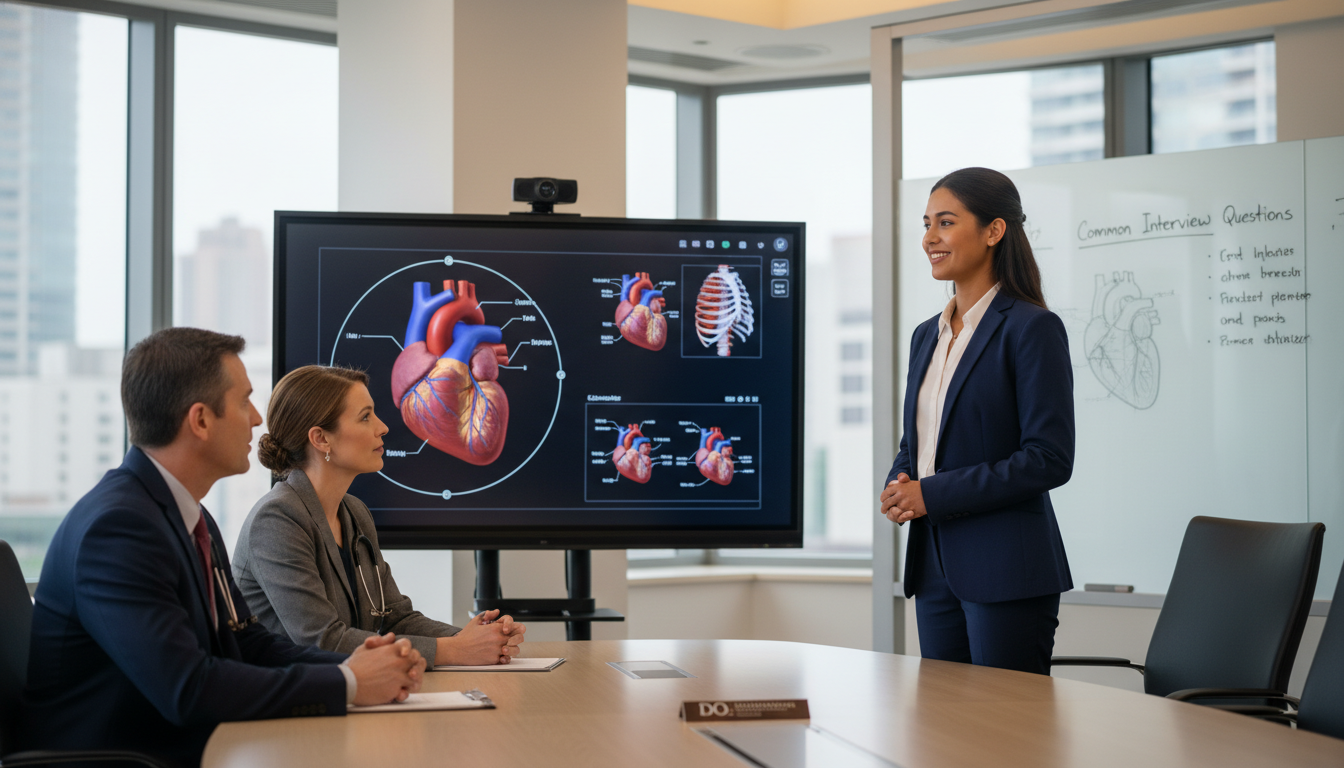
Emergency Medicine–Internal Medicine (EM–IM) combined programs are competitive, small, and highly selective. As a Caribbean IMG, you’re evaluated not only on your clinical skills but also on how convincingly you demonstrate maturity, resilience, and clear purpose for choosing this unique pathway.
Program directors are trying to answer three core questions:
- Can you do the job? (Clinical readiness, work ethic, professionalism)
- Will you fit in here? (Teamwork, communication, adaptability, cultural fit)
- Will you stay and thrive? (Grit, resilience, realistic expectations, commitment to EM–IM)
Most of the “common interview questions” are simply different angles on these three themes. This guide focuses on how Caribbean IMGs applying to EM–IM combined programs can prepare targeted, high-yield responses—especially for behavioral interview medical questions.
Foundational Questions: Building Your Core Narrative
These questions appear in almost every residency interview and often shape the rest of the conversation. As a Caribbean IMG, you must be especially intentional about how you use them to introduce your story.
1. “Tell me about yourself”
This is often your first impression—and it’s not an invitation for your life story. Programs want a concise professional narrative that connects your background to emergency medicine internal medicine and to their program.
Goal: Deliver a 60–90 second, structured answer that highlights:
- Who you are academically/clinically
- Why EM–IM specifically
- Why your Caribbean training is an asset, not a liability
- A brief personal dimension that shows you’re human and well-rounded
Simple structure to follow: PAST → PRESENT → FUTURE
Example (Caribbean IMG, EM–IM focus):
“I completed my medical degree at St. George’s University, where I became especially interested in the continuum of acute and chronic care. During my clinical rotations in the U.S., I was drawn to how emergency physicians stabilize critically ill patients, and how internists then manage their long-term recovery and comorbidities.
Currently, I’m finishing an EM sub‑internship at a busy community hospital, where I’ve especially enjoyed working up undifferentiated patients and then following them on the medicine service to understand their longitudinal course. These experiences convinced me that the EM–IM combined pathway best aligns with my strengths—rapid decision-making, systems-based thinking, and enjoyment of complex, medically ill patients.
Looking ahead, I hope to train in a program like yours that offers strong critical care exposure and opportunities to be involved in ED operations and quality improvement. Outside of medicine, I run and cook with friends, which helps me manage stress and maintain balance, especially during intense rotations.”
Tips for Caribbean IMGs:
- Briefly mention your Caribbean medical school residency angle positively (“I trained in a diverse clinical environment with limited resources, which made me adaptable and resourceful.”).
- If you attended SGU, you can naturally tie in SGU residency match outcomes as an indicator of strong preparation (without sounding like an advertisement).
- Practice out loud repeatedly until it feels conversational.
2. “Walk me through your CV” / “Tell me about your path in medicine”
This is similar to “tell me about yourself” but often invites more detail, including:
- Gaps in training
- Transitions between countries
- USMLE timeline
- Changes in career direction
Strategy:
- Be chronological, honest, and forward-looking.
- If you have red flags (exam failures, gap years, extended time in medical school), briefly explain them with:
- Ownership (no blaming)
- Insight (what you learned)
- Recovery (what changed and improved)
Example for a repeated Step exam:
“I took Step 1 twice. The first time I underestimated the adjustment from basic science to board-style questions while adapting to a new educational system. I realized I needed a more structured approach and better test-taking strategies. I created a detailed schedule, used UWorld more systematically, and sought help from mentors who had gone through the process.
Since then, I’ve passed all subsequent exams on the first attempt and have consistently performed well on clinical evaluations and shelf exams. It was a humbling experience, but it forced me to improve my discipline, time management, and help‑seeking behavior—skills that have translated directly into my performance on demanding rotations like EM and ICU.”
3. “Why EM–IM combined and not just EM or IM?”
This is a make‑or‑break question for EM–IM programs. They need to know you truly understand the combined pathway and are not just applying broadly.
Programs are probing:
- Are you genuinely committed to emergency medicine internal medicine?
- Do you understand the intensity and duration (often 5 years) of the EM–IM combined pathway?
- Can you articulate how you will leverage both skill sets in a coherent career plan?
Key elements to include:
- Clinical interests that naturally span both specialties
- Personality traits aligned with both fast-paced, undifferentiated ED work and longitudinal, complex medical care
- Concrete career goals (e.g., critical care, ED-based observation units, hospital administration, academic leadership, global health systems)
Sample answer:
“I’m drawn to EM–IM because my favorite clinical experiences have been where the ED and the inpatient world intersect. On my EM rotations, I loved quickly assessing undifferentiated patients and initiating resuscitation. But I also found myself wanting to follow them beyond the ED—to understand their complex comorbidities, hospital course, and how we could prevent the next admission.
EM–IM provides the breadth to manage acute undifferentiated illness in the ED and the depth to care for medically complex, high-risk patients over time. Long term, I see myself in an academic center splitting my time between the emergency department, a medical step‑down or observation unit, and possibly critical care. I’m also interested in systems‑based work—optimizing throughput and transitions of care between the ED and inpatient services.
I’m not applying to EM or IM alone because I believe the combined training will make me more effective in exactly the overlap area that motivates me most: the front door of the hospital and the continuum that follows.”
Pitfalls to avoid:
- Saying “I couldn’t decide between EM and IM, so I chose both.”
- Being vague about future plans.
- Not showing that you understand the demands: call, length, double-board exams.

Core Behavioral Questions You Must Master
Most EM–IM programs use a behavioral interview medical framework: “Tell me about a time when…”. These questions reveal how you actually behave under pressure—crucial for emergency and internal medicine settings.
Use the STAR method (Situation, Task, Action, Result) for structured, succinct answers.
4. “Tell me about a time you made a mistake in patient care”
They are testing:
- Honesty
- Insight
- Accountability
- Growth mindset
Never claim you’ve never made a mistake.
Good example (Caribbean clinical rotation):
Situation/Task: “During my core internal medicine rotation, I was following an elderly patient with pneumonia and heart failure. I was responsible for pre-rounding and writing the daily note. One morning, I misinterpreted a mild rise in creatinine as insignificant and didn’t highlight it in my presentation. My senior later pointed out that, in the context of recent diuresis, this change was clinically relevant.
Action: I immediately acknowledged the oversight, went back to review the patient’s fluid balance, medication list, and trend of labs. I updated the team, we adjusted the diuretic dosing, and I documented the plan clearly. I also started systematically tracking key lab trends for all my patients in a small table in my notes to avoid similar misses.
Result: The patient’s kidney function stabilized, and there was no adverse outcome. Personally, it changed how I approach data: I’m more meticulous about spotting early trends and bringing them to the team’s attention, especially in complex patients. It also reinforced the importance of asking for feedback and double‑checking my assumptions.”
Avoid:
- Blaming others.
- Choosing a trivial “mistake” that sounds insincere.
- Leaving out what you learned.
5. “Describe a time you had a conflict with a colleague or nurse”
EM–IM physicians must collaborate across services, shifts, and hierarchies. Programs want to see emotional intelligence, respect, and a team-first mindset.
Answer framework:
- Briefly describe the conflict without exaggeration.
- Focus on your role, your communication, and resolution.
- End with how it changed your approach.
Example:
“On an EM rotation, I was working with a nurse who felt I was ordering labs ‘too slowly’ on new patients. She expressed frustration rather abruptly in front of the team.
I felt defensive at first but realized she was under significant pressure with a heavy assignment. I asked if we could step aside for a moment. I listened to her concerns—she felt delays made it harder to triage who needed beds quickly. I explained my workflow and how I tried to prioritize sickest patients first. Together, we agreed on a simple communication plan: when she was particularly worried about a patient, she would flag it to me early; in turn, I would verbalize my initial workup plan more clearly as I saw each patient.
After that, our collaboration improved significantly. The experience reinforced for me that addressing conflicts early, privately, and with curiosity rather than defensiveness is crucial—especially in high‑stress environments like the ED.”
6. “Tell me about a time you worked under significant pressure”
Perfect for EM–IM: think of resuscitations, busy night shifts, multiple admissions, or code situations.
EM–IM–specific angle: Emphasize your ability to:
- Prioritize
- Communicate under stress
- Maintain composure
- Think systematically
Example:
“During a night float rotation, I was covering cross‑cover for a medical ward when the ED simultaneously called about two potential ICU‑level admissions, and a ward nurse called about a patient becoming hypotensive.
I quickly triaged: I went first to the hypotensive patient to assess airway, breathing, and circulation, asked the nurse to start a rapid fluid bolus while I examined the patient, and called a rapid response. For the two ED patients, I asked the ED team to stabilize and provide a brief SBAR handoff and told them I would evaluate them as soon as the in‑house emergency was addressed.
I delegated appropriately, communicated my priorities to the charge nurse and senior resident, and documented key events in real time. Once the ward patient stabilized and the senior took over, I went to evaluate the ED patients, one of whom we upgraded to ICU.
This situation reinforced the importance of triage, clear communication, and not appearing panicked even when juggling multiple critical tasks—skills I know will be central in EM–IM training.”
7. “Give an example of when you had to adapt to a new system or culture”
As a Caribbean IMG, this question is extremely important. They are assessing:
- How you transitioned from Caribbean to U.S. clinical training
- Cultural competence
- Flexibility
Example:
“Transitioning from my Caribbean medical school to U.S. clinical rotations required significant adaptation. The pace was faster, documentation expectations were higher, and there were new electronic medical record systems to learn.
I approached this by first observing how residents structured their notes and presentations, then asking for specific feedback on my first few patient write‑ups. I spent extra time after hours practicing orders and notes in the EMR training environment. I also learned to adjust my communication style—being more concise and direct during presentations and sign‑outs, which was different from what I was used to.
Within a few weeks, feedback from residents and attendings shifted from ‘needs to work on time management’ to ‘efficient and well‑prepared.’ This experience gave me confidence that I can quickly adapt to new systems—an important skill for EM–IM where we frequently navigate between ED, inpatient, ICU, and different teams.”

EM–IM–Specific and Scenario-Based Questions
Beyond standard behavioral questions, expect targeted prompts that probe your understanding of the specialty and your clinical reasoning.
8. “What qualities make someone a strong EM–IM physician?”
Programs want to hear that you understand the identity of an EM–IM doctor.
You might mention:
- Strong triage and prioritization skills
- Comfort with uncertainty and undifferentiated disease
- Deep understanding of complex medical comorbidities
- System-based thinking (transitions of care, throughput, disposition)
- Resilience and emotional stability under chronic stress
- Communication skills across multiple teams (ED, ICU, wards, consultants)
Turn this into a partially self-descriptive answer, with specific examples.
9. “Describe how you would handle this clinical scenario…”
Scenario questions test your thought process more than factual knowledge. Common EM–IM scenarios involve:
- Chest pain/shortness of breath with complex comorbidities
- Sepsis requiring ED resuscitation and inpatient management
- Disposition decisions (admit vs. observation vs. discharge)
- Managing limited resources on a busy night
Approach:
- Think out loud but stay organized.
- Use a framework: Stabilize → Assess → Investigate → Treat → Disposition → Follow-up.
- Show where EM and IM thinking intersect.
Mini-example:
“In a 65-year-old with COPD, CHF, and diabetes presenting with dyspnea, I’d first focus on ABCs and immediate stabilization—vitals, oxygenation, airway risk. Simultaneously, I would obtain a focused history and exam, looking for signs of decompensated heart failure, COPD exacerbation, PE, or pneumonia.
I’d order targeted labs, EKG, CXR, and possibly bedside ultrasound to help distinguish cardiac vs. pulmonary causes. Treatment would be initiated in parallel—e.g., BiPAP if appropriate, diuresis if volume overloaded, bronchodilators and steroids if bronchospasm is evident, and antibiotics if infection is suspected.
Disposition would depend on response to treatment and comorbidities. From an internal medicine standpoint, I’d think ahead about optimizing his chronic disease management, medication reconciliation, and ensuring appropriate follow-up or involvement of cardiology/pulmonology if admitted.”
10. “Where do you see yourself in 5–10 years?” (EM–IM version)
They’re testing:
- Realistic understanding of career paths
- Commitment to the combined specialty
- Long-term vision
Strong EM–IM aligned options:
- Academic EM–IM faculty with combined ED and inpatient roles
- Critical care (if planning fellowship)
- ED observation units or medical short-stay units
- Hospital administration, quality improvement, or operations
- Global health or systems development, especially if connected to Caribbean or LMIC settings
Example:
“In 5–10 years, I see myself working at an academic medical center splitting my time between the emergency department and a medicine step‑down or observation unit. I’m particularly interested in optimizing transitions of care for high‑risk, frequently admitted patients—both clinically and through quality improvement work.
I also hope to be involved in education, mentoring other IMGs and residents who are interested in EM–IM careers. Long-term, I could see myself in a leadership role that bridges ED operations and inpatient medicine, improving throughput and patient safety.”
Common Residency Interview Questions for Caribbean IMGs (and How to Tailor Them)
Because you’re a Caribbean IMG, certain questions are especially likely. Prepare for them explicitly.
11. “Why did you choose a Caribbean medical school?”
Answer directly, without defensiveness.
Elements to include:
- Honest reason (timing, prior career, opportunity, etc.)
- What you gained (diverse patient exposure, resilience, resourcefulness)
- How you addressed any limitations (extra observerships, strong US clinical rotations, research)
Example:
“I chose a Caribbean medical school because it provided me with a timely opportunity to pursue medicine after I decided to change careers and the application cycle in my home country had passed. I understood that as a Caribbean IMG, I would have to work harder to prove myself, especially in competitive fields like EM–IM.
The experience has been invaluable—I trained in resource-limited settings with a wide variety of pathology, which taught me to be adaptable and efficient. I actively sought out strong U.S.-based core and elective rotations, including EM and ICU, to ensure I was well-prepared for residency expectations here. My evaluations and letters from these rotations highlight my readiness to function at the level of a U.S. graduate, and I believe that combination of resilience and diverse experience will be an asset to your program.”
12. “How do you think being a Caribbean IMG will impact your residency training?”
They’re asking if you’re self-aware and proactive.
Suggested angle:
- Acknowledge reality: need to prove yourself, visa issues if applicable, limited built-in networks.
- Emphasize strengths: adaptability, work ethic, cultural competence.
- Show concrete strategies: seeking mentorship, continuous feedback, extra reading, exam preparation.
13. “What are your strengths and weaknesses?”
Avoid clichés (“I work too hard”) and generic answers.
Strengths ideal for EM–IM:
- Staying calm under pressure
- Strong communication with patients and teams
- Systems thinking and attention to detail
- Comfort with ambiguity and complex problem-solving
Weaknesses:
- Choose a real, manageable weakness that isn’t a core disqualifier (e.g., not “I struggle to communicate in stressful situations”).
- Show concrete steps you’ve taken to address it.
Example weakness:
“Earlier in my training, I struggled with over-documenting, which affected my efficiency. My notes were thorough but sometimes too long. After feedback from residents and attendings, I began using more structured templates and focused on clinically relevant information. I also reviewed sample notes from effective residents. Over time, my notes became more concise, and my turnaround time improved. I still value thoroughness, but I’ve learned to balance it with efficiency—especially important in fast-paced settings like the ED.”
Preparing for Your EM–IM Interview: Practical Strategies
Optimize Your Behavioral Answers
- Make a list of 10–12 core stories (clinical challenges, conflicts, leadership roles, mistakes, teamwork examples).
- Each story should be usable for multiple questions (e.g., a single ICU experience could be used for “working under pressure,” “conflict,” “mistake,” and “leadership”).
- Practice your STAR responses out loud with a friend, mentor, or via recording.
Anticipate High-Yield EM–IM Topics
- Disposition decisions and transitions of care
- Managing chronic disease in the context of acute illness
- Critical care exposure and interests
- Experience in both ED and inpatient settings
- Systems and quality improvement (admissions, handoffs, throughput)
Practice Classic Residency Interview Questions Daily
Include:
- “Tell me about yourself”
- “Why EM–IM?”
- “Why our program?”
- “Describe your most challenging patient”
- “How do you handle stress?”
- “What will be your biggest challenge in residency?”
- “Do you have any questions for us?”
The more you rehearse, the more smoothly your responses will flow—without sounding memorized.
FAQ: EM–IM Interview Questions for Caribbean IMGs
1. How is “Tell me about yourself” different from “Walk me through your CV”?
“Tell me about yourself” is a brief, high-level narrative that introduces who you are, why you’re here, and where you’re going. It should last 60–90 seconds and emphasize your identity as an aspiring EM–IM physician.
“Walk me through your CV” allows a bit more chronological detail, including transitions, exam timing, or nontraditional paths. It can be 2–3 minutes but should still be focused and purposeful.
2. What are some red-flag questions Caribbean IMGs should be especially prepared for?
- “Why Caribbean medical school?”
- “Can you explain this gap in your training?”
- “What happened with this exam failure/low score?”
- “How will you manage the demands of a 5‑year EM–IM program?”
Prepare honest, concise, and growth-oriented responses for each. Don’t wait to “wing it” in the actual interview.
3. How can I stand out in EM–IM interviews as a Caribbean IMG?
- Show an unusually clear, mature understanding of why EM–IM specifically.
- Link your Caribbean background to strengths: adaptability, resourcefulness, multicultural competency.
- Have strong, specific behavioral stories that show you’ve thrived in high-pressure, team-based environments.
- Ask thoughtful questions about how the program integrates ED and IM training, critical care exposure, and mentorship.
4. Are EM–IM interviews more behavioral or clinical?
Most are a mix, but increasingly behavioral-focused. You must be ready for both:
- Behavioral: teamwork, conflict, mistakes, ethics, resilience.
- Clinical: scenario-based reasoning in ED and inpatient contexts, disposition decisions, and management priorities.
Prepare your core behavioral stories and also review common EM and IM presentations so you can articulate your thought process clearly and calmly.
By anticipating these common interview questions and shaping your answers through the lens of an EM–IM–focused Caribbean IMG, you’ll present a coherent, confident narrative that reassures program directors you’re prepared—not just academically, but behaviorally and professionally—to thrive in the demanding, rewarding world of Emergency Medicine–Internal Medicine residency.