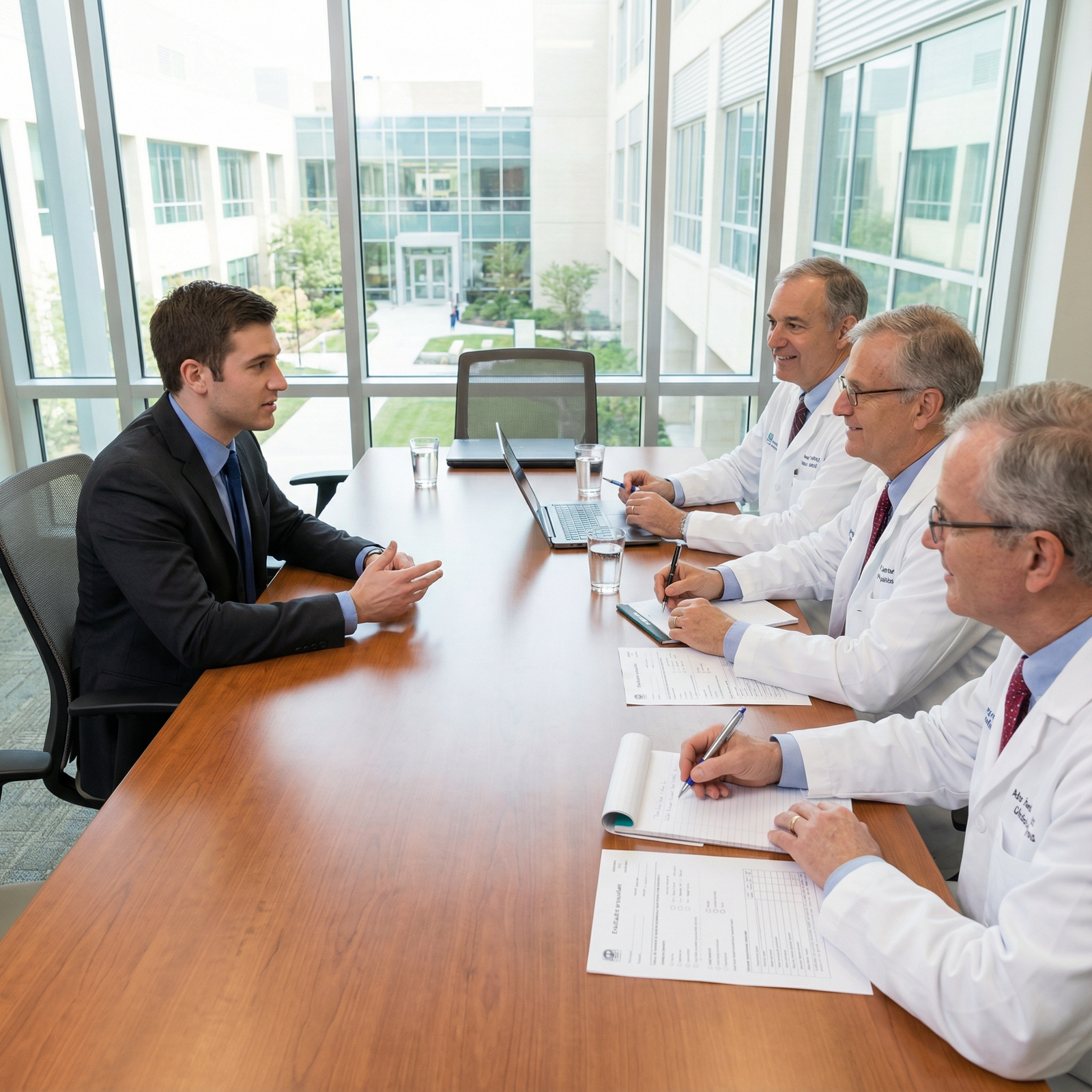
Understanding the PM&R Interview as a Caribbean IMG
Physical Medicine & Rehabilitation (PM&R), or physiatry, is a growing specialty that values communication, teamwork, and a deep understanding of function and quality of life. As a Caribbean IMG, you bring unique experiences and perspectives—but you also face additional scrutiny about your training, readiness, and fit for the U.S. system.
Program directors often say they can teach clinical skills, but they cannot teach professionalism, work ethic, or interpersonal skills. That is exactly what residency interview questions—especially behavioral interview medical questions—are designed to uncover.
This guide focuses specifically on common interview questions for Caribbean IMG applicants targeting PM&R residency, with attention to:
- How your Caribbean medical school background shapes the conversation
- What PM&R-specific qualities programs want to see
- How to answer common and challenging residency interview questions
- How to discuss SGU residency match or other Caribbean medical school residency outcomes strategically
- How to incorporate behavioral and “tell me about yourself” styles into compelling, concise responses
Use this as a working blueprint to build your own authentic responses—not as a script to memorize.
Core “Getting to Know You” Questions
These are the foundation of any PM&R residency interview. You will almost certainly be asked some version of each of these.
1. “Tell me about yourself.”
This is the single most common interview prompt and often your very first impression. Programs want a 1–2 minute professional snapshot, not your entire life story.
Purpose of the question
- Assess your communication skills and organization of thought
- Understand your journey to medicine, PM&R, and the U.S. system
- Evaluate your insight, maturity, and fit with their program
Structure your response (3-part framework)
- Brief background and education
- Where you’re from, medical school, and key context as a Caribbean IMG
- Clinical and PM&R-relevant experiences
- Key experiences that led you to physiatry and strengthened your candidacy
- Current goals and why this specialty/program
- What you are looking for in residency and how you hope to contribute
Sample outline for a Caribbean IMG pursuing PM&R
Start with who you are:
- “I’m originally from [Country/City] and completed my medical education at [Caribbean School, e.g., SGU]. During my clinical years in the U.S., I found myself consistently drawn to patients with chronic conditions and functional limitations.”
Connect to PM&R:
- “My interest in PM&R developed while working with patients after strokes and spinal cord injuries. I appreciated how physiatry focuses not just on the diagnosis, but on restoring independence and quality of life through a team-based approach.”
Include 1–2 concrete examples:
- “During my PM&R elective at [Hospital], I followed a patient with incomplete spinal cord injury from the ICU through inpatient rehab to outpatient follow-up. Seeing how coordinated therapy, spasticity management, and assistive technology transformed his function solidified my desire to pursue this specialty.”
End with your goals and fit:
- “I’m looking for a residency that emphasizes early exposure to inpatient rehab, strong outpatient musculoskeletal and procedures training, and a supportive learning culture. I hope to contribute a strong work ethic, adaptability from training in multiple systems, and my passion for working with diverse patient populations.”
Tips for Caribbean IMGs
- Briefly acknowledge your path (e.g., SGU, Ross, AUC), but don’t apologize for it. Focus on what you gained: adaptability, resilience, diverse clinical exposure, and strong US clinical experiences.
- Practice this answer out loud until it feels natural and polished but not robotic.
2. “Why PM&R?” / “Why physiatry?”
This is central to any physiatry match interview. Interviewers are testing whether you truly understand PM&R beyond a couple of shadowing experiences.
Programs want to see
- Insight into the core identity of PM&R: function, quality of life, interdisciplinary care
- Authentic exposure (rotations, electives, research, volunteer work)
- Alignment between your personality and the daily work of physiatrists
Strong answer components
- A specific story or patient who influenced you
- Awareness of the breadth of PM&R (inpatient, outpatient, neuro, MSK, pain, pediatrics)
- A connection between your strengths and what physiatrists actually do
Example talking points
- “I enjoy managing complex, chronic conditions rather than quick, episodic care.”
- “I value working closely with PT, OT, speech, and social work as part of an interdisciplinary team.”
- “I’m drawn to functional goals—helping someone transfer independently, return to work, or play with their grandchild—rather than just normalizing lab values.”
- “I appreciate procedures like joint injections, EMGs, and spasticity management that combine hands-on skills with clinical reasoning.”
Caribbean IMG angle
You can highlight how your diverse clinical background and exposure to resource-limited settings made you value creative, functional problem-solving and comprehensive rehab.
3. “Why our program?”
No matter how strong your overall profile, a generic answer here is a red flag. This is where you show you’ve done your homework.
What they’re really asking
- Did you research our curriculum, patient population, and strengths?
- Do your goals genuinely match what we offer?
- Are you likely to rank us highly and stay for the full training?
How to prepare
- Before interviews, make a one-page note per program:
- Unique rotations (e.g., strong spinal cord program, robust MSK clinics, VA exposure)
- Notable features: ultrasound education, EMG lab, research infrastructure
- Culture: small close-knit program, emphasis on mentorship, call structure
- Any alumni/Caribbean IMG success stories, including SGU residency match or other Caribbean medical school residency examples
Sample structure
Start with 2–3 specific program features:
- “I’m especially drawn to your strong inpatient stroke and spinal cord programs, the dedicated ultrasound curriculum, and your integrated continuity clinic starting in PGY-2.”
Connect them to your goals:
- “I’m very interested in developing strong MSK and ultrasound skills to pursue a sports and spine-focused practice, while still maintaining a solid background in neurorehabilitation.”
Show alignment with culture:
- “Speaking with your residents, I was impressed by how supportive they felt the faculty were, especially with IMG transitions to the U.S. system. That kind of collegial environment is really important to me.”
Behavioral and Situational Questions in PM&R
PM&R is heavily team-oriented, so behavioral interview medical questions are core to the process. These explore how you’ve handled real situations in the past as a predictor of future performance.
Use the STAR method for all behavioral questions:
- Situation – Brief context
- Task – Your role/responsibility
- Action – What you did, step by step
- Result – Outcome and what you learned
4. “Tell me about a difficult patient you managed.”
Programs want to see empathy, boundaries, communication skills, and professionalism.
Example response outline
- Situation: “During my inpatient rotation at [Hospital], I cared for a patient post-stroke who was frequently refusing therapy and became verbally aggressive with staff.”
- Task: “As the student following his case, I wanted to understand his concerns and support the team in improving his engagement.”
- Action:
- Scheduled a dedicated conversation, listened to his frustrations
- Identified his fear of permanent disability and his mistrust based on prior experiences
- Explained the purpose of rehab in simple, functional terms
- Coordinated with nursing and PT to set small, achievable daily goals
- Result: “Over the next week, he became more cooperative, attended more therapy sessions, and even began asking about long-term goals. I learned the value of active listening, validating emotions, and linking rehab to personally meaningful outcomes.”
Key PM&R angle
Emphasize how you focused on functional goals, patient-centered communication, and collaboration with PT/OT/speech.
5. “Describe a time you had a conflict with a team member. How did you handle it?”
Team dynamics are central in PM&R: nursing, therapists, social workers, case managers, and physicians all intersect.
Strong answer characteristics
- You do not blame or attack the other person
- You show insight into your own role
- You prioritize patient care and team function
- You end with growth and learning
Example scenario
- Miscommunication with a physical therapist about a patient’s weightbearing status
- Disagreement with another student about presentation responsibilities
- Tension with a resident about feedback or expectations
Sample structure
- Situation: “During my inpatient rotation, a PT was frustrated because the team had changed a patient’s therapy schedule without notifying rehab.”
- Task: “As the student who had been communicating with the therapist, I felt responsible to help clarify expectations.”
- Action: “I met with the PT privately, listened to her concerns, acknowledged the communication gap, and then clarified with the resident how changes should be communicated. I suggested we formalize updates in the EMR and during daily huddles.”
- Result: “The PT appreciated being heard, and our team’s communication improved. I learned how proactive, respectful clarification can prevent misunderstandings and keep patient care at the center.”
6. “Tell me about a time you made a mistake.”
Programs are not looking for perfection; they want honesty, accountability, and improvement.
Do:
- Pick a real, but non-catastrophic, example
- Show you took responsibility and changed something
- Emphasize patient safety and learning
Don’t:
- Choose an example of unethical behavior, serious harm, or dishonesty
- Blame everyone else or say “I can’t think of any mistakes”
Example outline
- Mistakenly omitted a key lab from your presentation
- Misinterpreted a physical exam finding and had to correct it later
- Miscommunicated an order to nursing (as a student, under supervision)
Tie your answer to improvement: “Since then, I always double-check X” or “I created a checklist for Y.”
7. “Describe a time you showed leadership.”
In PM&R, leadership shows up in subtle ways: organizing family meetings, coordinating with therapists, or advocating for patients.
Examples suitable for Caribbean IMGs
- Organizing a student-run clinic or rehab-themed health fair
- Leading a research or quality improvement project
- Coordinating between U.S.-based attendings and international preceptors
- Serving as a group leader for a rehab rotation or OSCE preparation
Highlight initiative, organization, and team facilitation, not just holding a title.
Caribbean-Specific and “Red Flag” Questions
As a Caribbean IMG, expect additional questions probing your journey, choices, and readiness. These are not necessarily negative; they are opportunities to show maturity and insight.
8. “Why did you choose a Caribbean medical school?”
Programs want to know how you think about your choices and whether you can handle the rigors of U.S. training.
Effective approach
- Be honest but strategic and positive
- Avoid overly personal or defensive explanations
- Focus on what you gained and how you maximized your opportunities
Example answer elements
- “I applied broadly and the opportunity to study at [Caribbean school] allowed me to pursue medicine when U.S. options were limited.”
- “The school offered strong affiliations with U.S. teaching hospitals, which was important for my long-term goal of training in the U.S.”
- “Training in different healthcare systems has made me adaptable, resourceful, and appreciative of multidisciplinary rehabilitation models.”
If you are from a well-known Caribbean school like SGU, you may also reference SGU residency match outcomes or strong alumni networks in PM&R, but keep it concise and focused on your growth, not just statistics.
9. “How did your Caribbean medical school prepare you for residency?”
Here, connect your education to specific skills:
Academic preparation:
- “System-based curriculum, early clinical exposure, and NBME-style exams helped me prepare for USMLE and patient care in the U.S.”
Clinical rotations:
- “U.S. core rotations at [Hospital(s)] exposed me to high-acuity, diverse patient populations and interdisciplinary teams.”
Adaptability:
- “Adjusting to different hospital systems and EMRs trained me to adapt quickly, which I know is valuable in PM&R where we move between inpatient, consult services, and outpatient clinics.”
10. “I see a gap/low score/failed exam on your record. Can you explain?”
If you have any academic difficulties or timeline irregularities, you must have a clear, mature, and concise explanation ready.
Key principles
- Own it: Take responsibility without excessive self-criticism
- Contextualize: Briefly describe contributing factors (e.g., adjustment to a new system, illness, family emergency)
- Demonstrate change: Focus on what you did differently and subsequent improvement
Sample framework
- “During my first exam attempt, I struggled with [specific challenge]. I realized I needed to adjust my study strategy and seek support.”
- “I created a structured study schedule, used NBME practice exams, and worked closely with faculty. On my next attempt, I improved by [X points].”
- “This experience taught me resilience, self-awareness, and how to seek help early—skills that will make me a stronger resident.”

PM&R-Specific Clinical and Ethical Questions
In addition to general residency interview questions, PM&R programs will assess how you think as a future physiatrist.
11. “Describe a meaningful interaction with a patient with a disability.”
Your answer should show:
- Respect and person-first language
- Awareness of autonomy and independence
- Sensitivity to long-term functional impact
Example concepts:
- Working with a patient with spinal cord injury, TBI, stroke, or amputation
- Learning from a patient’s perspective about living with chronic spasticity, neuropathic pain, or mobility limitations
- Recognizing environmental and social barriers (housing, transportation, access to therapy)
12. “What do you understand about the role of a physiatrist on the rehab team?”
Programs want to see that you recognize the physician’s distinct role:
- Lead and coordinate care across PT, OT, speech, psychology, nursing, and social work
- Diagnose and manage medical issues that impact function (spasticity, pain, bowel/bladder, mood, comorbidities)
- Set realistic, functional goals with patients and families
- Perform and interpret EMGs, manage spasticity (e.g., botulinum toxin), and perform MSK procedures
- Advocate for appropriate durable medical equipment, therapy services, and long-term support
As a Caribbean IMG, you can emphasize how your multi-system training prepared you to consider whole-person care, not just isolated organ systems.
13. “What areas of PM&R interest you most?” / “Do you have a long-term career goal?”
You are not required to have a firm subspecialty plan, but a thoughtful answer shows maturity.
Possible interests:
- Inpatient neuro-rehab (stroke, TBI, SCI)
- Outpatient MSK/sports and ultrasound-guided procedures
- Chronic pain management or cancer rehab
- Pediatric rehab
- Spinal cord injury medicine
Tie your interest to past experiences and how their program will help you grow, e.g.:
- “I’m particularly drawn to spinal cord injury because of my experience at [Hospital] where I saw the long-term impact of early, coordinated rehab. I also like that your program has a dedicated SCI rotation and strong mentorship in that area.”
14. “Tell me about a time you advocated for a patient.”
This could include:
- Ensuring a patient received appropriate rehab services instead of early discharge
- Clarifying goals of care and rehab expectations with family
- Helping address language, cultural, or financial barriers to therapy
- Coordinating with social work for equipment or community resources
For Caribbean IMGs, advocating in cross-cultural or limited-resource settings can be a powerful demonstration of your values—just ensure the story clearly relates to functional outcomes and interdisciplinary collaboration, which are central to PM&R.
Practical Preparation Strategies and Common Traps
Build a Personal Question Bank
Create a document with headings like:
- Tell me about yourself / Why PM&R / Why our program
- Behavioral questions (conflict, mistake, leadership, difficult patient)
- Caribbean-specific questions (why your school, academic issues, visa status)
- Clinical/ethical PM&R questions (disability, team roles, advocacy)
Under each, draft bullet points and STAR structures. Do not write scripts; write talking points.
Practice Aloud—Especially for “Tell Me About Yourself”
Record yourself answering:
- “Tell me about yourself.”
- “Why PM&R?”
- “Why this program?”
Then:
- Time each answer (aim for 1–2 minutes)
- Listen for clarity, confidence, and filler words
- Adjust to ensure your Caribbean medical school residency background is framed as a strength, not a liability
Prepare Questions You Will Ask Them
You will almost always be asked, “Do you have any questions for us?” Prepare 3–5 thoughtful questions tailored to PM&R and the specific program, such as:
- “How do residents get exposure to both inpatient and outpatient experiences early in training?”
- “What opportunities exist for learning ultrasound, EMG, and procedures?”
- “How have past IMGs, including Caribbean graduates, integrated into your program?”
- “Can you describe how residents are supported in research or QI projects related to rehab outcomes?”
Avoid questions easily answered on the website (e.g., “What electives do you offer?” if clearly listed).
Common Pitfalls for Caribbean IMGs
Over-explaining or apologizing for being a Caribbean graduate
- Acknowledge your path briefly, then move to strengths and growth.
Overly vague PM&R interest
- “I like helping people” is not enough. Show depth: team-based care, function, neuro/MSK balance, chronic disease management.
Memorized-sounding responses
- Use natural language. Programs want authenticity.
Not understanding basic PM&R terminology
- Review common terms: ADLs, IADLs, spasticity vs rigidity, TBI levels, gait aids, etc.
Failure to demonstrate teamwork
- Always emphasize that you respect and value therapists, nurses, and ancillary staff.
FAQ: Caribbean IMG PM&R Residency Interviews
1. As a Caribbean IMG, how can I stand out positively in PM&R interviews?
- Show deep, specific understanding of PM&R—not just a last-minute specialty choice.
- Demonstrate maturity and reflection about your path and any challenges.
- Highlight U.S. clinical experiences, especially inpatient rehab or PM&R electives.
- Emphasize your comfort working in diverse settings and with interdisciplinary teams.
- Use behavioral examples that show resilience, adaptability, and strong communication.
2. Will programs ask about SGU residency match or other Caribbean outcomes directly?
Not usually in those exact terms, but they commonly explore:
- Why you chose a Caribbean path
- How your school and its U.S. affiliations prepared you for residency
- How your performance compares within your class
You can reference strong SGU residency match or similar outcomes briefly to show that your school has a track record in U.S. training—but focus primarily on your individual performance and experiences.
3. What are some PM&R-specific residency interview questions I should definitely practice?
Be ready for:
- “Tell me about yourself.”
- “Why PM&R?”
- “Describe a patient with a disability who impacted you.”
- “What does function mean to you as a physician?”
- “Tell me about a challenging team interaction and how you handled it.”
- “What area of PM&R interests you?”
- “How do you handle emotionally challenging situations, such as young patients with life-changing injuries?”
Practice these with the STAR method and a PM&R lens focused on function, quality of life, and interdisciplinary care.
4. How different is a PM&R interview from other specialties like IM or FM for a Caribbean IMG?
The structure is similar, but emphasis differs:
- PM&R places more weight on your understanding of disability, function, and rehab teams.
- You’ll encounter more questions about collaboration with PT/OT, long-term patient relationships, and complex multi-system management.
- Programs will look for alignment between your personal qualities (patience, communication, empathy) and the longitudinal, rehabilitative nature of the field.
Preparing thoroughly for these common interview questions for Caribbean IMG in Physical Medicine & Rehabilitation will position you to present your story with clarity, confidence, and authenticity. Use your Caribbean background as a strength—evidence of resilience, adaptability, and global perspective—while demonstrating that you fully understand and are committed to the unique, rewarding work of physiatry.