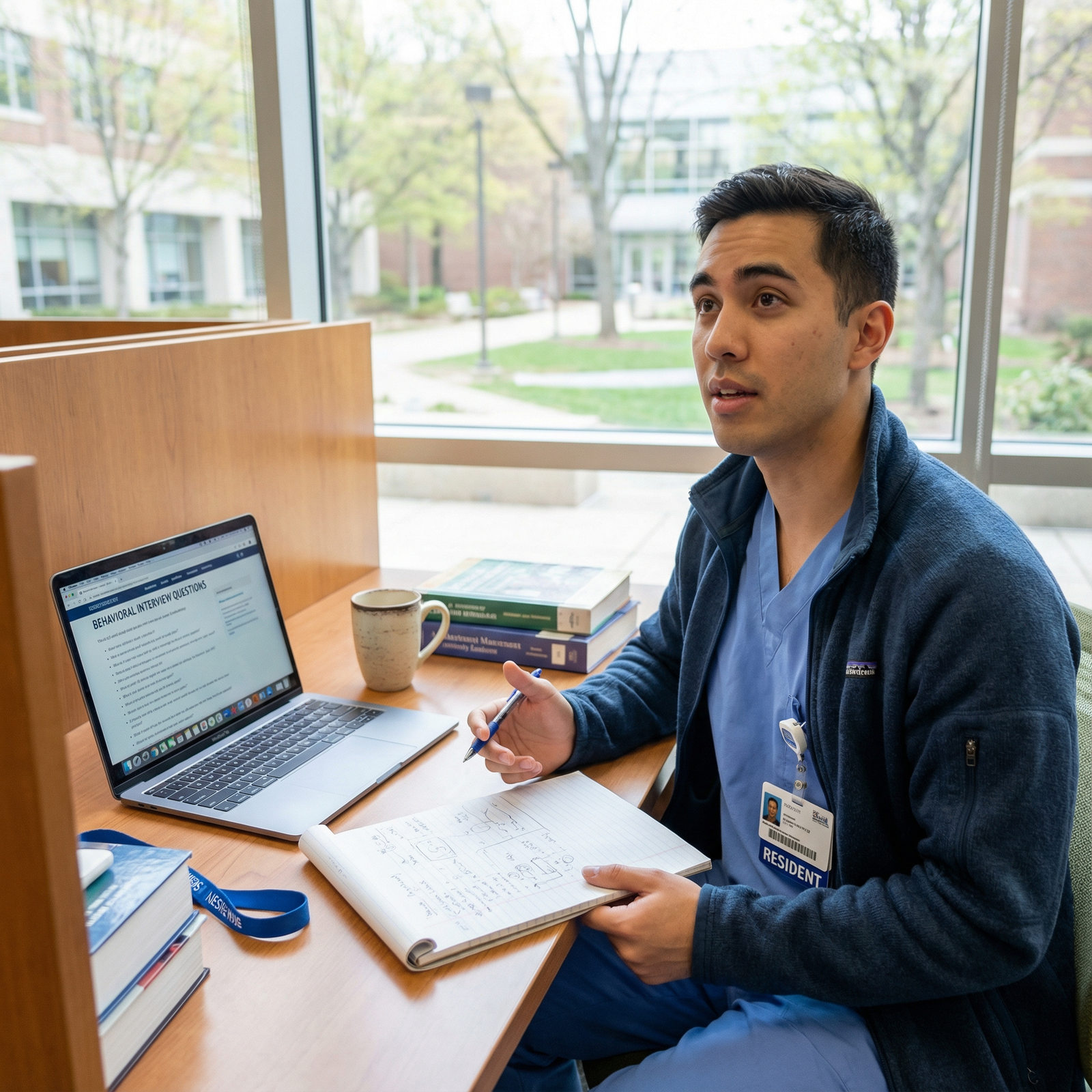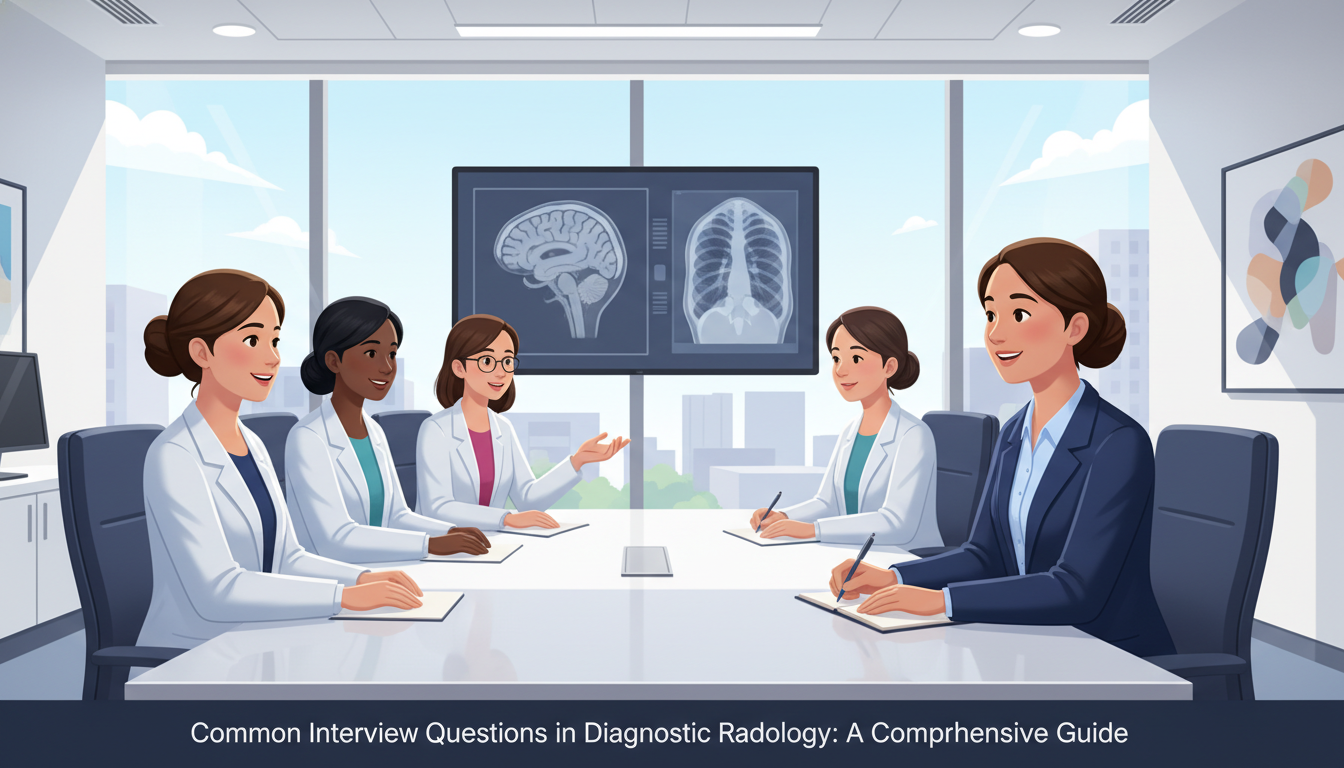
Understanding the Radiology Residency Interview Landscape
Diagnostic radiology residency interviews have evolved far beyond “Why radiology?” and “What are your strengths?” Programs now emphasize behavioral interview medical formats, standardized scoring rubrics, and culture fit. For applicants, that means you must be prepared not only to explain your CV, but to demonstrate how you think, communicate, and collaborate.
This guide breaks down common interview questions in diagnostic radiology, why they’re asked, and how to answer them strategically. While examples focus on radiology, the structure will also help you with interviews in related specialties and preliminary/transitional years.
You’ll see recurring themes:
- Your motivation for radiology
- Your ability to work in teams and under pressure
- Your communication skills with patients and colleagues
- Your integrity and professionalism
- Your readiness for a demanding, image‑dense specialty
We’ll walk through categories of residency interview questions, sample answers, and practical strategies tailored to the diagnostic radiology match process.
Foundational Questions: “Tell Me About Yourself” and Core Motivations
These early questions set the tone and are almost guaranteed to appear in some form. Program directors often decide within the first minutes whether you’re a strong fit.
1. “Tell me about yourself.”
This is arguably the most important question in any radiology residency interview. It’s open-ended, but your answer should not be your life story or a verbal copy of your ERAS application.
Objective:
Show a concise, coherent professional narrative that connects who you are to why you belong in diagnostic radiology and at their program.
Recommended structure (2–3 minutes):
- Present: Who you are now (medical student + key role/interest)
- Past: Brief background that led you here (pivotal experiences)
- Future: What you’re looking for in residency and career
Example framework:
- Present: “I’m a fourth-year at [School], currently completing a sub-I in radiology, with a particular interest in thoracic imaging.”
- Past: “I initially thought I’d pursue internal medicine, but during my core clerkships I found myself drawn to imaging and the way radiologists influenced patient care behind the scenes. A summer research project in CT lung imaging and several months in the reading room solidified that interest.”
- Future: “I’m hoping to train in a program with strong teaching, high imaging volume, and opportunities in both research and medical education, with the long-term goal of an academic career.”
Tips:
- Make sure “tell me about yourself” ends clearly with why radiology and what you seek in a program.
- Avoid reciting your CV line by line.
- Practice out loud; it should sound natural, not memorized.
2. “Why radiology?” / “Why diagnostic radiology specifically?”
Every program wants to know that you have a genuine, thoughtful reason for choosing diagnostic radiology—not just lifestyle considerations.
What they’re assessing:
- Depth of understanding of radiology’s role in patient care
- Exposure beyond a single elective
- Alignment between your strengths and the specialty
Avoid: “I like puzzles,” “I don’t like rounding,” or “I want a good lifestyle” as your primary answer.
Stronger components:
- A clinical story where imaging changed management
- A meaningful longitudinal experience: research, elective, mentorship
- Reflection on your own skills: pattern recognition, visual thinking, systems-based thinking, communication
Example talking points:
“As a third-year, I noticed that almost every major decision hinged on imaging. During a night float on medicine, I called radiology multiple times for acute reads; the radiologist’s interpretation directly changed our management. When I spent time in the reading room, I loved the combination of high-volume decision-making, multidisciplinary communication at tumor boards, and the intellectual challenge of integrating subtle imaging findings with clinical data.”
3. “Why our program?” / “How did you become interested in our institution?”
This is a near-universal question in the diagnostic radiology match process. Programs want evidence that you’ve done your homework and can visualize yourself there.
Do your research beforehand:
- Fellowship strengths (e.g., MSK, neuro, IR)
- Unique program features (early independence, structured teaching, night float model)
- Volume and case diversity
- Location and patient population
- Education culture (didactics, mentorship programs, resident wellness)
Better structure:
- Specific program strengths you value
- How those match your goals
- Any personal connections (rotations, alumni, mentors, geography)
Example:
“I’m looking for a high-volume academic program where I can develop strong general diagnostic skills while exploring thoracic imaging. Your dedicated first-year boot camp, structured daily noon conference, and early exposure to subspecialties align with that. I also appreciate your emphasis on teaching; your residents presenting at national meetings and the formal resident-as-teacher curriculum are very appealing because I hope to pursue an academic career.”
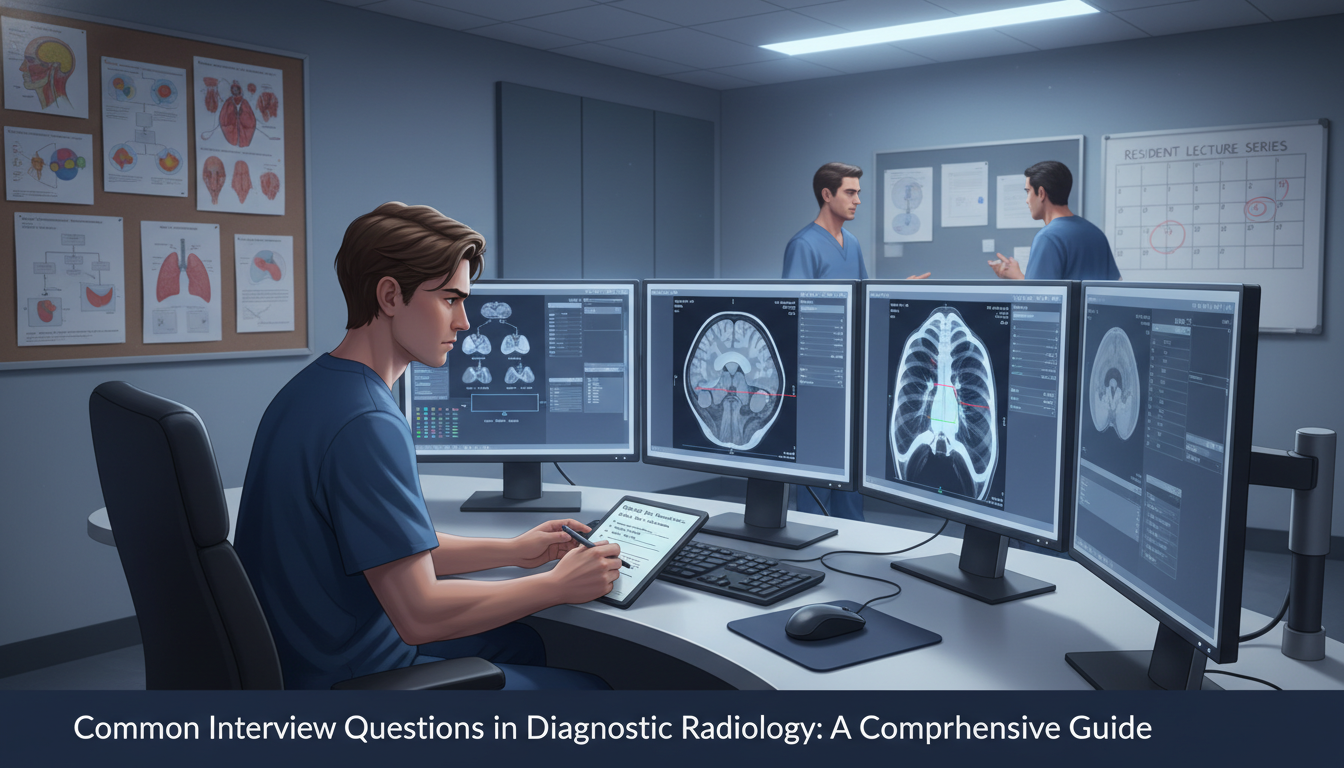
Behavioral and Situational Questions in Radiology Interviews
Behavioral interview medical questions are now central to residency selection. They often start with:
- “Tell me about a time when…”
- “Give me an example of…”
- “Describe a situation where…”
Programs use these to predict future behavior from past actions. Use the STAR method:
- Situation – Brief context
- Task – Your role
- Action – What you did
- Result – Outcome and what you learned
4. “Tell me about a time you had a conflict with a team member. How did you handle it?”
Radiology is highly collaborative: tumor boards, consults, multidisciplinary discussions. They want to see how you handle disagreement professionally.
What to highlight:
- Respectful communication
- Focus on patient care and shared goals
- Willingness to listen and adjust
- No personal attacks or gossip
Example approach:
“On my surgery rotation, there was miscommunication between me and a senior resident about pre-rounding responsibilities. Patients weren’t seen as early as expected. I requested a brief conversation after rounds, clarified expectations, acknowledged my part in the confusion, and proposed a shared checklist for the team. From then on, our pre-rounds were smoother, and we had fewer missed tasks. I learned the value of clarifying responsibilities early and addressing concerns directly but respectfully.”
Avoid blaming others or framing yourself as entirely the victim.
5. “Tell me about a time you made a mistake.”
This is critical in a specialty where errors can significantly impact patient care.
What they’re looking for:
- Ability to recognize and own mistakes
- Emotional maturity and professionalism
- Concrete learning and system improvements
Structure:
- Choose a real but not catastrophic mistake
- Avoid blaming circumstances alone
- End with clear lessons and changed behavior
Example elements:
“During my internal medicine rotation, I missed an elevated creatinine on a patient’s pre-contrast CT labs when preparing the sign-out. The resident caught it before the study, and IV contrast was appropriately withheld. I reviewed how the error occurred—I had been multitasking and didn’t use a systematic approach to reviewing labs. Since then, I’ve adopted a checklist for sign-out and always verify key labs for upcoming imaging or procedures. It highlighted the importance of systematic review, which is crucial in radiology reporting as well.”
6. “Describe a stressful situation and how you handled it.”
Radiology can be high-pressure: multiple STAT scans, ER calls, and time-sensitive decisions.
Demonstrate:
- Prioritization and triage
- Staying calm under pressure
- Seeking help appropriately
Example approach:
“On my sub-I in the ICU, I was covering multiple new admissions and a decompensating patient. I prioritized stabilizing the sickest patient first—calling for backup, initiating ACLS protocols, and delegating tasks. I also communicated with the nursing staff about delays for less acute tasks. After the shift, I debriefed with my senior about triage strategies. This experience reinforced how important situational awareness and communication are during high-stress moments—skills that directly translate to handling multiple STAT reads in radiology.”
7. “Tell me about a time you worked with someone who had a very different communication style.”
Radiologists interact with surgeons, emergency physicians, internists, and patients—all with distinct styles.
Focus on:
- Adaptability
- Empathy for different personalities
- Finding common ground
Example:
“During my emergency medicine rotation, one attending was very direct and fast-paced, which initially felt abrupt to me. I realized he valued efficiency above all, so I adjusted my presentations to be more concise and focused on decision-making data. Our interactions became much smoother, and I received positive feedback on my concise communication. This taught me to adapt my style to the preferences of different colleagues, something that will be essential when communicating radiology findings to busy clinicians.”
Radiology-Specific Questions: Fit for the Reading Room and Specialty
Programs want to ensure you understand what a radiology residency entails—long stretches at the workstation, independent calls, frequent consults, and constant learning.
8. “What experiences have best prepared you for diagnostic radiology?”
You need to show consistent exposure and insight, beyond a single elective.
Strong sources:
- Radiology electives and sub-Is
- Research in imaging, AI, or radiology-adjacent fields
- Shadowing radiologists
- Interdisciplinary tumor boards
- Prior careers or training emphasizing pattern recognition or visual thinking
Example:
“Two experiences were especially influential. First, my dedicated four-week diagnostic radiology elective, where I spent time in CT, MRI, US, and fluoro, allowed me to see how radiologists think and how they communicate uncertainty. Second, my research project on MRI quantification in liver disease required close collaboration with radiologists and gave me appreciation for image interpretation and the importance of standardized reporting. Together, these experiences solidified my understanding of the field and confirmed that I enjoy the day-to-day work.”
9. “What do you think will be the biggest challenge for you in radiology residency?”
This tests insight into the specialty’s demands and your own areas for growth.
Realistic challenges:
- Managing large volumes and maintaining accuracy
- Transitioning to primarily workstation-based work
- Night call responsibility and independent reads
- Keeping up with rapidly evolving technology and AI
Pair the challenge with your plan to address it.
Example:
“One challenge I anticipate is learning to balance speed and thoroughness when reading large volumes of studies, especially on call. To prepare, I’ve been practicing systematic approaches to chest X-rays and CT scans during my electives and seeking feedback on my preliminary reads. I expect to rely heavily on faculty and senior resident feedback early on, and I’ll be intentional about building efficient search patterns for different modalities.”
10. “How do you see AI and technology affecting the future of radiology?”
This question is increasingly common. They’re not looking for a technical lecture; they want nuanced, balanced thinking.
Key points to consider:
- AI as a tool, not a replacement
- Enhanced detection and workflow support
- Need for radiologists to understand AI’s strengths and limitations
- Ongoing importance of clinical integration and communication
Example framing:
“I see AI as an augmenting tool rather than a replacement for radiologists. It will likely help with tasks like triaging critical findings, quantifying measurements, and flagging possible misses. However, the radiologist’s role in integrating imaging with clinical context, communicating with teams, and participating in multidisciplinary decision-making remains essential. I’m interested in learning enough about AI to understand how to use it safely and interpret its outputs critically.”
11. “What subspecialties are you interested in?” (and the hidden follow-up)
Programs know your interests may change. They’re assessing whether you’ve thought about the field and whether your interests align (or at least don’t conflict) with their strengths.
Tips:
- It’s OK to be undecided—especially early in the year.
- Mention 1–2 genuine areas of curiosity, plus openness.
- Avoid sounding like your mind is permanently set on an ultra-narrow niche.
Example:
“Right now, I’m particularly interested in thoracic and emergency radiology because I enjoy acute decision-making and chest imaging from my ICU experiences. That said, my exposure is still limited, and I’m very open to discovering new interests during residency. I’m especially excited that your program has strong fellowships across multiple subspecialties and emphasizes general competency first.”
Academic, Professionalism, and “Red Flag” Questions
Programs will also explore your academic record, professionalism, and potential concerns. Prepare honest, concise, and mature responses.
12. “Can you walk me through your research?” / “What did you learn from your radiology project?”
If you have research on your application—especially imaging-related—be prepared to discuss it clearly and at an appropriate level.
What they want:
- That you actually understand your work
- Ability to explain complex topics in accessible language
- Reflection on your role and what you learned
Tips:
- Prepare a 60–90 second plain-language summary
- Emphasize your specific contributions
- Highlight skills: statistics, collaboration, persistence, presenting, writing
Example outline:
“In my main project, we evaluated the accuracy of MRI-based liver fat quantification compared to biopsy in patients with NAFLD. My role included data collection, working with radiologists to define imaging parameters, and helping with statistical analysis. We found that certain MRI sequences had strong correlation with biopsy, suggesting they could reduce the need for invasive procedures in some settings. The project taught me about imaging protocol standardization and how to collaborate effectively with radiology faculty.”
13. “Explain this gap / failed exam / leave of absence on your record.”
These are sensitive but common residency interview questions. Programs appreciate honesty and maturity more than perfection.
Approach:
- State briefly what happened (no evasiveness)
- Take appropriate responsibility
- Describe concrete steps you took to improve or address it
- Highlight evidence of sustained improvement
Example:
“During my second year, I struggled with time management and failed an exam in [course]. I met with academic counseling, adjusted my study methods, and created a structured schedule with regular self-assessments. Since then, I’ve passed all subsequent exams and performed well on my clinical clerkships. This experience helped me develop more disciplined study habits, which I know will be essential for the independent learning required in radiology.”
Avoid over-sharing personal details or sounding defensive; balance honesty with professionalism.
14. “How do you handle feedback and criticism?”
Radiology training involves constant feedback on your reports and interpretations.
Demonstrate:
- Openness and lack of defensiveness
- Ability to integrate feedback quickly
- Using feedback as a growth tool
Example:
“I actively seek specific feedback, especially when I’m learning a new skill. On my surgery rotation, my attending told me that my operative notes lacked critical detail. I asked for examples, reviewed high-quality notes, and created a template. Within a week, my notes improved, and the attending commented on the change. In radiology, I expect frequent feedback on my reports, and I plan to treat each suggestion as a way to refine my search patterns and communication.”
15. “Where do you see yourself in 5–10 years?”
Programs want to know if their training environment aligns with your goals.
Options to include:
- Academic vs. community vs. hybrid practice
- Interest in subspecialty fellowship
- Teaching and/or research aspirations
- Leadership or quality improvement interests
You don’t need a rigid, ultra-specific plan; show direction and flexibility.
Example:
“In 5–10 years, I see myself as a well-rounded diagnostic radiologist, likely with fellowship training in a subspecialty like thoracic or emergency imaging. I’d like to work in an academic or academic-affiliated setting where I can teach residents and medical students and contribute to clinical research or quality improvement projects. I’m also open to how my interests evolve during residency.”
Questions You Should Ask Programs
Almost every interview ends with, “What questions do you have for us?” Asking thoughtful questions demonstrates genuine interest and helps you assess fit.
Aim for questions that:
- Aren’t easily answered on the website
- Reflect that you’ve researched the program
- Relate to your values: education, wellness, career development
Examples:
- “How does your program support junior residents as they transition to independent call?”
- “Can you describe how feedback is given to residents on their reporting and case interpretation?”
- “How does the program foster resident involvement in teaching medical students?”
- “What qualities do your most successful residents tend to share?”
Avoid questions focusing solely on vacation, moonlighting, or salary early in the conversation. Those are important, but best addressed after core educational questions or via residents.
Quick Strategy Tips for Radiology Interview Success
- Practice out loud: Especially your “tell me about yourself,” “why radiology,” and “why our program” answers.
- Use the STAR method for behavioral questions.
- Prepare 2–3 patient care stories that show your role in clinical decision-making—these often translate well to radiology reasoning.
- Have examples ready that demonstrate: teamwork, leadership, handling stress, learning from mistakes, and communication.
- For virtual interviews, ensure a quiet space, good lighting, and a neutral background; test your microphone and camera ahead of time.
- Keep answers structured and concise (2–3 minutes), allowing time for back-and-forth dialogue.
FAQ: Diagnostic Radiology Residency Interview Questions
1. What are the most common diagnostic radiology residency interview questions I should prepare for?
You should be ready for:
- “Tell me about yourself.”
- “Why radiology?” and “Why diagnostic radiology vs. other specialties?”
- “Why our program?”
- Behavioral questions: conflict on a team, a mistake you made, handling stress, working with a difficult colleague.
- Radiology-specific: experiences preparing you for radiology, views on AI, anticipated challenges in radiology training.
- Academic/professionalism topics: explanation of any gaps, failures, or unusual aspects of your application.
- Future planning: subspecialty interests, long-term career goals.
If you can answer these thoughtfully, you’ll be well-prepared for most residency interview questions.
2. How important are behavioral questions in radiology compared to clinical knowledge questions?
In radiology residency interviews, behavioral interview medical questions are often more important than detailed clinical knowledge questions. Programs assume you have a strong medical foundation from your clerkships and exams. Interviews are used to assess:
- Communication skills
- Professionalism
- Teamwork and adaptability
- Integrity and response to feedback
You may be asked conceptual questions about radiology (e.g., how you see AI or multidisciplinary care), but image-interpretation quizzes are rare and usually low-stakes if they occur.
3. How long should my “tell me about yourself” answer be?
Aim for 2–3 minutes. That’s long enough to:
- Provide a concise narrative of your path
- Highlight key experiences and interests
- Connect your story to radiology and what you seek in residency
Shorter than a minute tends to feel underdeveloped; longer than three to four minutes can seem unfocused. Practicing this answer is one of the highest-yield preparations for the diagnostic radiology match interview season.
4. How can I stand out in a radiology residency interview?
You’ll stand out by combining clarity, authenticity, and insight:
- Show a genuine, well-thought-out interest in radiology, not just lifestyle reasons.
- Demonstrate you understand what life in a radiology residency looks like—reading room work, call, multidisciplinary conferences.
- Use specific, concrete examples in your answers; avoid generic statements.
- Ask thoughtful questions that show you’ve researched the program.
- Be personable and engaged; radiology is collaborative, and they want colleagues they enjoy working with at 2 a.m. on call.
With preparation using the question types and strategies in this guide, you’ll be equipped to navigate the full spectrum of common interview questions in diagnostic radiology and present yourself as a strong, thoughtful future radiologist.