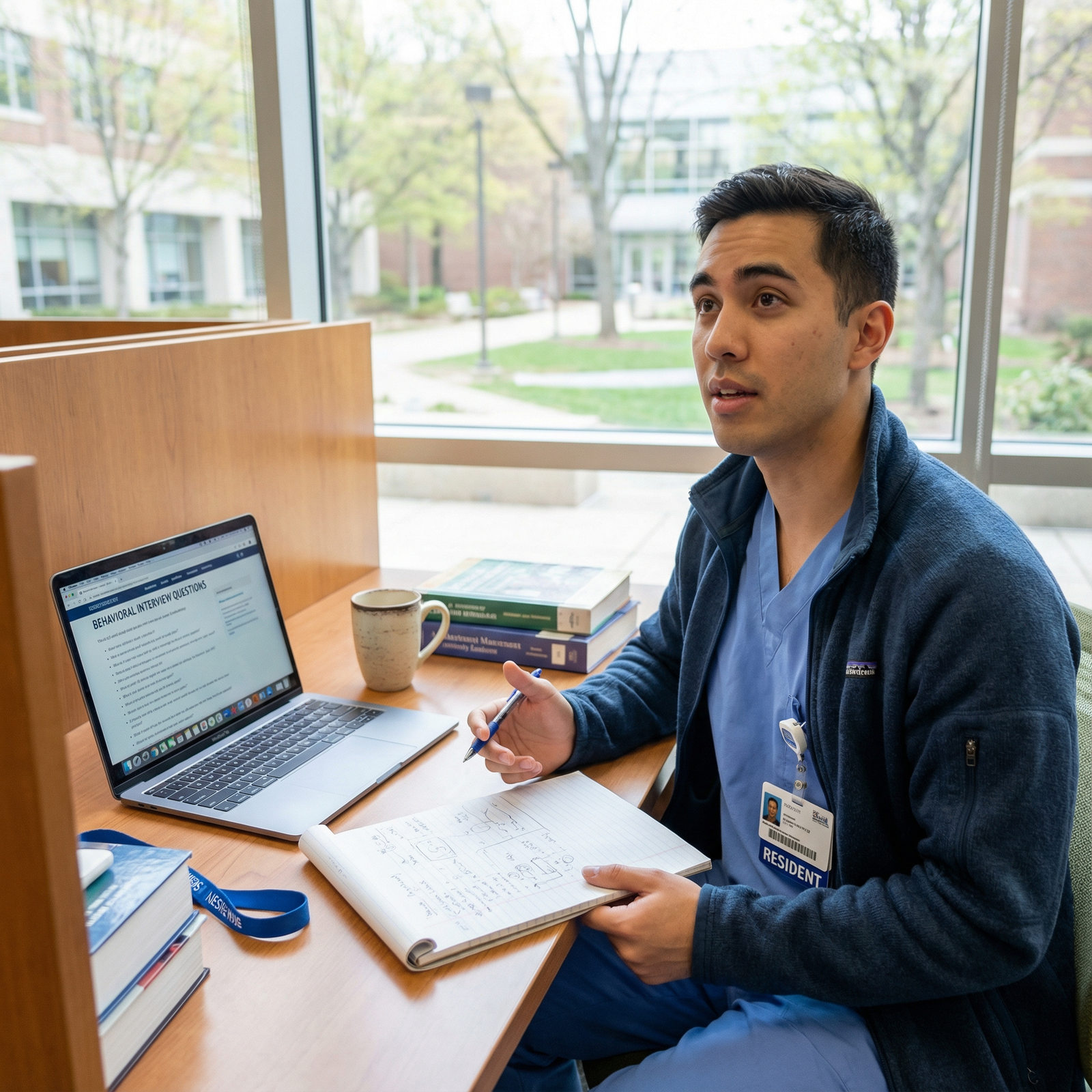
Understanding the Landscape: Caribbean IMGs and the Surgery Residency Match
Caribbean medical school residency applicants to general surgery face a very particular reality. You are competing in one of the most competitive specialties while also carrying the “IMG label,” which many programs still view with caution. Yet every year, Caribbean IMGs successfully enter general surgery residency, including through strong SGU residency match results and similar schools.
What often separates matched from unmatched candidates isn’t just board scores—it’s performance in the surgery residency match interview. Program directors repeatedly report that interview performance, interpersonal skills, and evidence of professionalism are critical in ranking decisions. For you, that means mastering common residency interview questions and especially the behavioral interview medical style questions that general surgery programs now rely upon.
This article will walk you through:
- The types of questions you’re most likely to see as a Caribbean IMG applying to general surgery
- How your Caribbean background will shape your answers
- Sample answers, frameworks, and red flags to avoid
- Specific tips for common prompts like “tell me about yourself” and high-stakes behavioral scenarios
Throughout, assume the interviewer is thinking:
“Will this person be safe in the OR, reliable on call, and a good fit for our team over the next 5–7 years?”
Your job is to consistently answer “yes” with your words, examples, and demeanor.
Core Interview Themes in General Surgery
Before drilling into specific residency interview questions, it helps to understand what surgery programs are really evaluating. Most common interview questions for Caribbean IMG in general surgery fall into a few core domains:
Motivation for General Surgery
- Do you genuinely understand what a general surgery residency entails?
- Are you committed to the lifestyle and intensity?
Clinical Competence & Work Ethic
- Can you manage sick patients and function under pressure?
- Do you show initiative and a strong work ethic?
Teamwork & Communication
- Can you communicate clearly with nurses, peers, attendings, and patients?
- Are you teachable and able to take feedback?
Professionalism & Integrity
- How do you respond when you make mistakes?
- Do you own your actions?
Resilience & Grit
- How do you handle setbacks, long hours, and stress?
- Can you cope with the demands of a surgery residency?
Fit with the Program
- Why this program, this city, and this training environment?
- How will you contribute to our culture?
As a Caribbean IMG, you’ll also consistently face a seventh theme that may not be asked directly but is always in the room:
- Training Background & Readiness
- Can your Caribbean medical school residency training prepare you for US surgical training?
- Have you had enough clinical exposure and U.S. experience?
The questions below are filtered through all of these lenses, with guidance on how to answer specifically as a Caribbean IMG.
High-Yield Traditional Questions for Caribbean IMGs in General Surgery
Traditional questions are more open-ended and conversational, but they are still high stakes. Many candidates underestimate them. Let’s break down the most important ones.
1. “Tell me about yourself.”
This is almost guaranteed, and how you answer sets the tone for the rest of the interview. For Caribbean IMGs, this question is also your first opportunity to normalize your training background and present a coherent professional identity.
Goals with this answer:
- Sound focused on general surgery and patient care, not scattered
- Briefly link your path: undergrad → medical school → key experiences → current goals
- Show that your choice of a Caribbean school was purposeful or at least productive
- Stay professional, forward-looking, and concise (90–120 seconds)
Simple structure for “tell me about yourself”:
- Present – who you are now (final-year student/graduate, where you’re rotating, what you’re focused on)
- Past – key experiences that led you toward medicine and then general surgery
- Caribbean chapter – one sentence about your Caribbean training, highlight strengths
- Future – what you’re looking for in a general surgery residency and your long-term goals
Sample (adapted for a Caribbean IMG):
“I’m a final-year medical student at St. George’s University, currently completing my sub-internship in general surgery at a busy community hospital in New York.
I grew up in [home country/city] and completed my undergraduate degree in biology at [University], where I was drawn to surgery after spending time shadowing a trauma surgeon and volunteering in the OR. I was fascinated by how quickly surgical decisions could change a patient’s trajectory.
I chose SGU because it offered access to diverse U.S. clinical sites, and during my rotations in general surgery and surgical ICU, I really enjoyed managing acutely ill patients, working closely with the team overnight, and following patients from pre-op through post-op. Those experiences confirmed that I thrive in a fast-paced, hands-on environment.
Now I’m looking for a general surgery residency that offers strong operative experience early on, a high volume of bread-and-butter general surgery, and a supportive teaching culture where I can develop into a safe, efficient, and compassionate surgeon with a focus on [e.g., acute care surgery, global surgery, or community practice].”
Common mistakes:
- Starting with your childhood in excessive detail
- Talking too much about non-medical hobbies
- Over-explaining why you went to a Caribbean school defensively
- Running longer than 2 minutes
2. “Why general surgery?”
This is a cornerstone question for any general surgery residency applicant. For Caribbean IMGs, it’s especially important to sound realistic and grounded; avoid vague clichés like “I like working with my hands.”
Stronger structure:
- Initial exposure – when and how you first became interested
- Specific clinical experiences – what confirmed the interest
- Personal attributes – how your personality fits with surgery
- Long-term vision – what you want to do with your training
Example:
“My interest in general surgery started during my third-year core rotation, where I saw a patient with a perforated ulcer go from critically ill to walking out of the hospital a week later after surgery. What solidified my decision was my sub-internship—taking call, evaluating acute abdomens in the ED, and following patients postoperatively.
I like that general surgery combines diagnostic reasoning with immediate intervention, and that you maintain a broad scope—from hernias and cholecystectomies to emergency laparotomies. I also enjoy the team-based environment in the OR, and I’ve found that I’m comfortable making decisions under pressure.
Longer term, I see myself practicing as a general surgeon in a community or academic-affiliated setting, where I can manage a wide range of cases and contribute to resident and student teaching.”
Avoid:
- “I like surgery because I like anatomy and using my hands” (too generic)
- Overemphasizing prestige or income
- Vague answers without concrete patient stories
3. “Why did you go to a Caribbean medical school?”
This question is common for Caribbean medical school residency applicants. Expect it, and prepare a calm, confident answer.
Principles:
- Be honest but not overly apologetic
- Briefly acknowledge constraints (e.g., timing, opportunities)
- Emphasize how you maximized the opportunity
- Pivot to what you gained from the experience
Example:
“After undergrad, I was determined to become a physician, but my options in the U.S. were limited due to [brief reason: late decision, GPA trajectory, etc.]. I researched international schools carefully and chose SGU because of its track record of placing graduates in U.S. residency programs and the opportunity for diverse clinical rotations.
Being at a Caribbean school pushed me to be very self-directed and resilient. I had to actively seek out mentorship, research, and additional clinical exposure, which helped me develop strong study habits and adaptability. My U.S. core rotations in general surgery, internal medicine, and ICU have given me a good foundation in managing complex patients in the U.S. healthcare system.
I recognize there’s sometimes skepticism about Caribbean graduates, which is why I’ve focused on strong USMLE scores, solid clinical evaluations, and strong letters to show that I’m fully prepared for the demands of a general surgery residency.”
Avoid:
- Blaming others (advisors, schools, the system)
- Sounding bitter or resentful
- Over-explaining or becoming defensive
4. “Why our program?”
Programs want evidence that you’re genuinely interested, not just mass-applying. As a Caribbean IMG, “fit” becomes even more important.
Before interviews:
- Study the website for case volume, trauma level, fellowships, and program size
- Note whether they have a history of matching SGU residency match or other Caribbean graduates
- Identify 2–3 specific features that matter to you
Structure:
- Confirm your interest in general surgery and their setting (community, academic, hybrid)
- Mention 2–3 program-specific factors
- Connect those factors to your goals
- If appropriate, mention geography/family
Example:
“I’m looking for a general surgery residency with strong operative volume, early progressive responsibility, and a close-knit resident group. From speaking with your residents and reviewing your case logs, I’m impressed by the high volume of bread-and-butter general surgery and acute care cases, as well as the autonomy senior residents have in the OR.
I’m also drawn to your resident-run clinic and the emphasis on continuity of care, which I experienced and really valued during my sub-internship. Finally, the fact that your program has successfully trained IMGs and graduates from Caribbean schools shows me that you know how to support diverse trainees.
With my background and interest in [e.g., acute care surgery or community practice], I think I’d be a strong fit for your patient population and team culture.”
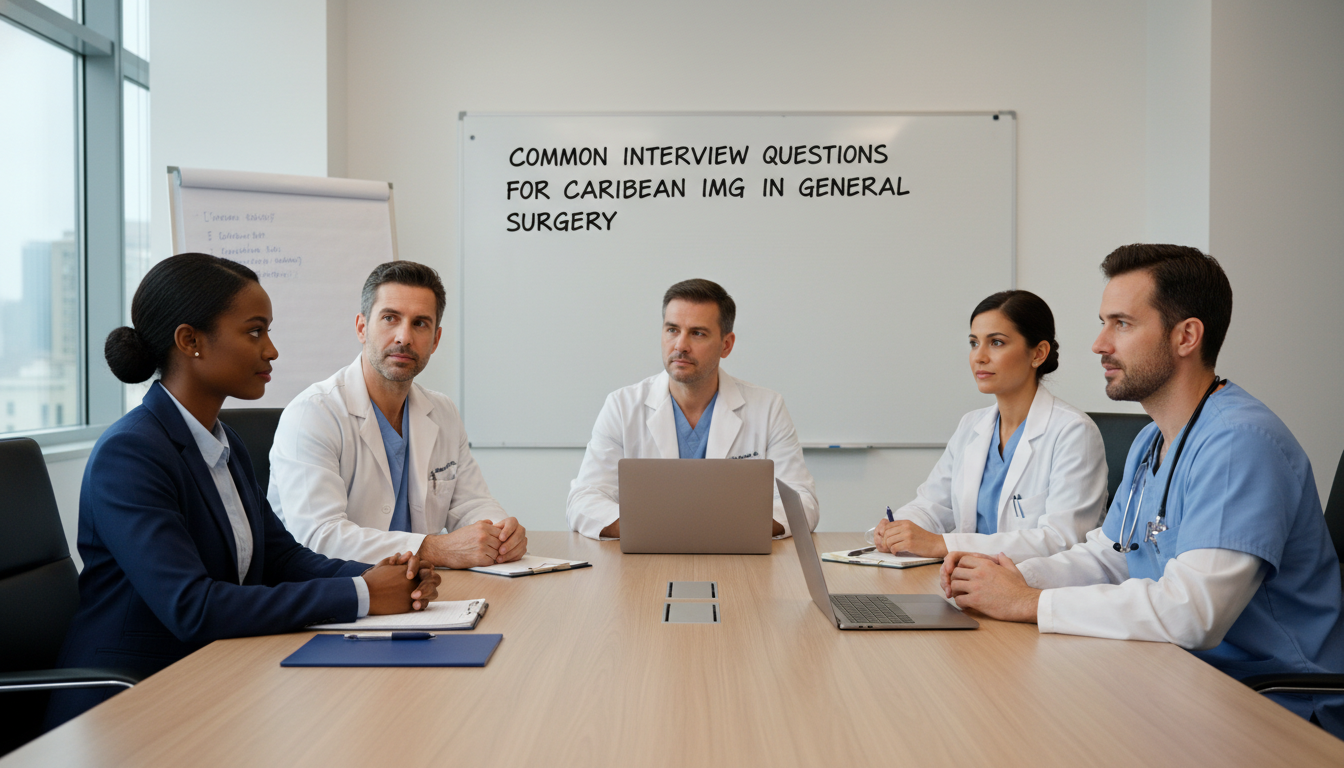
Behavioral Interview Questions: The Core of Surgical Residency Interviews
Many programs explicitly use behavioral interview medical formats: “Tell me about a time when…” These are crucial, especially in a surgery residency match where teamwork, stress, and patient safety are constant themes.
Behavioral questions assess:
- How you think under pressure
- How you relate to others
- Your insight and capacity to learn from mistakes
The STAR Method for Behavioral Answers
Use the STAR framework:
- S – Situation: brief context
- T – Task: your role/responsibility
- A – Action: what you did
- R – Result/Reflection: what happened and what you learned
Limit each response to about 1.5–2 minutes; focus on your actions more than background.
Common Behavioral Questions for Caribbean IMGs in General Surgery
Below are some high-yield examples, with guidance and sample outlines.
1. “Tell me about a time you made a mistake clinically.”
Programs are not looking for perfection; they are looking for honesty, accountability, and growth.
Key points:
- Choose a real, but not catastrophic, example (e.g., communication error, delay in task, near-miss)
- Take responsibility; avoid blaming others
- Emphasize what you changed afterward
Example outline:
- S: Third-year surgery rotation, busy service, you forgot to check a lab or follow up an imaging result
- T: You were responsible for following the result and updating the team
- A: You realized the error, immediately notified senior, updated the patient, apologized, and created a system (e.g., checklist) to prevent recurrence
- R: Patient ultimately did well; you improved your organizational system and have not repeated that mistake
Quick sample:
“During my third-year general surgery rotation, I overlooked a post-op hemoglobin result on a patient who had a laparoscopic colectomy. As the student assigned to the patient, my task was to follow all labs and notify the team of any abnormalities.
The next morning, my senior resident noticed a significant drop in the patient’s hemoglobin that had been reported the previous evening. Thankfully, the patient was stable and no harm occurred, but it highlighted that I’d missed the result. I immediately acknowledged my oversight, contacted the patient’s nurse to reassess vitals, and updated the chief and attending.
After that, I implemented a personal checklist and time-based reminders for following up on all ordered tests and results at the end of each day. I haven’t made that mistake again, and it reinforced for me how small lapses can have big implications in surgery, so I’m much more systematic now.”
2. “Tell me about a time you had a conflict with a team member or nurse.”
Surgery is team-based; conflict is inevitable. Programs want to know if you can handle conflict professionally.
Do:
- Choose a real conflict, not “I’ve never had conflict”
- Emphasize listening and collaboration
- Show respect for nurses and colleagues
Don’t:
- Insult or demean the other person
- Present yourself as the only one who was right
Example outline:
- S: Disagreement with a nurse over post-op pain control or discharge timing
- T: Ensure patient safety, maintain team relationship
- A: Clarified orders, listened to concerns, involved senior when appropriate
- R: Reached a safe plan, preserved working relationship
3. “Describe a time you were under significant stress or had to manage multiple priorities.”
General surgery involves heavy call and competing demands.
Example sources:
- A busy call night with multiple cross-cover patients
- ICU rotation with deteriorating patients
- Balancing exam prep with full-time rotations
Emphasize:
- Prioritization (sickest first)
- Communication with seniors and nursing
- Use of systems (lists, checklists, mnemonics)
4. “Tell me about a challenging patient or family interaction.”
They are assessing empathy, communication, and boundaries.
Example outline:
- S: Family angry about delayed surgery or perceived lack of updates
- T: De-escalate tension, explain clearly, maintain trust
- A: You listened, acknowledged frustration, clarified information, involved attending when needed
- R: Family felt heard; communication improved
5. “Tell me about a time you worked with someone from a different background.”
As a Caribbean IMG, you can leverage your international experience and culturally diverse patient population.
Example points:
- Cared for patients from different countries during clinical rotations
- Navigated language or cultural barriers with interpreters
- Worked with multidisciplinary teams in various hospitals (Caribbean and U.S.)
This showcases cultural competence and adaptability, which are strengths of many Caribbean IMGs.

Clinical and Specialty-Specific Questions in General Surgery
Beyond behavioral and classic residency interview questions, general surgery programs will test your understanding of the field and your readiness for surgical training—especially as an IMG.
1. “What cases or procedures have you seen or been involved in during your surgery rotations?”
Be specific and honest. As a Caribbean IMG, your clinical exposure may be questioned; concrete experiences reassure them.
Include:
- Common general surgery cases: appys, cholecystectomies, hernias, bowel resections
- Exposure to trauma, emergency surgery, ICU patients
- Your role: H&P, pre-op workup, assisting in OR, post-op care
Example:
“During my core and sub-internship in general surgery, I’ve followed a variety of patients, including laparoscopic cholecystectomies, open and laparoscopic hernia repairs, bowel resections for obstruction, and a few emergent exploratory laparotomies for perforation.
My responsibilities included performing initial histories and physicals, presenting in rounds, writing progress notes under supervision, reviewing imaging and lab results, and participating in pre-op and post-op counseling. In the OR, I’ve assisted with tasks such as retracting, suturing skin, and closing ports on select cases. I’ve also been involved in the management of post-op complications like ileus and wound infections during daily rounds.”
2. “How do you handle long hours and fatigue?”
This is critical in general surgery, and as an IMG, they may worry about how well you understand U.S. work-hour restrictions and expectations.
Good elements:
- Acknowledge that fatigue is real
- Share strategies: sleep hygiene, nutrition, exercise, micro-breaks, asking for help when too tired to be safe
- Emphasize patient safety
Example:
“On busy services and during call, I’ve seen how fatigue can affect focus. I try to manage it by staying hydrated, eating small, regular meals, and using any short downtime to reset—whether that’s a brief walk or reviewing the patient list to stay organized.
I’m also aware of my limits. If I ever felt that fatigue was affecting my clinical judgment or ability to safely care for patients, I would speak with my senior or attending rather than push through unsafely. In my experience on surgery and ICU rotations, structured sign-out and teamwork have been key to managing long hours while maintaining patient safety.”
3. “What do you think will be the biggest challenge for you in a general surgery residency?”
Programs want insight and humility, not bravado.
Better answers:
- Adapting to new systems/EMR
- Transition to intern-level responsibility
- Time management and prioritization on busy services
- For Caribbean IMGs: adjusting to full-time U.S. system or research expectations
Follow with your plan to address it.
Example:
“I think the biggest challenge will be managing the volume of tasks and interruptions on a busy surgical service while still maintaining an organized mental picture of each patient. During my sub-internship, I saw how quickly the day can get fragmented with pages, consults, and OR turnover.
To prepare, I’ve focused on developing robust organizational habits—like maintaining an up-to-date patient list, prioritizing the sickest or most time-sensitive tasks first, and using brief check-ins with my seniors to confirm priorities. I know that as an intern I’ll have a lot to learn, but I’m committed to asking for guidance early and often to ensure I’m safe and effective.”
4. “Where do you see yourself in 5–10 years?”
They’re gauging your long-term goals and how your path fits within general surgery.
For many Caribbean IMGs:
- Community practice with broad scope of practice
- Possible fellowships: critical care, colorectal, MIS, trauma, acute care surgery
- Global surgery or underserved populations
Keep it flexible but coherent.
Strategy, Preparation, and Practice for Caribbean IMGs
Content is only half the battle; delivery matters. Here are actionable steps to prepare specifically as a Caribbean IMG targeting general surgery.
1. Build a Bank of Stories
List 8–10 concrete clinical situations you’ve experienced:
- A diagnostic challenge
- A sick or crashing patient
- A mistake or near-miss
- A conflict or miscommunication
- A leadership/teaching moment
- A time you went “above and beyond” for a patient
- A time you adapted to a new system (Caribbean vs. U.S. hospital)
Then, map each story to multiple behavioral questions using the STAR framework.
2. Practice Out Loud
- Conduct mock interviews with mentors, residents, or peers
- If possible, find a general surgery resident (especially IMG) to drill you on specialty-specific questions
- Record yourself answering “tell me about yourself,” “why general surgery,” and one behavioral question—then review for clarity, structure, and filler words
3. Anticipate Perceptions About Caribbean Training
Subtly reinforce your readiness by highlighting:
- USMLE performance
- Strong U.S. clinical evaluations
- Surgical sub-internships in U.S. hospitals
- Any U.S.-based research or quality improvement projects
- Clear evidence of professionalism and reliability
You don’t need to bring up “being Caribbean” in every answer—but you should indirectly address concerns about preparation and adaptability.
4. Prepare Good Questions to Ask Them
At the end of the interview, you’ll typically be asked if you have questions. Ask questions that show insight into general surgery training, such as:
- “How do you support interns during their first few months on the service?”
- “What distinguishes residents who thrive in your program?”
- “How is operative autonomy granted as residents progress?”
- “How have Caribbean or other IMGs in this program performed, and what support systems helped them succeed?”
These questions signal that you’re serious, thoughtful, and aware of your IMG context.
FAQ: Common Questions from Caribbean IMGs About General Surgery Interviews
1. As a Caribbean IMG, will I be asked different questions in my general surgery interviews?
Most formal residency interview questions are the same for all candidates, but you may be more likely to hear:
- “Why did you choose a Caribbean school?”
- “How have you prepared for training in the U.S. system?”
- “Can you tell me about your U.S. clinical experience?”
You should be ready to answer these calmly and confidently. Program directors may also look more closely at your clinical exposure and letters to ensure your Caribbean medical school residency training has prepared you for general surgery.
2. How important is my answer to “tell me about yourself” in a surgery residency match?
Extremely important. It shapes first impressions about your communication skills, maturity, and focus. For a surgery residency match, interviewers want to see that you:
- Are clearly committed to general surgery
- Can present information logically and concisely
- Have a coherent career trajectory, even if non-traditional
As a Caribbean IMG, a strong, polished answer also reassures them that you’re prepared and professional.
3. What if I haven’t done many complex cases during my surgery rotations?
Many students—IMG and AMG—have limited case exposure pre-residency. Be honest about what you’ve seen, but emphasize:
- That you’ve maximized opportunities available to you
- That you are eager and quick to learn
- That you understand the fundamentals: pre-op assessment, post-op care, complications, communication
You can also highlight any elective or sub-internship experiences in high-volume centers, even if the cases were “bread and butter.” Depth and reflection about what you learned often matters more than the complexity of the case.
4. How can I stand out positively as a Caribbean IMG during general surgery interviews?
You stand out by combining content and presence:
- Clear, structured answers to both traditional and behavioral questions
- Evidence of strong work ethic and resilience (often a strength of Caribbean IMGs)
- Humility, respect for all team members, and teachability
- Concrete examples from both Caribbean and U.S. rotations that show growth and readiness
If you consistently convey: “I know what general surgery really is, I’ve worked hard to prepare, I’m dependable, and I’ll be a good teammate for 5–7 years,” you can be a highly competitive candidate—even in a demanding field like general surgery.