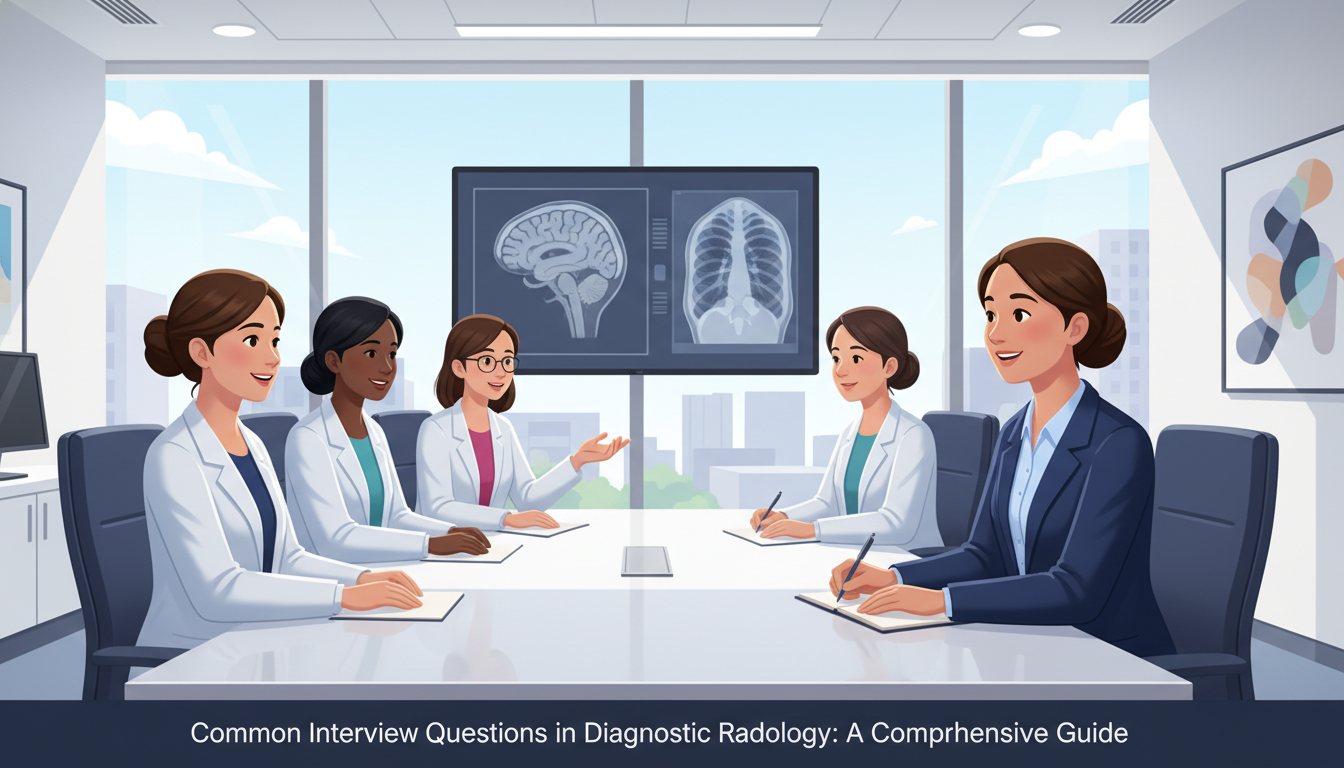
Preparing for a dermatology residency interview is very different from studying for Step exams or presenting on rounds. Your scores and letters may have secured the invitation, but how you answer interview questions often determines your derm match outcome.
This guide breaks down the most common interview questions in dermatology residency, why they’re asked, and how to structure strong, authentic answers—especially to behavioral interview medical questions that many applicants find challenging.
Understanding the Dermatology Residency Interview Landscape
Dermatology is one of the most competitive specialties. By the time you’re interviewing:
- Programs already know you’re academically strong.
- They’re now assessing: fit, professionalism, maturity, communication, and resilience.
- Your goal: make it easy for them to imagine you as a trusted colleague for the next 3+ years.
Most dermatology residency interviews involve:
- Traditional questions (“tell me about yourself,” “why dermatology?”).
- Behavioral questions (“tell me about a time you…”) that require specific examples.
- Case-based or clinical reasoning questions related to common derm issues.
- Occasionally ethical or professionalism scenarios.
- Informal conversations with residents that still influence your ranking.
Throughout this article, we’ll connect typical residency interview questions to dermatology-specific expectations and give concrete frameworks and examples to build your answers.
1. “Tell Me About Yourself” and Other Opening Questions
This is almost always one of the first questions you’ll encounter—and it sets the tone. In a dermatology residency interview, this is not an invitation to recite your CV. It’s a test of self-awareness, communication, and focus.
How to Approach “Tell Me About Yourself”
Your answer should be:
- 2–3 minutes max
- Clearly structured
- Focused on your path to dermatology, not your entire life story
Use a Past → Present → Future structure:
- Past – Brief personal/professional background relevant to medicine
- Present – Where you are now (medical school, current interests, key experiences)
- Future – What you’re hoping to do in dermatology and what you’re looking for in a program
Example outline for dermatology:
- Past: Where you grew up, a major influence (e.g., chronic skin condition, early interest in visual diagnostics, research exposure).
- Present: Current year at X med school, key derm experiences (clinic, research, advocacy, leadership).
- Future: Your areas of interest in dermatology (e.g., medical dermatology, complex medical derm, skin of color, dermpath, procedural derm) plus what you want in a residency.
Sample (condensed) answer:
“I grew up in a small town where access to specialists—especially dermatologists—was limited, and I saw how much chronic skin disease affected people’s confidence and quality of life. In medical school at ___, I initially thought I’d go into internal medicine, but during my third-year rotations I was drawn to dermatology’s combination of complex medical decision-making and immediate visual diagnosis.
Over the last two years, I’ve spent most of my elective time in dermatology clinics, working on a psoriasis quality-of-life study and volunteering at our free skin cancer screening events. Those experiences reinforced how impactful dermatologic care can be, particularly for underserved populations.
Going forward, I’m hoping to train in a program that combines strong medical dermatology and procedural exposure with a culture of teaching and mentorship. I’m especially interested in working with diverse patient populations and possibly pursuing a fellowship in complex medical dermatology or skin of color.”
Related Opening Questions You Might Hear
- “Walk me through your CV”
- Focus on 3–4 anchor experiences that led you to dermatology, not every bullet point.
- “How would your friends describe you?”
- Choose 3 traits that align with dermatology (detail-oriented, reliable, calm under pressure, good listener) and support each with a brief example.
- “What should I know about you that’s not on your application?”
- Pick something memorable but professional: a long-term commitment, hobby, life experience, or perspective that shapes how you care for patients.

2. Core Motivation Questions: Why Dermatology, Why Our Program, Why You?
Programs want to understand your motivation for dermatology and for their specific residency, and how you’ll contribute to their community.
“Why Dermatology?”
This question is unavoidable. Avoid generic or superficial answers like “I like the lifestyle” or “I enjoy procedures.” Those may be partially true, but programs want depth and authenticity.
Structure your answer around 3 pillars:
- Intellectual appeal – What about the medicine of dermatology attracts you?
- Patient impact – How do you see yourself improving patient lives?
- Personal alignment – How does dermatology fit your strengths and values?
Example points to include:
- Visual pattern recognition combined with pathology and systemic medicine
- Continuity of care for chronic skin conditions
- The psychosocial impact of skin disease (self-image, stigma, work limitations)
- Breadth of practice: medical derm, procedural work, pediatrics, oncology, immunology
- Longitudinal relationships with patients and families
Sample answer skeleton:
“I’m drawn to dermatology because it sits at the intersection of complex internal medicine, visual diagnosis, and procedures. On my rotation, I was fascinated by how much we could learn about systemic disease just from examining the skin. At the same time, I saw how treating conditions like hidradenitis or severe acne dramatically changed patients’ ability to work, socialize, and feel confident.
Dermatology aligns with my strengths: I enjoy detailed physical exams, I’m meticulous and procedure-oriented, and I value building long-term relationships with patients. I’m particularly interested in [medical dermatology/skin of color/psoriasis/oncologic derm], where I can combine evidence-based care with advocacy and education.”
“Why Our Program?”
This question is fundamental to a successful derm match. Programs want to know you’ve done more than glance at their website.
To prepare:
- Identify 3–4 specific, program-unique features:
- Strong medical derm or complex inpatients
- Skin of color clinic
- Research strengths (e.g., psoriasis, atopic dermatitis, dermpath, lasers)
- Community outreach or free clinics
- Culture of teaching, small program size, or strong mentorship
- Connect these features to your goals and experiences.
Strong vs. weak answers:
- Weak: “You’re a strong program with good research and a friendly vibe.”
- Strong: “I’m especially interested in your dedicated skin of color clinic and the opportunity to work with Dr. X, whose work in alopecia areata I’ve followed. I also value your longitudinal continuity clinics and the emphasis residents described on graduated autonomy.”
“Why Should We Rank You Highly?”
This is essentially: “What makes you a strong fit for dermatology and for us?”
Use a 3-part structure:
- Strengths aligned with dermatology
- Detail-oriented, dependable, good communicator, team player
- Evidence
- Brief examples from derm rotations, research, leadership, or patient care
- What you’ll contribute
- Teaching, scholarship, quality improvement, community engagement
Example approach:
“You should rank me highly because I bring a consistent work ethic, strong communication skills, and a genuine commitment to dermatology. On my dermatology rotation, attendings often relied on me for follow-up calls and patient education because I’m thorough and approachable.
I’ve also demonstrated persistence and curiosity through two long-term derm research projects, one of which resulted in a poster at ___ and a manuscript in progress. In residency, I’d like to contribute to your community outreach efforts and help with resident teaching of medical students, an area I already enjoy. I think my strengths align well with your program’s focus on patient-centered care and academic growth.”
3. Behavioral Interview Medical Questions: Telling Strong Stories
Behavioral questions are increasingly common in dermatology residency interviews. These include classic “tell me about a time…” prompts. The underlying assumption: past behavior predicts future behavior.
Use the STAR (or SHARE) Framework
For every behavioral question, organize your answer:
- Situation – Brief background
- Task – Your role/responsibility
- Action – What you did (focus here)
- Result – What happened, what you learned
Some also add:
- E – Reflection/what you’d do differently
Keep each answer 1.5–3 minutes, specific, and focused on your personal actions.
Common Behavioral Questions in Dermatology Interviews
1. “Tell me about a time you made a mistake in patient care.”
Programs want to see honesty, accountability, and growth, not perfection.
Tips:
- Choose a real but non-catastrophic mistake.
- Own your part; don’t blame others.
- Emphasize what you learned and how your behavior changed.
Example themes:
- Delayed follow-up on a lab result
- Miscommunication about a medication regimen
- Incomplete history or documentation that led to confusion later
2. “Tell me about a time you had a conflict on a team.”
They’re checking emotional maturity and professionalism.
- Describe a conflict with a peer or team member, not mostly one-sided abuse.
- Show you can see multiple perspectives, communicate clearly, and seek solutions.
- Avoid saying, “I’ve never had conflict.” Everyone has; saying otherwise feels inauthentic.
Sample outline:
S: On a busy inpatient month, a co-student and I disagreed about dividing tasks, leading to missed notes.
T: As the senior student, I was responsible for ensuring the work got done and the team functioned smoothly.
A: I initiated a private conversation, asked about their perspective, proposed a clearer division of responsibilities, and confirmed expectations with our resident.
R: Our workflow improved, and feedback from the team later highlighted our improved collaboration. I learned to address tension early and communicate expectations explicitly.
3. “Tell me about a challenging patient encounter.”
Especially relevant in dermatology, where patients may be anxious, frustrated about chronic disease, or focused on cosmetic concerns.
Possible scenarios:
- A patient upset about treatment side effects or cosmetic outcome
- A patient non-adherent to treatment
- A patient skeptical about biopsy or procedures
Focus on:
- Empathy and listening
- Clear explanations in accessible language
- Shared decision-making
- Avoiding judgment
4. “Describe a time you received critical feedback.”
Dermatology programs want residents who seek and integrate feedback.
- Choose a specific piece of feedback (e.g., note organization, efficiency, presentation skills).
- Describe your initial reaction honestly but professionally.
- Explain concrete steps you took to improve and any positive outcomes.
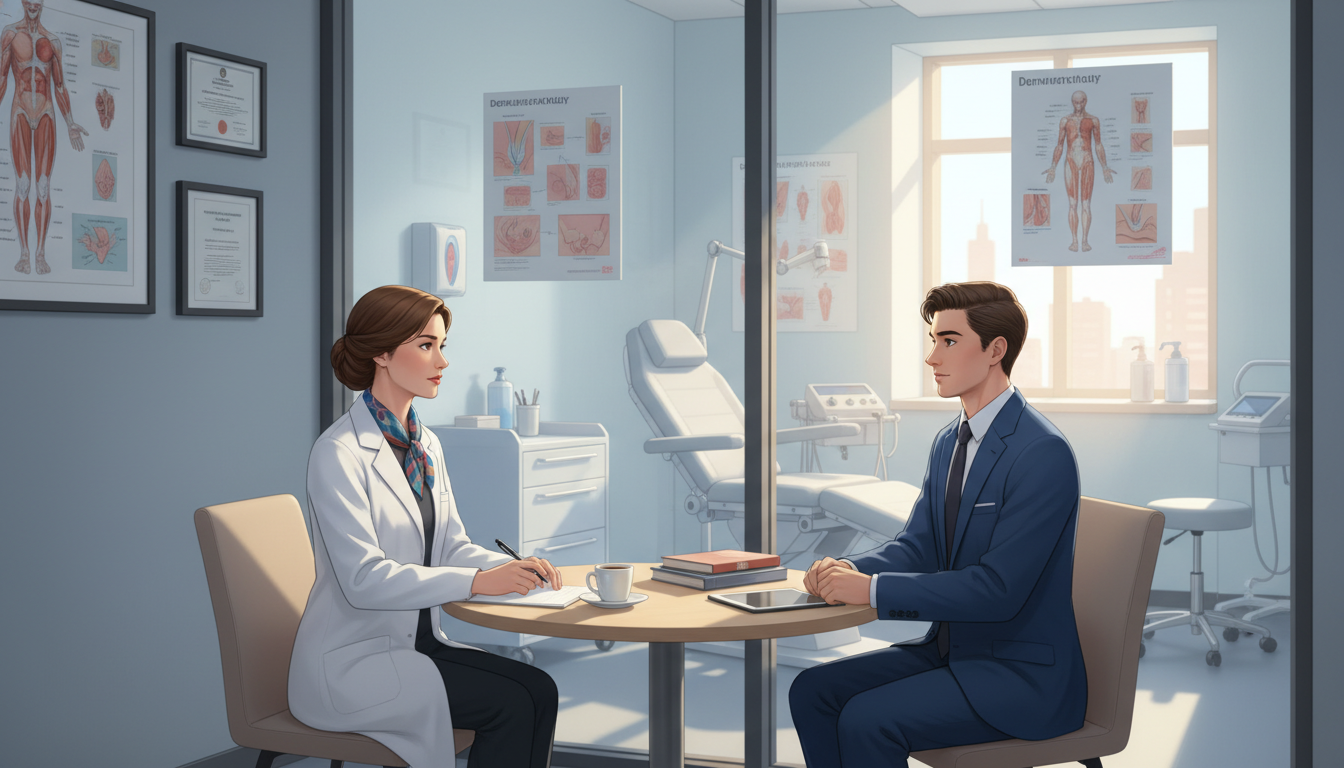
4. Clinical and Dermatology-Specific Interview Questions
While many programs emphasize behavioral and fit questions, some also ask clinical or scenario-based questions tailored to dermatology.
Common Clinical Question Types
1. Approach to a Rash or Lesion
Example:
- “How would you approach a patient who presents with a new generalized rash?”
- “Walk me through your approach to a changing pigmented lesion.”
They’re not expecting textbook-perfect answers, but want to see:
- A systematic approach (history, exam, differential, workup, plan)
- Comfort with bread-and-butter dermatology
- Awareness of red flags
For a new generalized rash:
- Ask about:
- Onset, progression, distribution, associated symptoms (pruritus, pain, fever)
- New medications, infections, exposures (topicals, travel, occupational)
- Systemic symptoms
- Past medical history, immunosuppression
- On exam:
- Morphology (macules, papules, plaques, vesicles, etc.)
- Distribution pattern and configuration
- Management:
- Relevant labs/biopsy if needed
- Symptomatic treatment
- When to involve dermatology urgently (e.g., SJS/TEN, DRESS)
You’re being assessed less on memorizing algorithms and more on organized reasoning and safety.
2. “What Would You Do If…” Scenarios
Examples:
- “You’re a dermatology resident in clinic and a patient becomes upset that they can’t get a same-day cosmetic procedure. How do you handle it?”
- “You notice a co-resident repeatedly arrives late to clinic and leaves you with extra work. What do you do?”
Use your standard ethical/professionalism approach:
- Prioritize patient safety and fairness
- Communicate clearly and respectfully
- Escalate appropriately if patient safety or team function is compromised
- Avoid gossip; focus on problem-solving
Questions About Dermatology Trends and Challenges
Programs may probe your awareness of issues affecting the field:
- Access to dermatologic care, especially in rural or underserved areas
- Disparities in skin of color diagnosis and treatment
- Teledermatology, AI in dermatology, and expanding technologies
- Ethical issues in cosmetic vs medical dermatology
You don’t need to be an expert, but you should be able to speak thoughtfully about:
- At least one current issue you care about
- How you might like to be involved in addressing it (research, outreach, advocacy)
5. Academic, Research, and Professionalism Questions
Dermatology is academically oriented; many applicants have research backgrounds. Expect to discuss your scholarly work and professional development.
Talking About Your Research
Common prompts:
- “Tell me about your research.”
- “What was your role in this project?”
- “If I skim your poster/publication, what should I understand about its importance?”
Focus on one or two main projects, not a list. For each:
- Simple summary of the research question and why it matters
- Your specific role (study design, data collection, analysis, writing)
- Key findings or lessons
- Skills developed (statistics, project management, resilience when studies don’t go as planned)
If you have no or limited dermatology research, emphasize:
- Other scholarly work (quality improvement, education, public health)
- How your skills are transferable to dermatology
Questions About Strengths and Weaknesses
These are classic, but still common residency interview questions.
“What are your strengths?”
Choose 2–3 strengths relevant to dermatology, each with an example:
- Attention to detail (biopsy site verification, accurate documentation)
- Reliability and follow-through (longitudinal research or clinic projects)
- Empathy and communication (helping anxious patients)
- Teaching and mentorship
“What is your greatest weakness?”
Avoid clichés (“I’m a perfectionist”) without depth. Use a genuine but modifiable weakness:
- Initial discomfort delegating
- Overcommitting to projects
- Nervousness with public speaking
Then:
- Acknowledge it honestly.
- Provide examples of specific steps you’ve taken to improve.
- Show current status and ongoing plan.
Example:
“I tend to take on too many commitments because I get excited about new projects. During my second year, that led to unnecessary stress. Over the last year, I’ve worked on being more realistic about my bandwidth, discussing timelines with mentors before saying yes, and using a structured task management system. As a result, I’ve been more reliable with deadlines and protected time for patient care and studying. It’s something I continue to monitor consciously.”
6. Questions You Should Ask and Final Impressions
One of the most underrated parts of the interview is your chance to ask questions. Thoughtful questions:
- Signal that you’ve researched the program
- Help you assess fit
- Show what you value in training
Strong Questions to Ask Dermatology Programs
You might ask faculty:
- “How would you describe the culture of your residency program?”
- “What qualities have you seen in residents who thrive here?”
- “How do you balance medical dermatology and procedural exposure?”
- “What opportunities exist for residents to be involved in research or teaching?”
- “How does your program address care for diverse and underserved populations, including skin of color?”
You might ask residents:
- “What does a typical week look like for a PGY-2 vs PGY-4?”
- “What changes have been made in response to resident feedback?”
- “How supported do you feel when you’re on call or managing complex inpatient consults?”
- “If you could change one thing about the program, what would it be?”
Avoid questions easily answered by the website (e.g., “How many residents per year?”) unless you’re clarifying a genuine confusion.
Non-Verbal and Professional Elements That Matter
Programs are evaluating more than your words:
- Professional appearance: conservative, comfortable, well-fitted attire.
- Body language: eye contact, posture, engaged facial expressions.
- Timing and tone: clear, concise answers; respect for time.
- Kindness: how you interact with staff, coordinators, and other applicants.
Remember, everyone you encounter—residents, coordinators, front desk staff—may contribute feedback.
FAQs: Common Questions About Dermatology Residency Interviews
1. How important are interview performances in the derm match?
In dermatology, where many applicants have strong academic metrics, interviews are critically important. They often determine which otherwise similar applicants programs rank more highly. Your ability to communicate clearly, demonstrate professionalism, and show genuine interest in dermatology and the specific program can significantly affect your rank position.
2. How should I prepare for “tell me about yourself” and other high-yield questions?
Write a bullet-point outline, not a script, for high-yield questions like:
- “Tell me about yourself”
- “Why dermatology?”
- “Why our program?”
- “Tell me about a time you faced a challenge/failure.”
Practice out loud, ideally with a friend, mentor, or in mock interviews. Aim for answers that feel organized but conversational, and keep most responses in the 1.5–3 minute range.
3. Will I be asked many clinical questions in a dermatology interview?
This varies by program. Some ask only a few basic clinical or hypothetical questions; others focus primarily on behavioral and fit-related questions. Prepare to discuss your approach to common derm complaints (rash, changing lesion, chronic pruritus) at a conceptual level. Emphasize systematic thinking and patient safety over memorizing rare diagnoses.
4. How can I stand out among other highly qualified derm applicants?
You don’t need to be the “flashiest” candidate to stand out. You can distinguish yourself by:
- Demonstrating clarity of motivation for dermatology and specific interests within the field.
- Showing maturity, humility, and self-reflection in behavioral questions.
- Sharing concrete examples of patient care, teaching, or research that show your values in action.
- Asking thoughtful questions that reflect understanding of the program’s strengths and challenges.
- Being consistently reliable, respectful, and kind throughout the entire interview process.
With thoughtful preparation and authentic reflection, you can approach dermatology residency interviews with confidence and significantly strengthen your chances in the derm match.