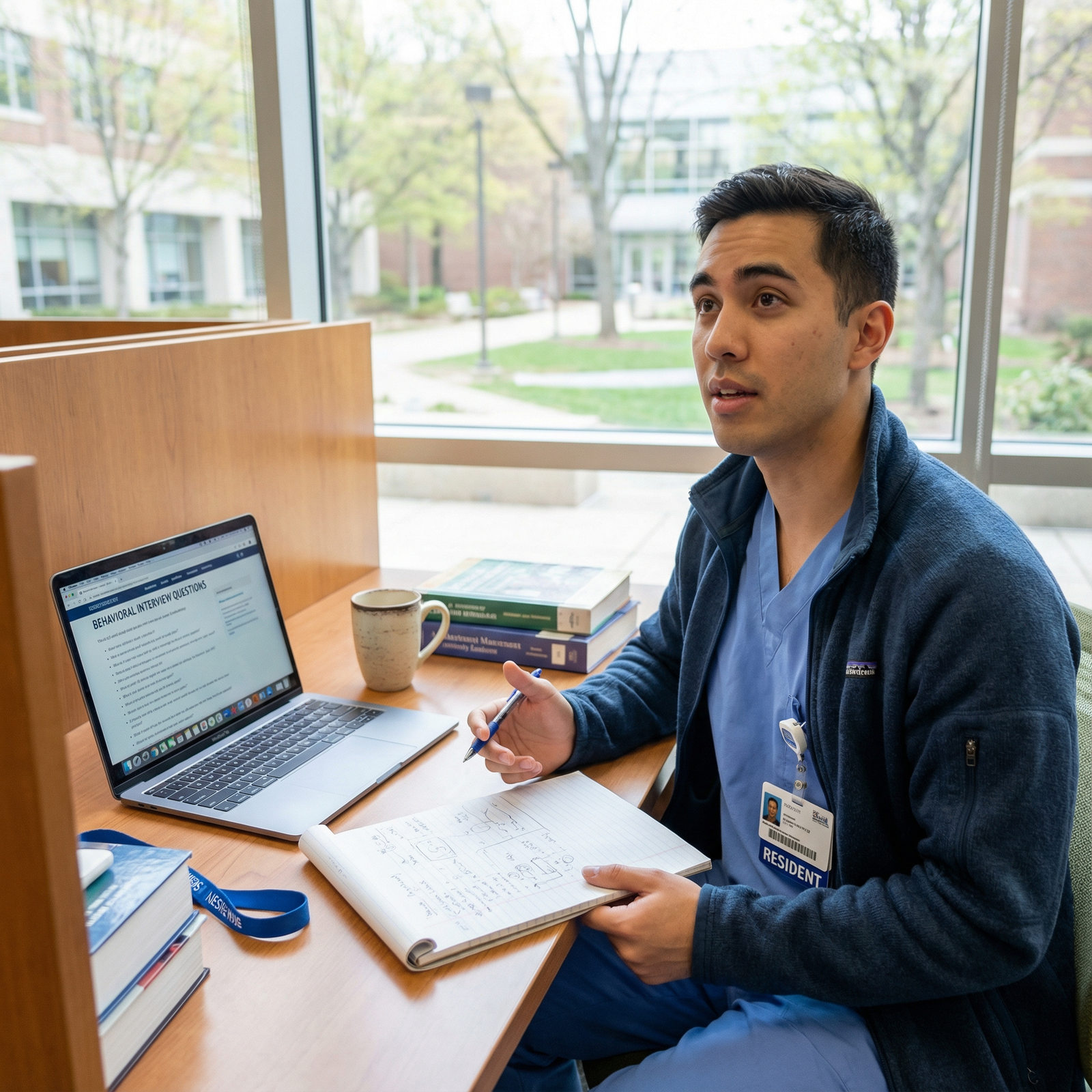
Understanding the General Surgery Residency Interview Landscape for DO Graduates
For a DO graduate pursuing general surgery, the residency interview is often the pivotal step in the osteopathic residency match (now unified with the MD match through ERAS/NRMP). Strong scores and a solid CV may earn you the invitation, but your performance during the interview is what often determines how high you’ll rank on the program’s list.
General surgery is competitive, and DO applicants can feel extra pressure to prove they belong—especially at historically allopathic programs. The good news: with deliberate preparation, you can turn the interview into a real advantage.
This guide focuses on the most common interview questions you’ll face as a DO graduate applying to general surgery residency. You’ll learn what programs are really asking, how to structure your answers, and how to handle behavioral and scenario-based questions that are increasingly common in the surgery residency match process.
Core “Traditional” Interview Questions You Must Master
These are the questions you can almost guarantee will appear in some form. They sound simple, but most applicants answer them poorly—either too vague, too long, or too generic.
1. “Tell Me About Yourself”
This is virtually guaranteed. It often sets the tone for the rest of your interview.
What they’re really asking:
- Can you tell a clear, concise story about who you are?
- Do you understand your own path and motivations?
- Can you highlight why you fit general surgery and this program?
Structure to use (2–3 minutes max):
- Present: Who you are now (DO graduate, interests, current stage)
- Past: Key experiences that shaped you (undergrad, prior career, major turning point)
- Future: Why general surgery and how their program fits your goals
Example (DO-focused) answer outline:
- Present:
- “I’m a DO graduate from [School], with a strong interest in acute care and complex abdominal surgery, and I’ve spent the last year deepening my exposure to general surgery through sub-internships and research.”
- Past:
- Brief note on a formative experience (e.g., manual, hands-on background; prior EMT or athletic training work; impactful surgery rotation).
- Highlight osteopathic philosophy: whole-patient perspective, teamwork, communication.
- Future:
- “I’m looking for a rigorous general surgery residency with strong operative volume and mentorship to become an excellent, technically skilled, team-oriented general surgeon serving a diverse community—exactly what I see in your program.”
Make sure your “tell me about yourself” flows logically, doesn’t repeat your entire CV, and subtly addresses why you’re a strong fit as a DO graduate in general surgery.
2. “Why Surgery?” / “Why General Surgery?”
What they’re really asking:
- Is your interest in surgery genuine, mature, and informed?
- Do you understand what a surgical lifestyle looks like?
- Are you choosing surgery for reasons that will sustain you long term?
Key elements to include:
- Specific experiences that drew you to surgery (not just “I like working with my hands”).
- Understanding of the field: acute decision-making, team leadership, longitudinal care, emergency vs elective.
- Alignment with your personality: you thrive in fast-paced, high-responsibility roles.
Example points to hit:
- A specific patient or case on your surgery rotation that made you feel “this is it.”
- Enjoyment of immediate impact and procedural work.
- Comfort with long hours and high stakes.
- Appreciation for the breadth of general surgery (trauma, acute care, oncology, endoscopy, etc.).
Be concrete: “During my trauma surgery sub-I, I realized I was energized rather than drained by middle-of-the-night emergencies. I loved leading resuscitations as part of a team and then seeing patients progress from the ICU to the floor. That combination of hands-on intervention and continuity is why general surgery fits me.”
3. “Why Our Program?”
This question can make or break an interview. Vague answers like “good training and great faculty” sound generic and insincere.
What they’re really asking:
- Did you actually research us?
- Do you understand what makes our program different?
- Are you likely to be happy and stay here for five years?
How to prepare:
Before each interview, know:
- Operative experience: Early autonomy? Bread-and-butter vs highly subspecialized cases?
- Program structure: Night float vs traditional call, trauma center level, community vs academic vs hybrid.
- Culture: Resident camaraderie, faculty accessibility, diversity, wellness.
- Osteopathic-friendliness: Number of DO residents, leadership attitudes toward DO grads.
Answer framework:
- Something about the training (case mix, trauma exposure, research, subspecialty clinics).
- Something about the culture (resident interactions, mentorship, support).
- Something about fit with your goals (academic vs community, location, patient population).
Example for a DO graduate:
“What stands out to me about your program is the balance between high operative volume and close faculty mentorship. On my interview day and during my sub-I here, I saw senior residents taking meaningful operative leadership while attendings provided very hands-on teaching. I also appreciate that your resident cohort includes both MD and DO graduates and that several of your recent graduates have gone into acute care and rural general surgery, which aligns with my own interest in practicing as a broad-based general surgeon in an underserved community.”

4. “Walk Me Through Your CV” / “Tell Me About Your Application”
This is your chance to guide the interviewer to your strongest points.
Strategy:
- Hit highlights from education, research, leadership, and clinical experiences.
- Emphasize anything related to general surgery (sub-Is, research, QI projects, trauma, ICU).
- Show progression and growth, not a random list.
Keep it under 3 minutes. Think of it as a narrated overview that points them toward topics you’d like to discuss further.
Common Behavioral and Scenario-Based Interview Questions
Programs increasingly use behavioral interview medical questions to assess professionalism, communication, and resilience. These often start with:
- “Tell me about a time when…”
- “Describe a situation where…”
- “Give an example of…”
Use the STAR method:
Situation – context
Task – your role
Action – what you did
Result – outcome and what you learned
1. Handling Conflict and Difficult Interpersonal Situations
Common questions:
- “Tell me about a time you had a conflict with a team member.”
- “Describe a situation when you disagreed with a supervising physician.”
- “Tell me about a time you had to give difficult feedback.”
What they’re looking for:
- Emotional maturity and professionalism.
- Ability to handle disagreement respectfully.
- Focus on patient safety and team function.
Tips:
- Avoid stories that portray you as a victim or the hero. Show collaboration.
- Never bad-mouth colleagues, attendings, or institutions.
- Highlight listening, empathy, and shared problem-solving.
Strong example outline:
- Situation: Miscommunication with an intern over task assignments on a busy call night.
- Task: Ensure safe patient care and preserve team relationships.
- Action: Privately clarified expectations, acknowledged both perspectives, proposed a shared task list and quick huddles.
- Result: Improved communication; fewer missed tasks; you learned the value of early clarification and assuming good intent.
2. Managing Stress, Burnout, and Resilience
General surgery residency is demanding. Programs want residents who can sustain performance under stress.
Common questions:
- “Tell me about a time you were overwhelmed and how you handled it.”
- “How do you manage stress and maintain work–life balance?”
- “Describe a setback or failure and how you responded.”
What they’re looking for:
- Self-awareness and insight.
- Healthy coping mechanisms (not “I just work harder and sleep less”).
- Ability to reflect and grow from difficulty.
Example approach:
- Choose a challenging rotation or academic setback (e.g., poor exam performance, difficult ICU rotation).
- Describe the moment you realized something had to change.
- Show specific strategies: time management, seeking mentorship, using wellness resources, debriefing, exercise, therapy, journaling.
- End with what changed and how you now handle similar situations.
For a DO graduate, you can also briefly note how osteopathic training’s emphasis on holistic wellness and body–mind integration informs your approach to resilience.
3. Professionalism and Ethical Challenges
Ethical and professionalism questions help programs see if you’ll be trustworthy at 2 a.m. in the OR or ICU.
Common questions:
- “Tell me about a time you witnessed unprofessional behavior and what you did.”
- “Describe an ethical dilemma you faced in medical school or on rotations.”
- “What would you do if you saw a resident cutting corners on patient care to leave earlier?”
Key principles to demonstrate:
- Patient safety first.
- Respectful escalation when necessary.
- Understanding of hierarchy but not at the expense of safety.
- Willingness to seek guidance if unsure.
Example elements:
- Situation: A team member documenting something that wasn’t done, or ignoring a patient concern.
- Action: You clarified intent, encouraged correction, involved appropriate supervision if needed.
- Reflection: What you learned about leadership, courage, and systems for reporting.
Never reveal identifiable details or speak disparagingly of individuals. Protect privacy.
4. Teamwork and Leadership
General surgery is a team sport: OR team, floor team, ICU, ED, consultants.
Common questions:
- “Tell me about a time you worked in a team where things went well. What was your role?”
- “Tell me about a time you led a team during a challenging situation.”
- “How do you handle working with nurses, anesthesia, and other disciplines?”
What to show:
- Collaboration and respect for all roles.
- Ability to step up when needed but also to follow leadership.
- Clear, calm communication under pressure.
Examples you might use:
- Leading a code or rapid response as a senior student (within your scope).
- Organizing sign-outs on a busy service.
- Coordinating care between multiple specialties for a complex patient.
Clinical and Scenario-Based Questions Specific to General Surgery
While many programs focus on behavioral questions, some will test your clinical reasoning relevant to general surgery. They’re not expecting you to be a resident yet, but they want to see how you think.
1. Common Clinical Scenarios
You might encounter questions like:
- “How would you approach a patient with acute right lower quadrant pain?”
- “A 65-year-old with a history of CABG presents with a small bowel obstruction. What are your major concerns?”
- “How would you work up a patient with painless jaundice?”
How to answer:
- Think in systems: ABCs, hemodynamic stability, focused history, physical exam, initial labs/imaging.
- State big picture differentials and immediate priorities.
- Emphasize communication with your team and consultants.
Example structure:
“For acute right lower quadrant pain, I’d first assess stability—vitals, appearance, peritonitis signs. I’d obtain a focused history (onset, migration of pain, associated symptoms like nausea, anorexia, fever, GU and GYN history in women). On exam, I’d check for rebound, guarding, and special signs. I’d order basic labs including CBC, BMP, pregnancy test if applicable, and imaging—often ultrasound in young women and CT abdomen/pelvis in others, guided by local protocols. I’d keep appendicitis high on the differential, but also consider gynecologic, urinary, and GI pathologies. I’d involve the surgery team early if appendicitis is suspected.”
You’re showing that you can reason safely and systematically.

2. “How Would You Handle a Complication?”
Programs know you haven’t managed surgical complications independently, but they want to see your attitude.
Example question:
- “During your rotation, a patient you recently rounded on decompensates rapidly. How do you respond?”
What to demonstrate:
- Recognition of urgency.
- Calling for help early.
- Basic initial steps: ABCs, vitals, rapid bedside evaluation.
- Communication with seniors and attending.
- Empathy toward the patient and family afterward.
Example outline:
- “I would immediately assess airway, breathing, circulation, and call for help and appropriate resources (rapid response/code).”
- “While help arrives, I’d follow ACLS/BLS protocols within my training level.”
- “I’d ensure clear, calm communication with the team and document events appropriately.”
- “After stabilization, I’d participate in debriefing and reflect on what could be improved.”
Addressing “DO Graduate”–Specific Topics and Perceptions
As a DO graduate, you may encounter explicit or implicit questions about your training background. Programs may or may not verbalize it, but many are evaluating:
- How well you integrate into an environment with MD and DO residents.
- Your exposure to high-acuity settings and surgical cases.
- Your understanding of osteopathic principles in a surgical context.
1. “Why Did You Choose a DO School?” / “Tell Me About Your Osteopathic Background”
Purpose:
- Understand your decision-making.
- Assess if you see osteopathic training as an asset, not a liability.
How to respond:
- Frame your choice positively: patient-centered care, holistic view, strong primary care foundation, emphasis on musculoskeletal system and biomechanics.
- Connect osteopathic principles to surgery: whole-patient view, tissue and structural understanding, respect for function, emphasis on communication and longitudinal care.
Avoid defensive or apologetic tone. Focus on what your DO training adds to your identity as a future surgeon.
2. “How Has Being a DO Prepared You for General Surgery?”
Highlight:
- Strong physical exam skills and appreciation for anatomy and function.
- Communication and rapport-building that improves perioperative care and informed consent.
- Flexibility from working in both community and academic settings.
- Humility and work ethic, especially if you had to actively seek out surgical opportunities.
Example response:
“My osteopathic training has emphasized seeing the patient as a whole person and understanding how structure and function are intertwined. In general surgery, that translates into careful attention not only to the technical aspects of an operation, but to how a patient’s comorbidities, social support, and goals of care impact the perioperative plan. Clinically, we had strong training in hands-on physical diagnosis, which helps me in the acute surgical setting when imaging may be delayed or incomplete. I also think the communication skills and focus on patient education that are central to DO training make me better at explaining surgical options and risks to patients and families.”
3. Handling Questions About the Osteopathic Residency Match (Now Unified)
Many programs are now fully accustomed to DO applicants, but you may be asked indirectly about:
- Your decision to apply broadly to MD and DO-friendly programs.
- How the unification of the osteopathic residency match with the allopathic system shaped your strategy.
You do not need to dwell on match politics; instead, keep the focus on:
- Seeking the best training environment and operative experience.
- Looking for programs that value diversity of backgrounds, including DO graduates.
- Being enthusiastic about working in multidisciplinary, mixed-background teams.
High-Yield “Curveball” and Personality Questions
Programs also want to know who you are as a person, not just a test-taker.
1. Strengths and Weaknesses
Common versions:
- “What are your greatest strengths?”
- “What is a weakness you’re working on?”
Strengths:
- Choose 2–3 strengths directly relevant to general surgery:
- Reliability and follow-through.
- Calm under pressure.
- Team communication.
- Attention to detail.
- Provide brief proof stories.
Weaknesses:
- Avoid cliché “fake weaknesses” (e.g., “I care too much,” “I work too hard”).
- Choose a real, but non-fatal weakness (e.g., trouble delegating, overcommitting, discomfort with public speaking).
- Emphasize what you’re doing about it and improvements observed.
Example:
“I used to struggle with delegating tasks because I wanted to make sure everything was done exactly right. On busy services, I realized this could actually slow the team down. I’ve been deliberately practicing clear task delegation to classmates and nurses, asking for feedback on my clarity, and prioritizing trust while verifying critical steps. It’s made me more efficient and has improved our team’s workflow.”
2. “Where Do You See Yourself in 5–10 Years?”
They’re not asking you to predict the future; they want to see if your goals match what they can provide.
Key approaches:
- If you’re interested in fellowship (trauma, surgical oncology, MIS, colorectal, etc.), say so—but be open to change.
- If you might be a community general surgeon, that’s also attractive, especially for programs with strong generalist training.
- Mention interest in teaching, QI, leadership, or research as appropriate.
Make sure your stated interests align with the program’s strengths. Don’t tell a community program you’re only interested in a highly specialized research career if that’s not realistic there.
3. Non-Medical Interests
You’ll often be asked:
- “What do you like to do outside of medicine?”
- “How do you relax during a tough rotation?”
Purpose:
- To see if you’re balanced and relatable.
- To assess if you have healthy coping mechanisms.
Answer honestly, with a few specific hobbies or activities. These can be great connection points with interviewers. Avoid saying “I don’t really have time for anything outside medicine.”
Preparing for the Interview: Strategy and Practice
1. Create a Personal Story Bank
Before interviews, write out 8–12 stories you can adapt for many behavioral questions:
- A time you led a team.
- A time you had a conflict.
- A time you made a mistake.
- A time you dealt with a difficult patient or family.
- A time you went above and beyond.
- A time you faced failure or a setback.
- A meaningful patient interaction.
- A major ethical or professionalism challenge.
Practice each using the STAR framework. This way, when you’re asked challenging residency interview questions, you’re not starting from scratch.
2. Practice Out Loud
- Do at least 2–3 mock interviews with:
- A mentor or attending.
- A resident (ideally a general surgery resident).
- A career advising or student affairs office.
- Record yourself answering “tell me about yourself,” “why surgery,” and “why our program” until they sound natural but structured.
3. Prepare Questions to Ask Them
You will almost always be asked, “Do you have any questions for us?” Prepare specific, genuine questions such as:
- “How do you support interns during the transition from medical school to residency, especially on your busiest services?”
- “How would you describe the resident–attending relationship here, particularly in the OR?”
- “How have your DO graduates done in terms of fellowships or job placement?”
- “What qualities distinguish residents who really thrive in your program?”
Avoid questions that suggest lack of preparation or focus only on lifestyle in a way that seems disengaged from training quality.
Frequently Asked Questions (FAQ)
1. As a DO graduate, will I get different or more difficult interview questions than MD applicants for general surgery?
Most programs do not deliberately give DO applicants different residency interview questions. However, you may face more questions indirectly related to your background, such as:
- “Tell me about your osteopathic training.”
- “How has being a DO shaped your approach to surgery?”
Handle these confidently and positively. Your goal is to show that being a DO is an asset, not a limitation, and that you’re fully prepared to thrive in an allopathic or mixed environment.
2. How long should my answer to “Tell me about yourself” be?
Aim for about 2–3 minutes. Shorter than 90 seconds usually feels shallow; longer than 4 minutes often becomes rambling. Focus on:
- Who you are now.
- The key experiences that shaped your path to general surgery.
- Why you’re sitting in that chair at that program.
Practice this repeatedly—this is one of the highest-yield questions you can prepare for.
3. How do I handle a question I truly don’t know the answer to, especially a clinical scenario?
- Take a breath and organize your thinking out loud: initial assessment, stabilization, basic workup.
- It’s acceptable to say, “I’m not sure of the exact next step, but I would…,” and then describe how you’d consult your team, guidelines, or senior.
- Avoid guessing wildly or pretending to know something you don’t. Programs respect honesty, safety, and good judgment more than encyclopedic recall.
4. Can I use the same stories across multiple behavioral questions?
Yes—with modifications. Many strong behavioral stories can answer multiple questions (conflict, leadership, resilience). Just ensure that:
- You emphasize different aspects of the story depending on the question.
- You don’t repeat the exact same story multiple times with the same interviewer.
- You have enough variety (8–12 stories) to draw from across a full interview day.
Thoughtful preparation for these common general surgery residency interview questions—tailored to your identity as a DO graduate—will significantly improve your confidence and performance. Combine clear, structured answers with authenticity and self-awareness, and you’ll stand out as a mature, reliable future surgical resident.