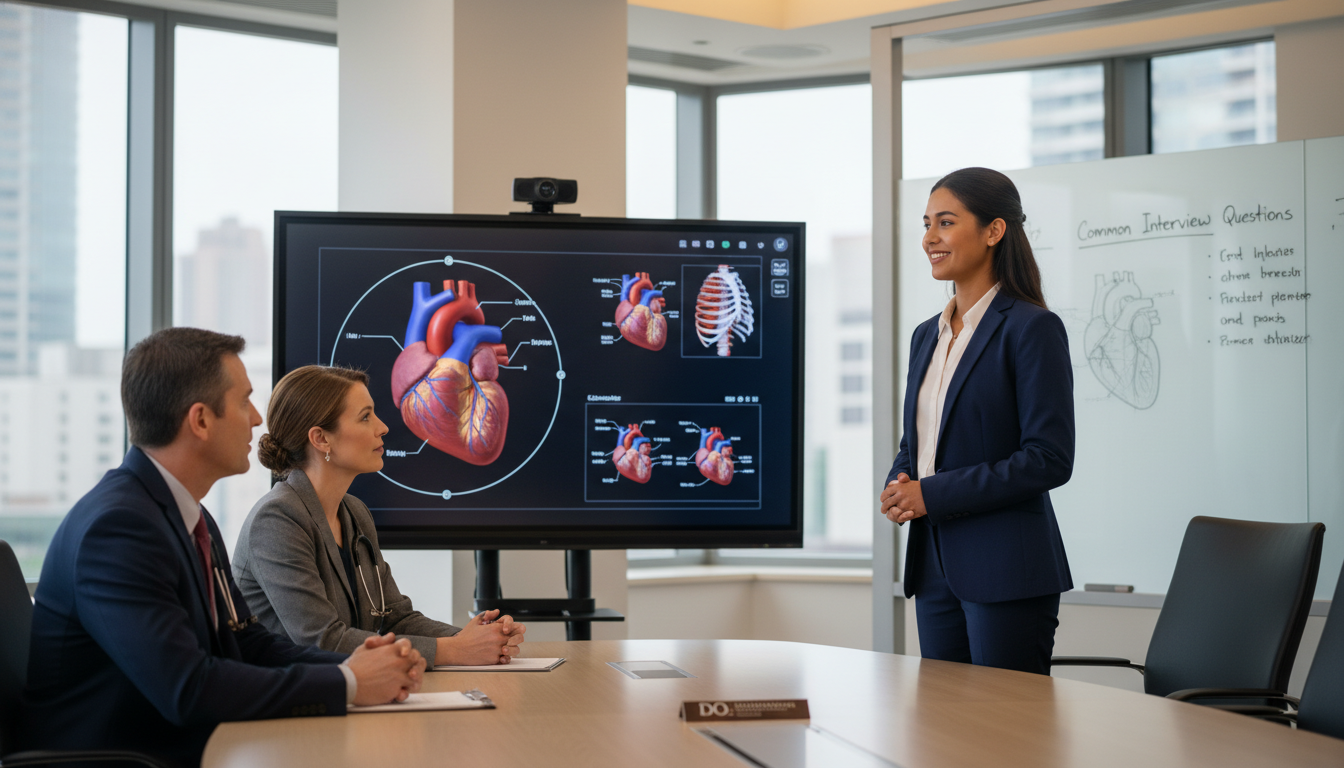
Understanding the IR Residency Interview Landscape as a DO Graduate
Interventional Radiology (IR) is one of the most competitive and rapidly evolving specialties. For a DO graduate, the osteopathic residency match or integrated IR match can feel especially high‑stakes—balancing the DO degree, board exam pathways (COMLEX and possibly USMLE), and a specialty often perceived as MD‑heavy.
Yet DO graduates match successfully into interventional radiology residency programs every year. What often separates successful candidates isn’t just board scores or research—it’s how effectively they navigate common residency interview questions, especially behavioral interview medical questions.
This guide focuses specifically on common interview questions for DO graduates applying to interventional radiology. You’ll find:
- High‑yield IR‑specific and general residency interview questions
- Sample frameworks to structure your answers (including “Tell me about yourself”)
- DO‑specific strategy and examples
- Practical tips for the osteopathic residency match and IR match interview process
The goal: help you walk into each interview with clarity, structure, and confidence.
Core “Story” Questions (Including “Tell Me About Yourself”)
These questions set the tone of the interview and often shape the rest of the conversation. For interventional radiology residency, you must connect your story to procedural skill, imaging, and patient-centered care—while also addressing your path as a DO graduate.
1. “Tell Me About Yourself”
This is arguably the most important of all residency interview questions. Programs use it to assess your communication, self-awareness, and fit for IR.
Goal: Deliver a 60–90 second narrative that links your background → key experiences → why IR and this program.
Use this simple 3‑part framework:
Past (Concise Background)
- Where you’re from / undergraduate focus
- Why you chose osteopathic medicine and core values you took from it
Present (IR‑Relevant Experiences)
- IR rotations, research, mentorships
- Skills and strengths you’re currently developing
Future (Why IR & Goals)
- Short‑ and long‑term career goals in interventional radiology
- Why this program specifically helps you reach them
Example (DO‑specific, IR‑focused):
“I grew up in a small town in Pennsylvania where access to advanced procedures was limited. That experience, combined with my interest in anatomy and hands‑on problem solving, drew me to osteopathic medicine at [School], where I really embraced the holistic and procedural aspects of patient care.
During third year, a radiology elective exposed me to interventional radiology. Watching a TIPS procedure completely change a patient’s quality of life in a single afternoon was transformative. Since then, I completed two dedicated IR electives, got involved in a QI project on reducing contrast use in peripheral angiography, and helped start an IR interest group for DO students.
Going forward, I see myself as a clinically focused interventional radiologist in an academic or large community setting—someone who not only performs technically complex procedures but also manages patients longitudinally. I’m particularly drawn to your program’s integrated clinic experience and strong mentorship culture, which I believe align well with my osteopathic training and my goal of becoming a thoughtful, patient‑centered IR physician.”
Key DO tips:
- Explicitly mention what osteopathic training adds to your IR practice (holistic assessment, MSK skills, bedside communication, understanding of pain and function).
- Keep it focused on IR readiness, not just “why medicine.”
2. “Why Interventional Radiology?”
This is central to the interventional radiology residency interview—and interviewers want a deeper answer than “I like procedures.”
Incorporate these elements:
- A specific clinical moment or patient that drew you to IR
- The integration of clinical medicine, imaging, and procedures
- The appeal of longitudinal patient care (especially in IR/DR integrated pathways)
- Your alignment with IR’s innovation and multidisciplinary nature
Example structure:
- A brief story (1–2 sentences)
- 3 concrete aspects of IR that resonate with you
- How your background as a DO supports those aspects
Example answer:
“During my third‑year IM rotation, I followed a patient with critical limb ischemia who was at risk for an above‑knee amputation. IR performed a complex endovascular intervention, and a few weeks later I saw that patient walking with only minor assistance. That experience crystallized how IR can change a person’s trajectory in a single procedure.
I’m drawn to IR because it uniquely combines detailed image interpretation, hands‑on procedural work, and meaningful longitudinal relationships—particularly in oncology and PAD. The specialty’s problem‑solving nature and its constant innovation really fit my personality.
My DO training emphasized whole‑person care, functional outcomes, and close attention to how disease affects the patient’s daily life. I see those skills translating directly into IR clinic, shared decision‑making, and procedural planning, and that’s why I feel such a strong fit with interventional radiology.”
3. “Why Did You Choose Osteopathic Medicine?” (And How Does It Fit with IR?)
As a DO graduate, you should be prepared for this question, especially in programs that historically take more MDs.
Goals:
- Avoid a defensive tone—frame DO as an intentional, positive choice.
- Connect osteopathic training directly to IR practice.
Sample answer points:
- Your interest in holistic, patient‑centered care
- Value of extra MSK and anatomy training
- Focus on function, pain, and quality of life—highly relevant to IR
- Exposure to underserved populations or community medicine
Potential response:
“I chose osteopathic medicine because I wanted a training environment that emphasized the patient as a whole person rather than just a set of images or lab values. The focus on function, pain, and quality of life really resonated with me. Our curriculum also gave me extensive training in anatomy and musculoskeletal medicine, which I’ve found extremely helpful when thinking about access routes, patient positioning, and procedure‑related pain in IR.
In rotations, that perspective pushed me to think beyond the technical success of a procedure—asking how it would impact the patient’s day‑to‑day function and long‑term goals. I see that as directly aligned with the evolving, clinic‑based model of interventional radiology.”
If you’ve taken USMLE in addition to COMLEX, you can mention that briefly later when addressing preparation and commitment to a competitive field.
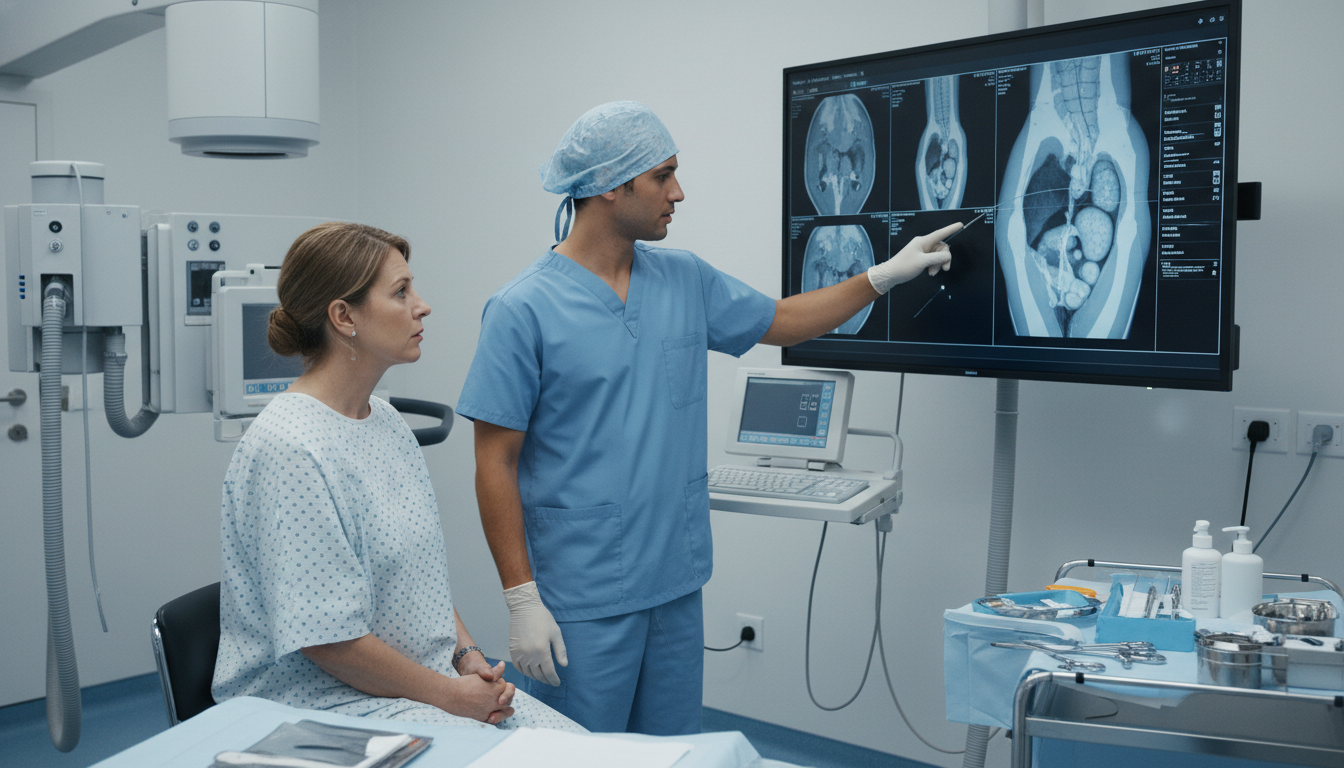
Common Behavioral & Situational Questions (With IR-Focused Examples)
Most programs now incorporate behavioral interview medical questions to assess how you think, react under pressure, and work with teams. For interventional radiology, they’re often framed around:
- Communication with other services
- High‑stress procedures and complications
- Multidisciplinary care and clinic interactions
Use the STAR framework (Situation, Task, Action, Result) to keep answers concise and structured.
4. “Tell Me About a Time You Dealt With a Difficult Patient or Family”
What they’re looking for:
- Empathy and professionalism
- Ability to de‑escalate conflict
- Clear communication—crucial for IR consent and post‑procedure care
Example:
“On my internal medicine sub‑internship, I cared for a patient with decompensated cirrhosis who was very frustrated about repeated imaging and potential procedures.
Situation/Task: He was refusing further tests and was angry with staff. I was asked to talk with him and try to clarify his concerns.
Action: I sat down at eye level and first listened without interrupting as he described feeling like ‘a lab rat.’ I validated his frustration and summarized his concerns to show I understood. Then I used simple language to explain how the proposed paracentesis and potential TIPS evaluation could reduce his symptoms and potentially decrease hospitalizations. I asked him what outcomes mattered most to him; he said he wanted to spend more time at home with his grandkids. We reframed the procedures in that context.
Result: He agreed to proceed with the paracentesis and evaluation, and his trust in the team improved. That experience reinforced for me how critical honest, empathic communication is—something I see as central to IR clinic and consent discussions.”
Tie back to IR: you’ll often manage patients and families who are anxious about invasive procedures.
5. “Tell Me About a Time You Made a Mistake”
Interviewers here want humility, accountability, and growth—not perfection.
DO/IR angle: You can pick a scenario from a radiology rotation, IR elective, or procedural setting, but avoid anything suggesting gross negligence.
Example:
“During my first IR elective, I was responsible for prepping a patient for a biopsy.
Situation/Task: I mistakenly assumed that all relevant labs had been checked earlier that morning and did not initially confirm the platelet count myself. The fellow caught that the labs were outdated before the procedure started.
Action: I immediately acknowledged the oversight and apologized to the team. I then reviewed our pre‑procedure checklist with the fellow and developed my own personal pre‑procedure protocol. For the remainder of the rotation, I double‑checked labs, allergies, medications, and consent on every patient.
Result: No harm came to the patient, but the experience made me much more systematic. By the end of the rotation, my attending commented that my pre‑procedure notes were thorough and that he trusted my preparation. It reinforced for me that attention to detail and owning mistakes are essential in a field like IR where patient safety depends on meticulous planning.”
Avoid answering with “I care too much” or “I’m a perfectionist” with no real example.
6. “Describe a Time You Worked on a Team with Conflict or Disagreement”
In IR, you’ll work with surgeons, oncologists, hospitalists, and nurses. Programs want to see how you handle disagreements professionally.
Example:
“On a general surgery rotation, there was disagreement between our team and radiology about the urgency of a CT‑guided drainage versus operative management for a patient with an intra‑abdominal abscess.
Situation/Task: The surgery resident felt the patient needed an urgent operation; the radiology attending felt percutaneous drainage first was safer. Emotions were rising during the discussion.
Action: As a student, my role was limited, but I offered to summarize the patient’s clinical status and imaging findings to ensure both teams were working with the same information. I pulled up the imaging, reviewed vitals and labs, and presented a concise overview in a calm manner. This helped refocus the conversation on the data instead of the disagreement.
Result: The teams agreed to proceed with image‑guided drainage first, with close monitoring and a low threshold for surgery if the patient worsened. The patient improved. The experience showed me how clear communication and objective data can help align multidisciplinary teams—a dynamic that’s especially important in IR.”
7. “Tell Me About a Time You Worked Under Significant Pressure”
IR often involves emergent procedures, bleeding, or unstable patients. Use an example that shows composure and prioritization.
Tips:
- Choose a situation with clear stakes
- Show your thought process and calm, structured response
Possible scenario:
- Managing multiple sick patients on a rotation
- Being part of a rapid response or code
- Handling an urgent consent/patient deterioration during a procedure
Example:
“During night float on internal medicine, I was covering several patients when one became acutely hypotensive with suspected GI bleeding.
Situation/Task: Nursing called me to the bedside; I had to stabilize the patient, call for help, and coordinate the workup.
Action: I quickly assessed airway, breathing, and circulation, initiated IV fluids, called the senior resident, and ordered stat labs and a type and screen. While the senior contacted GI, I documented the events, communicated updates to nursing, and ensured we had all prior imaging and endoscopy reports ready in case IR or GI needed to intervene urgently.
Result: The patient stabilized and ultimately underwent endoscopic therapy. That night reinforced for me the importance of staying calm, using checklists in my head, and communicating clearly under pressure—skills that I know will be crucial when I’m part of an IR team managing emergent bleeds or unstable patients.”
IR- and Radiology-Specific Questions You Should Expect
Beyond behavioral questions, be ready for IR‑focused topics that test your insight into the specialty, not detailed medical knowledge.
8. “What Areas of Interventional Radiology Interest You Most?”
Even if your interests are still broad, show you’ve explored the field.
Possible areas to mention:
- Interventional oncology (TACE/Y90, ablation)
- Peripheral arterial disease and limb salvage
- Venous interventions (DVT, PE, May‑Thurner, IVC filters)
- Hepatobiliary and portal venous interventions
- Women’s and men’s health (UFE, prostate artery embolization)
- Pain and MSK interventions
Link each interest to:
- A specific rotation or patient case
- Research or QI work you’ve done
- Your long‑term career vision
9. “How Do You See the Future of Interventional Radiology Evolving?”
This assesses your understanding of the field beyond just procedures.
Consider addressing:
- Shift toward clinical IR: more clinic, inpatient consults, longitudinal follow‑up
- Growth areas: interventional oncology, structural interventions, novel embolics/technologies
- Training models: integrated IR/DR residencies, ESIR, independent IR
- Challenges: turf battles, reimbursement, maintaining clinical identity
Sample response:
“I think IR will increasingly establish itself as a true clinical specialty rather than a purely procedural one. The integrated IR/DR training model and IR clinics reflect that shift. I expect to see continued growth in interventional oncology and complex venous disease, as well as expansion into new territories like portal hypertension management and certain structural procedures.
At the same time, IR will need to continue advocating for its role in multidisciplinary teams and maintain strong clinical footprints—in clinic, on inpatient consult services, and in longitudinal care. That’s one reason I’m drawn to programs like yours that emphasize both procedural excellence and clinical training.”
10. “Tell Me About a Radiology or IR Case That Impacted You”
Pick a case you know reasonably well and that illustrates your understanding of IR’s clinical impact.
Example approach:
- Briefly describe the patient and indication
- Explain the procedure in broad strokes (no need for minute technical details)
- Highlight the clinical impact and what you learned
Example:
“A memorable case from my IR elective involved a patient with hepatocellular carcinoma not eligible for surgery.
The IR team performed Y90 radioembolization. I helped review the pre‑procedure imaging, saw the mapping angiogram, and followed the patient in clinic afterward. I was struck by how much planning, imaging review, and careful dose calculation went into what looked like a relatively simple catheter‑based procedure from the outside.
Over the next few months, the patient’s tumor burden decreased, and his functional status improved significantly. That case showed me how IR can offer meaningful, life‑prolonging options to patients who otherwise would have few choices. It also reinforced the importance of understanding both the imaging and the clinical context—something I’m excited to develop further in an interventional radiology residency.”
DO-Specific Concerns, Gaps, and “Red Flag” Questions
As a DO graduate, you may face specific or nuanced questions around your background, metrics, or path to IR. Preparing for these in advance can prevent you from sounding defensive or caught off guard.
11. “Can You Explain This Gap or Dip in Your Academic Record?”
If you have a leave of absence, low COMLEX/USMLE score, or repeated exam, you must answer this clearly and maturely.
Principles:
- Own it; do not blame others.
- Explain briefly what happened, followed by what you learned and changed.
- End with evidence of improvement.
Example:
“During my second year, I struggled with time management and test anxiety, which contributed to a lower COMLEX Level 1 score than I had hoped for.
I reflected on my study strategies and realized I was relying too heavily on passive review. I met with our academic support office, adopted more active learning methods, and began structured practice questions much earlier. I also sought counseling to develop healthier stress‑management strategies.
As a result, my Level 2 score improved significantly, and my clinical evaluations during core and advanced rotations have been strong. I’m confident that the systems I put in place will continue to help me perform well in the demanding environment of an interventional radiology residency.”
12. “Did You Take USMLE in Addition to COMLEX? Why or Why Not?”
This is common for DOs, especially in competitive fields like IR.
- If you did take USMLE, frame it as commitment to competitiveness and broader comparison.
- If you did not, emphasize the strength of your COMLEX performance and your focus on clinical excellence and IR‑relevant experiences.
Example if you did take USMLE:
“Yes, I chose to take USMLE in addition to COMLEX because I knew I was interested in competitive specialties like interventional radiology and wanted to be comparable on a common metric across applicants. Preparing for both also strengthened my fund of knowledge and test‑taking skills, which I think helped me perform more confidently on clinical rotations.”
Example if you did not:
“I decided to focus on COMLEX, and I’m proud of my performance there. Early in medical school I was considering a broad range of specialties and prioritized doing well on one licensing pathway and building strong clinical evaluations, IR exposure, and research. Once I developed a strong interest in IR, I doubled down on gaining hands‑on experience, letters, and scholarly work directly relevant to this field. I understand some programs may prefer USMLE scores, but I believe my performance on COMLEX and my clinical record provide a strong, consistent picture of my capabilities.”
13. “Why Should We Choose a DO Graduate for Our Interventional Radiology Program?”
Occasionally this is asked directly; more often it’s implicit.
Your goal: Confidently frame your DO background as a strength, not merely “equivalent” to MD.
You might highlight:
- Extra training in holistic assessment and functional outcomes
- Strong communication and rapport built in primary care–heavy rotations
- Flexibility and adaptability developed from rotating in varied community settings
- Commitment to patient‑centered care—critical in IR clinic and multidisciplinary decision‑making
Sample answer:
“As a DO graduate, I bring a strong foundation in whole‑patient assessment, functional outcomes, and communication—skills that are increasingly central to modern IR practice. My training exposed me to a wide range of community and underserved settings where I learned to adapt to different resources and team structures.
In IR clinic and multidisciplinary conferences, I see that background as an asset: I’m comfortable talking with patients about their goals and quality of life, integrating those preferences with imaging findings to help make shared decisions. At the same time, I’ve actively sought out research and advanced IR electives to ensure I’m technically and academically prepared for a rigorous interventional radiology residency. I think that combination—holistic perspective plus focused IR preparation—would add value to your program and your patients.”

Practical Strategies for Answering Common IR Residency Interview Questions
Beyond individual questions, there are patterns in how strong candidates approach the IR match interview process.
Use Structured, Concise Frameworks
- For “story” questions (e.g., “Tell me about yourself”, “Why IR?”), use a Past–Present–Future structure.
- For behavioral questions, use STAR (Situation–Task–Action–Result).
- Keep answers to 1.5–2 minutes unless they invite further detail.
Have 3–4 Anchor Stories Ready
Prepare a few versatile experiences that you can adapt:
- A clinical challenge or difficult patient encounter
- A time you worked on a team or handled conflict
- A mistake or setback and what you learned
- An IR‑specific or radiology case that impacted you
Each story should be adaptable to multiple questions (leadership, communication, professionalism, etc.).
Tailor to IR and to Being a DO Graduate
As you answer:
- Highlight experiences that show procedural interest, image‑based thinking, and clinical IR exposure.
- Explicitly bring out osteopathic values—whole‑patient care, function, communication—in ways that naturally fit IR.
- When appropriate, mention how your DO background informs how you approach pain, function, and shared decision‑making.
Anticipate Classic Residency Interview Questions
In addition to the ones above, almost every program will ask some variation of:
- “What are your strengths and weaknesses?”
- “Where do you see yourself in 5–10 years?”
- “What questions do you have for us?”
Prepare IR‑relevant responses:
- Strengths: communication, teamwork, adaptability, procedural focus, attention to detail.
- Weaknesses: something real but non‑fatal (e.g., delegating tasks, over‑committing) plus what you’re doing to improve.
- Questions for them: ask about IR clinic structure, resident autonomy, case mix, relationship with surgery/oncology, IR research opportunities, and how DO grads have performed in the program.
Practice Out Loud—But Don’t Memorize
- Conduct mock interviews with mentors, residents, or via your school’s career services.
- Practice responding to “Tell me about yourself” and 5–10 core questions out loud until you sound natural and confident.
- Avoid memorized speeches; aim for clear talking points you can adapt based on interviewer reactions.
FAQs: IR Residency Interview Questions for DO Graduates
1. Are DO graduates at a disadvantage in the interventional radiology residency match?
Being a DO graduate can present some extra hurdles—certain programs historically favor MDs, and some use USMLE as a primary screening tool. However, many programs are DO‑friendly and focus on clinical performance, IR exposure, and letters of recommendation. DO graduates match into IR every year, especially when they demonstrate:
- Strong clinical and board performance (COMLEX ± USMLE)
- Dedicated IR rotations and strong letters from interventional radiologists
- Evidence of interest in the field (research, QI, IR interest groups)
- Excellent interview performance on both traditional and behavioral questions
Your goal is to show that your DO background is an asset and that you are as prepared and committed as any competitive applicant.
2. How can I best prepare for behavioral interview medical questions as an aspiring interventional radiologist?
Review your clinical rotations and identify 6–8 meaningful experiences involving teamwork, conflict, mistakes, difficult patients, leadership, or high‑pressure situations. For each, outline them using the STAR framework. Then, practice answering questions like:
- “Tell me about a time you faced a conflict on a team.”
- “Tell me about a time you made a mistake.”
- “Describe a stressful situation and how you handled it.”
When answering, explicitly connect what you learned to IR practice—procedures, emergent situations, multidisciplinary care, patient communication.
3. What IR‑specific topics should I review before interviews?
You’re not expected to be a mini‑fellow, but you should be conversant in:
- Common IR procedures (biopsies, drainages, TIPS, embolizations, angioplasty/stenting, IVC filters, venous interventions)
- The concept of IR clinic and longitudinal care
- The structure of interventional radiology residency training (integrated IR/DR, independent IR, ESIR)
- The role of IR in multidisciplinary care (oncology, vascular surgery, hepatology, etc.)
- Broad trends in the field—clinical IR, interventional oncology, limb salvage
Rather than memorizing minutiae, aim to articulate how IR helps patients and where the field is headed.
4. How should I answer when programs ask about my other specialty interests or backup plans?
Be honest but strategic. For a competitive field like IR, you should convey that it’s your clear first choice, while still showing maturity about the realities of the IR match.
Example approach:
“Interventional radiology is my top choice because of the combination of imaging, procedures, and longitudinal care. I’ve structured my rotations, research, and mentorship around IR. If for some reason I couldn’t train in IR, I’d be most interested in a path that maintains a strong connection to imaging or procedural work, such as diagnostic radiology or [another genuinely compatible field]. But my primary goal is to match into an interventional radiology residency, and I’ve prepared my application accordingly.”
This reassures programs that you’re committed to IR but also realistic and thoughtful about your career.
By understanding and preparing for these common interview questions for DO graduates in interventional radiology, you position yourself to stand out in the osteopathic residency match and IR match. Combine a clear personal narrative, IR‑focused experiences, and confident, structured responses, and you’ll be ready to make the most of every interview opportunity.