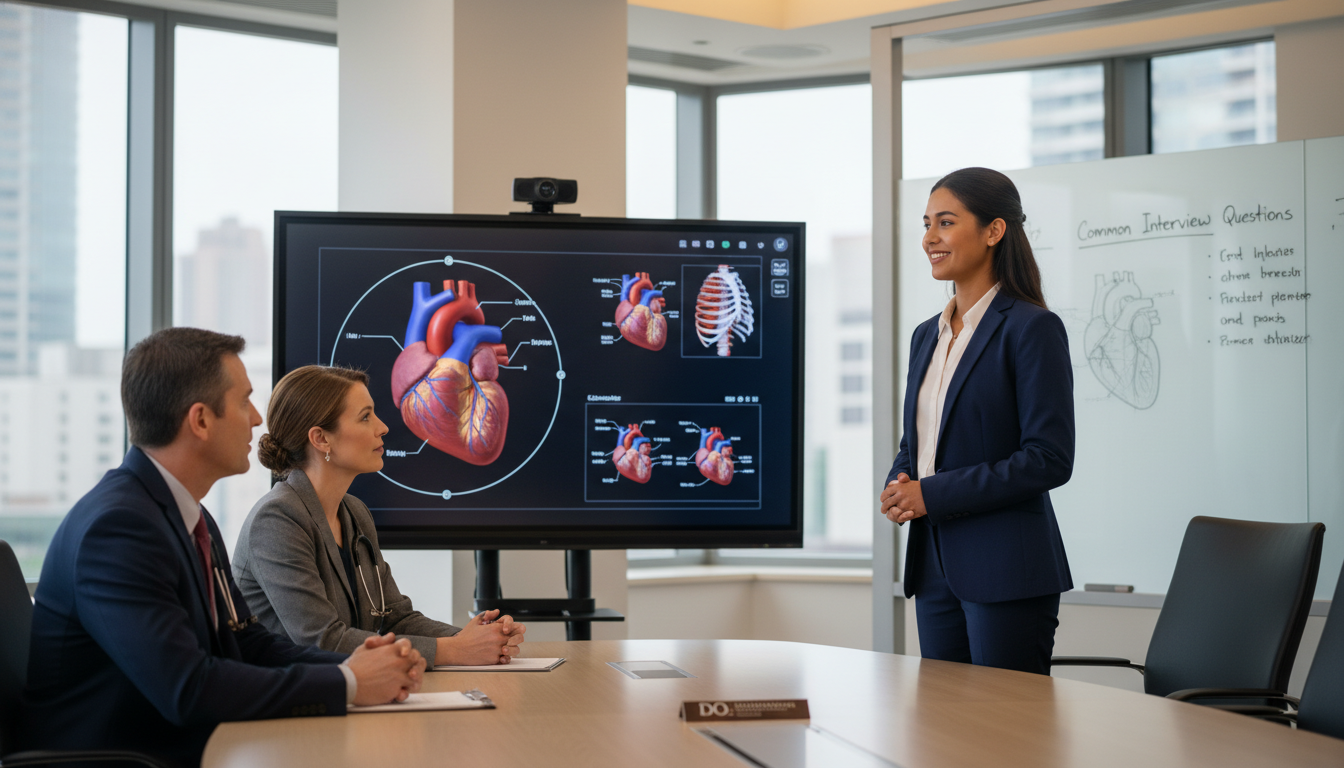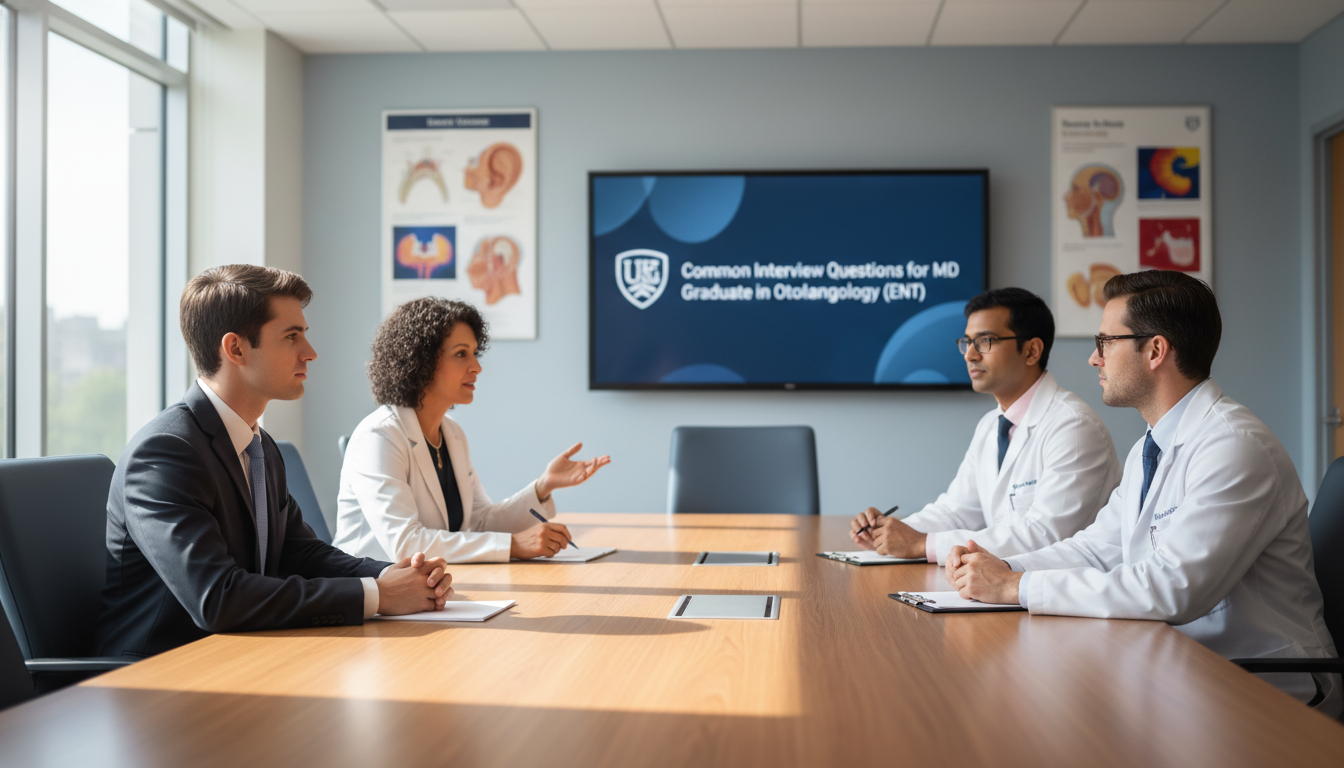
Preparing for a combined Emergency Medicine–Internal Medicine (EM-IM) residency interview as a DO graduate requires targeted, thoughtful preparation. Combined programs are small, highly competitive, and they expect applicants to show maturity, resilience, and a clear understanding of what this unique pathway entails. While your board scores and letters got you the interview, your success on interview day will hinge on how well you answer common residency interview questions—especially behavioral questions.
Below is a comprehensive guide to common interview questions for DO graduates applying to EM-IM programs, with examples, frameworks, and tips tailored to your osteopathic background.
Understanding the EM–IM Combined Path and What Programs Look For
Before diving into specific residency interview questions, it helps to understand why programs ask what they ask.
EM-IM programs are seeking applicants who:
- Understand both emergency medicine and internal medicine cultures
- Can manage acute crises and longitudinal care with equal comfort
- Have strong clinical reasoning and teamwork skills
- Demonstrate resilience, adaptability, and emotional intelligence
- Appreciate the osteopathic philosophy and can integrate it into modern, high-acuity environments
As a DO graduate residency applicant, you also need to navigate:
- Explaining your osteopathic training to interviewers who may come from MD backgrounds
- Addressing any perceived differences in COMLEX vs USMLE or program bias
- Highlighting how your osteopathic lens strengthens your EM-IM candidacy
Programs will probe these areas using classic and behavioral interview questions. Preparing thoughtful, concise, and authentic answers is one of the highest-yield things you can do for the residency match.
Core “Tell Me About Yourself” and Fit Questions
These are nearly universal and often asked early in the day. They set the tone and frame how interviewers remember you.
1. “Tell me about yourself.”
This is almost guaranteed. It is not your life story; it’s a 1–2 minute professional narrative linking your background to EM-IM.
Goal: Present a coherent story: who you are, where you’ve been, and why EM-IM.
Use a simple structure: PAST → PRESENT → FUTURE
Example structure for a DO graduate:
- Past: Where you grew up, undergrad, general interests, what drew you to medicine/osteopathy
- Present: Your DO school, key activities, why EM-IM caught your attention
- Future: What you hope to do with an EM-IM combined training (academic, community, critical care, global health, etc.)
Sample answer (condensed):
“I grew up in a small rural town where access to care was limited, so I saw early how important it is to have physicians who can handle both emergencies and chronic disease. In undergrad I studied biology and volunteered with EMS, which planted the seed for emergency medicine, but I also loved working in a free clinic managing patients over time.
In osteopathic medical school, I was attracted to the DO emphasis on treating the whole person—biopsychosocial and structural—particularly in high-stress settings like the ED. On my EM rotation, I enjoyed rapid decision-making and team-based care; on my IM rotations, I appreciated the complexity of diagnostic reasoning and continuity with patients and families.
Combined EM-IM training feels like the best reflection of who I am as a physician: someone who wants to stabilize the sickest patients but also follow them through the ICU and beyond. Long term, I see myself in an academic or hybrid setting, splitting time between the ED, inpatient medicine, and possibly critical care, while teaching students and residents—especially other DOs—about integrative, patient-centered care.”
Tips:
- This is one of the most important residency interview questions. Practice it out loud.
- Keep it under 2 minutes.
- Avoid reciting your CV; tell a story with a clear EM-IM focus.
- Explicitly mention why combined EM-IM, not just EM or IM alone.
2. “Why Emergency Medicine–Internal Medicine?” (and not just one or the other)
Programs want to know you’re choosing EM-IM intentionally, not because you “couldn’t decide.”
Key points to hit:
- Unique value of dual perspective: acute + longitudinal
- Examples from rotations where BOTH skill sets seemed relevant
- How EM-IM aligns with your career vision (critical care, administration, global health, hospital leadership, academic medicine)
Example answer outline:
- Moment or rotation that sparked interest in EM
- Moment that solidified interest in IM
- Patient or clinical scenario where both would be useful
- Long-term career vision that truly needs dual training
Sample answer idea:
“On my ED rotation, I loved being the first physician to evaluate undifferentiated patients, but I often felt frustrated handing off complex patients without seeing how their story ended. On my IM rotation, I enjoyed following those same types of patients through their hospitalization, working through diagnostic uncertainty and goals of care.
What drew me specifically to EM-IM is the ability to manage a patient in septic shock from initial resuscitation in the ED through their ICU course and ultimately to discharge and follow-up. I see myself working in a setting where I can move between the ED, inpatient wards, and possibly a step-down or ICU environment, while helping systems improve how care transitions happen. Pure EM or pure IM alone wouldn’t give me the breadth I’m seeking.”
Avoid:
- “I couldn’t choose, so I picked both.”
- Vague or generic enthusiasm without a clear integrated career plan.
3. “Why our program?”
This is a standard residency interview question, but especially important in small EM-IM programs.
Do your homework:
- Know key features: length (5 years), track options (critical care, admin, ultrasound, etc.), ED volume and case mix, IM strengths (academics, community, tertiary), fellowships, scholarly expectations.
- If the program is EM-IM combined with a specific identity (e.g., strong critical care culture or global health), reference it.
Effective approach:
- 1–2 specific program features
- 1 real personal/educational fit
- 1 statement tying to long-term goal
Example:
“I’m particularly drawn to your EM-IM program because of the strong critical care experience in both departments and the ability for EM-IM residents to pursue advanced ultrasound and ICU electives. On interview day and during the pre-interview dinner, I heard repeatedly that EM-IM residents are truly integrated into both departments, not sidelined.
I’m looking for a place where I can train as a frontline clinician in a high-acuity ED while building depth in inpatient medicine and ICU management, with mentorship from faculty who practice in multiple arenas. Long term I want to work at an academic medical center in a combined role, and this program’s graduated autonomy, research opportunities, and EM-IM alumni outcomes align with that goal.”
Behavioral Interview Questions: How You Think, Act, and React
Behavioral questions are increasingly common in the behavioral interview medical context and are particularly important in EM and IM, where teamwork, communication, and resilience are essential.
Use the STAR method for structure:
- Situation – Brief context
- Task – What you needed to do
- Action – What you did (focus here)
- Result – What happened, and what you learned
4. “Tell me about a time you made a mistake.”
This question tests self-awareness, accountability, and growth.
Good example features:
- Real (but not catastrophic) clinical or professional mistake
- Clear ownership, no blaming
- Reflection and specific changes you made
Sample outline:
S: 3rd-year IM rotation, busy inpatient service
T: Responsible for following up morning labs and imaging
A: Missed a critical lab or delayed follow-up on an abnormal result
R: Patient impact addressed quickly, you changed your workflow, and you learned to build redundancy into your systems
Key DO angle: You can integrate how osteopathic training emphasized self-reflection and continuous improvement.
5. “Describe a conflict with a team member and how you handled it.”
EM-IM residents work in high-stress, interprofessional teams. Programs need to know that you can manage conflict constructively.
Possible scenarios:
- Disagreement with a nurse over an order or priority
- Clash with a fellow student over workload distribution
- Miscommunication with a resident during sign-out
What they’re looking for:
- Respectful communication
- Willingness to listen
- Problem-solving rather than escalation
- Learning and insight
Example structure:
S: Busy ED shift as a student; nurse upset that you requested a non-urgent lab during a surge
T: Needed to maintain working relationship and advocate for patient care
A: Paused, listened to nurse’s perspective, clarified priorities, adjusted plan, and later checked in to debrief
R: Restored teamwork, learned to understand workload and staff perspective, changed how you prioritized tasks on later shifts
6. “Tell me about a time you were under significant stress. How did you cope?”
This is especially relevant for EM-IM, where burnout risk can be high.
Strong answers include:
- A specific clinical or academic scenario (e.g., exams + rotations, family crisis during clerkships, a difficult case)
- Healthy coping mechanisms: time management, exercise, mentorship, therapy, mindfulness, setting boundaries
- Insight into early signs you now recognize in yourself
Avoid:
- “I don’t really get stressed.”
- Only using unhealthy mechanisms (e.g., “I just sleep less and work more”) with no reflection.
7. “Give an example of when you went above and beyond for a patient.”
They’re testing your empathy, initiative, and sense of responsibility.
Ideas:
- Spending extra time with an anxious patient in the ED, coordinating social work, arranging follow-up
- Helping a patient navigate insurance/medication access on IM
- Using OMT (osteopathic manipulative treatment) to reduce a patient’s pain when other options were limited, and then coordinating further care
EM-IM twist: Highlight how you thought about both acute and long-term needs.
8. “Tell me about a time you had to deliver bad news or deal with a difficult conversation.”
EM and IM both involve frequent difficult conversations about prognosis, death, and chronic illness.
Focus on:
- How you prepared
- How you communicated (clear language, empathy)
- How you handled reactions
- How you supported the team and yourself afterward
Example:
Breaking the news of a new cancer diagnosis during an IM rotation, or discussing a poor prognosis after a devastating stroke or trauma admission in the ED.
Questions Specific to DO Graduates and Osteopathic Training
As a DO graduate, you may encounter questions that MD applicants will not. Be prepared to speak confidently and positively about osteopathic medicine.
9. “Why did you choose to become a DO?” / “How has osteopathic training shaped you as a clinician?”
This is your chance to integrate your identity into your EM-IM narrative.
Key themes:
- Holistic care: mind–body–spirit; social determinants of health
- Emphasis on structure–function relationships
- OMT as a tool (but not your only identity)
- Fit with EM and IM: complex patients, multimorbidity, functional status, pain, psychosocial stressors
Sample answer elements:
“I was drawn to osteopathic medicine because of its explicit emphasis on treating the whole person, which resonated with what I saw in underserved communities. My training has made me pay close attention to functional status, social context, and how a patient’s musculoskeletal and structural issues can interact with their disease process.
In EM-IM specifically, this perspective helps me think about more than just the immediate chief complaint—whether that’s identifying home stressors that may be worsening a COPD exacerbation or recognizing that a patient’s frequent ED visits might reflect unaddressed mental health or access issues. OMT has also given me another tool for certain types of pain and somatic dysfunction, particularly when we’re trying to limit opioid use.”
10. “How do you see yourself using OMT in an EM-IM career?”
Not every EM-IM resident will regularly use OMT, but you should have a thoughtful, realistic answer.
Options:
- Use OMT selectively: headache, neck/back strain, rib dysfunction, somatic contributions to dyspnea
- Incorporate OMT more into inpatient or clinic settings than in a chaotic ED
- Use osteopathic principles even when not doing hands-on OMT
Important: Be honest about feasibility and your current skill level.
11. “Have you experienced any bias or challenges as a DO, and how did you handle it?”
If applicable, this can be a powerful behavioral interview medical question to demonstrate resilience and professionalism.
- Describe the situation objectively.
- Avoid sounding bitter or defensive.
- Focus on how you responded, advocated, learned, and found allies/mentors.
- Emphasize your belief in interprofessional and interdegree collaboration.
Clinical Reasoning and Scenario-Based Questions in EM-IM
EM-IM interviews often include clinical vignette questions to assess how you think, not just what you know.
12. “Walk me through your approach to a patient with chest pain in the ED.”
They’re checking your ability to:
- Rapidly stabilize/emergency triage (EM mindset)
- Consider a broad differential diagnosis (IM mindset)
- Prioritize life-threatening causes
- Communicate clearly and logically
Outline:
- Primary survey: ABCs, vitals, immediate life threats
- Focused history + risk factors
- Targeted physical exam
- Initial orders: EKG, troponins, CBC, BMP, CXR, etc.
- Risk stratification: ACS, PE, dissection, pneumothorax, etc.
- Management and disposition: treat acute causes, coordinate with cardiology, consider admission vs discharge
- Consider long-term implications: follow-up, risk reduction
13. “Tell me how you’d manage an undifferentiated hypotensive patient.”
Again, they want EM-level resuscitation thinking alongside IM-style diagnostic depth.
Hit points:
- Immediate stabilization: airway, breathing, circulation
- Rapid assessment: type of shock (hypovolemic, cardiogenic, distributive, obstructive)
- Bedside ultrasound if available
- Early labs and cultures if sepsis is suspected
- Early antibiotics/fluids vs pressors depending on context
- Coordination with ICU or step-down
14. “Describe a complex patient case you were involved in and what you learned.”
Choose a case that illustrates:
- Integration of EM and IM thinking
- Your role (even as a student) in coordination, follow-up, or communication
- Reflection on what you would do differently now
Practical Tips for Answering Residency Interview Questions as an EM-IM DO Applicant
1. Anticipate and Practice Core Questions
At minimum, prepare polished, adaptable responses to:
- “Tell me about yourself.”
- “Why EM-IM combined and not just EM or IM?”
- “Why our program?”
- “Why did you choose osteopathic medicine?”
- Behavioral standards: mistake, conflict, stress, leadership, teamwork.
Practice aloud with:
- A peer
- A career advisor
- A mentor (ideally someone in EM, IM, or EM-IM)
Record yourself once or twice to check pacing and clarity.
2. Use the STAR Method for Behavioral Questions
Many residency interview questions now use a behavioral interview medical framework. Avoid rambling storytelling.
- Pick 6–8 stories that can answer multiple prompts:
- Clinical mistake
- Challenging patient
- Leadership situation
- Conflict with team member
- Adapting to change or feedback
- Time you advocated for a patient
You can reframe the same story differently depending on the question.
3. Bring EM-IM and DO into Your Answers Naturally
You don’t need to mention your osteopathic identity in every response, but try to:
- Show you value holistic care, continuity, and the patient’s context.
- Demonstrate excitement about both acute and chronic care.
- Reflect an appreciation for body–mind–environment relationships.
Integrate phrases like:
- “From an osteopathic perspective…”
- “Thinking about both the emergency presentation and long-term management…”
- “Considering the patient’s functional status and social support…”
4. Ask Strong Questions Back
Near the end, they’ll ask, “What questions do you have for us?” This is still part of your interview evaluation.
Potential EM-IM–specific questions:
- “How have your EM-IM graduates typically structured their careers after residency?”
- “How integrated are EM-IM residents in each department on a day-to-day basis?”
- “What support do dual residents get for research or fellowships, especially in critical care, ultrasound, or administration?”
- “How does the program support resident wellness, given the intensity of a 5-year combined training path?”
Avoid questions easily answered by the website or that suggest you haven’t researched the program.
5. Handling Tough or Unexpected Questions
You may get challenging residency interview questions such as:
- “Why do you think some programs are hesitant to take DOs?”
- “What’s the biggest concern you have about EM as a specialty right now?”
- “If you don’t match in EM-IM, what is your plan?”
Approach:
- Stay calm and thoughtful.
- Acknowledge realities (e.g., workforce issues, burnout) without being overly negative.
- Emphasize your flexibility and resilience.
Frequently Asked Questions (FAQ)
1. As a DO graduate, will I be asked different interview questions than MD applicants for EM-IM programs?
Most core residency interview questions are the same—“tell me about yourself,” “why this specialty,” behavioral questions, and clinical reasoning vignettes. However, as a DO graduate, you’re more likely to be asked:
- Why you chose osteopathic medicine
- How you use or plan to use OMT
- How osteopathic training influences your patient care
Be prepared with confident, positive, and specific answers that tie your DO background to your EM-IM goals.
2. How can I best answer “tell me about yourself” for an EM-IM combined interview?
Use a concise Past–Present–Future format:
- Past: Brief background, motivations for medicine/osteopathy
- Present: Key experiences in medical school that led you to both emergency medicine and internal medicine
- Future: A clear vision for how you want to use EM-IM training (e.g., critical care, academic medicine, rural care, hospital leadership)
Aim for 60–120 seconds, practice it out loud, and ensure that EM-IM and your DO identity appear naturally in your narrative.
3. What are common behavioral interview medical questions I should expect?
Common behavioral interview questions include:
- “Tell me about a time you made a mistake.”
- “Describe a conflict with a team member and how you handled it.”
- “Tell me about a time you were under significant stress.”
- “Give an example of when you went above and beyond for a patient.”
- “Describe a time you received critical feedback and what you did with it.”
Use the STAR method (Situation, Task, Action, Result) to structure your answers, and choose examples that highlight teamwork, communication, resilience, and your fit for a high-acuity, dual-discipline EM-IM environment.
4. How should I address questions about backup plans or not matching?
Programs may ask: “What will you do if you don’t match into EM-IM?” This tests your realism and resilience.
- Acknowledge that EM-IM is highly competitive.
- Briefly outline a rational backup (e.g., ranking categorical EM and/or IM programs, pursuing a preliminary year while reapplying).
- Emphasize your commitment to the core elements you value (acute care, longitudinal relationships, systems improvement).
Keep the tone calm and pragmatic, not anxious. This reassures programs that you’re thoughtful and grounded in your planning for the residency match and application process.
Preparing for an EM-IM combined interview as a DO graduate requires more than memorizing answers; it demands honest reflection on your path, your identity as an osteopathic physician, and your vision for a dual career in emergency medicine and internal medicine. By anticipating these common interview questions, practicing structured answers, and showing genuine enthusiasm for this unique path, you’ll be ready to present yourself as a compelling, mature, and mission-aligned future EM-IM resident.