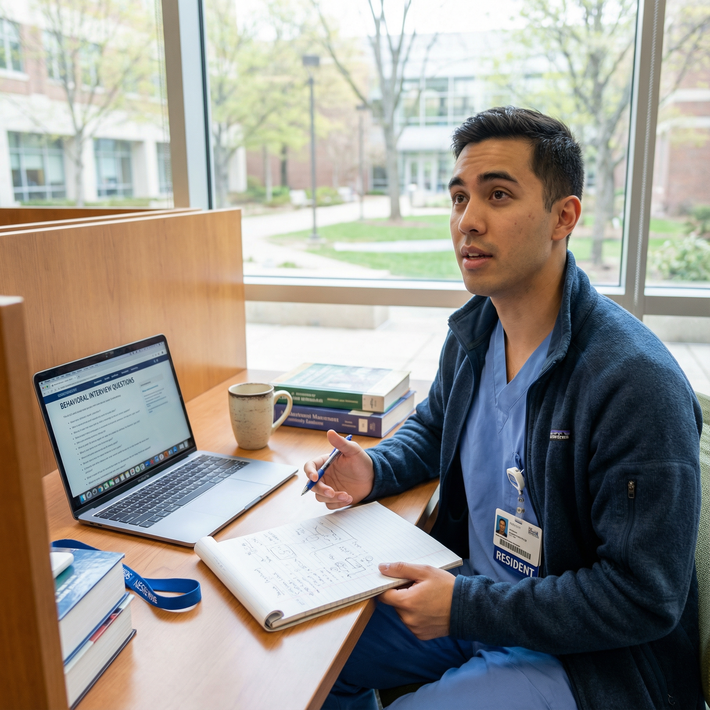
Preparing for PM&R residency interviews as a DO graduate means mastering both your content and your delivery. Programs are not just confirming your CV; they are assessing your self-awareness, clinical reasoning, communication, and how you’ll fit into their team.
This guide walks through the most common interview questions you’ll encounter as an osteopathic applicant to Physical Medicine & Rehabilitation programs—and how to answer them strategically and authentically.
Understanding the PM&R Residency Interview Landscape as a DO
Before diving into specific questions, it helps to know what interviewers are really looking for in a DO graduate pursuing a PM&R residency.
What PDs and Faculty Are Assessing
Across programs, interviewers tend to evaluate:
Fit for PM&R as a specialty
Do you understand what physiatry is—and what it isn’t? Can you articulate why this field aligns with your skills and values?Fit for their program
Have you researched their services (inpatient rehab, consults, outpatient, sports, pain), their patient population, and their educational strengths?Interpersonal and communication skills
PM&R is extremely team-based. Programs favor applicants who collaborate well with therapists, nurses, psychologists, and case managers.Clinical judgment and professionalism
Behavioral interview medical questions and clinical vignettes reveal how you think, prioritize, communicate, and manage conflict.Motivation and resilience
Rehabilitation can be emotionally demanding. Programs look for persistence, empathy, and realistic expectations.
DO-Specific Considerations
As a DO graduate entering the osteopathic residency match or combined NRMP/osteopathic residency match pathways, you may encounter:
- Questions about how osteopathic principles influence your approach to function, disability, and holistic care.
- Curiosity about your OMM/OMT training and how you envision using it in physiatry.
- Requests to explain any COMLEX/USMLE strategy (if you took both, or just COMLEX) and how you sought equivalent experiences to MD peers.
Your goal is to show that being a DO is not just a credential, but an asset in the PM&R and physiatry match process.
Core Personal Questions: “Tell Me About Yourself” and Beyond
These are often the first—and most important—questions you’ll face. They set the tone for the rest of the interaction.
1. “Tell Me About Yourself”
This is almost guaranteed, and it’s a classic behavioral interview medical opener. You should have a crisp, 60–90 second answer tailored to PM&R.
Purpose:
- Assess communication style and organization of thought
- Understand your background and narrative arc
- See what you think is most important about yourself
Structure (Simple 3-Part Framework):
- Brief background – Where you’re from, undergrad, medical school.
- Key experiences + path to PM&R – Clinical or life experiences that led you toward physiatry.
- Current goals – What you’re looking for in a PM&R residency and career.
Example (DO-focused):
“I grew up in a small town in Ohio and completed my undergraduate degree in exercise science before attending XYZ College of Osteopathic Medicine. I was initially drawn to osteopathic medicine because of its emphasis on holistic care and functional outcomes.
During my third-year rotations, I worked with a physiatrist on an inpatient rehab unit and was struck by how central function and quality of life were to every encounter. I also had the chance to use OMT to help a stroke patient with shoulder pain, which reinforced for me how manual skills and a whole-person perspective can significantly impact rehabilitation.
Now, I’m looking for a PM&R residency with strong inpatient exposure, diverse outpatient clinics—including musculoskeletal and spasticity management—and a team culture where DO and MD training are equally valued. Long term, I see myself in an academic or hybrid practice, balancing patient care, teaching, and multidisciplinary collaboration.”
2. “Walk Me Through Your CV” or “How Did You Get Here?”
This is similar to “Tell me about yourself” but more linear and often focused on decision points.
Tips:
- Highlight intentional choices—why you picked certain rotations, research, or extracurriculars.
- Emphasize a coherent progression toward PM&R rather than random experiences.
- Briefly mention leadership and teamwork roles that show you function well in interprofessional rehab settings.
PM&R-Specific Questions for DO Graduates
Interviewers want to know that you understand what PM&R physicians actually do—and that you’ve seen enough to choose physiatry deliberately.
3. “Why PM&R?” or “Why Physiatry?”
You must be able to clearly and confidently answer this. Vague answers (“I like helping people”) are not enough.
Include:
- A specific patient or clinical story that shaped your interest.
- Core elements of the specialty you enjoy:
- Function and quality of life
- Longitudinal care
- Team-based approach
- Neurologic and musculoskeletal medicine
- Procedures (EMG, injections)
- How this aligns with your osteopathic training.
Example Framework:
- Trigger moment or exposure
- What aspects of PM&R match your strengths/values
- How your DO background uniquely supports this choice
Sample answer snippet:
“PM&R aligns closely with why I chose osteopathic medicine in the first place—the focus on function, whole-person care, and understanding how different body systems interact. On my PM&R elective, I followed a young man after a traumatic brain injury from acute inpatient rehab through outpatient follow-up. Seeing his progress over time, guided by a coordinated team and directed by the physiatrist, showed me how powerful it can be to focus on goals like walking independently or returning to work.”
4. “What Is Your Understanding of What a Physiatrist Does?”
Programs are checking that you have a realistic, specific understanding of the field, not just stereotypes.
Key points to touch:
- Management of neurologic and musculoskeletal disability (stroke, SCI, TBI, amputees, MS, chronic pain, sports injuries).
- Emphasis on function, participation in life roles, and quality of life.
- Leadership role in interdisciplinary teams (PT, OT, SLP, psychology, social work, nursing).
- Use of diagnostic tools (EMG/NCS, MSK ultrasound) and procedures (spasticity management, joint injections, etc.).
- Settings: inpatient rehab, consults, outpatient clinics, and sometimes subspecialty practices (sports, pain, pediatric rehab).
5. “Why PM&R Over Other Specialties You Considered?”
They want to be sure you’ve actively chosen PM&R, not defaulted to it.
Approach:
- Briefly name the other specialties you considered (e.g., neurology, internal medicine, orthopedics).
- Identify overlaps (e.g., neurology’s interest in the nervous system, ortho’s interest in MSK).
- Explain why PM&R’s lens on function and rehabilitation ultimately fit you best.
Avoid disparaging other fields; focus on fit, not superiority.
6. “How Do You Plan to Use Your Osteopathic Training in PM&R?”
This is particularly aimed at DO graduates.
Possible angles:
- OMM/OMT for MSK pain, muscle imbalance, and biomechanics in outpatient clinics.
- Osteopathic principles to guide comprehensive history-taking and functional assessments.
- Emphasis on structure–function relationships in both neurologic and musculoskeletal conditions.
- Comfort with hands-on patient interactions and physical exam maneuvers.
Be realistic—acknowledge that not all programs heavily use OMT—but show how your osteopathic approach enriches your physiatry care.
Common Behavioral and Scenario-Based Questions in PM&R
Behavioral interview questions are increasingly common in PM&R residency interviews. Programs want to understand how you act under stress, collaborate, and handle ethical or interpersonal challenges.
Use the STAR method (Situation, Task, Action, Result) to structure your responses.
7. “Tell Me About a Time You Worked on a Team.”
PM&R is fundamentally interdisciplinary. They’re evaluating your collaboration skills.
Strong examples involve:
- Coordinating care with PT/OT or other services.
- Managing communication among team members.
- Navigating disagreements respectfully.
Example outline:
- Situation: Inpatient rotation where a patient’s discharge plan was unclear.
- Task: Help clarify goals and coordinate services.
- Action: You facilitated communication among team members, documented clearly, included patient preferences.
- Result: Safer discharge, improved patient/family satisfaction, recognition from supervisors.
8. “Describe a Conflict You Had with a Colleague or Supervisor and How You Handled It.”
They’re watching for emotional maturity and professionalism.
Tips:
- Choose a real but resolved conflict.
- Avoid blaming language; emphasize understanding perspectives.
- Show you can give AND receive feedback.
9. “Tell Me About a Time You Made a Mistake.”
Everyone makes mistakes; they want to see insight and growth.
Key elements:
- Own your role. Don’t deflect blame.
- Show how you corrected it and what you changed moving forward.
- Choose a story that doesn’t call your fundamental integrity or safety into question, but is still meaningful.
10. PM&R-Specific Scenario Questions
Programs may pose hypotheticals:
“What would you do if a patient refuses therapy?”
- Explore understanding of autonomy, motivational interviewing, exploring barriers (pain, depression, misunderstanding), collaborating with therapies and family.
“A family insists on unrealistic goals (e.g., full recovery after complete SCI). How do you respond?”
- Balance honesty with empathy, use clear functional prognostication, involve the team, use understandable language, revisit expectations over time.
“A physical therapist strongly disagrees with your discharge plan. What do you do?”
- Emphasize open dialogue, asking for their perspective, reviewing objective data, co-creating a plan in the patient’s best interest, and being willing to reconsider.
These are classic behavioral interview medical scenarios tailored to PM&R values: teamwork, communication, and patient-centered care.
Common Academic, Clinical, and Program-Fit Questions
Beyond personality and motivation, you’ll encounter questions about your clinical experiences and your fit for the specific program.
11. “Tell Me About a Patient Who Influenced You.”
Choose a patient story that:
- Connects to PM&R themes (disability, chronic illness, functional recovery, pain).
- Demonstrates your empathy and clinical curiosity.
- Shows your role (even as a student) in their care.
Avoid excessive detail; focus on what you learned and how it shaped your interest in physiatry.
12. “What Has Been Your Most Challenging Clinical Experience?”
Good options:
- Emotionally difficult cases (e.g., young stroke, TBI, catastrophic trauma).
- Complex communication (non-English speakers, cognitive deficits, family dynamics).
- Systems challenges (resource-limited discharges, insurance barriers).
Explain:
- Why it was challenging.
- How you managed your emotions and responsibilities.
- What you changed in your approach afterward.
13. “What Are Your Strengths and Weaknesses?”
This question comes up in almost every residency interview.
For strengths:
- Choose 2–3 relevant to PM&R:
- Strong communicator with patients and teams
- Patience and empathy with long recovery timelines
- Interest in functional assessments, MSK exam, or neurologic localization
- Reliability and organization
Use brief examples to back them up.
For weaknesses:
- Avoid clichés (“I’m a perfectionist”) unless you can make them meaningful.
- Pick real, non-fatal weaknesses (e.g., initial difficulty delegating, time management early in med school).
- Emphasize what you’re doing to improve.
14. “How Do You Handle Stress and Prevent Burnout?”
PM&R can be emotionally and administratively demanding.
Discuss:
- Practical coping strategies (exercise, hobbies, social support).
- Healthy boundaries and self-awareness.
- Willingness to seek help and use wellness resources.
- Understanding that personal resilience supports better patient care.
15. “What Are Your Career Goals?”
Programs want to know if they can support your interests.
Possible directions:
- Inpatient rehab, consult service, or outpatient MSK/sports.
- Pain rehab, EMG/neuromuscular, cancer rehab, pediatric rehab, TBI/SCI.
- Academic vs community practice.
- Incorporating osteopathic principles and possibly OMT in your practice.
Be honest but flexible. Early interests are fine; you do not need a perfectly defined subspecialty path.
16. “Why Our Program?” or “What Are You Looking for in a Residency?”
These questions separate generic applicants from those who’ve done their homework.
Before interviews, research:
- Inpatient rehab unit size and patient mix.
- Continuity clinics and outpatient exposures (sports, pain, EMG).
- Unique strengths (SCI programs, TBI center, cancer rehab, adaptive sports).
- Osteopathic-friendly environment (DO faculty, history of DO graduate residency training).
Your answer should:
- Reference 2–3 specific features of their program.
- Connect those features to your goals and learning style.
- Show you’re seeking mutual fit, not just any spot.
Handling “Red Flags,” Logistics, and Common Curveballs
Some questions arise to clarify your application history or probe your professionalism.
17. “Can You Explain This Gap / Failed Exam / Low Score?”
If you have academic problems or a gap year, prepare a direct, concise, and accountable explanation.
- State what happened briefly.
- Do not blame others.
- Discuss what you learned and concrete changes you made.
- Emphasize subsequent evidence of improvement (higher scores, strong clinical evals, research productivity).
18. “Do You Have Any Questions for Us?”
This is not optional. Thoughtful questions show engagement and maturity.
Avoid asking:
- Things clearly answered on their website.
- Salary or vacation details in your first question unless truly appropriate.
Consider asking about:
- Structure and supervision on the inpatient rehab rotations.
- Opportunities to work with:
- Interdisciplinary teams.
- EMG and procedural training.
- Research or QI projects in rehab.
- How DO graduates have integrated into the program historically.
- How the program supports resident wellness and career mentoring.
Prepare a short list of 4–6 questions you can adapt to each interviewer.
19. “Is There Anything Else You Want Us to Know About You?”
Use this as a final chance to:
- Reiterate your enthusiasm for PM&R and their program.
- Highlight 1–2 qualities or experiences you most want them to remember.
- Connect your DO identity, your PM&R passion, and your readiness to contribute.
Practical Preparation Strategies for DO Graduates in the Physiatry Match
Having seen the common interview questions, here’s how to prepare efficiently and effectively.
Build a Personal “Question Bank”
- List categories:
- Personal narrative (“tell me about yourself”).
- PM&R motivation and understanding.
- Behavioral scenarios.
- Academic/clinical experiences.
- Career goals and program fit.
- Under each category, draft bullet-point answers, not full scripts.
- Practice aloud until your responses feel:
- Natural and conversational.
- Clear and under 2 minutes for most questions.
Practice With PM&R-Specific Emphasis
- Work in examples of:
- Teamwork with PT/OT/SLP/nursing.
- Managing disability, chronic conditions, or recovery arcs.
- Using your osteopathic lens to think about function, biomechanics, and whole-person care.
Mock Interviews
Use your school’s career office or faculty mentors; ask specifically for:
- Behavioral interview medical practice.
- PM&R-specific content feedback.
- Review of posture, eye contact, and pacing.
Record yourself on video. Watch for:
- Rambling or jargon.
- Overuse of filler phrases (“like,” “you know”).
- Lack of structure. The STAR method can keep you organized.
Prepare for Virtual Interviews
Many osteopathic residency match and PM&R interviews are virtual or hybrid:
- Check lighting, sound, and background (neutral, professional).
- Ensure a stable internet connection; have a backup plan (hotspot).
- Dress professionally, full outfit—not just from the waist up.
- Maintain eye contact by mostly looking at the camera, not just the screen.
FAQs: Common Questions About PM&R Residency Interviews for DO Graduates
1. As a DO graduate, will I get different questions than MD applicants?
You’ll receive most of the same core PM&R and general residency interview questions, but you’re more likely to be asked:
- How your osteopathic training shapes your approach to rehabilitation.
- Whether and how you plan to use OMT/OMM in PM&R.
- If you took COMLEX only or COMLEX plus USMLE and how that influenced your application strategy.
Use these questions to clearly explain how your DO background strengthens your PM&R practice—especially your focus on whole-person, function-oriented care.
2. How should I answer if I’m asked about my COMLEX vs USMLE performance?
Be straightforward and confident:
- State which exams you took and why (school policy, personal strategy).
- If scores are strong, highlight them as evidence of your preparation.
- If there are weaknesses, acknowledge them briefly and emphasize your clinical performance, letters, and other indicators of readiness.
- Pivot toward how you’ve demonstrated growth and competence in rotations and PM&R settings.
3. What are good questions to ask the faculty and residents?
A few strong options:
- “How does your program balance inpatient rehab, consults, and outpatient clinics across the three years?”
- “What opportunities exist for DO residents to incorporate OMT or osteopathic principles into clinical care or teaching?”
- “How are residents involved in EMG training, procedures, and exposure to subspecialties like SCI and TBI?”
- “What qualities distinguish residents who thrive in your program?”
These questions show genuine interest in the program structure and your own professional development.
4. How can I stand out in PM&R residency interviews?
You stand out by combining:
- A coherent, authentic story of why PM&R is right for you.
- Clear evidence that you understand what physiatrists actually do.
- Demonstrated teamwork, communication, and empathy.
- Thoughtful integration of your DO background, especially your comfort with holistic, function-focused, and musculoskeletal care.
- Specific knowledge of each program and how it aligns with your goals.
If you can answer “tell me about yourself,” “why PM&R,” and the common behavioral questions with clarity, sincerity, and PM&R-focused examples, you’ll present yourself as a strong candidate in the physiatry match—ready to thrive in residency and beyond.