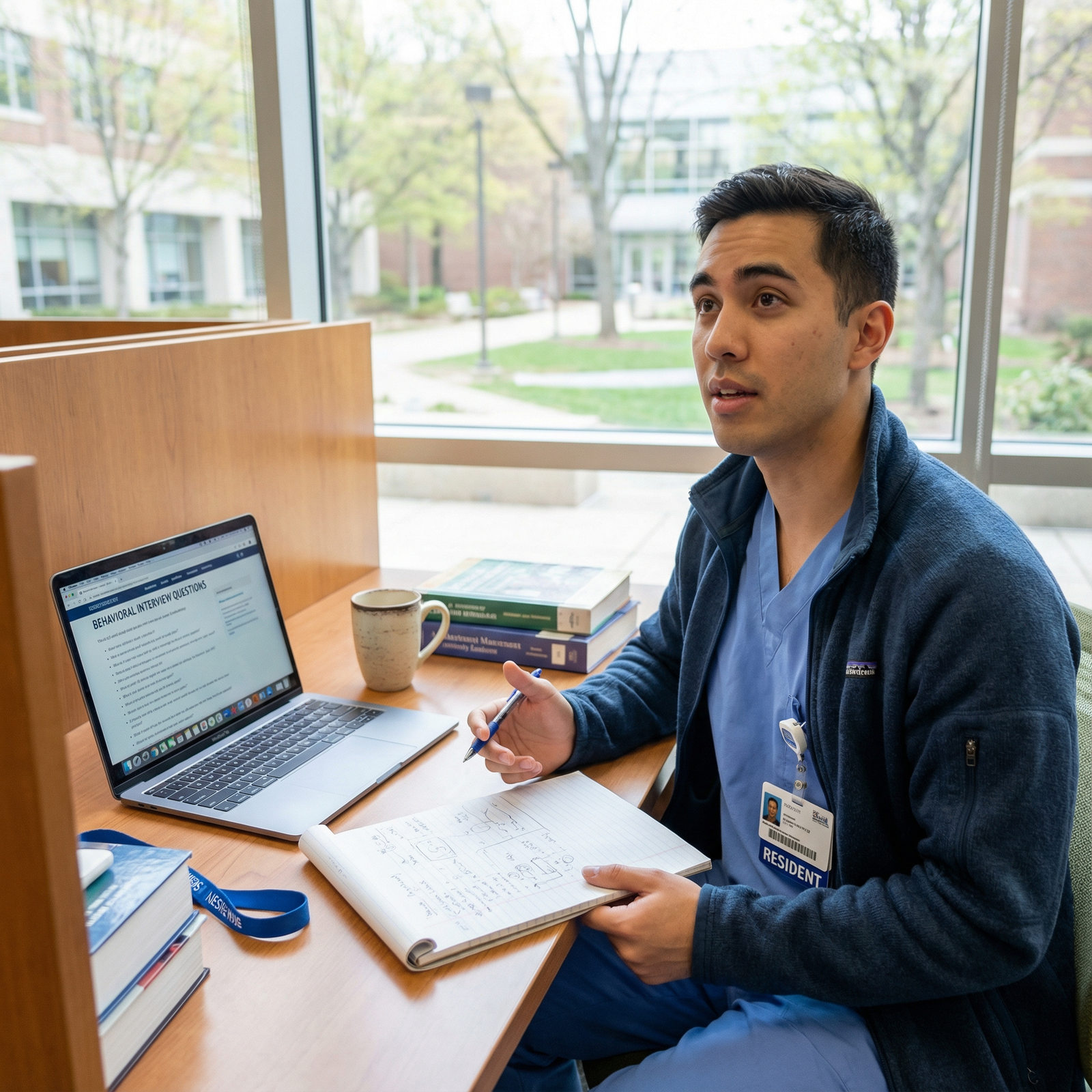
Understanding Transitional Year Residency Interviews as a DO Graduate
As a DO graduate targeting a Transitional Year (TY) program, you’re stepping into one of the most versatile and competitive entry points into graduate medical education. The osteopathic residency match has become increasingly integrated with ACGME-accredited programs, which means you’ll often face the same rigorous behavioral interview medical standards as MD applicants—while also needing to articulate what makes your DO training unique.
Transitional Year residency interviews tend to be broad, reflective, and personality-focused. Programs use them to answer one central question:
“Is this applicant safe, teachable, hardworking, and a good team fit for a generalist PGY‑1 year?”
This article walks through the most common interview questions you’ll encounter as a DO graduate applying to Transitional Year residency, how to answer them strategically, and what distinguishes outstanding responses. You’ll also find sample answers, frameworks, and actionable tips tailored specifically to DO graduates.
1. The High-Impact Opening: “Tell Me About Yourself”
Every residency applicant knows it’s coming, yet few have a truly strong answer. In Transitional Year interviews, the “tell me about yourself” question is often your first opportunity to set the tone, highlight your osteopathic background, and subtly lead the conversation toward your strengths.
What Interviewers Are Really Asking
When they say, “Tell me about yourself,” they’re trying to rapidly assess:
- Who you are—beyond your CV
- How you communicate under mild pressure
- Your maturity, self-awareness, and professionalism
- Whether your path and goals align with a TY program
- How your DO graduate background fits within their team
A Simple Structure for “Tell Me About Yourself”
Use a tight, 60–90 second structure: Present → Past → Future
- Present: Who you are now (DO graduate, current role, main focus)
- Past: Key experiences that shaped your path (undergrad, leadership, clinical highlights, why medicine/osteopathy)
- Future: Short- and long-term goals, including how a Transitional Year residency fits
Example Answer for a DO Graduate Targeting TY
“I’m a recent DO graduate from [School], currently completing a sub-internship in internal medicine where I’ve really enjoyed managing complex patients on the wards and working closely with multidisciplinary teams.
Before medical school, I studied [Major] at [University], where I first became interested in whole-person care volunteering at a free clinic. That experience led me to osteopathic medicine, because I valued the emphasis on preventive care and treating patients as more than their diagnoses. In school, I took on leadership roles in the [e.g., Student Osteopathic Medical Association], and I especially enjoyed my rotations in internal medicine and emergency medicine, where I refined my clinical reasoning and communication with patients and staff.
Looking ahead, I plan to pursue [e.g., anesthesiology, radiology, dermatology, or undecided but leaning in X direction], and I see a strong Transitional Year residency like yours as the best foundation for broad clinical skills, exposure to different specialties, and growth as a team-based resident physician.”
Key Tips for DO Graduates
- Name your DO identity clearly: Don’t just say “I went to medical school”; say “I graduated from a DO program at…”
- Thread in osteopathic values: Whole-person care, function, prevention, and patient-centeredness—without overdoing it.
- Connect the dots to TY: Explain why a general, flexible internship year is a deliberate choice, not just a backup.

2. Core Behavioral Questions: How TY Programs Evaluate Your Fit
Behavioral interview medical questions are at the heart of many Transitional Year residency interviews. These questions start with phrases like:
- “Tell me about a time when…”
- “Describe a situation where…”
- “Give an example of…”
They’re designed to predict future performance based on your past behaviors.
Use the STAR Method
For any behavioral question, follow STAR:
- Situation – Brief context
- Task – Your role and responsibility
- Action – What you did (focus here)
- Result – Outcome, what you learned, what you’d do differently
Aim for 1.5–3 minutes per answer.
Common Behavioral Interview Questions and How to Approach Them
2.1 “Tell me about a time you had a conflict with a colleague or team member.”
What they’re assessing:
- Emotional maturity and professionalism
- Communication skills
- Ability to resolve conflict and maintain working relationships
Strategy:
- Choose a real but not catastrophic conflict
- Avoid blaming language; focus on understanding and collaboration
- End with what you learned and changed
Sample Frameworked Answer:
Situation/Task:
“During my third-year internal medicine rotation, a co-student and I disagreed about how to divide the pre-rounding work on a busy service. I felt I was consistently taking the more complex patients, and it started to create tension.”
Action:
“Instead of letting the frustration build, I asked if we could step aside after rounds and talk. I shared my perspective using ‘I’ statements and asked how he felt the workload was going. It became clear he hadn’t realized how the assignments had fallen, and he felt I was rushing through sign-outs.
We decided to review the patient list together each morning and deliberately divide cases by complexity, and I made a point to slow down during sign-out and invite questions.”
Result:
“Within a few days the tension resolved, and our workflow became more balanced. We both received positive feedback from our resident about teamwork. I learned that early, direct communication based on curiosity rather than assumption is critical, especially under time pressure.
2.2 “Describe a time you made a mistake in clinical care and how you handled it.”
What they’re assessing:
- Honesty and accountability
- Patient safety mindset
- Insight and teachability
Strategy:
- Choose a genuine, non-catastrophic mistake
- Emphasize early recognition, transparency, and seeking help
- Focus heavily on what you changed afterward
Example Outline:
- Situation: busy rotation, specific task
- Mistake: what happened (own it)
- Immediate response: safety, escalation, communication
- Long-term learning: system/process changes, personal checklist
2.3 “Tell me about a time you were overwhelmed. How did you handle it?”
Transitional Year residents are often pulled in many directions—floor calls, cross-cover, admissions. TY programs want to know you can function under stress.
Key themes to show:
- Prioritization
- Time management
- Using support appropriately
- Maintaining patient safety and professionalism
Sample STAR Points:
- S: First week of a busy surgery rotation, 20 post-op patients, multiple pages
- T: Responsible for first-line responses and notes
- A: Created task list by urgency, communicated with senior resident, batched pages, set time limits per task, asked for clarity when needed
- R: Completed all essential tasks safely; received feedback on effective communication under pressure; adopted the system as your routine tool
2.4 “Give an example of when you showed leadership.”
Even in a Transitional Year, programs want residents who can lead teams, code situations, or QI projects.
Leadership can be:
- Formal: student government, club president
- Clinical: leading a family meeting, coordinating resuscitation workflow
- Systems: creating new processes or QI initiatives
Example topics:
- Leading a student-run clinic
- Organizing simulation sessions
- Serving as chief of a specialty club or organization
- Coordinating an OMT workshop for interdisciplinary learners
3. Transitional Year–Specific Questions DO Graduates Should Expect
TY programs have particular concerns and priorities: they know many applicants are ultimately headed for another specialty, and they want to ensure you’ll still be engaged and reliable throughout the year.
3.1 “Why Transitional Year residency?”
This is one of the most important questions for TY applicants.
What they’re really asking:
- Are you committed to making the most of this year?
- Do you understand what a Transitional Year residency is and isn’t?
- Are you using this as a placeholder or as part of a deliberate training plan?
Strong Answer Elements:
- Emphasize breadth of training and versatility
- Connect to future specialty (or thoughtful exploration if undecided)
- Highlight interest in becoming a well-rounded physician
- Show awareness of the program’s structure (rotations, electives, conferences)
Sample Response Framework:
“I’m applying to Transitional Year programs because I want a broad, well-rounded PGY‑1 foundation before I specialize in [e.g., dermatology, IR, PM&R]. A TY program like yours offers strong exposure to inpatient medicine, emergency care, and electives where I can refine my clinical reasoning, procedural skills, and communication across disciplines.
I value the flexibility of a TY because it allows me to tailor electives to my long-term goals while still developing as a general physician. I don’t see this year as a placeholder; I see it as a critical time to build habits of efficient workflow, evidence-based practice, and interprofessional collaboration that will benefit me and my patients regardless of my eventual specialty.”
3.2 “What are your long-term career goals?”
As a DO graduate in the osteopathic residency match or ACGME match, you may be:
- Already matched or planning to pursue a categorical specialty next cycle
- Using TY as the PGY‑1 year required by some specialties (e.g., radiology, radiation oncology, dermatology, anesthesiology)
- Still exploring
Tips:
- Be honest but strategic—programs don’t expect lifelong generalists, but they do expect engagement
- Show that your desired specialty benefits from a strong Transitional Year foundation
- If undecided, articulate a thoughtful exploration plan
3.3 “How will you stay motivated in a broad, generalist year if your interest is in [X specialty]?”
Programs worry about “checked out” interns. Address this directly:
Points to emphasize:
- Value of general skills (e.g., managing comorbidities, inpatient care, communication)
- Interest in learning from various fields
- Commitment to patient care regardless of specialty
- Desire to be a better consultant for future colleagues
Sample closing line:
“Regardless of my eventual specialty, I’ll be taking care of complex patients with chronic medical issues and working closely with hospitalists, surgeons, and emergency physicians. I’m motivated to use this year to become the kind of colleague others trust and rely on.”
3.4 “Why our TY program specifically?”
Avoid generic praise. Show you’ve done your homework.
Research and mention:
- Rotation structure (e.g., number of electives, ICU time, continuity clinic)
- Educational features (didactics, simulation, board review, OMT or osteopathic recognition if applicable)
- Culture and support (mentorship, wellness initiatives)
- Fit with your career interests
Tie your response to your DO background where appropriate, such as an interest in programs that recognize osteopathic principles or allow elective time in OMT, sports medicine, or manual therapies.

4. Highlighting Your DO Background in a Transitional Year Interview
As a DO graduate, part of your job is to confidently present your training as an asset.
4.1 Common Questions Related to DO Training
You may be asked:
- “Why did you choose osteopathic medicine?”
- “How has your DO training shaped your approach to patient care?”
- “Do you use OMT in clinical practice? How do you see it fitting in here?”
Sample Approach:
“I chose osteopathic medicine because I strongly believe in treating the whole person—understanding the social, psychological, and functional dimensions of health—not just the disease. My DO training emphasized careful physical exams, building strong therapeutic relationships, and prevention.
In clinical rotations, that meant taking a few extra minutes to understand functional goals, pain impact, and barriers to adherence. Even when I’m not doing formal OMT, those principles guide how I counsel patients, coordinate with therapy services, and think about long-term outcomes. I think they align well with your program’s emphasis on [e.g., patient-centered care, multidisciplinary rounds, community health].”
4.2 Addressing Perceived Bias or Questions About DO vs MD
Most Transitional Year residency programs are accustomed to DO graduates, but you might still encounter subtle questions.
If asked indirectly about DO vs MD:
- Stay positive and non-defensive
- Emphasize your strong clinical performance and board scores
- Highlight osteopathic strengths without implying superiority
Example:
“I’ve trained alongside both DO and MD students and residents, and I’ve found that once we’re on the wards, what matters most is clinical performance, teamwork, and patient care. My DO background has given me a strong foundation in physical diagnosis, communication, and holistic assessment, and I think those skills complement the rigorous, evidence-based training I’ll receive in your TY program.”
4.3 When OMT Comes Up
For programs with osteopathic recognition or OMT-friendly environments, you can mention:
- Experiences using OMT in inpatient or outpatient settings
- Interest in teaching OMT to co-residents
- Appropriate and realistic use of manipulative techniques in a busy practice
For non-osteopathic focused programs:
- Emphasize that you’re comfortable practicing in settings where OMT is used selectively
- Clarify that you respect institutional norms and guidelines
5. Classic Residency Interview Questions You’re Almost Certain to Hear
Beyond TY- and DO-specific questions, you should be ready for the standard residency interview questions almost every program uses.
5.1 “What are your strengths?”
Choose 2–3 specific, relevant strengths:
- Strong communicator with patients and staff
- Reliable and organized under pressure
- Adaptable; quick learner with new workflows
- Calm in emergencies
- Empathetic and patient-centered
Pair each strength with a brief example.
5.2 “What are your weaknesses?” (or “areas for improvement”)
This question still appears frequently in residency interview questions.
Guidelines:
- Pick a real but non-fatal weakness (e.g., difficulty delegating, over-detailing notes early on, being initially quiet in large groups)
- Show insight and a proactive improvement plan
- Avoid clichés like “I work too hard” or “I care too much”
Example:
“I’ve historically been slow with documentation because I tend to over-include details. During my sub-internship, my senior pointed this out. I started using templates, time limits, and focusing on what truly changes management. My notes are now much more efficient, and I continue to seek feedback on clarity and brevity.”
5.3 “Why should we choose you?” (or “What will you bring to our program?”)
Connect your unique attributes to their needs:
- Reliability as a night float or cross-cover intern
- Strong teamwork and communication
- Interest in teaching or QI
- Commitment to patient-centered, osteopathic-informed care
5.4 “Tell me about a patient who had a significant impact on you.”
Use this to highlight:
- Compassion and empathy
- Cultural sensitivity
- Ethical reasoning
- Insight into social determinants of health
Follow STAR but focus more on insight and reflection than technical details.
5.5 Ethical and Professional Scenario Questions
Examples:
- “What would you do if you saw a resident behaving unprofessionally?”
- “How would you handle a family asking you not to tell a patient about a serious diagnosis?”
- “What would you do if you strongly disagreed with your attending’s plan of care?”
Key principles to emphasize:
- Patient safety
- Honesty and transparency
- Chain of command and appropriate escalation
- Respectful communication
6. Practical Strategies to Prepare as a DO Graduate Applying to TY Programs
6.1 Build Your Answer Bank
Make a list of 10–15 experiences that cover:
- Clinical challenges and successes
- Team conflicts and resolutions
- Leadership and QI
- Ethical dilemmas
- Times you used osteopathic principles meaningfully
From this bank, you can adapt answers to most behavioral questions.
6.2 Practice Aloud—But Avoid Sounding Scripted
- Record yourself answering “tell me about yourself” and top behavioral questions
- Ask mentors or peers to perform mock interviews
- Focus on clear, concise responses with natural language
6.3 Research Each Transitional Year Program
Before the interview, know:
- Rotation schedule and elective options
- ICU and ED exposure
- Unique features: global health tracks, teaching certificates, osteopathic recognition, or TY–specific conferences
- Program size and call structure
- Faculty backgrounds and resident testimonials (if available)
Use this knowledge to tailor answers to:
- “Why our TY program?”
- “How would you use your elective time here?”
- “What are you looking for in an internship year?”
6.4 Prepare Your Questions for Them
Thoughtful questions demonstrate maturity and genuine interest. Consider asking:
- “How do successful Transitional Year residents typically spend their elective time?”
- “How do you support TY residents in preparing for their next step—whether that’s boards, fellowship, or a categorical position?”
- “How are DO graduates integrated into your educational and procedural opportunities?”
- “What qualities do your strongest TY residents share?”
Avoid questions that are easily answered on the website or that focus only on vacation or salary.
6.5 Handling Virtual vs In-Person Interviews
Many TY programs now use virtual interviews:
- Test your technology in advance
- Ensure neutral, professional background and lighting
- Maintain eye contact by looking at the camera
- Keep a one-page “cheat sheet” of key experiences and program facts out of view if virtual
For in-person interviews:
- Arrive early; confirm parking and building logistics
- Treat everyone—from coordinators to residents—as part of the process
- Observe how current residents interact with each other and faculty
Frequently Asked Questions (FAQ)
1. Are interview expectations different for DO graduates in Transitional Year programs compared with MD applicants?
The core expectations are the same: professionalism, clinical readiness, teamwork, and teachability. However, as a DO graduate, you may be asked specifically about your choice of osteopathic school, how osteopathic principles inform your practice, and whether you use OMT. Programs are generally familiar and comfortable with DO graduates, especially in community and mid-sized academic TY programs, but be prepared to articulate your DO identity positively and confidently.
2. How important are behavioral interview medical questions in the TY selection process?
Very important. Transitional Year residents often cover multiple services and must function well in varied teams and high-pressure situations. Behavioral questions help programs predict how you’ll handle conflict, stress, errors, and leadership responsibilities. Strong, specific STAR-based answers can significantly differentiate you from other candidates with similar board scores and grades.
3. What if I’m undecided about my future specialty—will that hurt my chances?
Not necessarily. Many TY programs understand that applicants use this time to explore and clarify their goals. The key is to show that you have a thoughtful plan: which specialties you’re considering, how a broad TY program supports that exploration, and your commitment to being fully engaged regardless of where you ultimately match. Emphasize curiosity, openness, and dedication to patient care.
4. How can I stand out in residency interview questions for TY programs as a DO graduate?
You can stand out by:
- Delivering a clear, coherent “tell me about yourself” that ties your DO background to your goals
- Offering specific, reflective behavioral answers grounded in real clinical experiences
- Demonstrating genuine understanding of what a Transitional Year residency entails and how you’ll use it
- Confidently, but humbly, explaining how osteopathic principles enhance your approach to patient care and teamwork
- Asking insightful questions that show you’re thinking beyond simply “getting an intern year” and toward building a strong foundation for your entire career
By preparing deliberately for these common interview questions, you’ll be well-positioned to present yourself as a mature, capable DO graduate ready to thrive in a Transitional Year residency.