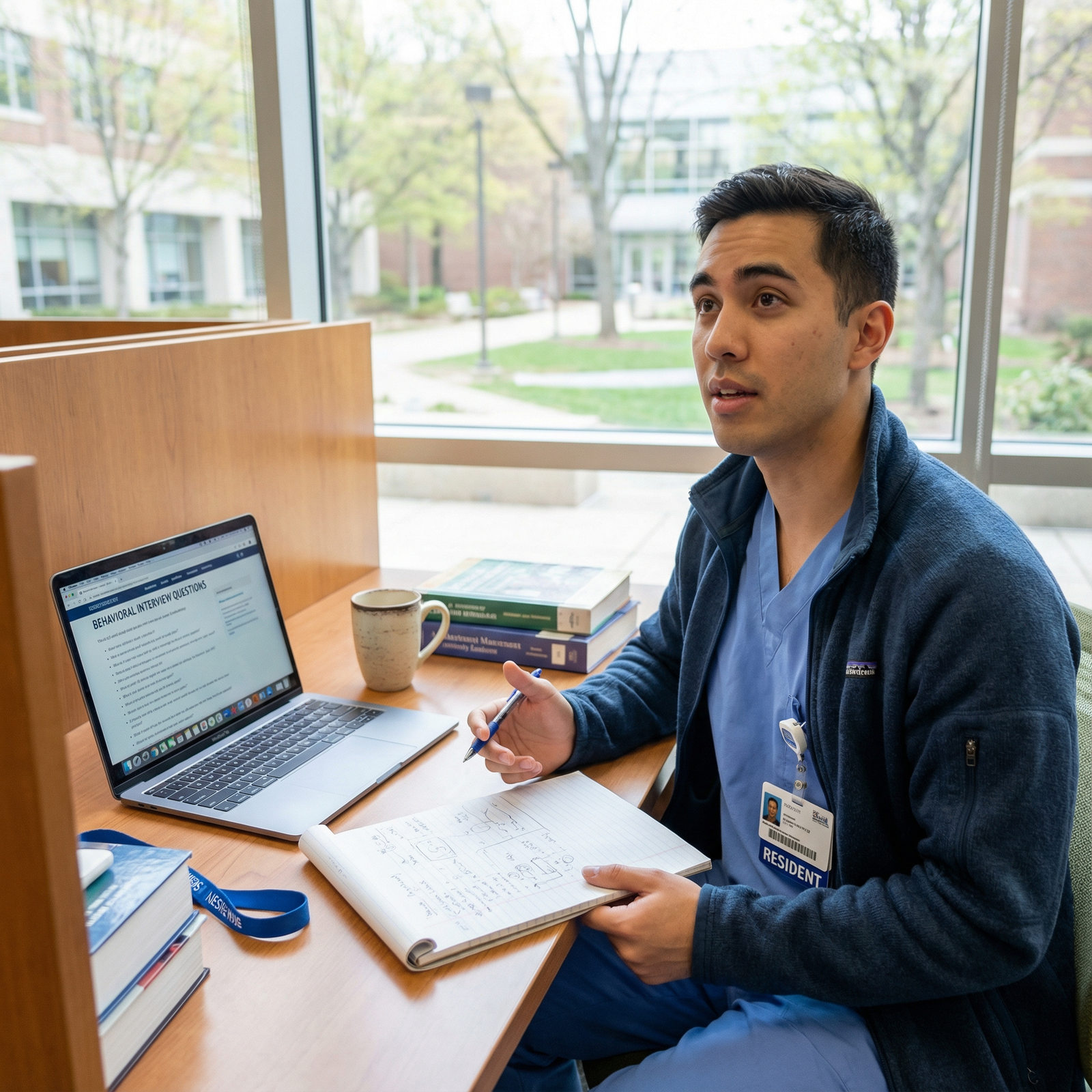
Preparing for general surgery residency interviews as a US citizen IMG (American studying abroad) requires more than strong clinical stories and test scores—you must be ready for focused, often challenging behavioral interview and fit-based questions. Program directors want to know not just what you’ve done, but how you think, respond under pressure, and function on a surgical team.
This guide walks you through the most common interview questions you’ll face as a US citizen IMG in general surgery, how they’re evaluated, and how to structure strong, specific answers that stand out in the surgery residency match.
Understanding What General Surgery Programs Really Assess
Before diving into individual questions, it helps to understand what general surgery programs are trying to learn about you.
Across interviews, they are assessing:
- Clinical maturity and judgment
- Work ethic and resilience
- Teamwork and communication style
- Coachability and response to feedback
- Grit in high-pressure, high-acuity environments
- Professionalism and integrity
- Motivation for general surgery specifically
- Fit with their resident culture
As a US citizen IMG, interviewers will also be subconsciously (and sometimes explicitly) asking:
- Why did you go abroad for medical school?
- How did your international training prepare you for a US surgical environment?
- Can you integrate smoothly into a demanding, hierarchical US surgery program?
- Have you made up for potential perceived gaps in clinical exposure, systems knowledge, or letters?
Your answers should calmly, confidently address these concerns while showcasing your strengths and readiness.
Core Personal & Background Questions
These are almost universal and often asked at the very beginning of the residency interview.
1. “Tell me about yourself.”
This is the most common opener and one of the most important residency interview questions. Interviewers use it to understand your story, communication style, and priorities.
What they’re really asking:
- Can you summarize your path clearly and logically?
- Do you present a coherent story of why you’re pursuing general surgery?
- As a US citizen IMG / American studying abroad, can you explain your training path without sounding defensive?
How to structure your answer (2–3 minutes):
Use a simple Present → Past → Future framework:
- Present: Who you are now as an applicant
- Current role: senior medical student / recent graduate
- Key clinical focus: surgery rotations, sub-I’s, research
- Past: Briefly, what led you here
- Why medicine
- Why general surgery
- Why you trained abroad (succinctly and positively)
- Future: What you’re looking for in residency
- Type of program (academic vs community, patient population, case mix)
- Long-term goals (fellowship interests, academic vs community practice)
Example outline (US citizen IMG in general surgery):
“I’m a US citizen who completed medical school at [X University] overseas, and over the last two years I’ve focused heavily on general surgery through sub-internships and research in the US.
I grew up in [US city], and I was first drawn to surgery after [concise, specific experience—e.g., family member’s surgery, OR experience as an EMT, or premed research in surgical oncology]. I chose to attend medical school abroad because [succinct reason: opportunity, cost, unique exposure], and I made it a priority to return to the US system early for clinical electives.
Through my US rotations at [Hospitals], I realized I’m most engaged when I’m in the OR managing acute problems, working closely with a team under pressure, and following patients through their postoperative course. I’m now specifically looking for a general surgery residency that emphasizes [teaching autonomy, high operative volume, strong mentorship, etc.], with the long-term goal of [academic/community practice, potential fellowship interest such as trauma, colorectal, surgical oncology].”
Key tips:
- Avoid reciting your CV—tell a narrative.
- Directly and positively own the “American studying abroad” aspect.
- Keep it under 3 minutes—leave room for follow-up questions.
2. “Why general surgery?”
Every program will ask this in some form. It’s one of the most critical questions in the surgery residency match.
What they’re really asking:
- Do you understand the reality of surgical training and lifestyle?
- Are you genuinely motivated, or is surgery your backup?
- Do your experiences demonstrate sustained, informed interest?
How to answer effectively:
Use 2–3 specific experiences that progressively deepened your interest:
- An early exposure that sparked your initial interest
- A hands-on experience that showed you the day-to-day reality
- A culminating moment or pattern that confirmed your decision
Link these experiences to core surgical traits:
- Love of anatomy and procedures
- Comfort with acute, high-stakes decisions
- Desire for longitudinal responsibility for your patients
- Appreciation of team-based care and structured hierarchy
- Enjoyment of immediate, tangible results from intervention
Example talking points:
- A night in the trauma bay where you saw coordinated, high-stakes teamwork.
- Scrubbing in on an emergent laparotomy and following the patient post-op.
- Managing surgical patients as the primary student on a busy service.
3. “Why did you choose to study abroad as a US citizen?”
This is almost guaranteed for a US citizen IMG. Interviewers are not attacking; they’re filling a gap in your narrative.
What they’re really asking:
- Was this a thoughtful decision or a last resort?
- Can you reflect maturely on that choice?
- Did you make the most of your international training?
Answer principles:
- Be direct, calm, and concise.
- Avoid being defensive or blaming others.
- Emphasize what you gained: adaptability, diverse pathology, resourcefulness.
Example structure:
- Reason for going abroad
- Limited US acceptance, financial reasons, unique opportunity
- What you gained educationally and personally
- Diverse patient populations, hands-on clinical exposure, independence
- How you bridged back to the US system
- US clinical electives, research, Step scores, mentorship, letters
Sample response snippet:
“I applied broadly in the US and received waitlists but no acceptances, and I still felt strongly that medicine—and eventually surgery—was the right path for me. Studying at [International School] offered a chance to start clinical training immediately, with very early patient contact.
Being an American studying abroad pushed me to become highly adaptable—working with limited resources, language barriers, and complex social situations. To ensure I was fully prepared for US training, I planned several US surgery electives, pursued research with US faculty, and focused on excelling on the USMLE. Overall, the experience broadened my perspective while I kept my long-term goal fixed on returning to train in US general surgery.”

Core Motivation & Fit Questions for General Surgery
4. “Why our program?”
Generic answers can sink your interview. Programs expect that you’ve done your homework.
What they’re really asking:
- Have you researched our program, not just our name?
- Do you understand our case mix, strengths, and culture?
- Are you likely to stay for 5+ years and be happy here?
To prepare:
Before each interview, know 3–4 specific details:
- Case volume and types (trauma center, oncologic focus, transplant availability)
- Structure (night float vs 24-hour call, early vs late operative autonomy)
- Educational features (sim lab, research tracks, global surgery opportunities)
- Geographic/personal connections (family nearby, previous rotations)
- Alumni outcomes (fellowship placement vs community practice readiness)
Answer blueprint:
- Start with genuine appreciation (but avoid excessive flattery).
- Mention 2–3 program-specific features that match your training goals.
- Briefly connect these to your career aspirations.
5. “What are you looking for in a general surgery residency program?”
This is your chance to show whether you understand what makes a program strong for surgery specifically.
Emphasize:
- Strong operative volume with graduated autonomy
- Structured and frequent feedback
- Transparent expectations and culture of safety
- Supportive but demanding environment
- Variety of cases and exposure to key subspecialties
- Opportunities for research or QI if relevant to your goals
Avoid listing only lifestyle factors or sounding overly picky.
Example elements:
“I’m looking for a program that offers high operative volume with early involvement in cases, a culture where feedback is direct but constructive, and a resident group that supports each other through the intensity of training. Having exposure to [trauma, oncologic surgery, rural surgery, etc.] is important because I’m considering [X] in the future.”
6. “Where do you see yourself in 5–10 years?”
This assesses:
- Whether your career path fits what the program typically produces.
- Your level of ambition versus realism.
- Your commitment to general surgery as a foundation, even if you want a fellowship.
You don’t need a fully defined plan, but have a direction:
- “Academic surgical oncology with a focus on outcomes research.”
- “Community general surgery with a broad scope in a semi-rural area.”
- “Trauma/critical care in a safety-net hospital.”
As a US citizen IMG, it’s particularly helpful to show you’re here for the long-term and not uncertain about staying in the US system.
Behavior-Based and Performance Questions (High-Yield for Surgery)
Behavioral interview medical questions often start with “Tell me about a time when…” and are common in general surgery because they reveal how you function under stress and in teams.
Use the STAR method:
- Situation – Brief context
- Task – Your responsibility
- Action – What you did (focus here)
- Result – Outcome and what you learned
7. “Tell me about a time you made a mistake.”
This is almost guaranteed. They’re assessing honesty, accountability, and growth.
Do:
- Choose a real, meaningful but non-catastrophic clinical or professional error.
- Own your role without blaming others.
- Highlight the concrete change you made afterward.
Don’t:
- Say you’ve “never made a mistake.”
- Choose something trivial like “I cared too much.”
Example types of scenarios:
- Miscommunication leading to a delayed lab or imaging.
- Not speaking up early when you noticed something was off.
- Documentation error that created confusion about orders.
Focus on how you now prevent recurrence—using checklists, confirming verbal orders, asking for clarification earlier, etc.
8. “Tell me about a conflict you had with a colleague or team member.”
Surgery is team-based and high-stress. They want to see if you escalate conflict or resolve it constructively.
Good scenario choices:
- Disagreement over patient management plan.
- Nurse or resident expressing frustration with your communication.
- Scheduling conflict with another student or resident.
Key elements:
- Show you tried to understand the other person’s perspective.
- Demonstrate calm, respectful communication.
- Emphasize patient safety and teamwork over ego.
- Describe a positive, stable resolution.
9. “Tell me about a time you received critical feedback. How did you respond?”
Programs need residents who are coachable, not defensive.
Structure:
- Brief context (rotation, skill, behavior).
- Feedback you received (be tangible).
- Your immediate emotional reaction (brief, honest).
- Concrete steps you took to improve.
- Outcome and how you now seek or use feedback.
Surgery-specific example:
- Feedback about OR etiquette, efficiency with suturing, concise presentations, or time management on busy call days.
10. “Describe a time you were under significant pressure. How did you handle it?”
This is key for any behavioral interview medical in surgery, where the days are long and stakes are high.
Use an example where:
- Multiple tasks piled up simultaneously.
- An acutely sick patient needed quick decisions.
- You had overlapping responsibilities (e.g., shelf exam studying plus heavy call schedule).
Highlight:
- Prioritization skills.
- Ability to stay calm and organized.
- Asking for help when appropriate.
- Maintaining patient safety despite workload.

Clinical Judgment and Ethics Questions in General Surgery
While not always technical, many questions will probe your clinical reasoning and professionalism.
11. “Tell me about a challenging clinical case and what you learned from it.”
Pick a case where you had:
- Meaningful responsibility (for your level).
- A clear challenge (diagnostic uncertainty, communication barrier, ethical dilemma).
- Close interaction with the surgical team.
Include:
- Your thought process and what you contributed.
- How you communicated with the team and the patient.
- Specific lessons you’ll carry into residency.
12. “Describe a time you advocated for a patient.”
Programs want residents who will not ignore red flags or accept unsafe situations.
Potential examples:
- Noticing a subtle clinical change and escalating appropriately.
- Ensuring a non-English-speaking patient had a proper interpreter.
- Correcting an order or medication concern after catching an error.
- Standing up for appropriate pain control or palliative care.
Make sure your story emphasizes respectful advocacy, not confrontation for its own sake.
13. “Have you ever seen something in clinical practice that concerned you ethically? What did you do?”
This tests your moral compass and judgment.
Examples might involve:
- Inadequate informed consent.
- Unprofessional behavior toward a patient or staff member.
- Questionable documentation or billing practices.
Show that you:
- Thought carefully before acting.
- Sought guidance from appropriate channels (resident, attending, ethics, clerkship director).
- Balanced respect for hierarchy with duty to the patient.
IMG-Specific and Red-Flag Questions
As a US citizen IMG, you may face additional questions addressing gaps or perceived risks.
14. “Can you explain this gap in your CV / your time since graduation?”
If you have a gap:
- Be honest and concise (health, family responsibility, visa issues, extra research degree, exam preparation).
- Emphasize how you stayed connected clinically or academically.
- Highlight skills gained—research methods, language, resilience, self-discipline.
15. “Your clinical experience is partly abroad—how do you think it prepared you (or didn’t) for US general surgery residency?”
Use this to confidently assert your readiness:
- Discuss diverse pathology, resource-limited settings, hands-on skills.
- Acknowledge any initial adaptation challenges (documentation systems, EHR, US cultural norms) and how you overcame them in US electives.
- Emphasize strong feedback from US faculty in your letters.
16. “Do you anticipate any issues adjusting to residency in the US?”
For a US citizen IMG, you can emphasize:
- Cultural familiarity as a US citizen.
- Previous US clinical rotations, work, or education.
- Support systems in the US (family, friends, mentors).
- Your excitement to rejoin the US healthcare environment.
Programs want to be sure you won’t struggle with basic cultural or language barriers or systems navigation.
Practical Preparation Strategies for US Citizen IMGs
Use Targeted Practice for High-Yield Questions
Focus your preparation on:
- “Tell me about yourself.”
- “Why general surgery?”
- “Why did you study abroad?”
- “Why our program?”
- Behavioral questions about mistakes, conflict, feedback, and pressure.
Record yourself answering these on video to check:
- Clarity and structure
- Filler words (“um, like, you know”)
- Nonverbal cues (eye contact, posture, fidgeting)
Build a Bank of 8–10 Versatile Stories
Most behavioral questions can be answered with a limited set of well-chosen stories if you adapt the framing. Prepare stories that cover:
- A clinical mistake
- A teamwork success
- A conflict with a colleague
- A difficult patient/family encounter
- Receiving critical feedback
- Managing high workload/pressure
- Advocating for a patient
- Learning from a complex surgical case
Outline each in STAR format and practice delivering them in 1.5–3 minutes.
Anticipate Variations of Common Questions
The same concept may be asked in different ways, for example:
- “What are your strengths and weaknesses?”
- “How would your colleagues describe you?”
- “What’s something you’re working to improve?”
For weaknesses, pick something real but modifiable:
- Struggles with over-committing and learning to say no.
- Initially being too self-critical and working on seeking balanced feedback.
- Needing to improve efficiency with daily notes and documentation.
Always end with:
- What you’re doing to improve
- Evidence of improvement (feedback, outcomes)
Prepare Thoughtful Questions to Ask the Interviewers
Having 3–5 prepared questions shows genuine interest and helps you assess fit.
Examples for general surgery:
- “How does the program support residents in developing autonomy in the OR over the five years?”
- “Can you describe the culture among residents—what makes this group unique?”
- “How do graduates from your program typically do in the fellowship match / in securing community positions?”
- “How are residents involved in quality improvement or patient safety projects?”
Avoid questions easily answered on the website or that center only on vacation, salary, or call schedule.
FAQs: Common Concerns for US Citizen IMGs in General Surgery Interviews
1. As a US citizen IMG, how should I address concerns about my training quality?
Acknowledge that training systems vary, then focus on:
- Strong USMLE performance (if applicable).
- Strong letters from US surgeons who observed you clinically.
- US-based sub-internships where you integrated seamlessly.
- Specific ways your international experience adds value (diverse pathology, resourcefulness, global health perspective).
Always shift from defense to demonstrating readiness and strengths.
2. How detailed should my answers be when they ask clinical or case-based questions?
For general surgery interviews, non-technical questions predominate, but some programs do ask about clinical decision-making. Keep answers:
- Structured and concise: briefly outline differential, key tests, initial management.
- Focused on principles of patient safety and timely escalation.
- Honest about your level: “As a student, this is how I would think about it and what I would present to my resident/attending.”
You aren’t being tested as a resident yet—they’re assessing how you think and communicate.
3. What if I get a question I truly don’t know how to answer?
It’s acceptable to:
- Pause and think—don’t rush.
- Ask for clarification if the question is ambiguous.
- Use a partial approach: “I haven’t experienced that exact scenario, but in a similar situation I would…”
For knowledge-based questions (rare), it’s better to say:
“I’m not sure I can give you a fully accurate answer right now, but here’s how I would approach figuring it out…”
Honesty and reasoning matter more than perfection.
4. How important is it to tailor my “tell me about yourself” answer to being a US citizen IMG?
Very important. As a US citizen IMG, your path is a central part of your story. In 2–3 sentences, you should:
- Identify yourself as a US citizen who trained abroad.
- Briefly explain why, in positive and mature terms.
- Move quickly to how you’ve prepared to return to the US system and pursue general surgery.
This reassures interviewers early and reframes your IMG status as intentional and enriching, not as a liability.
By systematically preparing for these common interview questions—with special attention to your unique perspective as a US citizen IMG pursuing general surgery residency—you’ll walk into each interview ready to communicate clearly, think aloud effectively, and demonstrate that you’re ready for the rigors and rewards of surgical training in the US.