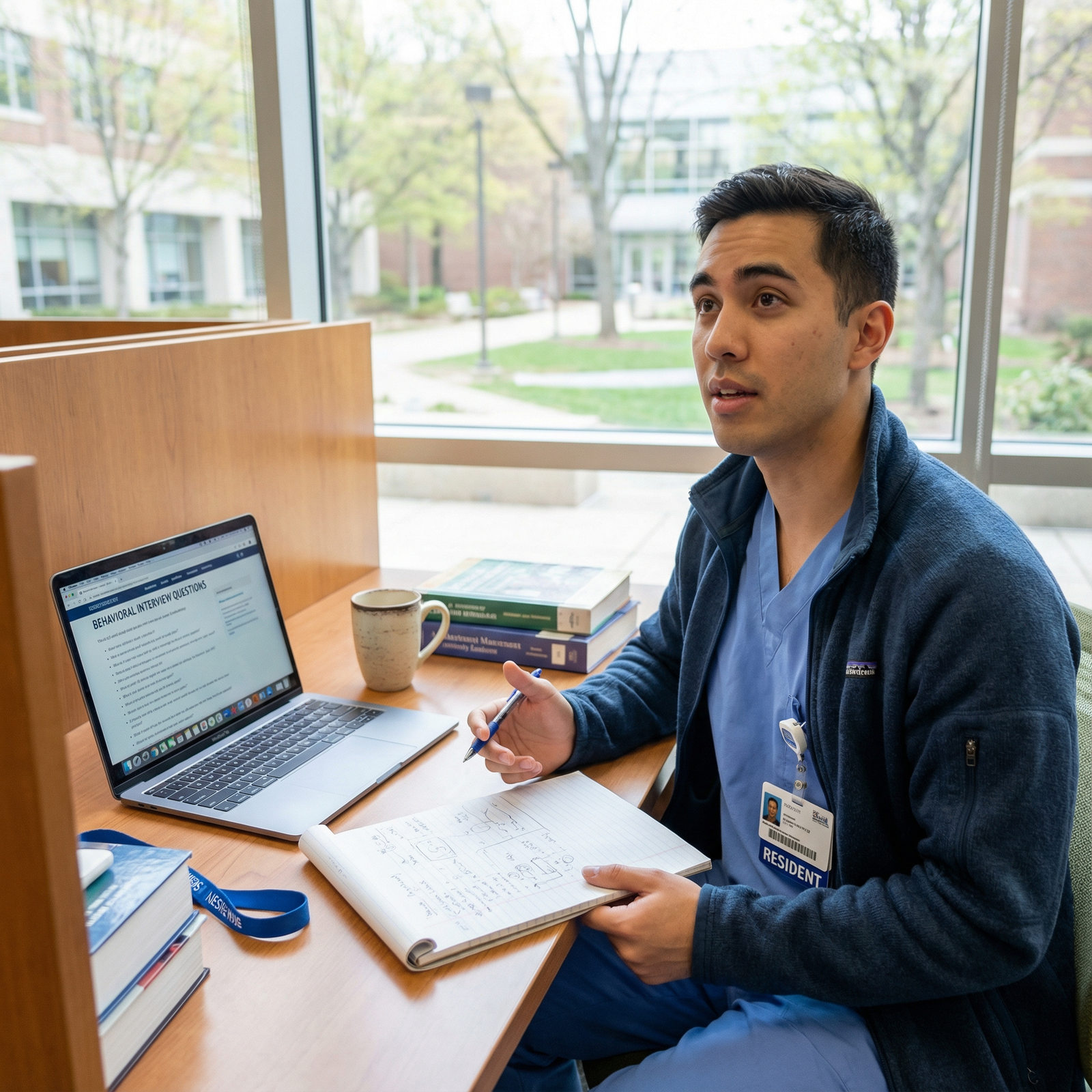
Understanding the Med-Peds Interview as an IMG
Medicine-Pediatrics (Med-Peds) interviews are uniquely challenging for international medical graduates. You’re not only proving you can handle a rigorous combined program—you’re also showing you can adapt to a new healthcare system, culture, and training environment.
This IMG residency guide focuses on common interview questions you’ll face as an international medical graduate applying for Med-Peds residency, with particular emphasis on:
- Behavioral interview medical questions
- “Tell me about yourself” and other core prompts
- Med-Peds–specific scenarios and professional identity
- How to address being an IMG directly and confidently
- Sample answers and strategies tailored to the medicine pediatrics match
Use this as a working document: copy questions into your notes, draft answers, and refine until your delivery feels natural, clear, and confident.
1. Core Introductory Questions (And How to Nail Them)
These are almost guaranteed in every Med-Peds interview and often set the tone for the rest of your conversation.
1.1 “Tell me about yourself”
This is the single most common opening question. It is not an invitation to recite your CV; it’s a test of how clearly and concisely you can present your professional story.
What programs are assessing:
- Your communication skills and organization of thought
- Your professional identity: Who are you as a physician?
- Your fit for Med-Peds and their specific program
- Your insight into your own journey as an IMG
Structure your answer in 3 parts (2–3 minutes total):
Brief Background (20–30 seconds)
- Where you’re from and your medical school
- One brief personal element (not too private, but human)
Clinical & Academic Path (1–1.5 minutes)
- Key experiences that shaped you
- Transition to the US system: observerships, research, USCE
- Highlight Med-Peds–relevant skills (continuity, complex care, adaptability)
Why Med-Peds & This Program (30–45 seconds)
- Clear motivation for Med-Peds
- 1–2 program-specific reasons you’re excited about them
- Tie to your future goals
Sample IMG-focused answer (condensed):
“I grew up in Lagos, Nigeria and graduated from XYZ University College of Medicine. During medical school I was drawn equally to internal medicine and pediatrics—particularly caring for adolescents with chronic conditions who often fell between services.
After graduation, I completed a rotating internship where I saw how poorly young adults with childhood-onset diseases transitioned to adult care. That experience pushed me to pursue Med-Peds. Over the past year in the US, I’ve completed observerships in both internal medicine and pediatrics, participated in quality improvement work on diabetes transitions, and prepared for the US system through Step exams and clinical exposure.
I’m especially interested in a career that combines outpatient continuity care with work in transitional clinics for adolescents with chronic disease. Your program’s strong categorical medicine and pediatrics training, plus your dedicated transition-of-care clinic, align with that path, and I’m excited about the chance to train in an environment that values both rigorous clinical care and teaching.”
Practice aloud until it sounds conversational, not memorized.
1.2 “Walk me through your CV” / “Tell me about your journey to this point”
Similar to “tell me about yourself,” but more chronological.
Tips:
- Do not repeat every item; choose key turning points
- Explain gaps, changes, and transitions proactively
- For IMGs, briefly address your path from home country → US
Sample outline:
- Medical school: focus, key interests, leadership/research highlights
- Postgraduate training at home (if any): internship, residency, work
- Transition to US: exams, observerships, research, additional degrees
- Current status: what you’re doing this year (and why it’s meaningful)
1.3 “Why Med-Peds and not categorical Internal Medicine or Pediatrics?”
For Med-Peds applicants, this is critical. Programs want to know you understand the unique identity and demands of Med-Peds, not that you “couldn’t decide.”
Avoid:
- “I couldn’t choose between medicine and pediatrics.”
- “I like both equally” without depth.
- Vague answers that could apply to any field.
Emphasize:
- Longitudinal care from childhood through adulthood
- Complex chronic illness management across the age spectrum
- Interest in transitional care, systems-based practice, or underserved populations
- Specific experiences where you saw the need for Med-Peds
Sample concept for IMGs:
“In my home country, children with sickle cell disease often stopped regular follow-up once they reached adulthood because there were no organized transition systems. As a student, I followed one patient from the pediatric ward to adult medicine; the lack of continuity led to multiple preventable admissions. Med-Peds offers the skill set to close those gaps—something I first recognized at home and then studied more deeply during my US observerships.”

2. Med-Peds–Specific Interview Questions
Med-Peds interviewers tend to probe how well you understand the unique nature of the combined training and where you see yourself fitting.
2.1 “What draws you specifically to a combined Med-Peds program?”
Key elements to include:
- Desire for full-spectrum, lifespan care
- Comfort with complex, multi-system disease
- Commitment to continuity and long-term relationships
- Interest in systems improvement, transitions, or underserved care
You can mention examples like:
- Caring for a child with cystic fibrosis and wanting to keep following them into adulthood
- Managing congenital heart disease patients in both pediatric and adult settings
- Designing better transition clinics or chronic disease registries
2.2 “What kind of career do you see yourself pursuing after Med-Peds?”
Programs are not testing if you’ve chosen a final job—they want to see if you’ve thought about how Med-Peds fits into your future.
Common Med-Peds career paths:
- Primary care for all ages, often in underserved communities
- Hospitalist roles (adult, pediatric, or combined)
- Subspecialty training (e.g., cardiology, infectious disease, endocrinology) with a focus across ages
- Transitional care clinics for chronic conditions (sickle cell, diabetes, congenital heart disease)
- Academic medicine, global health, or health systems leadership
For IMGs, it helps to connect your vision to:
- Needs you observed in your home country
- How you’ll leverage dual training to address global or immigrant health
- Long-term plans to work across borders or in multicultural communities
2.3 “How do you see the balance between adult and pediatric practice in your future?”
Be honest, but show openness. It’s fine to have a slight preference, but avoid making one side sound like a backup.
For example:
“I’m particularly drawn to caring for adolescents and young adults with complex conditions, which may skew my practice slightly toward adult medicine over time. However, maintaining pediatric experience is essential both for understanding where these patients come from and for early intervention in chronic disease, so I plan to maintain a practice that includes both age groups, especially early in my career.”
2.4 “What challenges do you anticipate in Med-Peds training, and how will you handle them?”
Potential challenges:
- Frequent switching between services and teams
- Learning two sets of guidelines and workflows
- Building professional identity in two departments
- Managing time and preventing burnout in a demanding schedule
Show insight plus strategy:
“Switching between adult and pediatric services requires rapid adaptation. As an IMG, I’ve already navigated major transitions—moving from my home system to the US, adjusting to different documentation and team structures. I’ve learned to use transition checklists, maintain concise notes about my patients, and review key guidelines before each rotation. I expect Med-Peds to be demanding, but I know that structure, open communication with co-residents, and early help-seeking are key to managing that challenge.”
3. Common Behavioral and Situational Questions
Most programs now use behavioral interview medical questions: “Tell me about a time when…” These assess how you think, communicate, and act under pressure.
A helpful framework is STAR:
Situation – context
Task – your role
Action – what you did
Result – outcome and what you learned
3.1 Teamwork and Communication
Typical questions:
- “Tell me about a time you had a conflict with a team member. How did you handle it?”
- “Describe a situation where you had to work with a difficult colleague.”
- “Tell me about a time you had to communicate bad news or a difficult message.”
IMG-specific angle: You can choose examples from your home country or US experiences, but always translate them into skills relevant to US residency—clear communication, respect, patient-centeredness.
Example (condensed):
“During my internship, I disagreed with a senior resident about discharging a child with pneumonia who still had mild hypoxia on exertion. I was concerned about the family’s ability to recognize deterioration at home.
I asked to discuss my concerns privately, presented the vital sign trends and social context, and proposed an overnight observation with clear discharge criteria. The senior initially felt I was over-cautious, but after reviewing the data, agreed. The child required increased oxygen overnight and was eventually discharged safely two days later. I learned the importance of respectfully voicing concerns, using data, and focusing on shared goals rather than hierarchy.”
3.2 Handling Stress, Workload, and Burnout
Common questions:
- “Tell me about a time you were overwhelmed. What did you do?”
- “How do you handle stress and prevent burnout?”
- “Describe a challenging call shift and how you managed it.”
Key points for IMGs:
- Transitioning to a new culture, exams, and visa issues are real stressors—mention them briefly, but focus on coping strategies: organization, seeking mentorship, healthy routines, reflection.
- Show that you recognize limits and know when to ask for help.
3.3 Dealing with a Medical Error or Near Miss
Program directors want residents who are honest, reflective, and safety-focused.
Typical question:
- “Tell me about a time you made a mistake in patient care, or had a near miss. What happened, and what did you learn?”
Avoid excuses or blaming others. Emphasize:
- Taking responsibility (within your level of training)
- Transparency and communication
- Systems improvement and learning
Example skeleton:
- Situation: busy ward, medication or diagnostic oversight
- Task: your role as a student/intern
- Action: recognized error, notified senior/attending, corrected harm, discussed with team, learned new checklist or practice
- Result: improved patient outcome and personal practice change
3.4 Cultural Sensitivity and Diversity
As an international medical graduate, you bring valuable diversity—but programs also need to know you can work sensitively with patients from many different backgrounds.
Possible questions:
- “Tell me about a time you worked with someone from a very different background from yours.”
- “How do you approach caring for patients whose beliefs or practices differ from your own?”
- “How has being an IMG influenced your approach to patient care?”
Highlight:
- Respect for differences
- Curiosity rather than judgment
- Willingness to adapt communication and care plans
- How your own background helps you empathize with immigrant or marginalized patients

4. IMG-Specific Questions You Should Expect
Many programs will ask directly about your status as an international medical graduate. Prepare confident, honest, and positive responses.
4.1 “Why did you choose to leave your home country to train in the US?”
Avoid criticizing your home system; instead:
- Emphasize educational opportunities in the US
- Mention specific aspects of US training (Med-Peds availability, research, subspecialty access, structured education)
- Connect to how you might later contribute back home or to similar communities
Sample angle:
“My home country has strong clinicians, but there is no formal Med-Peds training and limited structured programs in transitional care. The US offers a well-established Med-Peds pathway and robust mentorship in areas like chronic disease management and quality improvement. My long-term goal is to use this training to serve patients who often fall through the cracks during transitions—even if that means working with immigrant communities here, collaborating internationally, or eventually returning for academic partnerships.”
4.2 “How have you adapted to the US healthcare system?”
Show concrete steps:
- US clinical experience (observerships, externships, research)
- Learning EMR, documentation, and billing basics
- Understanding patient-centered communication and shared decision-making
- Feedback you’ve received from US mentors or preceptors
4.3 “You have a gap / additional research years / late graduation—can you explain that?”
Address any red flags directly:
- Gaps for exams, family, visa issues, research, or clinical work
- Attempts or delays in exams
- Switching specialties or countries
Use a non-defensive, structured response:
- Briefly explain what happened (factually)
- Emphasize what you did with that time (productive activities)
- Highlight what you learned and how you’re now stronger
4.4 “Do you plan to stay in the US or return to your home country?”
Programs worry about retention, but many are open to diverse paths.
Balanced response:
- You’re committed to completing training and contributing meaningfully where you’re training
- You’re open to opportunities in the US (clinical, academic)
- You also have long-term interest in global health or collaborations
Don’t sound like you plan to leave immediately after training, but it’s acceptable to express broad global goals.
5. Content-Focused Questions: Clinical Judgment and Ethics
Some Med-Peds interviews include clinical or ethical scenarios—not to test textbook knowledge, but to understand your reasoning and values.
5.1 “Describe a challenging case you managed.”
Choose a case that:
- Involves both complexity and reflection (e.g., chronic disease, psychosocial issues)
- Shows collaboration and humility
- Highlights Med-Peds–relevant thinking if possible
Structure:
- Brief case summary (age, main problem)
- Your role
- Key challenges (clinical + social)
- What you did and what you learned
- If appropriate: how the case influenced your interest in Med-Peds
5.2 “How do you handle situations when families refuse recommended care?”
Topics might include vaccines, procedures, or life-sustaining treatments.
Demonstrate:
- Respect for autonomy and cultural beliefs
- Clear, nonjudgmental explanation of risks and benefits
- Efforts to understand underlying fears or beliefs
- Collaboration with the team (attendings, ethics, social work)
- Documentation and shared decision-making
5.3 “What do you think are the biggest challenges in healthcare for children becoming adults?”
This is a classic medicine pediatrics match type of question.
Possible points:
- Poorly coordinated transitions between pediatric and adult services
- Loss of insurance coverage or continuity
- Adult providers unfamiliar with childhood-onset conditions
- Psychosocial issues: independence, adherence, mental health
- System-level barriers (fragmentation, disparities)
As an IMG, you can compare:
- How transitions are (or are not) managed in your home country
- How Med-Peds can bridge these gaps, both in the US and abroad
6. Practical Strategies to Prepare and Perform Well
6.1 Build a Personal Question Bank
Create your own IMG residency guide for interviews:
- Copy down:
- All questions from this article
- Any additional generic residency interview questions you find
- Group them:
- Personal background and “tell me about yourself”
- Med-Peds specific
- Behavioral scenarios
- IMG-specific
- Ethical/clinical scenarios
- Draft bullet-point responses (not scripts) for each
6.2 Practice Behavioral Answers Out Loud
- Use the STAR format repeatedly until it feels natural.
- Practice with:
- A friend or mentor
- A fellow IMG in a mock interview
- Your own video recording to evaluate body language and clarity
6.3 Prepare Your Own Questions for Programs
Interviewers expect you to ask thoughtful questions; this also signals investment and curiosity.
Good topics:
- How Med-Peds residents integrate with categorical Medicine and Pediatrics
- Mentorship structure for IMGs or international scholars
- Opportunities in your areas of interest (e.g., transition clinics, global health, immigrant health)
- How the program supports residents with visa issues or international backgrounds
Avoid questions already clearly answered on the website.
6.4 Managing Video Interviews (Common for IMGs)
- Test your technology: camera, microphone, internet connection
- Professional, quiet background with good lighting
- Laptop at eye level; look at the camera, not your own image
- Dress as you would for an in-person interview
- Keep notes, but avoid reading; short bullet reminders only
6.5 Prepare for “Tell me about yourself” and “Any questions for us?” as Bookends
First impression and last impression matter greatly.
- Refine and rehearse “tell me about yourself” until it’s natural.
- Maintain a short list of 3–5 thoughtful questions to ask at the end.
- Always thank interviewers and restate briefly why you’re genuinely interested in their Med-Peds program.
FAQs: Common Questions from IMGs About Med-Peds Interviews
1. How often do Med-Peds programs ask behavioral interview questions?
Very frequently. Many programs use standardized behavioral interview medical formats to improve fairness and consistency. Expect several “Tell me about a time when…” questions in almost every interview and prepare 8–10 versatile stories (teamwork, conflict, error, stress, leadership, teaching, cross-cultural care) that you can adapt.
2. Is it okay to use examples from my home country, or should I only use US clinical experiences?
You can absolutely use experiences from your home country. What matters most is:
- You clearly explain the context
- You focus on your actions and reflections
- You connect the lesson to how you’ll function in US residency
Include some US-based examples if you have them (observerships, research teams, volunteer work) to show you understand the local system.
3. What if my English is not perfect or I have a strong accent?
Programs care far more about clarity, professionalism, and willingness to improve than accent. To optimize:
- Practice answers aloud and get feedback from native or fluent speakers
- Slow your pace slightly and pause between ideas
- Avoid overly complex sentences; short, clear messages are best
- Ask for clarification if you don’t understand a question:
“Could you please repeat or rephrase that question?”
Many successful residents are IMGs with accents; communication skills can be strengthened with practice.
4. How should I answer if I’m also applying to categorical Internal Medicine or Pediatrics?
Be honest but strategic. You can say:
- You are committed to Med-Peds as your top choice, but you also applied to categorical programs as a practical backup
- Your reasons for preferring Med-Peds (continuity, transitions, complex chronic care)
- You would still be a strong and committed resident if you matched categorical, but Med-Peds is the best fit for your long-term goals
Avoid sounding indecisive; frame it as a pragmatic approach in a competitive match.
By anticipating these common interview questions and tailoring your responses as an international medical graduate interested in Medicine-Pediatrics, you can present yourself as a thoughtful, resilient, and well-prepared candidate. Use this guide to practice, refine, and internalize your key stories and messages—so that on interview day, you’re not improvising, you’re communicating your best, most authentic professional self.