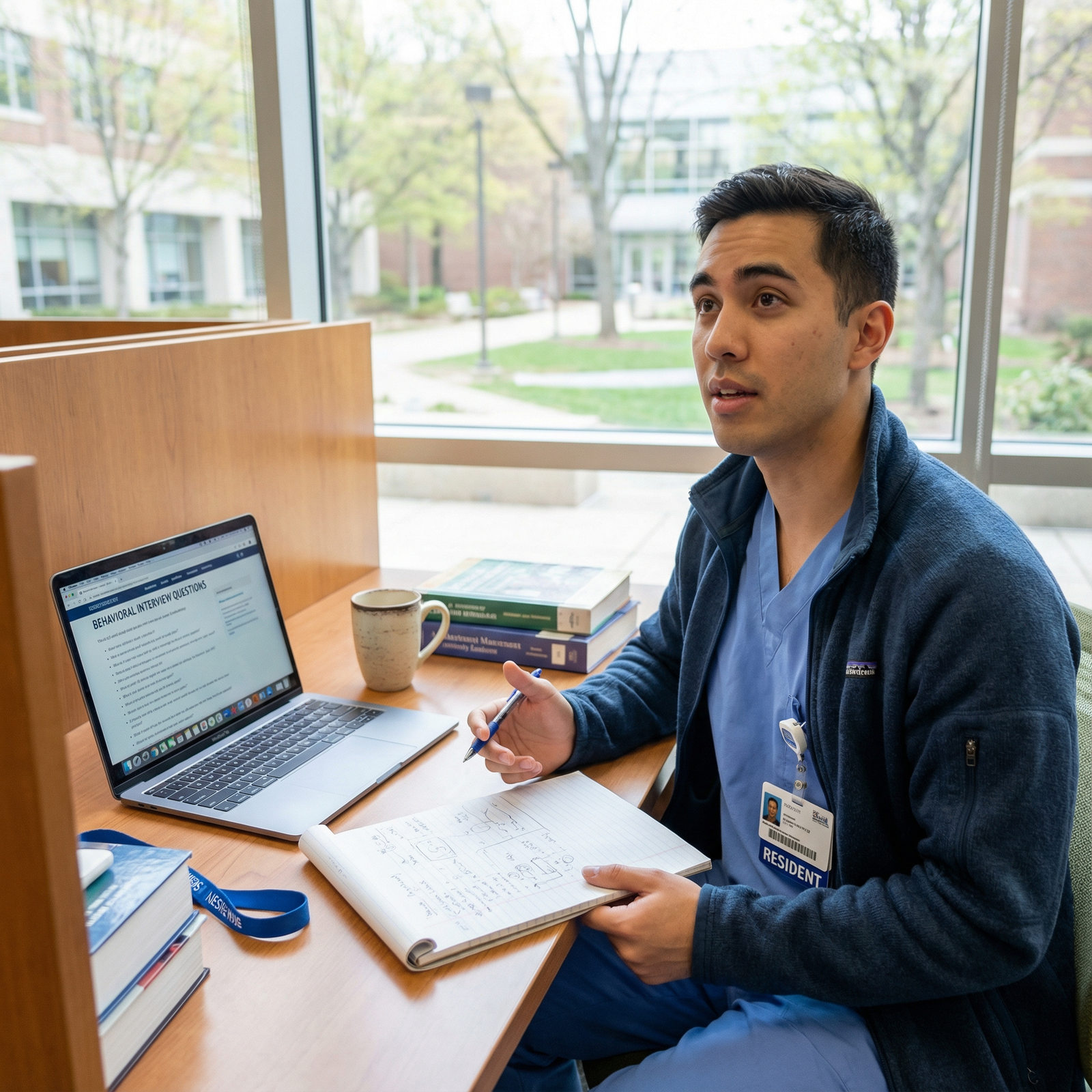
International medical graduates (IMGs) applying for a preliminary surgery year face a unique combination of clinical, cultural, and communication challenges. Residency interview questions will test who you are, how you think, and whether you fit the culture of a demanding surgical team.
This IMG residency guide focuses on common interview questions for preliminary surgery residency, with a special emphasis on behavioral interview medical questions and how to answer them strategically. You’ll find concrete examples, sample answers, and structured approaches you can adapt to your own story.
Understanding the Preliminary Surgery Interview Landscape as an IMG
Preliminary surgery positions are often fast-paced, service-heavy, and highly competitive—especially for IMGs. Program directors want residents who can:
- Function safely in a high-acuity environment
- Learn quickly and accept feedback
- Work well as part of a multidisciplinary team
- Handle stress and long hours
- Communicate clearly despite cultural and language differences
Your goal in the interview is to show that you are:
- Prepared – you understand what a prelim surgery residency is and is not
- Resilient – you can handle steep learning curves and uncertainty
- Professional – you are reliable, ethical, and a good colleague
- Coach‑able – you can accept feedback and grow quickly
- Goal‑directed – you have a realistic plan for using your preliminary surgery year
Interviewers use behavioral and situational questions to probe these traits. “Tell me about yourself,” “Describe a time you made a mistake,” and “How do you handle conflict?” are not small talk—they are data points about how you will behave under pressure at 3:00 a.m. in the trauma bay.
Core Question #1: “Tell Me About Yourself” (for an IMG in Preliminary Surgery)
For most IMGs, the very first—and often most important—question is:
“Tell me about yourself.”
This is not an invitation for your full biography. It is a structured elevator pitch that should connect your background to surgery, the U.S. system, and this prelim year.
Structure Your Answer (The 3‑Step Framework)
Use a simple, effective structure:
- Past – Your background and training (brief, focused)
- Present – What you are doing now and why you are interested in surgery in the U.S.
- Future – Your goals and how a preliminary surgery year fits into them
Example Answer (Adapted for an IMG)
“I completed my medical education at [Medical School] in [Country], where I developed a strong interest in surgery during my clinical rotations, especially in acute care and trauma. After graduation, I worked as a junior surgical resident for one year, managing pre- and postoperative patients and assisting in the OR on appendectomies, cholecystectomies, and emergency laparotomies.
Over the past year, I’ve focused on transitioning to the U.S. system—taking and passing USMLE Step exams, participating in two general surgery observerships, and working on research in surgical outcomes for emergency laparotomies. These experiences have strengthened my desire to pursue a surgical career here and given me a clearer understanding of the expectations in U.S. training.
Looking ahead, my goal is to complete a preliminary surgery year where I can demonstrate my clinical abilities, adapt quickly to the system, and contribute meaningfully to patient care and the team. I’m particularly interested in programs like yours that provide strong operative exposure and mentorship to preliminary residents, as I plan to pursue a categorical general surgery position.”
Practical Tips for IMGs
- Avoid lengthy details about high school or unrelated non-medical jobs unless they directly support a key theme (e.g., resilience, leadership).
- Emphasize:
- Smooth transition from your country’s system to the U.S. system
- Evidence of interest in surgery (rotations, cases, mentors)
- A realistic understanding of what a preliminary surgery residency is
- Practice until your answer is 90–120 seconds, clear and confident, not memorized-sounding.

Core Question #2: “Why Surgery?” and “Why a Preliminary Surgery Year?”
For an IMG applying to prelim surgery residency, you will nearly always get:
- “Why surgery?”
- “Why are you applying for a preliminary surgery year instead of a categorical position?”
You must show both genuine passion for surgery and a realistic, honest understanding of what a preliminary year entails.
Answering “Why Surgery?”
Use a 3‑part structure:
- Origin – Where your interest started (key experiences, not childhood clichés)
- Evidence – Concrete actions you took to pursue surgery
- Fit – Why your personality and strengths suit a surgical career
Sample Answer
“My interest in surgery developed during my fourth-year trauma rotation in [Country], where I saw how rapidly surgical decisions could change a patient’s trajectory. One particular case—a young patient with a splenic rupture after a road traffic accident—made me appreciate the combination of decisive action and careful pre- and postop management that surgery requires.
Since then, I’ve sought experiences that confirmed this interest: I completed additional elective time in general surgery, assisted in emergency laparotomies and cholecystectomies, and contributed to a research project on postoperative complications. In my observerships in the U.S., I enjoyed the teamwork in the OR and the continuity of seeing patients from consult to recovery.
I’m drawn to surgery because I enjoy hands-on problem-solving, working under pressure, and collaborating closely with a team. I like the accountability that comes with being responsible for both the technical and clinical aspects of patient care.”
Answering “Why a Preliminary Surgery Year?”
This is critical for IMGs. Program directors know most prelims want a categorical spot eventually. They want to hear a clear, coherent plan, not vague hope.
Focus on:
- Honesty about your path (e.g., needing U.S. experience, Step attempts, late decision)
- What you want to gain from the preliminary year
- How you will contribute despite the position being non-categorical
Example Answer
“I am applying for a preliminary surgery year because I want structured, intensive experience in the U.S. surgical system to prepare me for a categorical position. As an IMG, I recognize that program directors need to see how I function clinically, communicate with patients and staff, and adapt to the workflow here.
A preliminary surgery residency allows me to demonstrate my work ethic, reliability, and commitment to surgery while gaining stronger U.S. clinical evaluations and references. In return, I know I will be taking on heavy clinical responsibilities, and I am prepared to work hard, cover call, and support the team fully. My goal is to use this year to grow rapidly, show that I can function at the level of a categorical intern, and become a strong candidate for future categorical positions.”
Avoid statements like, “I’m just using this year as a backup,” or “I’ll transfer as soon as possible.” Emphasize mutual benefit: what you gain and what they gain.
Behavioral Interview Questions: How You Think, Act, and Relate
Most residency interview questions for IMGs in preliminary surgery are behavioral interview medical questions designed to predict future performance:
“Tell me about a time you…”
“Describe a situation where you…”
These questions test:
- Teamwork and communication
- Response to stress and conflict
- Professionalism and ethics
- Adaptability and learning from feedback
Use the STAR Method
Answer behavioral questions with STAR:
- Situation – Brief context
- Task – Your role/responsibility
- Action – What you did (focus here)
- Result – Outcome + what you learned
Let’s walk through common categories and examples.
1. Dealing with Mistakes and Patient Safety
Common questions:
- “Tell me about a time you made a clinical mistake.”
- “Describe a situation where you missed something important.”
- “How do you handle it when you realize you did something wrong?”
Programs want to know if you are honest, reflective, and safety‑focused.
Example STAR Answer (Medication Error Near-Miss)
S: “During my internship in [Country], I was on a busy surgical ward. A postoperative patient had orders for IV antibiotics every 8 hours. During evening rounds, I noticed that the antibiotic dose written in the chart seemed higher than usual for his weight and renal function.”
T: “As the junior resident, it was my responsibility to ensure safe medication administration and clarify any doubts.”
A: “I double-checked the medication reference and confirmed that the prescribed dose was indeed above the recommended maximum. I immediately held the next dose, informed my senior resident, and contacted the attending. We corrected the order in the system and closely monitored the patient for any adverse effects. I also documented the discrepancy and reported it through our hospital’s incident-reporting system.”
R: “Fortunately, the patient did not experience any harm. This event reinforced the importance of independently verifying orders that seem unusual, especially in a high-volume surgical service. Since then, I always cross-check high-risk medications and encourage nurses to speak up when something seems off.”
Key elements: ownership, clear actions, patient safety, learning.
2. Handling Conflict and Difficult Team Members
Common questions:
- “Tell me about a time you had a conflict with a colleague or nurse.”
- “Describe a situation when you disagreed with your senior.”
- “How do you manage conflict on the team?”
They want to see if you can maintain professionalism and prioritize patient care.
Example STAR Answer (Conflict with Nurse)
S: “During my surgical internship, I was covering several postoperative patients overnight. A senior nurse approached me upset because she felt I was not responding quickly enough to her pages about a patient’s pain control.”
T: “My responsibility was to manage the patient’s pain appropriately while also maintaining a good working relationship with the nursing staff.”
A: “Instead of reacting defensively, I listened to her concerns and apologized for any frustration. I explained that I had been handling a simultaneous hypotensive patient but agreed that pain control was important. We reviewed the patient together. I adjusted the analgesia plan, ordered a multimodal regimen, and clarified specific parameters for when to page me urgently. Later, when the shift was calmer, I approached her again to ask if our new plan worked better and to discuss how we could improve communication.”
R: “The patient’s pain was better controlled, and the nurse appreciated that I took her concerns seriously. Our communication improved significantly, and I learned to be more proactive in setting expectations with nursing staff at the start of the shift.”
Show that you:
- Avoid blame
- Listen
- Seek a collaborative solution
3. Working Under Pressure and Heavy Workload
Common questions:
- “Describe a time when you were overwhelmed with clinical responsibilities.”
- “How do you manage stress and long hours?”
- “Tell me about a high-pressure situation and how you handled it.”
Prelim surgery years are often high‑service; they need to see you can prioritize safely.
Example STAR Answer (Overwhelming Call Night)
S: “On a weekend call as a junior resident, I was responsible for both the general surgery ward and emergency consults. Within a short period, I had a new consult with acute abdomen, a postoperative patient with tachycardia, and a family requesting an urgent update.”
T: “My task was to prioritize these issues to ensure timely care and patient safety.”
A: “I quickly triaged the situations: I went first to the postoperative patient with tachycardia to rule out immediate life-threatening issues like bleeding or sepsis. I performed a focused assessment, ordered stat labs and imaging, and notified my senior resident. I then saw the acute abdomen consult, performed an exam, and presented the case to my senior with a concise differential and plan. For the family seeking an update, I informed the nurse that I would speak to them as soon as the emergent issues were stabilized, and when there was a safe window, I provided a clear explanation and answered their questions.”
R: “Both patients received appropriate, timely care, and the postoperative patient was transferred to the ICU for closer monitoring. I learned to organize my tasks by acuity, communicate transparently with families about expected delays, and call for help early when my workload becomes unsafe.”
Highlight:
- Prioritization
- Communication
- Early escalation to seniors
4. Adapting to a New Culture or System (Especially Critical for IMGs)
Common questions for an international medical graduate:
- “Tell me about a time you had to adapt quickly to a new environment.”
- “What has been the biggest challenge moving from your home system to the U.S. system?”
- “How do you handle communication barriers?”
Example STAR Answer (Adapting to U.S. Clinical Environment)
S: “During my first U.S. observership in general surgery, I realized that the communication style and documentation requirements were very different from what I was used to in [Country]. Attendings expected very concise presentations and problem-based notes.”
T: “I needed to adjust quickly to communicate effectively and not slow down the team.”
A: “I asked one of the residents if I could review some of their notes and listen to their presentations to understand the structure. I practiced presenting imaginary cases using the same format and asked for feedback from the resident and my attending. I also read about common U.S. documentation expectations and learned to use SBAR for handoffs.”
R: “By the end of the observership, my presentations became much more focused and I received positive feedback about my improvement. This experience showed me that I can adapt quickly by seeking feedback, observing successful models, and practicing intentionally.”
Programs want IMGs who are self-aware, not in denial about cultural differences.
Ethical and Professionalism Questions for Prelim Surgery Applicants
Given the intensity of surgical training, programs will probe your ethics, integrity, and professionalism.
Common questions:
- “Tell me about a time you saw something you felt was unethical.”
- “Describe a situation where you had to advocate for a patient.”
- “What would you do if you disagreed with an attending’s decision?”
Answering Ethically Sensitive Questions
Use STAR but be especially careful about:
- Avoiding gossip or personal attacks
- Protecting confidentiality
- Emphasizing patient safety, respect, and appropriate escalation
Example (Witnessing Unprofessional Behavior)
S: “During a surgical rotation, I observed a resident speaking sharply to a nurse in front of a patient when a lab result was delayed. The nurse looked uncomfortable, and the patient seemed anxious.”
T: “I felt it was important to support a respectful team environment and patient trust, but I was also in a junior position.”
A: “At the moment, I focused on the patient by calmly explaining that we were working on gathering all necessary information to make the best decisions about their care. Later, when we were away from the patient, I gently mentioned to the resident that the interaction might have made the nurse and patient uncomfortable, and I suggested that we clarify expectations with the nurse privately. I also checked in with the nurse afterward, listened to her concerns, and encouraged open communication going forward.”
R: “The resident acknowledged that he had been stressed and agreed to talk with the nurse. Their communication improved, and I learned that it is possible to encourage professionalism without undermining hierarchy, always keeping patient care at the center.”
Classic Residency Interview Questions You Should Expect (with Sample Angles)
Below is a list of high-yield residency interview questions especially relevant to preliminary surgery and international medical graduate applicants, with brief guidance on how to approach them.
1. “What are your strengths?”
- Choose 2–3 strengths relevant to surgery:
- Work ethic and reliability
- Calm under pressure
- Teamwork and communication
- Organization and prioritization
- Provide specific examples, not generic traits.
Example angle:
“I stay calm during emergencies; during a trauma resuscitation, I…” (then STAR).
2. “What are your weaknesses?”
- Choose a real, but not dangerous weakness (e.g., not perfectionism alone).
- Show concrete steps you’re taking to improve.
Example angle for IMG:
“In the past, I could be hesitant to speak up in large group rounds due to language confidence, but I’ve been improving by…”
3. “Why our program?”
Programs can instantly recognize generic answers. For a prelim surgery residency, mention:
- Their case mix (trauma, HPB, vascular, community vs. academic)
- Evidence they value preliminary residents (mentorship, previous prelims matching into categorical spots)
- Particular faculty interests or research areas that align with yours
Structure:
- What you know about them (specific)
- How that aligns with your goals
- What you can contribute
4. “Where do you see yourself in 5–10 years?”
As a prelim surgery applicant, be ambitious but realistic.
Example angle:
“In five to ten years, I see myself as a fully trained surgeon in the U.S., ideally in a general surgery practice with a strong acute care or trauma component. I hope to be involved in resident education and quality improvement projects, particularly focusing on surgical outcomes in underserved populations. This preliminary surgery year is a key first step for me to prove myself in the U.S. system and work toward a categorical position.”
5. “Tell me about your research” (if applicable)
- Be ready to explain:
- Your specific role
- What question you studied
- Main findings and impact
- Link it to your clinical interests in surgery.
6. “Do you have any questions for us?”
Always prepare 3–5 thoughtful questions, such as:
- “How do you integrate preliminary residents into educational activities with categorical residents?”
- “Can you tell me about how previous preliminary residents from your program have progressed in their careers?”
- “How is feedback delivered to interns, especially early in the year?”
Avoid questions easily answered on the website.
Special Considerations for IMGs in Behavioral Interviews
As an international medical graduate, you must anticipate some unspoken concerns and address them through your answers and behavior.
1. Communication and Accent
- Speak clearly and at a moderate pace.
- Practice key phrases (e.g., “tell me about yourself,” “why surgery,” explaining cases) aloud.
- If asked to repeat something, respond calmly and clarify without embarrassment.
2. Understanding of U.S. Healthcare
Many programs will indirectly assess whether you understand:
- Team hierarchy (intern–resident–fellow–attending)
- Interprofessional roles (nurses, PAs, NPs, case managers)
- Documentation, patient autonomy, informed consent
Show this through examples that involve:
- Working effectively with nurses
- Respecting patient preferences
- Documenting carefully and following protocols
3. Visa and Commitment Concerns
You may be asked directly or indirectly about:
- Visa status
- Long-term plans in the U.S.
- Willingness to complete the full year
Answer straightforwardly and reassure them of your commitment to the full preliminary surgery year and to a long-term future in the U.S. system.
Practical Preparation Strategy for IMG Preliminary Surgery Interviews
To make this IMG residency guide actionable, here is a step-by-step plan:
Write Out Your Core Stories
- 8–10 STAR stories: mistake, success, conflict, leadership, teamwork, adapting, patient advocacy, stress.
Customize for Surgery and Prelim Context
- Highlight cases and scenarios from surgical settings.
- Emphasize work ethic, stamina, team communication.
Practice “Tell Me About Yourself” and “Why Surgery?” Daily
- Aim for natural, not robotic, delivery.
- Record yourself and review clarity and pacing.
Mock Interviews
- With mentors, friends, or online groups.
- Focus on behavioral interview medical style questions.
Research Each Program
- At least 3 unique points: case volume, trauma level, academic vs. community, prelim track history.
Prepare Your Questions for Them
- Especially about prelim surgery residency structure, mentorship, and support for IMGs.
Debrief After Every Interview
- Write down questions asked.
- Note which answers felt strong or weak.
- Refine for the next interview.
FAQs: Common Questions from IMGs About Preliminary Surgery Interviews
1. Will I be asked different residency interview questions because I am an IMG?
The core interview questions are similar for all applicants, but IMGs are more likely to get questions about:
- Transition to the U.S. system
- Visa and long-term plans
- Gaps in training or additional years after graduation
Use these as opportunities to show maturity, planning, and commitment rather than being defensive.
2. How do I explain a USMLE attempt or gap in my CV?
Be honest, concise, and forward-looking:
- Briefly state the reason (preparation, family issue, transition between countries).
- Emphasize what you learned and how you improved.
- Highlight your present readiness and recent clinical activity.
Avoid lengthy excuses; focus on evidence that the issue is resolved and you are functioning at a high level now.
3. How can I stand out as a prelim surgery applicant?
You stand out by combining:
- Clear motivation for surgery and for a preliminary year
- Strong behavioral examples that show reliability, teamwork, and resilience
- Concrete U.S. exposure (observerships, research, letters)
- A thoughtful plan for how you will use the year and how you will contribute to the team.
Program directors remember applicants who are genuine, reflective, and realistic, not just the ones with perfect scores.
4. What if I’m asked something I don’t understand due to accent or phrasing?
It is perfectly acceptable to say:
“I’m sorry, could you please repeat or rephrase the question?”
This actually reflects professional communication. It is far better to clarify than to guess and answer a different question.
By preparing strategically for these common interview questions for international medical graduate (IMG) in preliminary surgery, and by framing your experiences with clear, structured stories, you can show programs that you are ready to thrive in a demanding prelim surgery residency and grow into the surgeon you aim to become.