
Interventional Radiology (IR) has become one of the most competitive fields in the allopathic medical school match. As an MD graduate aiming for an interventional radiology residency, you can expect your interview day to be rigorous, fast-paced, and focused heavily on how you think and how you work with others—not just what you know.
This guide walks through the most common residency interview questions for IR, explains why they are asked, and gives you example structures and sample answers to help you respond with clarity and confidence. The emphasis will be on behavioral interview medical style questions (the “Tell me about a time…” type) that IR programs rely on to evaluate fit, professionalism, and resilience.
Understanding the IR Interview: What Programs Are Really Assessing
Interventional radiology programs are looking for more than technical aptitude. They understand that almost every MD graduate walking in the door is bright, hardworking, and motivated. What differentiates candidates in the IR match is how they communicate, solve problems, and handle high-stakes situations.
Most residency interview questions in IR are designed to assess:
- Clinical judgment under pressure (urgent bleeds, crashing patients, complications)
- Teamwork and communication (interacting with surgeons, intensivists, ED, nurses, techs)
- Professionalism and self-awareness (owning mistakes, giving and receiving feedback)
- Motivation for IR specifically (not just “I like procedures”)
- Resilience and well-being (coping with long hours and complex cases)
- Long-term fit (are you someone they want to work with at 2 a.m. in a high-stress emergency?)
The Behavioral Interview Framework
Many IR programs use structured or semi-structured behavioral questions:
“Tell me about a time you…”
“Describe a situation where…”
“Give me an example of…”
Use a consistent framework to answer these:
STAR Method
- Situation – brief context
- Task – your role / responsibility
- Action – what you did (focus here)
- Result – outcome and what you learned
You don’t have to say “S, T, A, R” out loud, but your answer should follow this logical flow.
Foundational Questions: Setting the Tone
These are often asked early and strongly influence the interviewer’s initial impression. You should expect every one of these in an interventional radiology residency interview.
1. “Tell me about yourself.”
This is almost always the first question—and one of the most important. Programs use it to quickly assess communication skills, self-awareness, and your overall narrative as an MD graduate.
What they’re really asking:
- Can you summarize your story clearly and concisely?
- Do you have a coherent path from MD graduate to IR?
- Do you sound focused, grounded, and likable?
Common mistakes:
- Reciting your entire CV chronologically
- Starting with childhood or high school
- Talking for 5–7 minutes without structure
- Giving generic answers that could fit any specialty
A simple structure:
- Present – Who you are now (MD graduate, current role, main focus)
- Past – Key experiences that shaped your interest in IR
- Future – What you’re looking for in a program and in your career
Example answer (condensed):
“I’m an MD graduate from an allopathic medical school with a strong interest in image-guided procedures and minimally invasive oncology. During my third-year rotations, I found myself consistently drawn to cases where imaging changed management, particularly in the ICU and oncology services.
I did my first IR elective in my fourth year and was struck by the combination of rapid clinical decision-making, procedural skill, and longitudinal patient relationships—especially in palliative oncology and complex venous disease. That led me to pursue additional IR research in locoregional therapies and a sub-internship where I was deeply involved in consults and follow-up care.
Looking ahead, I’m hoping to train in a program with high procedural volume, strong critical care exposure, and a culture of mentorship, so I can develop into a clinically strong, academically active interventional radiologist who can build a comprehensive IR practice in an academic or large community setting.”
Practice this until it sounds natural and takes 60–90 seconds, max.

2. “Why Interventional Radiology?”
This is critical in the IR match. Programs want to know that you truly understand the specialty beyond “I like procedures.”
What they’re looking for:
- Understanding of IR as a clinical field, not just “radiology plus procedures”
- Exposure to real IR practice (consults, inpatient rounds, clinics)
- Thoughtful reflection on why IR fits your strengths and values
Include these elements:
- First meaningful exposure to IR
- Specific aspects you enjoy (procedural, longitudinal care, problem-solving)
- Alignment with your personality (e.g., calm under pressure, enjoy team-based acute care)
- Concrete experiences (sub-I, IR elective, research, mentorship)
Example talking points:
- “I enjoy rapid, image-guided problem solving in high-stakes situations.”
- “I value being both a proceduralist and a consultant.”
- “I like that IR cares for diverse patient populations—oncology, PAD, trauma, women’s health, dialysis—often when other options have failed.”
3. “Why our program?”
Program-specific interest matters, especially in a competitive interventional radiology residency. Generic answers can hurt you.
Research before the interview:
- Case mix (oncologic IR, PAD, trauma, women’s interventions, pediatrics)
- IR clinic structure and inpatient service
- Integrated vs. independent pathway
- Research strengths and faculty interests
- Culture: call schedule, mentorship, resident autonomy
Effective structure:
- Demonstrate knowledge of their program
- Align that with your goals
- Mention fit with culture/location
Example elements:
- “Your strong clinical IR service with a dedicated admitting service aligns with my goal of being a clinically grounded interventionalist.”
- “The high volume in trauma and embolization cases fits my interest in acute care IR.”
- “I’ve spoken with your residents about the supportive teaching culture and felt that during my rotation here.”
Core Behavioral Questions: How You Think, Work, and Recover
Behavioral questions are central to modern residency interview questions. In IR, they often focus on crisis management, communication, and professional integrity.
4. “Tell me about a time you made a mistake.”
This is a classic behavioral interview medical question. It tests honesty, maturity, and your ability to learn from error.
Key principles:
- Choose a real but safe example (not catastrophic harm, not an ongoing legal case)
- Avoid blaming others; focus on your role
- Emphasize what you changed afterward
Answer outline (STAR):
- S: Clinical or academic situation
- T: Your responsibility
- A: The mistake and immediate response
- R: Outcome + what you implemented to prevent recurrence
Example (summarized):
“On my medicine rotation, I misread a lab result trend and delayed escalating care for a patient with evolving sepsis.
Once I realized the mistake after rounds, I immediately notified my senior, updated the team, and communicated directly with the patient and family about our plan. The patient received timely antibiotics and improved, but it was a clear signal that I needed a more systematic way to review overnight events and labs.
Since then, I’ve adopted a structured pre-round checklist—reviewing vitals, labs, imaging, and nursing concerns—for every patient. It has significantly improved my situational awareness, and I’ve carried that approach into my IR elective when pre-rounding on consults and post-procedure patients.”
5. “Describe a time you handled a conflict on a team.”
Interventional radiologists work at the intersection of multiple specialties. Programs need to know that you can handle disagreement with composure.
Common types of conflicts:
- Disagreement with a consultant or attending
- Tension between residents, nurses, or techs
- Differences in management plans
What to show:
- Respect for all team members
- Focus on patient safety and shared goals
- Willingness to listen, clarify, and escalate appropriately
Example outline:
- Situation: Disagreement between surgery and medicine about discharge readiness
- Your role: Student or intern caught between teams
- Actions: Gather facts; seek direct communication; propose a joint discussion; keep patient informed
- Result: Harmonized plan; timely and safe discharge; lesson on early inter-team communication
6. “Tell me about a time you had to deliver bad news or have a difficult conversation.”
IRs often deliver serious news about complications, limited options, or palliative procedures.
What they’re assessing:
- Empathy and communication skills
- Ability to handle emotional responses
- Professionalism and clarity in tough moments
Strong answer elements:
- Set the stage (privacy, sitting down, family presence)
- Use plain language
- Allow silence and emotions
- Offer a clear next step or plan
High-Stakes & Complication-Focused Questions
IR is a procedural specialty with real risk. Programs want to see that you understand safety, consent, and complication management—even at the MD graduate level.
7. “Tell me about a time you were in a high-pressure or emergency situation.”
Here, they are picturing you in the angio suite with a hypotensive patient—and wondering how you’ll react.
Good scenarios:
- Code blue or rapid response you participated in
- Acute decompensation on the floor or ICU
- Time-sensitive situation (e.g., stroke activation, trauma activation)
Focus on:
- Staying calm and task-oriented
- Following protocols (ACLS, RRT, etc.)
- Knowing your limitations and asking for help
- Clear communication with the team
Example themes:
- “I was the first to recognize a patient’s acute GI bleed on the floor and activated the rapid response team.”
- “During a night float rotation, I coordinated with nursing and the ICU team when a patient suddenly decompensated.”
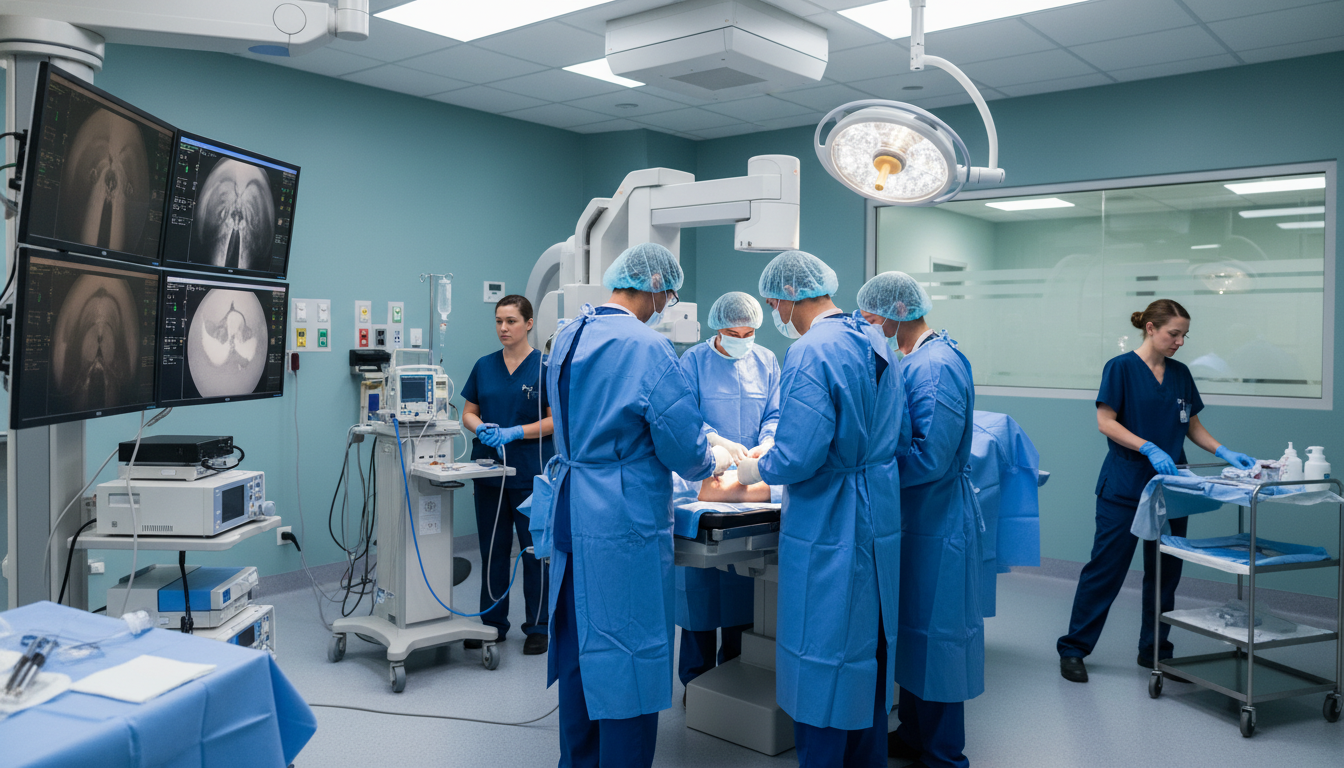
8. “How would you handle a complication during a procedure?”
You may not have directly managed complications yet, but you should demonstrate a framework.
Key elements:
- Anticipation and preparation: Know risks, informed consent, equipment ready
- Early recognition: Monitoring vitals, communication with anesthesia/nursing
- Priorities: Stabilization, call for help, document, communicate with family
- Follow-up: Debrief, analyze cause, improve systems
Example answer outline:
- Ensure patient is stable (ABCs, hemodynamics)
- Immediately involve appropriate support (attending, anesthesia, ICU, surgery if needed)
- Be transparent with patient/family once stable; avoid minimizing
- Document accurately and participate in debrief/M&M
- Reflect on how to reduce recurrence (checklist, timeout modification, supervision level)
You’re not expected to know every technical fix, but you are expected to think systematically and ethically.
Questions About Work Style, Learning, and Resilience
These questions help programs decide if you will thrive in their environment and grow into a safe, independent interventionalist.
9. “What are your strengths and weaknesses?”
Programs ask this in nearly every allopathic medical school match interview, including IR.
Strengths:
- Choose 2–3 relevant to IR (e.g., calm under pressure, communication, attention to detail, systems thinking)
- Provide brief examples that show, rather than just tell
Weaknesses:
- Pick a real but manageable area
- Avoid red flags (e.g., “I’m bad with deadlines,” “I have trouble working with others”)
- Show insight and clear steps you’re taking to improve
Example weakness:
“I used to struggle with overcommitting to projects because I was excited about new opportunities, especially research. I realized this spread me too thin and reduced my effectiveness. Over the past year, I’ve started vetting new commitments with a mentor, setting clear timelines before saying yes, and tracking my ongoing responsibilities weekly. This has helped me focus on completing projects well rather than just starting many.”
10. “How do you handle stress or prevent burnout?”
IR residency can be intense: long cases, urgent procedures, night call, and emotionally heavy situations.
Useful talking points:
- Practical strategies (exercise, sleep hygiene, hobbies, mindfulness)
- Using support systems (co-residents, family, mentors)
- Time management and boundary setting
- Recognizing early signs of burnout in yourself and colleagues
Avoid answers that sound like you deny stress entirely; programs know residency is challenging.
11. “Tell me about a time you received critical feedback.”
They want to know: Are you coachable?
Answer tips:
- Choose a specific instance (clerkship evaluation, simulation lab, procedure feedback)
- Avoid being defensive; emphasize openness
- Highlight what changed in your behavior/practice afterwards
Example:
- “I was told my oral presentations were too detailed; I worked with my senior to develop a problem-focused format and improved evaluations afterward.”
- “An attending noted that I was too quiet in managing the team; I gradually took on more active roles in rounds and sign-out.”
IR-Specific & Career-Focused Questions
These questions probe your understanding of IR’s current challenges and your long-term goals.
12. “What do you see as the biggest challenges facing Interventional Radiology?”
Demonstrate that you appreciate IR as a maturing, clinically driven specialty.
Potential topics:
- Maintaining and expanding clinical independence
- Competing interests and turf battles with other specialties
- Reimbursement changes and health policy pressures
- Building robust IR clinics and longitudinal care
- Ensuring access to IR in community and rural settings
- Burnout and workforce sustainability
Link at least one to how you hope to contribute—through advocacy, research, or building a comprehensive practice.
13. “Where do you see yourself in 5–10 years?”
Programs want to know if your goals align with what they offer.
Possible directions:
- Academic IR with research focus (oncology, PAD, women’s health, etc.)
- Hybrid academic–community practice
- Leadership roles (section chief, program director)
- Building new service lines (IO, outpatient IR clinic, limb salvage programs)
Be honest but flexible. It’s okay not to know precisely; frame it as a set of interests rather than a rigid plan.
14. “Tell me about a patient who impacted you and why.”
This question connects your personal motivation with your clinical work.
Good responses:
- Highlight empathy and reflection
- Show your appreciation for longitudinal or complex care
- Relate back to why IR appeals to you (relieving suffering, solving complex problems, being there when options are limited)
Practical Preparation Strategies for IR Interview Day
Knowing the common questions isn’t enough; execution matters. Here’s how to prepare effectively as an MD graduate.
Build a Bank of Stories
Prepare 8–10 experiences you can adapt to multiple questions:
- A time you led a team
- A time you were a team player
- A significant challenge or failure
- A clinical situation with ethical complexity
- A stressful/emergency situation
- A conflict resolution example
- A time you went above and beyond for a patient
- An example of quality improvement or systems thinking
- Research or leadership experiences that required persistence
Write bullet-point STAR outlines for each so you can flexibly apply them.
Practice Common High-Yield Questions Aloud
Focus especially on:
- Tell me about yourself.
- Why IR?
- Why our program?
- Strengths and weaknesses.
- Tell me about a time… (conflict, mistake, stress, feedback)
Practice with:
- A friend or co-applicant
- Faculty mentor
- Mock interview sessions through your medical school
Record yourself once or twice to check for:
- Rambling or excessive detail
- Filler words (“um,” “like”)
- Tone and body language
Prepare Insightful Questions to Ask Programs
Almost every interview ends with: “What questions do you have for us?”
Avoid questions you could easily answer from the website. Instead, ask:
- “How do residents typically transition from supervised to more autonomous practice in the angio suite?”
- “Can you describe how IR is integrated into the hospital clinically—consult services, inpatient admissions, and clinic structure?”
- “What qualities have you seen in your most successful IR residents?”
- “How do you support resident wellness and prevent burnout in a high-volume IR service?”
FAQs: Interventional Radiology Residency Interview Questions
1. Are IR interviews more technical than other specialties?
Most IR interviews for MD graduate residency applicants are not primarily technical. You might be asked basic clinical reasoning or high-level IR concepts, but the focus is on behavioral questions, your understanding of IR as a clinical specialty, and your fit with the program. Deep procedural questions are uncommon at the interview stage.
2. How much should I talk about diagnostic radiology (DR) during my IR interview?
It’s appropriate to acknowledge that strong DR skills are foundational to good IR practice. However, avoid framing your interest as primarily in DR with “some procedures.” Emphasize your commitment to the full scope of interventional radiology—clinic, inpatient care, procedures, and longitudinal follow-up—while recognizing the integral relationship with DR.
3. What if I haven’t done a formal IR rotation at the program where I’m interviewing?
That’s common, especially for MD graduates applying broadly. Compensate by:
- Researching the program thoroughly
- Talking to current or former residents if possible
- Asking thoughtful questions that show you understand their structure and case mix
You can still convey strong interest by connecting your IR experiences elsewhere to what their program offers.
4. How long should my answers be to behavioral questions?
Aim for 1–2 minutes per answer. Shorter than 45 seconds often feels superficial; longer than 2–3 minutes can sound unfocused. Use the STAR method to stay organized, and if you sense you’re talking too long, wrap up with a brief “What I took away from that experience was…” sentence.
By anticipating these common interview questions and practicing clear, structured responses, you position yourself as a thoughtful, prepared candidate in the IR match. Combine this preparation with genuine curiosity, professionalism, and a clear narrative about why interventional radiology is the right path for you, and you’ll make a strong impression on programs looking for their next generation of interventional radiology residents.