Radiation oncology is one of the most competitive specialties in the United States, and this can feel even more daunting for a non-US citizen IMG or foreign national medical graduate. The interview is where programs decide whether your unique background is an asset they want in their department. Knowing the most common residency interview questions—and how to answer them strategically—can transform anxiety into a clear, confident narrative.
This guide focuses specifically on common interview questions for non-US citizen IMGs applying to radiation oncology residency, with a behavioral interview medical lens and specialty-specific examples.
Understanding What Radiation Oncology Programs Are Really Assessing
Before diving into specific residency interview questions, it helps to understand what programs are looking for when they speak with a non-US citizen IMG:
- Clinical readiness: Can you function safely and effectively in a US hospital from day one?
- Communication skills: Can you explain complex information clearly to patients, colleagues, and other services?
- Professionalism and reliability: Do you show maturity, integrity, and respect for the team and patients?
- Fit with the program: Do your interests and personality fit the culture and priorities of this specific rad onc department?
- Commitment to radiation oncology: Do you understand the field and have credible, long-term motivation?
- Visa and long-term plans: Are there visa barriers, and how likely are you to complete training and stay in the US?
Every “standard” question—whether it’s “Tell me about yourself” or a deep behavioral scenario—is really probing one or more of these areas. As a non-US citizen IMG, your goal is to show that you’re not just “as good as” a US graduate, but that your international background adds value to the program.
Core “Getting to Know You” Questions (and How to Stand Out)
1. “Tell me about yourself”
This is almost guaranteed. For a non-US citizen IMG in a radiation oncology residency interview, this question sets the tone for how interviewers will view your entire application.
What they’re really asking
- Can you communicate clearly and concisely?
- Do you have a coherent story that explains your path into medicine, the US, and radiation oncology?
- Are you self-aware and professional?
Structure your answer (2–3 minutes)
Use a simple 3-part framework: Past → Present → Future
Past (background and medical education)
- Where you’re from, medical school, a brief highlight.
- Mention one or two key experiences that shaped you, especially those related to oncology, research, or patient-centered care.
Present (current status and strengths)
- What you’re doing now: observerships, research, clinical work, exams, etc.
- Emphasize skills relevant to radiation oncology: analytical thinking, attention to detail, communication with vulnerable patients, comfort with technology.
Future (career goals and why rad onc in the US)
- Why you’re pursuing radiation oncology residency in the US.
- Your long-term vision: academic career, research interests, global oncology, etc.
Example tailored to a non-US citizen IMG
“I was born and raised in [Country], where I completed medical school at [Institution]. Early in my clinical rotations, I was struck by how limited access to advanced cancer treatment was—many patients lacked timely radiation therapy, and outcomes were visibly different. During my internship, I worked closely with an oncologist who encouraged me to assist with a small project on treatment delays and survival. That experience sparked my interest in oncology and in systems that can improve cancer care.
Currently, I am working as a research fellow in radiation oncology at [US Institution], focusing on [briefly mention project—e.g., treatment planning optimization or outcomes research]. I also completed several observerships in US hospitals, where I’ve gained a better understanding of multidisciplinary cancer care and the role of the radiation oncologist as both a technical expert and a longitudinal caregiver.
Looking ahead, I want to train in a US radiation oncology residency because the combination of advanced technology, strong multidisciplinary care, and research opportunities will prepare me to contribute meaningfully to oncology, especially for underserved populations and resource-limited settings. I see myself in an academic career where I can combine clinical work with research on [your interest, e.g., global oncology, treatment planning, health disparities], and I believe your program’s strengths in [specific program strengths] align well with those goals.”
2. “Walk me through your CV” or “Can you summarize your background?”
This often overlaps with “tell me about yourself,” but is more focused on your timeline, especially if you’re a foreign national medical graduate with:
- A gap after graduation
- Prior residency or clinical work abroad
- Extended research time or multiple degrees
Key tips
- Be transparent, especially about gaps.
- Show logical progression: every step should feel like it brought you closer to radiation oncology.
- For non-US clinical experience, emphasize transferable skills: handling complex patients, multidisciplinary teamwork, procedural skills, teaching, etc.
Red flags to handle proactively
- Multiple gaps: Briefly explain each (exams, research, family responsibilities, immigration issues), then pivot to what you learned and how it strengthened you.
- Switching specialties: If you previously trained or started in another specialty, explain honestly why rad onc is a better fit now, with specific examples—not “I changed my mind” but “I discovered X, which aligns more with my strengths and interests.”
Behavioral Interview Questions in Radiation Oncology
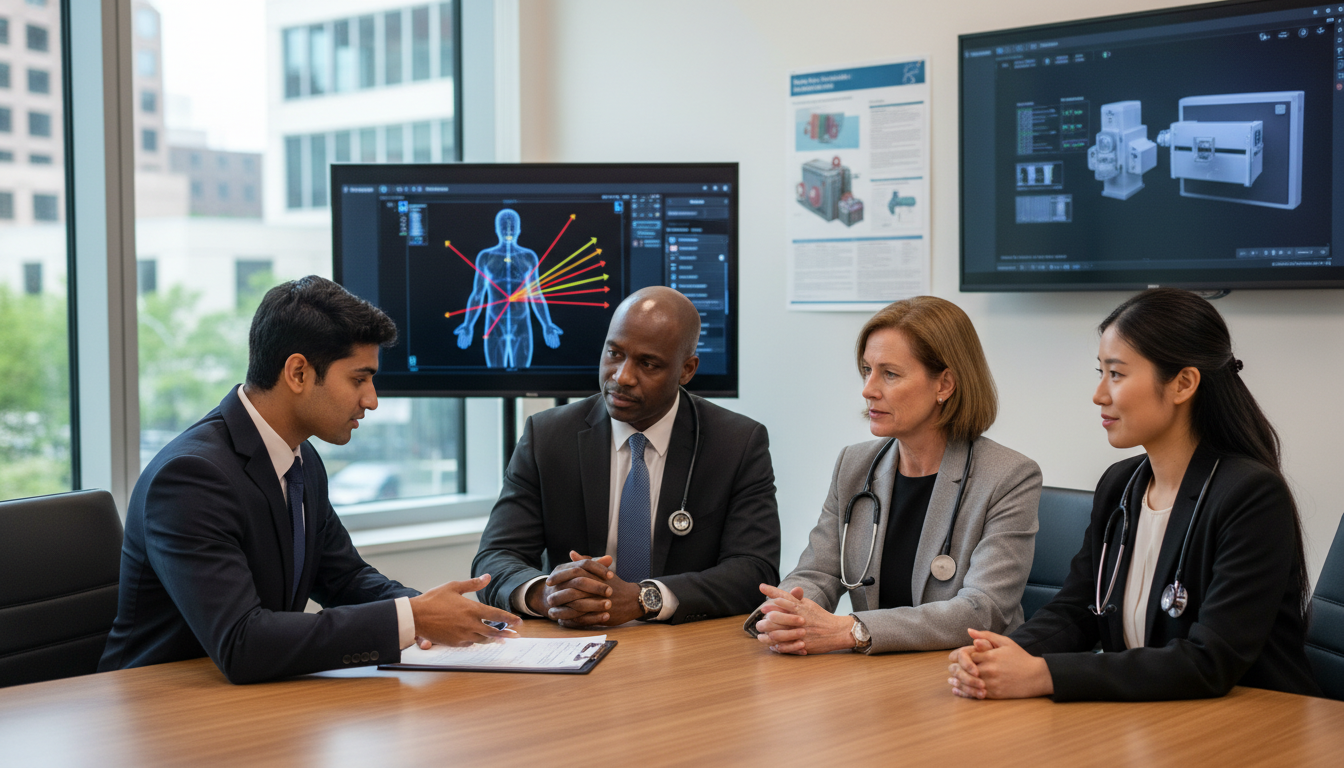
Radiation oncology residency interviews increasingly use behavioral interview medical formats: “Tell me about a time when…” questions designed to evaluate how you think, behave, and learn.
The key tool here is the STAR method:
- Situation – Brief context
- Task – Your responsibility
- Action – What you did
- Result – Outcome and what you learned
3. Common Behavioral Questions You Should Expect
Below are examples tailored to a non-US citizen IMG applying to rad onc, with strategies and sample answers.
a) “Tell me about a time you made a mistake.”
What they’re testing
- Honesty and accountability
- Ability to learn and improve
- Emotional maturity
Tips for non-US citizen IMGs
Choose an example:
- Not involving major patient harm
- Where you clearly took responsibility
- That shows insight into differences between your home system and the US (if relevant)
Example (concise STAR answer)
- Situation/Task: “During my internship in [Country], I was on a busy oncology ward. A patient’s lab results were delayed, and I assumed they were normal because they usually were in similar cases.”
- Action: “I proceeded with ordering chemotherapy pre-medications without confirming the labs, which led to a delay when the nurse caught that the labs were still pending. I immediately acknowledged the mistake, updated my senior, and spoke with the nurse and patient, apologizing for the inconvenience.”
- Result: “There were no adverse clinical consequences, but the patient’s treatment was delayed by several hours. I created a checklist for my own practice to verify all labs personally before any chemotherapy orders, and I started double-checking key parameters as part of the team routine. This experience made me more systematic and cautious, and I’ve carried that habit into my work in US settings, where verifying labs and imaging before treatment planning is equally critical.”
b) “Tell me about a time you had a conflict with a colleague or supervisor.”
What they’re testing
- Communication skills
- Respectful disagreement
- Ability to work in a team and manage hierarchy
- Cultural adaptability (especially for a foreign national medical graduate)
Advice
- Avoid attacking the other person’s character.
- Show that you sought understanding and resolution, not just to “win.”
- Highlight how you adjusted to cultural or system differences.
Example
“I was working in a multidisciplinary tumor board in [Country], and I disagreed with the attending surgeon’s plan to delay radiation for a patient with locally advanced rectal cancer. I was a junior doctor, and in that setting hierarchy is quite strict, so I felt hesitant to speak up.
I requested a brief meeting after the board, where I respectfully presented data from recent trials supporting earlier chemoradiation. I emphasized that I understood his concerns about surgical timing but wanted to ensure we considered the evidence. He appreciated my initiative and evidence-based approach, and we ended up discussing the case again as a team; we modified the plan to start radiation earlier.
This experience taught me how to respectfully advocate for patients and evidence, even within strict hierarchies—something I’ve continued practicing in US clinics, where open discussion is encouraged but must still be respectful and team-oriented.”
c) “Describe a difficult patient interaction and how you handled it.”
In radiation oncology, patient communication is central—cancer diagnosis, side effects, prognosis, and long-term follow-up are all emotionally heavy.
Focus on:
- Empathy
- Clarity of explanation
- Cultural sensitivity
- Shared decision-making
Example (for a non-US citizen IMG)
“In my home country’s oncology clinic, I met a patient with advanced head and neck cancer who became angry when I discussed the need for combined radiation and chemotherapy. He felt that previous doctors hadn’t explained his condition clearly and distrusted the medical system.
I listened without interrupting, acknowledged his frustration, and said, ‘I can see why you feel that way; this is a lot to process.’ I then used simple language and visual diagrams to explain his cancer stage, treatment options, and potential side effects. I also asked about his personal goals and fears. Over time, his anger shifted into questions, and he eventually agreed to the recommended treatment. From this experience, I learned how powerful active listening and clear communication are, especially when patients are scared or distrustful—a skill I now apply in US settings, where discussions about radiation risks and benefits are often complex and emotionally charged.”
d) “Tell me about a time you had to adapt quickly to a new environment or system.”
This is a natural question for a non-US citizen IMG.
Highlight:
- Moving from your home country to the US
- Learning a new electronic medical record (EMR)
- Adapting to US clinical culture (documentation, communication, hierarchy, patient expectations)
Example
“When I started my research fellowship in the US, I was unfamiliar with the EMR, the structure of tumor boards, and even some common expectations around direct patient communication and shared decision-making. I proactively asked for a brief orientation from the residents, watched online tutorials, and created personal notes about key workflow steps. I also observed how attendings communicated treatment risks and alternatives.
Within a few weeks, I felt comfortable presenting in tumor board and documenting in the EMR under supervision. This experience reinforced my ability to learn new systems quickly—something I believe will be valuable as I transition into a radiation oncology residency, where I’ll need to quickly master treatment planning tools, contouring platforms, and institutional workflows.”
Radiation Oncology–Specific Questions You Should Prepare For
Radiation oncology programs want to know whether you truly understand and are committed to the specialty—especially in a competitive field and as a foreign national medical graduate.
4. Motivation and Understanding of the Field
a) “Why radiation oncology?”
Avoid generic answers like “I love technology and helping cancer patients.” Be specific and personal.
Elements of a strong answer for a non-US citizen IMG:
- A patient story that sparked your interest
- Exposure to radiation oncology departments (home country and/or US)
- A clear appreciation for:
- Multidisciplinary cancer care
- The blend of physics, biology, and clinical care
- Longitudinal relationships with patients
- How this ties into your long-term career goals (e.g., research, global health, academic medicine)
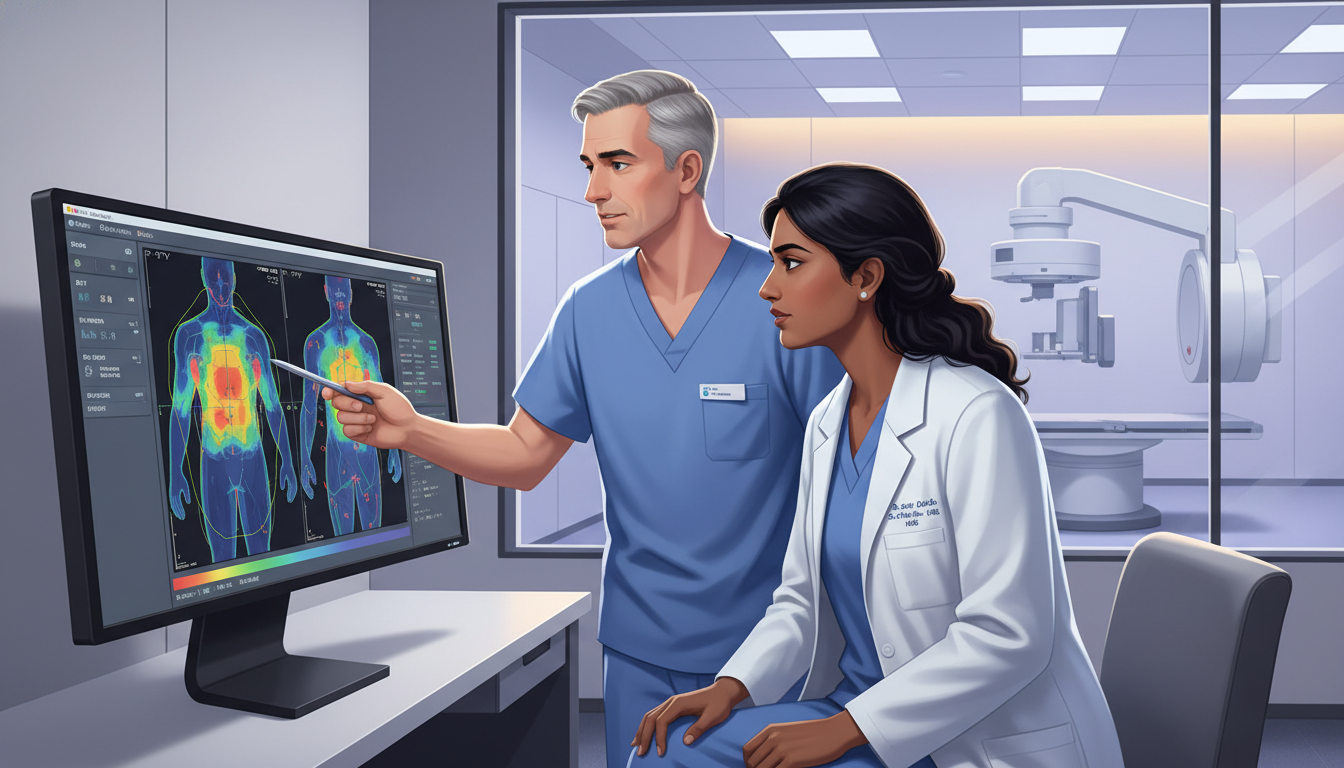
b) “What do you see as the biggest challenges or future directions in radiation oncology?”
Programs want to know if you’re informed and thoughtful.
Possible talking points:
- Access to radiation therapy in low- and middle-income countries (relevant if you’re from such a region)
- Integration of immunotherapy and systemic therapies with radiation
- Advances in imaging and adaptive radiation therapy
- Balancing technological advancement with cost and equity
- Managing long-term toxicities and survivorship issues
You might say:
“As a non-US citizen IMG from [Country], I’m particularly aware that globally, many patients still lack access to even basic radiation services. I’m interested in how advances like hypofractionation, more efficient planning algorithms, and telemedicine might expand access without compromising quality. I also see opportunities in outcomes research—understanding how new techniques affect both survival and quality of life across diverse populations.”
5. Research and Academic Questions
Radiation oncology is highly academic. Expect questions about your research.
a) “Tell me about your research project.”
Prepare a 60–90 second explanation:
- The clinical question or hypothesis
- Your specific role (design, data collection, analysis, writing)
- Key findings
- What you learned (beyond the science: statistics, teamwork, perseverance)
Avoid too much jargon. Emphasize methodology and your contribution.
b) “What are your future research interests?”
Link them to:
- Your past work
- The strengths of the program you’re interviewing at
- Realistic goals (e.g., outcomes research, clinical trials, physics collaborations, disparities research)
6. Technical and Clinical Scenario Questions
Some programs ask simple clinical or ethical scenarios to see how you think, not to test full attending-level knowledge.
Example questions:
- “How would you explain radiation therapy to a patient who is very anxious about side effects?”
- “A patient refuses recommended radiation therapy after you’ve explained the benefits and risks. What do you do?”
- “You notice a potential error in a treatment plan. How do you handle it?”
Approach:
- Emphasize patient safety and teamwork.
- Highlight communication: clear explanations, checking for understanding, shared decision-making.
- For ethics scenarios, mention:
- Patient autonomy
- Non-maleficence (do no harm)
- Beneficence
- Getting help from supervisors or ethics resources when appropriate
IMG- and Visa-Specific Questions You Must Be Ready For
As a non-US citizen IMG or foreign national medical graduate, you may face questions that US graduates never hear. These are not always asked, but you should be prepared.
7. Questions About Visa and Legal Status
Common phrasing:
- “What is your visa status?”
- “Will you require sponsorship for a visa?”
- “Do you have a preference for J-1 vs. H-1B?”
How to respond
- Be clear and factual; there is no advantage in being vague.
- Know your options: J-1 vs. H-1B, prior visa history, and any restrictions.
- Reassure them that you’ve researched the process and are prepared.
Example:
“I’m currently on a J-1 research visa and will require a J-1 or H-1B visa for residency. I understand that your institution sponsors J-1 visas through ECFMG, and I’ve reviewed the requirements. I’m fully prepared to comply with all documentation and timelines.”
8. Questions About US Clinical Experience and Systems
Programs may ask:
- “What have you learned from your US clinical experience?”
- “How do you think the US healthcare system differs from your home country?”
- “What challenges do you anticipate as a non-US citizen IMG in our program?”
Answer strategy
- Show that you understand US clinical culture: documentation, communication, patient-centered care, multidisciplinary teams.
- Acknowledge language/accent or cultural adaptation if relevant, but frame them as areas you’ve actively worked on, not weaknesses.
- Emphasize resilience and rapid learning.
Example:
“From my observerships and research experience in US radiation oncology clinics, I’ve learned the importance of thorough documentation, interdisciplinary communication, and shared decision-making. Compared with my home country, there is more emphasis here on explaining options in detail, involving patients and families in decisions, and using formal treatment pathways. As a non-US citizen IMG, the biggest challenge initially was adapting to the communication style and pace, but I’ve worked on this by seeking feedback, observing senior residents, and practicing concise presentations in tumor board.”
9. “Why should we choose a non-US citizen IMG like you over a US graduate?”
This may be asked directly or implied.
Key principles
- Avoid sounding defensive.
- Don’t criticize US graduates.
- Focus on the unique value you bring:
- Resilience and adaptability
- Global perspective on cancer care
- Bilingual/multilingual abilities
- Prior clinical, research, or teaching experience
- Commitment to underserved populations
Example:
“I recognize that many of your applicants are excellent US graduates. As a non-US citizen IMG, I bring a complementary perspective: I’ve cared for patients with cancer in a resource-limited environment, which has made me adaptable, resourceful, and very aware of global disparities in access to radiation therapy. I also have extensive research experience in [specific area], and I am fluent in [languages], which can be helpful in caring for diverse patient populations. My path has required persistence, flexibility, and a strong commitment to radiation oncology, and I believe that combination would add to the diversity and strength of your residency cohort.”
Practical Preparation Strategy for the Rad Onc Match
To succeed in the rad onc match as a non-US citizen IMG, you need more than content knowledge—you need structured preparation.
10. Build Your Personal Story Bank
Create a list of 10–15 experiences that you can adapt to answer different residency interview questions:
- A time you showed leadership
- A time you dealt with conflict
- A major challenge or failure
- A difficult patient or family interaction
- A time you showed initiative
- A time you worked in a multidisciplinary team
- An example of learning from feedback
- A research challenge you helped overcome
For each, write a brief STAR outline. Practice telling them out loud in 1.5–2 minutes.
11. Practice Key Questions Out Loud
Especially:
- “Tell me about yourself”
- “Why radiation oncology?”
- “Why our program?” (be specific for each program)
- “What are your strengths and weaknesses?”
- “Where do you see yourself in 5–10 years?”
Record yourself or practice with:
- A mentor or attending
- Current residents (especially IMGs if possible)
- Peers applying in the same cycle
12. Prepare Questions to Ask the Program
Interviewers expect you to have questions. Consider:
- Mentorship and career development for IMGs
- Support for visa issues and long-term planning
- Research opportunities, especially in your areas of interest
- How graduates have succeeded in academic or global oncology careers
Avoid questions easily answered by the website (call schedule, basic structure) unless you’re asking for clarification or an insider’s perspective.
Frequently Asked Questions (FAQ)
1. As a non-US citizen IMG, will I be asked different interview questions than US graduates?
Most core questions—such as “Tell me about yourself,” “Why radiation oncology?” and common behavioral interview questions—are the same. However, as a foreign national medical graduate, you’re more likely to be asked about:
- Visa status and long-term plans
- Differences between healthcare in your home country and the US
- How you will adapt to US clinical and cultural expectations
- Gaps in training or prior postgraduate experiences
Prepare honest, confident answers that highlight your adaptability and the strengths of your background.
2. How can I answer “Tell me about yourself” effectively for a radiation oncology interview?
Use a Past–Present–Future structure:
- Past: Where you’re from, medical school, and key experiences—especially those related to oncology, imaging, or research.
- Present: What you’re doing now (research, observerships, clinical work), highlighting rad onc–relevant skills.
- Future: Your career goals in radiation oncology and why training in the US is essential to those goals.
Keep it to about 2–3 minutes, focused on your journey into radiation oncology and what makes you a strong candidate.
3. How much technical radiation oncology knowledge do I need to show in the interview?
You’re not expected to function as an attending, but you should demonstrate:
- A basic understanding of what radiation oncologists do
- Familiarity with common cancers treated with radiation
- An appreciation for multidisciplinary care and patient communication
- Awareness of major themes in the field (e.g., technology, access, survivorship, integration with systemic therapy)
If you have research or observership experience in rad onc, use that to show insight into the specialty’s day-to-day workflow.
4. What if I’m not sure how to answer a behavioral question or I can’t think of an example?
It’s acceptable to pause briefly and think. You can say:
“Let me think for a moment; I want to give you a meaningful example.”
Then:
- Draw from any stage of your training: medical school, internship, research, or clinical work abroad.
- If you truly cannot find a perfect example, choose the closest relevant one and explain what you learned.
- Focus on what you did, not what “we” did, to show your personal role.
Over time, creating a “story bank” before interviews will help ensure you’re rarely caught off guard.
By carefully preparing for these common interview questions—and framing your non-US citizen IMG experience as a strength—you can present yourself as a mature, motivated, and well-informed candidate ready to contribute meaningfully to a radiation oncology residency program in the United States.