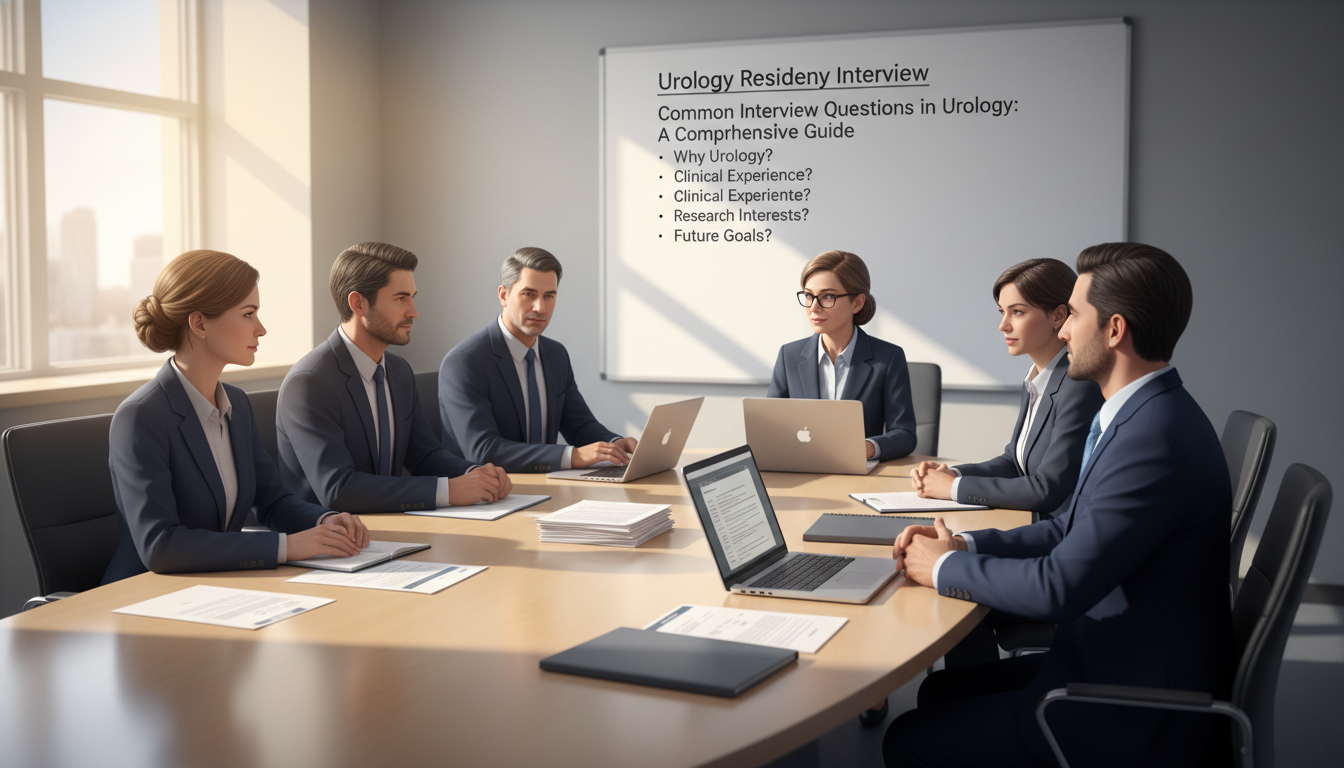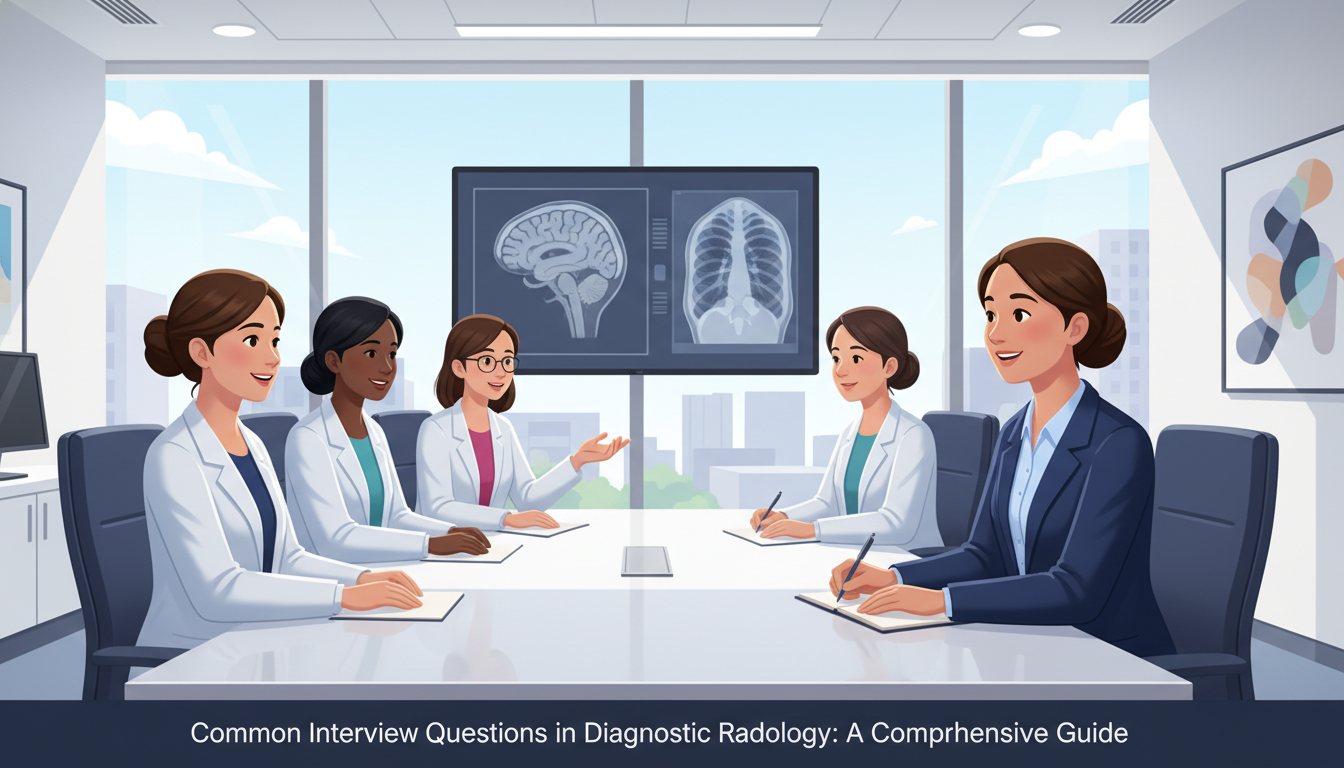
Understanding the Diagnostic Radiology Interview as a Non-US Citizen IMG
Diagnostic radiology residency interviews in the United States can feel especially daunting when you are a non-US citizen IMG (international medical graduate). You are not only being evaluated for your clinical and academic potential—you are also being assessed for cultural fit, communication skills, your ability to work in a new system, and sometimes, your visa situation.
Most programs use a mix of:
- Traditional questions (e.g., “Tell me about yourself”)
- Behavioral interview medical questions (e.g., “Tell me about a time you made a mistake”)
- Radiology-specific questions (e.g., “Why radiology?”)
- Program fit and career goal questions (e.g., “Where do you see yourself in 5–10 years?”)
For a foreign national medical graduate, the key is to anticipate these themes, prepare structured answers, and embed your unique IMG journey in a concise, compelling way.
Below is a comprehensive guide to the most common interview questions you’ll encounter in the diagnostic radiology match, with sample structures, examples, and tips tailored to non-US citizen IMGs.
1. Foundation Questions: “Tell Me About Yourself” and Your Story
The opening few minutes of the interview often shape the interviewer’s overall impression. For IMGs, this is your chance to quickly clarify your path, your status as a non-US citizen, and your motivation for radiology—without overloading them.
1.1 “Tell Me About Yourself”
This is almost guaranteed. It is not an invitation for your full life story; it is an invitation for a focused, 60–90 second elevator pitch.
Core goals of this answer:
- Present a clear, chronological narrative
- Connect your background to radiology and US training
- Highlight 1–2 strengths or themes
- Show you are more than a test score or visa category
Recommended 4-part structure (P-B-R-N):
- Present role / status – Who you are today
- Background – Medical school + key experiences
- Radiology motivation – Why radiology, briefly
- Next step / Fit – Why this stage (US residency, their program)
Example (for a non-US citizen IMG):
“I’m a non-US citizen IMG from [Country], currently completing a clinical observership in diagnostic radiology at [US Institution]. I graduated from [Medical School] in [Year], where I developed a strong interest in imaging while rotating through internal medicine and oncology. During my final year, I worked closely with radiologists on a quality-improvement project that reduced CT report turnaround time, and that experience showed me how central radiology is to patient care decisions.
Since graduation, I’ve strengthened my US clinical exposure through sub-internships and research in abdominal imaging, while preparing for the USMLE. I’m particularly interested in academic diagnostic radiology, with a focus on efficiency and safety in imaging workflows. I’m now looking for a residency program like yours that combines strong clinical training with opportunities in research and teaching.”
Common mistakes to avoid:
- Reciting your CV line by line
- Overexplaining visa issues at this stage
- Going over 2 minutes
- Becoming overly personal (e.g., childhood stories) unless they are truly relevant and concise
1.2 “Walk Me Through Your CV” or “Tell Me Something Not on Your CV”
These are variations of the same theme—understanding who you are beyond bullet points.
For “Walk me through your CV”:
- Stay high-level (education → key experiences → why radiology → current position)
- Emphasize transitions: Why did you move from one step to the next?
For “Tell me something not on your CV”: Choose one of:
- A personal hobby that reveals discipline, teamwork, or resilience
- A life event that shaped your values
- A small project or accomplishment that character references might not capture
Example:
“Something not on my CV is that I play classical piano and have performed in small local concerts in [Country] and here in the US. Preparing for performances has taught me discipline, focus under pressure, and how to accept and incorporate feedback—skills that I think translate well to radiology, where accuracy and composure are crucial.”
2. Behavioral Interview Questions for IMGs: How You Work and Think
Behavioral interview medical questions aim to predict your future behavior based on past experiences. These are especially important if your US clinical experience is limited; interviewers want to see how you manage conflict, uncertainty, and stress in any setting.
2.1 The STAR Framework
Use STAR to structure your responses:
- S – Situation (brief context)
- T – Task (your responsibility)
- A – Action (what you did)
- R – Result / Reflection (outcome and what you learned)
Keep STAR answers to 1–2 minutes. Focus on clarity and your personal role, not long background stories.
2.2 Common Behavioral Questions You’ll Face
a) “Tell me about a time you made a mistake.”
Purpose: Assess honesty, accountability, and learning capacity.
Tips:
- Choose a real, non-catastrophic clinical or professional mistake
- Do not blame others
- Emphasize what changed afterwards in your practice
Example outline (IMG in internal medicine rotation):
- Situation: Busy internal medicine ward, multiple new admissions.
- Task: You were responsible for taking initial histories and entering orders.
- Action: Missed adding an important lab due to time pressure → recognized error early → notified senior → corrected order → communicated with team and patient.
- Result: No harm to patient, implemented personal checklist and better organization → improved reliability.
Ending sentence:
“Since then, I routinely use a checklist for new admissions, which has significantly reduced these omissions, and it’s a practice I would carry into radiology, where systematic approaches are key to avoiding errors.”
b) “Tell me about a conflict with a colleague or supervisor.”
They want to see professionalism and communication, not drama.
Tips:
- Avoid extreme or unethical stories
- Show that you sought understanding and compromise
- End with improved relationship or process
Example themes:
- Disagreement over imaging priority for a patient
- Miscommunication about roles on a research project
- Clashing expectations with a consultant during call
c) “Describe a stressful situation and how you handled it.”
As a non-US citizen IMG, you might mention:
- Adapting to a new language or EMR system
- Handling many tasks on call
- Balancing USMLE prep and clinical duties
Focus on:
- Maintaining patient safety
- Using support systems (team, supervisors)
- Organizational strategies (prioritization, checklists, time management)
d) “Tell me about a time you worked in a diverse team.”
Radiology teams are multicultural. Your experience as a foreign national medical graduate is an asset.
Potential examples:
- Multi-disciplinary tumor boards in your home country
- Working with nurses, technicians, and physicians from different cultural backgrounds
- Collaborating with US residents/fellows during observerships
Highlight:
- Respect for different perspectives
- Communication clarity (especially across language accents)
- How diversity improved the outcome
3. Radiology-Specific Questions: Showing Genuine Interest and Insight
Programs want residents who truly understand what diagnostic radiology involves—not just lifestyle or income.
3.1 “Why Radiology?” (and Why Not Another Specialty?)
They’re screening for:
- Depth of understanding of radiology’s role
- Evidence you have seen radiology practice, not just heard about it
- Alignment of your strengths with radiology skills
Three-pillar structure:
- Clinical exposure – When and how you first engaged with radiology
- Personal strengths – What about you fits radiology
- Future goals – How radiology fits your vision
Example:
“I became interested in radiology during my internal medicine rotation when I regularly followed my patients’ CT and MRI results with the radiologists. I saw how their interpretations changed management decisions, often more than any single physical exam.
Radiology matches my strengths: I enjoy pattern recognition, working with complex data, and making precise, evidence-based decisions. I also like using technology and have basic programming exposure, which I hope to apply to imaging informatics.
Long-term, I see myself as an academic radiologist contributing to quality improvement and possibly AI applications in imaging, and diagnostic radiology offers the best path to combine clinical impact with these interests.”
Avoid:
- Overemphasizing lifestyle
- Vague statements like “I like looking at images” without real examples
- Saying you chose radiology because another specialty “didn’t work out”
3.2 “What Do You Think Are the Challenges Facing Radiology Today?”
This tests your awareness of the field beyond your home country.
Possible points to mention:
- Increasing imaging volume and pressure on turnaround times
- Burnout and work-life balance challenges
- AI and machine learning: opportunities and uncertainty
- Communication with clinicians and patients (visibility of radiologists)
- Radiation safety and appropriateness of imaging
Example concise answer:
“A major challenge is managing increasing imaging volume while maintaining accuracy and communicating effectively with referring clinicians. In many places, radiologists are under pressure to read more studies with shorter turnaround times, which can contribute to burnout and errors. Another challenge is integrating AI in a way that supports radiologists rather than replacing them, and ensuring clinicians and patients understand radiology’s critical role in patient care. I’m interested in these issues and would like to be involved in quality-improvement projects during residency.”
3.3 “What Subspecialty of Radiology Interests You?” (Even as a Beginner)
Programs do not expect you to be fixed on a subspecialty, but they like to see curiosity.
Thoughtful ways to answer:
- Mention 1–2 areas you’re currently drawn to and why (e.g., neuroradiology, body imaging, interventional radiology)
- Emphasize openness to change as you gain more exposure
- If you have research or observerships, connect them to that area
Example:
“Based on my current experience, I’m especially interested in body imaging because I find the correlation between cross-sectional imaging and clinical decision-making in oncology fascinating. Much of my research exposure has been in abdominal CT and MRI. That said, I know residency will expose me to the full range of subspecialties, and I’m very open to discovering new interests.”
4. Program Fit and Career Goals: Aligning Your Path with Their Residency
Diagnostic radiology programs want residents who will thrive in their specific environment. As a foreign national medical graduate, also expect questions probing your long-term intent (stay in the US? academic vs. community practice?).
4.1 “Why This Program?”
This is your chance to demonstrate you’ve done your homework and can picture yourself there.
Include:
- Specific strengths of the program (case mix, subspecialty breadth, call structure, early responsibility, research, teaching culture)
- Any connection: rotation, research, mentors, geographic ties
- Your goals and how the program supports them
Example outline:
- “I’m drawn to your strong [subspecialty] division and high imaging volume.”
- “Your track record in fellowship placement in [interventional/neuroradiology/etc.] aligns with my goals.”
- “I value your structured teaching schedule and daily case conferences.”
- “The city/community appeals to me because [brief reason].”
Avoid:
- Generic praise that could apply to any program
- Mentioning visa sponsorship as your primary reason (it’s okay to ask about visas later, but not as the main “Why this program?” content)
4.2 “Where Do You See Yourself in 5–10 Years?”
Interviewers want to know:
- Do you have realistic goals?
- Are you leaning toward academic vs. community practice? Fellowship?
- Will you represent the program well?
Consider including:
- Intention to complete a fellowship (most DR graduates do)
- Interest in academic vs. private practice, even if flexible
- Geographic flexibility or specific constraints (careful with this—avoid sounding like you will absolutely leave the US if they’re hoping for long-term alumni presence)
Example:
“In 5–10 years, I see myself as a fellowship-trained diagnostic radiologist with a focus in body imaging, ideally in an academic or hybrid academic-community practice. I want to be involved in resident teaching and quality-improvement projects, especially around workflow efficiency and communication with referring physicians. I’m open regarding exact location, but I’m committed to building my long-term career in the US.”
4.3 “What Are Your Strengths and Weaknesses?”
Strengths: Choose 2–3 that match radiology:
- Attention to detail
- Systematic approach to problem-solving
- Teamwork and communication
- Resilience and adaptability (especially as a non-US citizen IMG)
Each strength should have a brief supporting example.
Weaknesses: Choose 1–2 that:
- Are genuine but not fatal (e.g., not “poor time management” without clear improvement)
- Show self-awareness and active improvement
Good weakness examples:
- Tendency to over-prepare → now working on efficient prioritization
- Initial difficulty speaking up in large groups → joined journal clubs or presentations to practice
Example:
“One weakness I’ve been working on is my tendency to hesitate before speaking up in larger groups, especially in a new environment or a second language. During my observerships in the US, I initially held back from asking questions. I’ve been addressing this by preparing questions in advance, participating more actively in conferences, and seeking feedback from mentors. Over time, I’ve become more comfortable contributing, and I plan to continue intentionally building this skill during residency.”
5. IMG-Specific Concerns: Gaps, Visas, Communication, and Cultural Fit
As a non-US citizen IMG, you’re likely to face a few additional or more targeted questions.
5.1 “You Graduated in [Year]. Can You Explain This Gap?”
If there is a gap between graduation and your application:
- Be honest and concise
- Emphasize productive activities (research, observerships, exams, clinical work)
- Show that you remained clinically or academically engaged
Example:
“After graduating in 2019, I spent one year working as a general practitioner in [Country], followed by a year dedicated to USMLE preparation while doing part-time research in abdominal imaging. During this time, I also completed two observerships in the US. Although my path was not linear, I remained clinically active and used the time to strengthen my radiology interest and US readiness.”
Avoid:
- Defensive tone
- Blaming circumstances without explaining your response to them
5.2 “Do You Anticipate Any Challenges Practicing in the US Healthcare System?”
Good angle:
- Acknowledge real differences (EMR, healthcare structure, communication norms)
- Highlight your prior adaptation (e.g., observerships, electives)
- Show proactive attitude
Example:
“The US healthcare system is more complex and resource-rich than where I trained, particularly regarding insurance and documentation. During my observerships, I took time to learn the EMR and observed how radiologists communicate with clinicians and patients. I anticipate a learning curve, but I’ve already started adapting, and I’m comfortable seeking feedback and using protocols and guidelines to ensure I’m aligned with local practice.”
5.3 “Tell Me About a Time You Had to Communicate in a Second Language or Across Cultures.”
This is an opportunity to turn your IMG background into a strength.
Mention:
- Concrete situations (e.g., explaining imaging to non-native speakers)
- Strategies: simple language, checking understanding, using visual aids or interpreters
- Positive outcomes and lessons
5.4 Visa and Status Questions
Programs might ask indirectly:
- “Do you have any visa requirements?”
- “What is your current immigration status?”
Your answer should be:
- Factual and concise
- Non-apologetic (visa needs do not mean you’re less worthy)
- Not the main focus of the interview
Example:
“I am currently on a [visa type, if applicable], and for residency I will require [J-1 / H-1B] visa sponsorship. I’ve confirmed that I meet the basic requirements, and I’m happy to provide any necessary documentation. I understand that programs have different policies, and I appreciate your consideration.”
6. Handling Classic “Curveball” and Ethical Questions
Radiology interviews sometimes include ethics or abstract questions to understand your judgment.
6.1 Ethical/Clinical Scenarios
Examples:
- “What would you do if you noticed a serious finding on a study you weren’t officially reading?”
- “How would you handle a referring physician pressing you to change a report you believe is correct?”
General approach:
- Prioritize patient safety
- Use institutional policies and chain of command
- Communicate respectfully and clearly
- Document appropriately when needed
6.2 “What Do You Do for Fun?” and Personality Questions
They want to see you as a balanced person.
Recommendations:
- Have 1–2 genuine hobbies ready (sports, music, reading, travel, volunteering)
- Show how they keep you grounded, balanced, or connected
- Avoid answers that sound purely CV-driven or exaggerated
Example:
“I enjoy long-distance running. Training gives me structure outside of work and helps manage stress. I’ve also found local running groups to be a great way to build a community in new cities.”
6.3 “Do You Have Any Questions for Us?”
Always say yes—and prepare 3–5 questions in advance.
Good question categories:
- Teaching: “How is feedback given to residents on their reads?”
- Workflow: “How early do residents start taking independent call?”
- Mentorship: “How are research or subspecialty mentors assigned?”
- Culture: “How would you describe the relationship between residents and faculty?”
- IMG support: “Do you have many international graduates in your program, and how have you supported them with transitions such as visas and relocation?”
Avoid:
- Questions answerable by a quick website read
- Detailed early questions about salary/benefits before understanding training first
- Aggressive or confrontational questions
FAQs: Common Concerns for Non-US Citizen IMGs in Radiology Interviews
1. How different are diagnostic radiology interviews for a non-US citizen IMG compared to US graduates?
The core content of the interview is similar: programs assess your clinical potential, communication skills, professionalism, and fit for their environment. However, as a non-US citizen IMG you should expect:
- More attention to your adaptation to the US system
- Possible questions about visa needs, graduation date, and clinical currency
- More interest in your motivation for choosing the US and your long-term plans
Use this as an opportunity to highlight your resilience, cross-cultural skills, and global perspective.
2. How can I prepare for common residency interview questions effectively?
Focus on:
- Practicing structured answers to major themes: “tell me about yourself,” “why radiology,” “why this program,” strengths/weaknesses, behavioral scenarios.
- Doing mock interviews with mentors, friends, or IMG support groups.
- Recording yourself (audio or video) to adjust pacing, clarity, and accent if needed.
- Preparing a short list of examples (mistake, conflict, leadership, teamwork, stress) that you can adapt to many behavioral questions using the STAR format.
3. How honest should I be about weaknesses or challenges as an IMG?
You should be honest but strategic:
- Acknowledge genuine challenges (cultural adaptation, second language, different system).
- Emphasize how you have addressed or are actively addressing them.
- Avoid weaknesses that suggest unreliability or unsafe practice without a clear improvement path.
The goal is to show self-awareness + growth, not perfection.
4. Will my visa needs hurt my chances in the diagnostic radiology match?
Visa requirements can influence program decisions, but many radiology programs successfully train non-US citizen IMGs. To optimize your chances:
- Research programs’ historical visa sponsorship (J-1 vs. H-1B).
- Be clear and concise about your status when asked.
- Emphasize the strengths you bring—clinical skills, work ethic, global perspective, research experience.
- Apply broadly within your reach range and be prepared to discuss your long-term commitment to a US radiology career.
By understanding these common residency interview questions and preparing thoughtful, structured responses, you can present yourself as a confident, capable non-US citizen IMG ready to succeed in diagnostic radiology. Your international background is not a liability; when framed well, it is a powerful asset that brings diversity, resilience, and global insight to any radiology residency program.