Understanding the Clinical Informatics Interview Landscape
Clinical informatics is a unique intersection of medicine, technology, and systems thinking. As an MD graduate seeking a clinical informatics fellowship or a health IT–focused residency track, you will face interview questions that go well beyond traditional clinical assessments.
Programs are looking for candidates who can:
- Think like a clinician and like a systems designer
- Communicate with both frontline staff and technical teams
- Navigate complex change management in healthcare organizations
- Demonstrate maturity, self-awareness, and resilience
Compared with a traditional allopathic medical school match process, clinical informatics interviews place heavier emphasis on:
- Depth of motivation for informatics
- Comfort with ambiguity and long-term projects
- Ability to discuss data, workflow, and technology thoughtfully
- “Behavioral interview medical” style questions that probe your past actions
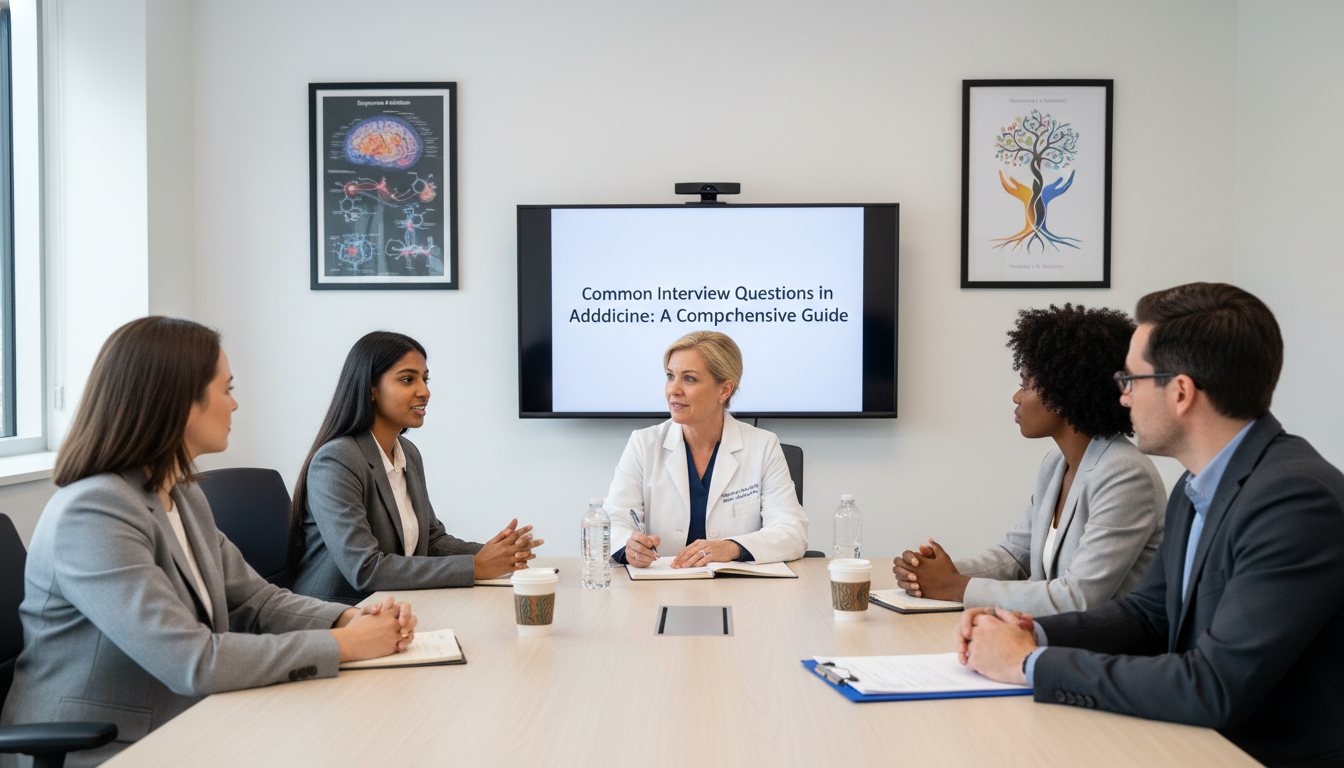
This guide breaks down common interview questions for MD graduates in clinical informatics, explains what programs are truly assessing, and provides strategies and examples so you can prepare with purpose.
Foundational Questions: Who You Are and Why Informatics
These questions open the conversation and set the tone. They often feel simple but carry high stakes; they frame how the rest of your answers will be interpreted.
1. “Tell me about yourself.”
This is almost guaranteed, whether you’re applying to a clinical informatics fellowship, health IT training track, or informatics-focused residency.
What they’re really asking
- Can you deliver a concise, organized narrative?
- Do you understand your own story and how it leads logically to clinical informatics?
- Are you self-reflective and purposeful, or scattered and opportunistic?
Structure your answer (2–3 minutes):
Present – Who you are now
- “I’m an internal medicine–trained physician with a strong interest in improving care delivery through data and technology…”
Past – Key experiences that shaped you
- Medical school, residency, projects, or roles that sparked your interest in informatics
- Briefly mention one or two defining experiences (e.g., EHR optimization project, quality improvement work, data analysis, app development)
Future – Why clinical informatics, why now
- Tie your path directly to the clinical informatics fellowship or health IT training role
- Clarify your intended career direction (e.g., CMIO track, data-driven QI, digital health leadership)
Example outline answer
“I’m a PGY-3 internal medicine resident with a strong focus on using data and technology to improve inpatient workflows. During my MD graduate residency, I noticed how much time we spent fighting the EHR rather than using it to support care.
In my second year, I led a project to redesign order sets for sepsis, working closely with IT analysts and frontline nursing. That experience showed me how thoughtful configuration, clinician engagement, and data feedback can change behavior and outcomes. I later completed elective time in clinical informatics, where I worked on a dashboard to track readmissions for our heart failure population.
Those experiences convinced me that my long-term impact will be greater if I combine clinical practice with formal training in clinical informatics. I’m particularly interested in learning more about data governance, predictive analytics, and implementation science, and I see this fellowship as the right next step to grow into a physician leader who bridges clinicians and IT.”
2. “Why clinical informatics?”
Even if your interest seems obvious to you, they want you to articulate it clearly.
Key points to hit
- Problem-focused, not gadget-focused: Care quality, safety, equity, efficiency
- Understanding that informatics is more than just EHRs: workflow, data standards, decision support, analytics, change management
- Awareness of the broad scope of clinical informatics fellowship training
Stronger responses include:
- Honest reflection on the pain points you’ve seen in clinical care
- How you moved from frustration to solution-seeking behavior
- Examples of initiatives, electives, or self-directed learning you pursued
Avoid saying:
- “I really like computers” (too superficial)
- “I’m burned out and want to get away from patients” (red flag)
Programs want to hear: “I care about patient care and system improvement; informatics is my vehicle.”
3. “Why our program / institution?”
For any allopathic medical school match or fellowship process, this question matters—but even more so in a niche field like clinical informatics where programs differ substantially.
Research and address:
- Program’s strengths (e.g., EHR vendor, data warehouse, research focus, quality initiatives)
- Faculty or projects that align with your interests
- Type of health system (academic, safety-net, integrated delivery network, VA, pediatric, etc.)
Actionable tip
Prepare 2–3 specific details for each program so your answer doesn’t sound generic:
- A particular informatics project mentioned on their website
- Their role in a regional HIE or interoperability initiative
- Their strengths in data science, telehealth, or decision support

Core Content Questions: Informatics Knowledge and Thought Process
You’re not expected to be a fully trained informatician, but you are expected to think like one. These questions test your conceptual understanding and reasoning.
4. “What do you think a clinical informatician does?”
They want to see if your expectations match reality.
Include elements such as:
- Translating clinical needs into technical requirements
- Supporting EHR configuration, order sets, templates, and clinical decision support
- Participating in data governance, quality improvement, and analytics projects
- Leading change management and stakeholder engagement
- Evaluating and implementing digital health tools (telemedicine, apps, patient portals)
A thoughtful answer shows you understand that clinical informatics is a bridge role, not just “doing IT stuff.”
5. “Describe a clinical problem you would like to address using informatics.”
What they’re assessing
- Your problem-framing skills
- Ability to think in terms of workflow, data, and stakeholders
- Pragmatism: do you suggest realistic, incremental solutions?
How to structure your answer
- Define the problem clearly – e.g., medication reconciliation errors at transitions of care
- Identify stakeholders – physicians, nurses, pharmacists, patients, IT, administration
- Describe possible informatics interventions – EHR workflow changes, clinical decision support, dashboards, structured documentation, alerts
- Consider implementation – pilot testing, training, evaluation metrics
- Reflect on limitations – alert fatigue, data quality, usability
Example topics:
- Reducing duplicate lab orders
- Improving timely follow-up of critical results
- Enhancing sepsis recognition and early treatment
- Managing high-risk patient populations using registries
6. “How comfortable are you with technology and data?”
Programs do not require you to be a programmer, but they do expect:
- Basic data literacy (e.g., understanding concepts like EHR data, registries, SQL, dashboards, predictive models conceptually)
- Willingness to learn technical concepts
- Proof you’ve engaged with technology beyond being just an end-user
Be honest. If you haven’t coded, say so—but highlight:
- Any exposure to data analysis (e.g., R, Python, Excel, statistical software)
- Experience working with analysts, data scientists, or IT teams
- Courses, certificates, or online learning (e.g., Coursera, AMIA 10×10, health IT training modules)
7. “What are some challenges with EHR implementation or optimization?”
Programs want to know if you recognize real-world complexity.
Consider discussing:
- User experience (UX) and workflow misalignment
- Alert fatigue and inappropriate decision support
- Data quality issues (missing, inaccurate, inconsistent documentation)
- Interoperability limitations and information blocking
- Change management – resistance from clinicians, inadequate training
- Governance – too many ad hoc customizations without oversight
Link your answer to experiences from your MD graduate residency or clinical rotations where you saw these issues in action.
Behavioral and Situational Questions: How You Work With Others
Behavioral interview medical questions are central in clinical informatics because the role is highly collaborative and political. Programs want to predict your future behavior from your past.
Use the STAR method (Situation, Task, Action, Result) for all behavioral questions.
8. “Tell me about a time you led a project or initiative.”
Clinical informatics fellows are often asked to lead cross-disciplinary projects. They’re testing:
- Leadership potential
- Initiative and follow-through
- Ability to work across disciplines
Choose an example such as:
- Leading an EHR documentation improvement project
- Running a QI project (e.g., sepsis bundle adherence, discharge summary timeliness)
- Organizing a new morbidity and mortality (M&M) format that uses data
Emphasize:
- How you identified the problem
- How you engaged stakeholders
- How you navigated resistance
- What changed as a result (even if outcomes were modest)
9. “Describe a time you faced resistance to change from colleagues.”
This is classic in a field where clinicians may be skeptical of IT changes.
Key elements
- Demonstrate empathy for frontline staff
- Show you can listen and adapt, not bulldoze
- Highlight communication strategies (one-on-one conversations, data transparency, pilot phases)
- Reflect on what you learned about change management
Avoid framing colleagues as “lazy” or “technophobic.” Instead, acknowledge:
- They may be overburdened
- Their concerns might reveal real design flaws
- Successful implementation requires co-creation with end-users
10. “Tell me about a time you made a mistake.”
Programs are testing:
- Integrity and self-awareness
- How you handle errors and feedback
- Your ability to learn and adapt
For MD graduate residency applicants transitioning into informatics, an honest clinical or project-related example is appropriate—as long as you:
- Take responsibility (no blaming)
- Explain what you did right after the mistake
- Clearly articulate what you changed in your behavior or process
- Avoid extremely egregious errors that might raise serious red flags without clear remediation
11. “Describe a challenging interpersonal situation and how you handled it.”
Clinical informatics often involves:
- Mediating between clinicians and IT
- Negotiating priorities with administrators
- Addressing conflict in committees or workgroups
Pick a scenario that shows:
- Listening skills
- Professional communication
- Focus on shared goals
- Ability to de-escalate tension
For example:
- Disagreement with a senior attending about documentation changes
- Conflict between two departments over order set ownership
- Friction with a colleague about project timelines

Clinical + Informatics Integration: Bridging Two Worlds
These questions test whether you can maintain a clinical identity while embracing technology and systems thinking.
12. “How do you see informatics fitting into your clinical career?”
For many programs, the goal is not to produce pure IT professionals, but clinician-informaticians.
Explain:
- What percentage of your career you envision as clinical vs. informatics (even if approximate)
- How your clinical work will inform your informatics priorities
- How your informatics skills will improve your clinical practice and your team’s care
Examples:
- “I’d like to maintain 30–40% clinical time in hospital medicine so I stay close to frontline needs.”
- “I see myself as a bridge who can translate between clinicians and technical teams, anchored in real patient care.”
13. “Can you describe a time when you used data to change your clinical practice or influence others?”
They want to see:
- Comfort reading and interpreting data
- Ability to move from data to action
- Appreciation for limitations of data
Examples:
- Using local data to change antibiotic choices or durations
- Presenting a run chart to show improvement in discharge summary completion
- Using dashboards to identify outliers in performance and initiate peer discussion
Explain how you:
- Obtained the data (even if simple)
- Analyzed or interpreted it
- Shared it with stakeholders
- Monitored changes over time
14. “What ethical issues do you foresee in clinical informatics?”
This is increasingly important in informatics interviews, especially with AI and big data.
Topics you might mention:
- Data privacy and security (HIPAA, de-identification, breaches)
- Algorithmic bias and fairness in predictive models
- Transparency and explainability of decision support systems
- Over-reliance on technology vs. clinical judgment
- Patient consent in data reuse, research, and AI training
Demonstrate that you:
- Don’t view technology as purely neutral
- Recognize the need for governance and safeguards
- Are willing to raise concerns when patient welfare is at stake
Program Fit, Motivation, and Logistics
Toward the end of interviews, programs want to confirm mutual fit and clarify practical details.
15. “What are your long-term career goals?”
Specificity helps. For example:
- “I’d like to become a hospital CMIO or an associate CMIO focusing on inpatient decision support and quality analytics.”
- “I hope to lead a health system’s population health analytics team.”
- “I’m interested in working at the intersection of academic medicine and digital health startups.”
You don’t need a perfectly fixed plan, but you should show:
- A clear vision that requires clinical informatics fellowship or advanced health IT training
- Motivation to contribute beyond your own career (to patients, systems, and the profession)
16. “What are you looking for in a clinical informatics fellowship / residency track?”
Anchor your answer in:
- Mentorship – from both clinicians and informaticians
- Project opportunities – EHR optimization, analytics, AI/ML, interoperability, telehealth
- Formal training – coursework in informatics, data science, change management
- Institutional environment – multidisciplinary collaboration, supportive leadership
Avoid saying “I just need any program to complete the required training.” Show intentionality.
17. “Do you have any experience with quality improvement or patient safety projects?”
Informatics and QI often go hand-in-hand. Highlight:
- QI curriculum from your MD graduate residency
- Specific projects (Plan-Do-Study-Act cycles, root cause analyses, safety event reviews)
- Any metrics you tracked and what changed
- How informatics tools supported your QI work (dashboards, order sets, templates)
18. “Do you have any questions for us?”
This question is not a formality; it’s another chance to demonstrate your thoughtfulness and fit.
Ask questions that:
- Show you understand what a clinical informatics fellowship entails
- Reflect your genuine interests
- Invite conversation rather than yes/no answers
Examples:
- “How have fellows here been involved in major EHR upgrades or new module implementations?”
- “Can you tell me about how fellows interface with the data science or analytics teams?”
- “What types of career paths have recent graduates of your program pursued?”
- “How does your program approach training in AI and predictive analytics for clinicians?”
Avoid:
- Questions that are clearly answered on the website
- Overly narrow questions about salary or vacation as your only concerns
Practical Preparation Strategies for MD Graduates
To prepare effectively for clinical informatics fellowship or health IT–focused interviews:
1. Review common themes and build stories
Create a set of 5–7 versatile personal stories that can be flexibly adapted to:
- Leadership
- Conflict resolution
- Project management
- Dealing with failure
- Working with other disciplines
- Using data or technology to improve care
Practice framing each story using the STAR method.
2. Refresh informatics fundamentals
You don’t need deep technical knowledge, but you should be conversant with:
- What clinical informatics encompasses (per ABPM, AMIA)
- Basic EHR architecture and workflow concepts
- Examples of effective clinical decision support
- Core interoperability ideas (HL7, FHIR in broad terms)
- How data is used for quality improvement and research
A brief review of key articles, AMIA resources, or a structured health IT training module can sharpen your language and confidence.
3. Align your CV with your narrative
Make sure your CV and your spoken narrative align:
- Highlight informatics-related work early (e.g., “Informatics and Quality Improvement Experiences” section)
- Be prepared to discuss every project you list in some detail
- Connect major experiences to your decision to pursue clinical informatics
4. Practice delivering concise answers
Program directors and interviewers are busy; rambling answers undermine strong content.
- Aim for 2–3 minutes for complex answers
- Practice out loud, ideally with feedback from mentors or peers
- Record yourself to assess clarity, pacing, and filler words
5. Prepare for virtual interview logistics
Many allopathic medical school match and fellowship interviews now occur virtually:
- Test your camera, microphone, and internet connection
- Choose a neutral, quiet background
- Keep notes nearby for quick reference (questions to ask, key points)
- Maintain eye contact by looking at the camera, not your own video
Frequently Asked Questions (FAQ)
1. How technical do I need to be for a clinical informatics fellowship?
You do not need to be a software engineer or expert coder. Programs expect:
- Strong clinical background as an MD graduate
- Curiosity about data and technology
- Comfort learning new tools and concepts
Any experience with data analysis, scripting, or working with IT teams is a plus, but not mandatory. Emphasize your ability to collaborate with technical experts and your willingness to build technical literacy.
2. How are clinical informatics interviews different from standard residency interview questions?
There is overlap—many residency interview questions (e.g., “tell me about yourself,” conflict, leadership, mistakes) still apply. The difference is how you frame your answers:
- Greater emphasis on systems, workflows, and data
- More questions about EHRs, decision support, and digital health
- Behavioral interview medical style that probes how you lead change and work across disciplines
They want to see you can think beyond individual patient encounters to the level of populations and processes.
3. What if I have limited formal informatics experience?
That is common. Focus on:
- Informal experiences where you noticed system issues and tried to improve them
- QI projects, committee work, or documentation initiatives
- Self-directed learning in health IT training, online courses, or informatics electives
You can be a strong candidate as long as you demonstrate a clear, authentic interest and a track record of engaging with system-level problems.
4. How should I prepare for “tell me about yourself” specifically for informatics?
Craft a 2–3 minute narrative that:
- Starts with your current role and clinical background.
- Highlights 2–3 key experiences where you engaged with EHRs, data, or system redesign.
- Concludes with a clear statement of why you’re pursuing clinical informatics and how this fellowship or role fits your long-term goals.
Practice out loud until it feels natural and confident, not memorized. Tailor your story slightly for each program based on their focus and strengths.
By anticipating these common interview questions and preparing thoughtful, experience-based responses, you can present yourself as a mature, mission-driven MD graduate ready to thrive in clinical informatics—advancing patient care, improving systems, and bridging the gap between medicine and technology.