Understanding the Med-Peds Residency Interview as a Caribbean IMG
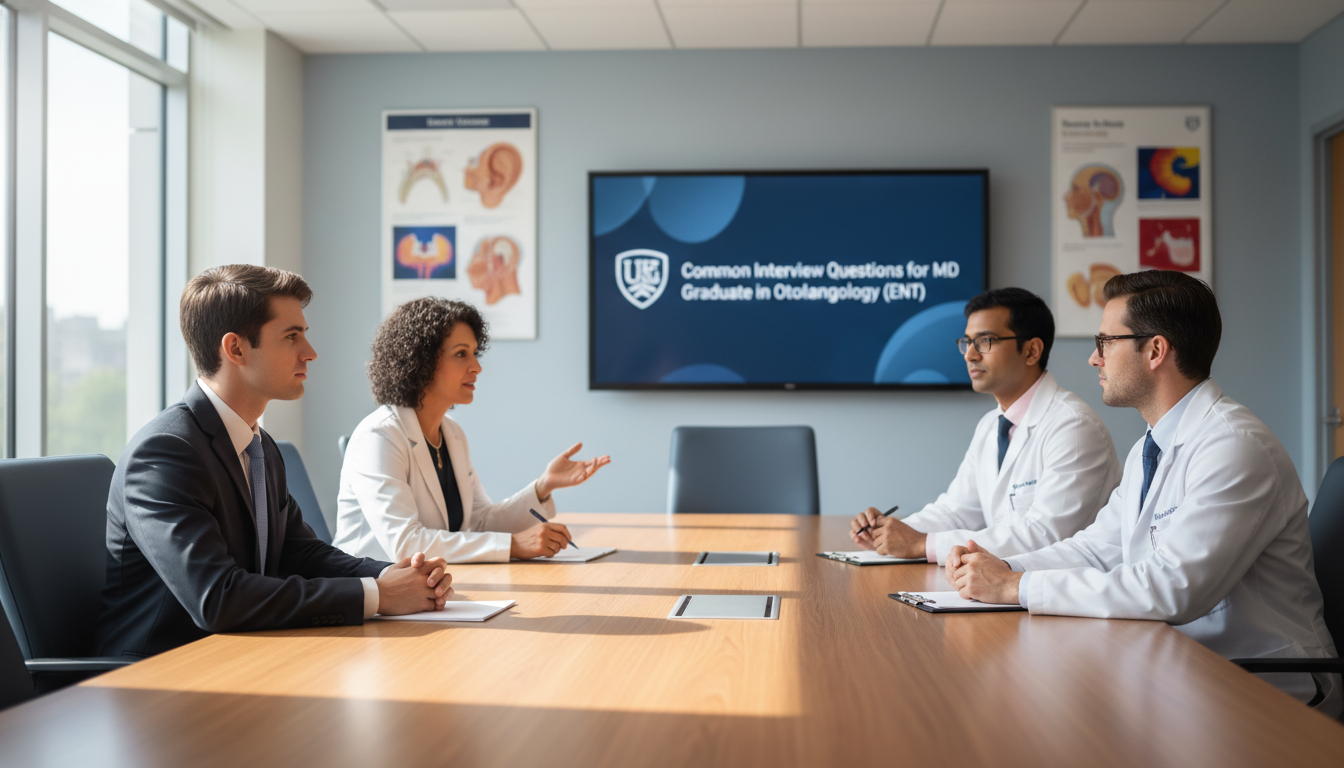
Medicine-Pediatrics (Med-Peds) residencies attract applicants who love complexity, continuity of care, and working with patients across the lifespan. As a Caribbean IMG, you face the dual challenge of explaining your Med-Peds interest and addressing concerns programs may have about Caribbean medical school training, US clinical exposure, and visa status.
This article focuses on common interview questions you can expect as a Caribbean IMG applying to Med-Peds and how to answer them strategically. We will also touch on key aspects of the Caribbean medical school residency landscape and how programs often view graduates from schools like SGU, AUA, Ross, Saba, etc. If you’re aiming for a strong medicine pediatrics match and especially if you’re following the SGU residency match path or similar, these questions and frameworks will help you prepare.
Core Behavioral and “Story” Questions You Will Almost Certainly Be Asked
Behavioral questions are standard in Med-Peds interviews because programs want to know how you think, how you work in teams, and how you respond under pressure. For Caribbean IMGs, these also serve as opportunities to highlight your adaptability, resilience, and cross-cultural competence.
Use the STAR framework for behavioral interview medical questions:
- Situation – Brief background
- Task – Your role/what needed to be done
- Action – What you did (focus here)
- Result – What happened and what you learned
1. “Tell me about yourself.”
This is almost always the first and most important question. Programs use it to assess your communication style, organization, and professional identity.
Goals for a Caribbean IMG Med-Peds applicant:
- Show a clear, logical path from your background to Med-Peds.
- Address being a Caribbean graduate positively but briefly, without defensiveness.
- End with why you’re a good fit for this specific Med-Peds program.
Suggested 3-part structure (2–3 minutes):
- Brief background & education
- Clinical experience & Med-Peds motivation
- Current goals & why this program
Example outline answer:
- Background:
- Where you grew up and your undergrad background.
- Why you chose a Caribbean medical school (succinct, non-apologetic).
- Med school & clinicals:
- Key experiences in internal medicine and pediatrics (US rotations if possible).
- One or two defining stories that led you to Med-Peds.
- Today:
- The kind of Med-Peds physician you want to become.
- What you’re looking for in a program that matches the one you’re interviewing at.
Sample (condensed) response:
I grew up in [country/city], where I was exposed early to health disparities and limited access to care, especially for children and families with chronic conditions. After completing my undergraduate degree in [field] at [institution], I pursued my medical education at [Caribbean school].
During my core rotations, I found myself equally drawn to internal medicine and pediatrics. On my medicine rotation, I loved managing complex adults with multiple comorbidities and working through diagnostic uncertainty. On pediatrics, I enjoyed building trust with families, focusing on prevention, and watching children improve quickly with appropriate care. A continuity clinic experience where I followed a teenager with congenital heart disease into young adulthood really solidified Med-Peds for me—I saw how important it was to provide seamless care across the lifespan.
Over the last year, in my US-based medicine and pediatrics electives, I’ve become more confident in managing both acute and chronic conditions in diverse patient populations, and I’ve seen how Med-Peds physicians serve as bridges between pediatric and adult systems. I’m now looking for a Med-Peds program with strong inpatient training, robust ambulatory continuity, and a culture of mentorship for IMGs. From speaking with your residents and reviewing your curriculum, I feel this program aligns well with my goals of caring for medically complex, underserved patients and pursuing a career in academic primary care.
Key tips:
- Practice until it sounds natural, not memorized.
- Avoid long autobiographical stories; be purposeful.
- Subtly address your Caribbean medical school residency path as a deliberate, thoughtful choice.
2. “Why Med-Peds and not just Internal Medicine or Pediatrics?”
Programs want to see that you understand the specialty and aren’t just hedging between IM and Peds.
Elements to include:
- Explain what uniquely draws you to dual training.
- Give specific types of patients or clinical scenarios that excite you.
- Mention continuity across the lifespan, complex care, or transitional care.
Example points you might weave together:
- Enjoyment of complex adult medicine (e.g., heart failure, diabetes with complications, multi-morbidity).
- Fulfillment from pediatrics (growth, prevention, family-centered care).
- Passion for transitional care: congenital heart disease, cystic fibrosis, childhood-onset diabetes, sickle cell disease.
- Interest in working in underserved or resource-limited settings, where dual training is extremely valuable.
Pitfalls to avoid:
- Saying you “couldn’t decide” between the two specialties without deeper reasoning.
- Being vague—programs want concrete examples.
3. “Why did you choose a Caribbean medical school?” / “Tell us about your journey as a Caribbean IMG.”
This is especially common for Caribbean graduates, including those targeting the SGU residency match or similar pathways. Interviewers are often assessing:
- Insight and maturity behind your decision.
- Resilience, adaptability, and growth.
- How you handle perceived “weaknesses” in your application.
Guiding structure:
- Brief context for the decision (scores, timing, personal factors).
- Emphasize ownership of the choice, not victimhood.
- Highlight the strengths of your training and what you gained.
- Connect it to how it prepared you for Med-Peds and the US system.
Sample framing:
I applied to US medical schools initially but was not accepted. At that point, I carefully evaluated Caribbean options, spoke with alumni, and chose [school] because of its strong US clinical network and record of placing graduates in US residency programs, including Med-Peds and primary care.
Training as a Caribbean IMG required a high degree of self-discipline and adaptability. I had to actively seek out research, mentorship, and US clinical experiences. During my core and elective rotations in the US, I worked hard to demonstrate that my knowledge base and clinical skills meet the same standards as my US-trained colleagues.
This path has definitely made me more resilient and proactive. I learned to navigate new health systems quickly, work with diverse patient populations, and advocate for my own education. I believe those skills will serve me and my patients well in a demanding Med-Peds residency.
Keep the tone:
- Positive.
- Accountable.
- Forward-looking.

High-Yield Behavioral Interview Medical Questions for Med-Peds
Med-Peds programs rely heavily on behavioral interview medical questions to gauge your professionalism and teamwork. Below are common questions and ways to structure your responses.
4. “Tell me about a time you had a conflict with a team member. How did you handle it?”
Programs want to see how you function in interprofessional teams, especially in busy adult and pediatric services.
Use STAR:
- S: Briefly describe the rotation and the conflict.
- T: Your responsibility in that situation.
- A: What you specifically did to address the issue.
- R: Outcome and what you learned.
Stronger example themes for Med-Peds:
- Disagreement with a senior resident over management of an asthma exacerbation or sepsis.
- Conflict with a nurse regarding discharge instructions for a complex child or adult.
- Miscommunication about follow-up for a patient transitioning from peds to adult clinic.
What interviewers are listening for:
- Respectful communication.
- Willingness to listen, not just insist.
- Focus on patient safety and team function, not ego.
- Reflection: “Next time I would…”
5. “Describe a time you made a mistake in clinical care.”
All residents make mistakes; Med-Peds programs care about your honesty, insight, and response.
Good approach:
- Choose a real but non-catastrophic error.
- Avoid blaming others or the system entirely.
- Show you:
- Recognized the error.
- Took responsibility.
- Communicated appropriately (to team and, when appropriate, to patient/family).
- Implemented changes to avoid repeating it.
Example scenario types:
- Delayed follow-up on a pending lab.
- Medication dose miscalculation caught by a nurse or pharmacist.
- Miscommunication about NPO status leading to a delay in a procedure.
Link your reflection to Med-Peds:
This experience underscored the importance of clear communication and structured handoffs, especially for complex patients who may see multiple teams as they transition between pediatric and adult care.
6. “Tell me about a difficult patient or family you worked with.”
Med-Peds physicians frequently navigate sensitive family dynamics and complex psychosocial issues. Interviewers want to know if you can handle challenging interactions without judgment.
Include:
- How you listened to the patient/family.
- Efforts to understand their perspective (culture, language, health literacy).
- How you balanced empathy with appropriate boundaries.
- Any collaboration with social work, case management, psychology.
For Caribbean IMGs:
- Highlight your cross-cultural competence and ability to adapt communication style.
- If you speak multiple languages, note how that helped build trust.
7. “Describe a situation where you showed leadership.”
Leadership isn’t only titles; it’s behaviors.
Examples suitable for Med-Peds:
- Organizing teaching sessions for junior students on both adult and pediatric topics.
- Leading quality improvement or a patient-safety project.
- Coordinating care for a medically complex patient with multiple specialists.
- Serving as a liaison between residents and administration in a clinical setting.
Connect leadership to Med-Peds:
I realized how critical it is to coordinate multidisciplinary input, especially for patients with chronic conditions who move between pediatric and adult services.
Med-Peds–Specific Questions You Should Expect
Programs will want to know that you understand what makes Med-Peds unique.
8. “What kinds of patients do you see yourself caring for as a Med-Peds physician?”
Use this question to demonstrate a clear vision of your future career.
Potential interests to mention:
- Transitional care for youth with congenital heart disease, sickle cell, CF, type 1 diabetes, childhood cancer survivors.
- Community-based primary care for underserved urban or rural populations.
- Working with adolescent and young adult patients, including mental health and substance use.
- Global health or work with resource-limited settings, where dual training is particularly useful.
As a Caribbean IMG, you might highlight:
- Desire to bridge care between Caribbean communities and US health systems.
- Interest in returning to or serving Caribbean or immigrant communities with limited access.
9. “How will you integrate your adult and pediatric training in your career?”
Show that you’re not thinking of Med-Peds as “two separate residencies,” but as an integrated skill set.
You might say you plan to:
- Have a mixed-age continuity clinic (children, adolescents, and adults).
- Focus on families—caring for parents and children in the same practice.
- Work at a transition clinic that specifically helps youth move from pediatric to adult care.
- Be involved in systems-level work to improve transition protocols.
10. “What do you see as the biggest challenges facing Med-Peds today?”
This question assesses your understanding of healthcare systems and Med-Peds identity.
Possible points:
- Fragmentation between pediatric and adult care systems.
- Lack of standardized transition of care processes.
- Workforce recognition and explaining the Med-Peds role to patients and other providers.
- Ensuring Med-Peds physicians are used optimally (not just as “extra coverage” for either IM or Peds).
Demonstrate that you:
- Stay informed (mention guidelines, position statements if you know them).
- Think about solutions—education, advocacy, interdisciplinary collaboration.

Addressing IMG- and Caribbean-Specific Concerns Directly
Even if interviewers never phrase it this way, some are wondering:
- Can this Caribbean IMG handle the intensity of residency here?
- How well have they integrated into the US system?
- Are there communication, cultural, or professionalism concerns?
Anticipate and indirectly answer these concerns.
11. “What challenges have you faced as an international/Caribbean medical graduate, and how have you handled them?”
This is your chance to frame your story as one of resilience and growth.
Consider including:
- Navigating multiple health systems (Caribbean + US).
- Adapting to different documentation and EMR systems.
- Managing distance from family support systems.
- Balancing visa/immigration logistics with training.
Focus on:
- Practical strategies you used (time management, seeking mentorship).
- How these experiences prepared you for a demanding med peds residency:
- Flexibility.
- Cultural sensitivity.
- Strong work ethic.
12. “How have your US clinical experiences prepared you for Med-Peds?”
For Caribbean IMGs, US rotations are critical evidence that you can function in the local environment.
Be specific:
- Mention particular US hospitals/clinics, types of patients, and responsibilities.
- Highlight experiences in both IM and Pediatrics:
- Managing adults with multi-morbidity.
- Caring for children with acute illnesses or chronic conditions.
- Participating in family-centered rounds.
- Emphasize:
- Comfort with EMRs.
- Order entry.
- Electronic handoffs.
- Participation in interdisciplinary rounds.
If you’ve had exposure to Med-Peds physicians or combined clinics, describe that concretely.
13. “Do you have any concerns about starting residency in the US?”
Avoid saying “no concerns at all.” Instead, show insight and readiness.
Examples:
- Acknowledge that transitioning to intern year is challenging for everyone.
- Mention realistic concerns (long hours, steep learning curve) and what you’re doing to prepare:
- Reading regularly.
- Practicing residency interview questions and clinical scenarios.
- Reviewing US guidelines and common protocols.
- Seeking feedback during sub-internships or acting internships.
Tie it back to your Caribbean IMG experience:
Having already adapted to different clinical environments, I feel prepared to quickly learn your system and contribute to the team, while still being aware that I’ll need to keep asking questions and seeking feedback early on.
Classic Residency Interview Questions You Still Need to Master
Beyond Med-Peds and IMG-specific questions, you’ll still get the standard residency interview questions.
14. “What are your strengths and weaknesses?”
Strengths:
- Choose 2–3 strengths that are highly relevant to Med-Peds:
- Communication with diverse populations.
- Adaptability across settings.
- Strong clinical reasoning.
- Teamwork and humility.
- Provide a brief example illustrating each strength.
Weaknesses:
- Avoid clichés (“I’m a perfectionist”) unless you can ground them in real behavior.
- Choose something real but improvable, such as:
- Initially taking on too much responsibility without asking for help.
- Hesitancy in delegating tasks.
- Difficulty with work-life balance.
- Emphasize:
- Specific steps you’re taking to improve.
- Results you’ve seen so far.
15. “Where do you see yourself in 5–10 years?”
Interviewers want to know:
- Do you have a coherent career vision?
- Is it realistic within Med-Peds training?
Possible directions:
- Academic Med-Peds physician with a focus on transitional care.
- Community Med-Peds practitioner serving underserved or immigrant communities.
- Global health work bridging care between Caribbean and US populations.
- Leadership roles in quality improvement or medical education.
For Caribbean IMGs, it can be compelling to:
- Mention a desire to remain engaged with Caribbean communities, either locally in diaspora or through global partnerships.
- Emphasize continuity of care and health equity.
16. “Why our program?”
This question is almost guaranteed, and weak answers can sink an otherwise good interview.
Do your homework:
- Review:
- Program website and curriculum.
- Med-Peds clinic structure.
- Patient population.
- Unique tracks (global health, advocacy, primary care, hospitalist).
- Talk to:
- Current or former residents (if possible).
- Alumni from your Caribbean school who matched there.
Structure a strong answer:
- Educational fit – e.g., strong inpatient exposure, robust ambulatory continuity, Med-Peds identity.
- Patient population – underserved communities, diversity, specific disease patterns.
- Program culture – supportive for IMGs, mentorship, collegial environment.
- Location/personal factors – proximity to family or Caribbean diaspora communities (briefly).
Make it clear you’re not using a generic script. Include specific details you could only know from learning about that program.
17. “Do you have any questions for us?”
Always say yes and prepare at least 3–5 thoughtful questions. This is a key part of the behavioral interview medical process because it reveals your priorities and how you think.
Good question categories:
- Curriculum & training:
- How is Med-Peds identity supported compared with categorical IM and Peds?
- What opportunities exist for Med-Peds residents in transition clinics?
- Support for IMGs:
- What structures are in place to support international graduates adjusting to the US system?
- Mentorship and career development:
- How do graduates from your program typically structure their careers?
- What percentage enter primary care vs fellowship vs hospitalist work?
- Program culture:
- How would you describe the culture between residents and faculty here?
Avoid questions that:
- Are clearly answered on the website.
- Focus solely on vacation, benefits, or moonlighting in a way that suggests that’s your primary concern.
Final Practical Tips for Caribbean IMGs Preparing for a Med-Peds Interview
Build a “story bank.” Have 8–10 concrete stories ready:
- A conflict you resolved.
- A difficult patient/family.
- A mistake you learned from.
- A time you led a team.
- A success you’re proud of.
For each story, identify what they reveal about:
- Communication.
- Teamwork.
- Resilience.
- Ethical decision-making.
- Commitment to Med-Peds.
Practice out loud with:
- Co-applicants or upper-year residents.
- Career services at your Caribbean school.
- Alumni who have successfully completed a medicine pediatrics match.
Record yourself answering “Tell me about yourself,” “Why Med-Peds?” and “Why this program?” until you are concise, confident, and clear.
Know your application inside out:
- Be prepared to discuss any:
- Gaps.
- Exam failures or low scores.
- Research projects.
- Volunteer experiences.
- Have honest, non-defensive explanations that show growth and accountability.
- Be prepared to discuss any:
Leverage your strengths as a Caribbean IMG:
- Adaptability to new systems.
- Comfort with diverse cultures and socioeconomic backgrounds.
- Often strong clinical exposure and hands-on experience.
- Motivation and resilience demonstrated by navigating the Caribbean medical school residency pathway.
If you approach the process thoughtfully, with honest self-reflection and well-prepared stories, your interviews can be a major asset in securing a position in a med peds residency—even in a competitive medicine pediatrics match as a Caribbean IMG.
FAQ: Common Questions from Caribbean IMGs Applying to Med-Peds
1. Are Med-Peds programs open to Caribbean IMGs?
Yes. Many Med-Peds programs have a history of matching international graduates, including Caribbean-trained physicians. Success is more likely if you have:
- Strong USMLE scores.
- Solid US clinical experience in both IM and Pediatrics.
- Strong letters of recommendation (ideally one from a Med-Peds physician if possible). Schools with strong SGU residency match outcomes, for example, often place students into Med-Peds, but each program’s IMG friendliness varies—research this ahead of time.
2. What interview questions should I expect specifically about being a Caribbean graduate?
Common ones include:
- Why did you choose a Caribbean medical school?
- What challenges have you faced as an international/Caribbean graduate?
- How have your US rotations prepared you for residency here? Prepare concise, positive, and reflective answers, emphasizing resilience, adaptability, and how your background will help you thrive in residency.
3. How can I best prepare for behavioral interview medical questions?
- Learn and practice the STAR method.
- Build a list of clinical and personal experiences you can adapt to multiple questions.
- Practice with friends, mentors, or career advisors.
- Focus on demonstrating your thought process, teamwork, and growth—not just the outcome. Review lists of common residency interview questions and rehearse out loud, especially “Tell me about yourself,” which sets the tone for the entire interview.
4. Is there anything different I should do as a Caribbean IMG to improve my medicine pediatrics match chances?
Beyond strong academics and clinicals, emphasize:
- US-based IM and Peds rotations with good evaluations.
- Letters from US faculty who can directly compare you to US-trained students.
- Clear, specific commitment to Med-Peds (not just “I like adults and kids”). Also:
- Understand each program’s track record with IMGs.
- Apply broadly.
- Prepare particularly well for your interviews, as they are an important opportunity to overcome any preconceived notions about Caribbean medical school training.