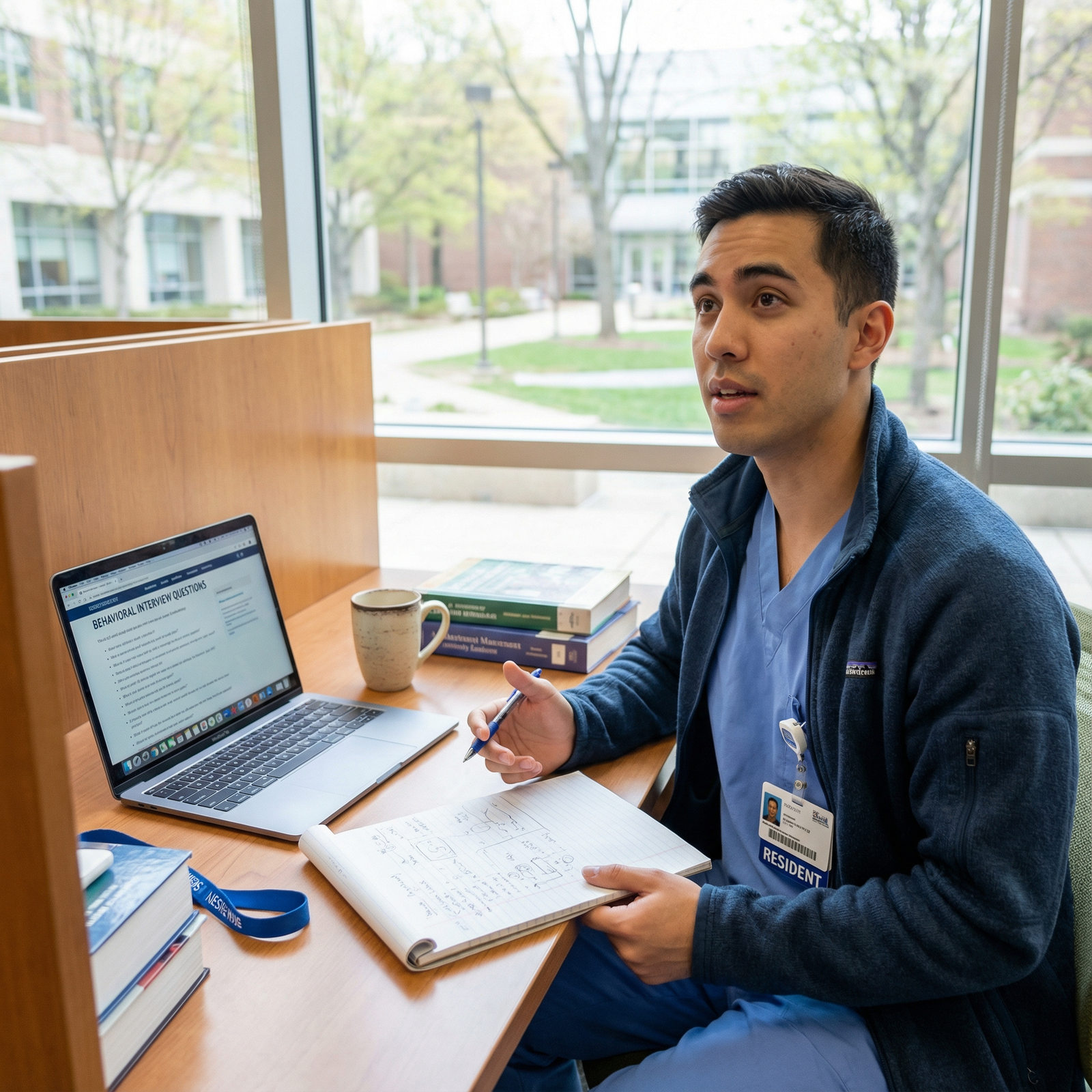
Understanding the Med-Peds Interview Landscape as a DO Graduate
Medicine-Pediatrics (Med-Peds) residency interviews are rigorous, conversational, and increasingly behavioral in style. As a DO graduate, you bring unique training and perspective that programs value—but you also need to be prepared to address specific osteopathic-related questions and show how you’ll thrive in a combined specialty.
This article breaks down common residency interview questions you’ll likely face, why they’re asked, and how to answer them thoughtfully. It is tailored to DO graduates applying to Med-Peds programs and navigating the osteopathic residency match or the broader medicine pediatrics match.
We’ll cover:
- Classic and behavioral interview questions
- DO-specific angles you should anticipate
- Med-Peds–specific topics programs care about
- How to structure strong, memorable answers
- Sample responses and practical strategies
Throughout, keep three priorities in mind:
- Show you understand Med-Peds as a distinct specialty, not just “IM + Peds.”
- Highlight the value of your osteopathic background for this specific field.
- Demonstrate maturity, insight, and team orientation through examples (behavioral interviewing is standard now).
Core “Getting to Know You” Questions
These are almost guaranteed to come up in some form at every Med-Peds interview, whether you’re a DO or MD. Your goal is to show who you are, how you think, and why Med-Peds is a fit.
1. “Tell me about yourself.”
This is the most predictable of all residency interview questions, yet many applicants ramble here. Programs often use your answer to this question to decide what to ask you next—and to remember you later.
What they’re really asking:
- Can you organize your thoughts and communicate clearly?
- What are the major themes of your story?
- How do those themes connect to Med-Peds and to being a DO graduate?
How to structure it (2–3 minutes):
Use a simple, chronological framework:
- Past – Brief background and key influences
- Present – Where you are now and your main interests
- Future – What you’re aiming for and why this specialty
Example outline for a DO Med-Peds applicant:
- Past: Where you grew up, key experiences that led you to medicine (e.g., community service, work with underserved populations, early exposure to both adult and child care).
- Present: Your DO school, major clinical or research interests, leadership or advocacy work, and why you gravitated toward Med-Peds.
- Future: The kind of Med-Peds physician you hope to be (e.g., primary care for transitional-age youth, complex chronic disease management, academic Med-Peds, hospitalist) and how your osteopathic perspective fits into that.
Sample framing:
“I’m originally from a small rural town where access to both adult and pediatric care was limited. Growing up, my grandparents and younger siblings often had to see different physicians hours apart, and continuity was a challenge.
At my DO school, I was drawn to the holistic, systems-based approach and had early exposure to both internal medicine and pediatrics through community clinics. I realized I loved managing complex adult conditions, but I also felt at home working with kids and families. On my rotations, I was consistently drawn to patients whose medical issues didn’t fit neatly into one age group or specialty.
Looking ahead, I see myself as a Med-Peds physician working with underserved populations, especially adolescents and young adults with chronic childhood-onset conditions transitioning to adult care. My osteopathic training in whole-person, longitudinal care fits naturally with that, and I’m excited about a residency that will support my interests in continuity clinic and health systems improvement.”
This connects your background, DO identity, and Med-Peds clearly and concisely.
2. “Why Medicine-Pediatrics instead of Internal Medicine or Pediatrics alone?”
This is the defining Med-Peds question. Your answer must go beyond “I like both” or “I couldn’t choose.”
What they’re looking for:
- Evidence you understand Med-Peds as a true combined specialty.
- Insight into specific populations or career paths that need dual training.
- Maturity in your decision-making process.
Key points to cover:
- Clinical themes: Transitional care, complex chronic disease, dual populations (e.g., adult with congenital heart disease, cystic fibrosis, sickle cell disease).
- Career goals: Med-Peds hospitalist, primary care with broad age range, global health, academic Med-Peds, etc.
- Skills and mindset: Flexibility, comfort with uncertainty, ability to switch cognitively and emotionally between age groups.
Example talking points:
“I seriously considered both internal medicine and pediatrics. On my IM rotation, I enjoyed the complexity and multi-morbidity of adult patients. On pediatrics, I valued preventive care and building long-term relationships with families.
What drew me specifically to Med-Peds was seeing the gaps in transitional care. On my pediatric endocrine rotation, I followed a teen with Type 1 diabetes who was about to age out of pediatric care; the family was anxious about losing their long-standing team. Later, on adult medicine, I cared for a 23-year-old with the same condition who had poor follow-up after transitioning. I realized that Med-Peds physicians are uniquely equipped to bridge that gap and create continuity across the lifespan.
Med-Peds matches my long-term goals of caring for both adults and children, especially young adults with childhood-onset disease, and my DO background in holistic, continuity-focused care reinforces that choice.”
If you’re applying to Med-Peds plus categorical programs, be prepared to give a consistent but tailored answer across specialties.
3. “Why did you choose osteopathic medicine?” (DO-focused)
As a DO graduate, you will almost certainly be asked this, especially at programs historically more allopathic. This is your opportunity to highlight what you bring to a Med-Peds residency because of your DO background, not in spite of it.
What they’re looking for:
- Thoughtful reasons for choosing a DO path.
- Understanding and pride in your osteopathic identity.
- How osteopathic principles align with Med-Peds.
Potential angles:
- Emphasis on whole-person care, mind-body-spirit integration.
- Focus on prevention, function, and lifestyle across the lifespan.
- Experience with OMM/OMT as a tool to help patients (even if you don’t plan to use it extensively, show you value it).
Sample answer elements:
“I chose a DO school because the philosophy of treating the whole person, not just the disease, mirrored how I wanted to practice medicine. The osteopathic focus on function, lifestyle, and social context has been especially relevant in Med-Peds settings—whether I’m counseling a teenager on obesity and physical activity or helping an older adult manage chronic pain without over-reliance on medications.
OMM training has also deepened my understanding of anatomy and biomechanics, which I’ve applied in sports physicals and musculoskeletal complaints in both adults and children. Even when I’m not performing manipulation, that hands-on, structural perspective informs my physical exams and treatment plans.
Ultimately, I see my DO background as complementary to Med-Peds’ emphasis on continuity, prevention, and caring for the whole patient across the lifespan.”
You don’t need to overemphasize OMT, but do convey confidence in your training.

Behavioral and Scenario-Based Interview Questions in Med-Peds
The behavioral interview medical style is now standard. Programs ask about specific past behaviors because they predict future performance. These questions often begin with:
- “Tell me about a time when…”
- “Give me an example of…”
- “Describe a situation where…”
Use the STAR method:
- Situation – Context
- Task – Your responsibility
- Action – What you did
- Result/Reflection – Outcome, what you learned, how you grew
4. Teamwork and Communication
Common questions:
- “Tell me about a time you had a conflict with a team member. How did you handle it?”
- “Describe a situation where you had to communicate bad news or difficult information to a patient or family.”
- “Tell me about a time you advocated for a patient.”
Med-Peds angle: Show you can navigate difficult dynamics with families, adolescents, and complex adult patients, and work across disciplines (nursing, social work, subspecialists).
Example scenario (advocacy):
Situation: On your pediatrics rotation, a medically complex child kept bouncing between the ED and clinic due to social instability.
Task: You were the student following the patient in clinic.
Action: You coordinated with social work, clarified medication access issues, ensured the family received transportation resources, and presented a coherent care plan to the attending.
Result/Reflection: Fewer ED visits, improved follow-up, and you learned the importance of addressing social determinants of health—a critical piece of Med-Peds care.
Be concrete: name your role, not just what “we” did, but also show that you value the team.
5. Handling Stress, Errors, and Feedback
Med-Peds is intense: busy inpatient services, clinic continuity, frequent switching between age groups. Programs want residents who are self-aware and resilient.
Common questions:
- “Tell me about a time you made a mistake in clinical care or on a rotation.”
- “Describe a situation where you received critical feedback. What did you do with it?”
- “How do you manage stress and prevent burnout?”
Key principles:
- Never claim you’ve never made a mistake. Choose a safe but honest example.
- Focus on ownership, communication, and systems improvement, not blame.
- End with specific changes you made to your behavior or system.
Example structure (feedback):
Situation: On your internal medicine rotation, you received feedback that your notes were too long and not focused enough on assessment and plan.
Task: You needed to improve documentation while still capturing complexity.
Action: You asked your senior resident for examples of strong notes, created a template for yourself, and practiced writing concise daily notes, asking for feedback after a week.
Result/Reflection: Your notes improved, you received positive comments later in the rotation, and you realized how effective targeted feedback plus deliberate practice can be. This experience shapes how you plan to actively seek feedback in residency.
For stress management, move beyond generic answers like “I exercise” and include something concrete and sustainable (e.g., scheduled debriefs with peers, mindfulness, time blocking, boundaries with email/social media).
6. Ethical and Difficult Situations
These questions test judgment and professional values.
Common examples:
- “Tell me about a time you saw something in the clinical environment that concerned you. What did you do?”
- “Describe a situation where a family or patient asked for something you didn’t think was in their best interest.”
- “How would you approach a parent refusing a vaccination for their child?” (very common in Med-Peds)
Vaccination refusal example (Med-Peds–specific):
- Start with empathy and curiosity: understand the parent’s concerns without judgment.
- Use motivational interviewing: ask open-ended questions, affirm their role as a caring parent, reflect their concerns, and offer evidence-based information.
- Emphasize shared goals: protecting the child/family/community.
- If they still refuse, document the conversation, maintain the relationship, and ensure they know they can revisit the topic.
- Reflect on the importance of longitudinal trust in Med-Peds to gradually move the needle on preventive care.
Programs want to see that you balance respect for autonomy with advocacy for evidence-based care, and that you recognize Med-Peds’ emphasis on continuity and trust-building.

Med-Peds–Specific Content Areas Programs Probe
Beyond generic questions, Med-Peds interviews often explore your understanding of what’s unique about the specialty and how you’ll use dual training long-term.
7. “How do you see yourself using both sides of your training?”
Programs worry about residents who end up doing only medicine or only pediatrics. Show that you’ve thought concretely about integrating both.
Possible themes:
- Transitional care clinics (e.g., cystic fibrosis, sickle cell, congenital heart disease)
- Combined Med-Peds hospitalist roles
- Global health where age-based separation is less strict
- Primary care in underserved areas with limited subspecialty access
- Complex chronic disease across the lifespan
You don’t need a fully formed 10-year plan, but you should have plausible, specific ideas.
8. “Tell me about a Med-Peds physician you’ve worked with or what you learned on your Med-Peds rotation.”
If you had Med-Peds exposure, you will be asked about it.
Highlight:
- How Med-Peds attendings approached patients differently than categorical colleagues.
- Examples of transitional care, continuity, or multi-generational care.
- How observing Med-Peds physicians solidified your career choice.
If you didn’t have formal Med-Peds exposure, be honest and emphasize how you sought out combined experiences: adult congenital clinics, adolescent medicine, transitional programs, etc.
9. Balancing Adult and Pediatric Mindsets
Med-Peds requires constant cognitive switching—one room might hold a 2-month-old with fever, the next a 65-year-old with CHF exacerbation.
Programs may ask:
- “What do you find challenging about working with both adults and children?”
- “How do you adjust your communication style between pediatric and adult patients?”
- “Tell me about a time you had to work with a challenging adolescent patient.”
Emphasize:
- Flexibility and self-awareness.
- Strategies to meet patients where they are developmentally.
- Respectful communication with parents and caregivers while still centering the patient.
DO-Specific and Osteopathic Residency Match Considerations
As a DO graduate, you’ll sometimes encounter subtle or explicit questions about board exams, OMT, and any perceived gaps in allopathic exposure.
10. “Did you take the USMLE? How do you feel about your board performance?”
If you took both COMLEX and USMLE, have a clear, non-defensive explanation. If you only took COMLEX, be ready to speak confidently about it.
Tips:
- Own your decision: explain your reasoning (timeline, cost-benefit, focus on COMLEX, etc.).
- If you have gaps or lower scores, focus on how you’ve grown—study strategies, improved performance on later exams, strong clinical evaluations.
Avoid over-apologizing; instead, link your performance to concrete adjustments you made and clinical strengths you’ve demonstrated since.
11. “How do you plan to use your osteopathic skills in residency?”
Programs may ask if and how you’ll integrate OMT in a Med-Peds context.
Possible answers:
- Direct integration: select patients with musculoskeletal pain, headaches, or pulmonary issues in clinic or on wards, with attending support.
- Educational value: contributing to teaching sessions or workshops on physical exam and functional anatomy.
- Indirect impact: using osteopathic principles to frame discussions of posture, ergonomics, functional limitations, and rehabilitation.
You don’t need to commit to a high OMT volume, but you should show that you value your osteopathic training and see it as an asset, not a liability.
Practical Strategies to Prepare Answers
Build a Personal Question Bank
For the most common medicine pediatrics match and behavioral interview medical topics, create a list of 10–15 core stories from your rotations and life that highlight:
- Leadership
- Teamwork
- Conflict resolution
- Dealing with mistakes
- Advocacy for patients
- Working with children, families, complex adults
- Managing transitions or ambiguity
Map each story to multiple potential questions using the STAR method. This allows you to adapt on the fly without sounding scripted.
Practice Out Loud—But Don’t Memorize
- Rehearse responses to:
- “Tell me about yourself”
- “Why Med-Peds?”
- “Why did you choose a DO school/osteopathic medicine?”
- Record yourself or practice with a friend/mentor.
- Aim for clear structure, 2–3 minute answers, and genuine tone.
- Avoid scripting word-for-word; focus on key bullet points.
Anticipate Program-Specific Questions
Before each interview:
- Review the program’s website—look for:
- Transitional care clinics
- Combined Med-Peds hospitalist tracks
- Research strengths
- Community or global health initiatives
- Prepare 2–3 tailored talking points about how your goals align.
- Get ready to answer:
- “Why our program?”
- “What interests you about our curriculum/clinics/population?”
Prepare Questions You’ll Ask Them
Programs also judge you by the questions you ask. Have thoughtful ones ready about:
- How they support DO graduates or prior osteopathic residents
- Structure of Med-Peds continuity clinic
- Opportunities in transitional care, QI, or specific populations you care about
- Wellness and mentorship in a dual-training environment
This shows you’ve moved beyond just trying to match anywhere and are thinking intentionally about fit.
FAQs: Medicine-Pediatrics Interview Questions for DO Graduates
1. Are Med-Peds interviews different for DO graduates compared to MDs?
The core residency interview questions are similar, but DO graduates are more likely to be asked about:
- Why they chose osteopathic medicine
- How they plan to use OMT/OMM
- Their board exam strategy (COMLEX ± USMLE)
- Their experience working alongside MDs or in mixed environments
As long as you approach these topics confidently and positively, your DO background is an asset—especially in a specialty like Med-Peds that values holistic, continuity-based care.
2. What behavioral questions are most common in Med-Peds interviews?
Common behavioral questions include:
- “Tell me about a time you had a conflict with a team member.”
- “Describe a situation when you had to deliver bad news or manage a difficult conversation with a patient or family.”
- “Tell me about a time you made a mistake in clinical care.”
- “Give me an example of how you handled a challenging adolescent or a non-adherent adult patient.”
Prepare STAR-based stories that highlight teamwork, communication, resilience, and advocacy—ideally with examples that include both adult and pediatric contexts when possible.
3. How can I show I’m serious about Med-Peds and not just ‘undecided’ between IM and Pediatrics?
Programs are wary of applicants who seem to view Med-Peds as a compromise. To counter this:
- Give specific reasons for Med-Peds: transitional care, complex chronic disease across the lifespan, underserved settings, Med-Peds hospitalist roles, etc.
- Reference Med-Peds experiences or mentors you’ve had and what you learned from them.
- Describe a plausible future career path that clearly requires dual training.
- Use language that shows Med-Peds is your first, deliberate choice, not a fallback.
4. How should I answer if I’m also interviewing in categorical IM or Pediatrics programs?
Be honest but strategic:
- It’s acceptable to say you’re exploring both, but emphasize that you’ve thoughtfully considered how combined vs. categorical training affects your goals.
- When at Med-Peds programs, focus on how dual training will better prepare you for the populations you want to serve.
- When at categorical IM or Peds programs, articulate what draws you to that single specialty and how you’d still care for a broad patient population.
The key is consistency in your core motivations and avoiding any suggestion that you’re applying randomly.
By anticipating these common interview questions, structuring your responses thoughtfully, and connecting your osteopathic identity with the strengths of Medicine-Pediatrics, you can present yourself as a mature, insightful candidate who will thrive in the med peds residency environment and contribute meaningfully to the field.