
Understanding Neurology Residency Interviews as an MD Graduate
For an MD graduate applying to neurology residency, the interview is often the deciding factor after your application is screened. Programs already know you’re academically capable; now they’re asking:
- Will you be a reliable resident and colleague?
- Do you have a genuine interest in neurology?
- Can you communicate clearly with patients and teams?
- Are you self-aware, resilient, and professional?
This is where common neurology residency interview questions—especially behavioral interview medical questions—matter. Programs use these to predict how you will perform in real-world situations: on call at 3 a.m., handling a complex stroke admission, or working through conflict on rounds.
This guide focuses on the most frequent and high-yield residency interview questions for neurology applicants—particularly MD graduates from allopathic medical schools—and offers structured ways to answer them, with neurology-specific examples.
1. Foundational Questions: Your Story and Motivation
These are nearly universal and often asked at the beginning of the interview. How you handle them sets the tone.
1.1 “Tell me about yourself”
This is almost guaranteed. Programs want a concise, coherent narrative that connects your background with neurology and their residency.
Goal: Provide a professional, 2–3 minute overview of who you are, where you come from, and where you’re going—anchored in neurology.
Suggested structure (Past → Present → Future):
- Past: Brief personal/educational background and key formative experiences
- Present: Where you are now (MD graduate, current interests, recent experiences)
- Future: Your goals in neurology and what you’re seeking from residency
Example (adapted for an MD graduate neurology applicant):
“I grew up in [city] and completed my MD at [allopathic medical school]. Early in medical school, I was fascinated by how neurologic diseases affected patients’ identities and function. During my third-year neurology clerkship, I was struck by how a detailed neuro exam and focused history could localize a lesion almost as precisely as imaging.
Since then, I’ve pursued opportunities to deepen that interest, including a sub-internship on the neurology service and a research project on outcomes in ischemic stroke patients receiving early rehab. These experiences confirmed that I enjoy both the diagnostic reasoning and longitudinal patient relationships neurology offers.
Looking ahead, I see myself in an academic neurology career with a focus on stroke and medical education. I’m looking for a neurology residency with strong inpatient neurology exposure, active stroke research, and strong mentorship in teaching, which is what drew me to your program.”
Tips:
- Avoid reciting your CV chronologically; highlight key themes.
- Keep it professional; minimal personal details unless they clearly connect to your career path.
- Practice out loud so you sound natural, not scripted.
1.2 “Why neurology?”
Programs want to distinguish those genuinely committed to neurology from those who applied broadly or switched late without reflection.
Aim for:
- A clear origin story (clinical experience, patient story, mentor, research)
- Specific aspects of neurology that appeal to you
- Evidence you understand the realities of neurology (not just “the brain is fascinating”)
Strong elements to mention:
- Diagnostic reasoning and localization: The “neuro match” between clinical findings and anatomy.
- Longitudinal care: MS, epilepsy, neuromuscular disease follow-up.
- Acute care: Stroke codes, neuro-ICU, emergencies.
- Interdisciplinary work: Rehab, neurosurgery, psychiatry, radiology.
Example:
“I was drawn to neurology during my third-year clerkship. I followed a patient who presented with subtle double vision and imbalance. Watching the team use the exam to localize the lesion to the brainstem before imaging confirmed it was a small pontine stroke was a turning point for me.
What keeps me interested is that neurology combines careful clinical reasoning with rapidly evolving therapies—especially in stroke and autoimmune neurology. I also value the longitudinal relationships with patients managing chronic conditions like MS or Parkinson’s disease, where education and multidisciplinary care significantly shape quality of life.
Having done rotations on both general neurology and the stroke service, I feel I have a realistic sense of the challenges—limited cures, sometimes slow progress—but I’m very motivated by the opportunity to improve function and help patients adapt to life-changing diagnoses.”
1.3 “Why our program?” / “Why this neurology residency?”
This is where your knowledge of the program—and your fit—matters. It is especially important for an allopathic medical school match in neurology, where programs expect MD graduates to have researched them carefully.
Do before the interview:
- Review the program website and social media.
- Note specific strengths: stroke center designation, epilepsy monitoring unit, neurocritical care, research areas, resident wellness initiatives.
- Identify how those match your goals.
Use a 3-part framework:
- Clinical training: Case volume, neuro sub-specialties, patient diversity.
- Educational culture: Didactics, mentorship, teaching opportunities.
- Fit and personal goals: How this program uniquely supports your trajectory.
Example:
“I’m particularly interested in your program because of the strong exposure to acute stroke and neurocritical care through your comprehensive stroke center and dedicated neuro-ICU. As someone drawn to vascular neurology, the chance to be involved in high-volume stroke codes and participate in your telestroke network is very appealing.
I also value your structured noon conferences and the way residents are integrated into medical student teaching, which aligns with my interest in medical education. Finally, when I spoke with current residents, they emphasized the collaborative culture and strong mentorship, especially through your resident–faculty mentorship program. This combination of strong clinical training, academic opportunities, and supportive environment is exactly what I’m looking for in a neurology residency.”
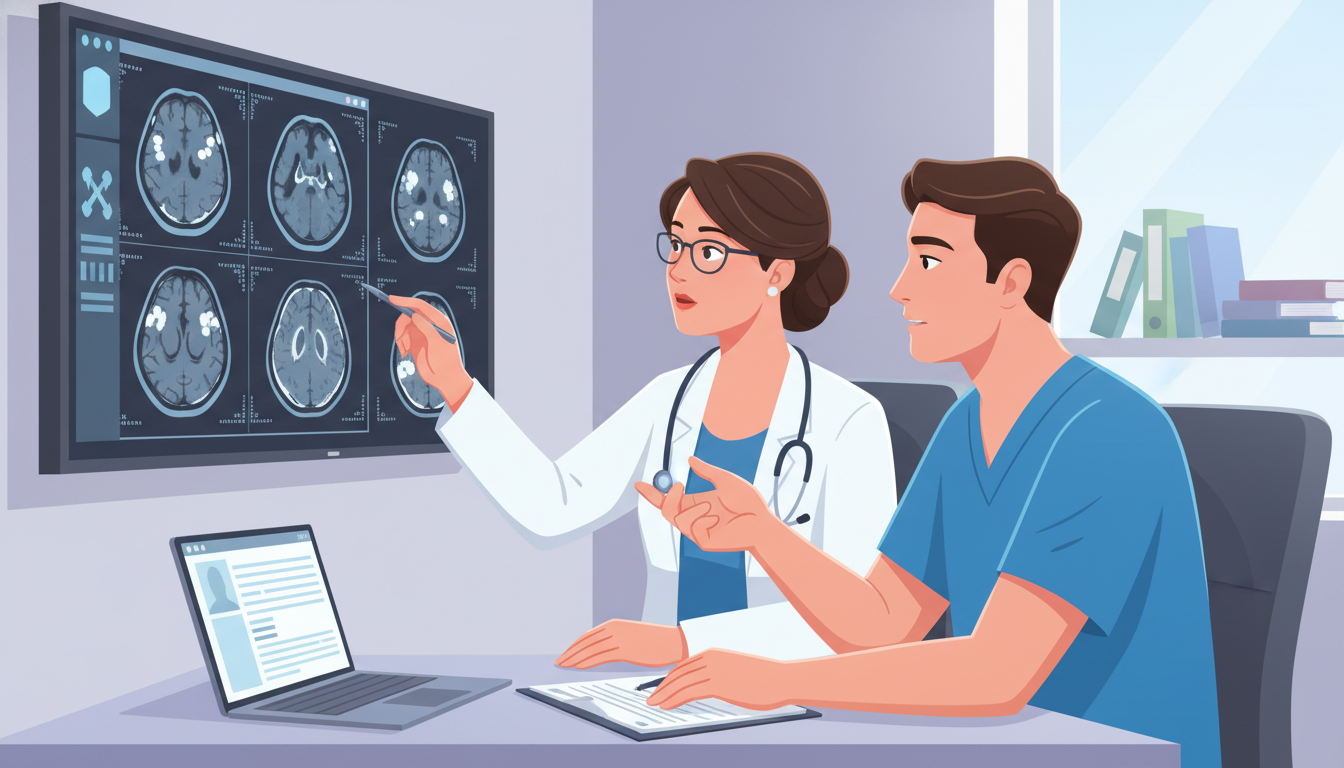
2. Behavioral Interview Questions in Neurology: Core Themes and Examples
Many neurology programs increasingly use behavioral interview medical frameworks: “Tell me about a time when…” questions. These are meant to predict future behavior based on past behavior.
2.1 Use the STAR Method
Answer behavioral residency interview questions with STAR:
- Situation – Brief context
- Task – Your role or responsibility
- Action – What you did (focus here)
- Result – Outcome and what you learned
2.2 Managing Stress, Burnout, and Resilience
Neurology can be emotionally and cognitively demanding: stroke codes, neurodegenerative disease, prognostic discussions.
Common questions:
- “Tell me about a time you were overwhelmed or under significant stress. How did you handle it?”
- “Describe a difficult on-call experience and how you managed it.”
- “How do you cope with emotionally challenging cases?”
Example answer:
S: “During my neurology sub-internship, we admitted three stroke patients in rapid succession overnight. One had a devastating basilar artery occlusion.
T: As the sub-intern, I needed to help stabilize the patients, assist with documentation, and ensure nothing fell through the cracks.
A: I prioritized tasks with the senior resident, quickly gathered focused histories and exam findings, and entered preliminary notes to support timely decision-making. I used our checklist to ensure thrombolysis and thrombectomy eligibility criteria were evaluated for each patient. Emotionally, I felt the weight of the prognosis discussions, so after the shift I debriefed with my senior and the attending about how they manage these situations and maintain perspective.
R: All critical tasks were completed on time, and I received feedback that my organization and communication helped the team. I also learned the importance of asking for help early and building routines for self-care after difficult calls, including regular exercise and talking with peers.”
Tips:
- Show self-awareness and emotional regulation, not perfection.
- Highlight seeking support appropriately, not suffering alone.
2.3 Teamwork and Communication
Neurology residents interact closely with ED, ICU, neurosurgery, rehab, and ancillary services.
Common questions:
- “Tell me about a time you worked in a difficult team dynamic.”
- “Describe a conflict with a colleague or nurse and how you handled it.”
- “Give an example of when you had to communicate bad news.”
Example (team conflict):
S: “On my internal medicine rotation, a colleague and I disagreed about the timing of a consult for a patient with new-onset focal weakness. I felt it was urgent; my colleague wanted to wait for more labs.
T: My task was to advocate for the patient while maintaining a good working relationship.
A: I asked to step aside and discuss our perspectives. I explained my concern that the patient might be having a stroke or TIA and that, given the time-sensitive nature of neurologic interventions, early imaging and neurology involvement were important. I referenced guidelines we had learned on rounds. I also listened to my colleague’s concerns about overconsulting. We agreed to call the senior resident for input.
R: The senior supported early imaging and a neurology consult; fortunately, the patient was found to have a small stroke and received timely treatment. My colleague later told me they appreciated that I had raised the concern respectfully. I learned the importance of grounding disagreements in patient safety and evidence, and involving seniors when there’s uncertainty.”
2.4 Ethical Dilemmas and Professionalism
Neurology frequently intersects with complex ethical issues: capacity, code status, end-of-life decisions, and chronic disability.
Common questions:
- “Tell me about a time you faced an ethical dilemma.”
- “Describe a situation where you saw something you felt was unprofessional. What did you do?”
- “Have you ever made a mistake in patient care?”
Example (ethical dilemma):
S: “During my neurology rotation, I followed a patient with advanced dementia whose family requested full-code status, despite prior documentation suggesting the patient would not have wanted aggressive measures.
T: As a student, my role was limited, but I wanted to ensure the team fully considered the patient’s previously expressed wishes.
A: I reviewed the chart and found a prior advance directive. I discussed it with my resident, highlighting the discrepancy between the directive and the family’s current request. The attending then met with the family to explore their understanding of the patient’s prior wishes and the likely outcomes of different interventions. I remained present to observe how the conversation was handled.
R: Ultimately, the family agreed to a DNR order consistent with the patient’s prior preferences. This experience reinforced for me the importance of reviewing advance directives and of clear, compassionate communication with families. It also showed me that even as a student or junior resident, I can contribute to ethical patient-centered care by raising concerns respectfully within the team.”
When asked about mistakes, always:
- Take responsibility without blaming others.
- Emphasize what you learned and how you changed your practice.
2.5 Handling Uncertainty and Limited Knowledge
Neurology is a field where uncertainty is common and evidence evolves quickly.
Common questions:
- “Tell me about a time you didn’t know the answer to a question and how you handled it.”
- “Describe a time you had to make a decision with limited information.”
Example:
S: “On my neurology sub-I, I saw a patient with intermittent sensory symptoms that did not fit a clear localization pattern.
T: I needed to present the case and propose a plan but felt unsure of the differential.
A: I was honest with my resident that I didn’t have a clear localization and asked if we could walk through it together. I then systematically reviewed the history and exam findings, consulted reliable resources, and drafted a broad differential including central and peripheral causes. I proposed a plan of targeted imaging and EMG/NCS evaluation, acknowledging the uncertainty.
R: My resident appreciated my structured thinking and willingness to ask for guidance. Over time, my comfort with uncertain presentations grew. This taught me that acknowledging uncertainty and using a systematic approach is valued more than guessing or overconfidence.”
3. Neurology-Specific Clinical and Situational Questions
Programs want to know you understand what neurology work actually looks like and that you can think clinically.
3.1 Clinical Reasoning and Approach to Common Neurologic Problems
You may be asked:
- “How do you approach a patient with acute weakness?”
- “Walk me through your evaluation of a patient with new-onset seizures.”
- “How do you assess a patient with acute change in mental status?”
They’re not looking for board-style recitations but for organized clinical thinking.
Example approach: Acute focal weakness
“For acute focal weakness, my first priority is to rule out stroke or other emergencies. I’d start with a rapid assessment of airway, breathing, and circulation, and a focused neurologic exam, including cranial nerves, motor strength, sensation, reflexes, and coordination. I’d look for patterns suggesting localization—for example, face and arm weakness greater than leg might suggest MCA territory. I’d ask about timing, onset, associated symptoms like aphasia, vision changes, or headache, and vascular risk factors.
In the ED, I’d ensure rapid CT head to rule out hemorrhage and consider CTA if large-vessel occlusion is suspected. I’d review last-known-well time and contraindications for thrombolysis or thrombectomy and involve the stroke team early if there’s any concern. For non-emergent causes, I’d broaden the differential to include demyelinating disease, spinal cord pathology, neuromuscular junction disorders, and metabolic causes.”
You are not expected to function as a fellow; aim to show prioritization, safety, and systematic thinking.
3.2 “What do you see as the biggest challenges in neurology?”
This tests your insight into the realities of the field.
Potential points:
- Limited disease-modifying therapies for some neurodegenerative diseases.
- Prognostication uncertainty in stroke and anoxic brain injury.
- Resource and access issues (e.g., imaging, rehabilitation).
- Neurology workforce shortages leading to high consult demand.
- Distinguishing functional neurologic disorders vs organic disease.
Example:
“One major challenge in neurology is balancing the rapid advances in certain areas—like acute stroke and autoimmune encephalitis—with the persistent lack of curative options for many neurodegenerative diseases. This can be emotionally difficult for patients, families, and providers.
Another challenge is access to timely neurologic care; in many regions, patients face long wait times, which can delay diagnosis and treatment. As a future neurologist, I’m interested in how tele-neurology, better triage systems, and collaborative care models can help bridge these gaps. I also think clear, empathetic communication is essential in helping patients navigate uncertainty and chronic symptoms.”
3.3 Questions About Your Clinical Experiences and the “Neuro Match”
Expect to be asked:
- “Tell me about your neurology sub-internship experience.”
- “What was your most memorable neurology patient?”
- “Have you done any neurology research? What did you learn from it?”
Advice:
- Choose cases that demonstrate your growth, clinical curiosity, or communication skills.
- For research, emphasize your role and what you learned about the field, even if the project was small.
Example memorable patient:
“One memorable patient was a middle-aged man with new-onset refractory status epilepticus. I followed him from the ICU through rehabilitation. Initially, I focused on understanding the diagnostic workup and treatment algorithms. Over time, I also saw how the team supported the family through a very uncertain prognosis.
This experience highlighted both the complexity and the human side of neurology: we were constantly revising our differential as new data emerged, and at the same time, the family needed clear explanations at each step. It reinforced my interest in epilepsy and my desire to develop strong communication skills for dealing with prolonged, uncertain courses.”
4. Questions About You: Strengths, Weaknesses, and Fit
These are classic questions across specialties, but your answers should be tailored to neurology and residency.
4.1 “What are your strengths?”
Pick 2–3 strengths relevant to neurology and residency:
- Clinical reasoning and attention to detail
- Communication with patients and families
- Team collaboration and reliability
- Teaching and leadership
- Adaptability and resilience
Example:
“One of my strengths is careful clinical reasoning. I enjoy building a differential from the history and exam and using neuroanatomy to localize lesions. My sub-I evaluations often mentioned that I was thorough and organized in my presentations.
Another strength is communication. I make a deliberate effort to avoid jargon and to check for understanding, especially when discussing complex neurologic concepts. On my neurology rotation, I helped develop a simple handout to explain stroke warning signs to patients and families, which the team later adopted more broadly.”
Be specific and, if possible, back strengths with brief examples.
4.2 “What are your weaknesses?” / “What is an area for growth?”
Programs are not looking for perfection; they seek self-awareness and growth mindset.
Guidelines:
- Choose a genuine but manageable area (not “I have poor work ethic”).
- Avoid clichés (“I’m a perfectionist”) unless you describe a real, specific pattern.
- Emphasize what you’re doing to improve.
Examples of appropriate weaknesses:
- Taking too long on documentation and learning to be more efficient.
- Hesitating to ask for help initially, working on earlier escalation.
- Public speaking anxiety, improved through teaching roles.
Example answer:
“Earlier in medical school, I tended to spend too long on my notes, trying to make them perfect. This sometimes meant I stayed later than I needed to or had less time to see additional patients. I received feedback on this during my internal medicine rotation.
Since then, I’ve been working on writing more concise notes focused on key decision points and using templates more effectively. During my neurology sub-internship, I challenged myself to draft notes more efficiently and ask my senior for tips, which helped. I’m still working on this, but I’ve made progress and now feel more comfortable balancing thoroughness with efficiency.”
4.3 Red-Flag and Clarification Questions (If Applicable)
As an MD graduate, you may be asked to clarify:
- A gap in training.
- A failed exam or low USMLE score.
- A leave of absence.
- A switch from another specialty.
Approach:
- Be honest and concise.
- Take responsibility where appropriate.
- Emphasize growth, insight, and concrete steps you took to address the issue.
Example (step failure):
“I did not pass Step 1 on my first attempt, which was a difficult experience. In retrospect, I underestimated the exam and relied too heavily on passive studying. After that, I met with my academic advisor, created a structured study plan with active learning, and took practice exams under realistic conditions. I passed on my second attempt with a significantly improved score, and I’ve continued to use these strategies in all my subsequent exams and clinical rotations.
This experience taught me the importance of honest self-assessment and systematic preparation, and I believe it ultimately made me a more disciplined learner.”
5. Questions You Should Ask Programs (and How They See You)
Remember: interviews are bidirectional. Asking thoughtful questions shows your maturity and helps you find a good fit in your neurology residency.
5.1 High-Yield Questions to Ask
You will usually be given time to ask questions. Avoid questions you could easily answer from the website (e.g., salary, basic rotation schedule). Instead, ask about:
Education and mentorship
- “How are residents supported if they’re interested in a particular subspecialty, like stroke or epilepsy?”
- “Can you describe your approach to resident feedback and evaluation?”
Clinical exposure and responsibility
- “How does graduated responsibility work from PGY1 through PGY4?”
- “What is the balance between inpatient stroke/ICU and outpatient neurology?”
Wellness and culture
- “How does the program support resident wellness, especially during busy rotations?”
- “What qualities do your most successful residents share?”
Research and career development
- “How are residents connected with research mentors?”
- “Where have your recent graduates gone for fellowship or practice?”
5.2 What Interviewers Are Really Assessing
Across all these residency interview questions, programs are screening for:
- Clinical potential: Reasoning, organization, curiosity.
- Professionalism: Reliability, honesty, respect.
- Communication: Clarity, empathy, ability to talk to patients and teams.
- Fit with neurology: Genuine interest and realistic expectations.
- Fit with their program: Alignment with their strengths and culture.
Your advantage as an MD graduate from an allopathic medical school is familiarity with U.S. clinical environments; show that you can step smoothly into residency-level responsibilities.
FAQ: Common Questions About Neurology Residency Interviews
1. How can I best prepare for behavioral interview medical questions in neurology?
- List 8–10 experiences from medical school (neurology and non-neurology) that show:
- Teamwork and conflict resolution
- Managing stress or high workload
- Ethics/professionalism
- Leadership and teaching
- Handling mistakes or feedback
- For each, outline a brief STAR story.
- Practice answering out loud with a friend, mentor, or mock interviewer.
- Focus on clarity, honesty, and reflection rather than memorizing exact scripts.
2. Will I be asked neurology “quiz” questions or pimping-style questions?
Some programs may ask basic clinical reasoning questions (e.g., “How would you approach acute vision loss?”), but these are usually at a medical student level. They are not trying to fail you; they want to see how you think:
- Stay calm, be systematic, and prioritize safety.
- If you don’t know, say so and talk through what you’d look up or ask.
- Don’t guess wildly; showing you know your limits is valued in residency.
3. How important is the interview compared with my scores and application for the allopathic medical school match in neurology?
Once you receive an interview, your scores and credentials have already cleared a threshold. At that point:
- The interview and post-interview impressions are often the most important factors in ranking.
- Programs want to know if you will be a good colleague at 2 a.m., teachable, reliable, and truly interested in neurology.
- A strong interview can significantly boost your position on a program’s rank list; a poor interview can lower it, even with strong scores.
4. How should I talk about other specialties if I considered them before choosing neurology?
- It’s normal to have explored other fields before deciding on neurology.
- Be respectful of other specialties and show a thoughtful decision process.
- Emphasize why neurology ultimately provided the best fit for your interests and strengths.
Example:
“I was initially drawn to internal medicine because I enjoyed complex cases, but during my neurology rotation, I realized that what I loved most was the detailed localization and the neurologic exam. Neurology allows me to keep that complexity while focusing on a system I find uniquely fascinating, with both acute and longitudinal care.”
By anticipating and practicing these common neurology residency interview questions, you’ll be able to present yourself as a thoughtful, committed MD graduate ready to thrive in neurology training—and to find the neuro match that fits your goals and personality.