Understanding the Neurology Residency Interview as a Non‑US Citizen IMG
Neurology is one of the most intellectually rewarding specialties in medicine, and programs know that many of the strongest applicants are international medical graduates. As a non‑US citizen IMG or foreign national medical graduate, you bring unique strengths—often including strong clinical exposure, multilingual skills, and resilience. However, you’ll also face additional layers of scrutiny: visa sponsorship, adaptability to the US system, and communication skills.
Neurology residency interview questions tend to blend:
- Standard behavioral interview medical questions
- Neurology‑specific clinical and academic topics
- Targeted questions for non‑US citizen IMG candidates
- Classic “tell me about yourself”–type prompts
This guide breaks down the most common neurology residency interview questions you are likely to face as a non‑US citizen IMG, along with advice, sample structures, and pitfalls to avoid.
1. Core “Getting to Know You” Questions
These questions appear in almost every neuro match interview and set the tone for the rest of the conversation.
1.1 “Tell me about yourself”
This is almost guaranteed. Programs use it to assess your communication, organization, and maturity.
What they’re really asking:
- Can you summarize your story concisely?
- Do you have a coherent path toward neurology?
- How do you present yourself as a foreign national medical graduate in the US system?
How to structure your answer (2–3 minutes):
Use a simple Present → Past → Future framework:
- Present – Who you are now
- Year in training, current role, where you’re based, main interests in neurology.
- Past – Key experiences that led you here
- Medical school background, influential neurology experiences, research/observership.
- Future – What you’re aiming for
- Career goals in neurology, and why this type of program fits you.
Example (non‑US citizen IMG, neurology‑focused):
“I’m a non‑US citizen IMG from India, currently completing a research fellowship in vascular neurology at [Institution]. I split my time between stroke outcome research and supporting the inpatient neurology consult team.
I went to medical school at [School], where early in my training I rotated through a busy neurology ward. Seeing young stroke patients and people with uncontrolled epilepsy deeply affected me, especially recognizing the gap in access to specialized care in my home region. During my internship year there, I was responsible for the initial neurological assessment of many emergency admissions, which strengthened both my interest and my comfort with acute neurology.
Looking ahead, I want to train in a rigorous academic neurology residency where I can develop as a clinically strong neurologist and continue research in cerebrovascular disease. Ultimately, I plan to pursue a stroke fellowship and contribute to improving stroke systems of care in resource‑limited settings, ideally building collaborations between US and international centers.”
Common mistakes:
- Starting with childhood or high school unless truly relevant.
- Reciting your CV line by line.
- Exceeding 3 minutes or speaking in a monotone.
- Focusing only on being a non‑US citizen IMG rather than on your neurology identity.
1.2 “Walk me through your CV” / “Tell me about your journey to neurology”
This overlaps with “tell me about yourself” but is more chronological and detailed.
Tips:
- Highlight transitions: medical school → internship → US clinical experience → research.
- Emphasize neurology‑related decisions and experiences at each step.
- Briefly acknowledge any gaps or detours with a positive explanation (e.g., exam prep, research year, family reasons) and what you learned.
1.3 “Why neurology?” (for the neuro match, this is critical)
Programs must be convinced you truly want neurology, not just “any residency in the US.”
Key elements:
- Trigger – A specific experience or moment that sparked your interest.
- Sustained exposure – Rotations, sub‑internships, research, observerships.
- Fit with your strengths – Analytical thinking, patience, communication, longitudinal care.
- Future vision – How neurology aligns with your long‑term career.
Answer framework:
- Start with a short story (patient or experience).
- Connect to what you enjoy daily in neurology.
- Conclude with what you hope to become as a neurologist.
Avoid:
- Overly generic answers (“The brain is fascinating”).
- Emphasizing prestige, lifestyle, or visa convenience as your main reasons.
- Failing to mention US neurology experiences if you have them.
2. Motivation, Program Fit, and Career Goals
Residency programs need to know whether you’ll thrive in their particular environment and complete training successfully.
2.1 “Why our program?”
This is a high‑yield question across all specialties, but especially in competitive fields like neurology.
What interviewers look for:
- That you’ve done your homework on their program.
- Alignment with their strengths: clinical exposure, subspecialty breadth, research, community vs academic mission.
- Realistic understanding of what the program offers.
How to prepare:
- Review:
- Program webpages (rotations, call structure, EMR, affiliated hospitals).
- Resident bios and research interests.
- Program’s strengths: e.g., stroke center, epilepsy monitoring unit, neurocritical care, community outreach.
- Write 2–3 program‑specific points you can mention for each place.
Answer structure:
- Clinical training features you value.
- Neurology subspecialties or resources that align with your interests.
- Culture/values (diversity, IMG‑friendliness, teaching style).
- Location factors (only if genuine and secondary).
Example elements for a non‑US citizen IMG:
“Your strong stroke service and exposure to teleneurology are especially important to me given my interest in cerebrovascular disease and care in resource‑limited areas. I was also impressed by the diversity of your residents, including several non‑US citizen IMG alumni who are now practicing in both academic and community settings…”
2.2 “What are your long‑term goals?” / “Where do you see yourself in 5–10 years?”
Programs expect a reasonable plan but not rigid inflexibility.
Good components:
- A likely subspecialty interest (e.g., vascular, epilepsy, neuromuscular, movement, neurocritical care, general neurology).
- Type of practice (academic vs community vs hybrid).
- Interest in teaching, research, global neurology, or health systems.
As a foreign national medical graduate, also consider:
- Whether you plan to stay in the US long‑term or contribute to your home country.
- Interest in global neurology or international collaborations.
Keep your answer ambitious but realistic, and open to learning more during residency.
2.3 “What other specialties did you consider?”
They’re testing your commitment to neurology and whether you shifted rationally.
Tips:
- It’s fine to mention having considered internal medicine, psychiatry, or neurosurgery—briefly.
- Emphasize why neurology was the better match for your skills and values.
- Avoid implying neurology was a backup.
3. Behavioral and Situational Questions for Neurology Applicants
Behavioral interview medical questions are central to US residency selection. They aim to predict your future performance based on your past behavior.
Use the STAR method:
- Situation – Brief context
- Task – Your role
- Action – What you did
- Result/Reflection – Outcome and what you learned
3.1 Teamwork and Communication
Common questions:
- “Tell me about a time you had a conflict with a colleague and how you handled it.”
- “Describe a situation where you worked in a multidisciplinary team.”
- “Tell me about a time you had to give difficult feedback or receive criticism.”
Neurology‑specific angle:
You can choose examples involving:
- Complex stroke codes.
- Coordination with neurosurgery, ICU, or emergency medicine.
- Interpreting imaging with radiology.
- Working with therapists and social workers in rehabilitation.
Key points to show:
- Respectful communication.
- Willingness to listen.
- Focus on patient safety and outcomes.
- Reflection and growth.
3.2 Handling Stress and Workload
Residency is demanding, especially on busy inpatient neurology and stroke services.
Possible questions:
- “Tell me about a time you were overwhelmed—how did you manage it?”
- “Describe a time you made a mistake and what you did.”
- “How do you handle long or night shifts?”
What to highlight:
- Time management strategies (prioritization, task lists, handoff structure).
- Seeking supervision appropriately.
- Self‑care strategies that are realistic and healthy.
- Learning from errors without becoming defensive.
Avoid:
- Claiming you never feel stressed.
- Blaming others for your mistakes.
- Describing unsafe independent action without supervision.
3.3 Dealing with Difficult Patients or Families
Neurology often involves chronic, progressive, or life‑changing conditions. Emotions run high.
Typical questions:
- “Tell me about a difficult patient or family you worked with.”
- “How do you approach delivering bad news?”
- “Describe a situation where a patient disagreed with your recommendation.”
Show that you:
- Communicate with empathy and clarity.
- Adapt language to the patient’s level of understanding.
- Respect cultural and religious beliefs.
- Are willing to involve senior physicians or a team when appropriate.
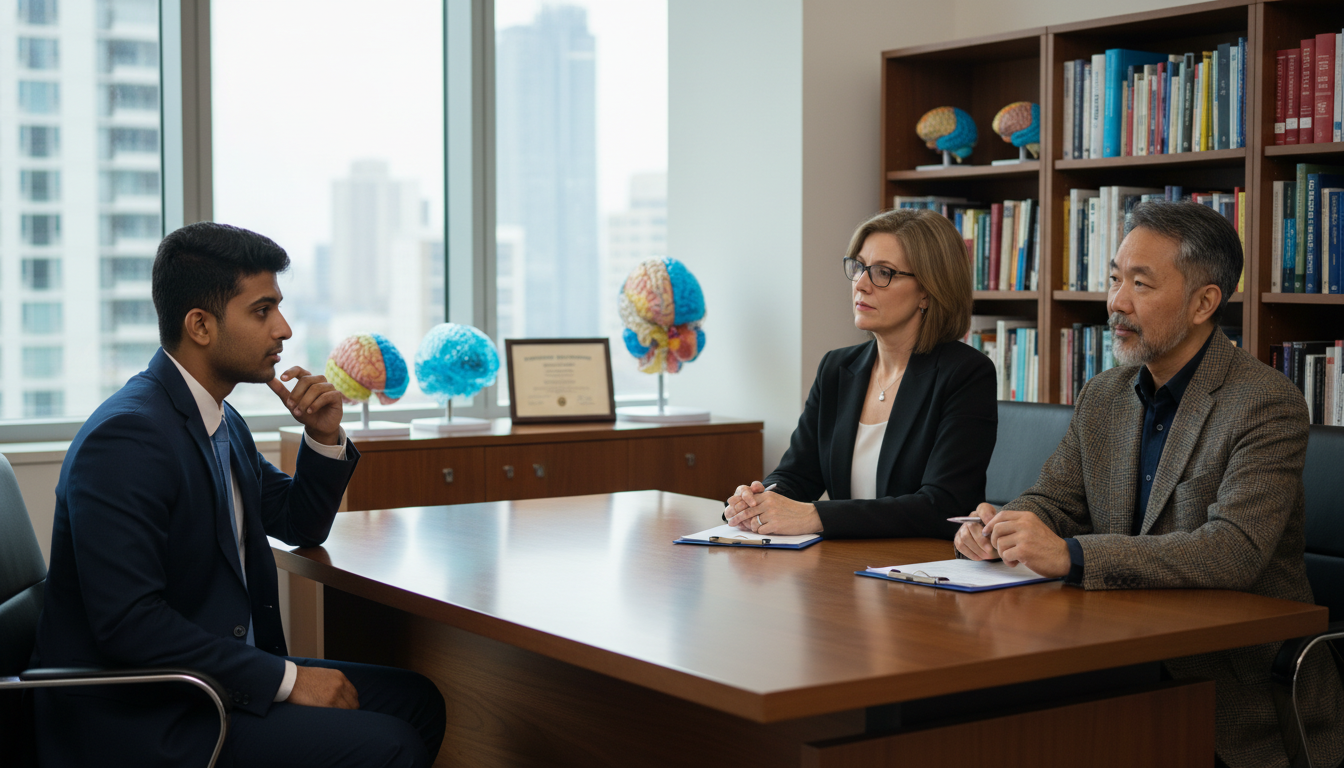
4. Questions Specific to Non‑US Citizen IMGs
As a non‑US citizen IMG or foreign national medical graduate, you can expect targeted questions that US graduates may not encounter.
4.1 “Why do you want to train in the US?”
Underlying concerns:
- Are you committed to completing training here?
- Do you understand the US healthcare system enough to adapt?
- Are you just using this as a temporary step?
Strong elements:
- Desire for structured, evidence‑based neurology training.
- Exposure to diverse patient populations and advanced technology (stroke systems, epilepsy monitoring, neurocritical care).
- Intention to apply what you learn either in the US, your home country, or both.
- Recognition of the US system’s strengths and limitations.
4.2 “Tell us about your US clinical experience” / “What did you learn from your observerships?”
Programs use your US clinical experience to evaluate:
- Adaptation to US culture and medical communication.
- Understanding of documentation, EMR, and team structures.
- Reliability of your letters of recommendation.
Be ready to discuss:
- Specific roles you played (observer vs hands‑on responsibilities in permitted settings).
- Neurology cases you found educational.
- How these experiences shaped your understanding of US neurology practice.
4.3 Addressing Gaps, Exam Attempts, or Career Transitions
Non‑US citizen IMGs frequently face questions like:
- “Can you explain this gap in your CV?”
- “What did you do between graduation and now?”
- “Can you tell me about your USMLE attempts?”
Strategies:
- Be honest, concise, and non‑defensive.
- Focus on what you did (research, clinical work, teaching, family responsibilities) and what you learned.
- For multiple attempts, emphasize:
- Improvement in later scores.
- Concrete changes in your study strategy.
- Persistence as a strength—not an excuse.
4.4 Visa‑Related Questions (Indirect)
Programs may not directly ask, “Do you need a visa?” because they already know from your application. However, you may hear:
- “Where do you see yourself practicing in the future?”
- “Do you have any geographical preferences?”
- “Would you be open to staying in this region after residency?”
Be transparent but professional. It’s acceptable to say you are:
- Hopeful to stay in the US if opportunities and immigration status allow, or
- Planning to return to your home country, but eager to train in a strong US program to build skills and collaborations.
Avoid appearing uninterested in serving the local patient population during residency.
5. Clinical, Academic, and Neurology‑Focused Questions
While neurology residency interviews are not formal exams, many faculty will assess your clinical reasoning and academic curiosity.
5.1 Clinical Reasoning and Case Discussion
Possible questions:
- “Tell me about a memorable neurology case you’ve seen.”
- “Describe the workup of a first‑time seizure.”
- “How would you approach a patient with acute weakness?”
- “How do you differentiate central from peripheral causes of vertigo?”
Tips for answering:
- Use logical structure: history → exam → differential → investigations → initial management.
- Show that you know your limits and would seek senior help in emergencies.
- Focus more on your reasoning process than on memorized lists.
5.2 Research and Scholarly Activity
Neurology is increasingly subspecialty and research driven.
Common questions:
- “Tell me about your research.”
- “What was your role in this publication/poster?”
- “What did you learn from the project?”
- “How do you see research fitting into your career?”
As a foreign national medical graduate, be prepared to explain:
- Differences in research infrastructure between your country and the US.
- How you adapted to US‑style research if you did a fellowship or observership.
- Your specific contributions (data collection, analysis, writing, etc.).
Avoid exaggeration. Faculty can quickly detect inflated claims.
5.3 Ethics and Professionalism in Neurology Context
Potential questions:
- “Tell me about an ethical dilemma you faced in clinical practice.”
- “How would you handle a situation where a family insists on continuing life‑sustaining treatment that you feel is non‑beneficial?”
- “What would you do if you saw a colleague behaving unprofessionally?”
Neurology often involves capacity assessments, end‑of‑life decisions, and chronic disability. Show that you:
- Respect patient autonomy.
- Value shared decision‑making.
- Use ethics consultation, palliative care, or senior guidance when needed.
- Understand confidentiality and professionalism standards.
6. Questions You Should Ask the Interviewers
Your questions are part of your interview. They reveal your priorities, preparation, and maturity as a candidate.
6.1 Good Questions for Neurology Programs
Consider asking:
- “How does your program support residents interested in [subspecialty] neurology?”
- “Can you describe the balance between inpatient stroke/acute neurology and outpatient continuity clinics?”
- “What opportunities exist for non‑US citizen IMG residents to be involved in research or quality improvement?”
- “How does the program support residents’ well‑being during demanding rotations like neurocritical care or night float?”
6.2 Questions Specifically Helpful for Non‑US Citizen IMGs
You can phrase these tactfully, often during informal resident chats:
- “Could you share how the program has supported previous non‑US citizen IMG residents, for example with onboarding or adapting to the US system?”
- “Are there graduates who were foreign national medical graduates? What paths did they take after residency?”
- “How does the program help residents understand the US healthcare system, documentation, and billing practices?”
Avoid making every question about visas; focus mainly on clinical training, education, and environment. Visa discussions usually happen through the program coordinator or officially stated policies.
Practical Preparation Tips for the Neurology Neuro Match
To prepare effectively for common neurology residency interview questions as a non‑US citizen IMG:
Write and refine key answers:
- “Tell me about yourself”
- “Why neurology?”
- “Why this program?”
- 3–4 STAR stories (teamwork, conflict, mistake, difficult patient, stress).
Practice out loud:
- Record yourself and adjust pacing and clarity.
- Focus on clear, simple English if it’s not your first language—clarity matters more than complex vocabulary.
Know your application deeply:
- Be ready to discuss any research, every activity, and any gap honestly.
- Review your personal statement the night before; interviewers often pull questions from it.
Prepare neurology content:
- Review common neurology chief complaints (weakness, seizures, headache, altered mental status).
- Be able to discuss 1–2 interesting cases in detail.
Adapt to virtual interviews:
- Stable internet, neutral background, professional attire.
- Look at the camera when speaking to mimic eye contact.
- Keep your CV and a few bullet notes nearby—but do not read from a script.
Reflect on your identity as a non‑US citizen IMG:
- Think about how your international background is a strength: cultural competence, resilience, resourcefulness.
- Decide how you want to describe your journey without sounding defensive or apologetic.
FAQ: Common Questions from Non‑US Citizen IMGs About Neurology Interviews
1. Will I get more difficult residency interview questions because I’m a non‑US citizen IMG?
You may not get more “difficult” questions, but you will often get additional ones about your US clinical experience, gaps, exam attempts, and long‑term plans. Programs want to understand:
- How well you can adapt to the US neurology environment.
- Whether you are likely to complete the program successfully.
- How your visa and career goals align with training.
If you prepare thoughtful, honest answers, these questions can become an opportunity to highlight your resilience and motivation rather than a disadvantage.
2. How should I answer if they ask about multiple USMLE attempts or low scores?
Be honest, brief, and focused on growth:
- Acknowledge the attempt/score without excuses.
- Explain contributing factors if appropriate (e.g., adjusting to a new exam style) without blaming others.
- Emphasize what you changed (study strategy, resources, time management).
- Highlight later improvements (Step 2, CK, clinical performance, research output) as evidence of resilience.
Programs are often more concerned about attitude and trajectory than one number.
3. What if I’m not sure which neurology subspecialty I want yet?
It’s completely acceptable not to have a final choice. You can:
- Mention 1–2 areas you are most curious about (e.g., epilepsy and movement disorders).
- Emphasize your openness to exploration during residency.
- Clarify that your primary goal is to become a solid general neurologist first.
Avoid sounding totally directionless; express curiosity and a plan to use residency to discover the best fit.
4. Is it okay to mention wanting to return to my home country after residency?
Yes, as long as you convey strong commitment to:
- Providing excellent care to patients during residency.
- Fully engaging with the program’s educational and research opportunities.
- Completing the program successfully.
Many programs value applicants who want to contribute to global neurology. Be clear, but avoid speaking as if residency is just a temporary task you must “get through.” Emphasize how you plan to use US neurology training to make a broader impact.
By anticipating these common neurology residency interview questions and tailoring your preparation as a non‑US citizen IMG, you position yourself to not only answer competently but to tell a compelling, authentic story of who you are and the neurologist you aim to become.