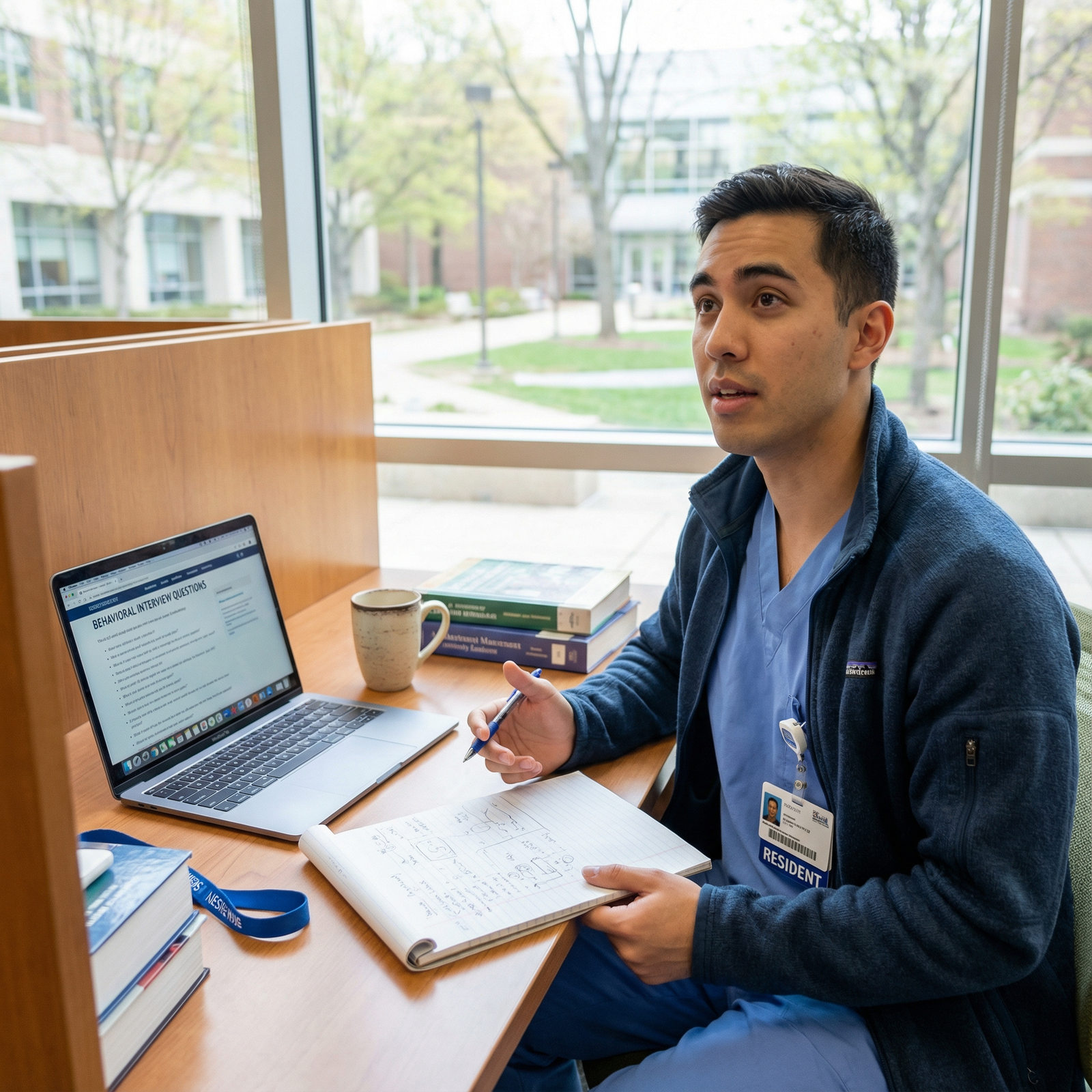
Understanding the Neurosurgery Residency Interview Landscape
Neurosurgery is one of the most competitive and demanding specialties in medicine. The neurosurgery residency interview is not just an assessment of your academic record; it is a high‑stakes evaluation of your judgment, emotional resilience, technical potential, and ability to function on a high‑performing team that cares for critically ill patients.
Programs receive many more applications than they can interview, and many interviewed applicants are academically similar. What often differentiates candidates is how they answer common neurosurgery residency and brain surgery residency interview questions—especially behavioral interview medical questions that reveal how you think, communicate, and handle pressure.
This guide walks you through:
- Common interview themes and question types
- Sample questions with strategic approaches and example responses
- How to handle “tell me about yourself” and other core prompts
- Behavioral, ethical, and scenario‑based questions specific to neurosurgery
- Practical tips and red flags to avoid
Use this as a framework to build your own, authentic responses—not as a script.
Core Questions You Will Almost Certainly Be Asked
Some questions appear in almost every neurosurgery residency interview. Having strong, polished responses to these gives you confidence and allows you to perform well on more unpredictable questions.
1. “Tell me about yourself”
This is arguably the most important question in any interview. In a neurosurgery residency interview, it often comes first and sets the tone for everything that follows. Programs want to see how you organize your story, how you communicate, and which values you highlight.
Goal: Provide a 1–2 minute, structured narrative that links who you are, what shaped you, and why that leads logically to neurosurgery.
Structure to use (3-part framework):
- Brief background – Where you’re from / formative context (10–20 seconds)
- Key experiences and strengths – Focus on 2–3 themes: research, leadership, resilience, service (60–90 seconds)
- Why neurosurgery, why now – Connect your story to the specialty (30–40 seconds)
Example approach (not to memorize, but to model):
“I grew up in a small town where access to specialty care was limited, and I saw early how neurologic illness could reshape entire families’ lives. In college, I majored in biomedical engineering, where I developed an interest in neural circuits and device design.
In medical school, three experiences really shaped me. First, my research in glioblastoma outcomes taught me to think critically and handle complex data sets. Second, leading our neurosurgery interest group and tutoring junior students showed me how much I value teaching and team coordination. Third, during my sub‑internship in neurosurgery, I saw how these patients require both decisive action and deep empathy—especially in the ICU and on call nights.
Those experiences convinced me that neurosurgery is where my interests in neuroanatomy, longitudinal patient relationships, and high‑stakes decision‑making best align. I’m looking for a brain surgery residency where I can grow into a technically excellent, thoughtful neurosurgeon who contributes to both patient care and academic advancement in the field.”
Common mistakes:
- Repeating your CV line‑by‑line
- Talking for 5+ minutes with no structure
- Focusing only on achievements without reflection
- Sounding generic: “I like the brain; I like surgery” with no personal connection
Practice this answer out loud until it feels natural and confident.
2. “Why neurosurgery?” and “Why our program?”
These are related but distinct questions. Programs want to know both your specialty choice rationale and your program choice rationale.
“Why neurosurgery?”
Key elements to include:
- Intellectual fascination (neuroanatomy, pathophysiology, imaging, critical illness)
- Exposure experiences (sub‑I, mentor, longitudinal patient relationships)
- Alignment with your personality: tolerance for uncertainty, resilience, desire for technical mastery, comfort with long hours and responsibility
- Realistic understanding: not just the “glamorous” parts
Stronger example themes:
- “I value being part of high‑stakes decisions where my preparation and calm under pressure directly affect outcomes.”
- “I enjoy longitudinal relationships with patients and families facing life‑altering diagnoses—helping them understand options and navigating uncertainty.”
- “I’m drawn to the combination of precise microsurgery, peri‑operative critical care, and the need for strong, multidisciplinary teamwork.”
Avoid answers that focus only on the brain being “interesting” or a single dramatic case. Ground your response in a pattern of experiences and introspection.
“Why our program?”
Here, vague enthusiasm is a red flag. You must demonstrate that you’ve done your homework and that your interests genuinely fit the program.
Before the interview, research:
- Case volume and variety (trauma, tumor, spine, functional, pediatrics, vascular)
- Resident autonomy and graduated responsibility
- Research infrastructure and specific labs or mentors
- Program culture (teamwork, wellness, mentorship structure)
- Unique strengths (e.g., spine deformity, endovascular, global neurosurgery, basic science)
Better structure:
Show you understand them:
“From speaking with residents and reviewing your case volume, it’s clear this is a very busy level I trauma center with strong exposure to complex spine and vascular cases.”Connect to your goals:
“I’m particularly interested in developing into a well‑rounded general neurosurgeon with strong spine skills, and your early operative experience and chief resident autonomy really align with that.”Mention specific people/opportunities:
“During my away rotation, I appreciated how Dr. X gave structured feedback in the OR and how the senior residents actively taught on rounds. The neuro‑oncology research with Dr. Y also closely fits my interest in outcomes research.”

Common Behavioral and Situational Questions in Neurosurgery Interviews
Behavioral interview medical questions are designed to predict future behavior based on past actions. Neurosurgery programs use them heavily because technical skill can be taught, but professionalism, judgment, and integrity are much harder to remediate.
Using the STAR Framework
For nearly all behavioral questions, use STAR:
- Situation – Context in 1–2 sentences
- Task – What you needed to accomplish
- Action – What you specifically did (focus here)
- Result/Reflection – Outcome + what you learned
Keep each response to about 1.5–2 minutes.
1. Teamwork, Communication, and Conflict
Examples of common questions:
- “Tell me about a time you had a conflict with a team member. How did you handle it?”
- “Describe a situation where you had to give or receive difficult feedback.”
- “Tell me about a time you disagreed with a supervisor’s plan.”
- “Describe a time you had to work with a difficult or underperforming team member.”
What programs are assessing:
- Emotional maturity
- Ability to handle hierarchy and disagreement respectfully
- Ownership without blame‑shifting
- Communication under stress
Example structure (conflict with team member):
Situation/Task: “During my surgery clerkship, I was on a trauma team where one of my co‑students frequently arrived late to pre‑rounding, which made sign‑out chaotic and delayed the team.”
Action: “First, I checked in with them privately, assuming there might be something I didn’t know, and asked how they were doing. I learned they were struggling with transportation and time management. I shared the schedule template I used, helped them plan earlier arrival, and we agreed on a backup plan if they anticipated delays. I also suggested we communicate earlier in the evening if the patient list changed significantly so we could both adjust. I did not escalate immediately because patient care wasn’t compromised, and I wanted to give them a chance to improve.”
Result/Reflection: “Their punctuality significantly improved within a week, and our pre‑rounding became smoother. I learned the importance of approaching conflict with curiosity rather than criticism, and how a brief, respectful conversation can prevent resentment and protect team function.”
Avoid:
- Criticizing others harshly
- Claiming you “never have conflicts”
- Blaming “lazy” or “incompetent” people without acknowledging your role in solutions
2. Stress, Burnout, and Resilience
Neurosurgery residency is intense; programs want to know whether you have healthy coping strategies.
Common questions:
- “Tell me about a time you were overwhelmed. What did you do?”
- “How do you manage stress and prevent burnout?”
- “Describe a major setback and how you handled it.”
Stronger response elements:
- Specific stressful situation (exam failure, family illness, difficult rotation, research setback)
- Concrete actions (seeking mentorship, restructuring schedule, therapy, exercise, time management tools)
- Insightful reflection (what you changed permanently)
Example (managing overwhelm):
“During my third year, I was on a demanding surgery rotation while preparing for a major licensing exam. I initially tried to keep my usual study schedule and quickly became exhausted and less effective clinically and academically.
I met with my clerkship director and a faculty mentor, who helped me restructure my schedule—prioritizing protected blocks for high‑yield studying, using commute time for audio review, and deliberately scheduling one half‑day off per week for rest. I also started running regularly again, which I’d stopped because I felt too busy.
My performance improved both clinically and on the exam, and I learned that proactively seeking guidance and building sustainable routines are essential—skills I know will be critical during neurosurgery residency.”
3. Leadership and Initiative
Neurosurgery requires residents who can lead teams, especially at night and in crises.
Common questions:
- “Tell me about a time you led a team.”
- “Describe a situation where you saw a problem and took initiative to fix it.”
- “Tell me about a project you’re most proud of.”
Look for stories from:
- Student interest groups or organizations
- Quality improvement (QI) or research projects
- Community outreach or educational initiatives
- Leading a code or acute clinical response (within your scope)
Emphasize:
- How you organized people and resources
- How you communicated and delegated
- How you measured success and adjusted
Clinical, Ethical, and Neurosurgery‑Specific Questions
Beyond generic behavioral questions, neurosurgery interviews frequently include specialty‑specific scenarios to test your decision‑making, professionalism, and understanding of the field.
1. Dealing with Complications and Adverse Outcomes
Programs want to know if you can handle the emotional and ethical weight of complications.
Example questions:
- “Tell me about a time you made a mistake in patient care.”
- “How would you handle a serious surgical complication?”
- “How do you think about risk and consent in high‑risk neurosurgical procedures?”
Key principles:
- Take responsibility for your role (even as a student)
- Emphasize patient safety and transparency
- Discuss systems improvements, not just individual blame
- Show emotional insight without being paralyzed by guilt
Example (mistake as a student):
“During my neurology rotation, I failed to follow up a lab I’d agreed to check before sign‑out. The omission was discovered the next morning; fortunately, it did not change the patient’s overnight management, but it delayed a medication adjustment.
I immediately acknowledged my error to the resident, apologized, and ensured the result was communicated to the team and documented. I then implemented a personal checklist system for all tasks before leaving the hospital, and I’ve used it ever since.
That experience reinforced the importance of closed‑loop communication and redundancy in patient care, and it made me more vigilant about task tracking—habits I know are critical in neurosurgery where the stakes are even higher.”
2. End‑of‑Life, Prognosis, and Goals of Care
Neurosurgery involves frequent conversations with families about prognosis after stroke, trauma, malignant tumors, and spinal cord injuries.
Common questions:
- “How would you approach a family demanding ‘everything’ be done when prognosis is poor?”
- “Describe a time you were involved in a difficult goals‑of‑care discussion.”
- “How do you balance quality of life with aggressive treatment in neurosurgery?”
Strong answers show:
- Respect for patient autonomy and previously expressed wishes
- Use of multidisciplinary teams (palliative care, ethics, social work)
- Clear, compassionate communication strategies
- Understanding that not operating is sometimes the most ethical choice
3. Knowledge of Neurosurgery’s Realities
Programs want to see if you have a realistic view of:
- Hours, call, and sleep deprivation
- Length of training and fellowship considerations
- Malpractice risk and medico‑legal realities
- Emotional toll of complications and mortality
Sample questions:
- “What do you think will be the hardest part of neurosurgery residency for you?”
- “How will you balance life outside of medicine with the demands of neurosurgery?”
- “Where do you see yourself in 10–15 years in neurosurgery?”
Avoid naïve responses (“I’m fine being in the hospital all the time; I don’t really need hobbies”). Instead, show that you’ve talked to neurosurgeons, observed their lives, and developed sustainable strategies.

Academic, Research, and Technical Interest Questions
Neurosurgery is a research‑intensive specialty. Expect questions that probe your academic curiosity, scholarly productivity, and technical mindset.
1. Research‑Focused Questions
Common prompts:
- “Tell me about your research.” (You will almost certainly get this.)
- “What was the most challenging part of your main project?”
- “If I gave you $5 million and a lab, what problem in neurosurgery would you study?”
- “How has your research shaped your thinking as a future neurosurgeon?”
Preparation steps:
Know your work cold. Be ready to explain:
- Your hypothesis
- Methods and your specific role
- Key results and their limitations
- Potential next steps
Tailor depth to interviewer.
- Non‑neurosurgeons: emphasize concepts and clinical relevance
- Neuroscientists/neurosurgeons: be ready for technical follow‑ups
Show reflection.
- How did this change how you read literature?
- What did you learn about persistence, collaboration, and failure?
Example answer outline (“Tell me about your main project”):
- “Our aim was to evaluate whether [intervention] improved outcome X in patients with Y.”
- “We conducted a retrospective cohort study of Z patients over N years.”
- “My primary role was data extraction, building the database, and leading the analysis under Dr. X’s supervision.”
- “We found [main result], but were limited by [retrospective design, single center, sample size].”
- “This project taught me [skills] and sparked my interest in [subfield], which I hope to pursue in residency.”
2. Technical Curiosity and Surgical Thinking
Even though you are not yet a surgeon, programs look for early signs of “surgical thinking”:
- Spatial reasoning and comfort with anatomy
- Appreciation for pre‑op planning and post‑op care
- Curiosity about new technologies (navigation, endovascular, stereotactic, robotics)
Possible questions:
- “What neurosurgical case or procedure most fascinated you, and why?”
- “If you had to choose today, what area of neurosurgery interests you most?”
- “What is one neurosurgical innovation you find exciting?”
Strong answers:
- Stay humble—avoid over‑confident statements about already “knowing” your subspecialty
- Highlight genuine curiosity and how you’ve begun exploring areas of interest
- Acknowledge that your views may evolve during residency
Practical Tips, Preparation Strategy, and Red Flags
How to Prepare Effectively
Build a personal “story bank.”
Write 10–12 bullet‑point stories (not scripts) that cover:- Leadership
- Team conflict
- Making a mistake
- Difficult feedback
- Time you went above and beyond
- Managing stress
- Research challenge
- Ethical dilemma
- Working with a difficult patient or family
- Advocating for a patient
Then practice mapping these stories to different residency interview questions.
Practice out loud, not just in your head.
Use:- Peer or mentor mock interviews
- Video recording on your phone to observe body language
- Virtual platforms to simulate remote interviews
Refine, don’t script.
Have clear structures and themes, but avoid memorized wording. Interviewers quickly sense rehearsed, robotic answers.Prepare thoughtful questions for the program.
You will almost always be asked, “What questions do you have for us?” Have at least 4–5:- “How is feedback delivered to residents, formally and informally?”
- “Can you tell me about recent program changes based on resident feedback?”
- “How are residents supported after difficult cases or complications?”
- “How does the program help residents pursue research or subspecialty interests?”
Common Red Flags in Answers
- Negativity toward previous institutions, peers, or specialties
- Lack of insight into your own weaknesses or growth areas
- Unrealistic expectations about work‑life balance or case variety
- Over‑emphasis on prestige instead of training quality and fit
- Dishonesty or exaggeration, especially about research or clinical duties
Day‑of Interview Tips
- Be ready to answer “tell me about yourself” smoothly even if asked multiple times.
- Maintain professional but approachable body language—good eye contact, attentive posture.
- When you don’t know something, say so honestly; pivot to how you would learn or seek help.
- Keep answers concise; let the interviewer ask follow‑ups rather than monologuing.
- Remember that residents are key evaluators; be equally engaged during resident‑only sessions.
FAQs: Common Questions About Neurosurgery Residency Interviews
1. How many programs should I expect to interview with for neurosurgery?
It varies by applicant profile, but neurosurgery is highly competitive and the number of available positions is limited. Strong candidates often aim to secure 12–15 neurosurgery residency interviews to have a solid chance of matching. However, quality and fit of programs often matter more than raw number. Work closely with your home program mentors to set a realistic target for your specific application.
2. How is a neurosurgery interview different from other specialties?
Compared with many other specialties, neurosurgery interviews:
- Place greater emphasis on resilience, work ethic, and grit
- Probe more deeply into your research and long‑term academic ambitions
- Include more questions about handling complications, end‑of‑life decisions, and high‑stakes situations
- Often involve longer interview days and multiple informal interactions (dinners, resident hangouts, virtual social sessions), where “fit” is closely assessed
3. What should I do if I get a question I haven’t prepared for?
Pause, take a breath, and:
- Clarify the question if needed.
- Think in terms of principles: patient safety, honesty, teamwork, humility.
- Use the STAR framework if it’s behavioral.
- If you truly have no relevant experience, say:
“I haven’t encountered that exact situation yet, but in a similar context I did X, and I imagine I would approach this by Y and Z.”
Interviewers are assessing your thought process more than a “correct” answer.
4. How important are social events and informal interactions?
Very important. Programs use pre‑interview dinners, virtual socials, or resident‑only zoom rooms to evaluate:
- Whether you’re collegial and easy to work with at 2 a.m.
- How you treat people who are not “decision‑makers” (coordinators, residents)
- Your authenticity and interpersonal skills
Maintain professionalism, be genuinely curious, and remember that everything you say and do—including at social events—contributes to the program’s overall impression of you.
Preparing thoughtfully for common neurosurgery residency and brain surgery residency interview questions—especially behavioral and scenario‑based ones—allows you to present a coherent, authentic picture of who you are and the neurosurgeon you hope to become. Focus on clarity, reflection, and alignment with the realities of the field, and use each interview as an opportunity to explore where you will best grow during the demanding but rewarding years ahead.