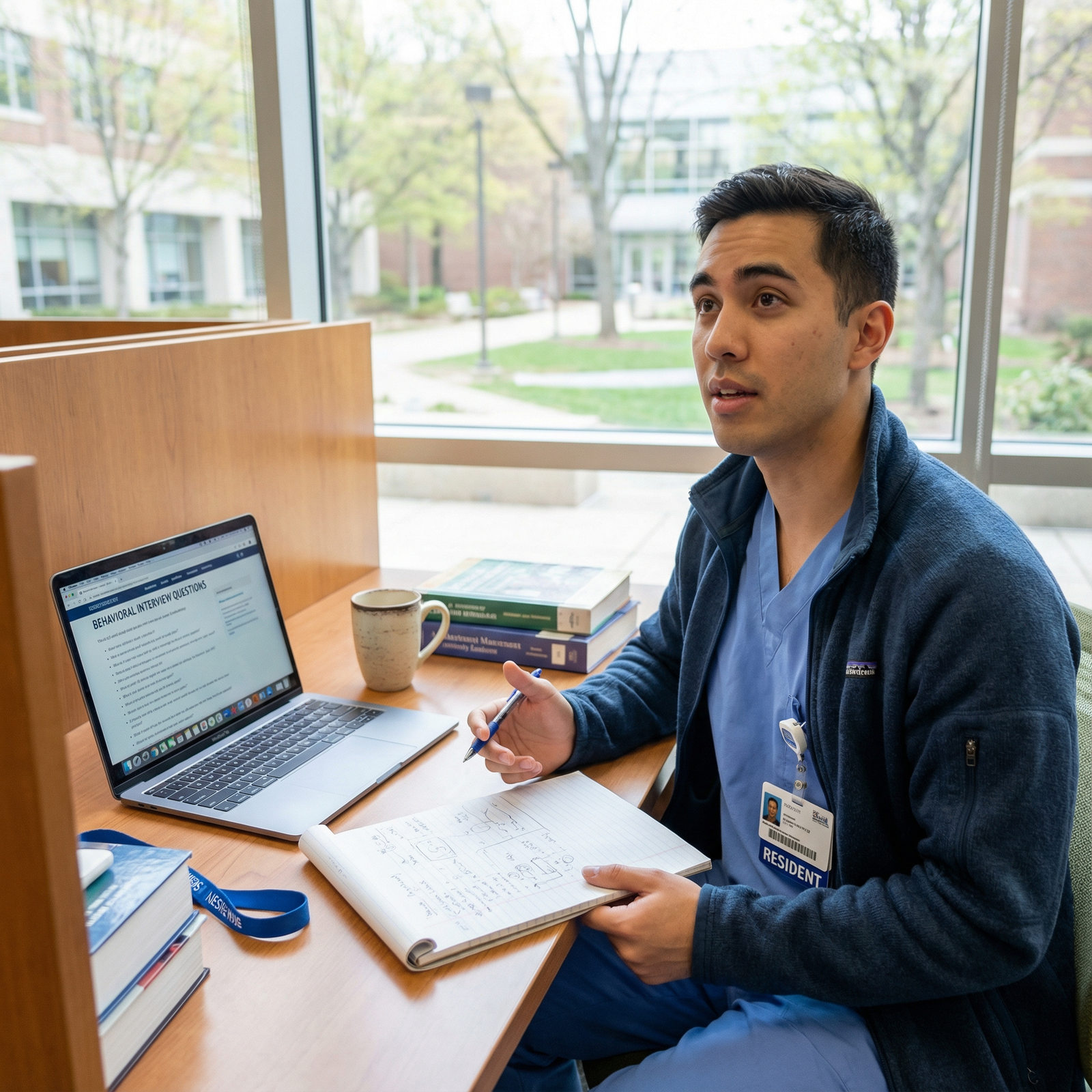
Understanding the Neurosurgery Interview Landscape for DO Graduates
Applying to neurosurgery as a DO graduate is ambitious—and absolutely achievable with the right preparation. The neurosurgery residency interview is one of the highest‑stakes conversations you will have in your training. Programs are evaluating not just your academic record and research, but also how you think, communicate, collaborate, and cope with stress in a demanding “brain surgery residency” environment.
Because neurosurgery is small and competitive, the quality of your interview can significantly influence whether you match, particularly in the osteopathic residency match context where programs may still be learning how to evaluate DO applications equitably in a unified Match system.
This article focuses on common interview questions for DO graduates in neurosurgery, with an emphasis on:
- Behavioral and situational questions (the core of the behavioral interview medical style)
- Role‑specific neurosurgery questions
- DO‑specific questions you’re likely to face
- High‑yield classics like “Tell me about yourself”
- Strategy, examples, and tailored advice for DO candidates
How Neurosurgery Programs Evaluate You in the Interview
Before diving into specific questions, it helps to understand what programs are really assessing. When you know the “why” behind questions, you can craft clearer and more targeted answers.
Core Attributes Neurosurgery PDs Look For
Across programs, interviewers typically look for:
- Clinical judgment and decision‑making
- Work ethic and resilience
- Integrity and professionalism
- Teamwork and communication
- Teachability and humility
- Commitment to neurosurgery as a career
- Research curiosity and academic potential
- Understanding of the realities of neurosurgical training
For DO graduates specifically, they may also assess:
- How you’ve integrated osteopathic training into a surgical and neuroscientific mindset
- Your exposure to academic neurosurgery (research, sub‑internships at MD‑heavy departments)
- Your adaptability in mixed DO/MD environments
The questions themselves fall into a few broad categories:
- “Classic” introductory questions (e.g., “Tell me about yourself”)
- Motivation and specialty choice
- Program fit and career goals
- Behavioral interview questions (using past experiences)
- Ethical and professionalism scenarios
- Technical/clinical neurosurgery and “brain surgery residency”–specific questions
- DO‑focused and identity‑focused questions
Foundational Questions: Setting the Tone of Your Interview
These are almost guaranteed. How you answer them shapes everything that follows.
1. “Tell me about yourself.”
This is arguably the most important of all residency interview questions. It often comes first, and your performance here sets the interviewer’s frame for the entire conversation.
What they’re assessing:
- Your ability to organize your thoughts
- Self‑awareness and narrative coherence
- How your background leads logically to neurosurgery
- How you present yourself as a DO graduate
Structure your answer in 3 parts (2–3 minutes total):
Brief background
- Where you’re from and a concise academic path
- One or two key identity points (e.g., prior career, athletics, research)
Medical school and neurosurgery interest
- Pivotal experiences (neurosurgery OR, ICU, research, mentors)
- How your DO training shaped your approach (holistic, musculoskeletal understanding, hands‑on skills)
Current goals and why this specialty/program type
- Your vision for your neurosurgery career
- Fit with academic vs community, research vs clinically heavy programs
Example (condensed):
“I grew up in a small town in Ohio and was the first in my family to pursue medicine. I studied biomedical engineering in college, where I became fascinated by neuroimaging and neural interfaces. In osteopathic medical school, I found that I enjoyed both the hands‑on nature of OMM and the complexity of neuroanatomy.
During my third‑year rotations, my neurosurgery clerkship was a turning point. Assisting with emergent decompressions and following those patients in the ICU showed me how quickly neurosurgical decisions can change a patient’s life. I also worked on a project studying outcomes in spine surgery, which solidified my interest in an academic neurosurgery career.
Now I’m seeking a neurosurgery residency that values both rigorous operative training and mentorship in research. As a DO graduate, I bring a strong foundation in holistic, patient‑centered care and manual skills, which I’m excited to apply to a career in complex cranial and spine surgery.”
DO‑specific tips:
- Don’t apologize for being a DO; integrate it as a strength.
- Mention any MD‑affiliated sub‑I or rotation to show you’ve succeeded in mixed environments.
- Highlight how osteopathic principles (function/structure, whole‑person thinking) naturally support neurosurgery.
2. “Why neurosurgery?” / “Why brain surgery?”
What they’re assessing:
- Authentic motivation vs prestige/ego
- Understanding of the sacrifices involved
- Ability to articulate what makes neurosurgery different from other surgical fields
Key elements to include:
- Initial spark: A patient, case, mentor, research project, or formative experience
- Intellect and identity: Why the nervous system and brain surgery—cognitively and emotionally—fit you
- Reality check: Acknowledgment of long hours, emotional intensity, long training
- Alignment with your strengths: Work ethic, decision‑making under pressure, comfort with complexity
Example framing:
“Neurosurgery drew me in because it sits at the intersection of high‑stakes decision‑making and intricate anatomy. My first time assisting in an emergent craniectomy as a third‑year DO student, I saw how a single, time‑sensitive intervention could restore a patient’s chance at life and function.
At the same time, working on outcomes research for lumbar fusion exposed me to the long‑term impact our decisions have on quality of life. I’m drawn to problems where anatomy, physiology, imaging, and surgical technique all converge. I also appreciate that neurosurgery demands resilience and lifelong learning; those match how I’m wired.
I’ve spent a lot of time speaking with neurosurgery residents and attendings about the lifestyle and training demands. I understand that this path involves long hours, emotional cases, and delayed gratification—but I’ve consistently felt that this is the work I want to dedicate myself to.”
3. “Why our program?” / “What are you looking for in a neurosurgery residency?”
Programs expect a tailored answer. Generic responses signal lack of preparation.
What they’re assessing:
- Genuine interest in their program (not just neurosurgery)
- Whether your career goals match their strengths
- If you did your homework
Prepare by:
- Reviewing their website thoroughly
- Noting specific features: case mix (cranial vs spine), resident autonomy, research institutes, call structure
- Talking to current residents if possible
Answer structure:
Show you understand them
- “From what I’ve seen, your program emphasizes X, Y, Z…”
Link to your goals
- “That aligns with my interest in…because…”
DO‑specific angle (if relevant)
- For example, appreciation of mentorship, structured education, or previous DO residents successful in their program.
Example:
“I’m looking for a neurosurgery residency that combines high operative volume with strong mentorship and a culture of academic curiosity. From speaking with your residents, it’s clear that juniors gain early operative experience in spine and trauma while still having access to complex cranial cases as they progress.
I’m particularly drawn to your neuro‑oncology and skull base exposure, as well as your partnership with the basic science neuroscience institute. As a DO graduate with a background in outcomes research, I’m eager to grow both as a surgeon and an academic. I also appreciate that you’ve successfully trained DO residents before, which tells me that you value diversity of training backgrounds and are focused on who will succeed in your environment.”

Behavioral & Situational Questions: Core of the Medical Interview
Most modern residency interview questions follow a behavioral or situational format: “Tell me about a time when…” or “What would you do if…”. These are essential in a behavioral interview medical context because past behavior is considered the best predictor of future behavior.
Using the STAR Method
For each behavioral question, answer using STAR:
- Situation – Brief context
- Task – Your role or goal
- Action – What you did (focus here)
- Result – What happened, plus what you learned
Keep each response 1.5–3 minutes.
Below are common categories with example questions and strategies.
4. Teamwork and Conflict
Common questions:
- “Tell me about a time you had a conflict with a team member.”
- “Describe a time you worked in a dysfunctional team. What did you do?”
- “How do you handle disagreements with a senior resident or attending?”
What they’re assessing:
- Emotional maturity
- Ability to function in a hierarchical team
- Communication skills under stress
Example framing:
“During my third‑year surgery rotation, I was part of a team where the intern and a senior resident disagreed frequently about task prioritization. This sometimes led to confusion for students and nurses.
As the student, my task was mainly to learn and support the team. I noticed that post‑op orders were sometimes delayed because of mixed communication. I approached the intern privately and asked how I could help streamline communication. We agreed that I would create a shared rounding checklist and confirm plans each morning briefly with both the intern and senior.
I implemented that checklist and made sure any discrepancies were clarified early in the day. Over the next couple of weeks, we saw fewer missed orders and smoother sign‑outs. I learned that even as a student, I can contribute to team function by clarifying communication and staying neutral in conflict.”
DO‑specific advantage:
If you rotated at multiple hospital systems (common in DO training), highlight how you adapted to different team cultures and communication styles.
5. Dealing With Stress, Workload, and Failure
Neurosurgery is high‑pressure. Interviewers want to know how you handle stress, fatigue, and setbacks.
Common questions:
- “Tell me about a time you made a mistake.”
- “Describe a time you felt overwhelmed and how you handled it.”
- “How do you cope with the emotional aspects of patient outcomes in brain surgery?”
Key principles:
- Own your mistakes—no deflecting blame.
- Emphasize systems thinking: what you changed to prevent recurrence.
- Show healthy coping strategies (exercise, mentors, reflection), not denial or obsession.
Example:
“On my ICU rotation, I once miscommunicated a patient’s fluid balance during evening sign‑out because I had misread the EHR I/O flowsheet. The resident caught the error before any orders were placed, but it was a wake‑up call.
I immediately corrected the information and then debriefed with the resident. I realized I had been rushing and not double‑checking the numbers. That night, I created a personal checklist for patient presentations and started verifying key data points twice. I also began arriving slightly earlier to pre‑round more thoroughly.
Since then, I haven’t repeated that error. More importantly, I learned to treat near‑misses with the same seriousness as actual errors, and to build small safety checks into my workflow—skills that I know are crucial in neurosurgery.”
6. Ethics and Professionalism
As a future neurosurgeon, you will face ethical dilemmas: end‑of‑life decisions, informed consent in emergencies, resource allocation.
Common questions:
- “Tell me about an ethical dilemma you faced in medical school.”
- “Have you ever seen unprofessional behavior? What did you do?”
- “What would you do if a senior asked you to do something you felt was wrong?”
Approach:
- Choose real examples, even if small in scale.
- Emphasize patient safety, honesty, and appropriate escalation.
- Show that you can respect hierarchy while protecting patients.
Example:
“During a surgery rotation, I observed a colleague frequently arriving late for pre‑rounds and documenting exams they had not performed in full. I was concerned about the accuracy of the chart and the impact on patient care.
I first spoke to my classmate privately, framing it around patient safety and professionalism. When the behavior continued, I discussed it with the resident I worked closest with, without making assumptions about intent. The team then monitored the documentation more closely and addressed the issue.
I learned the importance of addressing concerns directly and respectfully first, but also my duty to escalate when patient care could be affected.”
7. Leadership and Initiative
Programs want residents who will improve their environment.
Common questions:
- “Tell me about a time you led a project or group.”
- “Describe a situation where you saw a problem and took initiative to fix it.”
- “What’s one thing you improved in your training environment?”
Example (DO‑focused):
“At my osteopathic school, many students struggled to find neurosurgery exposure early, which limited interest and mentorship. I noticed this gap after my own third‑year rotation.
I worked with the neurology interest group and a local neurosurgeon to create a neurosurgery career panel and a surgical skills workshop, including basic suturing and neuroanatomy case discussions. I coordinated logistics, recruited speakers, and collected feedback.
Over 40 students attended, and several later sought neurosurgery rotations. The event is now held annually. This experience taught me that even in environments without large neurosurgery departments, you can build opportunities by connecting motivated students with interested faculty.”
Neurosurgery‑Specific and DO‑Focused Questions
Beyond general behavioral themes, neurosurgery interviews often include specialty‑specific and DO‑specific components.
8. Clinical and Specialty‑Specific Questions
These are not usually full oral boards, but many programs will probe your clinical thinking.
Common questions:
- “Walk me through your approach to a patient with acute epidural hematoma.”
- “How would you prioritize management for a patient with suspected cauda equina?”
- “What neurosurgical case impacted you the most and why?”
What they’re assessing:
- Basic neurosurgical triage and priorities (airway, hemodynamics, imaging, timing of surgery)
- Ability to think logically and safely, even if you don’t know all the details
- Understanding the patient experience and functional outcomes
Strategy:
- Start with stabilization and differential diagnosis.
- Clearly state when you would call neurosurgery/attending or escalate.
- Acknowledge any knowledge gaps without trying to bluff details.
9. Research and Academic Interests
Neurosurgery is one of the most research‑intensive specialties. Many brain surgery residency programs are heavily academic.
Common questions:
- “Tell me about your research project.”
- “What was your role on the team?”
- “How do you see research fitting into your career?”
Tips:
- Be ready to explain your methods and results at an M3–M4 level.
- Focus on what you actually did, not just lab prestige.
- If your home DO school lacked neurosurgery research, emphasize:
- How you sought research opportunities elsewhere
- Transferable skills (statistics, study design, literature review)
10. DO‑Specific Questions and Bias‑Related Concerns
As a DO graduate in neurosurgery, you may face explicit or implicit questions about your training:
Common questions:
- “Why did you choose a DO school?”
- “How do you think your osteopathic background will influence your neurosurgery training?”
- “How have you prepared yourself for an environment that has traditionally trained mostly MDs?”
How to handle these:
- Stay factual and confident, not defensive.
- Emphasize strengths:
- Holistic patient care perspective
- Strong musculoskeletal and manual skillset
- Often more clinical exposure early in training
- Demonstrate that you’ve succeeded in MD‑heavy or academic environments (audition rotations, research collaborating with MDs).
Example:
“I chose a DO school because I appreciated its emphasis on holistic care and the integration of structure and function—principles that actually resonate strongly with neurosurgery. My osteopathic training has given me a strong foundation in physical exam skills and manual assessment, as well as a habit of thinking about the patient’s overall functional and psychosocial context.
To prepare for a neurosurgery career, I completed sub‑internships at academic centers where I worked on high‑acuity neurosurgery services alongside MD students and residents. That experience confirmed that I can thrive in those environments, and it helped me bridge my osteopathic education with the demands of a neurosurgery residency.”

High‑Yield “Curveball” and Closing Questions
Interviewers often end with open‑ended or reflective questions. These are opportunities to showcase maturity, insight, and authenticity.
11. Classic Curveballs
- “What is your greatest weakness?”
- “Tell me about a time you failed.”
- “How would your classmates describe you in three words?”
- “If not neurosurgery, what would you do?”
Tips:
- Choose a real weakness that you are actively working on (e.g., over‑committing, discomfort delegating).
- Pair it with strategies and evidence of improvement.
- For “If not neurosurgery,” avoid sounding half‑hearted; pick something that plausibly fits your traits (e.g., neurology, orthopedic surgery, PM&R, or research) but reaffirm that neurosurgery is your primary goal.
12. Questions You Ask Them
Your questions to the program matter; they demonstrate your insight and priorities.
Consider asking:
- “How do you support residents who are interested in academic careers or subspecialty fellowships?”
- “What characteristics have you seen in your most successful residents?”
- “How do you foster wellness and resilience in a demanding specialty like neurosurgery?”
- “As a DO graduate, how have previous residents with non‑traditional backgrounds integrated into your program?”
Avoid questions easily answered on their website (e.g., “How many residents per year?”).
Practical Preparation Strategies for DO Neurosurgery Applicants
To succeed in the osteopathic residency match for neurosurgery, your interview preparation should be strategic and intensive.
1. Build a Personal Story Bank
Create a list of 10–15 experiences you can adapt for different behavioral prompts:
- A major challenge
- A patient that impacted you deeply
- A conflict on a team
- A leadership role
- A mistake or near‑miss
- An ethical dilemma
- An example of resilience
- A time you received critical feedback
- A time you improved a system or process
For each, outline:
- Situation
- Your role
- Key actions
- Outcome
- What you learned (and how it applies to neurosurgery)
2. Practice Aloud—Especially “Tell Me About Yourself”
Record yourself answering:
- “Tell me about yourself.”
- “Why neurosurgery?”
- “Why this program?”
Refine until you can deliver each smoothly in 2–3 minutes, without sounding memorized.
3. Conduct Mock Interviews
- Use faculty mentors (especially neurosurgeons), program directors, or advisors.
- Ask them specifically to test behavioral interview medical questions.
- Request feedback on:
- Clarity and structure
- Overuse of filler words
- Professionalism and demeanor
- How your DO narrative lands with an MD audience
4. Prepare for Virtual vs In‑Person
- For virtual interviews, test your camera, lighting, and audio.
- Dress in professional attire; maintain good posture and eye contact (look at the camera, not your own video).
- For in‑person, plan logistics (travel, parking, time zone changes) to minimize stress.
5. Understand the Neurosurgery Training Path
Be ready to discuss:
- The length and structure of neurosurgery residency
- Common fellowships (e.g., spine, vascular, skull base, functional, pediatrics)
- Your openness to evolving interests as you gain experience
Showing that you understand the long arc of neurosurgical training reassures programs that you’ve thought this through realistically.
FAQs: Neurosurgery Interview Questions for DO Graduates
1. Are DO graduates at a disadvantage in neurosurgery residency interviews?
There can still be variability between programs in experience with DO trainees, but many neurosurgery programs now actively consider DO applicants. A strong application—high board scores, strong clinical evaluations, neurosurgery sub‑Is, and meaningful research—levels the field considerably. In the interview, confidently articulating how your osteopathic background strengthens your approach to neurosurgery can turn a perceived “difference” into a clear asset.
2. How can I best answer “Tell me about yourself” as a DO applicant?
Use a structured narrative: briefly describe your background, highlight key experiences from medical school that led you to neurosurgery, and connect your DO training to skills valued in a brain surgery residency (holistic care, manual skill, adaptability). Keep it 2–3 minutes and end by tying your story to your future goals in neurosurgery.
3. Will I be asked technical neurosurgery questions? What if I don’t know the answer?
Some programs will test your basic clinical reasoning with neurosurgery‑related scenarios. They’re not expecting you to function as a resident yet. Focus on patient stabilization, logical differentials, appropriate imaging, and when to escalate to neurosurgery or ICU. If you don’t know a detail, say so honestly and explain how you would find out or who you would ask. Safe judgment and humility matter more than obscure technical knowledge.
4. How can I prepare for behavioral interview questions specifically?
Create a story bank of your major experiences and practice using the STAR method (Situation, Task, Action, Result). Do mock interviews emphasizing behavioral interview medical formats: “Tell me about a time…”. After each practice session, refine your stories to be concise, focused on your actions, and tied clearly to traits important in neurosurgery—resilience, teamwork, integrity, and commitment to patients.
By anticipating these common neurosurgery residency interview questions—and tailoring your responses as a DO graduate—you can present yourself as a prepared, thoughtful, and resilient future neurosurgeon ready for the demands of a brain surgery residency.