Understanding the Interview Landscape for Non‑US Citizen IMGs in Clinical Informatics
Clinical informatics is a highly specialized and rapidly evolving field, and the interview process reflects that complexity. As a non-US citizen IMG (international medical graduate), you are evaluated not only on your medical knowledge, but also on your:
- Understanding of US healthcare systems and health IT
- Experience with data, EHRs, and digital tools
- Ability to communicate across clinical and technical teams
- Professional readiness for training in a new country and culture
- Long‑term commitment to clinical informatics as a career
Your goal is to show interviewers that you are more than a foreign national medical graduate seeking US experience—you are a future colleague who can contribute meaningfully to clinical workflows, data‑driven quality improvement, and innovation.
This article focuses on common interview questions you are likely to encounter for clinical informatics fellowship, informatics‑focused residency tracks, or health IT–heavy positions, with specific emphasis on the challenges and opportunities for non‑US citizen IMGs.
Core Behavioral Questions: Telling Your Story Clearly and Confidently
Behavioral questions are used to understand how you think, how you react, and how you’ve behaved in real situations. For clinical informatics, these questions are often framed around teamwork, change management, conflict, and problem‑solving with technology.
1. “Tell Me About Yourself”
This is almost guaranteed, and it sets the tone for the entire interview. For a non-US citizen IMG, this is your chance to quickly connect your background to clinical informatics and health IT training.
What they are really asking:
- Can you summarize your story logically and concisely?
- Can you connect your diverse background to the fellowship’s mission?
- Do you have a coherent trajectory toward clinical informatics?
How to structure your answer (2–3 minutes):
Use a simple three‑part structure: Past → Present → Future.
Past – Where you trained and how you became interested in informatics
- Briefly mention medical school, home country, and key clinical experiences.
- Introduce a specific informatics‑relevant experience (e.g., EHR use, quality improvement, data analysis, telemedicine).
Present – What you are doing now and your current skills
- Current clinical role, research, or informatics projects.
- Highlight technical or analytic skills (SQL, Python, Excel, data dashboards, EHR optimization, etc.).
Future – Why this program, and your long‑term plan
- Why clinical informatics fellowship or informatics‑focused residency.
- Your career goals in digital health, clinical decision support, data analytics, or implementation science.
Example answer (outline):
- Past: “I completed medical school in [Country] and then worked as a [specialty] physician where I saw firsthand how poorly designed EHR templates increased documentation burden and contributed to errors.”
- Present: “Over the last two years in the US, I’ve worked as a research fellow on a project using EHR data to reduce readmissions in heart failure patients, collaborating with IT and quality teams. I’ve developed skills in basic SQL querying, data visualization, and workflow analysis.”
- Future: “Now I want formal clinical informatics fellowship training to become a bridge between clinicians and technology teams, focusing on safer, more efficient clinical workflows. Your program’s emphasis on [CDS, data science, population health, etc.] aligns with my goal of leading health IT initiatives in large health systems.”
Avoid generic or overly personal introductions. Stay professional, focused, and explicitly link your experience to informatics.
2. Classic Behavioral Interview Questions (With a Medical Informatics Twist)
These behavioral interview medical questions are common in residency and fellowship interviews but often require informatics‑specific examples for this specialty.
Use the STAR method (Situation, Task, Action, Result) for all of them.
“Describe a time you improved a process or solved a workflow problem.”
They want to know if you can see systems issues and design solutions—core skills in clinical informatics.
Good examples:
- Streamlining handoff documentation in your department
- Redesigning a paper order form to reduce errors
- Creating a simple Excel or database tool to track patients or metrics
- Implementing a checklist or template to reduce missed steps
Your answer should highlight:
- How you identified the problem (data, observation, feedback)
- How you engaged the team (nurses, physicians, IT, administration)
- What specific change you made (template, protocol, training, checklist)
- Measurable or observable outcomes (fewer errors, faster workflow, better satisfaction)
“Tell me about a time you received critical feedback.”
This assesses your coachability, maturity, and professionalism—particularly important for a foreign national medical graduate adjusting to US practice norms.
Strong answer elements:
- Briefly describe the situation (e.g., communication style, documentation, teamwork).
- Show that you listened without becoming defensive.
- Explain what you changed and how.
- End with how you now approach similar situations differently.
“Tell me about a time you worked with a difficult team member.”
In clinical informatics, you’ll work with clinicians, administrators, and IT personnel who may resist change. They want to see emotional intelligence, not blame.
Tips:
- Pick a situation where you maintained professionalism.
- Emphasize perspective‑taking: understanding their concerns.
- Describe a specific communication strategy you used (one‑on‑one conversation, clarifying goals, involving a neutral party).
- Focus on collaboration and compromise, not “winning” the conflict.
Clinical Informatics–Specific Questions You Should Expect
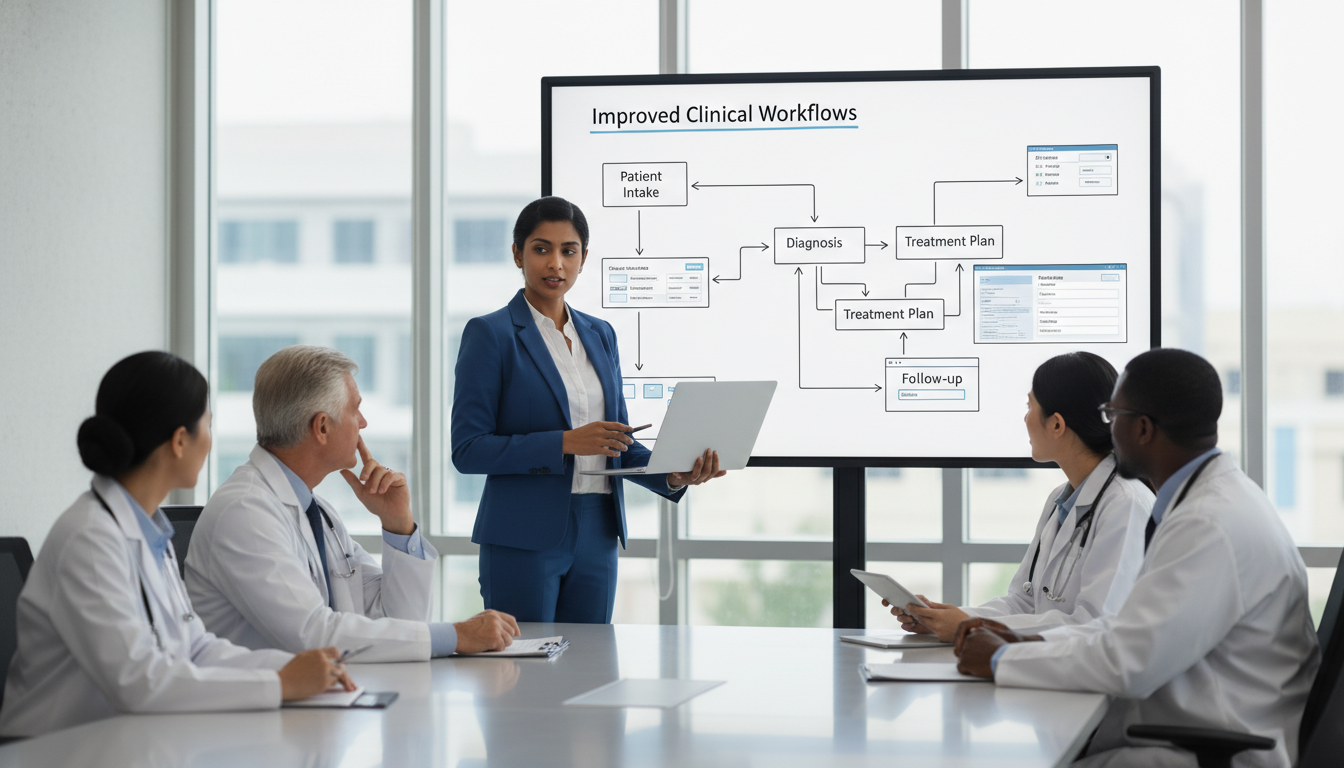
Clinical informatics interviews probe your understanding of how technology intersects with clinical care. You are not expected to be a software engineer, but you are expected to demonstrate:
- Systems thinking
- Comfort with data
- Awareness of EHR functionality
- Appreciation of patient safety and human factors
3. “Why Clinical Informatics?”
This is your chance to show that you understand the field beyond buzzwords.
Key points to include:
- A specific problem you observed that informatics can solve (e.g., medication errors, duplicate testing, poor handoffs, burnout from documentation).
- Your interest in using data and technology to improve care, not just “liking computers.”
- Your desire to act as a bridge between front‑line clinicians and IT teams.
- Awareness of the scope of clinical informatics: EHRs, clinical decision support, data analytics, interoperability, quality improvement, population health, user‑centered design, and patient engagement.
Example phrase:
“Clinical informatics allows me to combine my clinical background with my interest in data‑driven problem solving. I want to redesign systems so that technology supports, rather than obstructs, safe and efficient patient care.”
4. “What’s your experience with EHRs or health IT systems?”
As a non-US citizen IMG, you may have used non‑US systems, but that can still be an asset.
Mention:
- EHRs you’ve used (Epic, Cerner, local systems, custom platforms).
- Roles you’ve played: super‑user, trainer, project participant, report requester.
- Tasks you’ve done: building templates, optimizing documentation, running basic reports, extracting data for research.
- If you lack formal experience, emphasize parallel experience: spreadsheets, registries, telemedicine platforms, mobile health apps, or databases.
Be honest, but highlight your curiosity and adaptability:
“Although I have not yet built order sets directly in Epic, I have worked closely with our IT analyst to refine templates and test changes in our EHR QA environment.”
5. “What informatics or data‑related projects have you worked on?”
Programs expect at least some exposure to informatics or data work, especially if you’re applying specifically to a clinical informatics fellowship.
Examples you can use:
- Quality improvement projects using EHR data.
- Retrospective chart review studies requiring data extraction.
- Implementation or evaluation of a new electronic tool (e.g., patient portal, e-prescribing).
- Development of dashboards or reports for clinical services.
- Workflow analyses for clinic redesign or telehealth expansion.
When describing projects, include:
- The clinical problem.
- Your specific role.
- Tools used (SQL, R, Python, Excel, REDCap, Tableau, Power BI, etc.).
- Outcomes: what changed, and what you learned.
6. “How would you evaluate a new clinical decision support tool?”
This question tests your understanding of actual informatics work.
Basic framework to mention:
- Identify the clinical need – What problem is it solving? For whom?
- Stakeholder engagement – Involving clinicians, nurses, IT, leadership.
- Workflow analysis – Where in the workflow should the tool appear?
- Usability and human factors – Is it intuitive and not disruptive?
- Data accuracy and source – Is the data driving the tool reliable and up to date?
- Pilot and monitoring – Small‑scale rollout, collect feedback, track metrics (alerts accepted, outcome changes, alert fatigue).
- Continuous improvement – Iterate based on data and user feedback.
You do not need deep technical detail, but you should show you think in terms of systems, workflows, and measurable outcomes.
Common Residency & Fellowship Interview Questions for Non‑US Citizen IMGs
Many programs will ask standard residency interview questions, then tailor them to clinical informatics.
7. “Why are you interested in our program specifically?”
For informatics, generic answers are especially harmful. Programs want to see that you’ve done your homework.
Before interviews, research:
- Types of projects done by faculty (EHR optimization, AI/ML, population health, patient safety).
- Partnerships (health systems, academic departments, industry).
- Educational structure (didactics, certificate programs, MPH/MS options).
- Technical environment (Epic vs Cerner vs homegrown systems).
In your answer:
- Mention 2–3 specific aspects of their program.
- Connect those directly to your interests and prior experiences.
- Highlight how you can contribute (e.g., your data skills, clinical background from another health system, language skills, or global health experience).
8. “What are your strengths and weaknesses?”
For informatics, try to align your strengths with the field:
Examples of strengths:
- Systems thinking and seeing patterns in processes.
- Ability to translate between clinicians and technical staff.
- Comfort with data and analytics.
- Cross‑cultural communication and adaptability as a non-US citizen IMG.
For weaknesses:
Choose something real but manageable and describe how you’re addressing it.
Examples:
- Limited formal programming background → taking online courses in Python/SQL.
- Initially struggling with US documentation norms → sought mentorship and feedback to improve.
Avoid weaknesses that directly contradict core fellowship expectations (e.g., “I don’t like working with computers at all”).
9. “How do you handle uncertainty or rapidly changing information?”
Informatics projects often involve evolving requirements, changing regulations, and shifting user needs.
You can reference:
- Your adaptability when moving from your home country to the US healthcare environment.
- Experiences implementing new guidelines or protocols.
- Approaches like frequent communication, iterative planning, and version control with stakeholders.

Immigration, Cultural, and Communication Questions: Unique to Non‑US Citizen IMGs
Programs understand that non-US citizen IMGs face additional hurdles: visa issues, cultural adjustment, and learning US healthcare norms. They may explore these directly or indirectly.
10. “What challenges have you faced as an international medical graduate, and how did you handle them?”
They are assessing resilience, adaptability, and self‑awareness.
Potential themes:
- Adjusting to US communication styles (more direct feedback, shared decision‑making).
- Learning US healthcare documentation requirements and malpractice environment.
- Navigating EHR systems and terminology different from your home country.
- Coping with separation from family and social support.
Emphasize:
- Specific strategies you used (mentorship, feedback, additional training).
- Skills you developed that are assets in informatics (e.g., adaptability, cross‑cultural communication, empathy for diverse users).
11. “Do you foresee any issues with visas or long‑term plans in the US?”
Programs may not always ask this directly, but some do, especially for a foreign national medical graduate.
When responding:
- Be honest but reassuring—show that you understand basic visa pathways (J‑1, H‑1B, etc.).
- Emphasize that you plan your career long‑term and are committed to completing the program.
- You can mention that you’ve consulted with advisors or institutional offices about visa options without going into excessive detail.
Example outline:
“I am currently on [visa type] and have worked closely with my institution’s international office. I understand the requirements for continuing training in the US and am committed to completing a full pathway in clinical informatics and my core specialty. I am prepared to work with your GME office to ensure smooth processing.”
12. “How have you adapted your communication style to the US healthcare environment?”
Effective communication is crucial in behavioral interview medical evaluations, especially for informatics leaders who must negotiate with multiple stakeholders.
Discuss:
- Adjusting from hierarchical communication norms to more collaborative ones.
- Learning to speak up respectfully in multidisciplinary meetings.
- Practicing structured communication tools (SBAR, closed‑loop communication).
- Feedback you’ve received and incorporated about clarity, brevity, or assertiveness.
Demonstrate that you’re self‑reflective and actively improving.
Practical Preparation Strategies for Clinical Informatics Interviews
Beyond anticipating residency interview questions, you must prepare deliberately for informatics‑specific and IMG‑specific concerns.
Build a Portfolio of Examples
Before interviews, list 6–10 experiences you can reuse flexibly:
- 2–3 clinical scenarios where you improved a workflow or process.
- 2–3 data or research projects (even small) showing analytic thinking.
- 2–3 teamwork or conflict scenarios (including cross‑disciplinary projects).
- 1–2 stories highlighting adaptation as a non-US citizen IMG.
Map these examples to common themes: leadership, teamwork, conflict, adaptability, innovation, patient safety, and ethics. Reuse them with different emphasis depending on the question.
Practice Explaining Technical Concepts in Plain Language
Clinical informatics fellows often act as translators between technical teams and clinicians.
Practice:
- Explaining what an EHR is to a layperson.
- Describing basic analytics concepts like “risk prediction model,” “dashboard,” or “data warehouse” in non‑technical terms.
- Summarizing your projects for a clinician with limited IT exposure.
This will help you in questions where interviewers test your ability to communicate across disciplines.
Anticipate Variations of “Tell Me About Yourself”
This core question can appear in multiple forms:
- “Walk me through your CV.”
- “Why did you move from clinical practice in [Country] to informatics in the US?”
- “How did your interest in clinical informatics develop over time?”
Structure all of them around a coherent narrative linking your:
- Clinical background
- Exposure to systems problems
- Growing interest in data and technology
- Decision to pursue health IT training and clinical informatics fellowship
Prepare Thoughtful Questions for Interviewers
Your questions are also part of your evaluation. Avoid generic questions easily answered on the website.
Good questions for clinical informatics programs:
- “What types of projects do fellows typically lead, and how are they matched to institutional priorities?”
- “How do you support fellows in developing both technical and leadership skills?”
- “How do clinicians in your institution perceive the informatics team—what has worked well and what remains challenging?”
- “Are there opportunities for additional health IT training, such as formal degrees or certificates in data science or public health?”
These questions show you understand informatics as a blend of technology, leadership, and change management.
Frequently Asked Questions (FAQ)
1. Do I need strong programming skills to match into clinical informatics as a non‑US citizen IMG?
Advanced programming is not always required, but comfort with data and technology is essential. Many successful fellows start with:
- Basic familiarity with spreadsheets, databases, and data visualization
- Exposure to EHR reporting tools or simple SQL queries
- Willingness to learn more technical skills during fellowship
Programs value your ability to think systematically, collaborate with IT, and understand clinical workflows. If you lack coding experience, demonstrate proactive learning through online courses or small projects.
2. How can I stand out as a non‑US citizen IMG in clinical informatics interviews?
You can stand out by:
- Presenting a clear, logical story in response to “tell me about yourself”
- Demonstrating real informatics‑relevant experience (even small projects)
- Showing understanding of US healthcare workflows and documentation
- Using examples that highlight resilience and adaptability in a new system
- Emphasizing your unique perspective from practicing in another health system, which can help in global health, interoperability, or diverse user design
3. Will my lack of US clinical experience hurt my chances in informatics?
Not necessarily, if you can:
- Show that you understand fundamental US healthcare structures (insurance, outpatient vs inpatient workflows, multidisciplinary teams).
- Provide examples of working with EHRs or health IT systems—even from your home country or research setting.
- Demonstrate excellent communication skills and teamwork in multicultural environments.
Programs often value the diverse perspective a non-US citizen IMG brings, especially in systems thinking and understanding how health IT functions in different settings.
4. What are some red flags in answers to clinical informatics interview questions?
Potential red flags include:
- Expressing dislike for EHRs or technology without also showing interest in fixing them.
- Blaming others in teamwork or conflict scenarios instead of reflecting on your role.
- Lacking any clear examples of process improvement, data use, or workflow analysis.
- Having no long‑term vision beyond “I just need a position in the US.”
- Showing limited awareness of what clinical informatics actually involves beyond “using computers.”
Focusing your preparation on thoughtful, specific, and informatics‑relevant examples will help you avoid these pitfalls.
By anticipating these common interview questions and tailoring your responses to highlight your informatics mindset, adaptability, and cross‑cultural strengths, you can position yourself as a compelling candidate—even as a non-US citizen IMG navigating a complex and competitive field like clinical informatics.