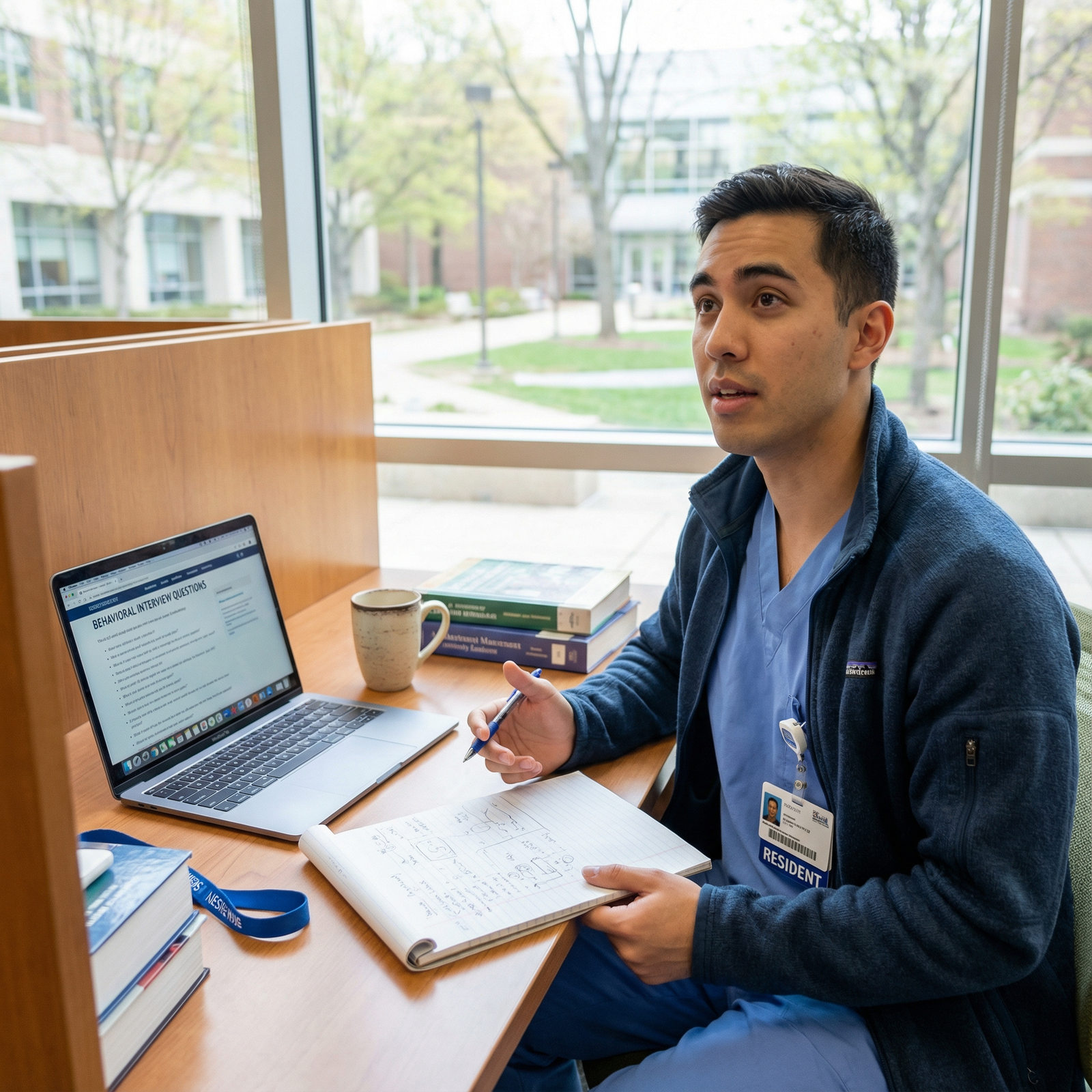
Understanding the OB GYN Residency Interview Landscape
As an MD graduate preparing for OB GYN residency, you’re stepping into one of the most competitive and dynamic fields in medicine. The allopathic medical school match process for OB GYN continues to attract applicants who are passionate about women’s health, surgical skills, advocacy, and longitudinal patient relationships.
The interview is often the decisive factor once your academic metrics and application have cleared the initial screening. Programs know many applicants look similar on paper; the interview is where they assess:
- Your fit for their culture and mission
- Your communication and teamwork skills
- Your maturity and professionalism
- How you think under pressure and handle conflict
- Whether you truly understand what life in OB GYN residency entails
This article focuses on common interview questions you’re likely to face, especially behavioral interview medical questions (e.g., “Tell me about a time…”). You’ll also see sample frameworks and tailored examples specifically for the obstetrics match and OB GYN residency interviews.
Core “Getting to Know You” Questions
These questions appear in almost every OB GYN residency interview, whether at an academic center, community program, or hybrid setting.
1. “Tell Me About Yourself.”
This is almost guaranteed. It’s also the question most MD graduates answer poorly because they improvise. Programs use it to evaluate your ability to structure a narrative and set the tone.
Goal: Provide a concise, professional story that connects who you are to why you’re a great fit for OB GYN and their program.
Use a simple 3-part structure (Past – Present – Future):
- Past: Where you’re from / early influences / key experiences
- Present: Your current training, focus areas, and strengths
- Future: Your career goals and what you seek in a residency
Example (Adapted for OB GYN):
“I grew up in a small town in Ohio where access to women’s health care was limited, and I saw firsthand how that affected family health. In medical school at X University, I was drawn to rotations that involved longitudinal relationships and procedures, but my OB GYN clerkship stood out: I loved the combination of high-acuity labor and delivery, the continuity of prenatal care, and the chance to advocate for patients at critical points in their lives.
Right now, I’m a fourth-year MD graduate focusing on women’s health and surgical skills. I’ve done additional electives in family planning and high-risk obstetrics and have been involved in a quality improvement project on postpartum hemorrhage protocols.
Looking ahead, I hope to train in a program that combines strong surgical training with a commitment to health equity and resident education. I’m especially interested in academic OB GYN and eventually mentoring medical students, so I’m looking for a residency that will help me grow as both a clinician and a teacher.”
Tips:
- Keep it under 2 minutes.
- Avoid reciting your CV. Focus on themes.
- Explicitly link your story to OB GYN residency and the program’s strengths.
2. “Why OB GYN?”
Programs know that OB GYN is demanding: overnight calls, high-stakes emergencies, emotional outcomes, and legal pressures. They want to see that your interest is durable and reflective.
Address these elements:
- Exposure: When and how your interest developed
- Specific features of OB GYN: Surgical aspects, continuity, advocacy, women’s health, high acuity
- Personal fit: Skills and values that match the specialty
- Longevity: Why this interest will sustain you over a career
Example Approach:
“I was initially open-minded about specialty choice, but two experiences were pivotal. First, during my OB GYN clerkship, I was struck by the privilege of being present at life-changing moments—from prenatal counseling to delivery to postpartum care. Second, on my sub-internship, I saw how OB GYNs balance operating room time with outpatient continuity and emergency situations on L&D.
I’m drawn to procedural work, but I don’t want to give up long-term patient relationships, and OB GYN uniquely offers both. I also value advocacy and public health, especially regarding reproductive rights and access to care, and this field is at the center of those issues. I can see myself still feeling fulfilled in this work decades from now, even with the challenges.”
Avoid:
- Overly generic answers (“I like women’s health and surgery”).
- Answers that sound naïve to the demands of the specialty.
- Focusing solely on one aspect (e.g., “I just want to operate”) without acknowledging the full scope.
3. “Why Our Program?”
This is where your preparation—or lack of it—shows. Programs can quickly tell if you’ve read their website or not.
Research before the interview:
- Program size, call structure, location
- Unique tracks (global health, academic, research, advocacy)
- Obstetric volume and case mix (e.g., high-risk OB, VBAC rates)
- Gynecologic oncology, minimally invasive surgery, family planning exposure
- Their mission statement and patient population
Answer Template:
- Signal genuine familiarity with 2–3 program-specific strengths.
- Align these strengths with your goals.
- Mention fit with culture and mentorship.
Example:
“I’m especially interested in your program for three reasons. First, your strong high-risk obstetrics exposure and Level IV NICU align with my goal of being comfortable managing complex pregnancies anywhere I practice. I was impressed by your maternal morbidity review process and how residents are actively involved in QI.
Second, the family planning and minimally invasive surgery training here stand out, particularly the early exposure in PGY-2. I hope to integrate these skills into general OB GYN practice and potentially subspecialty training.
Finally, when I spoke with your residents during the pre-interview social, what stood out was their sense of camaraderie and support, along with how approachable the faculty are. I’m looking for a program where I’ll be challenged clinically but also supported as a learner and person, and I feel your program offers that balance.”
4. “What Are Your Strengths and Weaknesses?”
Programs use this to assess insight and coachability.
Strengths:
- Choose 2–3 relevant, observable strengths (e.g., communication, work ethic, teamwork, adaptability, attention to detail).
- Provide brief evidence or an example.
Weaknesses:
- Pick a real, non-fatal weakness (not “I’m a perfectionist”).
- Show how you’ve addressed it and improved.
- Avoid weaknesses that directly undermine residency survival (e.g., “I have trouble with time management and deadlines” without a recovery plan).
Example Strength:
“One of my strengths is clear communication under pressure. During my OB triage rotation, I often coordinated between the nurse, resident, and patient’s family when new emergencies arrived. I made it a point to summarize the plan out loud and check for understanding, which helped keep everyone on the same page.”
Example Weakness:
“Earlier in medical school, I tended to hesitate before speaking up with questions or concerns on rounds. I worried about being wrong or slowing the team. After feedback from a mentor, I started preparing 1–2 specific questions ahead of time and reminding myself that patient care improves when the whole team voices concerns. Over time, I’ve become more comfortable raising issues, like clarifying medication plans or asking about alternative diagnoses, and I’ve noticed attendings appreciate that engagement. I’m continuing to work on balancing humility with appropriate assertiveness.”

Behavioral Interview Questions: How You Act in Real Situations
Behavioral questions are increasingly common in the allopathic medical school match process, especially for OB GYN residency. These “Tell me about a time…” questions aim to predict future performance based on past behavior.
Using the STAR or SOAR Framework
Organize your answer clearly:
- S – Situation: Brief context
- T – Task: Your role / what needed to be done
- A – Action: What you did (focus here)
- R – Result: Outcome and what you learned
Or SOAR (Situation–Obstacle–Action–Result) if there was a barrier.
Avoid overlong setups; spend most time on Action and Result.
Common Behavioral Themes in OB GYN Residency Interviews
Below are typical behavioral interview medical questions you might encounter, with sample approaches and OB GYN–specific examples.
1. Teamwork and Communication
- “Tell me about a time you worked on a difficult team.”
- “Describe a situation where you had to communicate bad news.”
- “Tell me about a time you had a conflict with a team member and how you handled it.”
Example Question:
“Tell me about a time you had a conflict with a colleague.”
Sample Answer (STAR):
- Situation: “During my OB GYN sub-internship, I was on a busy night shift where a PGY-2 resident and I disagreed about whether to call the attending for a patient with non-reassuring fetal heart tracings.”
- Task: “I felt it was my responsibility to advocate for the patient’s safety without undermining the team hierarchy.”
- Action: “I first asked the resident to walk me through her reasoning and acknowledged her experience. I respectfully shared my concerns, referencing specific tracing criteria we had learned. When we still disagreed, I suggested we quickly review the case at the nurse’s station and, if needed, call the attending together. That reframed it as a joint decision rather than challenging her authority.”
- Result: “We decided to call the attending, who came, evaluated the tracing, and ultimately expedited delivery. Afterward, the resident thanked me for speaking up and we debriefed about balancing autonomy with patient safety. I learned the importance of framing disagreements as shared problem-solving and anchoring discussions in objective criteria.”
2. Handling Stress, Mistakes, and High-Acuity Situations
OB GYN is high-stakes. Programs want to know how you function under pressure.
- “Tell me about a time you made a mistake.”
- “Describe a time you were under significant stress and how you handled it.”
- “Tell me about your most challenging clinical situation.”
Example Question:
“Tell me about a time you made a mistake in clinical care.”
Key Principles:
- Choose a real but educational, non-catastrophic mistake.
- Take ownership, don’t blame others.
- Emphasize what you changed afterward.
Sample Answer:
- Situation: “During my internal medicine rotation, I misheard a patient’s creatinine level and initially placed an order for contrast imaging without recognizing the risk.”
- Task: “I needed to acknowledge the mistake, ensure patient safety, and improve my practice.”
- Action: “While reviewing the chart before the scan, I realized the discrepancy, immediately canceled the order, and notified my senior. I apologized, clarified the lab values, and documented the updated plan. Afterward, I started double-checking key labs myself and repeating back critical values during sign-out to avoid miscommunication.”
- Result: “The patient was never exposed to contrast, and my team used the situation as a learning moment. Since then, I’ve been particularly vigilant about checking labs directly, which is crucial in OB GYN where decisions often hinge on lab values and time-sensitive changes.”
3. Difficult Patients or Families
- “Tell me about a time you dealt with a difficult patient or family member.”
- “Describe a situation where you had to advocate for a patient.”
OB GYN-Specific Example:
- Situation: “On my OB rotation, I cared for a patient in early pregnancy experiencing vaginal bleeding who was very anxious and frustrated by the wait times.”
- Task: “I needed to maintain professionalism, de-escalate tension, and ensure she felt heard.”
- Action: “I sat down at eye level, acknowledged her worries, and validated that waiting without clear answers is stressful. I clearly outlined the steps of the evaluation—labs, ultrasound, and what each could tell us—and set expectations about timing. I also checked in with the nurse to see if any steps could be expedited and updated the patient regularly, even if only to say we were still waiting on results.”
- Result: “Her frustration decreased, and she expressed appreciation for the frequent updates, even though the final diagnosis—a miscarriage—was difficult. I learned that clear communication and expectation-setting can significantly reduce distress, especially in emotionally charged situations common in OB GYN.”
4. Ethics and Professionalism
- “Tell me about a time you faced an ethical dilemma.”
- “Describe a time you had to speak up about something you felt was wrong.”
- “Have you ever seen unprofessional behavior? What did you do?”
Example Question:
“Tell me about a time you faced an ethical challenge.”
Sample Answer (OB GYN context):
- Situation: “During my OB GYN clerkship, I observed a conversation where a patient’s request for more information about contraceptive options wasn’t fully addressed due to time pressure.”
- Task: “I wanted to respect team workflow but also ensure the patient received adequate counseling.”
- Action: “After the visit, I approached the resident privately and asked if we could return briefly to provide more information or schedule a follow-up. I framed it as concern that the patient might not feel fully informed about her choices. The resident agreed and we went back to clarify options, including LARC methods, and arranged a follow-up visit for detailed counseling.”
- Result: “The patient appreciated the additional discussion and later chose a method that fit her needs. I learned that it’s possible to advocate for patients respectfully within team hierarchies, especially in areas like reproductive health where informed choice is central.”
Clinical and Specialty-Specific OB GYN Interview Questions
Beyond general behavioral and fit questions, you’ll frequently see questions probing your understanding of OB GYN itself and your long-term career vision.
1. “What Do You Think Will Be the Most Challenging Part of OB GYN Residency?”
Programs want to see realism and self-awareness.
Effective Approach:
- Identify a genuine challenge (e.g., managing fatigue, emotional outcomes, medico-legal climate, balancing OR and L&D priorities).
- Show you’ve thought about coping strategies.
- Emphasize your motivation despite challenges.
Example:
“I think one of the most challenging aspects will be the combination of high-acuity emergencies and emotional outcomes, especially when dealing with perinatal loss or severe maternal morbidity on L&D. I’ve had a small glimpse of that during my sub-internship and found it emotionally heavy.
To cope, I plan to use strategies I’ve already found helpful: debriefing with the team after difficult cases, maintaining a small circle of peers and mentors I can talk to openly, and establishing routines outside the hospital—regular exercise and time with family—that help me reset. Despite the intensity, I’m drawn to OB GYN precisely because it matters so much to patients and families, and I’m prepared to invest in my resilience to sustain this work.”
2. “Where Do You See Yourself in 5–10 Years?”
They’re assessing whether your goals align with their strengths and whether you’ve thought beyond match day.
Potential directions:
- General OB GYN (community or academic)
- Subspecialty interest (MFM, REI, Gyn Onc, MIGS, FPMRS, complex family planning)
- Research, education, advocacy, global health
You don’t need a rigid plan, but you should have plausible interests.
Example:
“In 5–10 years, I see myself as a general OB GYN with a strong focus on complex obstetrics and family planning, ideally in an academic or academic-affiliated setting. I’d like to be involved in resident and medical student teaching and in quality improvement projects targeting maternal morbidity. I’m open to fellowship—possibly MFM or MIGS—but I recognize that residency will shape those interests further. I’m looking for a program that gives robust exposure to both general and subspecialty care so I can make an informed decision.”
3. Clinical Scenario and Judgment Questions
Some programs incorporate basic clinical questions—not to quiz you like Step 2, but to see how you reason.
- “Walk me through how you would approach a patient presenting with decreased fetal movement at 37 weeks.”
- “How would you handle a postpartum patient with heavy bleeding?”
- “What’s your approach to obtaining consent for cesarean delivery?”
Tips:
- Think in structured steps: assessment, differential, immediate management, communication.
- Acknowledge when you’d call for help or involve senior residents/attendings.
- Emphasize safety and communication with the patient and team.
You’re not expected to know everything; they’re assessing reasoning and humility.

Program Fit, Red Flags, and “Personality” Questions
Fit questions often feel casual but are critically important. Program directors want residents who will work well with others and contribute positively.
1. “How Do You Handle Feedback?”
- Describe a specific time you received constructive criticism.
- Show that you listened, implemented changes, and improved.
Example:
“During my OB GYN clerkship, an attending noted that my operative notes lacked sufficient detail. I asked for specific examples and guidance, then created a checklist for key elements. Over the next few weeks, I used that checklist and asked for spot checks. By the end of the rotation, my notes were more complete, and the attending commented on the improvement. I’ve learned to see feedback as data to help me get better rather than as a personal judgment.”
2. “What Do You Do for Fun Outside of Medicine?”
This is not a trap; they want to see that you have a life outside the hospital—important for burnout prevention.
- Be honest.
- Avoid self-deprecating answers like “I don’t really have time for anything.”
- You can briefly link how hobbies support your well-being.
Example:
“I enjoy long-distance running and have run a couple of half-marathons. It helps me manage stress and gives me structured goals outside of medicine. I also like cooking and trying new recipes with friends—it’s a way I stay connected socially during busy times.”
3. “What Questions Do You Have for Us?”
This is almost always asked; not having questions can signal a lack of interest.
Prepare 3–5 thoughtful questions that:
- Can’t be answered by simply reading the website
- Show insight into training, culture, or your goals
- Invite residents and faculty to speak about their experience
Examples:
- “How does your program support residents who are interested in academic careers or subspecialty fellowship?”
- “Can you describe how feedback is delivered to residents and how often formal evaluations occur?”
- “What qualities do your most successful residents share?”
- “What recent changes have you made to the program based on resident feedback?”
Practical Preparation Strategies for MD Graduates
To perform well in OB GYN residency interviews, preparation should be structured and deliberate.
1. Compile a Personal Story Bank
List 8–10 clinical experiences that demonstrate:
- Teamwork
- Conflict resolution
- Handling mistakes
- Difficult patients/families
- Leadership
- Initiative/advocacy
- Adaptability / dealing with uncertainty
- Ethics/professionalism
For each, outline using STAR. Many residency interview questions will map onto these stories.
2. Rehearse, But Don’t Memorize
- Practice aloud answering “Tell me about yourself,” “Why OB GYN?” and “Why our program?”
- Record yourself or practice with a mentor, friend, or advisor.
- Focus on structure, clarity, and pacing—not on memorizing a script.
3. Know Your Application Cold
Expect questions about:
- Any gaps, leaves, or transcript anomalies
- Research projects: your specific role, methods, and findings
- Leadership or volunteer work: what you actually did
- Personal statement themes
Be prepared to discuss each element comfortably and honestly.
4. Prepare for Virtual and In-Person Formats
For virtual interviews:
- Test your technology, lighting, microphone, and background.
- Position the camera at eye level; dress professionally.
- Look at the camera when speaking to simulate eye contact.
For in-person interviews:
- Plan travel and arrival times conservatively.
- Bring copies of your CV and a small notebook.
- Be courteous to everyone you meet—residents, coordinators, administrative staff.
Frequently Asked Questions (FAQ)
1. How many behavioral questions should I expect in an OB GYN residency interview?
It varies by program, but many interviews will include 3–6 behavioral questions, often mixed with general questions (“Tell me about yourself”) and specialty-specific questions (“Why OB GYN?”). Some institutions use a structured behavioral format more heavily; others keep it informal. Prepare enough stories (8–10) to flexibly answer common behavioral themes.
2. How should I answer if I’m asked about a low Step score or a failed exam?
Be brief, honest, and forward-looking:
- Take responsibility without excessive self-criticism.
- Explain context if relevant (health issue, family crisis) without making excuses.
- Emphasize what you changed—study strategy, resources, time management.
- Point to subsequent improvement (better shelf scores, Step 2, strong clinical evaluations).
Programs care more about growth and reliability than perfection.
3. Is it okay to say I’m undecided about fellowship when programs ask about long-term plans?
Yes. Many MD graduates are unsure. It’s fine to say you’re open-minded, as long as you have plausible interests and can articulate what you want from residency (e.g., strong general training, exposure to subspecialties, teaching experience). Avoid sounding completely directionless; instead, frame it as curiosity supported by a plan to explore during residency.
4. How can I stand out among many strong applicants in OB GYN interviews?
You stand out by combining clarity, authenticity, and preparation:
- Provide specific, vivid examples in your answers rather than generic statements.
- Show that you’ve researched and genuinely understand each program.
- Demonstrate emotional intelligence—how you communicate, handle conflict, and process difficult situations.
- Be consistent across your application, personal statement, and interviewing style.
Ultimately, programs remember applicants who feel like future colleagues they’d want on L&D at 3 a.m.—reliable, thoughtful, communicative, and committed to patients and the team.
By anticipating these common interview questions for MD graduates in Obstetrics & Gynecology and preparing structured, authentic responses, you’ll walk into each interview with confidence—and maximize your chances of a successful obstetrics match into the OB GYN residency program that fits you best.